Jacob Loosed Twelve Arrows and Struck Esau Down at the Gate
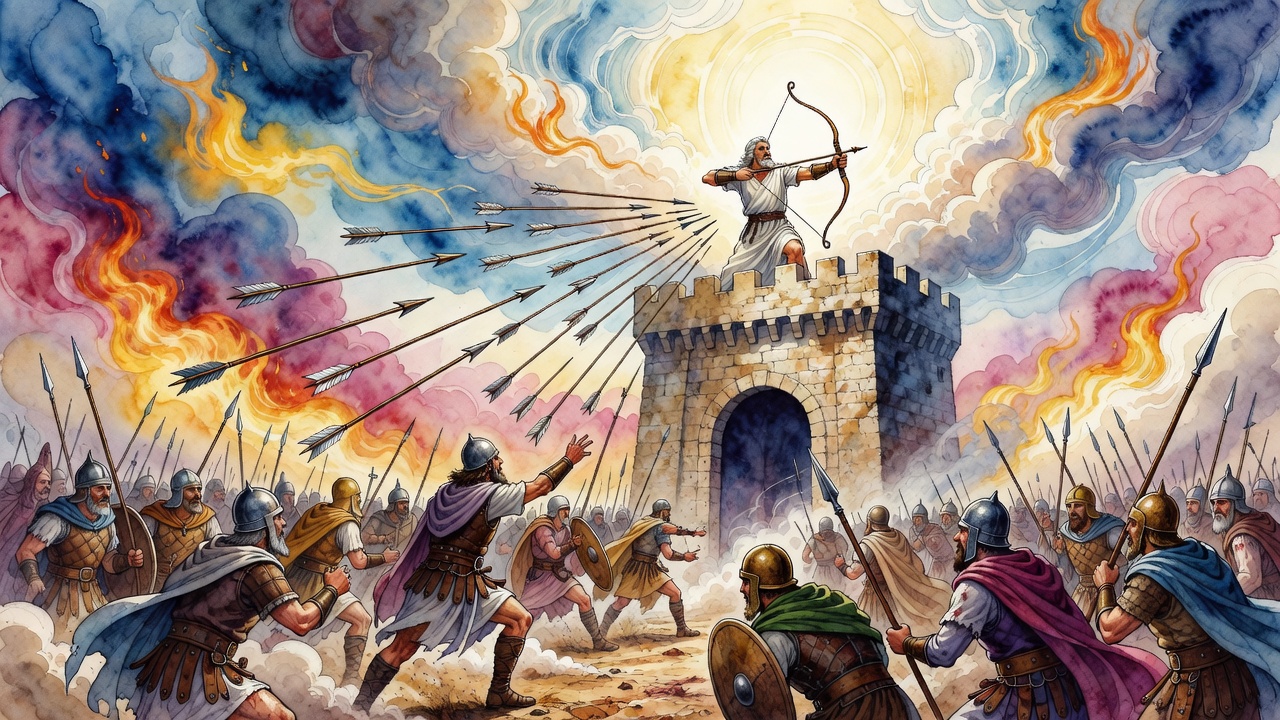
Esau brings a host to besiege the tower, deaf to every oath of peace, and Jacob looses twelve arrows that scatter the army and end the war.
Table of Contents
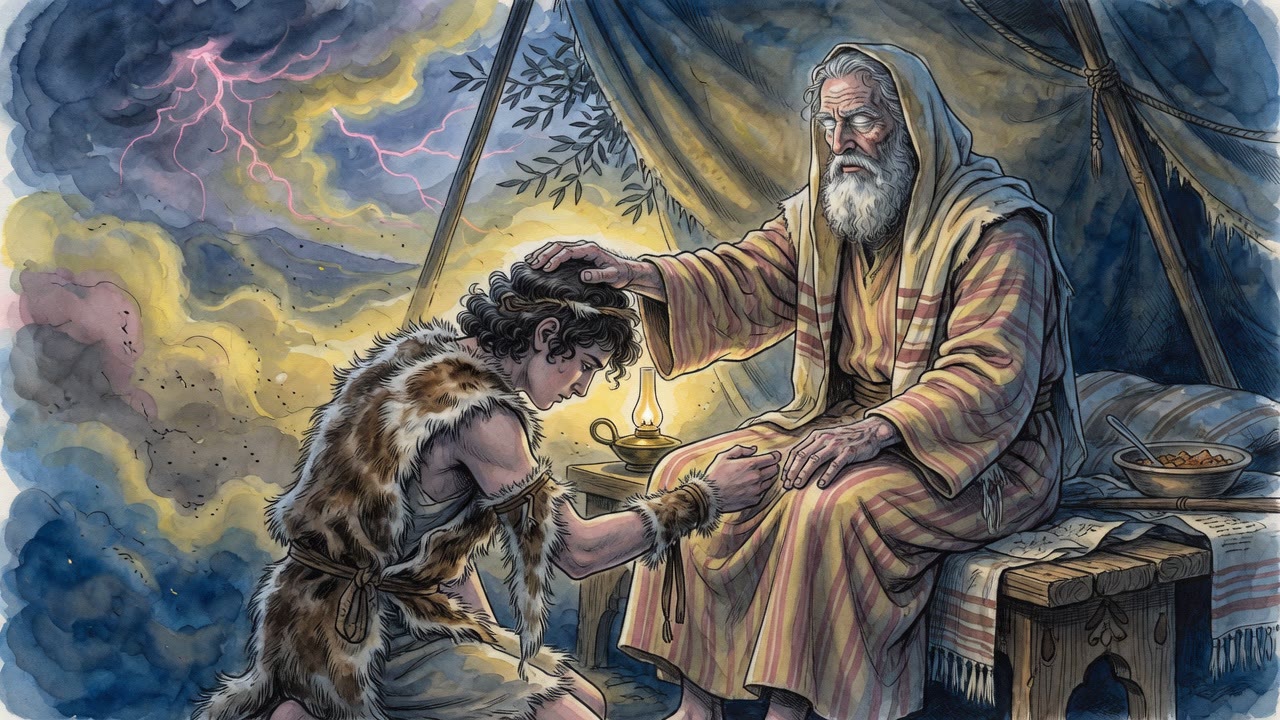
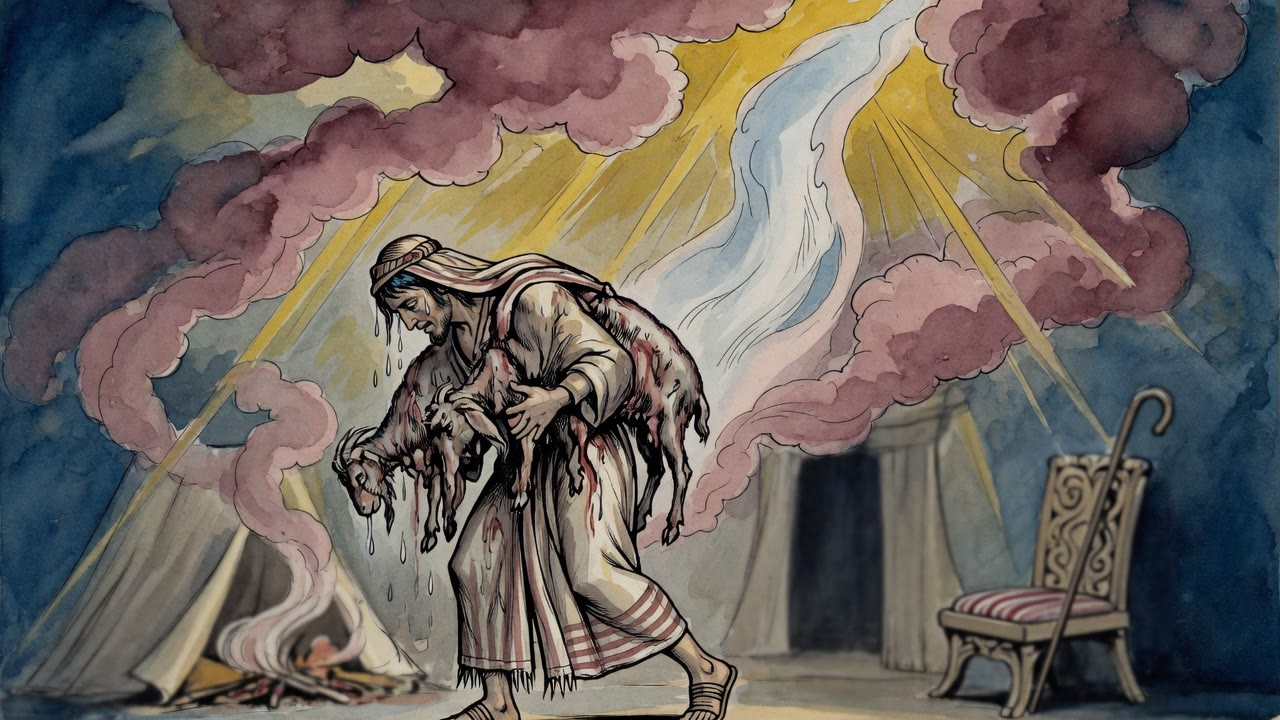
The meal ended in peace. Isaac, old and nearly blind, had laid his hands on both his sons and divided his blessings, and now the three of them ate and drank together in the tower at Hebron. For one evening the long war between the brothers went quiet. Jacob and Esau reclined at the same table, and their father, a hundred and eighty years old, fell asleep that night rejoicing and did not wake again in this world.
 Click for full size
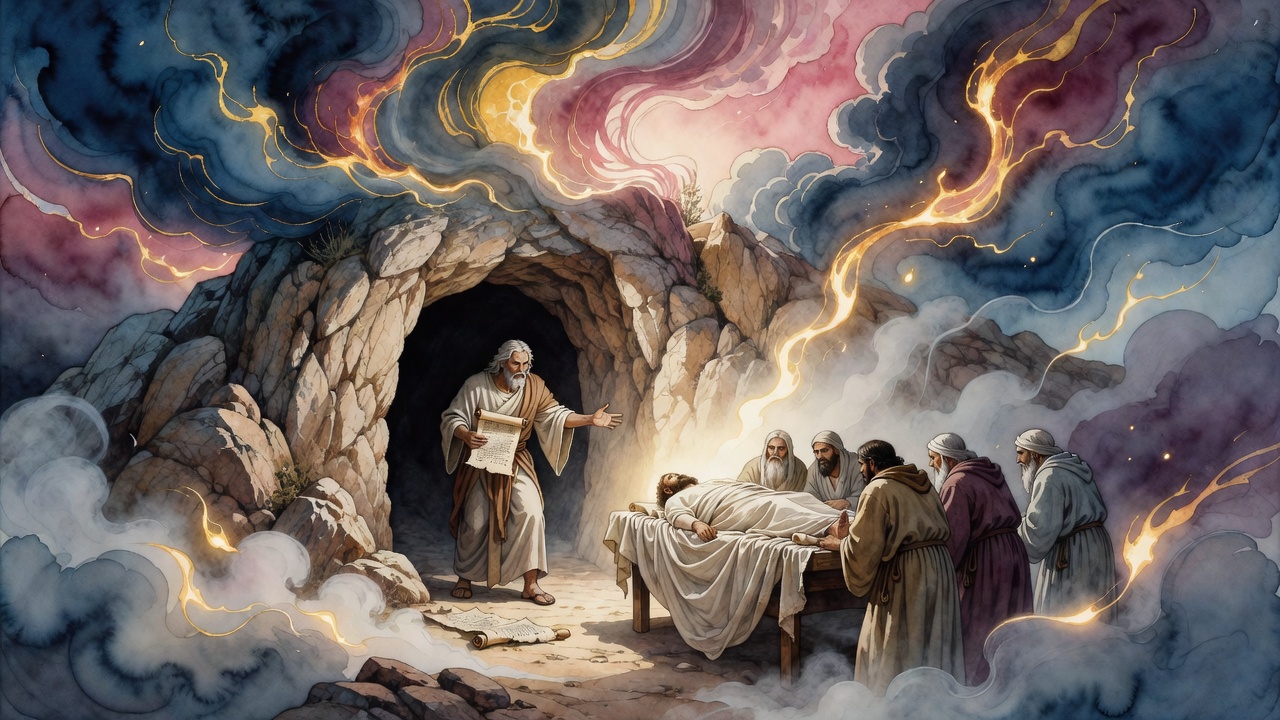
They buried him together. Esau and Jacob carried the body to the cave their grandfather Abraham had bought, and there, for a moment, the two stood side by side as sons and not as rivals. Then they parted. Esau gathered his flocks and his herds and all he had taken, and went south to the mountains of Seir, into the red land that would carry his name. Jacob stayed in the tower of his fathers and worshipped the Lord with his whole heart.
The Oath Rebekah Pulled From Both Her Sons
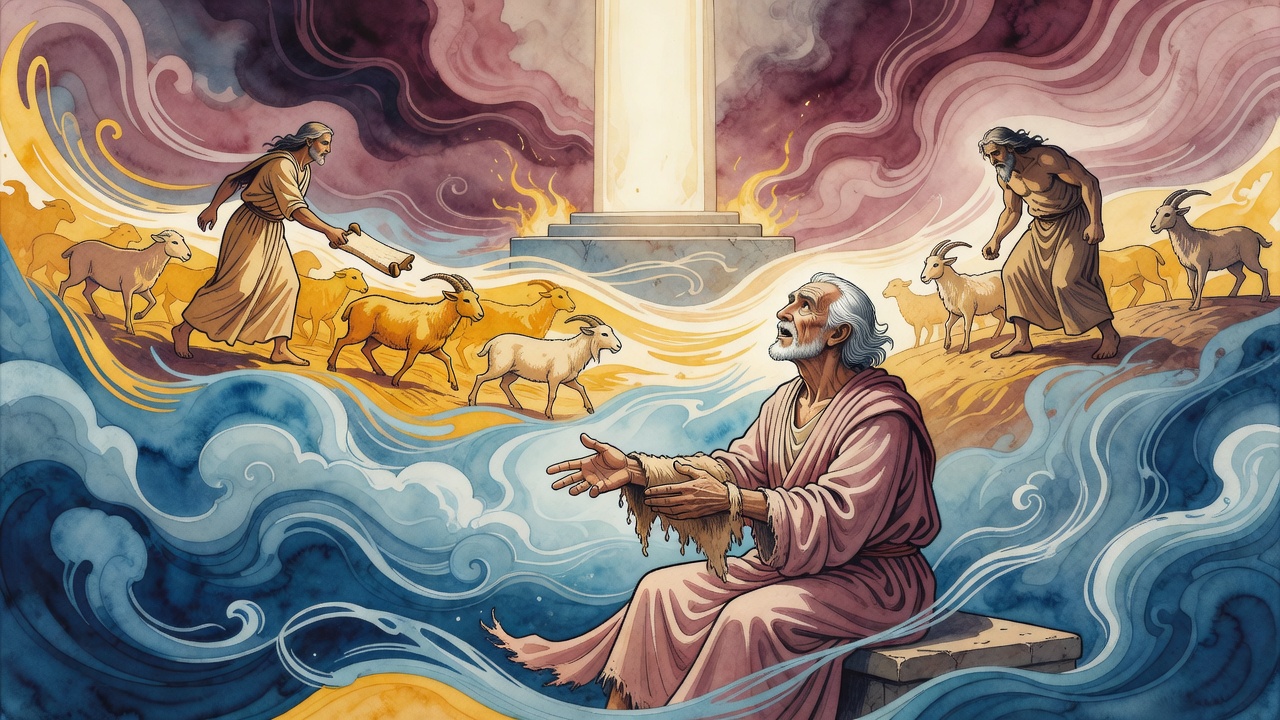
Before any of this, while their mother still lived, Rebekah had seen the danger coming. She had taken Jacob aside and commanded him to honor his father and his brother, and Jacob had answered her with an earnestness that almost ached. "I will do everything as thou hast commanded me," he told her, "for this thing will be honour and greatness to me, and righteousness before the Lord." Then he pressed her, the way a son pleads to be understood. "Thou knowest from the time I was born until this day all my deeds and all that is in my heart, that I always think good concerning all. Tell me, mother, what perversity hast thou seen in me, and I shall turn away from it."
She had no perversity to name in him. The danger was never Jacob's heart. It was the other son, the hunter, and the sons he was raising in the red mountains, who looked at their uncle's tower and saw not kin but spoil.
The Sons of Esau Force Their Father's Hand
The oaths of peace did not survive Isaac's burial by long. In Seir, Esau's own children pressed him, shamed him, told him a man who let his brother prosper unanswered was no man at all. They reminded him of the birthright sold for a bowl of stew, of the blessing stolen by a goatskin and a trembling voice, and they would not let it rest. Esau had sworn peace at his father's table. His sons made him forswear it.
So he gathered them, and he gathered more. Mercenaries, hard men hired with Edomite silver, until a host stood behind him, and the host turned north toward Hebron and the tower where Jacob lived among his servants and his sons.
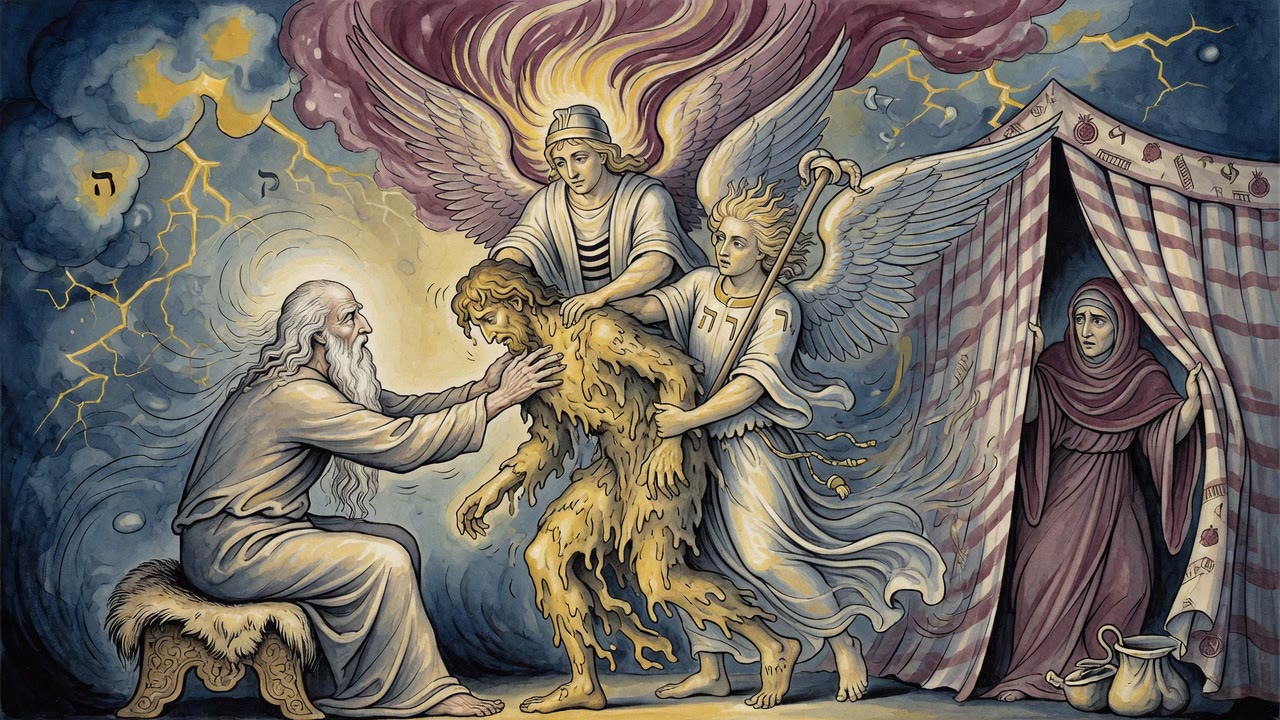
Inside the walls, someone ran to Jacob with the news. The voice broke as it spoke. "Have compassion on thyself, father, and on us and on all our house, for they have come against thee to slay thee and to destroy thy house." The brother who had wept on Jacob's neck was now camped at the gate with armed men, deaf to every oath, deaf to the memory of the meal they had shared over their father's deathbed.
Twelve Arrows From the Tower Wall
Jacob had spent his life avoiding this. He had bowed seven times. He had sent gifts ahead. He had called Esau "my lord" and crossed a river in the dark rather than fight. The forbearance was finished now.
He girded his loins with strength. He took up his bow and walked out before all his servants, onto the wall above the gate where the host pressed in, and he bent the bow and loosed. The first arrow found a mark. So did the next, and the next. Twelve times the string sang, and twelve of Esau's mightiest men fell dead in the dust below the tower, the ones who had run ahead to break the gate and reach Jacob first. The host that had come to slaughter a household began, instead, to break apart.
Then Esau himself rushed forward, straight at his brother. Jacob slipped his charge. He sprang upon Esau and struck him a single blow under the right shoulder, and Esau, the hunter, the firstborn, the man of the field, fell and died at the gate of the tower he had come to burn.
The Pursuit to the Mountains of Seir
With their leader down the army turned and ran, and Jacob's sons poured out of the tower after them. They chased the broken host all the way back toward the red mountains. Judah rushed ahead and cut down four. Reuben slew four, and Gad four, and Asher four, and Dan four, and Naphtali four. Levi, who had already drowned Shechem in blood, slew five. The servants of the house struck down two hundred more, and before the day burned out a thousand of the sons of Esau lay dead across the slopes of Seir.
They stripped the precious garments from Esau's body, the fine things he had worn to his father's table and his brother's gate. They bound him and carried him back to Jacob.
Seventy Days of Mourning at Aduram
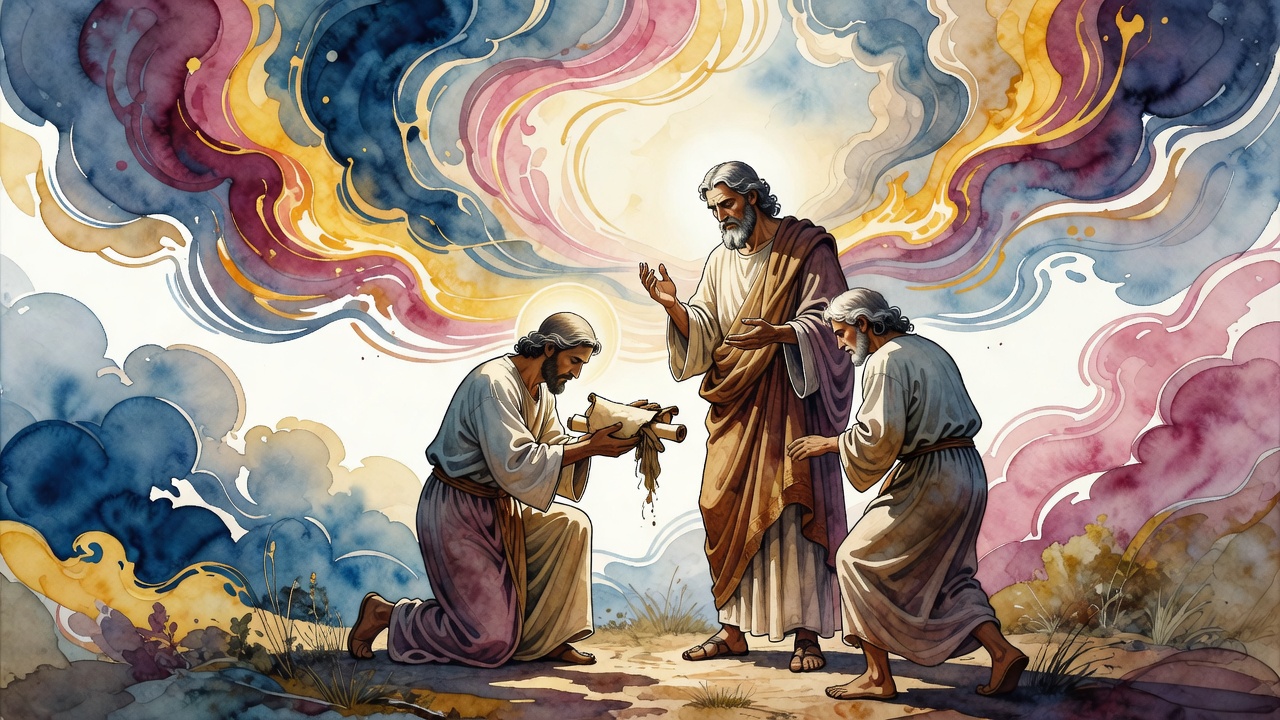
And then the strangest thing in the whole account. Jacob did not gloat over the corpse of the brother who had hunted him from the cradle. He mourned. His sons mourned with him. They carried Esau to a high hill at Aduram and buried him in the earth of Canaan, and for seventy days the tower wept for the man who had besieged it.
When the mourning ended, Jacob went up to Hebron, back to the tower, back to the worship of the Lord. Esau's sons gathered what was left of their possessions and went home to Seir and dwelt there, and the war of the brothers, the one that began before they were born, ended not with a kiss at a ford but with a body on a hill and seventy days of grief.
← All myths