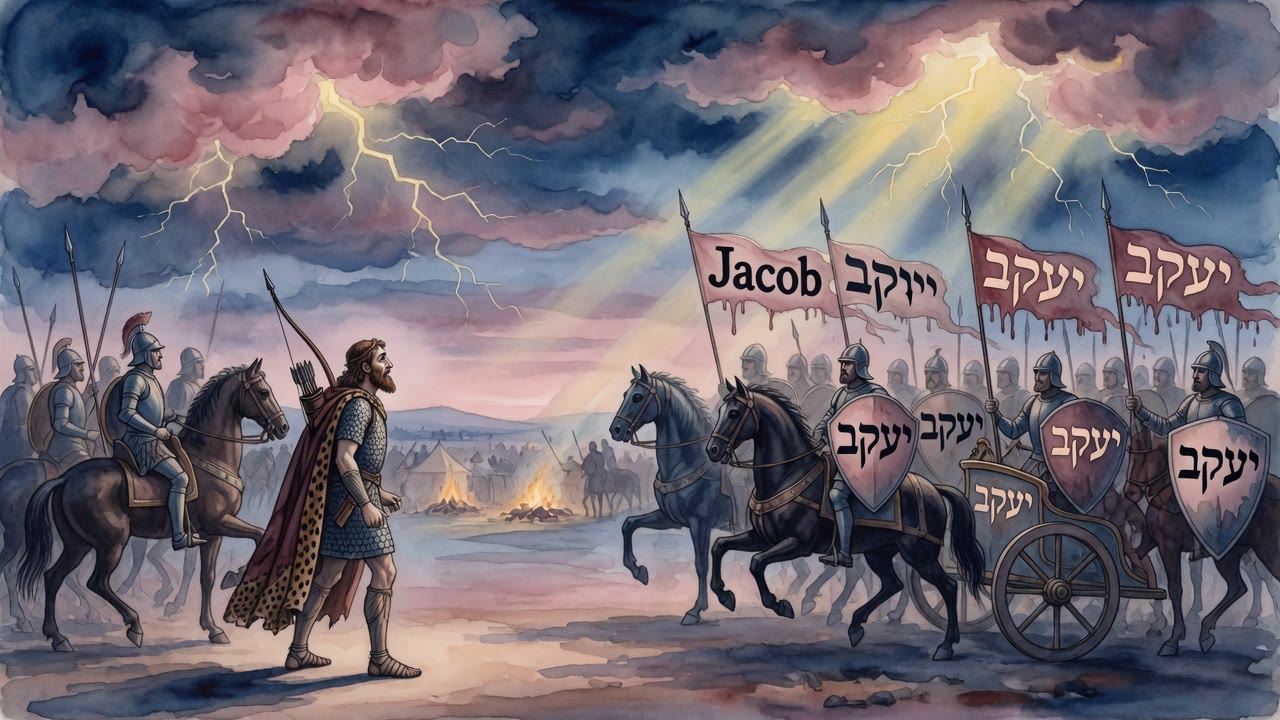
Jacob Heard the Whispers and Packed by Night
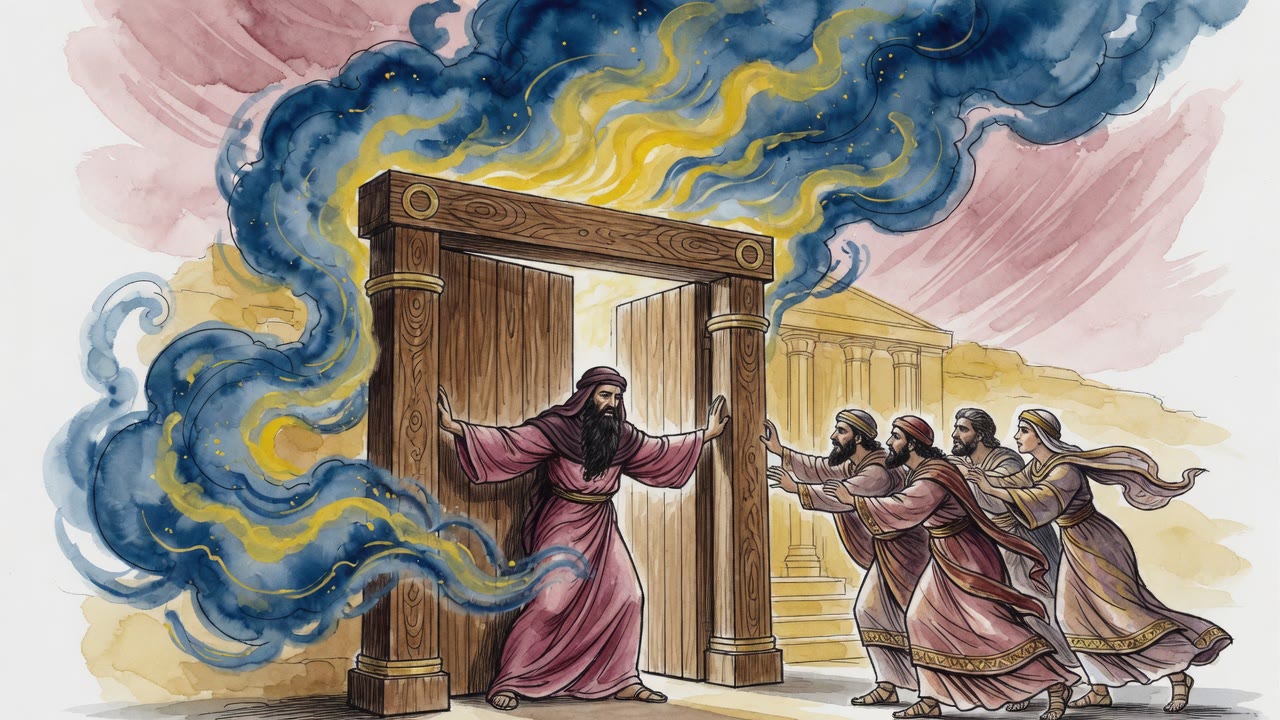
Laban's sons call Jacob a thief of their inheritance. He does not wait for hands to follow words. He packs while the house still sleeps.
Table of Contents
The house turned cold before anyone raised a voice at the table. Jacob heard the sons of Laban speaking about him, not to him (Genesis 31:1). Their complaint cut clean: Jacob has taken all that was our father's, and from what was our father's he has made himself all the glory of these riches.
 Click for full size
They left out the ledger. Fourteen years for two wives. Six more for the flock. Ten times their father had shifted the terms of payment under the open sky while Jacob watched the speckled and the striped. In the brothers' telling, a nephew appeared one day and swallowed the patrimony whole. Resentment always edits that way. It erases what was owed and photographs only the wealth standing in the yard at evening.
Words First, Hands Next
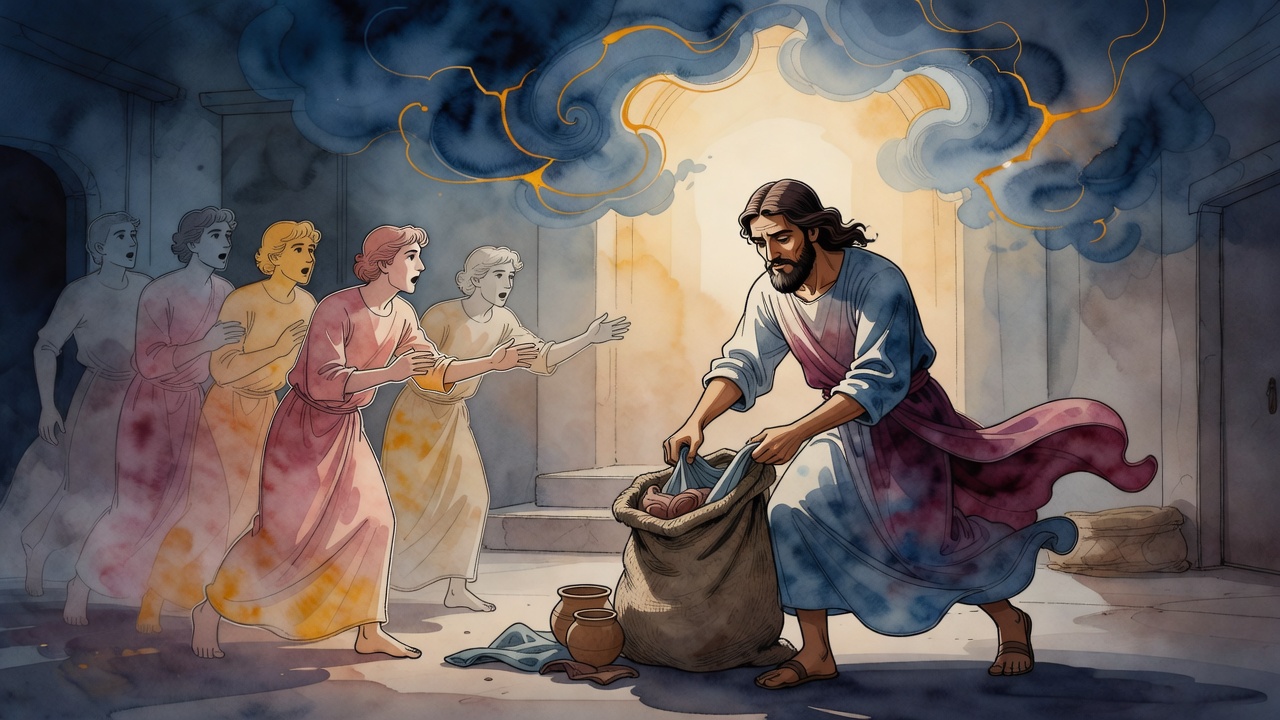
Jacob did not call a meeting in the doorway. He did not demand a hearing before the household gods. He had lived long enough under Laban to know how a cold house becomes a closed fist. When the children of the house whose fortune you built begin to call you a thief, the only wise answer is motion.
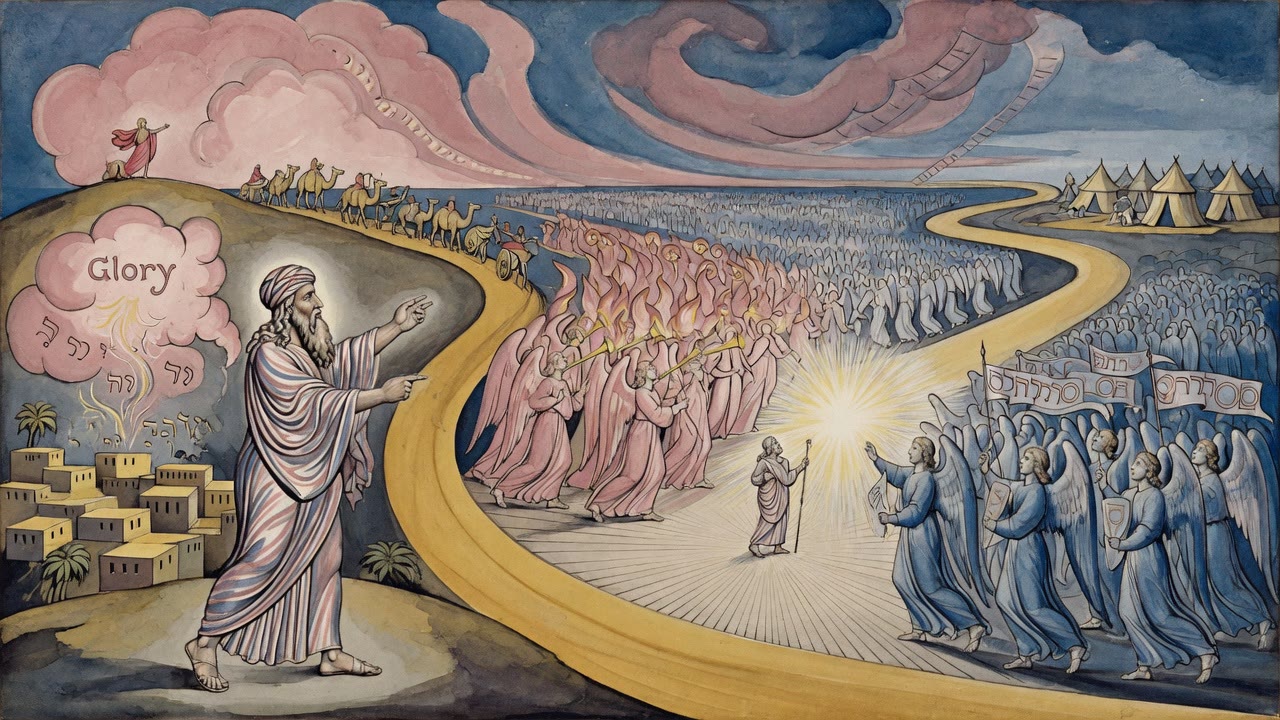
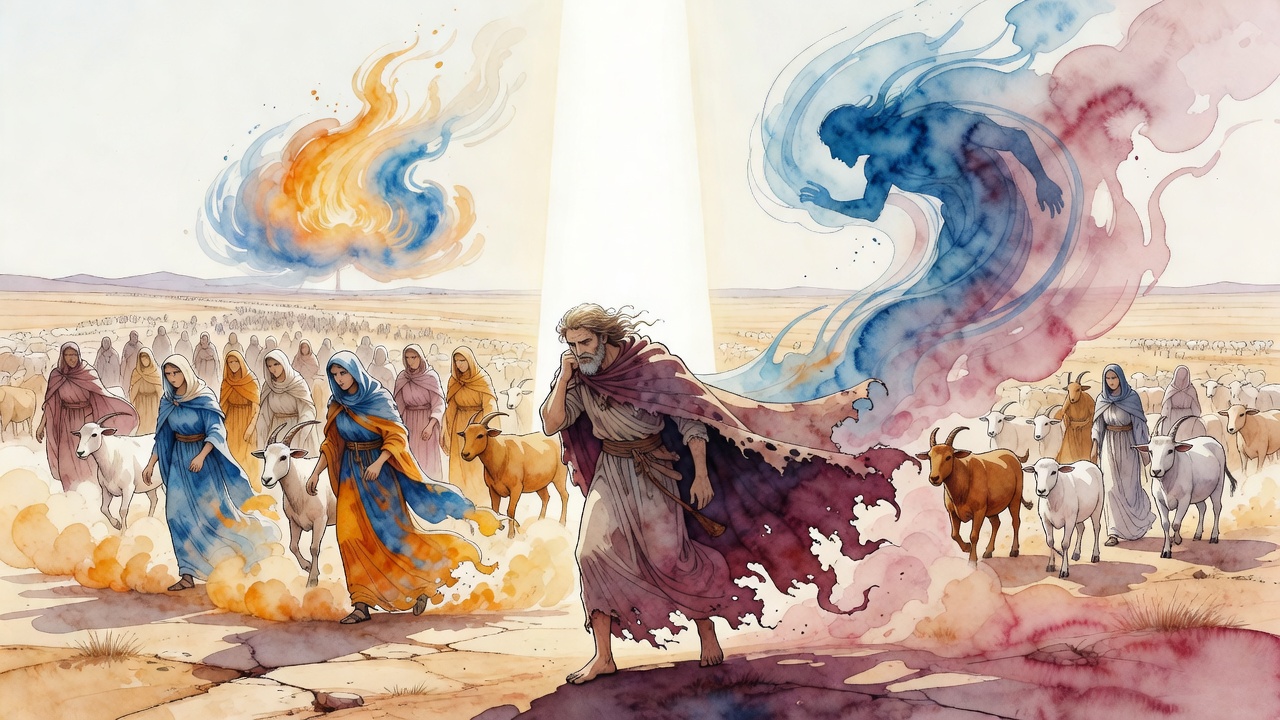
He moved while the camp still slept. Wives. Children. Flocks mottled by years of careful breeding under heat and frost. The road back toward Canaan rose under his feet like a debt finally called. He had come with a staff. He left with a nation in embryo, and with the sound of cousins' envy still in his ears.
Rachel stole the teraphim. Laban would chase. Angels would meet him later at the border of danger. None of that had begun yet. First there was only the decision not to wait for hands to follow words.
The Brother Who Compounded Trouble
Years earlier, another brother had faced a family problem and chosen the fool's path. Esau saw that the women of Canaan displeased his father Isaac (Genesis 28:8). So he married a daughter of Ishmael. Trouble stacked on trouble, a patch sewn with the wrong thread. The path of a fool is straight in his own eyes, but the one who listens to counsel is wise (Proverbs 12:15).
Jacob's path had been the opposite from the first night of flight. When Rebekah heard Esau threaten murder, she brought Jacob to Isaac. Isaac sent him to Paddan-Aram with a blessing and a command: marry a daughter of Laban, your mother's brother. Jacob listened. He went. He endured twenty years under a dishonest uncle, building a family from the wrong daughters in the wrong order, and still he kept the covenant at every stage.
Same father. Same mother. Same blessings available to both sons. Two different answers to counsel. One son trusted his instincts and multiplied error until the house filled with foreign wives and old grudges. The other trusted the voices around him and walked the harder road toward the name he would carry across a river at night.
The Moon's Escort
On the road under stars, the sky offers its own parable of smallness rewarded. Scripture shrank the moon, then added almost in passing, "and the stars." The sages catch the gift hidden in the afterthought. Picture a king with two governors. One holds a whole province. The other accepts a single city. Because that second governor took the lesser post, the king rules he shall never travel alone. Council and crowds escort him out and home.
So with the moon. She agreed to rule the night, the dimmer shift, the silver work while the sun kept the day. For that modesty, heaven surrounds her. When she rises the stars rise with her. When she sets they set with her. A glittering retinue for the one who made herself small.
Jacob had made himself small in Laban's house for twenty years. He had accepted the lesser seat, the delayed wages, the switched brides, the accusation that would one day come from Laban's sons. The midrash finds the same pattern in names and blessings: Joktan lowered himself and received thirteen founding families. Jacob crossed his hands to bless Ephraim, the younger, ahead of his brother, because Ephraim too made himself small and earned the firstborn's portion.
Leaving Beer-Sheba, Returning as Israel
Jacob left Beer-sheba with nothing and would come back with twelve sons and the name Israel. Esau acquired wives and stayed where he was, rich in livestock and poor in the covenant's forward motion. The contrast is almost cruel in its clarity. Listening looks like weakness until the night you hear the whispers and choose the road instead of the argument.
The sons of Laban kept their version of the story: a nephew who became rich at their expense. Jacob kept the years in his bones: heat on the back of the neck, frost in the watches, sleepless counting of lambs, the later angel waiting with a grip that would not let go. He did not wait for envy to grow hands. He put his household on the animals and pointed them west while the house still believed itself the center of the world.
Smallness is not the same as silence forever. Smallness is the refusal to claim a throne that is not yours, so that when the real blessing comes, the hands that receive it are empty enough to hold it.
← All myths