5 min read

Jacob Kept Time by the Moon Against Esau's Sun

Moses could not find the new moon over Egypt. It had been born too late in the day for any eye. A finger came out of the dark and pointed at it.

Curated by Arthur · Told by Maggid ·
Table of Contents
  1. Heaven Put On a Prayer Shawl
  2. The Brother Who Counted by the Great Light
  3. The Morning They Went Out to Gather
  4. A Finger Pointed at Jacob's Bier
  5. A Thing Never Done Before

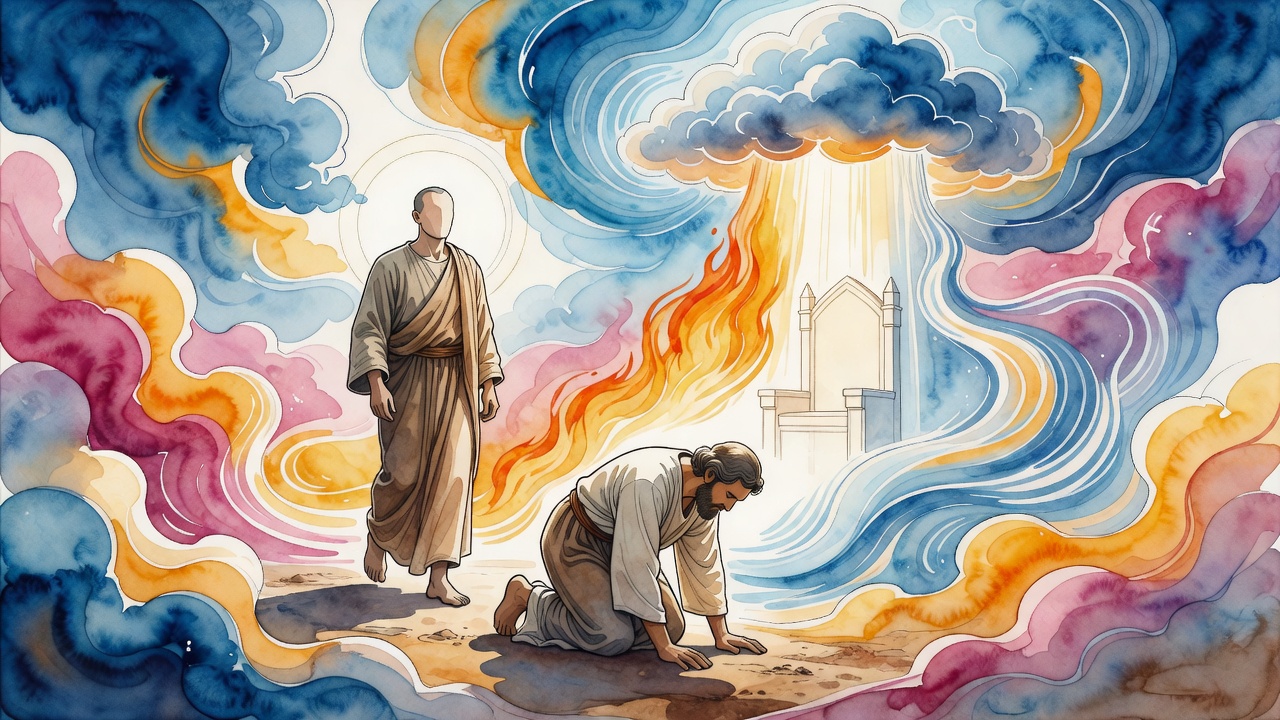
Moses stood in Egypt with his head tipped back and could not find the moon. A month born before the sixth hour still leaves a thread for the eye to catch. This one had been born after, and the sky over the brickyards gave up nothing.

Jacob Kept Time by the Moon Against Esau's Sun Click for full size

Then a finger came out of the dark and pointed. "This month," God said.

Moses followed the line of it, and there she was, a hairline of light exactly where he had been staring at nothing. The people were still slaves. No sea had split, no plague had finished its work, and the first thing they were handed was a clock. "You count by it," God told them. "The nations of the world do not."

Heaven Put On a Prayer Shawl

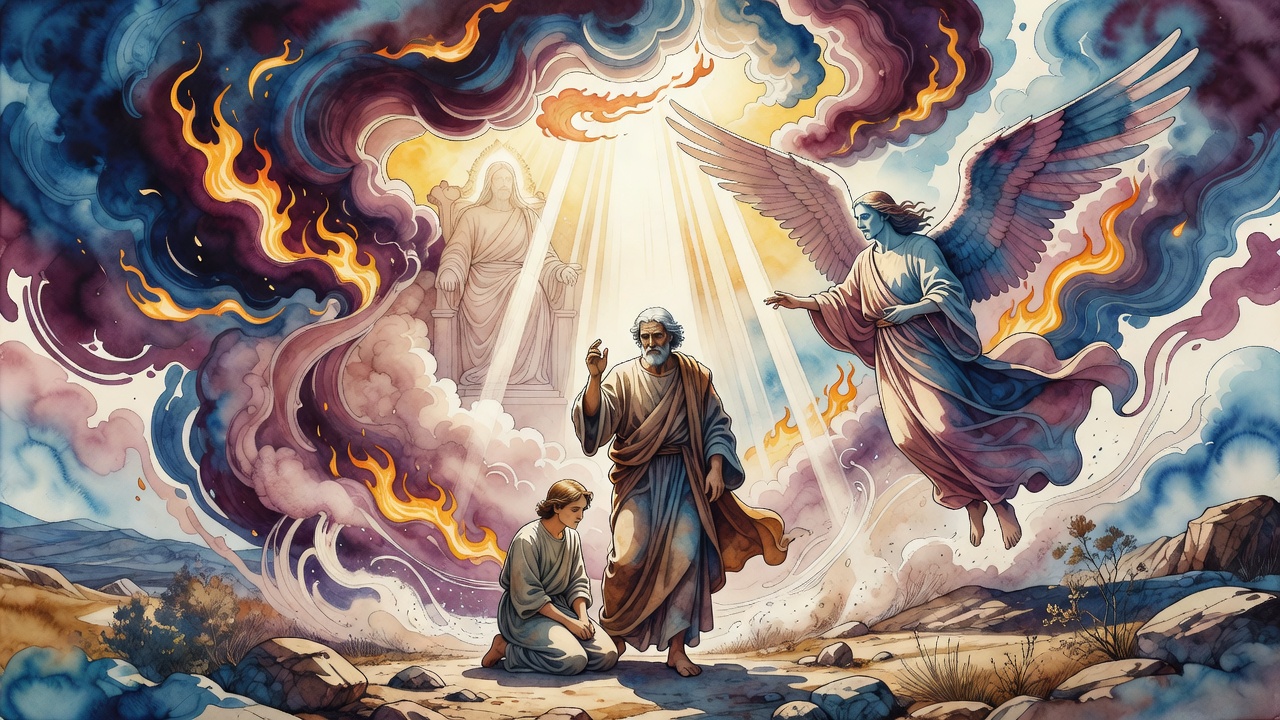
Then the Holy One wrapped Himself in a shawl with fringes at its corners, the way an old judge wraps himself before a court sits. He stood Moses at one side of Him and Aaron at the other. He called in Michael and Gabriel and made them the two witnesses who come down from a hill to swear that the new moon has been seen.

Then He examined them the way a court examines men who might be mistaken, or lying.

"How did you see the moon? Before the sun or after the sun? To its north or to its south? How high was it? How far did it lean? How wide was it?"

The angels stood and answered every question. When it was done He gave the ruling.

"In this order My children will sanctify the month below. By an elder. By witnesses. By a fringed shawl."

Centuries of small rooms were folded into that sentence. Two men walking in dusty from a hilltop, old men in shawls asking how high and how wide, and a month beginning because the answers held.

The Brother Who Counted by the Great Light

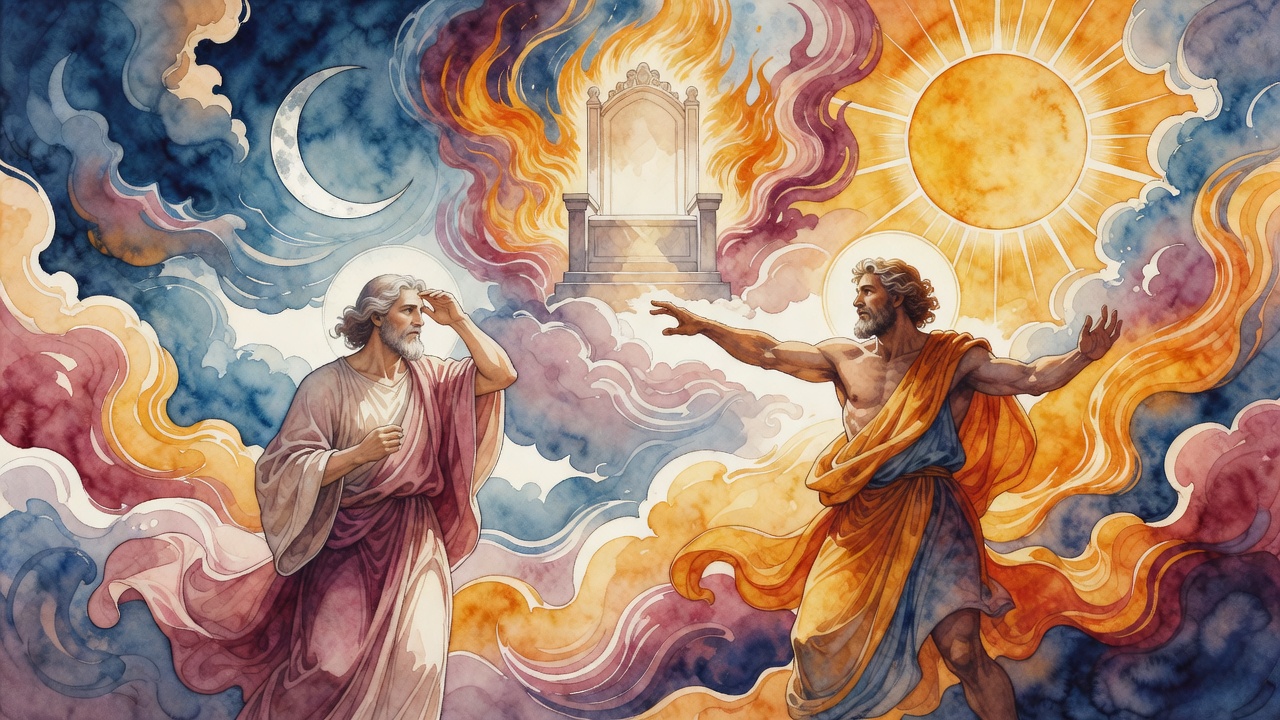
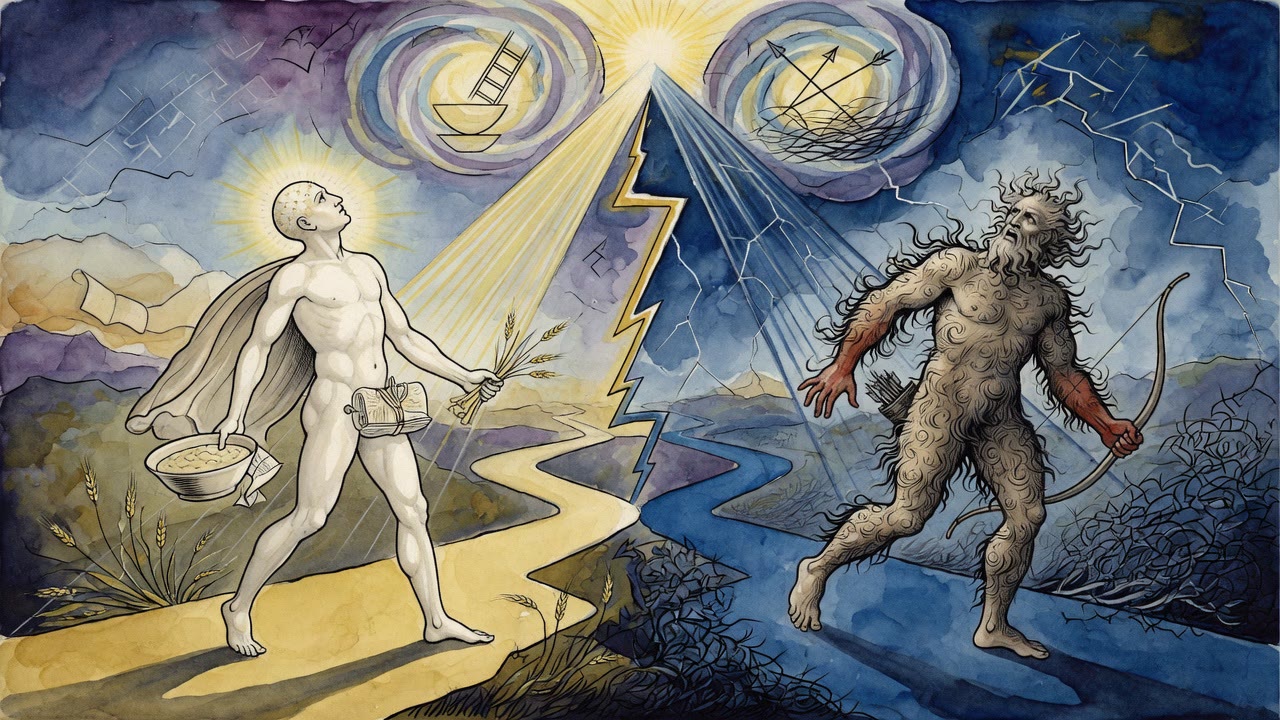
Rabbi Yehudah son of Rabbi Ilai had a plain rule for why Israel got the smaller light. The great measure themselves by what is great, and the small by what is small. Esau is the big man of the world, so he counts by the sun. Jacob is the younger brother, so he counts by the moon.

Rav Nahman refused to hear that as a demotion. "This is a good sign," he said. "The great light rules the day and has no power at night. The small light rules the day and the night both. Esau holds this world. Jacob holds this world and the world that comes after it."

He pushed the comparison one step further, into something closer to consolation. While the great light is blazing, nobody notices the small one at all. Let the great light sink and the small one is finally seen. So while Esau's light blazes, Jacob's goes unnoticed. When Esau's light goes down, Jacob's is seen. "Arise, shine" (Isaiah 60:1).

The Morning They Went Out to Gather

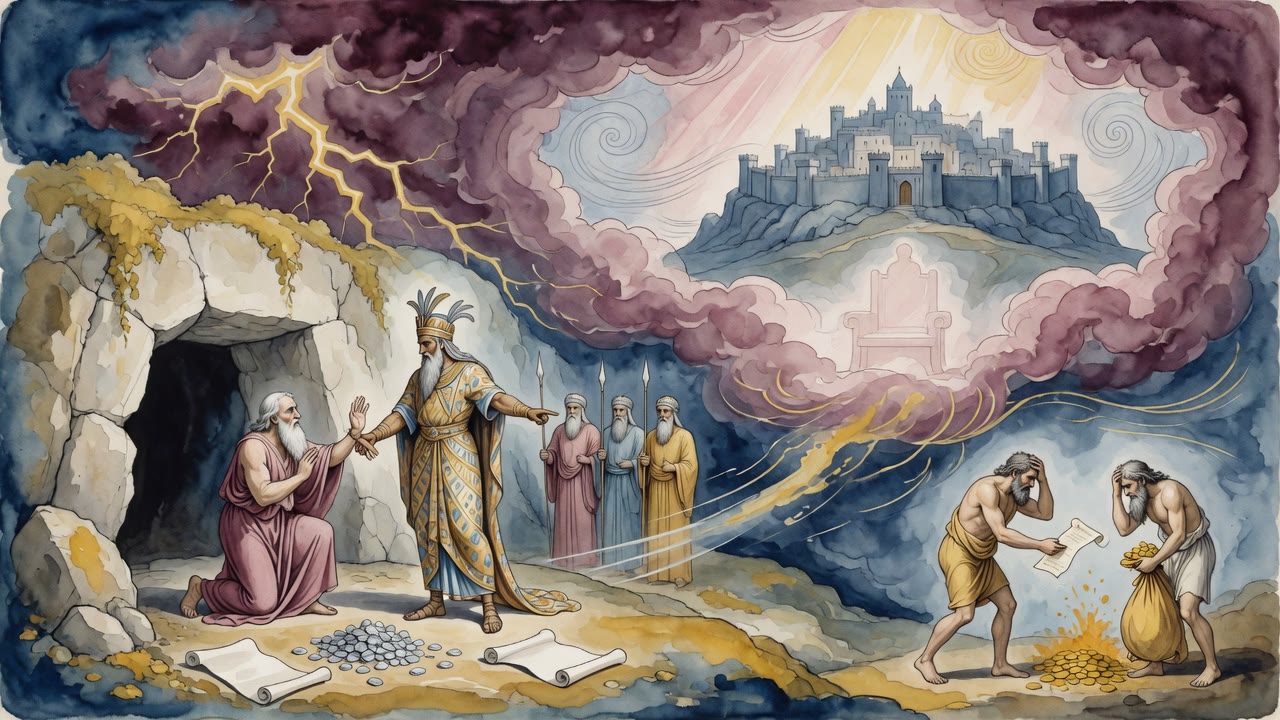
The younger brother's inheritance had no fence around it. Abraham was told to get up and walk the land, its length and its width, a country a man could pace off (Genesis 13:17). Isaac was told all these lands, to him and to his seed (Genesis 26:3). Jacob was told he would break out to the west and the east and the north and the south (Genesis 28:14). No edge anywhere.

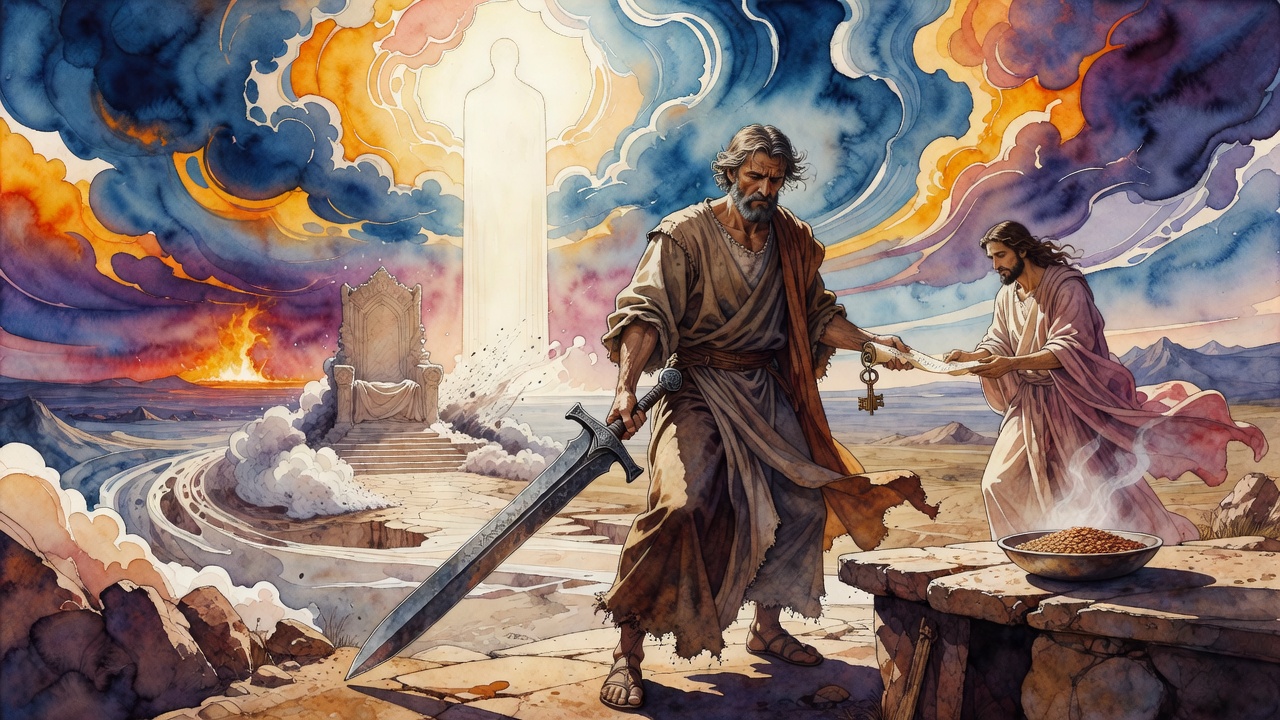
Rabbi Yehudah named the price on it. Had Israel kept the very first Sabbath after they were told to keep it, no empire would ever have owned them. Instead, on the seventh morning some of them went out with baskets to gather manna and found the ground bare (Exodus 16:27). The next thing written after that is Amalek, arriving to fight at Rephidim (Exodus 17:8).

One day not kept. One army at the edge of the camp.

A Finger Pointed at Jacob's Bier

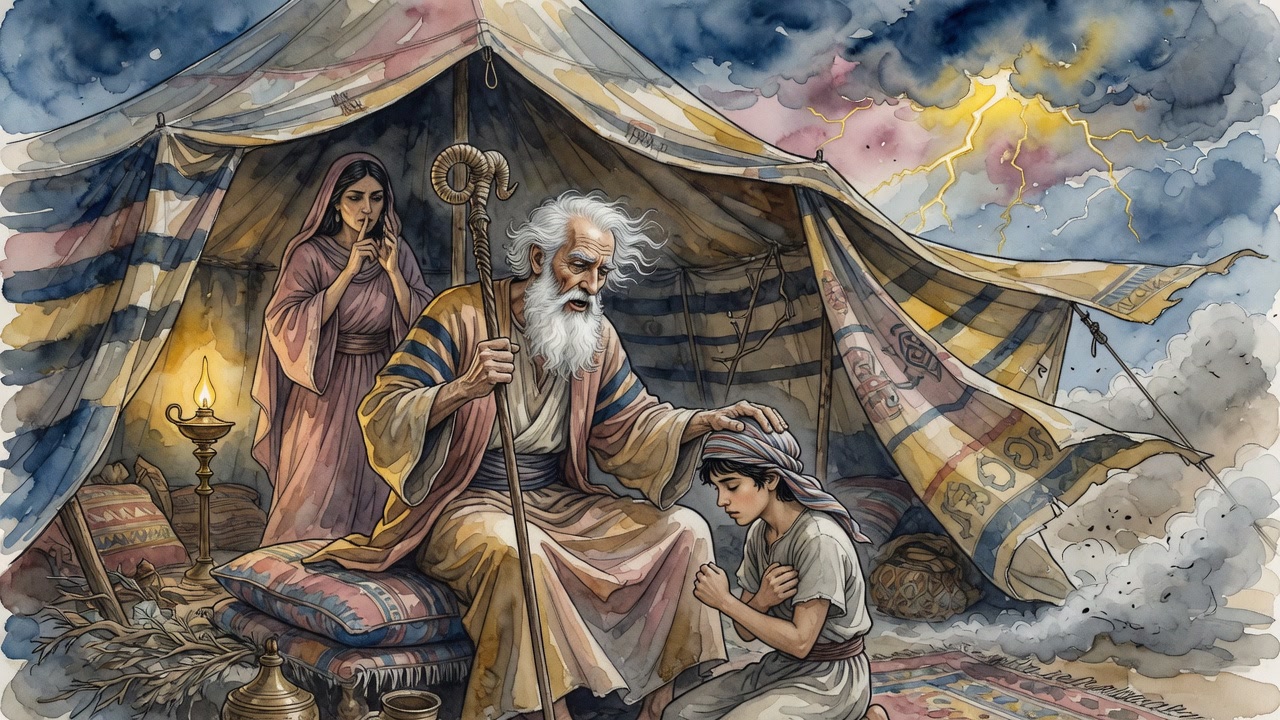
Long before any of that, a funeral had crossed Canaan. Jacob's body was going home to the cave, and the people of the land came out to look at the mourning (Genesis 50:11). The sages argued over how little they actually did. Rabbi Eleazar said they loosened their belts. Resh Lakish said they untied the knots at their shoulders. The Rabbis said they only straightened up as the bier went by. Rabbi Yudan said they did nothing whatever except lift a finger and point at it.

No coin was spent. Nobody walked a step out of his way. And when Israel came up out of Egypt, the road that ran through that country was held back from them, because a finger lifted at a coffin was still owed and heaven does not forget a debt that small (Exodus 13:17).

A finger pointed at a bier bought a nation a detour generations later. A finger pointed at an invisible moon started its calendar.

A Thing Never Done Before

God named the gift plainly before the first month was over. "I am making something new for you. I have never taken one nation out from inside another nation. For you I am doing this."

Outside the brickyards the sliver Moses could not find on his own had already begun to fill.


← All myths

From the tradition

Sources

3 sources

The texts behind this telling. Some cards carry a translation of the source; others are our own retelling of it, and each card says which. Every card links out to the original.

Yalkut Shimoni on Torah 191:2Yalkut Shimoni on Torah

Translation of the source text.Torat Emet (Yalkut Shimoni) · CC-BY-NC

"This month shall be for you" (Exodus 12:2): you count by it, but the nations of the world do not count by it. Rabbi, in the name of Rabbi Yehudah son of Rabbi Ilai: it is the way of the world that the great one reckons by the great and the small one reckons by the small. Esau, who is the great one, reckons by the sun, which is great; and Jacob, who is the small one, reckons by the moon, which is small. Rabbi Nahman said: this is a good sign. The great one rules by day but does not rule by night. So the wicked Esau rules in this world but does not rule in the world to come. The small one rules by day and by night. So Jacob rules in this world and in the world to come.

Rabbi Nahman said: as long as the light of the great one shines, the light of the small one is not noticed; once the light of the great one sets, the light of the small one becomes noticed. So as long as the light of Esau shines, the light of Jacob is not noticed; once the light of Esau sets, the light of Jacob becomes noticed, as it is said, "Arise, shine" and so forth (Isaiah 60:1).

"This month." Rabbi Shmuel bar Abba said: any new moon born before midday, there is power in the eye to see it; from midday onward there is no power in the eye to see it. And that month which the Holy One, blessed be He, spoke of to Moses was born after midday, and there was no power in the eye to see it; so the Holy One, blessed be He, showed it to him with a finger and said to him, "This month."

Rabbi Aha in the name of Rabbi Shmuel bar Nahmani: in the year Israel went out of Egypt, the months of the calendar year and the months of the solar season were equal. Rabbi Hiyya in the name of Rabbi Yohanan: the Holy One, blessed be He, wrapped Himself in a fringed prayer shawl, set Moses on one side and Aaron on the other, called to Michael and Gabriel and made them like witnesses of the new moon. He said to them: how did you see the moon, before the sun or after the sun, to its north or to its south, how high was it, how much was it inclined, and how wide was it? He said to them: in this order shall My children sanctify the new moon below, by an elder, by witnesses, and by a fringed prayer shawl. Another interpretation, "This month shall be for you": the Holy One, blessed be He, said to them: I am doing a renewal of matters for you; in the past I did not redeem one nation from within another nation, but for you I am renewing this thing.

Full source
Hebraic Literature (Harris, 1901), Rabbinical AnaHebraic Literature (1901)

Retold in our words. Read the original at the link below.Project Gutenberg eBook #14368, Hebraic Literature · PD-US-pre-1929

The rabbis noticed a quiet escalation in the promises made to the patriarchs about the land. To Abraham, God said, “Arise, walk through the land in the length of it and in the breadth of it; for I will give it unto thee” (Genesis 13:17). A surveyed country, walked and measured.

To Isaac, God said, “Unto thee, and unto thy seed, I will give all these countries” (Genesis 26:3). The promise grew.

To Jacob, God said something bigger still: “Thou shalt spread abroad to the west, and to the east, and to the north, and to the south” (Genesis 28:14). Jacob’s inheritance had no fixed boundary. It expanded outward in every direction.

Rabbi Yehudah drew a sharp lesson from this. Jacob’s children, Israel, received the most expansive promise — but they had to prove they could hold it. Had Israel strictly observed the very first Sabbath after the commandment to sanctify the seventh day, the rabbi taught, they would have been spared the long centuries of captivity. The Torah hints at this: “It came to pass on the seventh day, that there went out some of the people to gather mannah, and they found none” (Exodus 16:27). They broke the Sabbath. And the very next chapter opens, “Then came Amalek, and fought with Israel in Rephidim” (Exodus 17:8).

One Sabbath broken, one enemy at the door. The geography of the promise is boundless, but it rests on the observance of a single day.

Full source
Yalkut Shimoni on Torah 227:2Yalkut Shimoni on Torah

Translation of the source text.Torat Emet (Yalkut Shimoni) · CC-BY-NC

Another interpretation: "for it was near" (Exodus 13:17). Near was the kindness that the Canaanites did with our father Jacob. This is what is written, "and when the inhabitant of the land, the Canaanite, saw" the mourning (Genesis 50:11). Rabbi Eleazar says they loosened their belts. Rabbi Shimon ben Lakish said, because they untied the knots of their shoulder-garments. And the Rabbis say, because they straightened up their posture. Rabbi Yudan says, because they pointed with the finger. Now are these things not an argument from minor to major? If the Canaanites, who did no kindness with their hands nor with their feet, but only because they pointed with the finger, were saved from punishment, then Israel, who do kindness with their great ones and with their small ones, all the more so.

Full source