The Smooth Man and the Hairy Man Who Each Inherit a World
Jacob's skin and Esau's arms were more than a disguise. Two words sorted two brothers into two eternities before either one knew it.
Table of Contents
 Click for full size
The Objection at the Tent Door
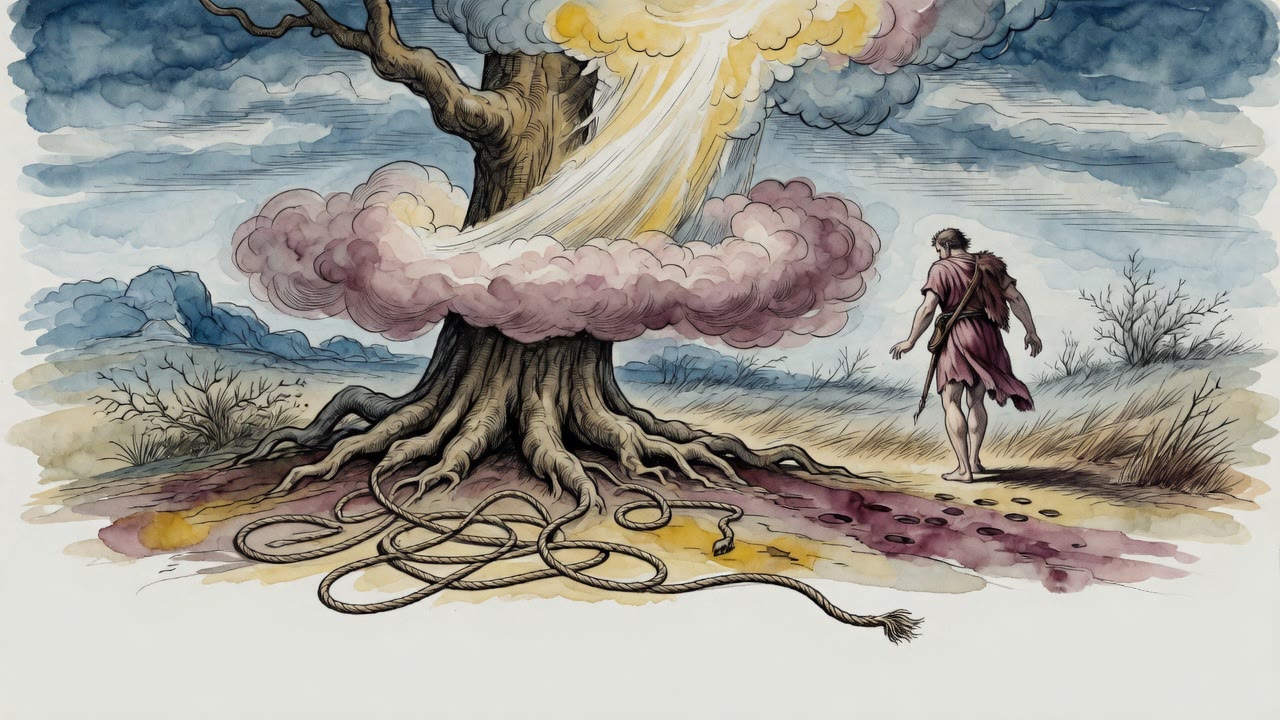
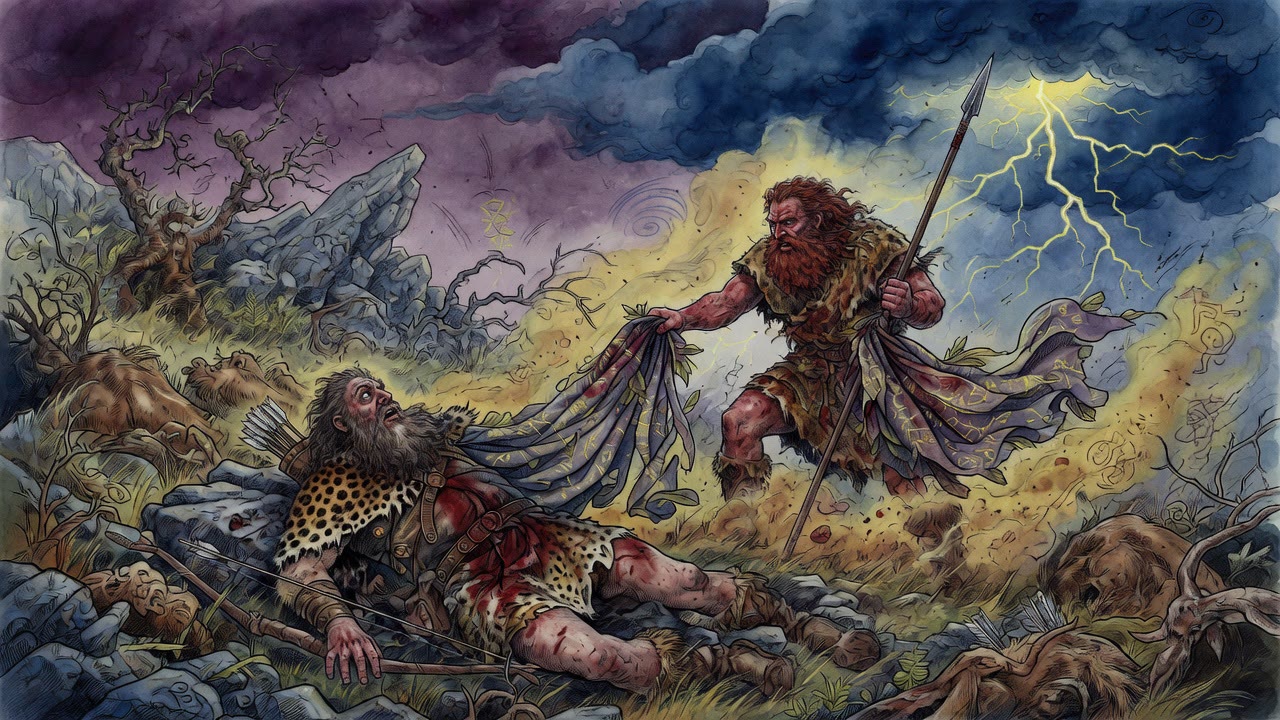
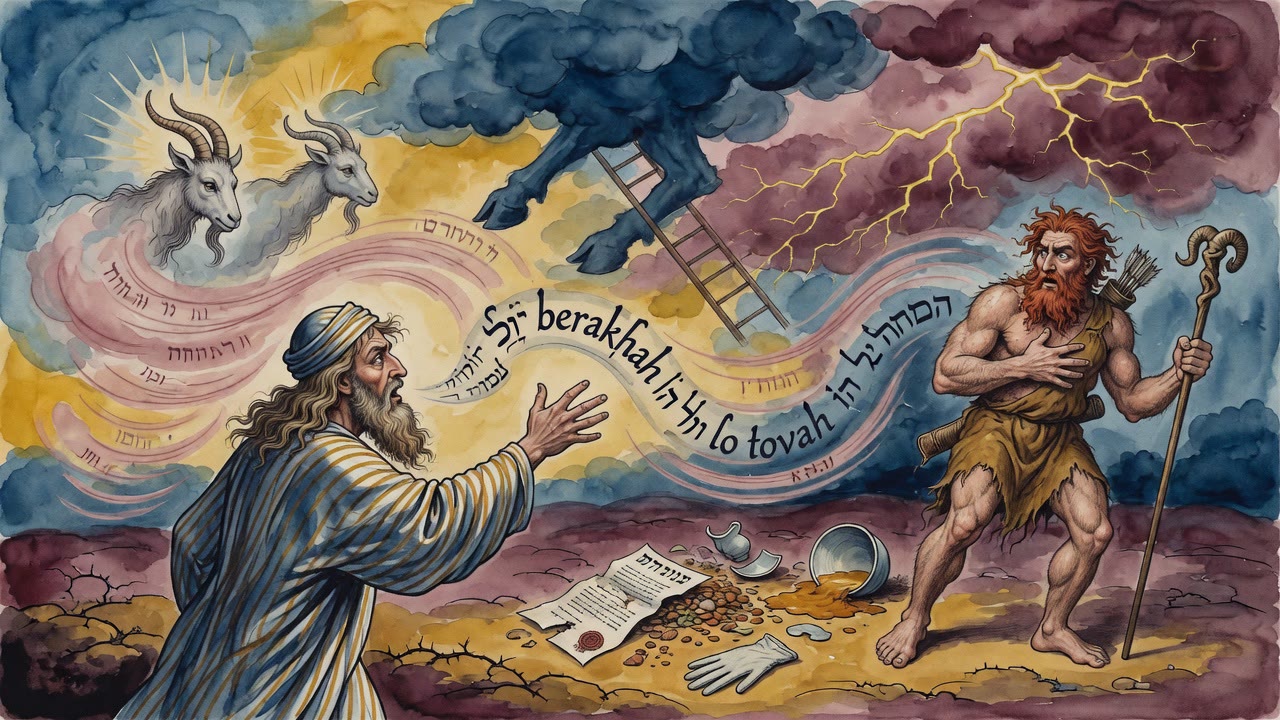
Rebekah had the plan laid out and Jacob was balking. Not from moral scruple, not yet, but from the logic of fear. He stood at the door of the tent running the calculation and reaching for the only argument that felt safe: my body will betray me. His brother was a hairy man. He was smooth. One touch from his father's blind hand and the whole scheme would collapse, and he would walk away with a curse instead of a blessing.
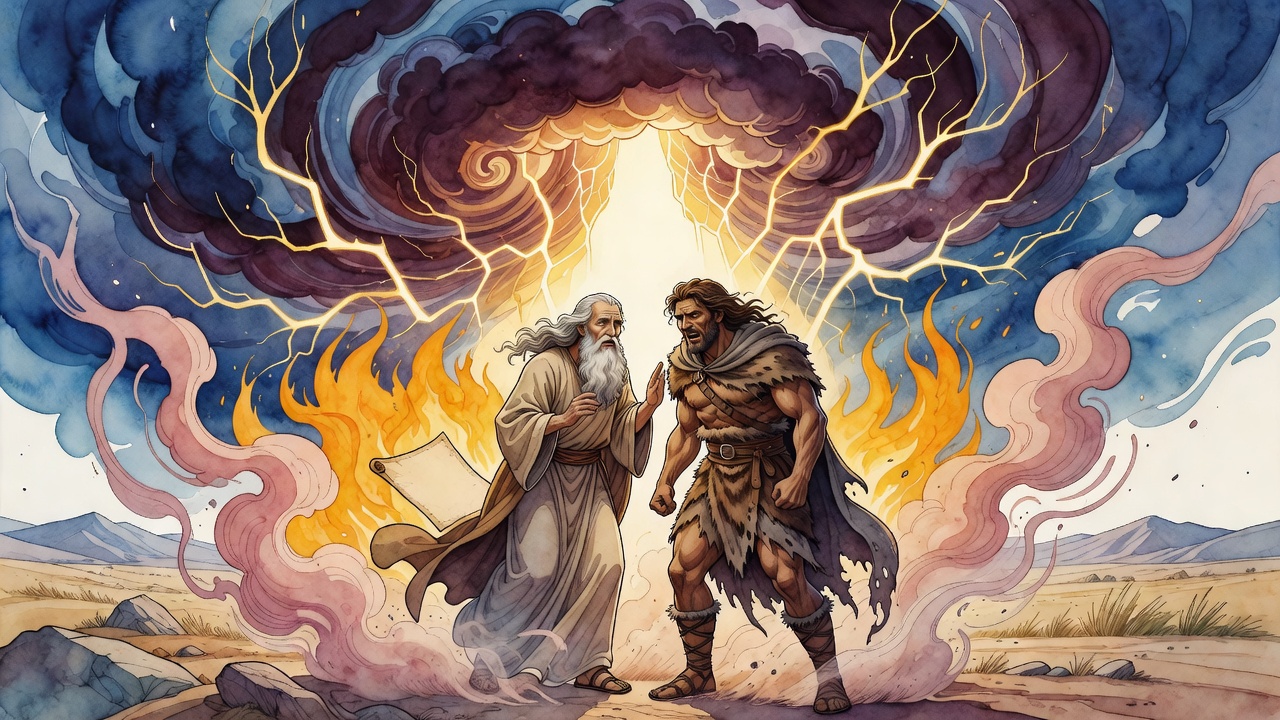
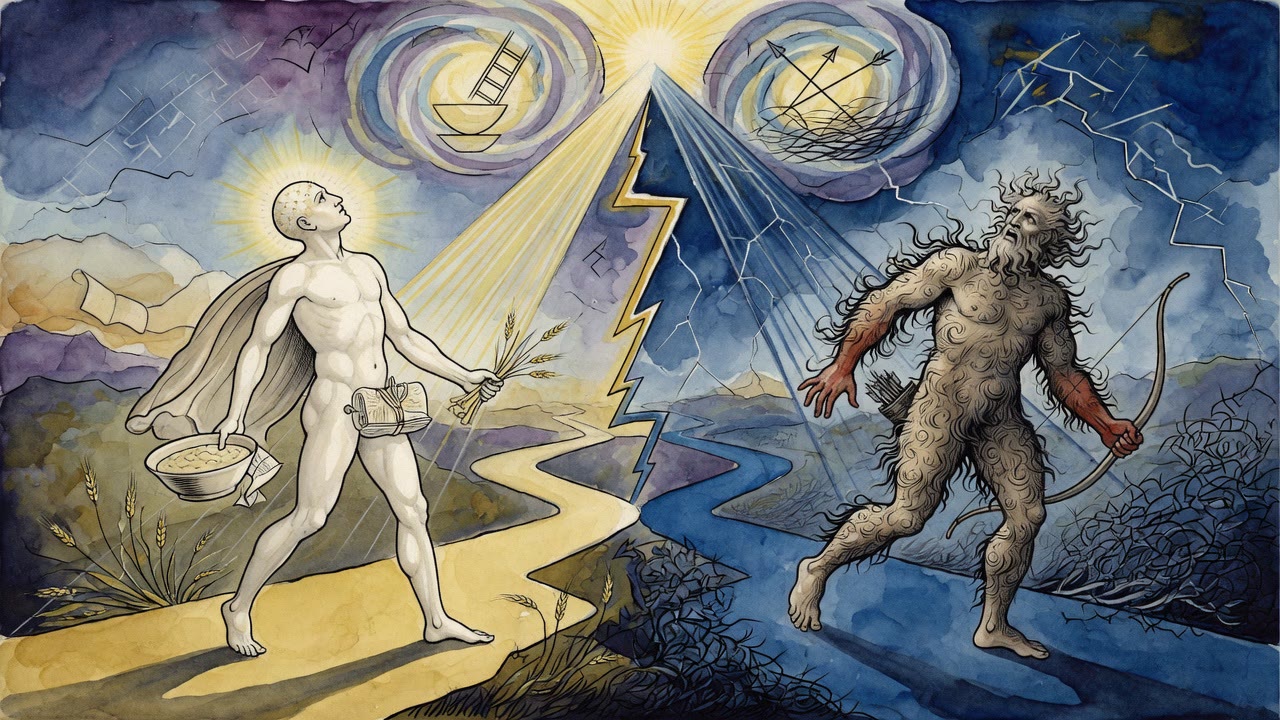
He said it aloud: my brother Esau is a hairy man, ish sa'ir, and I am a smooth man, ish chalak. He meant it as a practical objection. The medieval sages of Midrash Aggadah, the Torah commentary edited in the recension of Solomon Buber around the twelfth century, heard something far larger. They heard a man inadvertently announcing the destiny of his entire line and his brother's entire line in two adjectives.
Because sa'ir, hairy, is also the word Isaiah used for the capering creatures that would haunt Babylon's ruins when empire had reduced the city to rubble. The se'irim, the wild haunting things, demons of desolate places, performing their grotesque dances among the broken stones. So when Jacob described his brother's arms, the word he reached for was already stained with desolation. Esau was not just rough-skinned. He was kin, in the deep grammar of the Torah's language, to the creatures of the waste.
Two Words, Two Eternities
And I am a smooth man. Chalak, smooth, lands differently in the prophets. The Lord's portion is His people, Deuteronomy sings, Jacob the lot of his inheritance. The word for lot there is chevel, but the resonance runs into a different verse: smooth things, the easy path, the portion set aside. Midrash Aggadah drove the point home by lining up the two destinies explicitly. Esau's portion is the wilderness, the place the hairy ones dance. Jacob's portion is the God of the world. Two adjectives, one sentence, and the whole geography of eternity sorted.
The sages did not miss Esau's own forty-year arc. He married at forty, which the Torah notes without comment, and the medieval compilation took the note seriously. Isaac had married at forty, and the comparison was intentional. Isaac's forty years of waiting were spent in the worthiness of preparation. Esau's forty years were spent in the worthiness of a different kind of preparation, the kind that ends in Judith and Basemath, Hittite women whose incense smoke blinded Isaac but could not touch Rebekah, because the women who married Esau could only damage the eyes that had already begun to fail. Rebekah saw clearly to the end.
The Smoke That Blinded One Parent and Not the Other
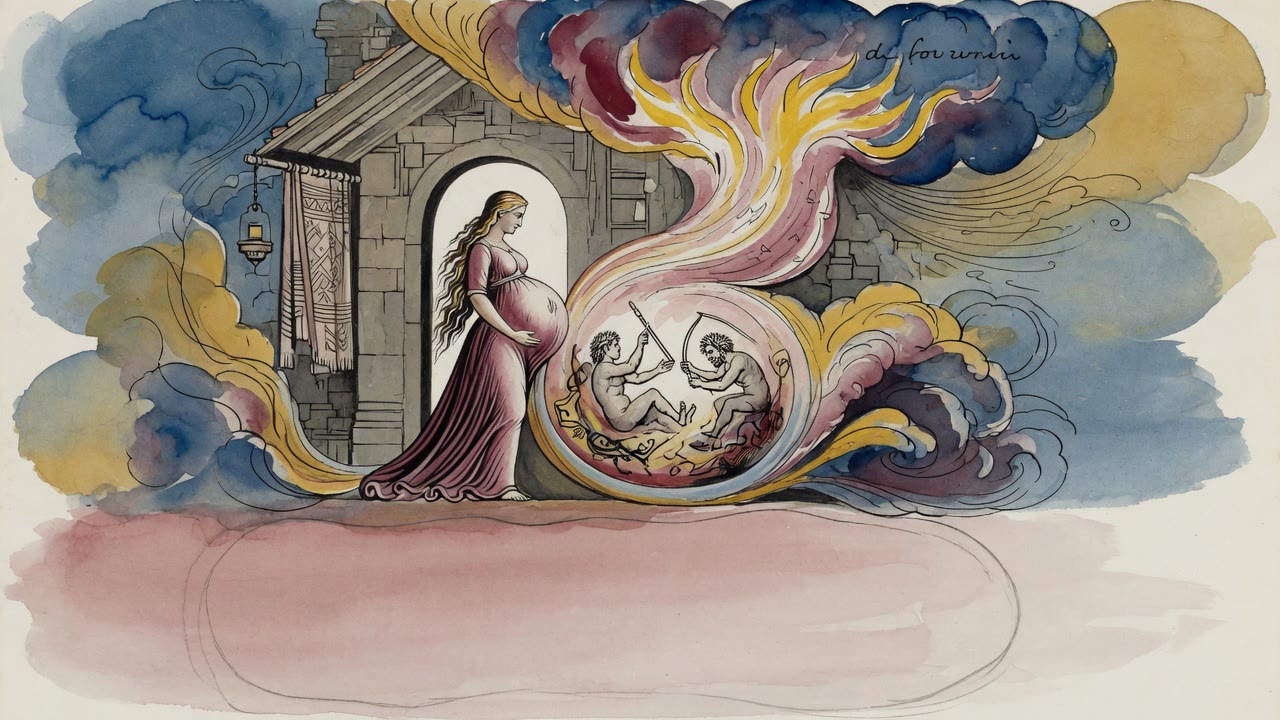
Why did the incense of Esau's wives harm Isaac's eyes but leave Rebekah's sight intact? Because Isaac's blindness was already written in his character, the rabbis said, not in cruelty but in recognition. He was a man of internal vision, an olah temimah, a perfect burnt offering that had been laid on the altar at Moriah, and the fire that had not consumed him had turned his gaze inward. The world of surfaces was already receding from him. The smoke of idolatrous offerings that Esau's wives burned in the home only hastened what was already underway.
Rebekah had been raised in Aram, among idolaters, and had breathed that smoke all her childhood and come out unscathed. She already knew exactly what those women were burning and what it cost, and the knowledge kept her eyes open. She was not shocked by the pollution because she had learned to see through it long before she came to Isaac's tent.
The Arithmetic of Jacob's Years
One detail the rabbis did not let pass: when Jacob arrived at Laban's house in Paddan Aram and announced that his days were full, he counted to eighty. He had spent fourteen years in the house of Shem and Ever before going down to Laban. Those years of study, the sages noted, were years in which the angel of death had no jurisdiction over him, because study of Torah gives a kind of protection that even time cannot easily breach. So Jacob arrived at Laban's door already full of years but still young in a way Esau, who had spent those same years among the se'irim of the field, was not.
Why Esau Is Called Brother and the Land Passed to Jacob
The story ends with a puzzle that the rabbis pressed like a bruise. Israel is commanded not to despise the Edomite, because Esau is your brother (Deuteronomy 23:8). And yet the tradition is also clear that the land Esau received, the land of Seir, was given to his people only in exchange for the land of Canaan, which he voluntarily released to Jacob's line. The brotherhood is real. The brotherhood was the transaction. Because Esau gave up one world for another, the two houses were bound to acknowledge each other across every generation of enmity.
The Midrash Aggadah refused to let that tension dissolve. You call him brother, it insists, because he is. And the land is yours, it insists, because he signed it away with his own mouth. Two men came from one womb and sorted themselves into two eternities with two adjectives, and every argument over inheritance that followed was already settled the day Jacob stood at his father's door and said, without meaning to, exactly what each of them was.
← All myths