5 min read

Jacob of Kefar Nibburaya Bends for the Lash

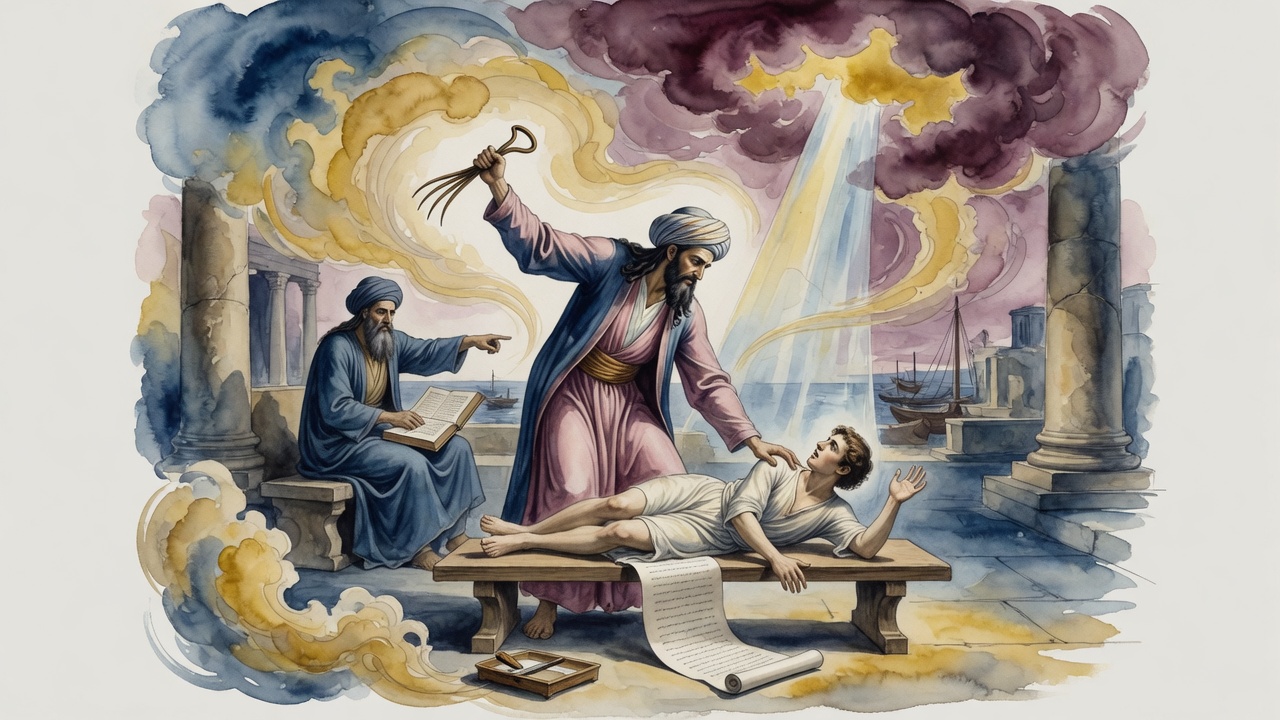
In Tyre a sage rules a mixed-birth son must be circumcised on the Sabbath. Rabbi Haggai lays him down for lashes, traps him with law, and hears him yield.

Curated by Arthur · Told by Maggid ·
Table of Contents
  1. Word Reaches Tyre
  2. The Trap in the Question
  3. Strike Your Blow
  4. Wisdom That Still Meets a Wall
  5. Authority Without a Dynasty
Jacob of Kefar Nibburaya Bends for the Lash Click for full size

Word Reaches Tyre

Word reached Tyre that Jacob of Kefar Nibburaya had issued a ruling. A son of Israel had lain with a gentile woman. She bore him a son. Markets still opened. Ships still unloaded. And a legal claim cut across the Sabbath. Jacob declared the child must be circumcised on the holy day, as for any Israelite. For proof he leaned on the verse about declaring pedigrees after their families. He thought lineage language could open a sealed day.

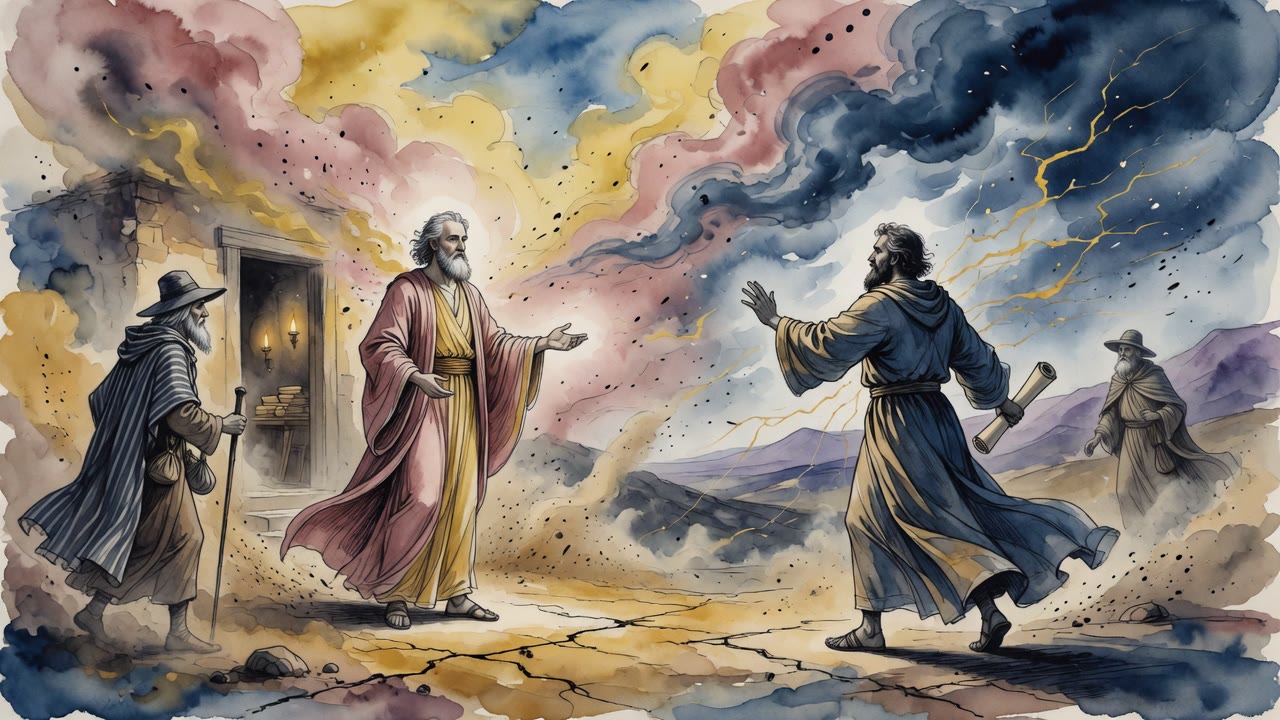
Rabbi Haggai heard and summoned him. The room was not a theater. It was a court with a whip ready. "Lay him down for lashes." Jacob protested, heat rising. "Shall a man be whipped for speaking a word of Torah?" "You ruled wrongly," said Haggai. "Lie down and listen." Speech that errs still costs the body when the day of rest is at stake.

Outside, Tyre kept trading. Inside, a single ruling threatened to treat the Sabbath as soft clay. Haggai meant to harden it again before the crack spread from one child to a custom.

The Trap in the Question

Haggai set a trap of pure law. "If a gentile came to convert on the Sabbath or on the Day of Atonement, would you profane the day to circumcise him?" "Never," Jacob answered. "Only for the son of an Israelite." The distinction he needed for his pride was already crumbling under a cleaner case. "And from where," pressed Haggai, "do you know even that the Israelite son may push the Sabbath for circumcision?"

The proof-chain tightened. Ezra's covenant put away foreign wives and all born of them. Then the teaching of Rabbi Yochanan in the name of Rabbi Shimon ben Yochai: Scripture warns that an intermarried son will turn your son away from Me. The child of an Israelite woman is your son. The child of a gentile woman is her son, not yours. The Sabbath knife does not race for a status the verse itself withholds. Pedigree is not a key you cut to fit every lock.

Strike Your Blow

Caught, Jacob bent low. "Strike your blow," he said, "for the lashing was good." No second defense. No appeal to crowd or cleverness. The man who had spoken Torah too quickly accepted the body-cost of being wrong in public. The lash rose. The correction entered flesh, not only memory.

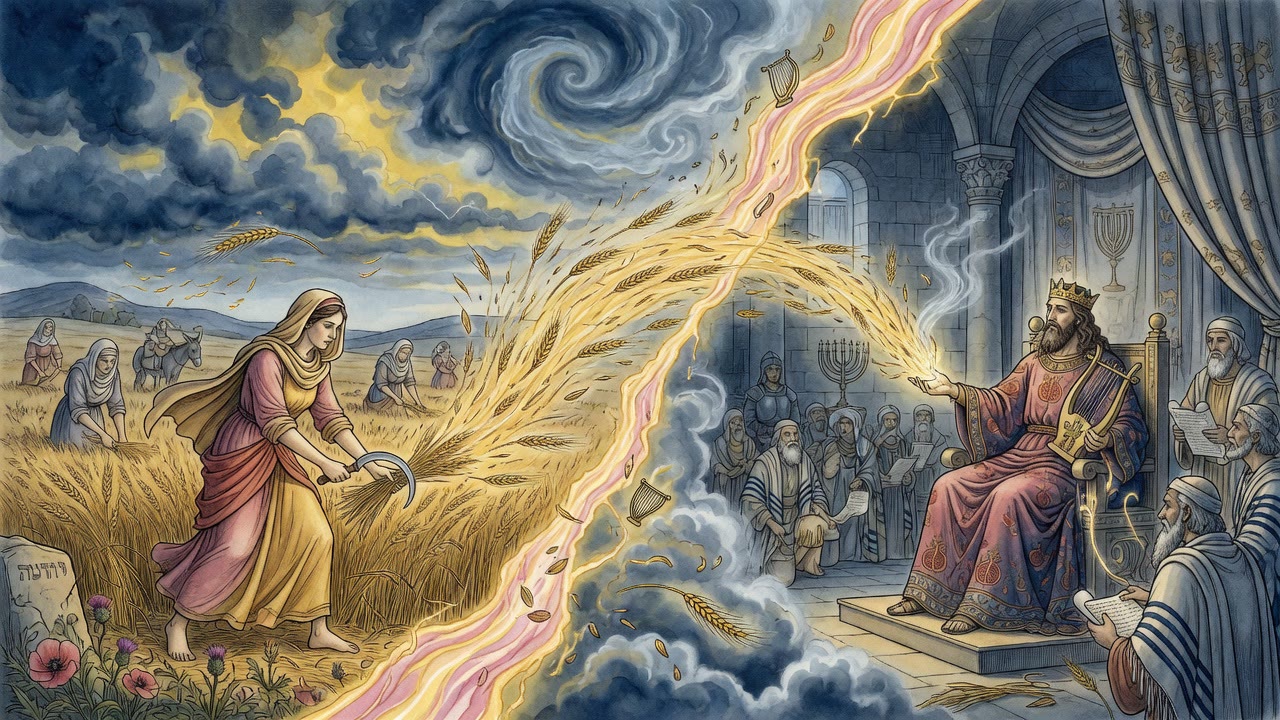
The sages recall Solomon in that hour. He mastered the heavens, read the wisdom of the East, and still confessed before the Red Heifer, "I said I will be wise, but it was far from me." Greatness is not the refusal to be corrected. Greatness is knowing when the goad has found the true furrow. A king who could outread the East still met a statute he could not force. A local sage in Tyre met a simpler wall and chose to bow.

Wisdom That Still Meets a Wall

Solomon surpassed the sages of the East, men who could read the sky and measure seasons. Still a statute without reason stopped him cold. The Red Heifer stands as a door even a king cannot force. Jacob of Kefar Nibburaya was no Solomon, yet he learned the same posture in a smaller room in Tyre: the mouth that teaches must also know how to close when a greater reading arrives.

The words of the wise are like goads. They prod into the furrow. They also straighten a student who has wandered. Malmad, mardea, darban: teaching, knowledge, understanding. A goad can be picked up and carried off. Torah, fixed like implanted nails, guards the one who accepts its bite. The lash in Haggai's court was a goad with a shorter handle and a sharper hour.

Authority Without a Dynasty

Even Moses knew the difference between a personal charge and an inheritance. Across the wilderness he could serve in white as high priest in certain hours, yet his sons took no priestly crown. Aaron's line held incense and blessing forever. Moses' greatness was his own, not a dynasty. When the Shekhinah (God's indwelling presence) descended through Aaron's hands and not through Moses' during the consecration days, Heaven itself drew a line. Service is not always transferrable. Authority is not always heritable.

Jacob of Kefar Nibburaya had no throne and no staff of miracles. He had a ruling, a lash, and a moment of bowing. That was enough to keep the Sabbath from being opened by a soft pedigree claim. The child would not be hurried under the knife on a false identity. The day stayed whole. The teacher who erred stood up corrected, and the community kept both the wound and the repair. After the lashes he walked out under Tyre's sky with a corrected mouth. In Tyre, as at Sinai's edge, the right to speak Torah includes the duty to take the blow when Torah speaks back.


← All myths
From the tradition

Sources

4 sources

The texts behind this telling. Some cards carry a translation of the source; others are our own retelling of it, and each card says which. Every card links out to the original.

Midrash Tanchuma Buber, Chukat 15:4Midrash Tanchuma Buber, Chukat

Translation of the source text.Midrash Tanchuma (Buber), Public Domain, on Sefaria · CC-BY-SA

And again Jacob the man of Kefar Nibburaya ruled in Tyre concerning a son of Israel who had relations with a gentile woman, and she bore him a son, that he should be circumcised on the Sabbath. Rabbi Haggai heard, sent, and had him brought. He said to him: From where do you derive this? He said to him: [From that which is written,] "And they declared their pedigrees after their families, by their fathers' houses" (Numbers 1:18). He said to those present: Lay him down that he may be lashed. He said to him: Shall a man who states a word of Torah be lashed? He said to him: You did not rule well. He said to him: From where? He said to him: Lie down and listen. He said to him: If one of the gentiles came to you in order to be converted on the Sabbath day, or on the Day of Atonement, does one profane the Sabbath on his account, or not? He said to him: One does not profane the Sabbath on his account [nor the Day of Atonement], but only for the son of an Israelite alone. He said to him: From where do you derive this? He said to him: "And now let us make a covenant with our God to put away all the wives and those born from them, etc." (Ezra 10:3). He said to him: From the received tradition you are lashing me? He said to him: It is written, "and let it be done according to the Torah" (ibid.). He said to him: From which Torah? He said to him: From that of Rabbi Yochanan, for Rabbi Yochanan said in the name of Rabbi Shimon ben Yochai: It is written, "Neither shalt thou make marriages with them: thy daughter thou shalt not give unto his son" (Deuteronomy 7:3), why? "For he will turn away thy son from following Me, etc." (ibid. 7:4): your son who comes from an Israelite woman is called "your son," but your son who comes from a gentile woman is not called "your son," but rather "her son." He said to him: Strike your blow, for it was good to be lashed. Solomon said: I have understood all of these, and the section of the Red Heifer I have searched out, inquired into, and examined, but, "I said, I will be wise; but it was far from me" (Ecclesiastes 7:23).

Full source
Midrash Tanchuma Buber, Chukat 11:1Midrash Tanchuma Buber, Chukat

Translation of the source text.Midrash Tanchuma (Buber), Public Domain, on Sefaria · CC-BY-SA

"And Solomon's wisdom surpassed the wisdom of all the people of the East" (I Kings 5:10). [What was the wisdom of the people of the East?] That they knew astrology, and were cunning in [the divination of] birds (tayyir), in the language of Ishmael they call a bird tayyir. Rabban Simeon ben Gamaliel said: In three things I love the Persians,

Full source
Midrash Tanchuma Buber, Beha'alotcha 25:1Midrash Tanchuma Buber, Beha'alotcha

Translation of the source text.Midrash Tanchuma (Buber), Public Domain, on Sefaria · CC-BY-SA

(Numbers 11:16:) GATHER ME [seventy men of the elders of Israel]. This is what Scripture says (Ecclesiastes 12:11): THE WORDS OF THE WISE ARE LIKE GOADS. Just as this goad brings living [creatures] into the world, so do the words of Torah bring life into the world, as it is written (Deuteronomy 30:20): FOR HE IS YOUR LIFE AND THE LENGTH OF YOUR DAYS.

[Another interpretation of LIKE GOADS:] Just as this goad directs the cow to plow, to make the furrows even, so do the words of Torah direct [those who study them] to declare the forbidden forbidden and the permitted permitted, and they show interpretations and rulings from the Torah.

THE WORDS OF THE WISE ARE LIKE GOADS. It is called by three names: darban, mardea, malmad. Why is it called malmad? Because it teaches (melammed) the cow to plow. Mardea, because it teaches knowledge (moreh deah) to the cow for plowing. Darban, because understanding (binah) dwells (dar) in it (bah). Therefore it is said: THE WORDS OF THE WISE ARE LIKE GOADS.

And should you say: just as the goad is movable, so the words of Torah are movable, the text teaches (Ecclesiastes 12:11, continued): AND LIKE IMPLANTED NAILS (masmerot). It is written [as] "like guards" (mishmarot): if you have fixed them like a nail, they are guarded, and they guard you.

Full source
Midrash Tanchuma Buber, Chukat 21:1Midrash Tanchuma Buber, Chukat

Translation of the source text.Midrash Tanchuma (Buber), Public Domain, on Sefaria · CC-BY-SA

[(Psalms 99:6): "Moses and Aaron were among His priests, and Samuel was among those who call upon His name." R. Yudan in the name of R. Yose b. R. Yehudah, and R. Berekhyah in the name of R. Yehoshua bar Korhah: All those forty years that Israel was in the wilderness, Moses was not prevented from serving in the High Priesthood. This is what is written (Psalms 99:6): "Moses and Aaron were among His priests."

And R. Berekhyah in the name of R. Simon brings it from here (1 Chronicles 23:13–14): "The sons of Amram: Aaron and Moses. And Aaron was set apart to consecrate him as most holy, he and his sons forever, to burn incense before the Lord, to minister to Him, and to pronounce blessings in His name forever; but as for Moses, the man of God, his sons were to be reckoned to the tribe of Levi." Moses is called "the man of God," but his sons were to be reckoned to the tribe of Levi.

R. Eleazar b. R. Yose said: It is plain to us that Moses served in a white robe in the wilderness. R. Tanhum b. R. Yudan said: All seven days, Moses served in the High Priesthood, but the Divine Presence did not rest through his hands; and once Aaron came and served in the High Priesthood, the Divine Presence rested through his hands. This is what is written (Leviticus 9:4): "for today the Lord will appear to you."]

Full source