4 min read

Jacob Read the Bloody Coat and Isaac Wept Too

Jacob sent Joseph toward Shechem fearing Hivite revenge. The bloody coat arrived. Holy Spirit showed an evil woman ahead. Blind Isaac wept beside him.

Curated by Arthur · Told by Maggid ·
Table of Contents
  1. Wrong Horizon
  2. The Coat Speaks
  3. Isaac's Silent Tears
  4. Two Truths in One House
Jacob Read the Bloody Coat and Isaac Wept Too Click for full size

Wrong Horizon

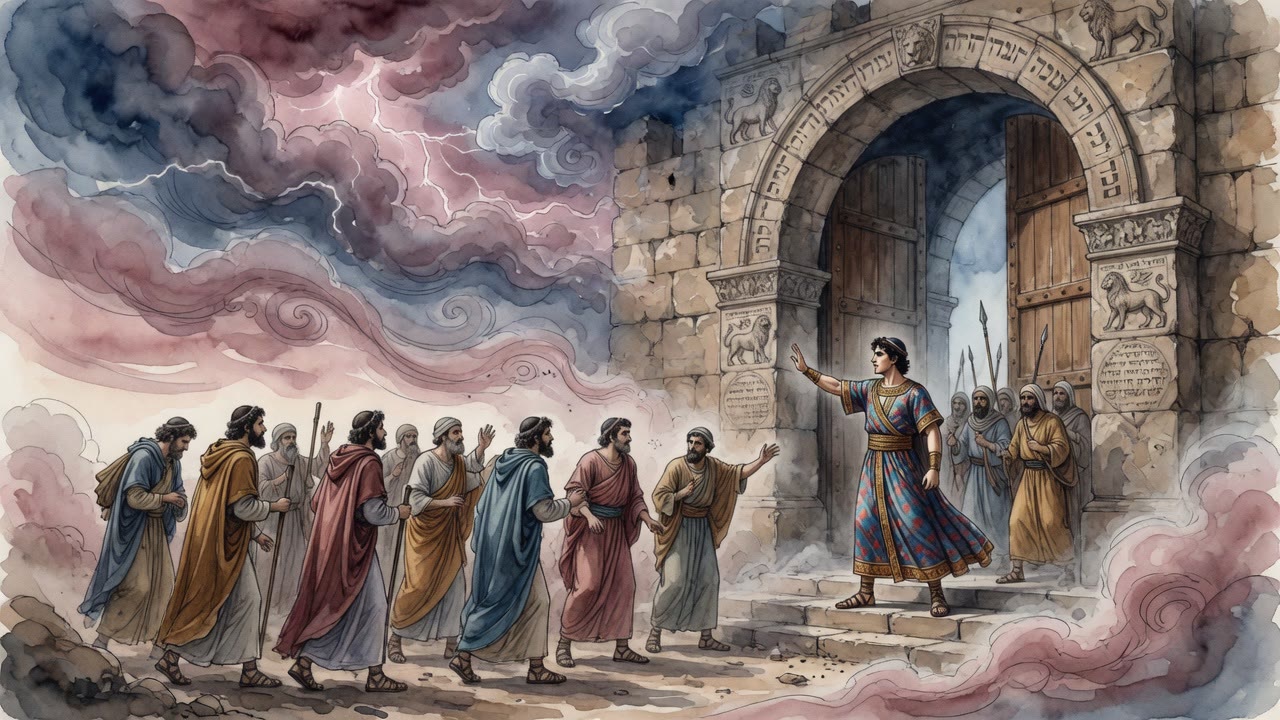
Jacob stood in Hebron and saw funerals that had not happened. His sons were grazing near Shechem, the city where Simeon and Levi had once killed every male after the matter of Dinah. Surviving Hivite clans had reason to want those brothers dead. Every hill path could hide a knife. The father could not sit in his tent without hearing swords that might still be sharp for the men who had swung them years before.

"I am afraid lest the Hivites come and smite them, because they smote Hamor and Shechem and the inhabitants of the city."

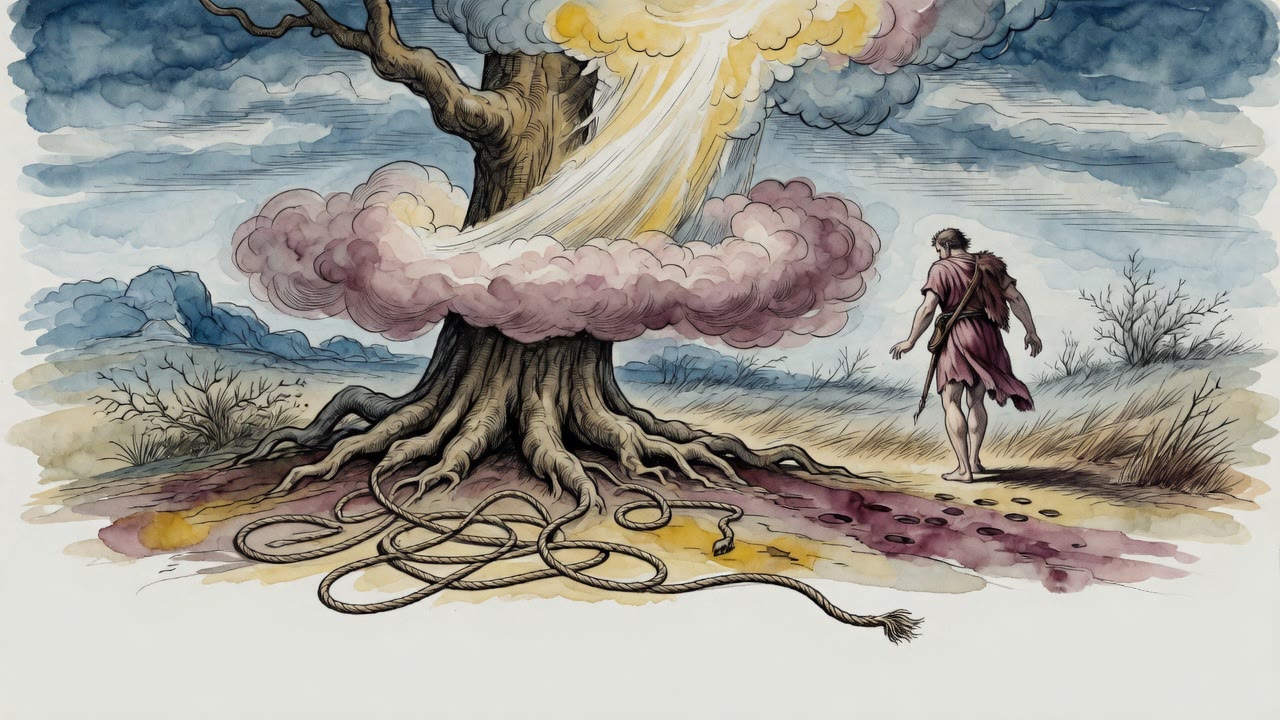
So he sent Joseph to check on them. Routine concern on the surface. Terror underneath. Joseph rode out to protect his brothers from strangers, a favored son on an errand of care. The danger that day was not the neighbors. It was the brothers themselves. Parents rarely fear the right thing. Jacob watched the wrong horizon while the true threat slept in his own tents and rose with the flocks.

The Coat Speaks

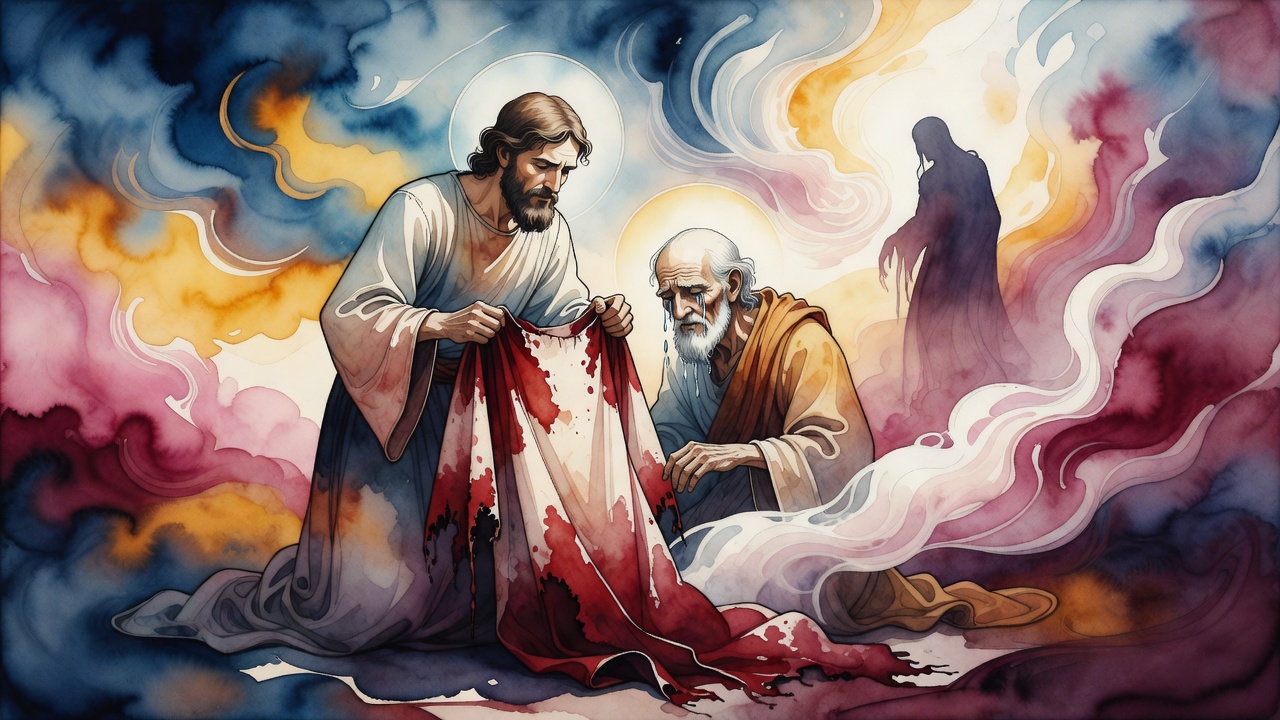
They brought him the tunic dipped in blood, the many colors turned dark and stiff. Jacob tore his clothes. He put sackcloth on his loins. He refused the comfort his other sons and daughters tried to pour over him. He said he would go down to the grave mourning for his son. Then something stranger than grief entered the tent.

He examined the coat and spoke by the Holy Spirit, the Ruach ha-Kodesh moving through a father's throat. "A beast of the wilderness hath not devoured him, neither hath he been slain by the hand of man. But I see by the Holy Spirit that an evil woman standeth against him."

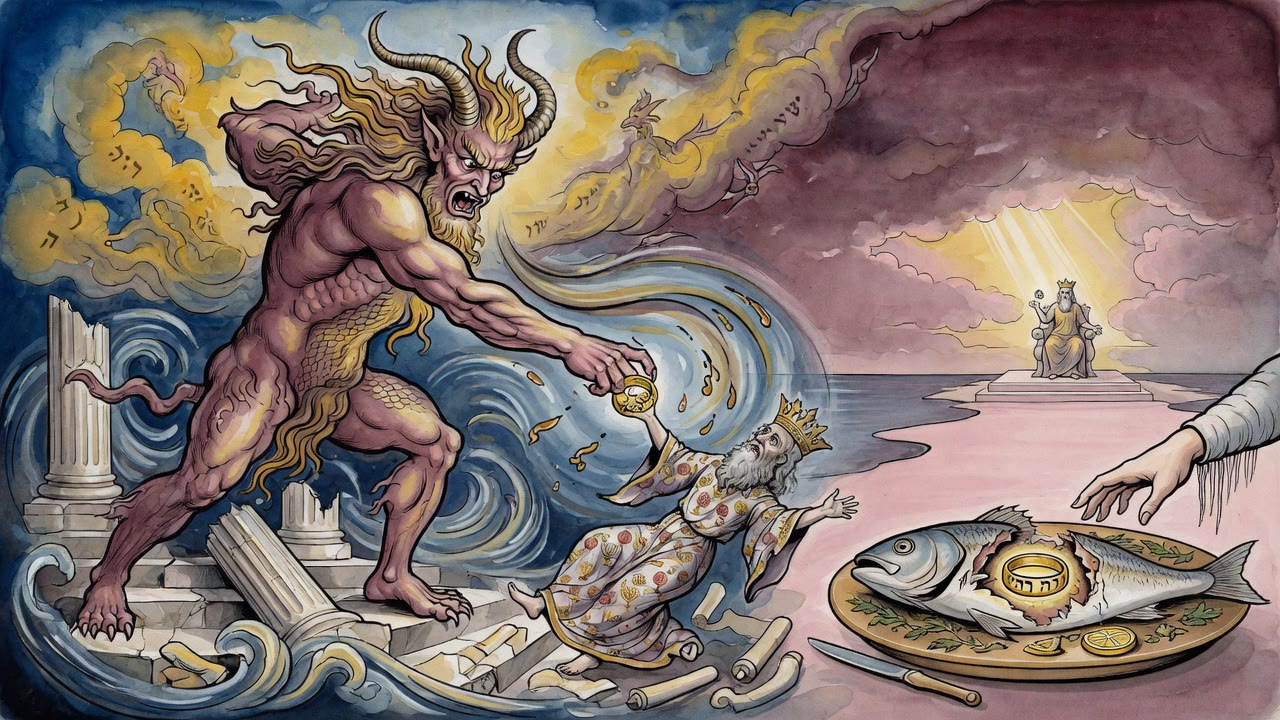
Not the whole truth. Not the pit. Not the caravan. Not the twenty pieces of silver. Enough. Joseph was not dead. A woman ahead, the wife of Potiphar, would one day menace him in Egypt and throw him into a prison when he refused her. Prophecy does not cancel pain. Seeing through the veil does not mean feeling less. Joseph was alive. Joseph was also gone. A father can hold both truths and ache with both for twenty-two years, hope burning faintly under a grief that will not extinguish.

Isaac's Silent Tears

And Isaac his father also wept for him.

Isaac was still alive, ancient and blind in Hebron. He outlived estrangements and wives and Jacob's long years with Laban. Now he heard that his grandson Joseph had been torn by a beast. He wept. He too possessed the Holy Spirit. He too could see that Joseph lived. Why the tears if the boy still breathed somewhere under the sun?

Because Isaac wept for Jacob, not for Joseph. He saw his son inconsolable and could not tell him the truth. Heaven had decreed that Joseph's fate remain hidden until the hour of the viceroy's reveal. Even a patriarch cannot overrule that timing. So Isaac, seeing further than the father who mourned, stayed silent and cried beside the son he could not console. The knowledge sat in his mouth like bread he was forbidden to share.

Two Truths in One House

Grandfather knowing. Father grieving. Knowledge unshareable between them. The house of the grave that Jacob named grew a little more bearable only by the weeping company of the one who knew better and said nothing. Love sometimes means crying with someone while holding a truth you cannot yet tell. The righteous sometimes carry two realities at once and are not permitted to set either down.

In the days after the coat, the household moved like a body with a fever. Meals went uneaten. Jacob's refusal of comfort became a second law of the tents. The brothers lived inside their lie and watched their father die by inches without dying. They had feared Hivite blades for their own skins when they grazed near Shechem. They had not feared what a coat could do to a father's mind.

Joseph was already on a road Jacob had never feared, toward a woman Jacob had glimpsed in the Spirit and a prison neither of them could name. The Hivites never came for the flocks that day. The brothers did. The coat lied and told the truth at once. In Hebron two generations of seers sat in the same dark, one half-seeing, one fully seeing, both unable to end the mourning until Heaven's clock, years later, allowed a ruler in Egypt to lift his head and speak Hebrew again.


← All myths

From the tradition

Sources

3 sources

The texts behind this telling. Some cards carry a translation of the source; others are our own retelling of it, and each card says which. Every card links out to the original.

Targum Pseudo-Jonathan on Genesis 37:13Targum Pseudo-Jonathan on Genesis

Retold in our words. Read the original at the link below.The Targum of Jonathan ben Uzziel, trans. J. W. Etheridge, London, 1862 · Public Domain

When Jacob sent Joseph to check on his brothers in Shechem, the Torah gives no reason for the trip other than routine concern. Targum Pseudo-Jonathan on (Genesis 37:13) reveals a father's actual terror.

Jacob says: I am afraid lest the Hivites come and smite them, because they smote Hamor and Shekem and the inhabitants of the city. This is the story of Dinah. Years earlier, after Shechem the son of Hamor violated Dinah, Simeon and Levi had entered the city with swords and killed every male (Genesis 34). The massacre had made Jacob's family a name to curse in the Canaanite hills. Every surviving Hivite clan had a reason to want the sons of Jacob dead.

Now those same sons, the brothers who had swung those swords, were grazing flocks right where it happened. Jacob is not being paranoid. He is being a father. He knows what his sons did. He knows who remembers. And he cannot sit in his tent in Hebron without seeing their funeral.

The irony is brutal. Jacob sends Joseph to protect his brothers from a Hivite attack that never comes. The danger in Shechem that day is not the neighbors. It is the brothers themselves. Joseph rides out to save his brothers from strangers and ends up sold by his brothers to strangers.

The Targumist is showing us that parents rarely fear the right thing. Jacob watched the wrong horizon. The true threat was already sleeping in his own tents.

Full source
Targum Pseudo-Jonathan on Genesis 37:33Targum Pseudo-Jonathan on Genesis

Retold in our words. Read the original at the link below.The Targum of Jonathan ben Uzziel, trans. J. W. Etheridge, London, 1862 · Public Domain

The moment Jacob examines the bloody coat, something astonishing happens. Targum Pseudo-Jonathan on (Genesis 37:33) gives us a line that reshapes the whole Joseph narrative. Jacob says: a beast of the wilderness hath not devoured him, neither hath he been slain by the hand of man; but I see by the Holy Spirit, that an evil woman standeth against him.

Jacob sees the truth. Not all of it, not the brothers' plot, not the caravan, not the pit. But enough. He sees that Joseph is not dead. He sees, through the Ruach ha-Kodesh, a woman who will menace his son. The sages identified her instantly: the wife of Potiphar, who would one day try to seduce Joseph in Egypt and have him thrown into prison when he refused (Genesis 39:7–20).

Think about the implication. Jacob knows Joseph is alive. Jacob can even identify a future danger that has not yet happened. And yet he still tears his clothes, still refuses to be comforted, still descends into decades of grief. Why?

Because prophecy does not cancel pain. Seeing through the veil does not mean feeling less. Jacob knows Joseph is not in a grave. But he does not know where Joseph is, and he does not know when he will see him again. The Holy Spirit tells him enough to keep hope burning faintly, but not enough to extinguish grief.

This is perhaps the deepest teaching of the Targum: the righteous sometimes carry two truths at once. Joseph is alive. Joseph is also gone. A father can hold both, and ache with both, for twenty-two years, until the day a viceroy of Egypt lifts his head and says, in Hebrew, I am Joseph, your son.

Full source
Targum Pseudo-Jonathan on Genesis 37:35Targum Pseudo-Jonathan on Genesis

Retold in our words. Read the original at the link below.The Targum of Jonathan ben Uzziel, trans. J. W. Etheridge, London, 1862 · Public Domain

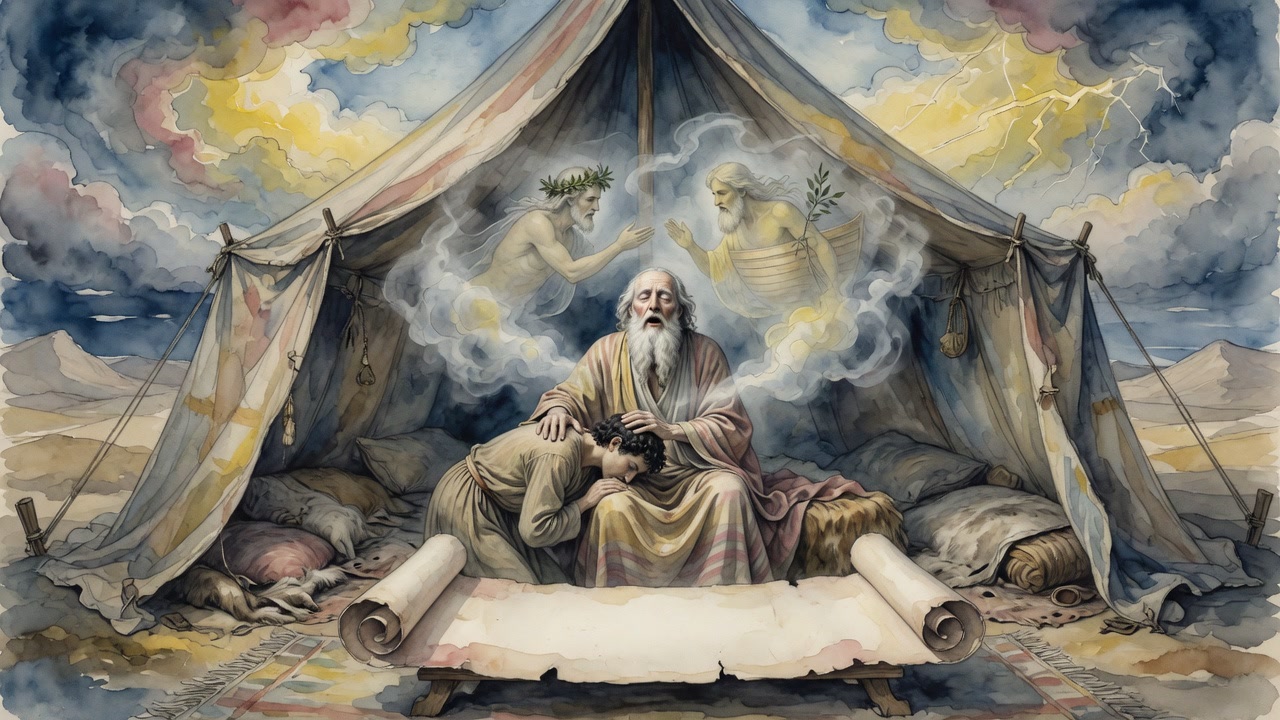
The Torah says Jacob refused to be comforted and declared he would go down to the grave mourning. Targum Pseudo-Jonathan on (Genesis 37:35) adds a heartbreaking line the Hebrew only hinted at: And Isaac his father also wept for him.

Isaac was still alive. He outlived his son Esau's estrangement, outlived Rebekah, outlived Jacob's twenty years with Laban. And now, ancient and blind in Hebron, he heard that his grandson Joseph had been torn apart by a beast. He wept.

Here is the secret the Targumist is quietly telling us. The sages taught that Isaac, like Jacob, possessed Ruach ha-Kodesh, the Holy Spirit. He too should have been able to see, as Jacob did, that Joseph was still alive. Why then did he weep?

Because Isaac wept for Jacob, not for Joseph. He saw that his son was inconsolable, and he could not tell him the truth, because the decree from heaven was that Joseph's fate remain hidden, and even a patriarch cannot overrule heaven's timing. So Isaac, seeing further than Jacob, stayed silent, and wept beside him.

This is one of the most wrenching scenes in the entire Torah. A grandfather knowing, a father grieving, and the knowledge unshareable between them. Isaac's tears were not for the grandson he would see restored. They were for the son he could not console.

The Targum teaches that sometimes love means crying with someone while holding a truth you cannot yet tell. The beit ha-kever, the house of the grave, that Jacob spoke of was made more bearable only by the silent, weeping company of the one who knew better and said nothing.

Full source