Jacob Sought Rest and the Accuser Answered
Jacob finally wants quiet after Esau, Laban, and Dina. The heavenly Accuser objects, Joseph vanishes, and only late Egypt gives him seventeen shielded years.
Table of Contents
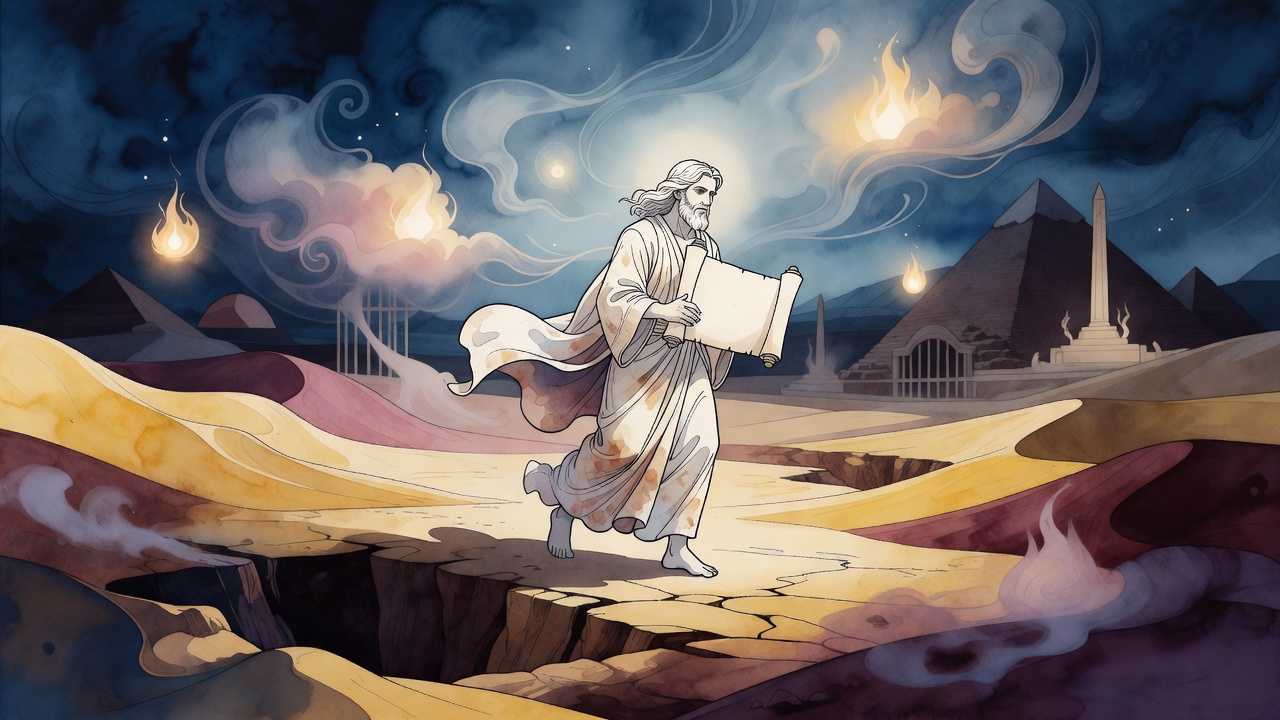
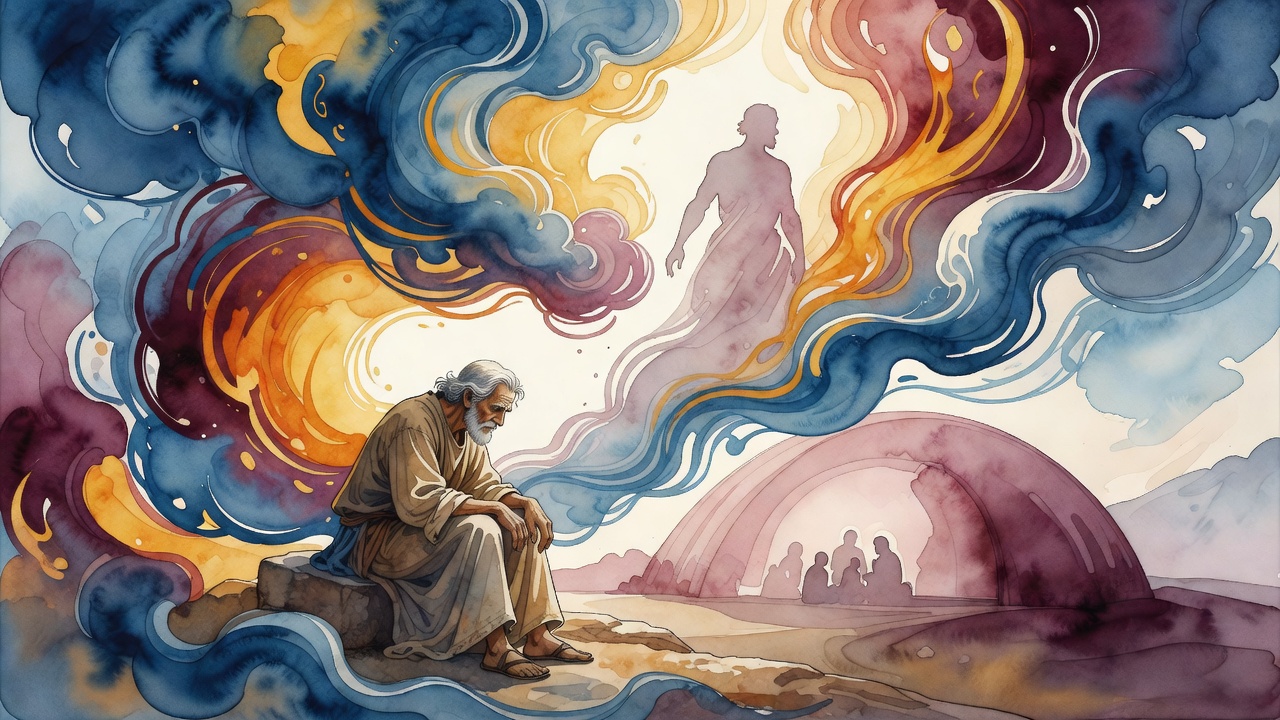
Jacob had outrun a brother, outworked a father-in-law, and buried a daughter's shame under silence that still rang in the tents. He wanted one season without a knife at the edge of the camp. He wanted to sit. He wanted the flocks counted and the boys home before dark. He wanted, at last, to live in tranquility in this world.
 Click for full size
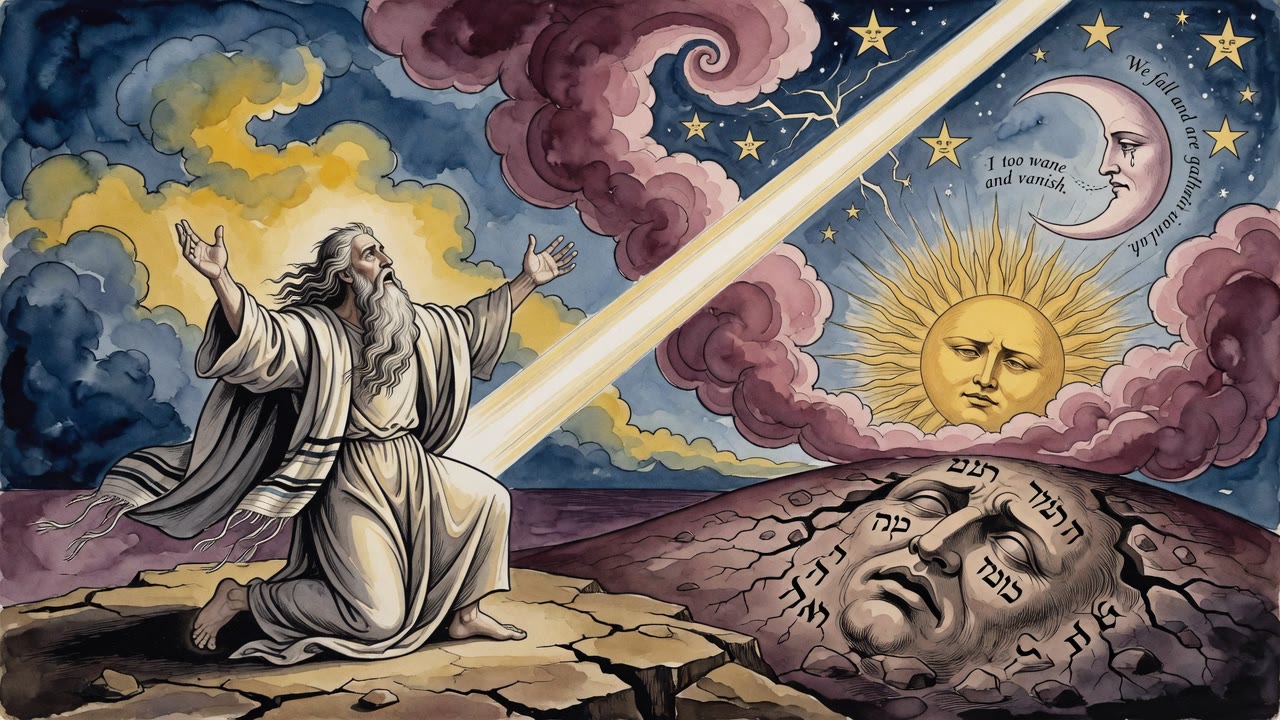
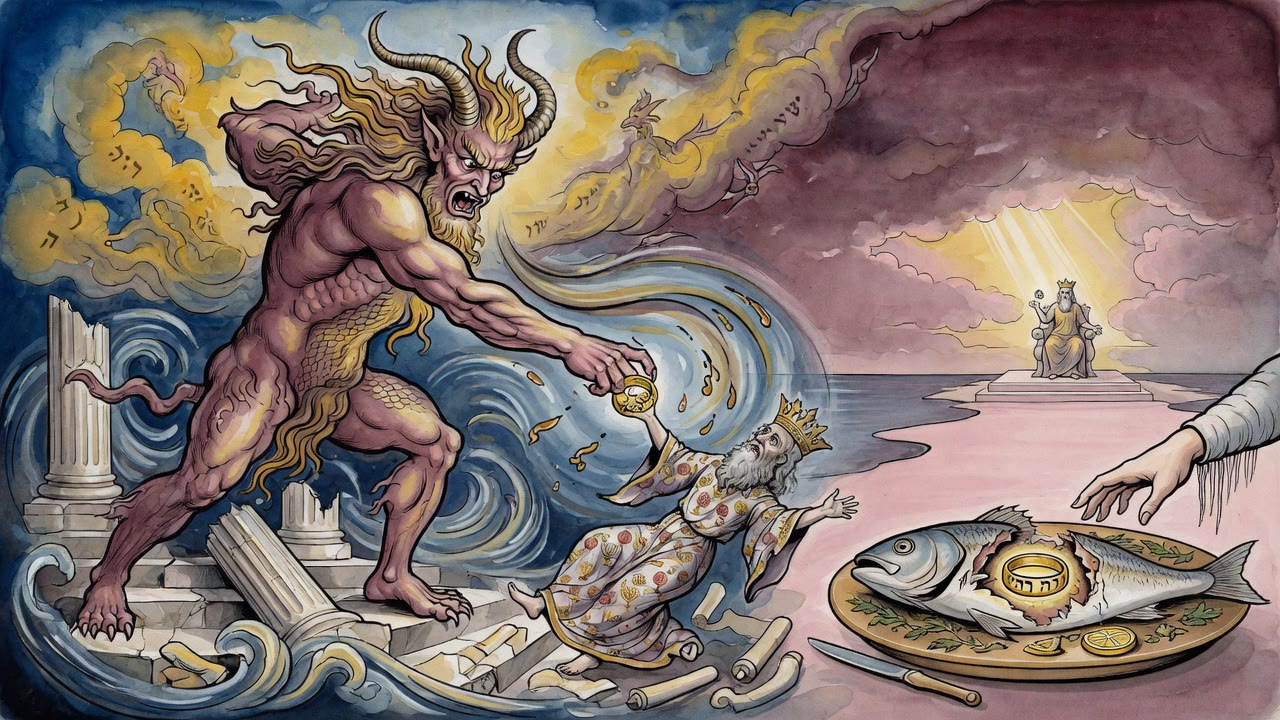
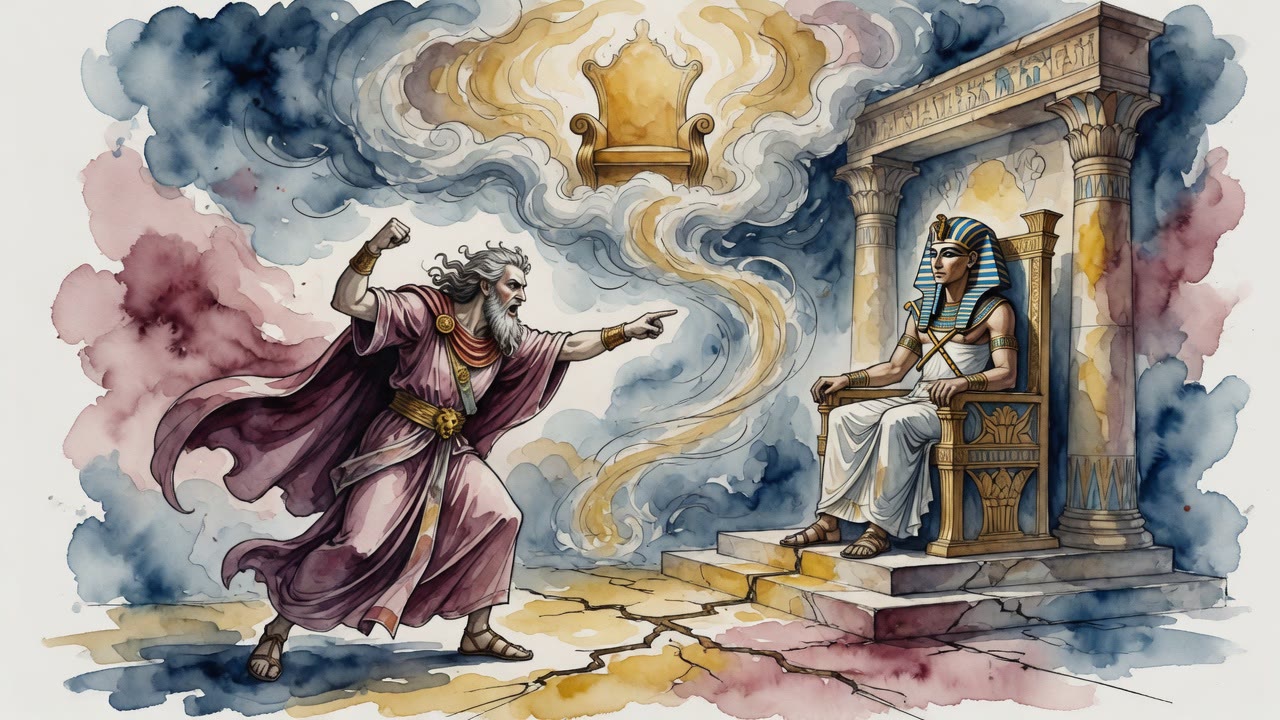
The heavenly Accuser heard the wish the way a prosecutor hears a defendant ask for early release. Reward waits in the World to Come, the Accuser said. Is that not enough, that the righteous also demand ease here? The file on Jacob opened again. The name on the next charge was Joseph.
No Quiet From Esau to Dina
Job's line became Jacob's map. "I was not tranquil, was not silent, and I did not rest, but turmoil came" (Job 3:26). Not tranquil: Esau in the field with a vow to kill after the burial. Not silent: Laban swapping daughters in the dark and changing wages ten times over. No rest: Dina taken in Shechem, and the swords of Simeon and Levi answering blood with blood until the camp stank of risk.
Jacob had carried each of those weights until his hip remembered a night-wrestle and his eyes remembered a coat dipped in goat blood he had not yet been shown. When he finally reached for quiet, the Accuser treated the reach itself as evidence. The righteous who seek peace on earth draw a challenge from above. Not because peace is filthy, but because the prosecutor never sleeps when a file might still be tried in this life.
Turmoil came. The brothers sold Joseph. The coat came home empty. Jacob tore his clothes and refused comfort. The pit in Canaan and the caravan toward Egypt closed over the boy while the father sat in a grief that ate years.
The Coat and the Long Dark
Jacob would not be soothed. "I will go down to my son mourning to Sheol," he said, and the house learned to walk softly around a man who had outlived his own hope (Genesis 37:35). Joseph lived, but Jacob did not know it. The Accuser's case had landed. The quiet Jacob wanted lay on the far side of a famine, a journey, and a recognition scene still decades away.
He lived inside the sentence of Job without knowing he was quoting a later book. Not tranquil. Not silent. Not at rest. Turmoil as a permanent guest. When the brothers finally brought grain news and a demand for Benjamin, Jacob's hands shook on the decision as if every old wound had grown a new mouth.
Egypt took Joseph up from prison to a second chariot. Canaan still held an old man who counted empty places at the evening fire. The Accuser did not need to speak again. The absence did the speaking.
Seventeen Years Under a Closed Roof
When the wagons came and Jacob saw Joseph alive, he did not leap into endless celebration as if the ledger had been wiped. He went down to Egypt. He blessed Pharaoh. He settled in Goshen. "Jacob lived in the land of Egypt seventeen years; the days of Jacob, the years of his life, were one hundred and forty-seven years" (Genesis 47:28).
Seventeen years. After a lifetime of flight and fraud and funerals, the count finally held a stretch without a new catastrophe crashing the tent pegs. God shielded him from the world's troubles for that span. The Accuser's long case paused. Joseph ruled. The brothers ate. Jacob taught and watched grandsons grow inside an empire that still thought itself eternal.
Peace arrived late and thin and borrowed, but it arrived. He sat. He breathed. He did not have to outrun Esau or outfox Laban or outgrieve a missing son in those particular hours. The shield held until it was time for the next sealing.
The Parsha That Will Not Open
In a Torah scroll, most portions breathe. Nine letters of white space stand between one block and the next. Before Vayechi, "And he lived," the space shrinks to almost nothing. One letter's width. Closed. Setuma.
When Jacob died, the enslavement in Egypt began to tighten on his children. The open road of the patriarch closed into brick and quota. The white space itself braces for the dark that follows a coffin carried up from Egypt to the cave of Machpelah.
On his last nights he tried to look through the curtain toward the End of Days, the ketz hayamim, and it was closed against him, nistam. Some maps are not for living eyes. He who had bargained and dreamed and wrestled was not shown the last page.
The same pinch of parchment also marks those seventeen shielded years, a roof pulled low over an old man so the storms of the age could not find him until the roof was no longer needed.
Bondage ahead, the End sealed, a late roof over Goshen. One narrow white gap on the parchment holds all three. The scribes leave the gap small enough that the thumb feels the constriction when the column turns.
What the Accuser Could Not Keep
Jacob died in Egypt with Joseph's hand under his thigh and a vow secured for burial in Canaan. The brothers feared revenge and heard instead a speech about God turning evil to good. The Accuser had won a long misery and still lost the final shape of the story. Joseph lived. The people multiplied. The closed parsha led into a night that would end, much later, at a sea that stood up like walls.
Jacob never got the early quiet he asked for. He got Esau, Laban, Dina, and the empty coat first. He got seventeen late years under a divine roof. He got a burial oath and a scroll that pinches white space where his life ends and bondage begins for everyone else.
On the night before the wagons, he had still been a man who could not rest. On the last night in Goshen, the shield was already lifting, and the children of Israel slept without knowing how small the next margin of the scroll would be.
← All myths