Parshat Vayetzei5 min read

Jacob Stood Naked and Asked Only for Bread

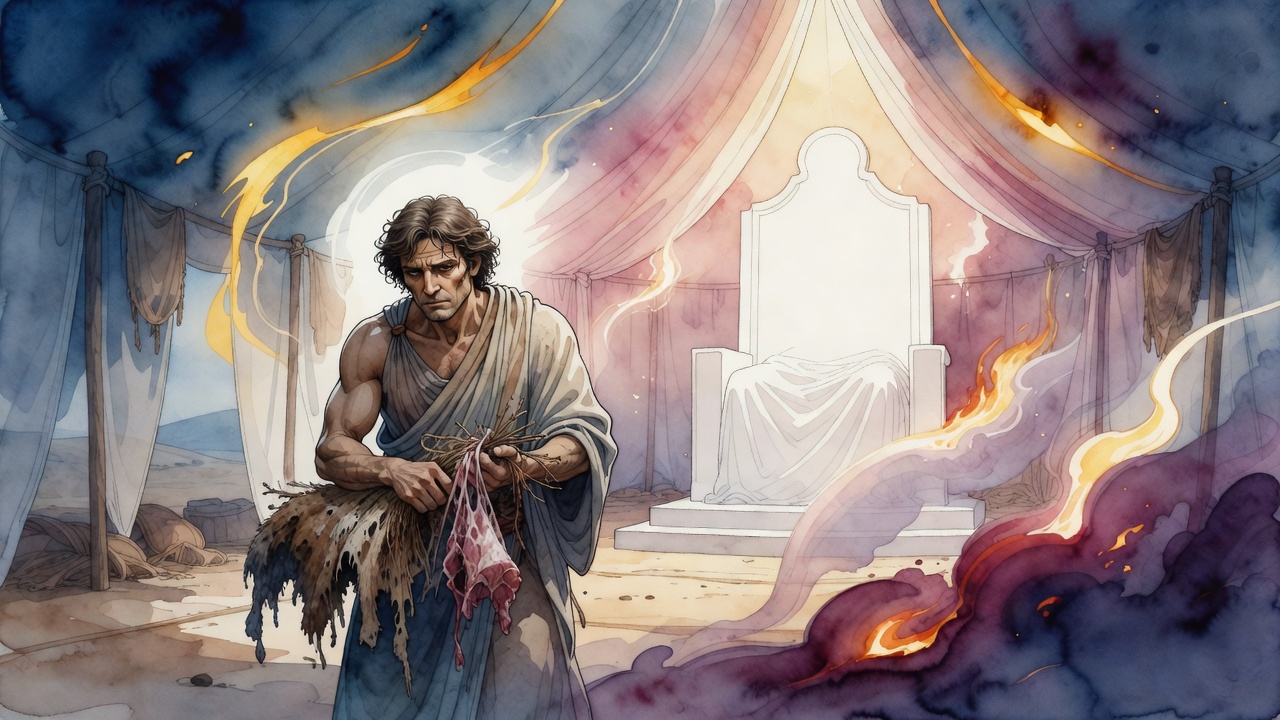
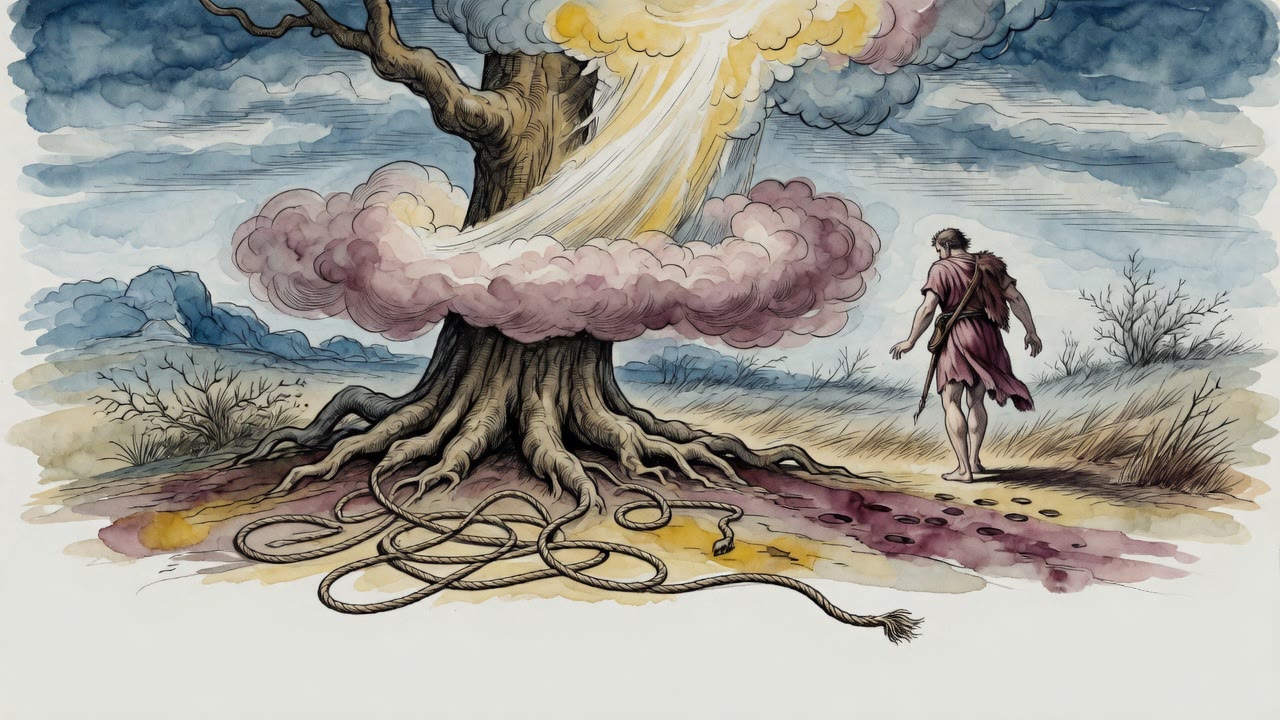
Esau sent Elifaz to kill his brother. The boy had been raised in Isaac's house and could not do it, so Jacob told him to take the money and the clothes.

Curated by Arthur · Told by Maggid ·
Table of Contents
  1. Only Bread
  2. The Brother Who Talked Himself Empty
  3. Leah at the Crossroads
  4. A Kiss With Dots Over It
  5. What the Road Held

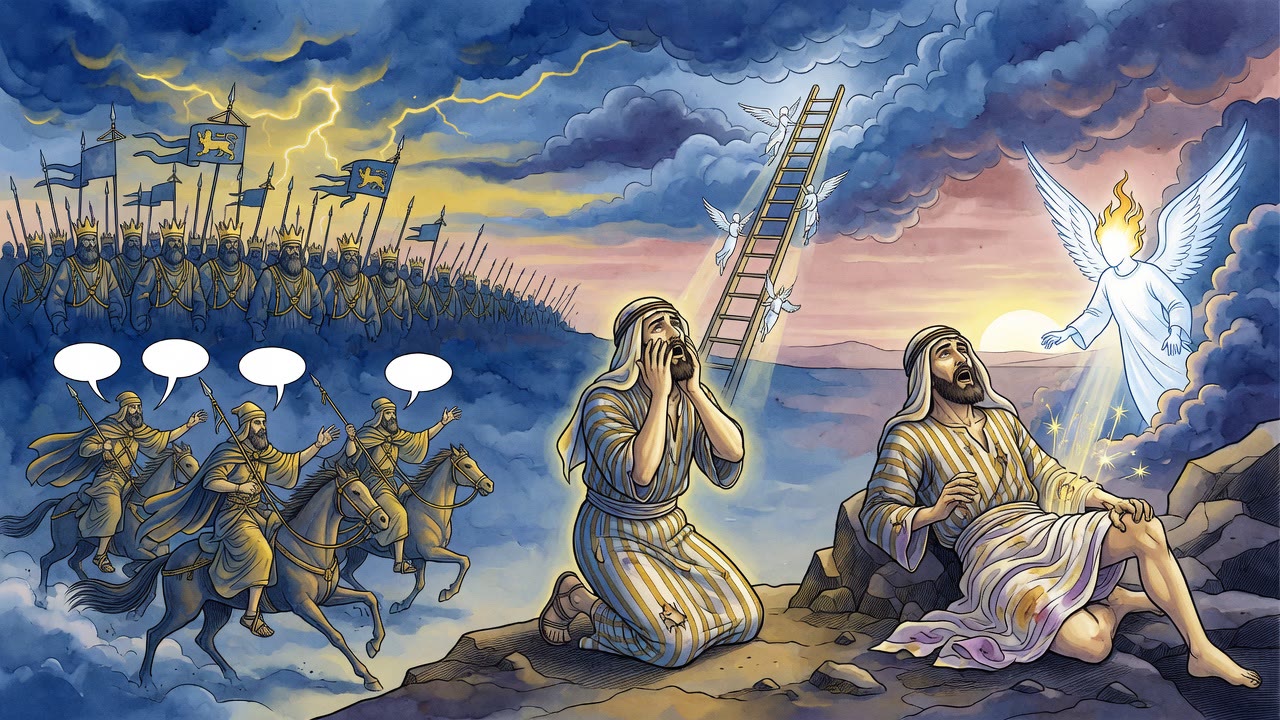
Jacob stood on the road without a garment. Esau had sent Elifaz to kill him. The young man, raised as a student in Isaac's house, could not bring the knife down. So Jacob told him how to keep a father's command without murder: take the money, take the clothes, leave me my life.
Jacob Stood Naked and Asked Only for Bread Click for full size

They stripped him. A poor man, the sages say, is counted among the dead. Jacob stood as good as buried and still opened his mouth toward heaven.

Only Bread

On the run he vowed. "Protect me," he asked, and the protection he meant reached past bandits toward three ruins: idol worship, adultery, and bloodshed. Then the line that defines him: "Give me bread to eat." Not riches. Not a throne. Bread.

From that sentence the righteous learn to ask for what keeps a body walking, not for what fattens a name. He had nothing on his skin and still refused to bargain like a man collecting trophies from God.

The Brother Who Talked Himself Empty

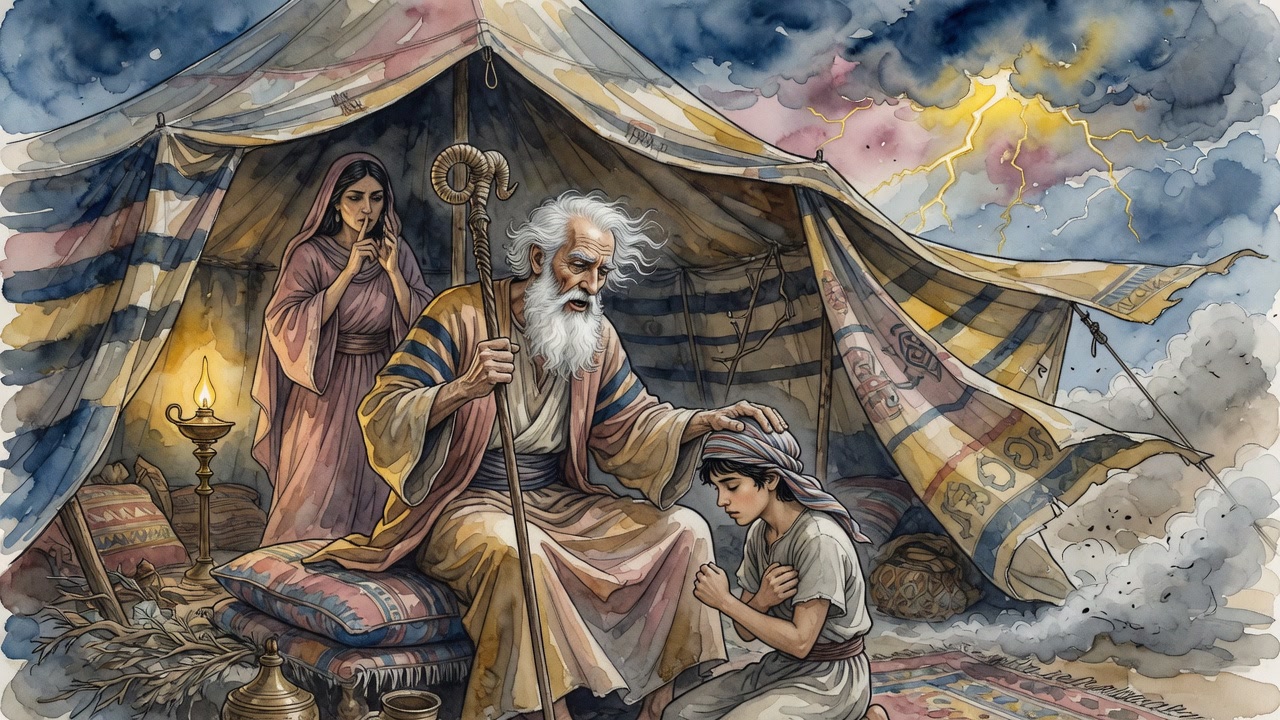
Years earlier Esau had come in from the field empty and said, "I am going to die. What good is the birthright to me?" Hunger was only the surface. The midrash hears four exits from a sacred portion.

Heresy has no use for a firstborn's share. Fear of Nimrod after war makes inheritance look pointless. Priestly service kills the unworthy who bring offerings, and Esau knew he was not righteous. Or the bleakest logic: I labor for God and still die like those who serve nothing, so why serve? Having argued himself into despair, he sold the birthright to Jacob over stew and walked away certain he had lost nothing worth keeping.

Leah at the Crossroads

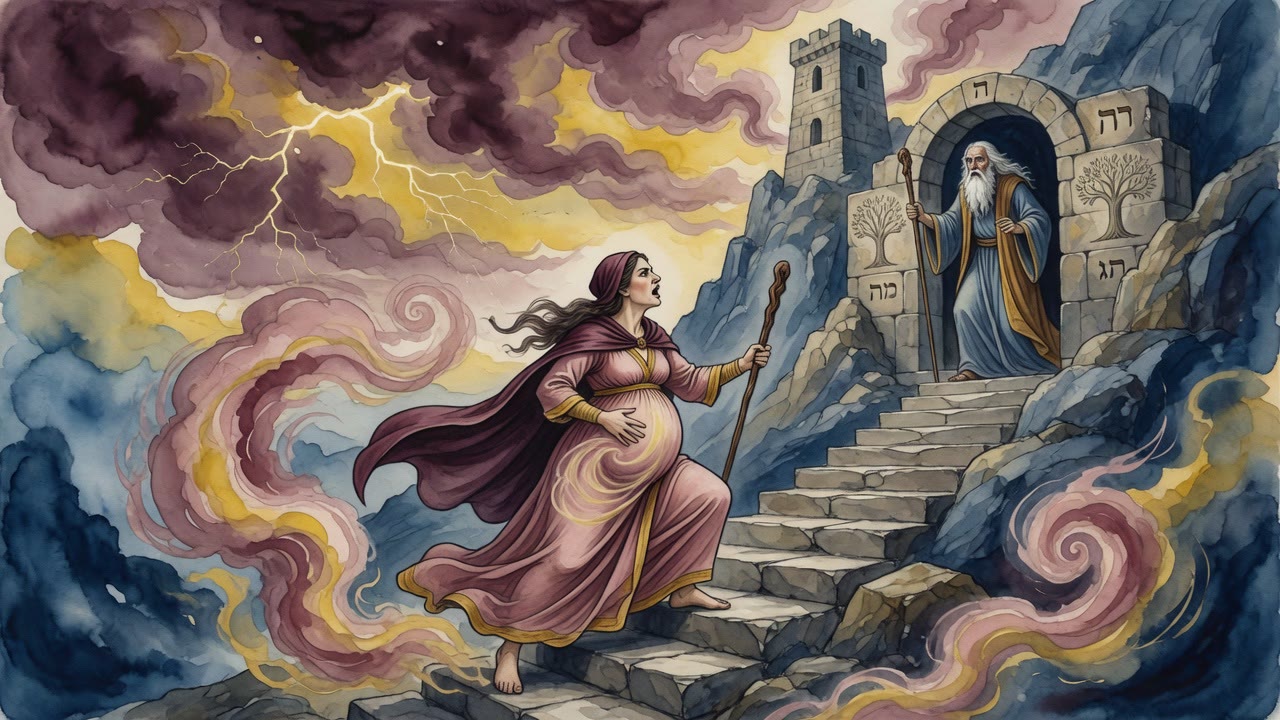
Far from that bowl, Leah stood where roads met and asked travelers what they knew of Esau. The whole region had already matched Laban's older daughter to Isaac's older son. Every answer came back the same. A completely wicked man. His younger brother, mild.

She wept day after day, certain first birth had sentenced her to a monster. She cried until her eyes grew tender and worn. The verse's weak eyes were carved by fear, not by vanity's accident. Rachel waited for Jacob in the village stories. Leah waited for a verdict she could not overturn, and the verdict lived in every passerby's mouth.

A Kiss With Dots Over It

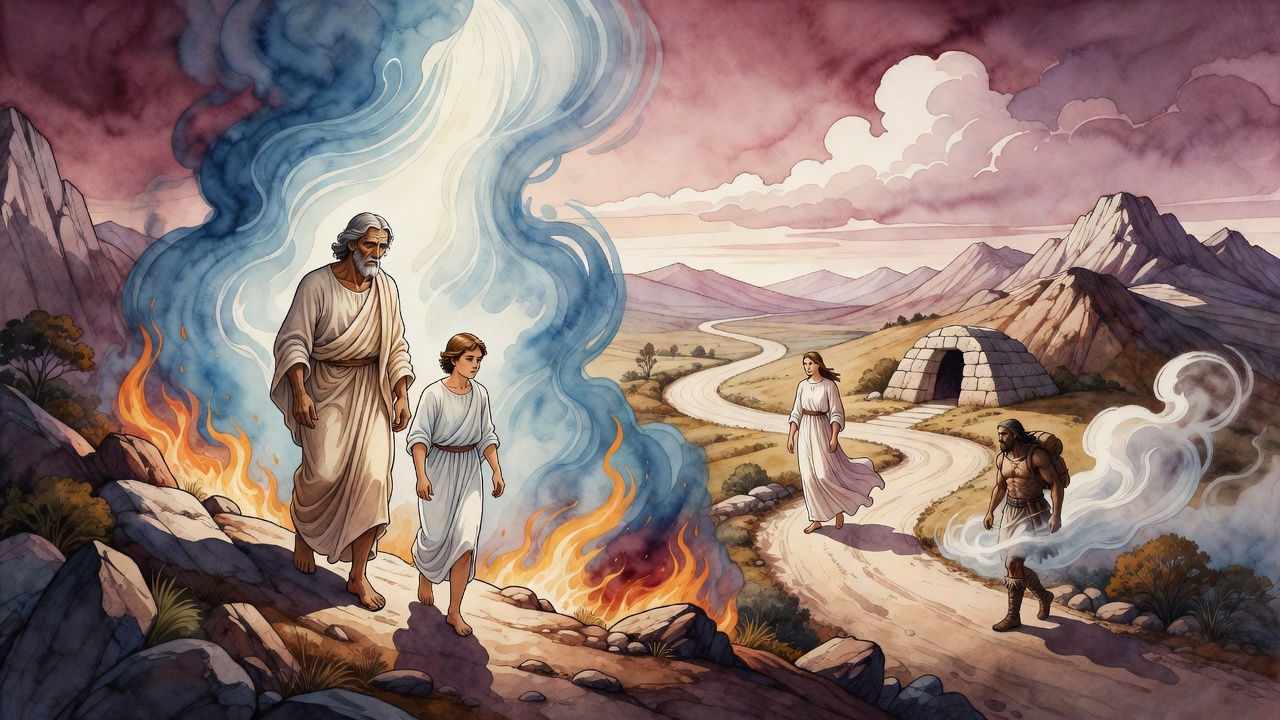
When the brothers met again years later, Esau ran and kissed Jacob. Over that kiss the scribes set dots, one of ten places in the Torah where marks force a second reading. It was not a kiss of love. It was a kiss of hatred wearing warmth. Rabbi Shimon ben Manasya heard the heart under the lips: murder delayed, not murdered desire erased.

The mouth can flatter while the heart plots. Esau had once said, "Let the days of mourning for my father pass, and I will kill my brother Jacob." The dotted kiss remembers that sentence even when arms open.

What the Road Held

Naked Jacob asked for bread. Weeping Leah asked strangers about a wicked bridegroom. Esau sold eternity for stew and later kissed with dots above the affection. The family that would become Israel was built through men and women who knew the price of a birthright, the weight of a rumor at a crossroads, and the difference between a garment and a life.

Jacob walked on with empty hands and a vow that fit in a single loaf's request. Heaven would have to meet him on stone with a ladder, because he had left himself no other furniture.

Wind found every rib as Jacob walked on after Elifaz vanished with the clothes. He did not curse the student who could not kill. He used the theft as a door into a vow. Bread. Protection from three ruins. A life reduced to what a body needs and what a soul must refuse. The road accepted that thin contract and gave him stones for a pillow later, when heaven would open a ladder over a man who owned nothing soft.

Leah's crossroads tears belonged to the same family story from another angle. She asked strangers about Esau because culture had already married her to him on paper made of gossip. Each answer carved her eyes a little weaker. Weakness here was not vanity's accident. It was protest written on the body until heaven would have to read it.

Esau's four reasons for selling the birthright still stank of stew-logic: heresy, fear, unworthiness at the altar, despair that service ends in the same death as neglect. He kissed later with dots above the affection because the Torah refuses to let surface warmth erase an earlier sentence about waiting for a father's mourning to kill a brother.

Between naked bread, crossroads weeping, and a dotted kiss, the house of Isaac learned that inheritance is not only land and blessing. It is what you refuse to sell, what you refuse to fund with panic, and what you refuse to trust when a mouth smiles while a heart still keeps an old murder calendar. Jacob's empty hands would fill. Leah's eyes would still carry their story into a marriage that was not the one the crossroads promised. Esau's shrug would echo longer than the meal that bought it.


← All myths
From the tradition

Sources

4 sources

The texts behind this telling. Some cards carry a translation of the source; others are our own retelling of it, and each card says which. Every card links out to the original.

Midrash Aggadah, Genesis 28:20Midrash Aggadah

Retold in our words. Read the original at the link below.Sefaria Community Translation · CC0

On the run from a brother who wanted him dead, Jacob made his vow to God. "Protect me," he asked, and the Midrash Aggadah hears in that word a plea to be guarded from three specific ruins: idol worship, adultery, and bloodshed. The tragedy the rabbis note is that Jacob's own children would later stumble in all three.

Then comes the line that defines him. "Give me bread to eat." Not riches, not honor, just bread. From here, the rabbis teach, the righteous learn to ask heaven for nothing beyond what they need to live.

And Jacob truly had nothing. When he fled Be'er Sheva, he did not even own the clothes on his back. Esau had sent his son Elifaz to kill him. The young man, raised as a student in Isaac's household, could not bring himself to murder, so he asked his teacher what to do. Strip me, Jacob told him. Take the money, take the garments, leave me with my life. A poor man, the Midrash says, is counted among the dead. Jacob stood there as good as buried, and still asked only for bread.

Full source
Midrash Aggadah, Genesis 29:17Midrash Aggadah

Retold in our words. Read the original at the link below.Sefaria Community Translation · CC0

The Torah says Leah had weak eyes, and the easy reading is that she was simply plain. The Midrash Aggadah tells a story that turns weakness into heartbreak.

The whole region had it figured out. Laban had two daughters, Isaac had two sons, so the match was obvious. The older daughter Leah would marry the older son, Esau. The younger, Rachel, would marry the younger, Jacob. Everyone said it aloud.

So Leah went to the crossroads and asked the travelers passing through what they knew of Esau. The answer came back the same every time. A completely wicked man. His younger brother, they would add, is gentle and mild. Day after day Leah stood there and listened, and day after day she wept, certain she was bound to a monster because she had the misfortune of being born first. She cried until her eyes themselves grew tender and worn, the verse's "weak eyes" carved by fear and tears.

Full source
Midrash Aggadah, Genesis 25:32Midrash Aggadah

Retold in our words. Read the original at the link below.Sefaria Community Translation · CC0

"I am going to die," Esau said. "What good is the birthright to me?" Most people hear a hungry hunter shrugging off an inheritance. The Midrash Aggadah hears something darker, and offers four readings of that single shrug, each one a window into a man talking himself out of his soul.

The first is the harshest: Esau had become a heretic, and a heretic has no use for a sacred firstborn's portion. The second is fear. He had just come from war with Nimrod and trembled that the mighty hunter would still hunt him down. The third turns on the altar itself. The firstborn served as priest, and offerings, the rabbis warned, can destroy the unworthy who bring them. "I am not righteous," Esau reasoned. "This service will kill me before my time."

The fourth is the cruelest logic of all. "I labor in God's service, and I will still die like the men who serve nothing. So why serve at all?" Having argued himself into despair, Esau sold the birthright to Jacob and walked away, certain he had lost nothing worth keeping.

Full source
Midrash Mishlei 26:4Midrash Mishlei

Translation of the source text.Midrash Mishlei (Buber) · CC-BY

(Proverbs 26:24): "With his lips an enemy disguises himself, and within himself he sets deceit." Rabbi Zeira said: From a person's words you can know whether he loves you or hates you. For so we find with Haman the wicked, who spoke with Mordecai with his mouth, while in his heart was his hatred for him, as it is said (Esther 6:7): "And Haman said in his heart, etc." And there is another verse as well (Esther 5:9): "And Haman was filled with rage against Mordecai." And so we find with Esau the wicked, who spoke with Jacob, while in his heart he hated him, as it is said (Genesis 27:41): "Let the days of mourning for my father draw near, and I will kill my brother Jacob."

There we learned: There are ten dotted places in the Torah. (Genesis 16:5): "May the LORD judge between me and you" - the yod of "and you" [u-veinekha, written defectively] is dotted, teaching that Sarah our mother was saying, 'Let Hagar return to her servitude,' while Abraham our father was saying, 'After we have made her a mistress, shall we turn back and enslave her again? This is a desecration of the name of Heaven.' If so, let the Omnipresent decide between my words and your words, as it is said (Genesis 21:12): "All that Sarah says to you, listen to her voice" - just as the first matter concerned Hagar, so the second concerned Hagar. (Genesis 19:33): "And he did not know when she lay down and when she arose" - why is it dotted? It teaches that he did not know when she lay down, but he did know when she arose: in the lying down of the elder daughter and in the arising of the younger, teaching that one transgression drags along another. (Genesis 37:12): "And his brothers went to pasture their father's flock in Shechem" - the word "et" is dotted over it, teaching that they did not go to pasture but to eat and to drink. And the matter is an argument from minor to major: if at the time they went to eat and to drink there came forth from them sustenance for the world, then if they had gone to study Torah, how much more so. (Numbers 9:10): "Or on a distant journey" - it teaches that the journey was not distant, but only from the threshold of the Temple court and outward. (Numbers 3:39): "All those counted of the Levites whom Moses and Aaron counted" - "and Aaron" is dotted over it, teaching that Aaron was not part of the count. (Numbers 29:15): "And a tenth-part, a tenth-part" - the first "tenth-part" is dotted over it, teaching that it did not require two tenth-parts, but only a single tenth-part. (Numbers 10:35): "And it came to pass when the Ark journeyed" - it is dotted both before and after, [about which] Rabbi said: It was a book unto itself and was hidden away. (Numbers 21:30): "And we have laid waste up to Nophach which is up to Medeba" - it is dotted over it, teaching that they left a remnant there. (Deuteronomy 29:28): "The hidden things belong to the LORD our God, and the revealed things to us and to our children" - it is dotted over "to us and to our children," teaching that Israel said before the Holy One, blessed be He: Master of the worlds, regarding what is revealed we are commanded, but we are not commanded regarding what is hidden? The Holy One, blessed be He, said to them: Even regarding what is revealed you are not able to stand. (Genesis 33:4): "And he fell upon his neck and kissed him, and they wept" - it is dotted over "and kissed him," teaching that it was not a real kiss of love, but of hatred. Rabbi Shimon ben Manasya said: And what was Esau the wicked thinking at that moment, in the category of one who loves or in the category of one who hates? You must say, in the category of one who hates. And so it says (Proverbs 21:1): "Streams of water, etc." Thus you have learned that he was speaking with Jacob with his mouth while hatred was in his heart, as it is said "and within himself he sets deceit."

Rabbi Simon said: At the moment when Esau the wicked was pleading before his father and saying (Genesis 27:38): "Bless me, even me also, my father," it was in his [Isaac's] mind to bless him more than Jacob his brother. Immediately the Holy Spirit set him apart and said to him, 'Isaac, Isaac, do not trust in the entreaties of the wicked, as it is said:'

Full source