Parshat Vayechi5 min read

Jacob Told His Sons to Gather and Meant Purify Yourselves

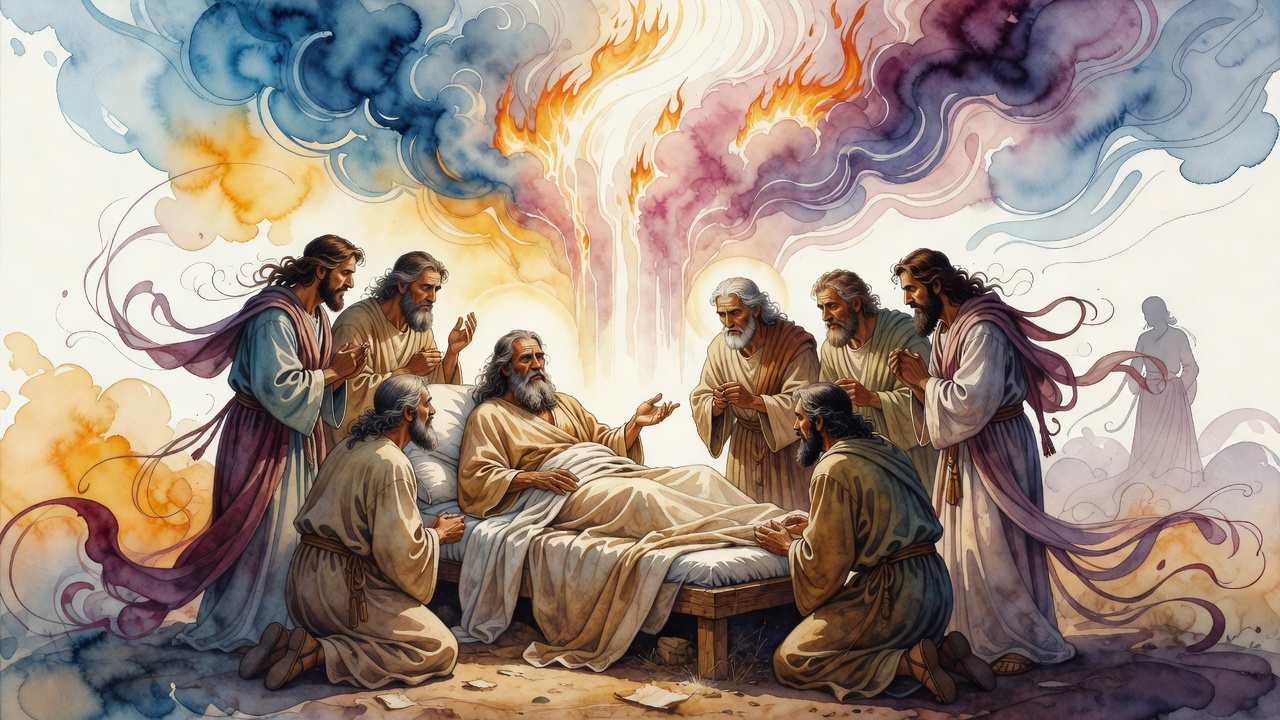
Twelve grown men leaned over a dying father waiting for their blessing. The first thing he gave them was an order to make themselves clean.

Curated by Arthur · Told by Maggid ·
Table of Contents
  1. Gather Yourselves
  2. Seventy Days of Egyptian Weeping
  3. A Threshing Floor Nobody Can Find on a Map
  4. What the Canaanites Did With Their Hands
  5. Seventy Days, Counted Twice
Jacob Told His Sons to Gather and Meant Purify Yourselves Click for full size

Gather Yourselves

Jacob was blind by then, and past sitting up on his own, and he sent word through the house that he wanted all of them. They came in from twelve different lives. A shepherd who had sold his brother stood next to the brother, who was now the second man in Egypt and dressed like it.

The old man said two words. "Gather yourselves."

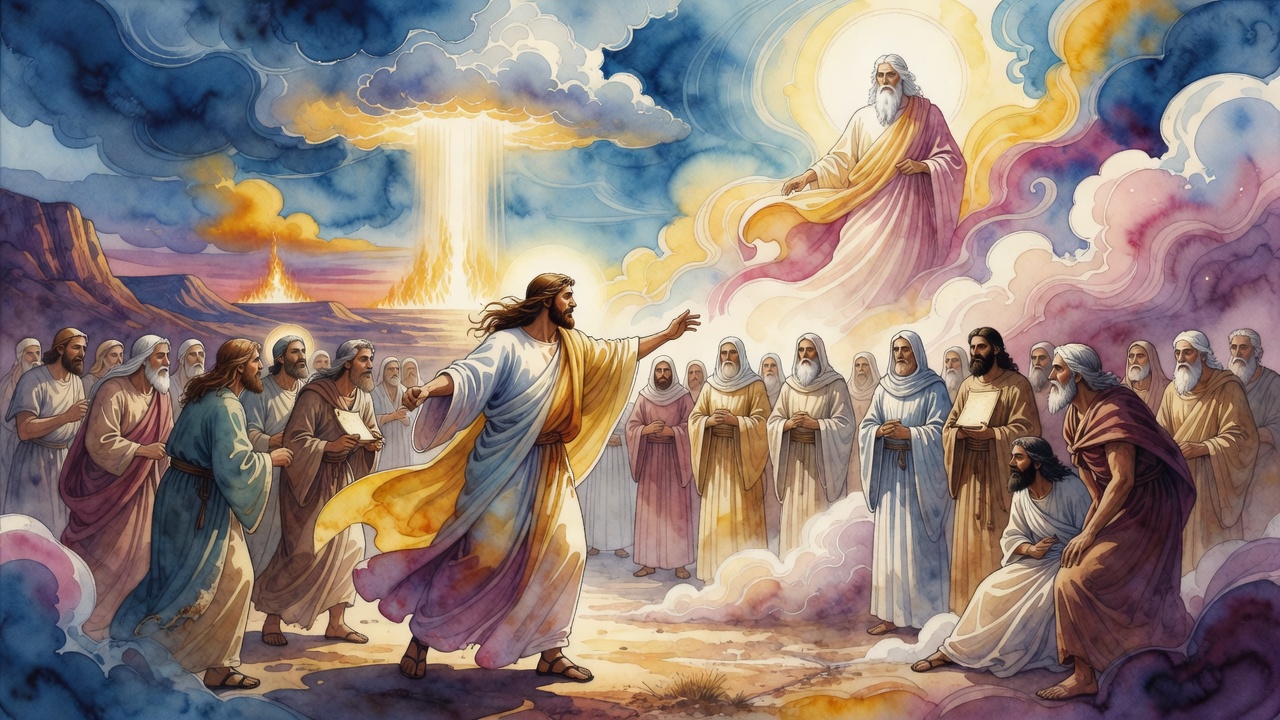
They leaned in, thinking he wanted them closer to the bed. Rabbi Pinhas the Priest son of Hama and Rabbi Yehuda the Levite son of Shallum turned those two words over and heard an order in them, and what he meant, they said, was purify yourselves. The word had done that job once before, out in the wilderness. When Miriam's skin went white and the camp had to put her outside the tents, the ruling was to shut her out seven days, and afterward she would be gathered in. Gathered back, but only once she was clean.

So the twelve heard a condition before they heard a blessing. Come in pure. Whatever any of you has been carrying since Shechem, since the pit, since the twenty pieces of silver, leave it at the door of this room.

Seventy Days of Egyptian Weeping

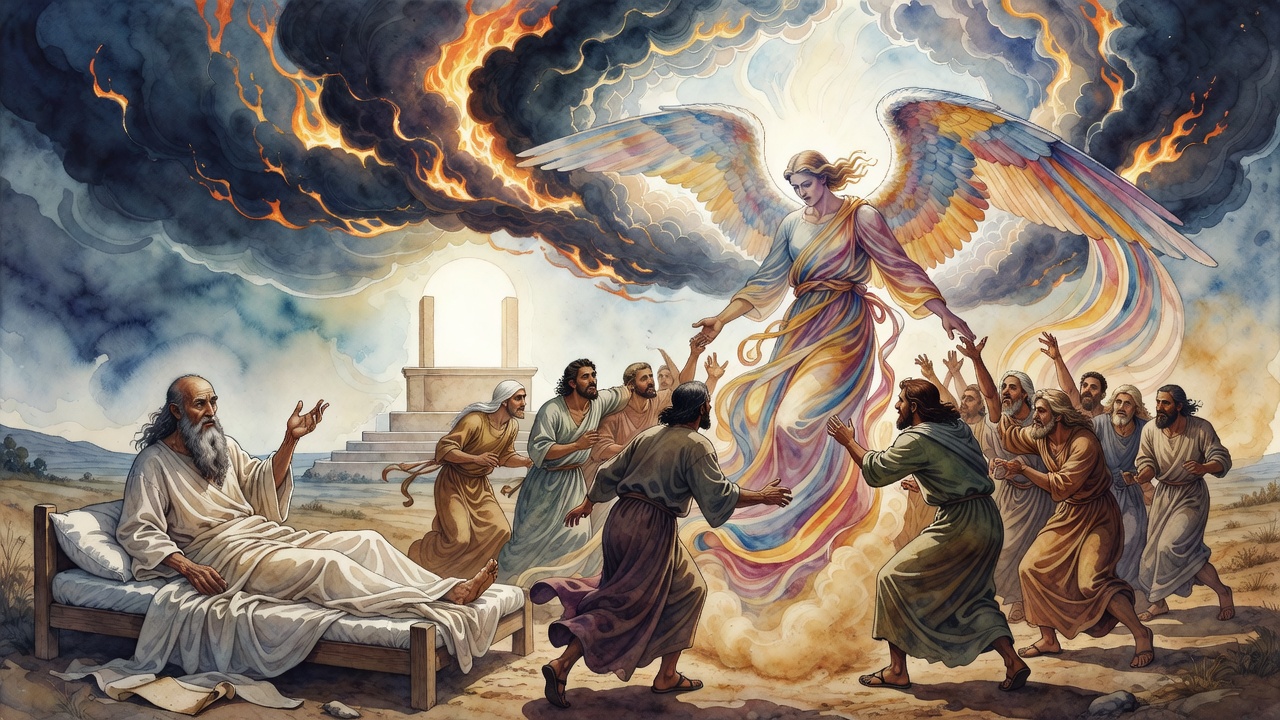
He finished naming them one by one, pulled his feet up into the bed, and died. Joseph went down on his father's face and wept there and kissed him, and then the machinery of Egypt took the body: forty days for the physicians and their spices, and seventy days of national mourning for a foreign shepherd who had once blessed the king.

Pharaoh let them go up to bury him, and sent his court with them. Chariots and horsemen went along, and the elders of Egypt, and every servant of the palace, so that what came north out of the delta was not a family funeral but a foreign power on the move.

A Threshing Floor Nobody Can Find on a Map

They halted at the threshing floor of Atad, beyond the Jordan, and mourned there seven more days, and the sound of it carried.

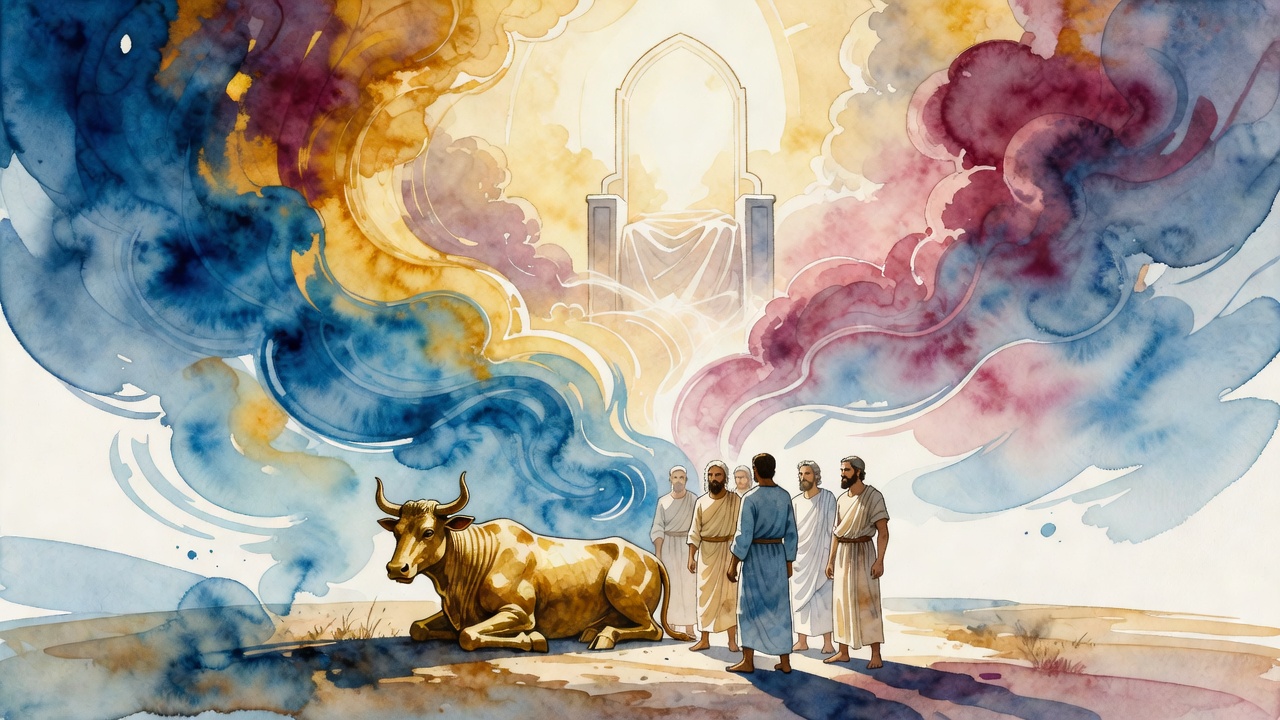
Rabbi Shmuel bar Nahman said he had been through the whole of Scripture hunting for a town by that name and there is no such place. Atad is a thornbush. Nobody builds a threshing floor to thresh thorns. So the thorns were the men standing around the edge of that camp watching the Egyptians weep, the Canaanites who owned the country, and they were ripe for the sledge to go over them and grind them into the dirt like brush.

They had come out to look at a procession. Sentence had already been passed on them and none of them knew it.

What the Canaanites Did With Their Hands

Then they did four small things, and nobody afterward could agree which of the four saved them.

Rabbi Elazar said they untied the belts at their waists and let their clothes hang loose, the way a man stands when he is not going to work and not going to fight. Reish Lakish said they loosened the cords on their packs and set the loads down in the road. Rabbi Yehuda bar Shalom said one of them lifted a finger, pointed at the bier as it went past, and said out loud, "That is a heavy mourning, that one, for Egypt." The rest of the rabbis said they only straightened their backs where they stood, or else stretched up on their toes to get a better look at the old man being carried home.

Not one of them moved a foot to help. Nobody took a corner of the bier. A finger and a loosened belt, and the sledge never came down. The name they said out loud that afternoon stuck to the ground: Avel Mitzrayim, the mourning of Egypt, and it is still there beyond the Jordan.

Seventy Days, Counted Twice

Rabbi Abahu was still counting those days centuries later. In Shushan the first letter went out under the king's seal ordering every Jew in the empire killed on one day, and the second letter, the one that let them stand and fight, went out seventy days after it. Seventy days of not knowing. Abahu set that number beside the seventy days Egypt had spent weeping for Jacob and said the two of them answer each other. A finger pointed at a roadside in Canaan, and a reprieve in a Persian capital, filed in the same ledger.

Then the twelve who had been told to come in clean picked their father up again, carried him across the Jordan into the field at Machpelah, and laid him in the cave beside Leah, in the dark with Abraham and Sarah and Isaac and Rebekah. Then they closed the cave and went back down to Egypt, all twelve of them, and stayed.


← All myths

From the tradition

Sources

2 sources

The texts behind this telling. Some cards carry a translation of the source; others are our own retelling of it, and each card says which. Every card links out to the original.

Midrash Tanchuma Buber, Vayechi 11:1Midrash Tanchuma Buber, Vayechi

Translation of the source text.Midrash Tanchuma (Buber), Public Domain, on Sefaria · CC-BY-SA

[And Jacob called to his sons and said: Gather yourselves (Gen. 49:1).] Rabbi Pinhas the Priest bar Hama and Rabbi Judah the Levite bar Shallum said: What is the meaning of "Gather yourselves"? Be purified, just as you say, "Let her be shut up seven days outside the camp, and afterward let her be gathered in" (Numbers 12:14).

Full source
Bereshit Rabbah 100:6Bereshit Rabbah

Retold in our words. Read the original at the link below.The Sefaria Midrash Rabbah, 2022 · CC-BY

The Torah portion of Vayechi recounts the death of Jacob and the journey to bury him in the Cave of Machpelah. We read in Genesis (50:10-11): “They came to the threshing floor of Atad that is beyond the Jordan, and they lamented a very great and substantial lament there and observed mourning for his father for seven days… the inhabitants of the land, the Canaanites, saw the mourning at the threshing floor of Atad, and they said: This is a substantial mourning for Egypt. Therefore, he called it Avel Mitzrayim, which is beyond the Jordan.” But what exactly happened at this "threshing floor of Atad?" And why does it matter?

The Midrash (rabbinic interpretive commentary), specifically Bereshit Rabbah, dives deep into this seemingly simple passage. Rabbi Shmuel bar Naḥman points out something curious: "We have reviewed the entire Bible and did not find a place whose name is Atad." So, if it wasn't a place, what was it? The Midrash suggests that Atad literally means "thorn bush." A threshing floor for a thorn bush? Unlikely! Instead, the Midrash proposes it was referring to the Canaanites themselves – implying they were deserving of being trampled like thorns. Harsh. But then comes the crucial question: why weren't they trampled? What saved them? The answer, according to Rabbi Elazar, Reish Lakish, Rabbi Yehuda bar Shalom, and the Rabbis, is acts of kindness.

The Midrash offers several interpretations of what these acts of kindness were. Rabbi Elazar says they untied the belt of their loins as a sign of mourning. Reish Lakish suggests they untied the ties of their packs. Rabbi Yehuda bar Shalom believes they pointed and exclaimed, "This is a substantial mourning for Egypt!" And the Rabbis add they straightened their postures as a sign of respect. Or, perhaps, they stretched to get a better look at Jacob's bier, as suggested by Maharzu.

Each interpretation paints a picture of the Canaanites showing respect and acknowledging the significance of Jacob's passing. These seemingly small gestures, these little acts of empathy, were enough to spare them.

The Midrash then drives home a powerful lesson, an a fortiori argument. If these Canaanites, who performed only minimal acts of respect, were spared, then how much more so will the people of Israel be spared, who perform acts of kindness with both their hands and feet?

Rabbi Abahu takes it even further, connecting this event to the story of Esther. He says the seventy days between Haman's decree to destroy the Jews and the subsequent decree allowing them to defend themselves correspond to the seventy days the Egyptians mourned Jacob. Jacob’s merit saved the Jews from destruction, but this merit was suspended for seventy days, corresponding to the days on which the Egyptians mourned Jacob. In other words, the kindness shown to Jacob, even by the Egyptians, had a lasting impact, delaying the negative decree. The mourning for Jacob, witnessed and acknowledged by the Canaanites, the respect shown by the Egyptians – these acts reverberated through time, influencing the fate of the Jewish people centuries later.

So, what’s the takeaway? The story of Avel Mitzrayim reminds us that no act of kindness is too small. Every gesture of respect, every moment of empathy, has the potential to create ripples of positive change. We never truly know the impact we have on the world around us. Maybe, just maybe, a simple act of kindness today could alter the course of someone's life, or even the course of history, tomorrow.

Full source