Parshat Vayishlach5 min read

Jacob Wrote the Answers Before Esau Asked

Before four hundred men arrived, Jacob drilled every servant on three answers and set gaps between flocks to cool Esau's anger.

Curated by Arthur · Told by Maggid ·
Table of Contents
  1. Drills on the Night Before Blood
  2. The Same Words Down the Whole Line
  3. Room Between Flock and Flock
  4. I Will Soften His Face First
  5. Seven Bows and a Mouth Full of Mercy
  6. Four Hundred and the Long Math of Fear
Jacob Wrote the Answers Before Esau Asked Click for full size

Drills on the Night Before Blood

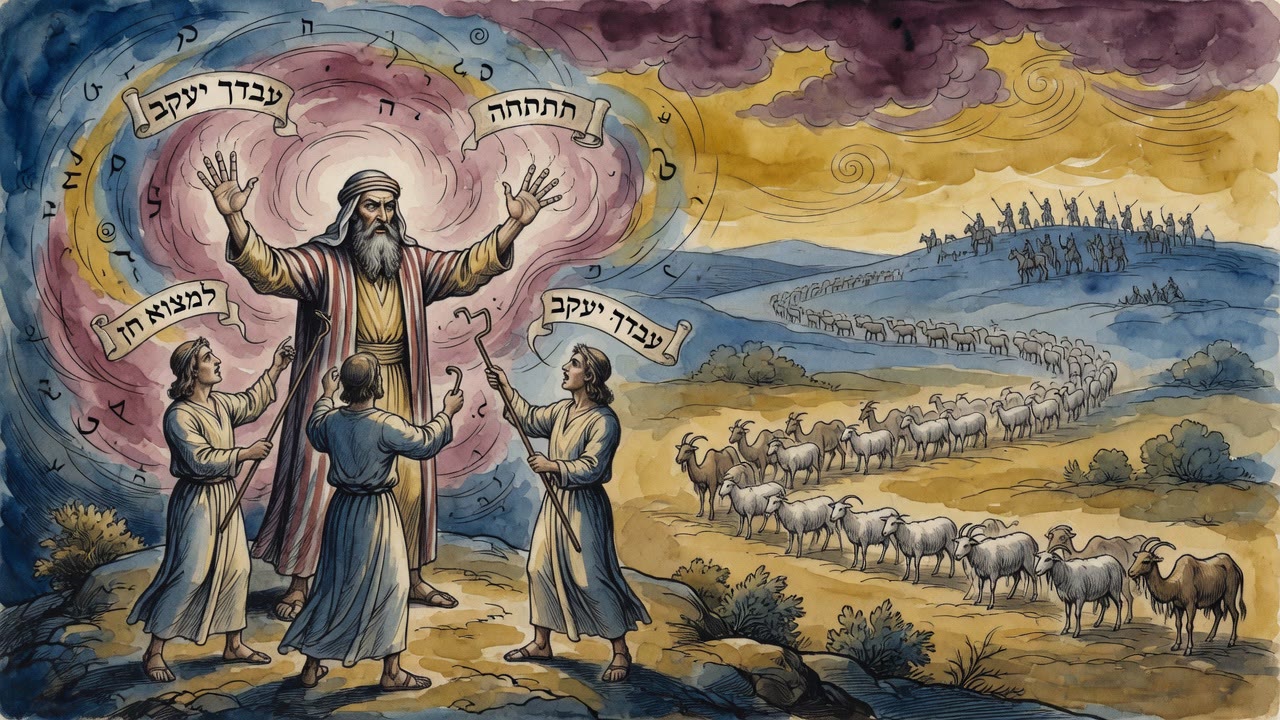
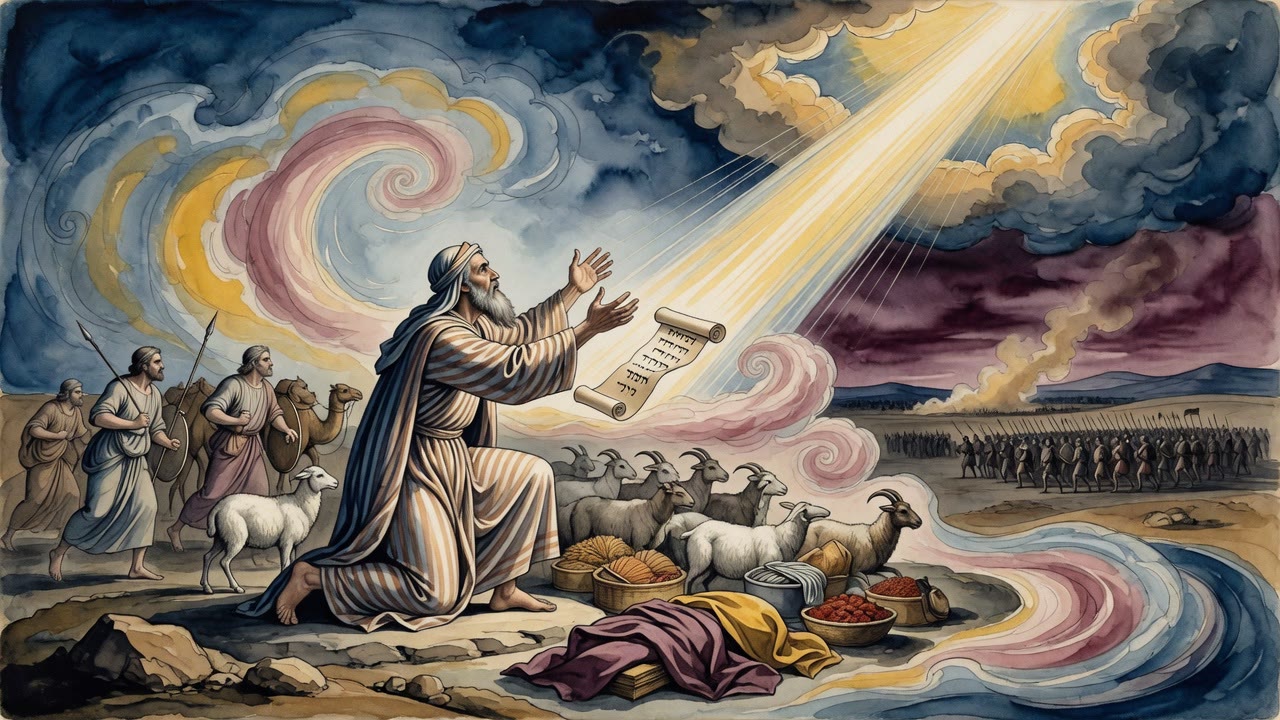
Jacob did not wait for Esau to invent the conversation. He called the first servant and put three questions into his mouth as if the road itself would ask them. When Esau my brother meets you and asks, Whose are you, and where are you going, and whose are these before you? The answers were already cut and measured. Belong to your servant Jacob. A gift sent to my lord Esau. And behold, he also is behind us.

Ownership. Direction. Purpose. Jacob knew the questions of a man riding with four hundred because he had once been the younger brother who took what the elder wanted. He wrote the peace before the war arrived.

The Same Words Down the Whole Line

He did not trust improvisation. According to these words you must speak with Esau when you find him. First servant. Second servant. Third servant. Every driver who followed a flock. The caravan became a single sentence repeated until it could not fail from nerves. Jacob was running a drill, not a hope. If one mouth stammered, the next mouth would still carry the same three answers like stones in a sling.

Behind the words walked goats, then sheep, then camels, then cattle, then more. The gift was not one pile. It was a rhythm.

Room Between Flock and Flock

Pass over before me, and put much room between flock and flock. Jacob made them ready by the hand of his servants in droves apart. A man cresting a hill in anger meets goats and must decide again. He rides farther and meets sheep and must decide again. Camels. Cows. Donkeys. Each gap forces the heat in the chest to cool a fraction before the next living bribe appears. By the time Esau's eyes finally found his brother's body, those eyes had already practiced mercy on animals.

Strategy is not the opposite of prayer. In Jacob's camp it was prayer's scaffolding.

I Will Soften His Face First

Jacob spoke the private calculus where only Heaven and dust could hear. I will make his countenance friendly by the gift which goes before me, and afterward I will see his face: perhaps he will accept me. Face and gift traded places in the Hebrew music of the verse. Soften the face before meeting the face. Buy a path for the eyes so the old murder plan cannot use them as a door.

He sent the gift over the stream. He stayed a night longer with the fear that twenty years had not erased.

Seven Bows and a Mouth Full of Mercy

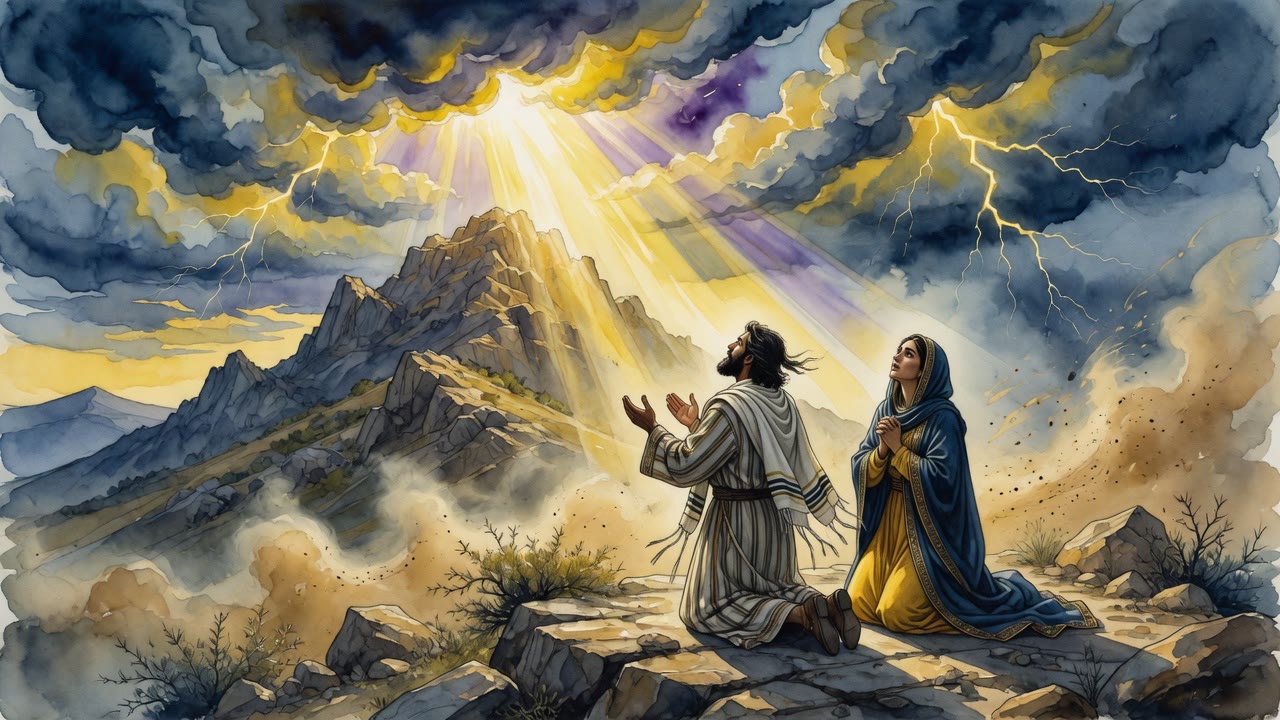
At last he went over before the women and children, praying and asking mercy before the Lord, and he bowed upon the earth seven times until he met his brother. Each bow was not theater for Esau alone. It was a body lowering itself under a petition. Seven full prostrations between a guilty past and a living enemy.

Esau ran, embraced, fell on his neck. The script had done its work. The gaps between flocks had done theirs. The softened face arrived before the hard history could finish loading its bow. Jacob stood up from the seventh bow into a brother who had chosen, for one day, not to kill him.

Four Hundred and the Long Math of Fear

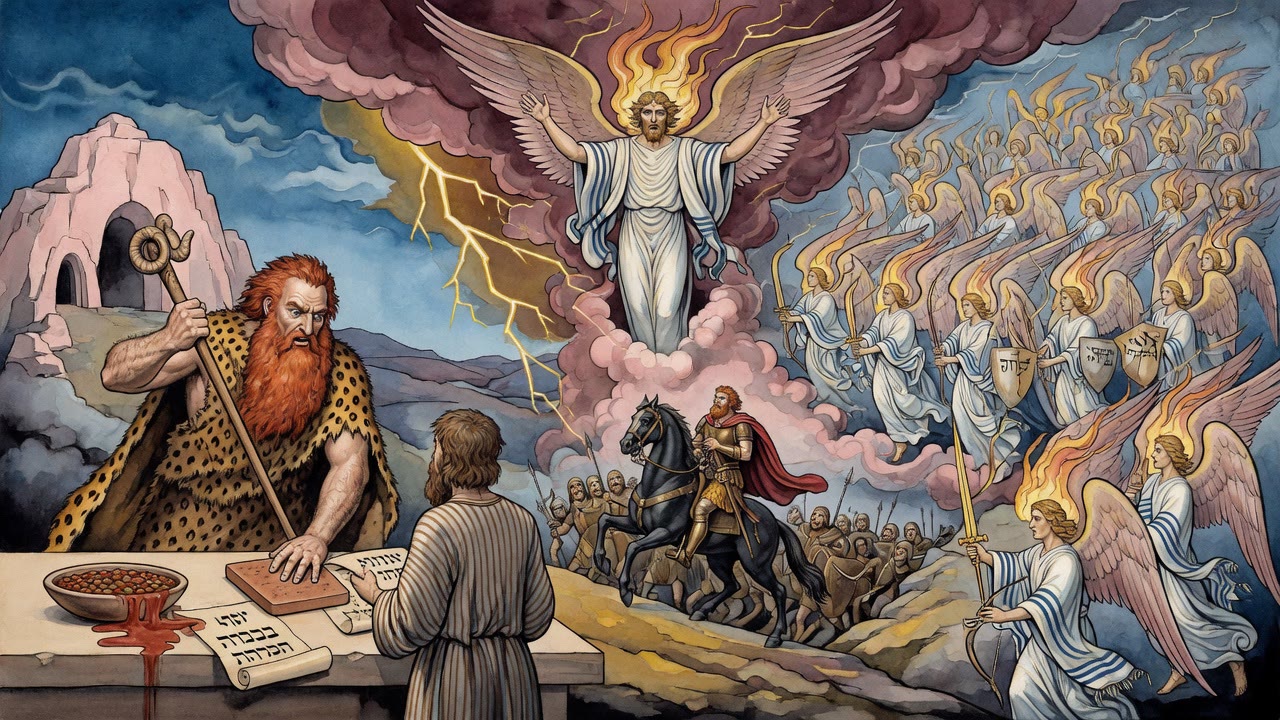
Esau was coming with four hundred men. Jacob divided camps, prayed the names of Abraham and Isaac, and reminded Heaven of the promise of sons as many as sand. Then he did what frightened wise men do: he prepared the human path as carefully as the divine petition. Gifts without a script can look like mockery. Scripts without gifts can look like empty cleverness. He braided both.

Each servant who crested a ridge toward Esau carried the same three answers until the questions themselves grew tired. Whose are you. Where are you going. Whose are these. Servant of Jacob. Gift to my lord Esau. He himself is behind us. The cadence turned a possible ambush into a procession of meaning. Esau would have to ride through layers of speech and livestock before he reached the brother he once planned to kill.

When the seven bows finally brought face to face, Jacob had already spent the night wrestling a stranger at the Jabbok and limping into dawn with a new name pressing at the edges of his old one. The softened face of Esau met a man who had been touched by more than strategy. Still the strategy mattered. Mercy often arrives on a road someone swept first. Jacob swept with goats, gaps, drilled sentences, and a body that knew how to go down to the earth seven times without losing the prayer in his mouth.

He checked the gaps one last time with his eyes the way a general checks ranks. Too close and the gift became one lump that anger could refuse in a single breath. Too far and Esau might grow bored and ride around the whole display. Jacob wanted intervals that forced decision after decision, each one slightly softer than the last, until the man who arrived at his face was not the same man who had left Seir with murder for a plan.


← All myths
From the tradition

Sources

5 sources

The texts behind this telling. Some cards carry a translation of the source; others are our own retelling of it, and each card says which. Every card links out to the original.

Targum Pseudo-Jonathan on Genesis 32:17Targum Pseudo-Jonathan on Genesis

Retold in our words. Read the original at the link below.The Targum of Jonathan ben Uzziel, trans. J. W. Etheridge, London, 1862 · Public Domain

Jacob was a strategist, and Targum Pseudo-Jonathan preserves the tactical cleverness of his gift to Esau (Genesis 32:17). He did not send one large herd. He sent flock after flock, and he gave a single instruction to his servants: "Put much room between flock and flock."

Think about what that does to a man riding toward war. Esau crests a hill and sees goats. He takes them and keeps riding. He crests the next hill and sees sheep. He takes them and keeps riding. Then camels. Then cows. Then donkeys. With every wave his anger has to reset, and each time a little less of it remains. By the time Esau actually sees his brother's face, he has already been softened by six separate encounters with Jacob's generosity.

The theology of the gap

The rabbis read this pacing as a spiritual principle. Rage cannot be argued out of a person; it has to be worn down. Jacob does not try to convince Esau of anything. He simply places gift after gift in the road, with rewach, space, breathing room, between each one. He lets time and beauty do the work.

The takeaway: sometimes the path to reconciliation is not a single grand gesture but a series of small ones, with patience between them.

Full source
Targum Pseudo-Jonathan on Genesis 32:18Targum Pseudo-Jonathan on Genesis

Retold in our words. Read the original at the link below.The Targum of Jonathan ben Uzziel, trans. J. W. Etheridge, London, 1862 · Public Domain

Jacob knew Esau would ask three questions, so he wrote the answers in advance. Targum Pseudo-Jonathan preserves the briefing given to the first servant in the caravan (Genesis 32:18): "When Esau my brother meets you and asks, Whose are you, and where are you going, and whose are these before you?"

Three questions. Ownership, direction, purpose. These are the questions any raider would ask, and any servant caught unprepared would stumble. Jacob would not let his men stumble. He rehearsed them.

Why scripting matters

The rabbis read this as a lesson in responsibility toward those who serve under you. Jacob did not simply hand his men a fortune in animals and send them into the path of a man with four hundred swords. He equipped them. He imagined the encounter from their point of view and put the right words on their tongues before they needed them.

There is a theology here too: even in the moment of direst prayer, Jacob did not stop doing the practical work. He prayed, he prepared, he scripted. The Talmud would later formalize this balance (Berakhot 32b): hishtadlut, human effort, and tefillah, prayer, are partners, not substitutes.

The takeaway: prayer that does not also script the hard conversation is only half the work.

Full source
Targum Pseudo-Jonathan on Genesis 32:20Targum Pseudo-Jonathan on Genesis

Retold in our words. Read the original at the link below.The Targum of Jonathan ben Uzziel, trans. J. W. Etheridge, London, 1862 · Public Domain

"According to these words you must speak with Esau when you find him." Targum Pseudo-Jonathan repeats the instruction three times (Genesis 32:20), first servant, second servant, third servant, and then everyone who followed the flocks. Jacob was not improvising. He was running a drill.

Why the repetition? The rabbis noticed that Jacob refused to let anyone in the caravan speak off-script. One inconsistent answer, one servant who panicked and said something unexpected, and the whole strategy would collapse. The gift was not just animals. The gift was the words that came with the animals, the steady, repeated message: your servant Jacob is coming after us.

The discipline of one message

A man riding toward battle listens for patterns. If the first servant says "Jacob sends these" and the second says the same and the third says the same, Esau hears something no skirmisher could miss: my brother is being systematic. He is not trying to buy me off in a panic. He has thought this through.

The takeaway: when the stakes are highest, do not improvise. Decide the message, repeat the message, and trust that repetition itself is persuasive.

Full source
Targum Pseudo-Jonathan on Genesis 32:21Targum Pseudo-Jonathan on Genesis

Retold in our words. Read the original at the link below.The Targum of Jonathan ben Uzziel, trans. J. W. Etheridge, London, 1862 · Public Domain

"I will make his countenance friendly by the gift which goes before me, and afterward I will see his face: perhaps he will accept me." Targum Pseudo-Jonathan preserves Jacob's private calculation in (Genesis 32:21), and the Hebrew wordplay underneath it is one of the richest in the whole book.

This teaching uses the word panim, face, four times in rapid succession. I will appease his face with the gift that goes before my face, then I will see his face, perhaps he will lift up my face. Four faces. Esau's, Jacob's, the gift's, and in some readings, God's.

Why faces?

The rabbis taught that reconciliation happens face to face, never side to side. But before the faces can meet honestly, something has to precede them, some softening, some sign of good will. Jacob sends the gift as his proxy, his first face, so that when his actual face finally appears, his brother is ready to see it.

There is humility here too. Jacob does not say, "He will accept me." He says, perhaps he will accept me. The reconciler holds the outcome loosely. You prepare the ground; you do not demand the harvest.

The takeaway: before the hard conversation, send something ahead that says, I come in peace. The face will follow the gift.

Full source
Targum Pseudo-Jonathan on Genesis 33:3Targum Pseudo-Jonathan on Genesis

Retold in our words. Read the original at the link below.The Targum of Jonathan ben Uzziel, trans. J. W. Etheridge, London, 1862 · Public Domain

"And he himself went over before them, praying and asking mercy before the Lord; and he bowed upon the earth seven times, until he met with his brother." Targum Pseudo-Jonathan (Genesis 33:3) turns the plain report into a spiritual portrait.

Notice what Jacob was doing with each bow. He was praying. Seven full prostrations, forehead to the earth, between himself and Esau. Each one was a prayer for mercy. The bowing was not merely courtly, it was liturgical.

Why seven?

The number seven is the signature of completeness in Hebrew thought. Seven days of creation. Seven branches of the menorah. Seven circuits around a bride. Jacob's seven bows constitute a full cycle, a complete supplication. He was not bowing once for show; he was bowing seven times because seven is the shape of wholeness.

The Targum adds a detail the plain text hides: Jacob went before his family. He did not send the handmaids forward and watch from behind. When the moment came to face Esau, Jacob stepped in front of everyone he loved. Whatever calculation had put the handmaids at the front of the caravan the night before, in the actual encounter he made himself the first body Esau would meet.

The takeaway: a father's last defense against the world is his own body, seven times bowed.

Full source