Jacob's Sons Married Sisters to Guard the Seed
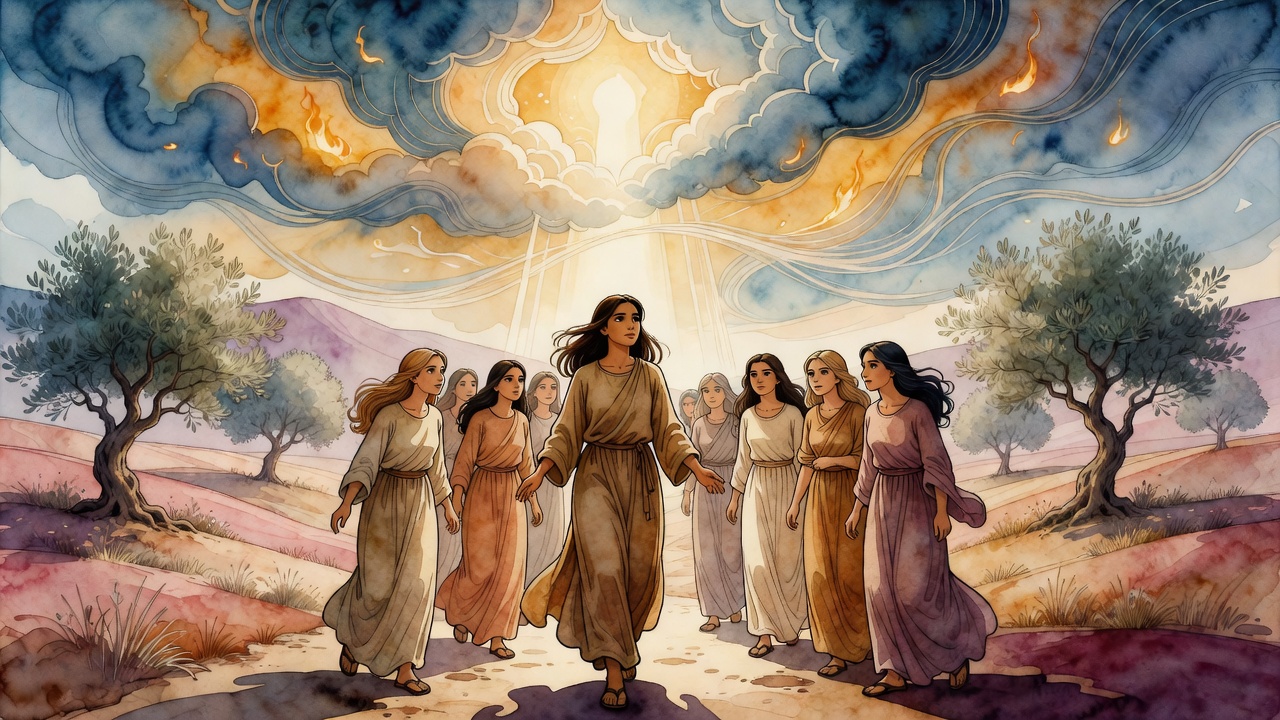
The list said daughters, then named only Dinah. Before the wagons rolled to Egypt, the sons took wives from inside the tents.
Table of Contents
 Click for full size
Daughters in the Count
Jacob heard the word and gathered his wives, his sons, and his daughters. The list of those who went down to Egypt names "his daughters" in the plural, then later fixes the eye on Dinah alone (Genesis 46:7, 46:15). The house knew the riddle in its bones. How many daughters walked those tents? Who stood at the wells and at the bridal cloths when twelve sons needed wives and the peoples of the lands pressed close with their gods and their daughters?
Famine sharpened every choice. Grain sat in Egypt under a face the brothers did not yet know. Before the wagons, before the bowing, the family had already decided what kind of blood would ride south.
Jacob packed more than food. He packed a closed map of marriage. The tents would move. The seed would not spill on the road.
Blood Chose Blood
The daughters of Jacob became wives to his sons. Sisters married brothers so the seed would not spill into foreign soil. Inside the camp it landed as strategy. A people carrying a covenant through famine and fear would not hand their future to Canaanite hearths.
"And all the seed of Jacob married their sisters and their blood-relations, so that they should not intermarry with the people of the lands." The line is blunt. Blood chose blood. The prophet's image seals it: "Yet I had planted thee a noble vine, wholly a true seed" (Jeremiah 2:21). True seed does not mean soft romance. It means a vine the planter still recognizes when the wind of empire blows.
Egypt waited with its grain and its idols. The road down from Canaan was already a risk. Every wedding inside the clan was a gate shut against melting away. Dinah's name still stands alone in the plain count. The plural "daughters" opens a wider room filled with sister-wives and the hard work of staying a people.
Brides From Keturah's Line
Not every marriage in the wider clan closed that tightly. Wives also came from the branches of Abraham and Keturah, kin at a remove, Midianite lines folded back into Jacob's sons. Zebulon took Maroshah, daughter of Molad, grandson of Midian. Benjamin, ten years old, was given Mahlia, daughter of Aram, grandson of Terah. She bore him five sons. At eighteen he married Arbat, daughter of Zimran, a son of Abraham by Keturah, and by her also he had five sons.
Those names are not strangers from a market of idols. They are cousins from Abraham's other tents, pulled close so the covenant family could keep its shape without vanishing into Egypt's streets.
Two maps of the same fear. One map says sisters, blood-relations, a wall of sameness. The other map says marry within Abraham's broader household, even when the bride's grandfather was Midian or Aram. Both refuse the open field where a son of Jacob might wake under a household god that never knew the God of the fathers.
Joseph Kept His Mouth Shut
When the brothers sold Joseph, he kept his mouth shut about his true name among Ishmaelites and Midianites. He would not shame the sellers by claiming Jacob's house in foreign ears. Even under threat he held the fiction of a slave. Loyalty to the family ran deeper than self-rescue.
The most distinguished of the Midianites looked at him and refused the lie. "Thou art no slave, thy appearance betrayeth thee." He threatened Joseph with death unless he acknowledged the truth. Joseph was steadfast. He would not act treacherously toward his brethren. He said he was a slave. He kept saying it.
A man who will die rather than expose his brothers is a man who already knows the clan is larger than one life. The sister-wives of the camp and Joseph's sealed lips belong to one stubborn ethics. The seed must arrive in Egypt still able to say who it is.
Wagons Toward Egypt
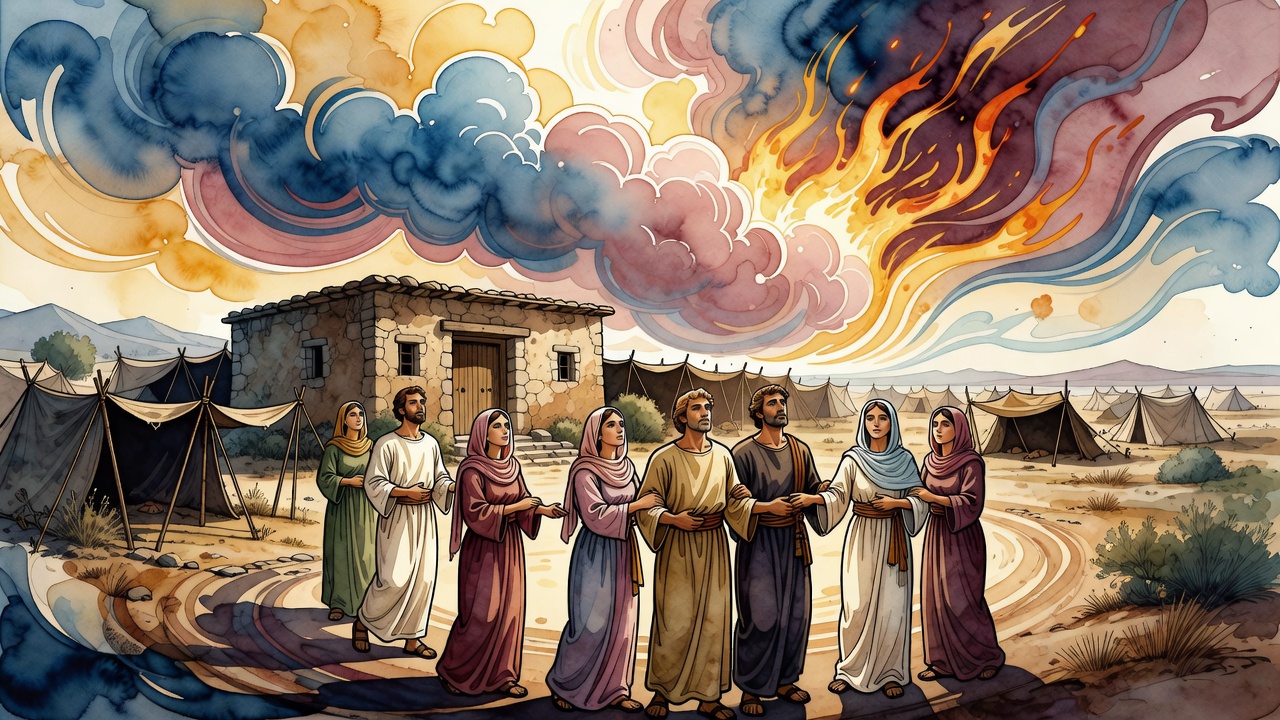
Wagons rolled. Children clung. The plural daughters of the verse became the women who had already bound the tribes from within. The true seed crossed a border without dissolving. Sister-wives and near-kin brides were not romance plots. They were a wall against a map full of household gods waiting to marry a Hebrew son and rename his children.
Dinah's single name in the plain count still aches. The plural daughters of the descent list open a door the camp walked through without apology. A noble vine, wholly a true seed. The planter wants fruit he can still call his own when empire swallows fields.
Joseph's silence among traders rhymes with that same stubborn care. Do not give the house away. Not by marriage. Not by speech. Not on the road to Egypt. The seed stayed true long enough to become a nation that could still name its fathers when Pharaoh asked who they were.
← All myths