5 min read

Jacob's Voice Met Esau's Hands Before They Met

Isaac heard Jacob's voice and felt Esau's hands in one blessing. Years later Jacob sent waves of gifts while Esau learned what the stolen words had cost.

Curated by Arthur · Told by Maggid ·
Table of Contents
  1. Two Signals in One Dark Room
  2. A Blessing That Cannot Be Unsaid
  3. Messengers, Herds, and a Night of Fear
  4. When Esau Understood the Full Loss
  5. Voice and Hands Still Contest the Field
Jacob's Voice Met Esau's Hands Before They Met Click for full size

Two Signals in One Dark Room

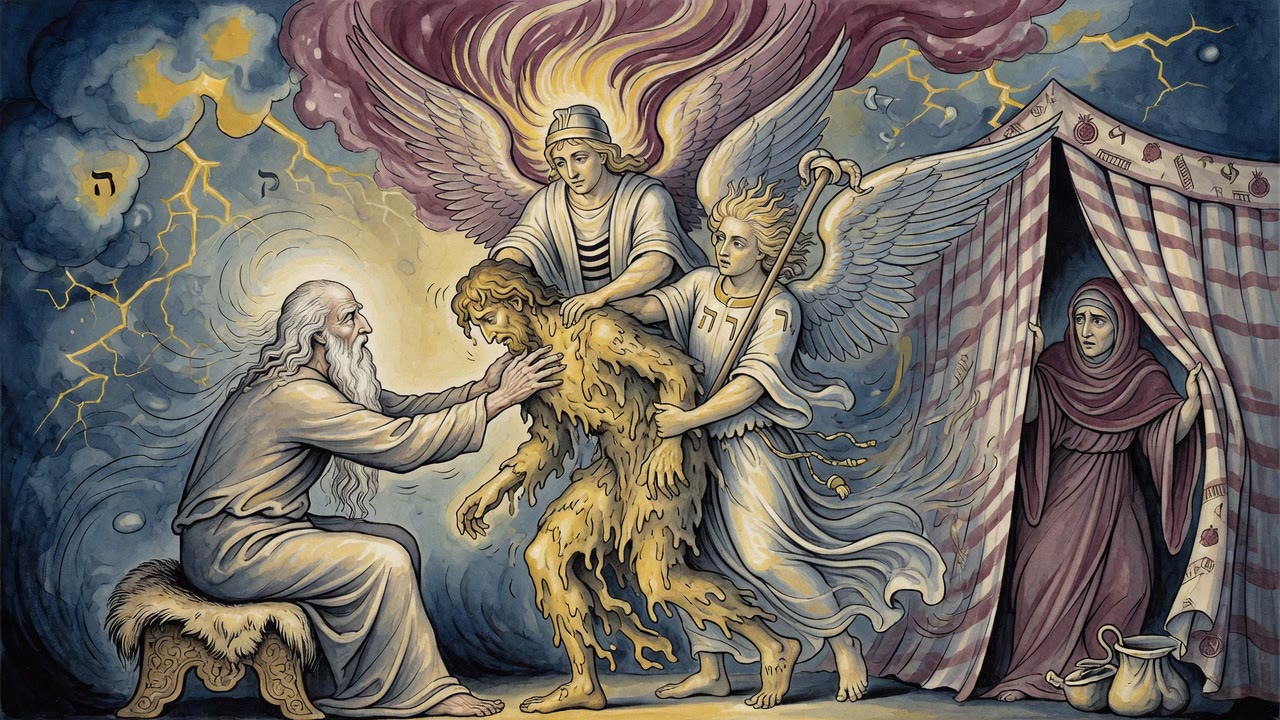
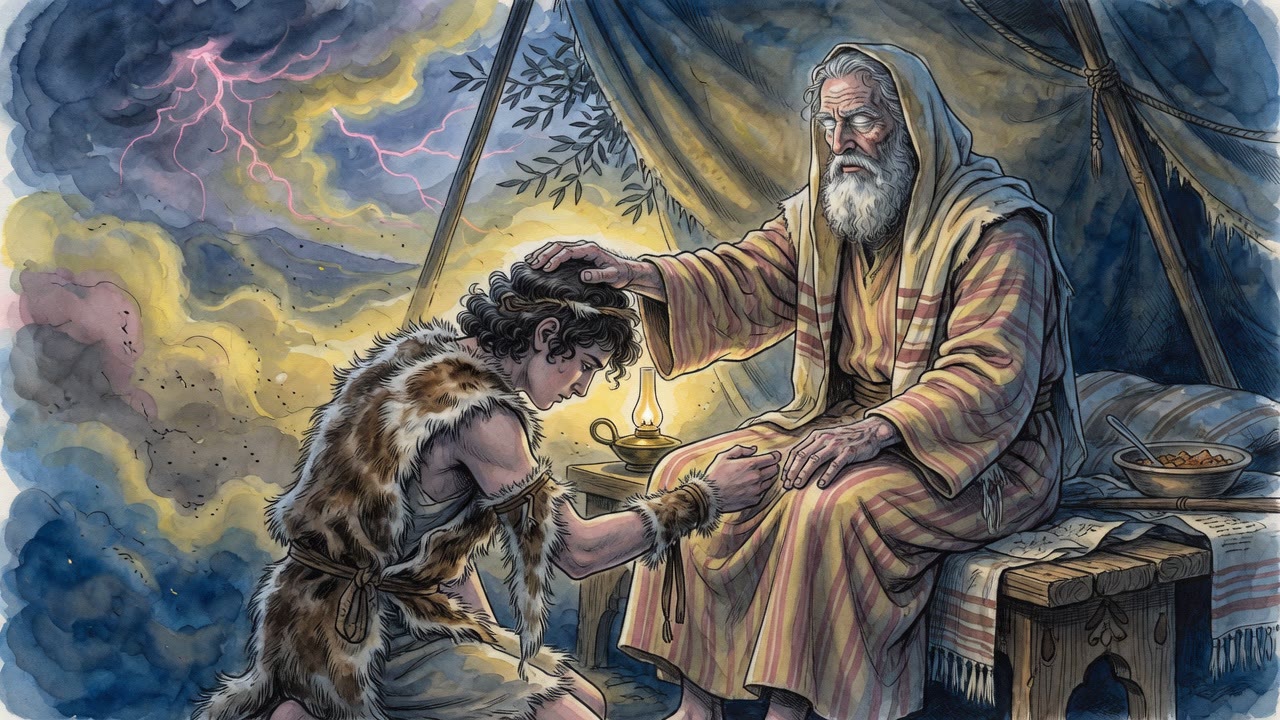
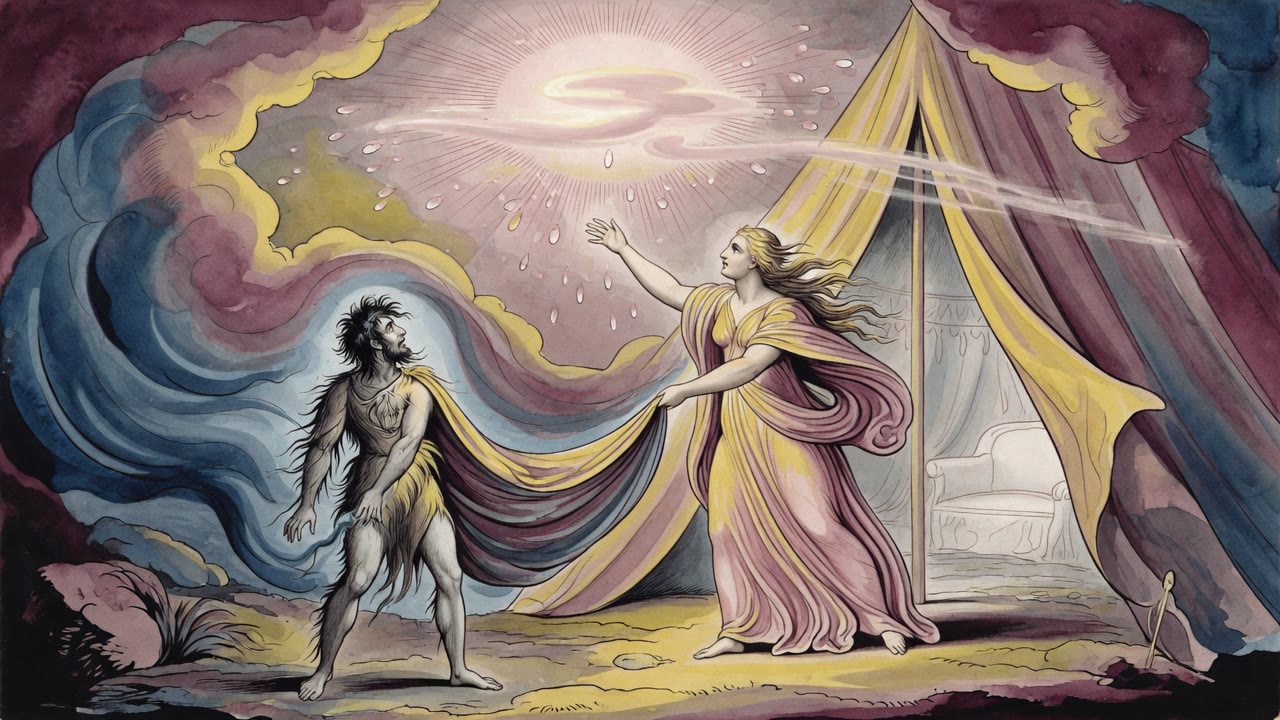
Isaac sat blind and listened. The voice was Jacob's. The hands, covered in goat, felt like Esau's. Bereshit Rabbah hears history hiding in that split. "The voice is the voice of Jacob, but the hands are the hands of Esau" (Genesis 27:22) becomes more than a father's confusion. It becomes a map of later power: when Jacob's voice rises in prayer and study, Esau's hands cannot rule; when the voice falls silent, the hands of violence prosper.

Rebekah had already felt two nations wrestling in her womb. The blessing scene makes the wrestle audible and touchable at once. Heaven lets the younger wear the older's skin so the covenant word can land where it must.

A Blessing That Cannot Be Unsaid

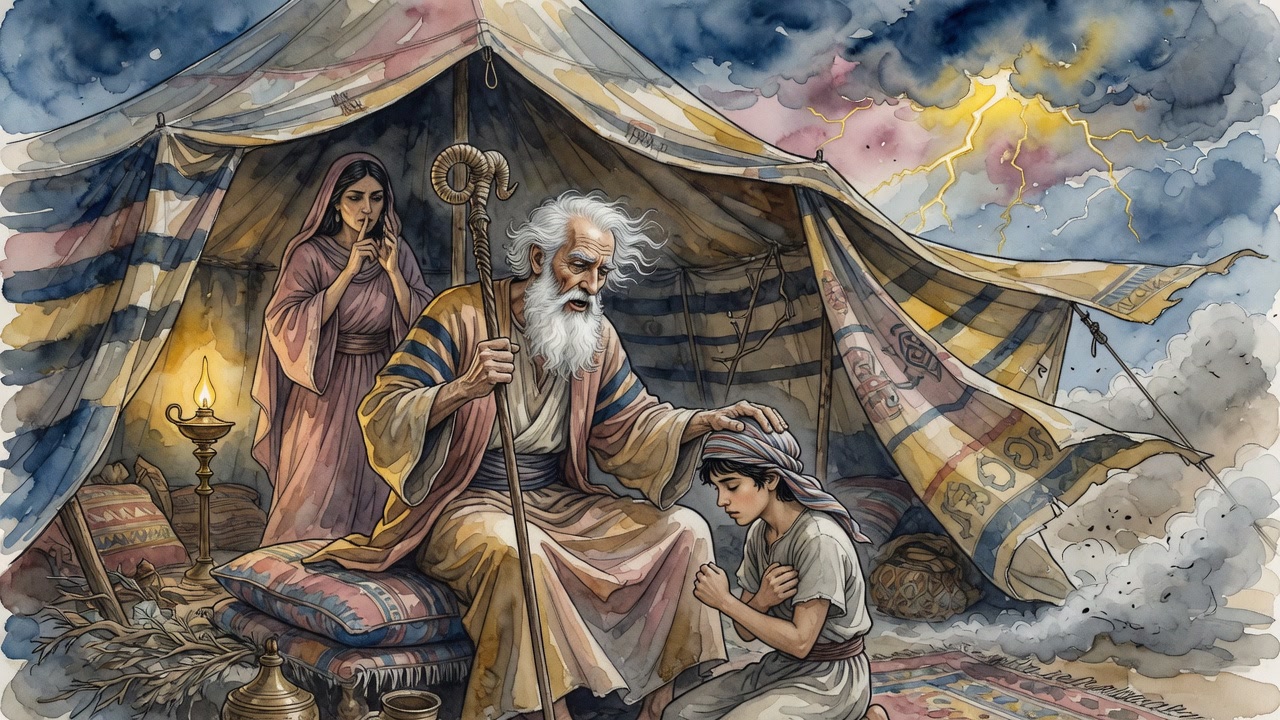
Isaac trembled when Esau returned from the field with real game and a real plea. The stolen blessing stood. A second blessing could honor Esau with fatness and sword, but the first word had already named Jacob as master of brothers in the line that carries promise.

Esau's cry was loud enough to become a midrashic warning about tears that force heaven to pay a debt in other generations. Theft of a blessing is not a children's trick in this telling. It is a civilizational hinge.

Messengers, Herds, and a Night of Fear

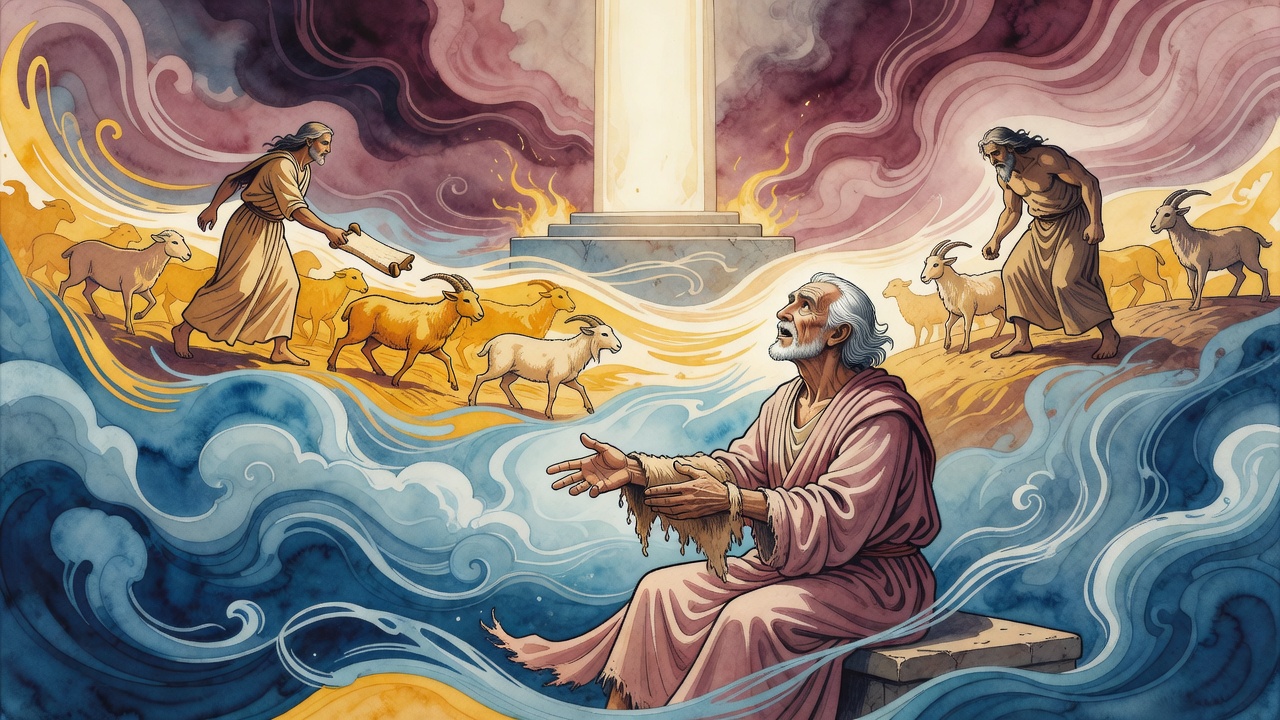
Years later Jacob turned home and sent messengers ahead to Esau in Seir. He called himself servant and Esau lord, stacking gifts in waves: goats, camels, cattle, distance between droves so kindness would arrive as rhythm, not as one panicked bribe. He divided camps. He prayed. He feared the sword his brother still knew how to use.

The man who once wore kid-skin now tried to wear humility in public. Soft words and paced herds were his answer to the hands he had once counterfeited.

When Esau Understood the Full Loss

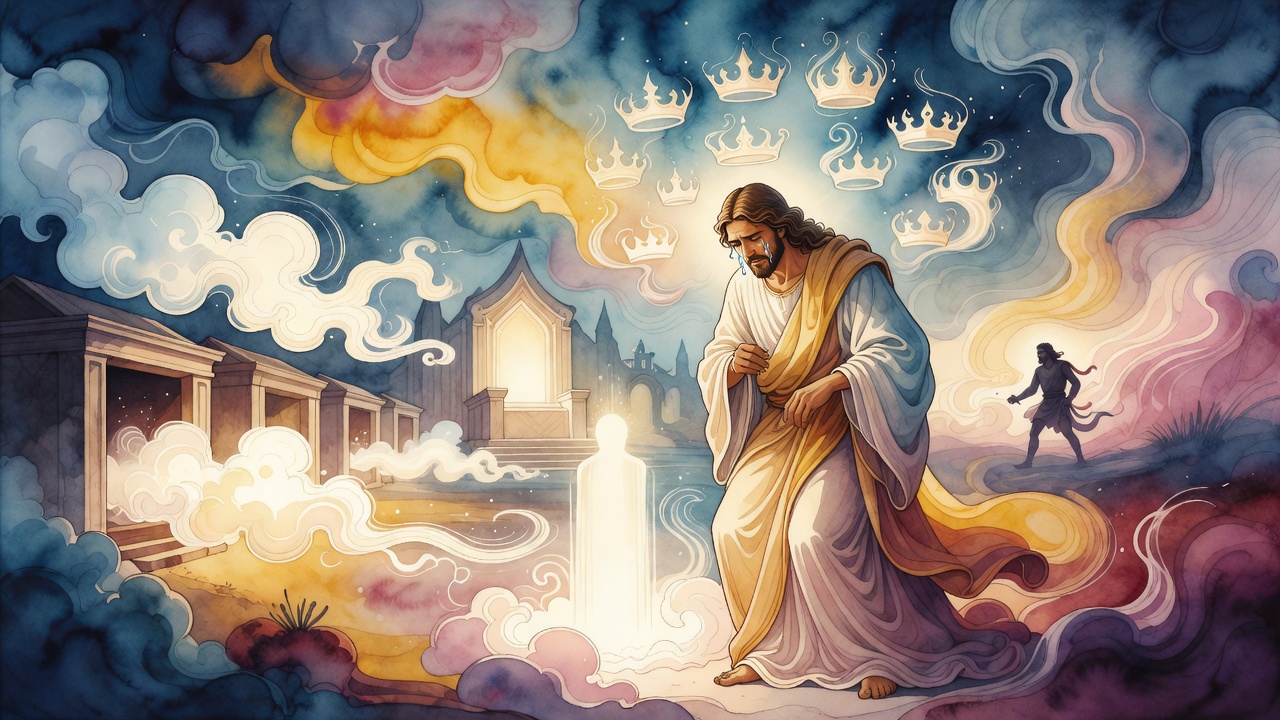
Devarim Rabbah and related traditions linger on Esau's realization: the blessing was not only food and field. It was future. Kings, land, and the quiet privilege of carrying Abraham's name forward had shifted. Hatred flared and cooled into a complicated peace when the brothers finally embraced, each still knowing the ledger was uneven.

Jacob limped from a night of wrestling when he met Esau by day. The limp told the truth better than speeches. Covenant survival leaves marks.

Voice and Hands Still Contest the Field

Whenever Israel treats prayer and learning as decoration, the midrash's Esau-hands find room. Whenever the voice of Jacob thickens into real service, the sword loses its claim to define the story. The brothers' meeting does not erase the earlier room. It shows two men living inside a word spoken over a blind father's confusion.

Jacob's gifts did not buy back innocence. They bought a path to live next to a brother who had every reason to kill him. Esau's escort offer and Jacob's gentle refusal keep distance inside reconciliation. Peace here is not fusion. It is survival with memory.

Parents still create rooms where voice and hands disagree. Nations still do. The Torah keeps Isaac's tremble so no one pretends the split was cheap. Rebekah's plan, Jacob's fear, Esau's tears, and the later herds all hang on one sentence about voice and hands.

Read that sentence as forecast and the whole later rivalry clarifies. Read it as tragedy and the responsibility of the voice becomes urgent. Israel is not asked to become Esau's hands. Israel is asked not to lose Jacob's voice.

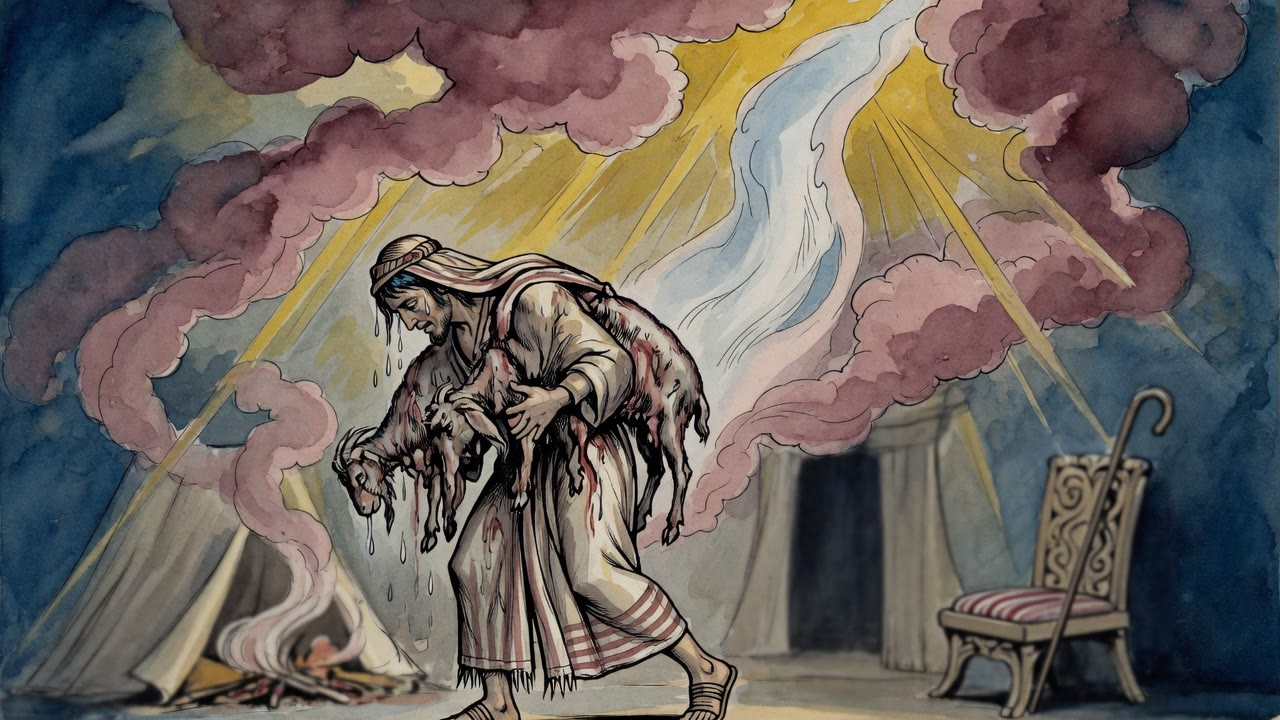
On the road to Seir the herds moved like punctuation between old theft and new restraint. Each drove said: I know what I took; I will not take your life as sequel. That is not full repair. It is the beginning of a people learning to carry a blessing without needing to wear another man's skin again.

Isaac's blindness is not only medical in the midrashic imagination. It is the condition that lets voice and hands quarrel without visual arbitration. A seeing father might have stopped the costume. A blind father becomes the stage on which heaven's preference and human schemes collide.

Jacob's fear on the return road is earned. He remembers the hands. He also remembers his own voice performing a lie. Sending messengers is already a kind of repentance: he will not arrive as a thief in the night again. He arrives announced, burdened with gifts, openly vulnerable.

Esau's eventual embrace does not cancel Seir's later role in Israel's memory as a hard brother-nation. The personal peace and the national tension can coexist in the tradition. What the meeting proves is narrower and enough: the stolen blessing did not have to end in fratricide that day. Voice can still speak. Hands can still choose not to strike.

The midrash will not let Israel forget which signal must lead. Voice first. Hands second. When the order reverses, exile logic returns. Jacob's messengers and paced herds were an attempt to keep the order honest on a road that still smelled of old theft.


← All myths

From the tradition

Sources

3 sources

The texts behind this telling. Some cards carry a translation of the source; others are our own retelling of it, and each card says which. Every card links out to the original.

Bereshit Rabbah 65:20Bereshit Rabbah

Retold in our words. Read the original at the link below.The Sefaria Midrash Rabbah, 2022 · CC-BY

The Torah, in its infinite wisdom, actually speaks to this very feeling, using one of the most iconic scenes in Genesis.

Think about Jacob and Esau. The story unfolds in (Genesis 27:22): Jacob, masquerading as Esau, approaches his blind father Isaac. Isaac, confused, says, “The voice is the voice of Jacob, but the hands are the hands of Esau.”

What does it mean?

Bereshit Rabbah, the ancient commentary on Genesis, unpacks this verse in fascinating ways. It's not just about a single moment of deception; it’s about the power – and the peril – of our voices.

One interpretation suggests that “the voice of Jacob” represents wisdom, Torah study, and prayer. It's the voice of intellect and spirit. But, the commentary continues, "his hands are those that flay dead animals." Yikes. What a stark contrast! Another interpretation offers that Jacob rules only with his voice. Esau rules only with his hands.

Rabbi Pinḥas takes it a step further. He suggests that the voice of Jacob actually withdraws into itself when it's not used for prayer and Torah. It becomes diminished, weakened. Like a muscle that atrophies from disuse. The Matnot Kehuna even points out a nuance in the Hebrew: the word hakol ("the voice") is spelled without a vav, implying that the voice of Jacob can be demeaned, or kal.

But here’s where it gets really interesting. The commentary contrasts this with Esau. When Jacob’s voice is weak, God "signals to Esau," and Esau comes to attack. It's a powerful image: a muted voice invites aggression and dominance.

Rabbi Berekhya adds another layer. When Jacob murmurs with his voice – using it for quiet, insidious things like slander – Esau’s hands dominate. He connects this to the story of Amalek in Exodus 17. The people complained against Moses, and immediately Amalek attacked (Exodus 15:24, 17:8). A complaining, murmuring voice invites trouble.

However, when Jacob calls out loudly, presumably in prayer or righteous action, Esau's hands lose their power.

Rabbi Abba bar Kahana shares a fascinating anecdote about Bilam and Avnimos the weaver. Idolaters sought their advice on confronting the Israelites. Avnimos told them to check the synagogues and study halls. If they found children crying out with the voice of Torah, they would be unable to overcome Israel. But if the voices were silent… then they could prevail. The voice of Jacob, when raised in Torah, is a shield.

But the Bereshit Rabbah doesn’t shy away from showing us the flip side. It points to examples in Jewish history where misusing the "voice of Jacob" led to disastrous consequences.

Consider the story of the concubine in Giva (Judges 21). The Israelites rashly swore an oath, "cursed is he who gives a wife to Benjamin." This thoughtless, spoken curse ultimately forced the men of Benjamin to "steal" wives, an act reminiscent of Esau's violent nature.

Or the days of Yerovam, when the sound of weeping filled the land after a devastating battle. Rabbi Shmuel bar Naḥman explains that Yerovam was punished because he "defaced the identifying features of Israel's faces," a metaphor for suppressing their identity and voice. Rabbi Levi adds that Yerovam positioned guards over the dead for three days, a desecration of their memory, echoing the idea of silencing their story.

Rabbi Yoḥanan, Reish Lakish, and other Rabbis offer further explanations, focusing on Yerovam's disrespect for religious leaders and his tolerance of idolatry. Yerovam stifled the true voice of Israel.

The commentary concludes with a powerful a fortiori argument: if a king is punished for mistreating another king, how much more so will a commoner be punished for mistreating another commoner? The principle is clear: the misuse of power and voice has consequences.

So, what's the takeaway from all this? They have the power to protect, to uplift, and to connect us to something greater than ourselves. But they also have the power to harm, to divide, and to invite negativity into our lives. The voice of Jacob, when used wisely, is a force for good. But when misused, it can open the door to the hands of Esau. It’s a potent reminder to choose our words carefully, to speak with intention, and to use our voices for prayer, for study, and for acts of kindness. What will you do with your voice today?

Full source
Bereshit Rabbah 75:3Bereshit Rabbah

Retold in our words. Read the original at the link below.The Sefaria Midrash Rabbah, 2022 · CC-BY

We’ve all been there. But what if I told you this very human tendency is reflected in the ancient commentaries on the Torah?

Bereshit Rabbah, a collection of rabbinic interpretations of the Book of Genesis. Specifically, It's a tense moment – years have passed since Jacob tricked Esau out of his birthright, and now Jacob is returning home. He's understandably nervous about the reception he'll receive.

Rav Huna kicks things off with a quote from Proverbs (26:17): “Like one who grasps the ears of a dog, so is a passerby who is angered over a quarrel not his.” What’s he getting at? Well, the Rabbis are using this proverb as a lens through which to understand Jacob’s actions. Was Jacob sticking his nose where it didn’t belong? Was he stirring up trouble where there was none?

Shmuel bar Naḥman then offers an analogy. An innocent passerby, seeing the danger, tries to wake him up to warn him. What does the robber do? He wakes up and starts beating the very person who was trying to help! The passerby cries out, "Evil has awakened!" The robber retorts, "I was asleep, and you woke me!"

What’s the connection to Jacob and Esau? According to Shmuel bar Naḥman, God is essentially saying to Jacob: Esau "was going on his way," perhaps content to leave the past in the past. Why are you sending messengers to him, addressing him submissively with the words, "So said your servant, Jacob"?

The implication is clear: Jacob, in his anxiety, might be the one re-igniting the old conflict.

Rabbi Yehuda ben Rabbi Simon drives the point home with a quote from Jeremiah (13:21): “What will you say when He will reckon with you, and you trained them as chieftains and heads over you?” Again, God is speaking to Jacob, questioning his actions. "He was going on his way," God says, "and then you are sending to him and saying: 'So said your servant, Jacob.'"

The repetition of "He was going on his way…" is striking. It emphasizes the idea that Jacob might have been better off leaving things alone. That sometimes, our attempts to control a situation, to preemptively appease or defend, can actually make things worse.

These Rabbis, through their interpretations, invite us to consider the complexities of reconciliation and the potential pitfalls of our own anxieties. Maybe Esau had moved on. Maybe Jacob's fear was creating the very problem he was trying to avoid.

Bereshit Rabbah isn’t just telling us a story; it’s holding up a mirror. It's asking us to examine our own motivations, our own fears, and the ways in which we might inadvertently "grasp the ears of a dog," stirring up trouble where there was peace. How often do we create the very conflicts we fear the most?

Full source
Devarim Rabbah 1:19Devarim Rabbah

Retold in our words. Read the original at the link below.The Sefaria Midrash Rabbah, 2022 · CC-BY

The story of Esau and Jacob is a classic example, and the Rabbis in Devarim Rabbah, a collection of homiletic interpretations on the Book of Deuteronomy, unpack it with incredible insight.

The scene. Esau comes to his father, Isaac, realizing Jacob has snagged the blessings meant for him. He cries out, "Have you not reserved a blessing for me?" (Genesis 27:36).

Isaac’s reply? Ouch. According to Rabbi Berekhya, Isaac essentially says that even if he did bless Esau, it would somehow be a blessing for Jacob. Remember, Isaac had already declared, "Be a lord to your brethren" (Genesis 27:29). The implication? What the servant has belongs to the master. Pretty harsh.

Here's where it gets interesting. The Rabbis then explore the cryptic phrase "turn yourselves to the north [tzafona]" from (Deuteronomy 2:4). What could that possibly mean in this context?

Rabbi Ḥiyya offers a fascinating interpretation. He suggests that God is telling the Israelites: if you see Esau (meaning, his descendants) trying to provoke you, don't engage. Instead, conceal [hatzpinu] yourselves until his power fades. In other words, "turn yourselves to the north" means bide your time, be strategic, and wait for the right moment.

But Rabbi Yehuda bar Shalom takes it a step further. He imagines Israel questioning God. "Master of the universe," they ask, "his father gave him the blessing: 'By your sword you will live' (Genesis 27:40), and You confirmed it! And now you tell us to hide? Where can we possibly flee?"

God's answer is profound: "If you see that they are confronting you, flee to the Torah." Tzafona, "north," is nothing other than Torah, Rabbi Yehuda bar Shalom argues, referencing (Proverbs 2:7): "He reserves [yitzpon] the Torah for the upright." The Torah becomes a refuge, a place of strength and wisdom in the face of adversity. A place to hide, not in fear, but in preparation.

Rabbi Yitzḥak provides yet another layer. He suggests that God is saying, "Wait until the time when the messianic king will come and fulfill: 'How great is the goodness [You have in store [tzafanta] for those who fear You]'” (Psalms 31:20). In other words, the ultimate "turning to the north" is waiting for the Messianic era, when all wrongs will be righted, and the goodness hidden away will be revealed.

It's more than just a story about sibling rivalry. It's about how we respond when life feels unfair. Do we confront head-on? Do we despair? Or do we find refuge in wisdom, in faith, and in the hope for a better future? Perhaps, the answer lies in a bit of all three. Maybe "turning to the north" isn't about running away, but about strategically positioning ourselves, drawing strength from our traditions, and patiently awaiting the unfolding of a brighter tomorrow.

Full source