Rebekah Took Jacob's Curse So Dew Could Crown Him
Jacob froze outside Isaac's tent, sure a deceiver earns a curse. Rebekah claimed it as earth once did for Adam, and heaven crowned him with dew.
Table of Contents
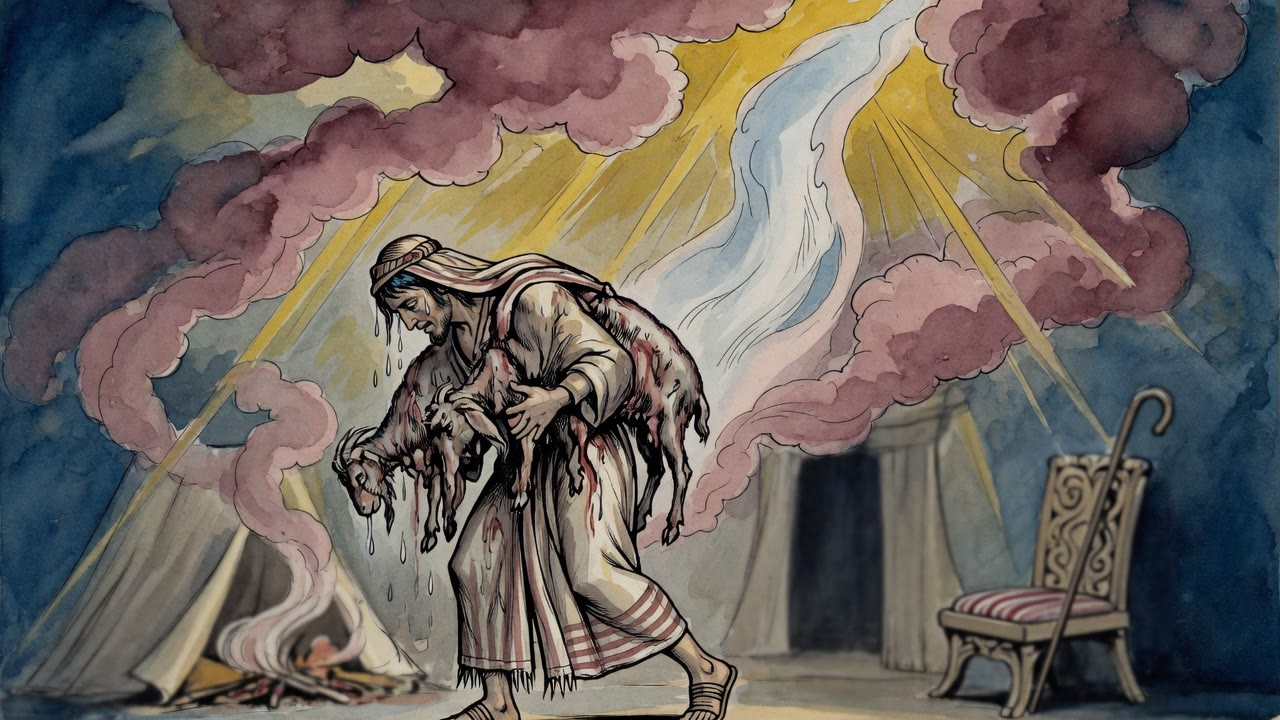
Jacob stood outside his blind father's tent with the dishes shaking in his hands. A son who wears his brother's skins and steals a voice must be cursed, not blessed. That was the arithmetic he could not escape.
 Click for full size
The Mother Who Claimed the Curse
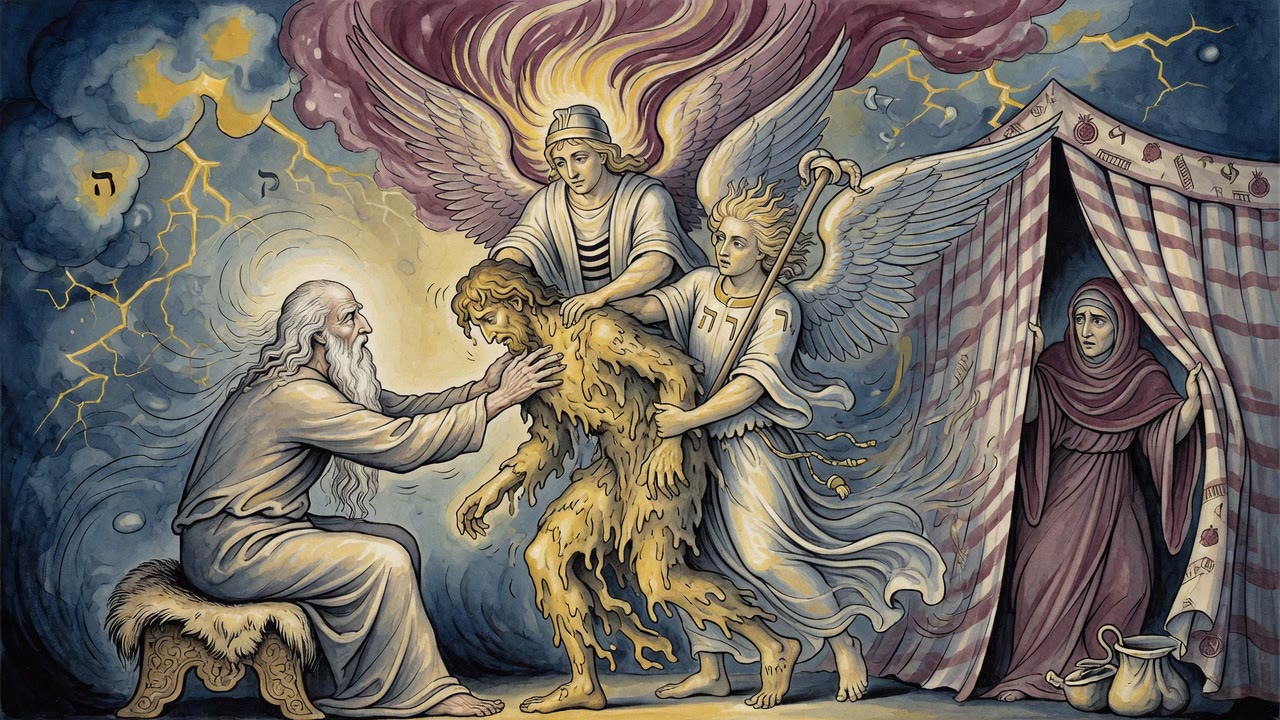
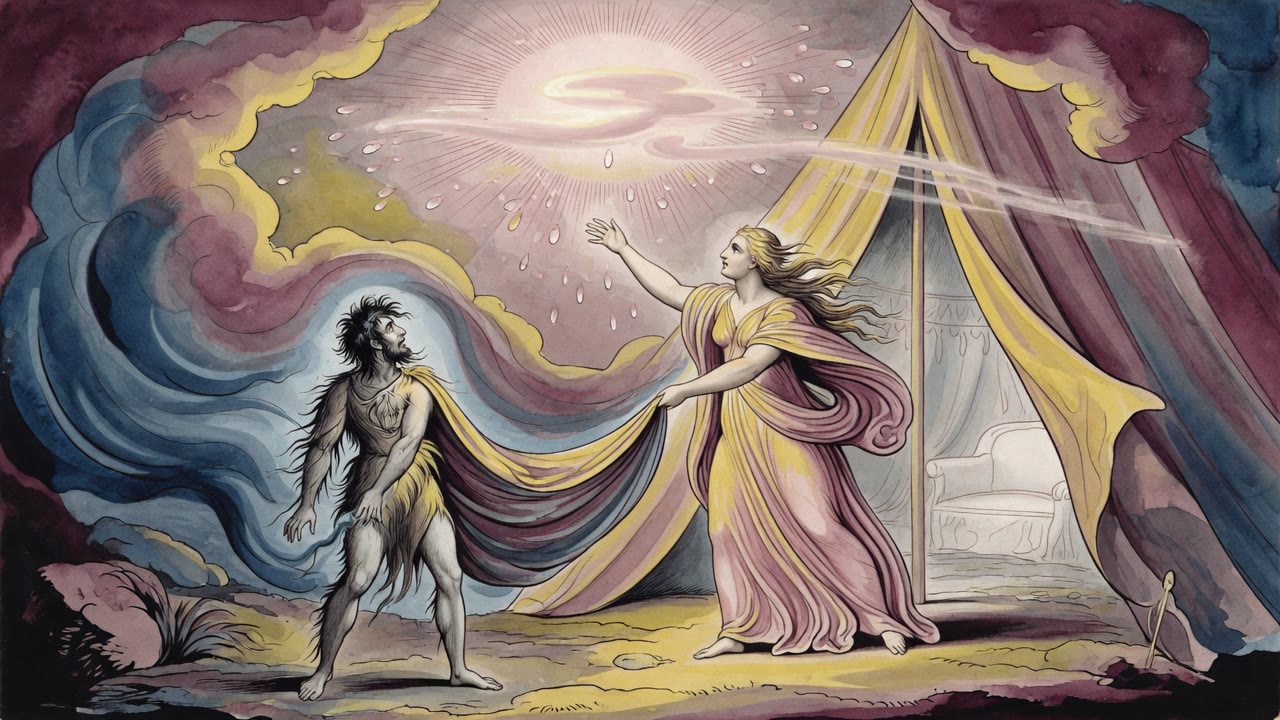
Rebekah met him at the flap. Scripture calls her tammah, the perfect one, and also tomah, mother of twins. Perfect not because she invented a scheme, but because the Holy One, blessed be He, had already set the plan in her heart. She spoke as a woman who knew which curse history had already swallowed for a son.
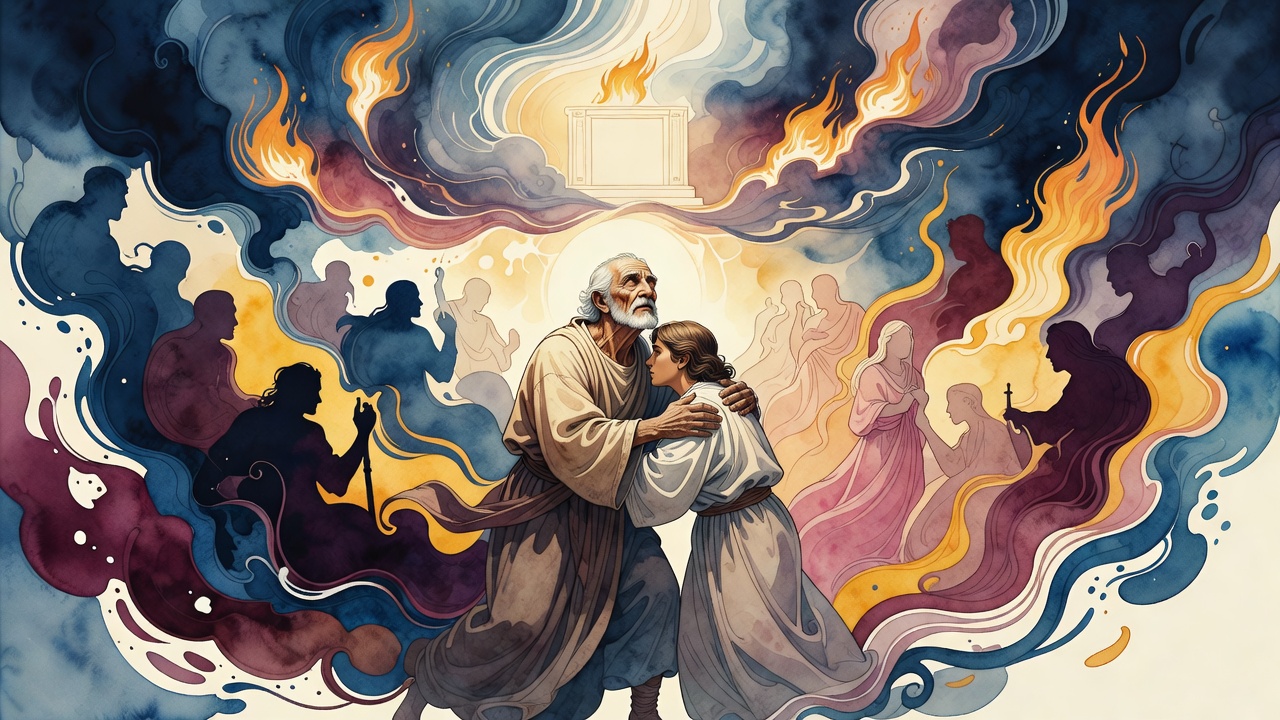
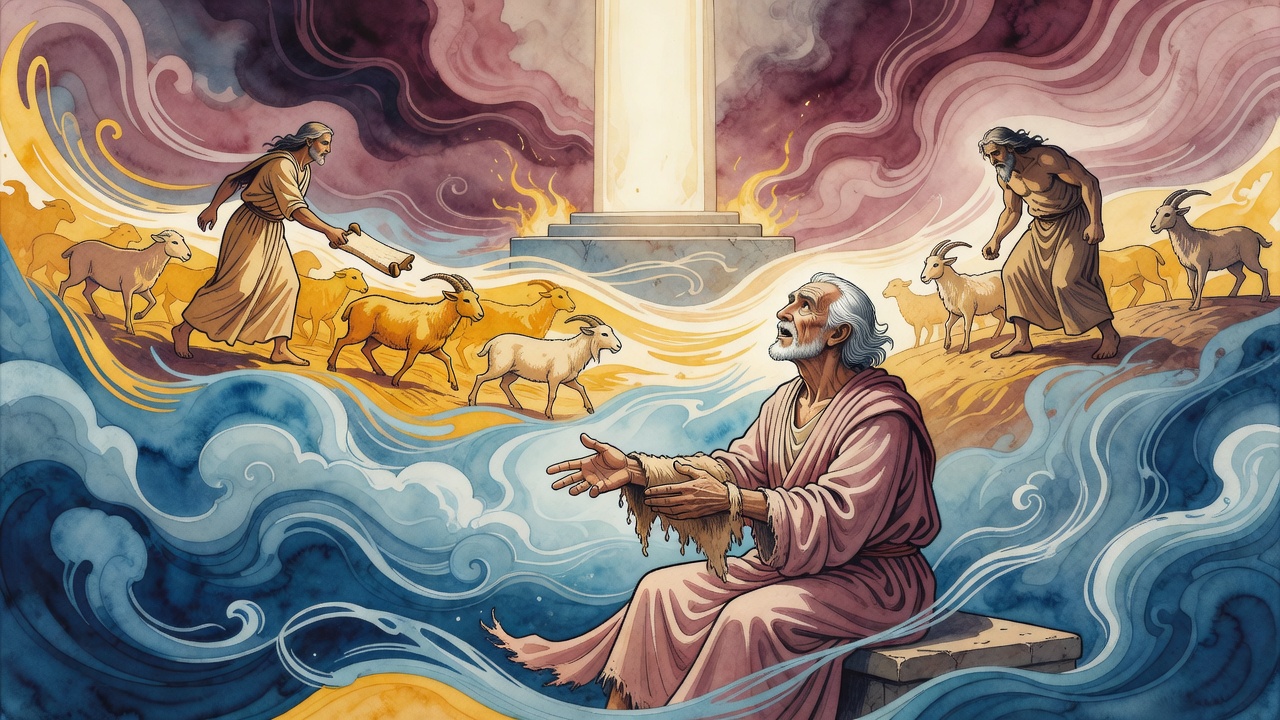
"When the first Adam sinned," she said, "was it he alone who bore the curse? Was it not his mother, the earth, who was cursed in his place? And now it is my turn. Do what is yours to do. If a curse should fall, let it fall on me." The verse she leaned on was already waiting in her mouth. "Upon me your curse, my son" (Genesis 27:13).
The earth had taken Adam's shame into its dust. Rebekah offered to take Jacob's fear into her own life. The tent flap still hung between a boy who would not move and a mother who would not let him stay frozen. Goats bleated beyond the camp. Somewhere Esau still hunted. Time pressed like a hand on the back of Jacob's neck.
He looked at the skins on his arms and saw only fraud. She looked at the same skins and saw a doorway heaven had already opened. Between those two readings the dishes cooled.
Dew Already Woven as a Wreath
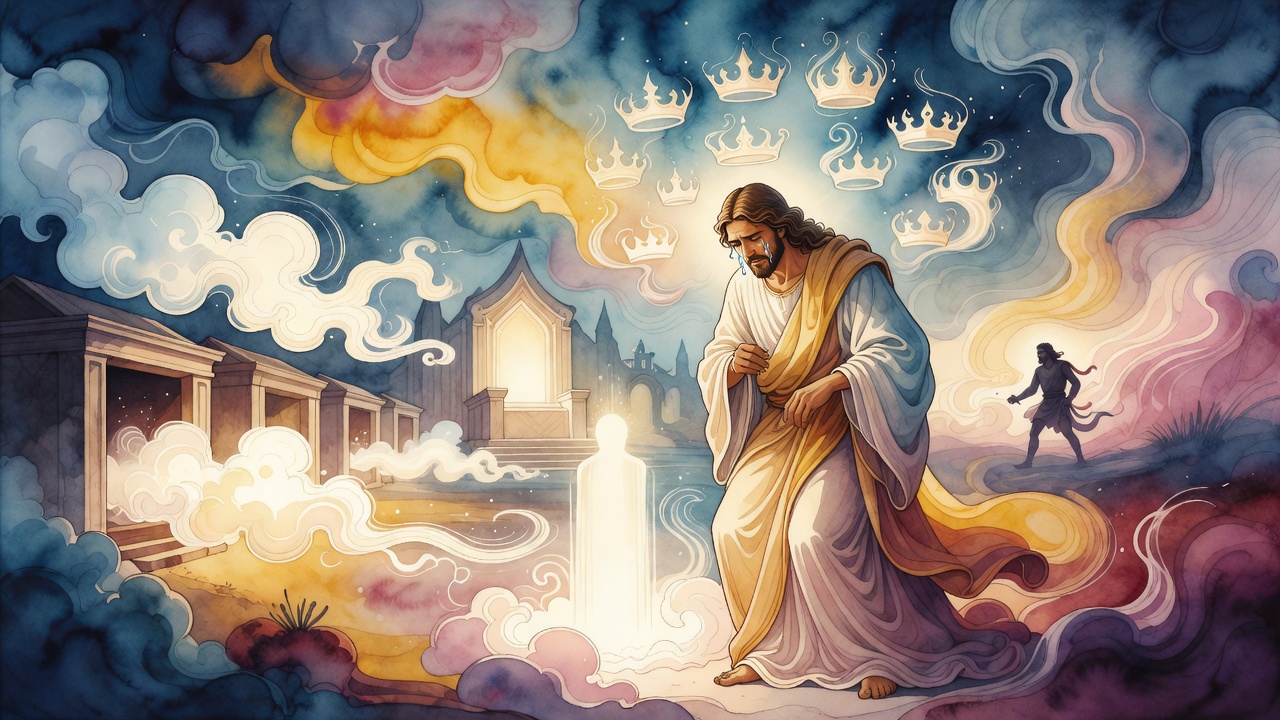
Then heaven itself broke into the fear. The Holy One reassured Jacob. Behold, I have already crowned these blessings as a wreath for you, for it is written, "my head is filled with dew." The dew was not a later gift. It was already twisted into a crown before Jacob crossed the threshold.
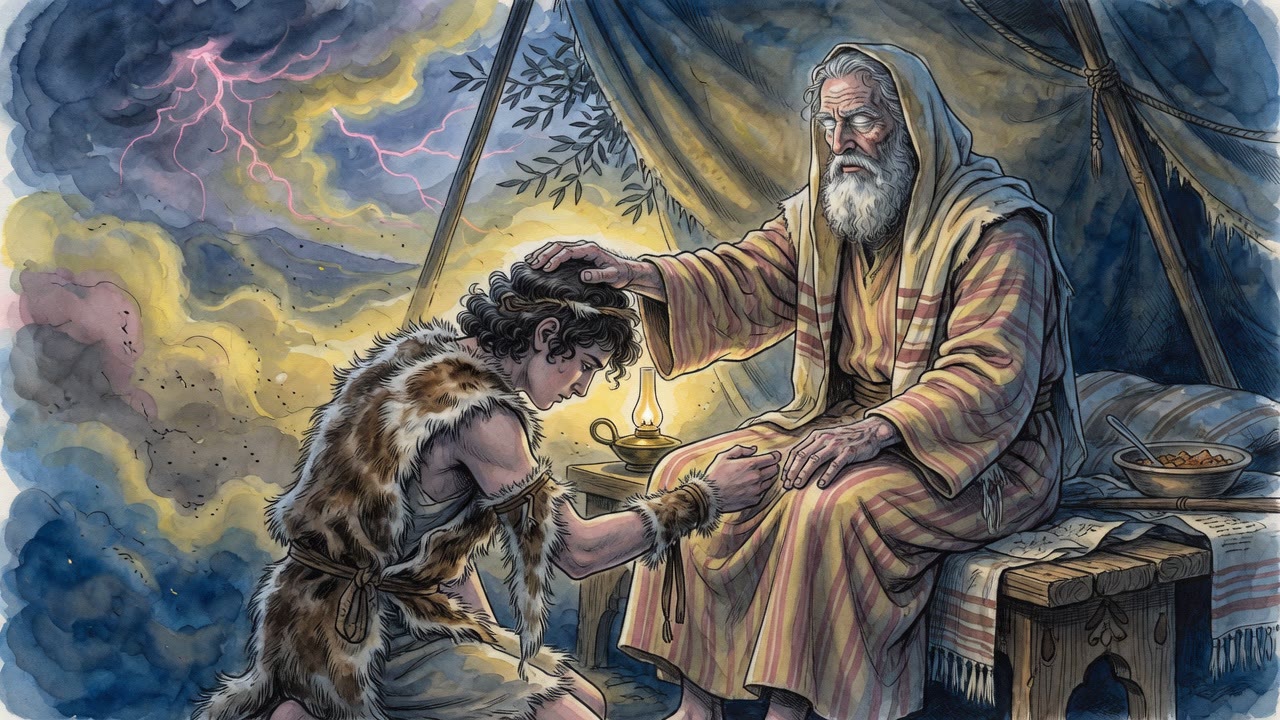
Hearing that, Jacob hesitated no longer. He took the dishes to his mother. She dressed his arms. She set the savory food in his hands. He entered before Isaac and received what the blind father still thought he was pouring on Esau.
"And may God give you of the dew of heaven" (Genesis 27:28). The same dew that had filled the head as a wreath now fell as spoken blessing into a son who had nearly turned back. Isaac smelled the field on a body that had not left the camp. His hands found hair that was not his quieter son's. The blessing left his mouth anyway, clause after clause, as if the words had been waiting longer than either man in the room.
Every Clause Opens a Doorway
When Isaac laid the great blessing, every phrase was a doorway, and later sages walked through each one to see who waited on the other side.
"May peoples serve you." These are the children of Noah, the families that spread after the Flood. "May nations bow down to you." These are the children of Keturah, Abraham's later sons sent east with gifts. "Be master over your brothers." These are the children of Ishmael, kin by Abraham's house. "May your mother's children bow down to you." These are the children of Esau, the twin who would come hunting for this very blessing with a cry that shook the house.
The blessing did not stop with blood kin. "Cursed be those who curse you." This is Balaam and his company, who lifted their mouths to curse and were turned aside. "Blessed be those who bless you." This is Moses and his company, who opened their mouths only to bless Israel.
A father's few words held nations and prophets. Who would serve. Who would bow. Who would curse in vain. Who would bless in truth. The room was small. The map inside the blessing was not.
The Twin Outside the Door
Esau returned from the field with game and a sonorous voice ready for his father's ear. The stew was late. The blessing was already sealed. Isaac trembled when the second son spoke, because the room still smelled of the first son who had worn skins and left with dew on his name.
Jacob fled with a blessing that was never a private inheritance. It named the Flood's children, Keturah's line, Ishmael's house, Esau's children, Balaam's failed curse, and Moses' open mouth. Rebekah's claim of the curse had cleared the path. Heaven's wreath of dew had settled on a head that nearly refused to enter.
The mother who called the curse onto herself stood afterward with empty dishes and a full house of consequence. The son who feared deceit walked out under a sky that had already promised him dew before he asked for it. The twin who came second found the doorway of blessing closed and the doorways of history still opening in the words Isaac could not take back.
Years later, when Jacob would still call Esau "my lord" on the road home, the dew of that first blessing would still cling to the clauses Isaac had spoken without seeing. Peoples. Nations. Brothers. Cursers. Blessers. The wreath did not unravel when the skins came off. It only waited for a people large enough to wear it.
Rebekah had spoken of Adam and the cursed earth as if mothering were an office older than tents. Jacob had heard dew as if a crown could be felt before a hand ever touched hair. Between earth that takes a curse and dew that crowns a head, the Toldot house turned, and the quiet son walked into exile already carrying more than one man's fortune.
← All myths