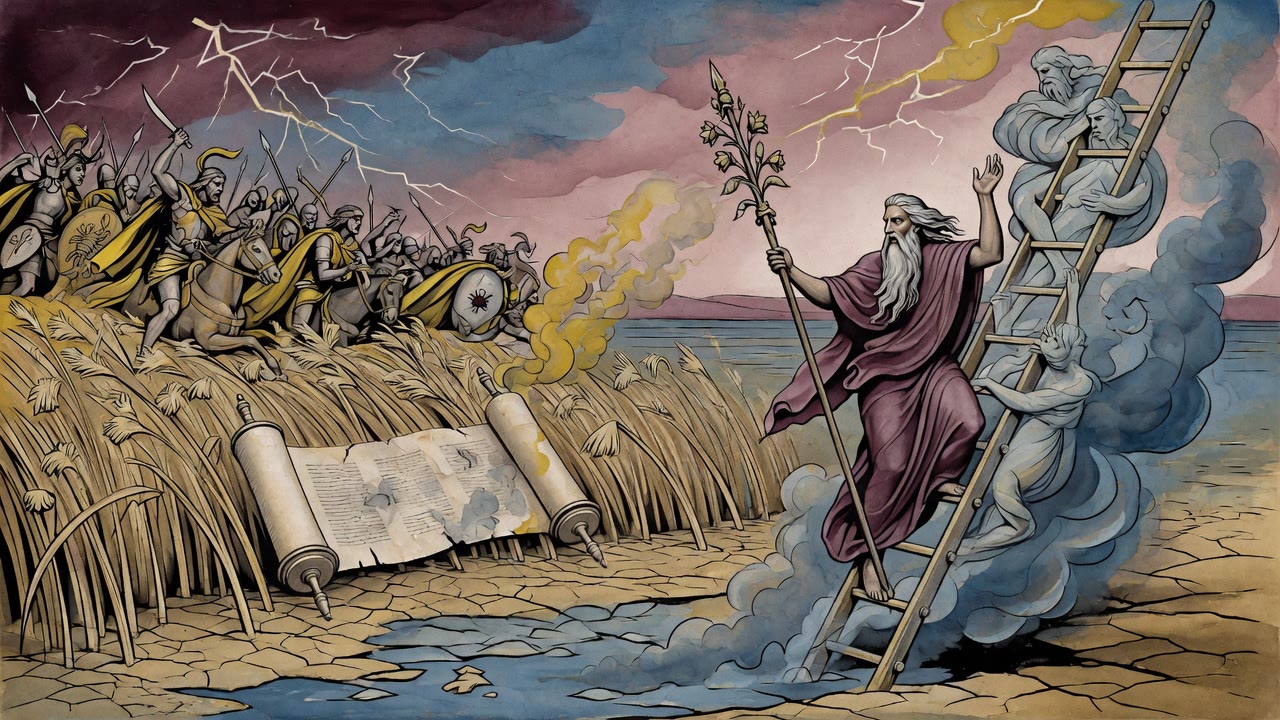
Joab Had Himself Slung Into Amalek and Sent Blood as His Signal
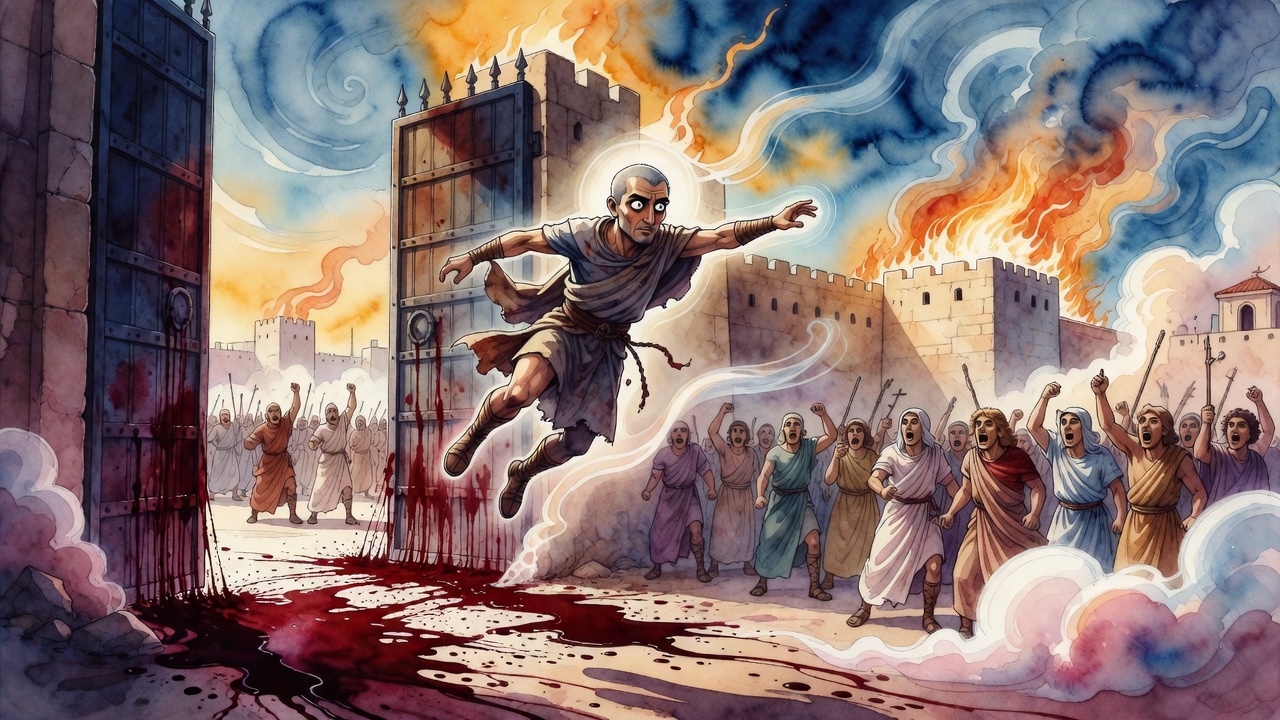
The army wanted to go home. Joab told them to sling him over the wall and watch the gates for forty days. Blood would mean he still lived.
Table of Contents
 Click for full size
Six Months and No Crack
Twelve thousand of Israel's best sat outside the Amalekite capital under Joab and could not break it. Six months. Homes far behind. Children growing without fathers. The soldiers came to him and asked to go home.
Joab refused. Retreat would earn contempt. Worse, it would teach every surrounding nation that Israel quits a wall. They would pile on a people that packed for home. He offered a plan that sounded like madness dressed as command. Hurl him into the city by sling. Wait forty days. If blood flows from the gates, he is still alive. If not, mourn and leave.
The general made his own body the reconnaissance, the breach, and the signal.
A Man Thrown Like a Stone
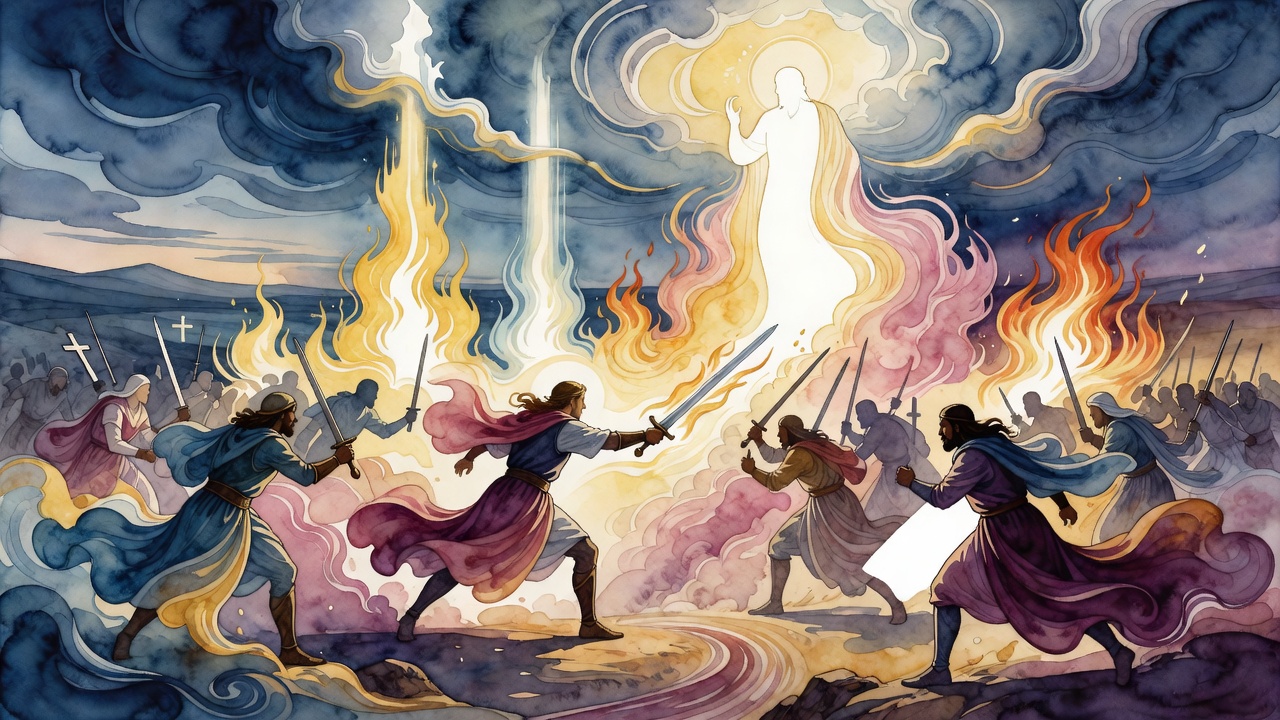
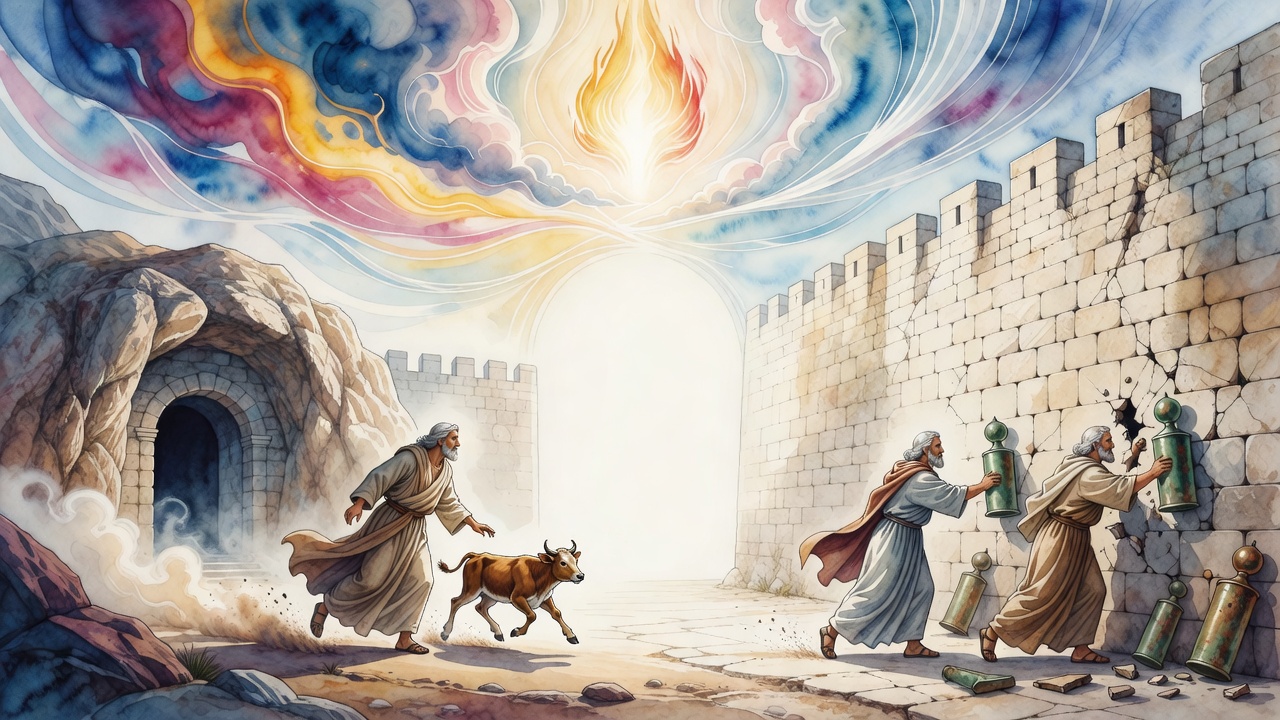
They slung him. He flew. The wall that had laughed at twelve thousand took one man over its teeth. Inside, Joab was a lone blade in a city of enemies. No trumpet. No messenger. The bargain was simple and ugly. Forty days. Blood at the gate as proof of life. An army watching wood and stone for a red answer.
He killed. He did not map every alley. He kept the days, and the men outside who had thrown their commander like a stone and then had to live with the silence of the wall. On some days they told themselves he was already meat. On others they told themselves the plan was still working.
Forty Days of Silence
Early mourning rose too soon. Grief dressed itself as realism. The men outside began to treat him as dead because the gates had given them nothing, and nothing is easy to read as an ending. They had wives to return to. They had a story ready: we waited, the sling failed, we were right to want home.
Then the signal came. Blood issued from the city. The gates bled. The watchers' throats changed in a single breath.
Shema at the Sight of Blood
They cried with one accord, "Hear, O Israel, the Lord is our God, the Lord is One." Blood from an enemy capital became a cue for the Shema (שמע), Hear. Not a victory chant of empire. A confession of the Name. Joab mounted a high tower and shouted back in a voice that carried, "The Lord will not forsake his people." Courage jumped the wall the other way. The army demanded permission to storm.
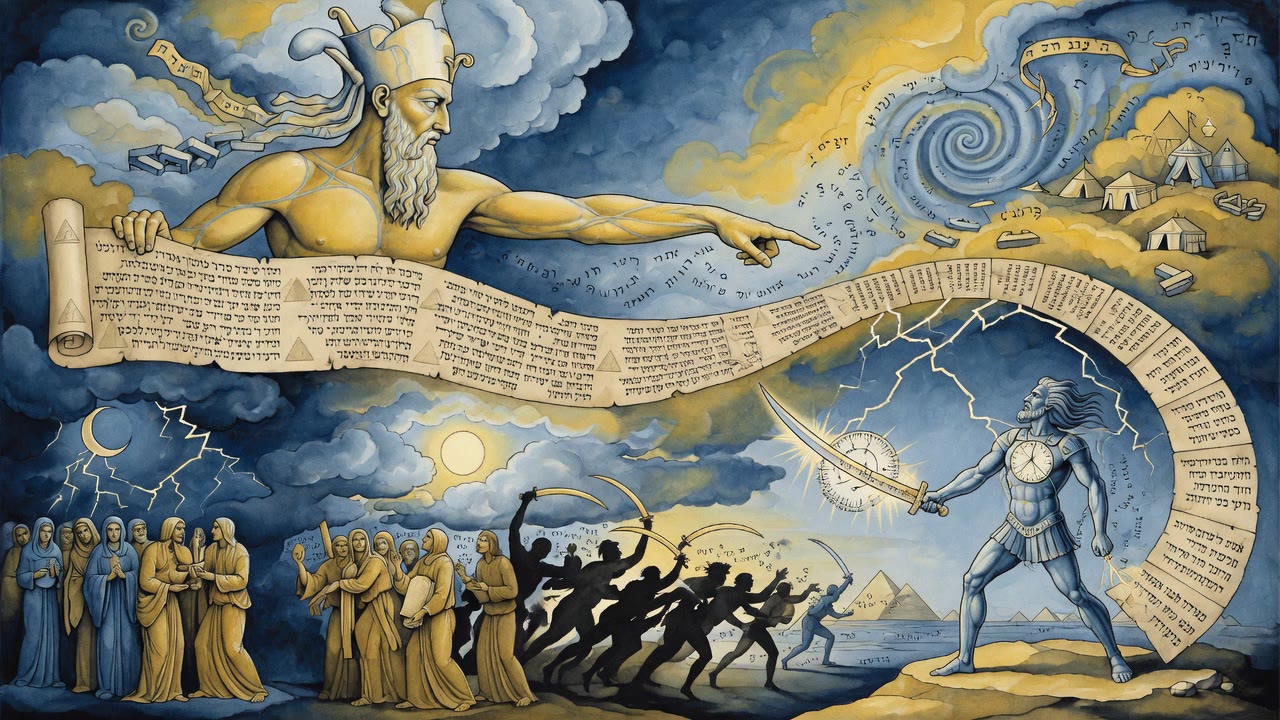
As Joab turned to descend, six verses of a psalm were inscribed on his foot. The first ran, "The Lord answers thee in the day of trouble, the name of the God of Jacob is thy defense." Later David would add three verses and complete the psalm. A general's flesh carried draft scripture out of a killing floor.
The Crown Carried Out
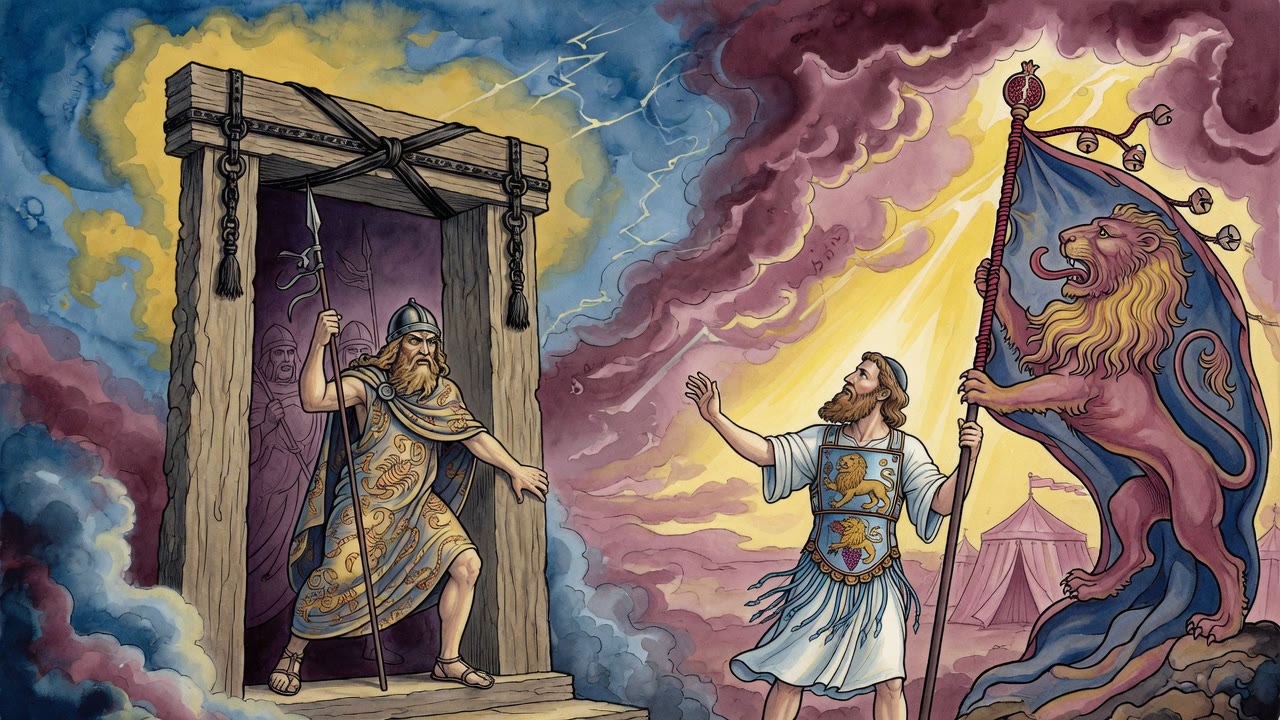
Israel took the Amalekite capital. They tore down the temples of Amalek's gods. They slew the inhabitants except the king, whom they brought before David with his crown of pure gold still on his head. The siege that six months could not finish ended because one man accepted being ammunition.
Joab's file holds colder orders and a death that would one day seek the altar. The sling remains. Six months of failure. One throw. Blood as telegram. Shema as answer. A verse on a foot that David would finish in safer air. Twelve thousand waiting. One man inside. A crown carried to a king who had stayed outside until the work was done.
The nations that had been ready to learn Israel retreats learned something else. A commander spent himself as the price of not teaching them that lesson. The gates had bled on purpose. The camp had named the Name over that red. Then they went in.
← All myths