7 min read

Joseph Hid the Cup of Wrath Inside the Vine

In prison Joseph reads the butler's vine as patriarchs and redeemers, then keeps Pharaoh's coming cup of wrath locked behind his teeth.

Curated by Arthur · Told by Maggid ·
Table of Contents
  1. Three Branches in a Dark Room
  2. What He Gave the Butler Instead
  3. The Fault Spoken Too Late
  4. From Pit to Second Chariot

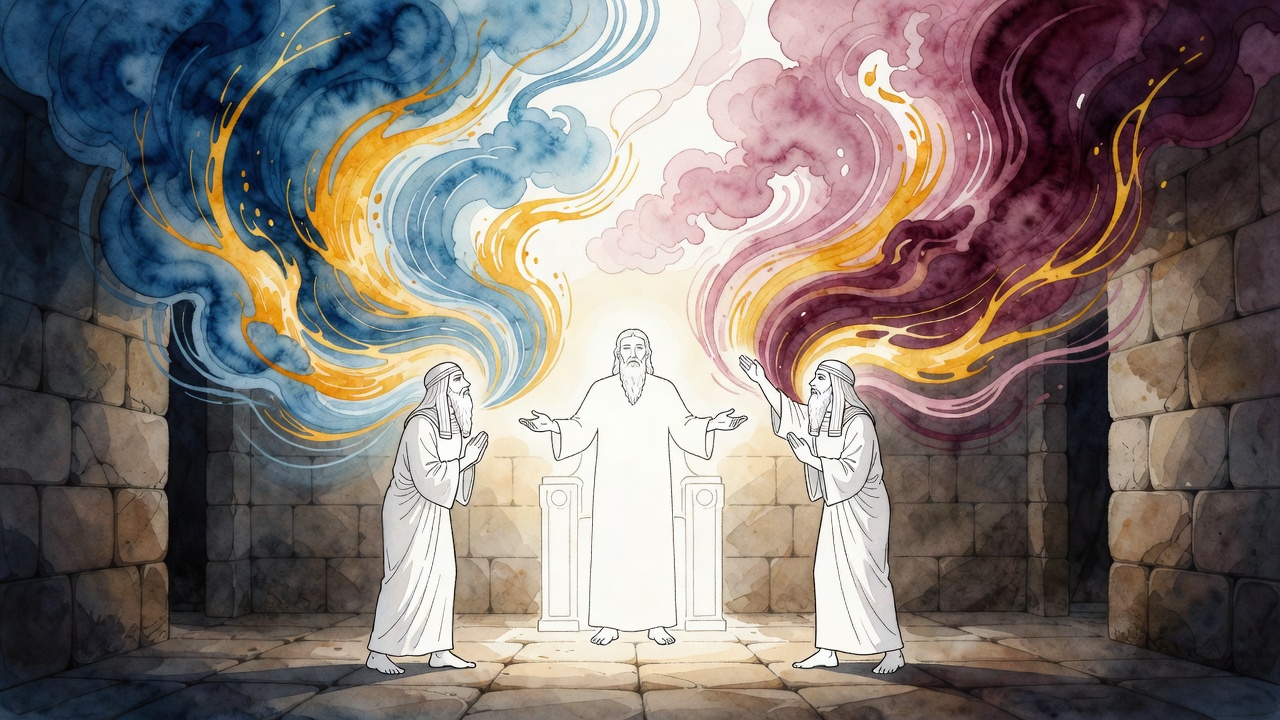
The dungeon smelled of wet stone and old wine gone sour. Joseph brought washing water to two men who had once stood close enough to Pharaoh to poison a cup, and now wore iron for it. One was the chief butler. One was the chief baker. Both had dreamed in the same night, and both sat with faces fallen as if the dreams still pressed their ribs.

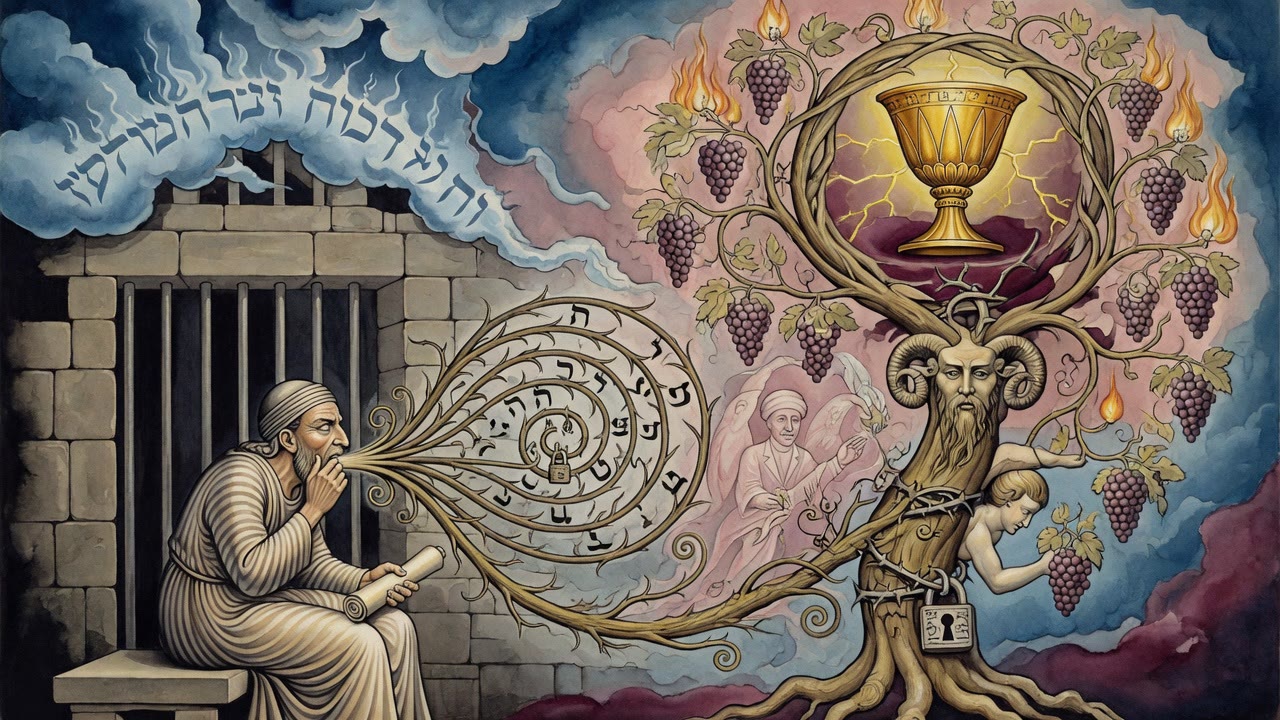
Joseph Hid the Cup of Wrath Inside the Vine Click for full size

Joseph asked why they looked so low. They told him. He asked for the dreams. The butler spoke first, and the vine rose in the cell like a third prisoner. Water dripped from the ceiling into a groove worn by years of other men's luck. Joseph listened with his hands still wet.

Three Branches in a Dark Room

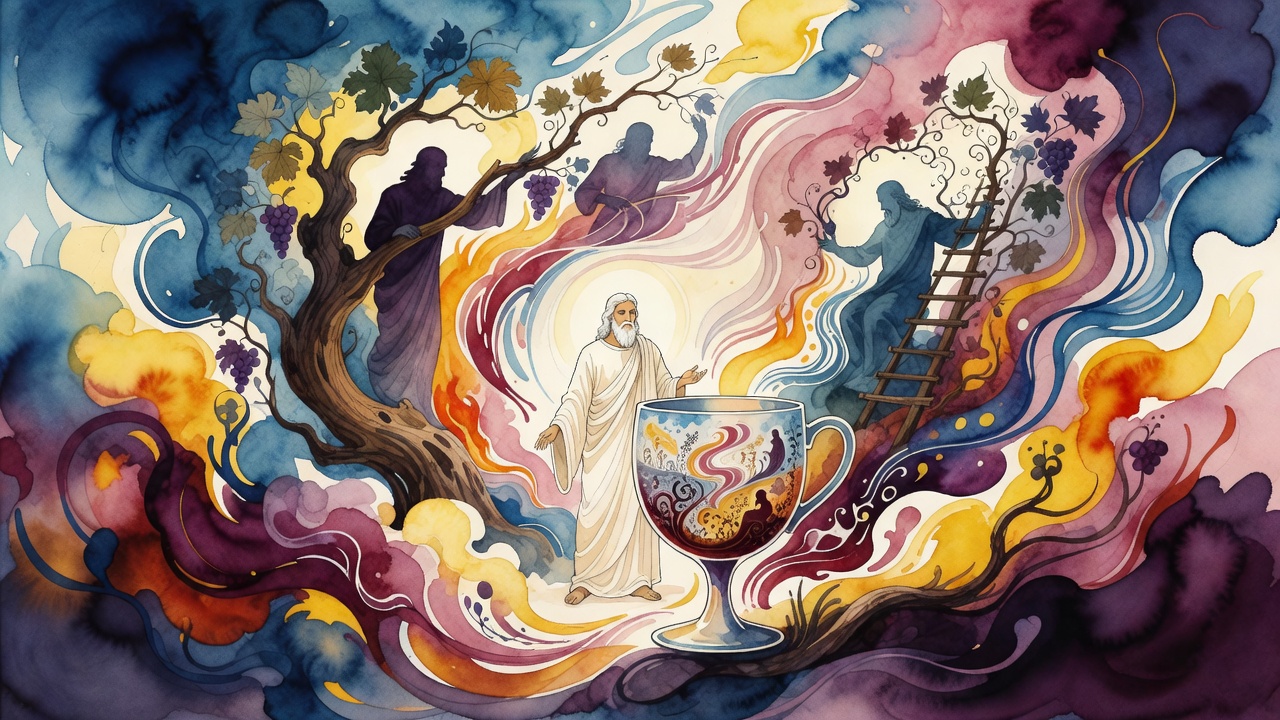
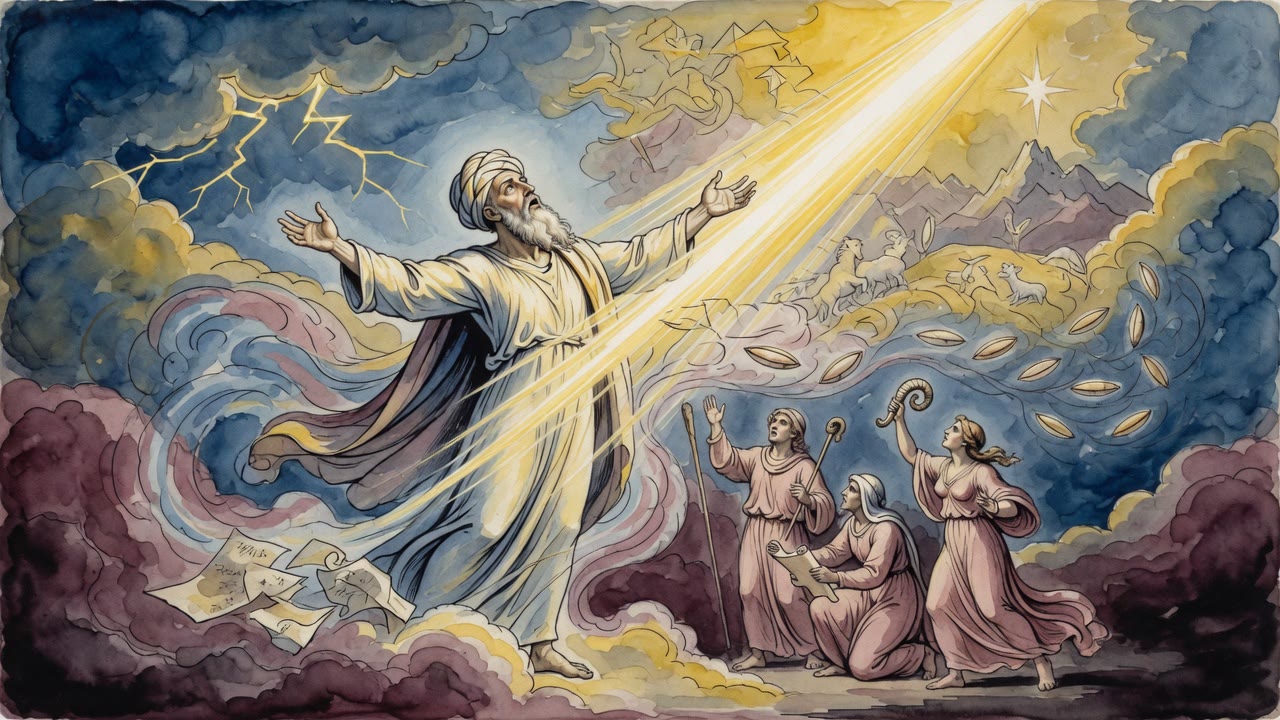
"In my dream, a vine was before me," the butler said. "And in the vine were three branches, and it was as though it budded, and its blossoms shot forth, and the clusters brought forth ripe grapes. Pharaoh's cup was in my hand. I took the grapes, pressed them into Pharaoh's cup, and gave the cup into Pharaoh's hand" (Genesis 40:9-11).

To the butler it was a night of grapes and service. To Joseph it was a map. The three branches were not three calendar days alone. They held the three patriarchs: Abraham, Isaac, and Jacob, the trunk of a people not yet counted as a nation. The ripe grapes held a later rescue, freedom pressed out of bondage through three leaders still unborn in that cell: Moses, Aaron, and Miriam.

Joseph saw Israel's future hanging on a vine in a Hebrew slave's mouth while Egyptian iron cut his ankles. He also saw the cup the butler would place in Pharaoh's hand as more than restored office. It was the kos shel af, the cup of wrath, the long drink of judgment Egypt would one day swallow for crushing the people the vine already named.

He did not say that part aloud. His jaw locked on it. The baker shifted and waited his turn without knowing that half a kingdom's future was already sitting in the dark between them.

What He Gave the Butler Instead

Joseph told the man the clean half. In three days Pharaoh would lift his head and set the cup back in his hand. Remember me when it is well with you. Mention me to Pharaoh. Bring me out of this house, for I was stolen from the land of the Hebrews, and here too I have done nothing to deserve a pit (Genesis 40:12-15).

The butler nodded. Gratitude flared for a moment like a lamp in wet air. Joseph kept the heavier vision locked. He would not hang a servant with the full terror of what the cup meant for a king still years from the plagues. Mercy toward a cellmate and strategy toward a future throne shared one silence. The baker heard a darker reading of baskets and birds and went white. Joseph gave each man the portion that belonged to him. He kept Israel's coded future and Egypt's deferred wrath for himself.

Three days later the butler walked free with wine in his grip. Chains came off. Sun hit his face. Joseph waited by the same wall. The silence that followed was not three days. It was two years of wash water, two years of other men's dreams that never came, two years of a name that never rose the palace stairs.

The Fault Spoken Too Late

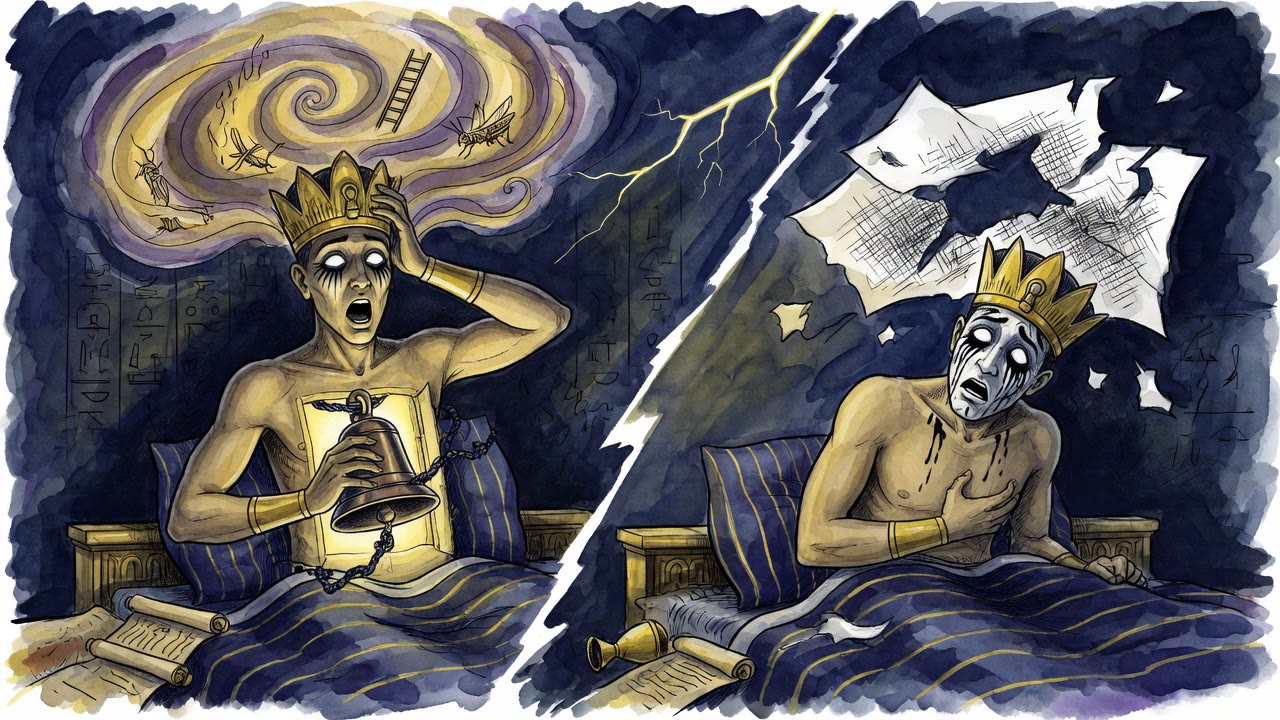
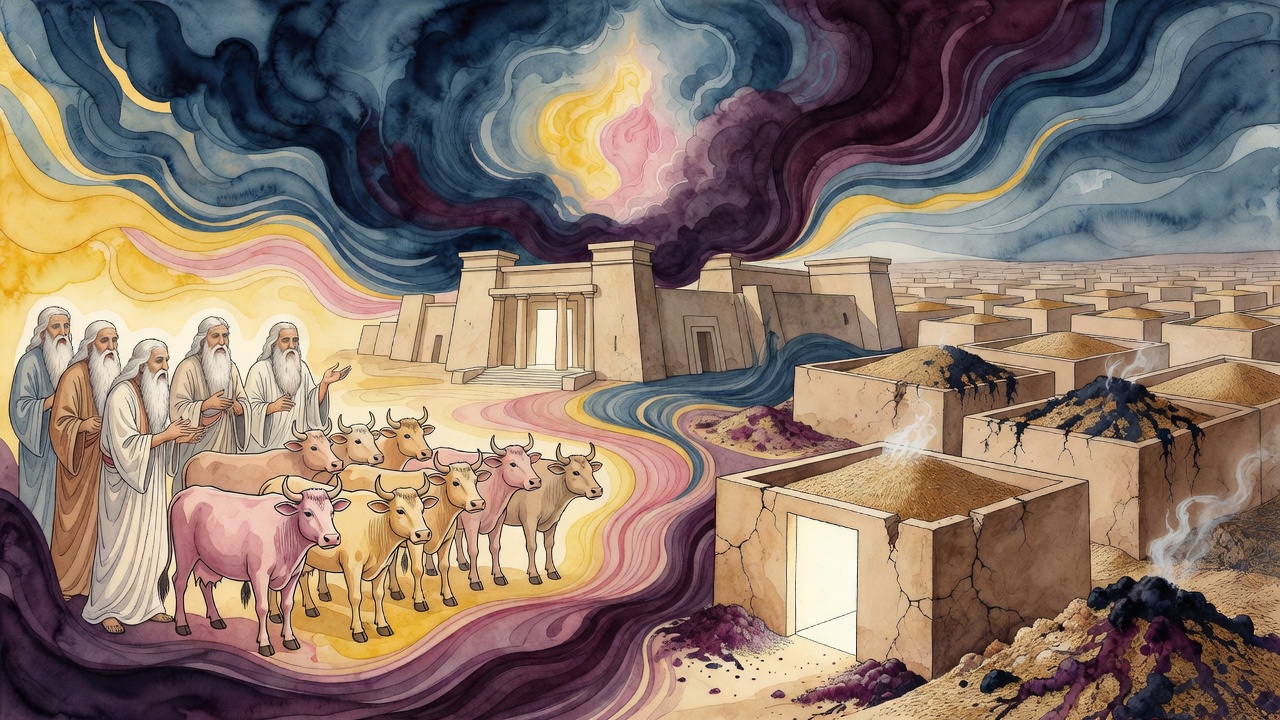
When Pharaoh finally dreamed of cows that ate cows and grain that ate grain, the palace filled with magicians who could not open the vision. Hangmen stood ready. Egypt's wise men failed in public. Scrolls unrolled and said nothing useful. The chief butler, called Mirod in the gathered legends, felt the ground shift under his restored place. A dead king would not keep a forgetful butler. A living king in panic might still kill the wrong servants for sport.

He stepped forward with sweat on his neck. "I do remember two faults of mine this day," he said. He had been ungrateful to Joseph. He had watched the king thrash and still kept the Hebrew's name behind his teeth. He told the prison story clean: a young man of the despised race of the Hebrews had read their dreams, and it had happened as he said. Stay the hangmen. Summon the prisoner. Call him, and he will interpret.

The gamble was pure self-interest and pure rescue at once. Joseph's name finally left the butler's mouth because the throne was ringing with terror, not because two years of conscience had matured on schedule. Guards ran. Keys turned. The pit that had held a stolen son began to empty upward.

From Pit to Second Chariot

They shaved Joseph, changed his clothes, and brought him up. Prison grit left his hair. He stood before gold and heard the cows and the ears and refused to claim the reading as his own craft. God would answer Pharaoh. He named seven years of plenty and seven of famine, and the doubled dream as certainty. Store the surplus. Find a man to lock the land against hunger. Build bins while the sun is still kind.

Pharaoh set a ring on his hand. The people cried long life to the king and to the king's deputy. Joseph rode out while dust rose around the horses, and he looked up and blessed the God who lifts the poor from the dust. Fields, silver, gold, slaves, a palace three years in the building, gifts forced from every Egyptian under penalty of death, all of it poured toward the man who had once brought wash water in a cell. A platform rose in the street. Commoners and grandees dropped treasure at his feet because the king's favor had a shape and they wanted to stand near it.

Somewhere in that rise the vine still lived. The three patriarchs still stood in its branches. The three redeemers still waited in the grapes. The cup of wrath still waited for another Pharaoh. Joseph had spoken enough in prison to free one servant and save a kingdom's grain. He had held back enough to keep a secret map of Israel's rescue from becoming a servant's barroom tale. At night, when the palace lamps went out, he could still see the three branches against dungeon dark, budding in a place where nothing green should have grown.

The butler poured wine again in a brighter room and did not always meet Joseph's eyes. Joseph counted granaries until the numbers made a wall against hunger. The vine in the dungeon had already told the longer story, and only one man in Egypt had heard both halves.


← All myths

From the tradition

Sources

3 sources

The texts behind this telling. Some cards carry a translation of the source; others are our own retelling of it, and each card says which. Every card links out to the original.

Legends of the Jews 1:146Legends of the Jews

Retold in our words. Read the original at the link below.The Legends of the Jews by Louis Ginzberg (1909) · Public Domain

Our story begins with Pharaoh's chief butler, recently tossed in the slammer. He's troubled, haunted by a vivid dream he can't shake. "In my dream," he recounts, "behold, a vine was before me; and in the vine were three branches; and it was as though it budded, and its blossoms shot forth, and the clusters thereof brought forth ripe grapes; and Pharaoh's cup was in my hand; and I took the grapes, and pressed them into Pharaoh's cup, and I gave the cup into Pharaoh's hand.”

Sounds… grape-y. But dreams, especially in ancient lore, are rarely just about what they seem. Enter Joseph, also imprisoned, but blessed with a unique gift: the ability to interpret dreams.

The butler, bless his heart, just thought he was having a weird night. He had NO idea his dream held a secret prophecy about the future of Israel. But Joseph? He saw it. He understood the remez – the hidden meaning.

In Ginzberg, Joseph discerned the dream's true significance. The three branches, he realized, represented the three patriarchs: Abraham, Isaac, and Jacob. These were no ordinary branches; they symbolized the very foundation of the Israelite nation.

And the grapes? They foretold the future redemption of the Israelites from their bondage in Egypt. This liberation, Joseph knew, would come through three leaders: Moses, Aaron, and Miriam. The ripe grapes, bursting with potential, were a promise of deliverance.

But there's more, a darker side to the vision. The cup given into Pharaoh's hand? That, Joseph understood, was the kos shel af – the cup of wrath. It was the suffering and divine punishment that Pharaoh would ultimately have to drink for his oppression of the Israelites.

The weight of that prophecy.

But here's where it gets interesting. Joseph, in his wisdom, kept the full, terrifying interpretation to himself. He didn't burden the butler with the vision of Pharaoh's impending doom. Instead, motivated by gratitude for the glimmer of hope – that Israel would be freed – he offered the butler a more… palatable interpretation. A favorable one.

He also made a heartfelt plea: "Remember me," he asked, "when things go well for you. Help me get out of this dungeon!"

Even with divine insight, Joseph is still a man, yearning for freedom, hoping for a second chance.

Full source
Legends of the Jews 1:160Legends of the Jews

Retold in our words. Read the original at the link below.The Legends of the Jews by Louis Ginzberg (1909) · Public Domain

That’s kind of where we find Mirod, Pharaoh’s chief butler, in this story from Legends of the Jews (Ginzberg).

Pharaoh, is in a right state. He's had these terrifying dreams (we'll get to those, I promise!), and nobody can figure out what they mean. He’s so distraught, Mirod fears the king might actually… well, die of frustration. And a dead Pharaoh? Not exactly job security for the chief butler. Who knows if the new king would keep him around?

So, Mirod gets a bright idea – or rather, remembers a past one. He steps forward, perhaps a little nervously, and addresses the king. "I do remember two faults of mine this day," he begins, as we read in Legends of the Jews. "I showed myself ungrateful to Joseph…"

Ah, yes, Joseph. Remember him? The young Hebrew slave, skilled in dream interpretation? Mirod admits he basically forgot to mention Joseph's abilities to Pharaoh before. Major oversight.

And then comes the second fault: seeing the king in distress over the dream, and still keeping mum about Joseph! Mirod is really laying it on thick.

He continues, spinning a tale of how, when he and the chief baker were imprisoned, this "simple young man, one of the despised race of the Hebrews," correctly interpreted their dreams. Ginzberg bases this part of the narrative on the original biblical account (Genesis 41:9-13). "It came to pass, as he interpreted to us, so it was." Pretty convincing. Mirod, in his slightly belated attempt to save the day (and his own neck), pleads with Pharaoh. "O king, stay the hand of the hangmen, let them not execute the Egyptians." (Pharaoh was apparently considering drastic measures to solve his dream problem). He assures the king that Joseph is still in the dungeon.

And then comes the big pitch: "If the king will consent to summon him hither, he will surely interpret thy dreams."

Think about the risk Mirod is taking here. He’s admitting to past failures, vouching for a slave, and promising results. It's a gamble, for sure. But sometimes, a little bit of honesty – even if self-serving – can be the key to unlocking a whole new chapter. The fate of Egypt, and, Joseph's destiny, hangs in the balance.

Full source
Legends of the Jews 1:179Legends of the Jews

Retold in our words. Read the original at the link below.The Legends of the Jews by Louis Ginzberg (1909) · Public Domain

It’s a story filled with twists, turns, and a whole lot of divine intervention. It's the story of Joseph.

After Joseph correctly interprets Pharaoh's dreams, foretelling seven years of plenty followed by seven years of famine, the king is astounded. He sees in Joseph not just wisdom, but leadership. And so, in a moment that must have taken everyone's breath away, Pharaoh appoints Joseph as his second-in-command, entrusting him with preparing Egypt for the coming crisis.

The reaction of the people? Immediate and overwhelming. They prostrated themselves, crying out, "Long live the king, and long live the deputy of the king!" Imagine the scene, the dust swirling around Joseph on horseback, the cheers echoing through the city. And Joseph, ever mindful of where his blessings came from, looks heavenward and exclaims, "The Lord raiseth up the poor out of the dust, and lifteth up the needy from the dunghill. O Lord of hosts, blessed is the man that trusteth in Thee." It's a powerful moment of humility and faith, right there for all to witness. (Legends of the Jews)

Joseph, now the de facto ruler, embarks on a tour of Egypt, accompanied by Pharaoh's officers and princes. Upon his return, Pharaoh showers him with gifts: fields, vineyards, a staggering three thousand talents of silver and a thousand talents of gold, plus onyx stones, bdellium (a fragrant resin), and countless other treasures.

But Pharaoh doesn't stop there. He commands every Egyptian to give Joseph a gift, under penalty of death! A platform is erected in the street, and everyone – from the common folk to the grandees – deposits their offerings. Gold, silver, precious stones. the accumulation must have been breathtaking. They saw that Joseph enjoyed the favor of the king, and they wanted to be on his good side.

And it wasn't just material wealth. Joseph received one hundred slaves from Pharaoh to do his bidding, and he acquired many more, residing in a spacious palace that took three years to build. Think of the artistry, the craftsmanship that went into such a project! The hall of state, his audience chamber, was particularly magnificent, and the throne itself was a masterpiece of gold, silver, and precious stones, depicting the entire land of Egypt and the life-giving river Nile. As Joseph multiplied in riches, so he increased in wisdom, for God added to his understanding, ensuring all would love and honor him. (Legends of the Jews)

Pharaoh even gave Joseph a new name: Zaphenath-paneah. But it's more than just a name; it's a title, a description of who Joseph had become. The text actually breaks down each letter, revealing its meaning. According to Ginzberg's retelling in Legends of the Jews, each letter represents a different aspect of Joseph's character and abilities. Zadde stands for Zofeh, seer; Pe for Podeh, redeemer; Nun for Nabi, prophet; Taw for Tomek, supporter; Pe for Poter, interpreter of dreams; Ain for Arum, clever; Nun for Nabon, discreet; and Het for Hakam, wise. It's a powerful evidence of Joseph's many-sided nature.

So, what do we take away from this chapter in Joseph’s story? It's a story about being prepared to receive blessings, but more importantly, being prepared to use them wisely and for the benefit of others. It's a story that resonates across generations, offering hope and inspiration in a world that often feels chaotic and uncertain.

Full source