Joseph's Prayer to Forget and the Test in Egypt
Joseph thanked God for a soft life in Egypt, but Jacob still sat in ashes. Heaven answered comfort with Zuleika's locked room and royal eyes.
Table of Contents
Joseph learned comfort could be more dangerous than the pit.
 Click for full size
In Potiphar's house, everything began to obey his hands. Keys passed to him. Storerooms opened. Silver and gold multiplied under his care. His master stopped treating him like an ordinary slave and gave him food, instruction, and authority fit for a prince.
Joseph breathed for the first time in years.
The Prayer Rose From Plenty
He thanked God for the new life. No brothers watched him with envy. No one begrudged him a fine object from his father. The household that owned him also trusted him, and plenty surrounded him on every side.
So he prayed the dangerous words.
"Blessed are You, Lord, who caused me to forget my father's house."
Then he dressed his hair. He painted his eyes. He trained his walk until elegance clung to him. Egypt had taken the boy thrown into a pit and given back a young man with polished steps.
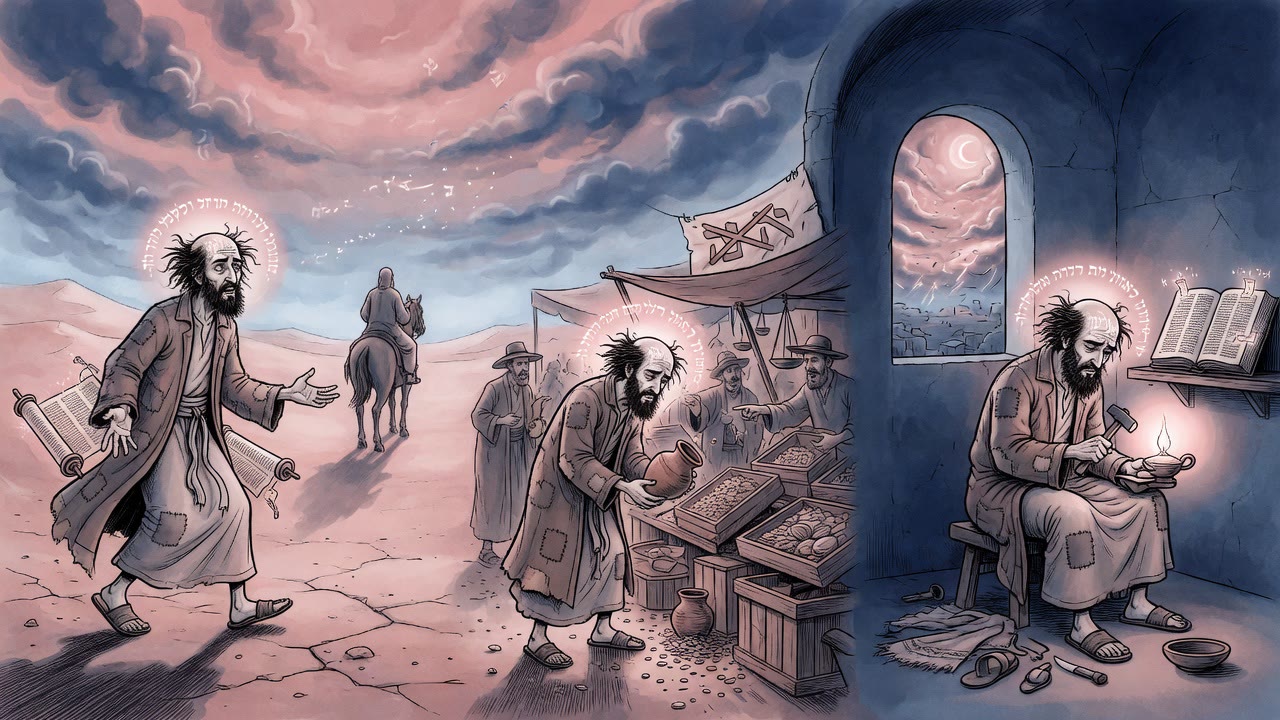
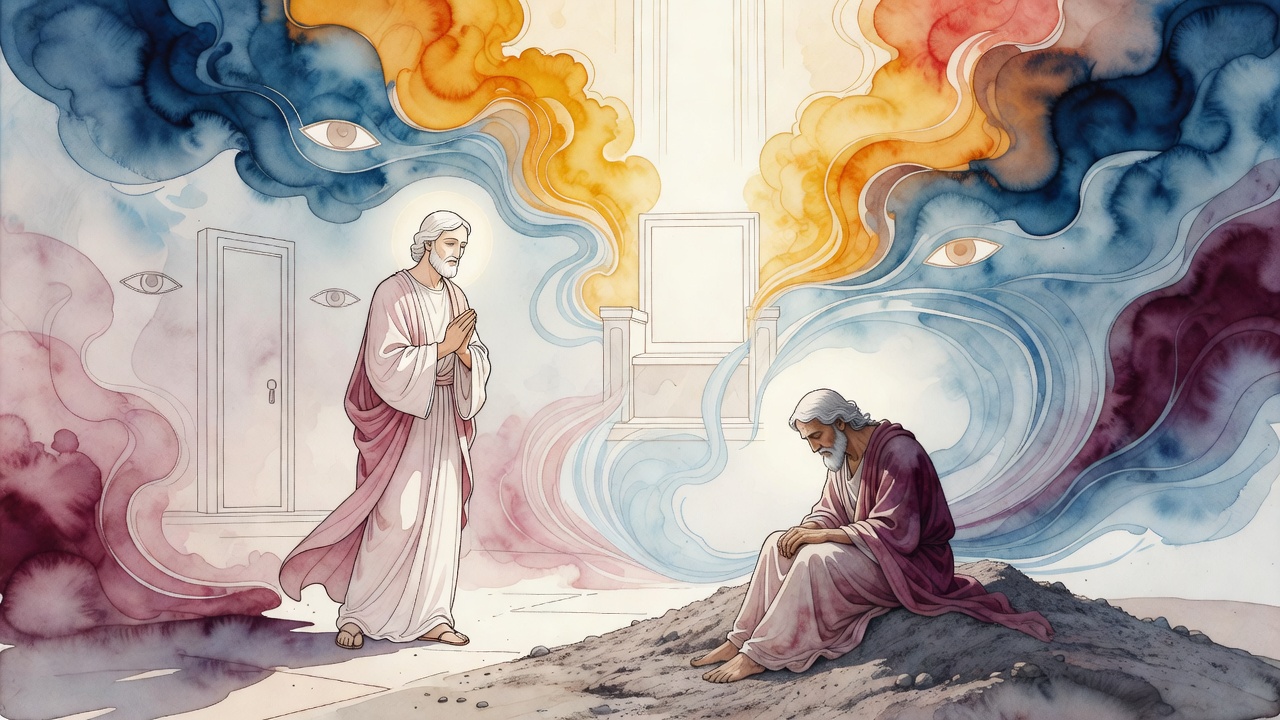
But far away, Jacob sat in sackcloth and ashes. His father was still mourning a son he believed dead. Joseph ate, drank, and groomed himself while grief kept vigil in Canaan. Heaven answered the prayer by turning the house of comfort into a chamber of testing.
Zuleika Closed the Door
Zuleika watched him move through the rooms. The more Potiphar's estate prospered, the more her desire sharpened. She began with blandishments. Joseph refused her.
I fear my master.
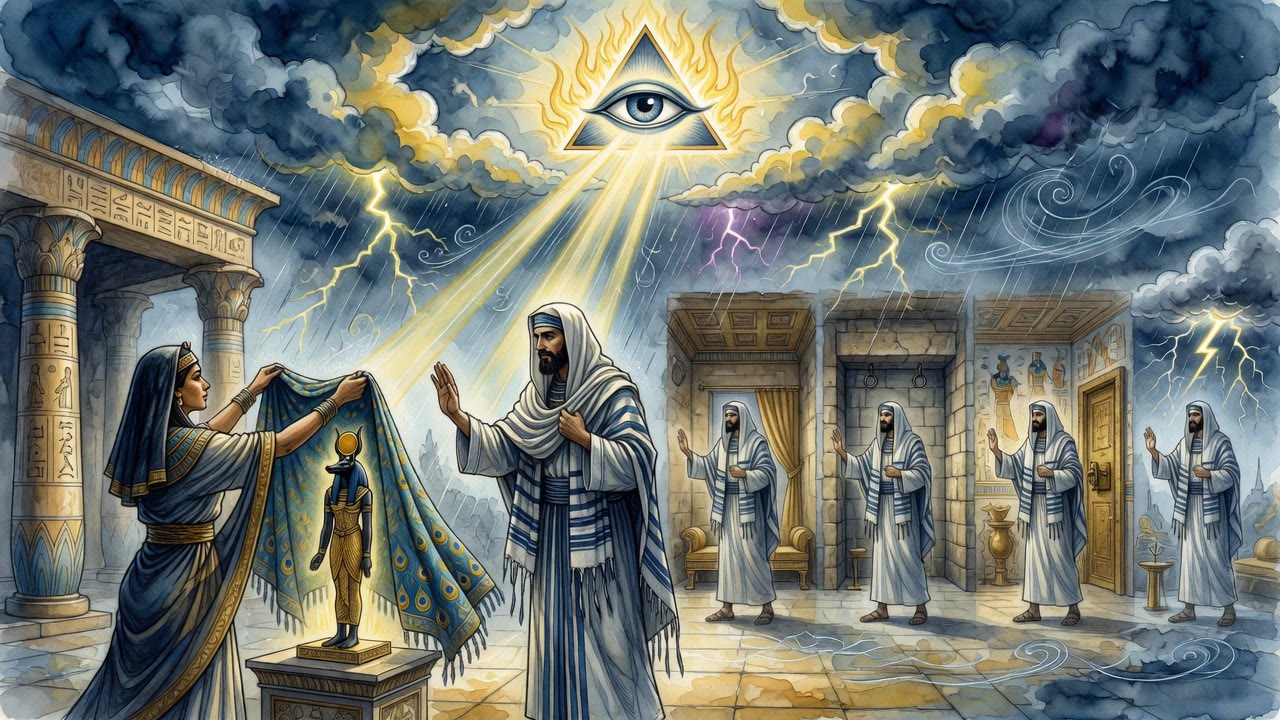
She threatened to kill Potiphar. Joseph's answer came hot and clean. Was adultery not enough for her? Would she make him a murderer too? Then he reached past master and mistress, past Egyptian walls and household rank.
I fear the Lord my God.
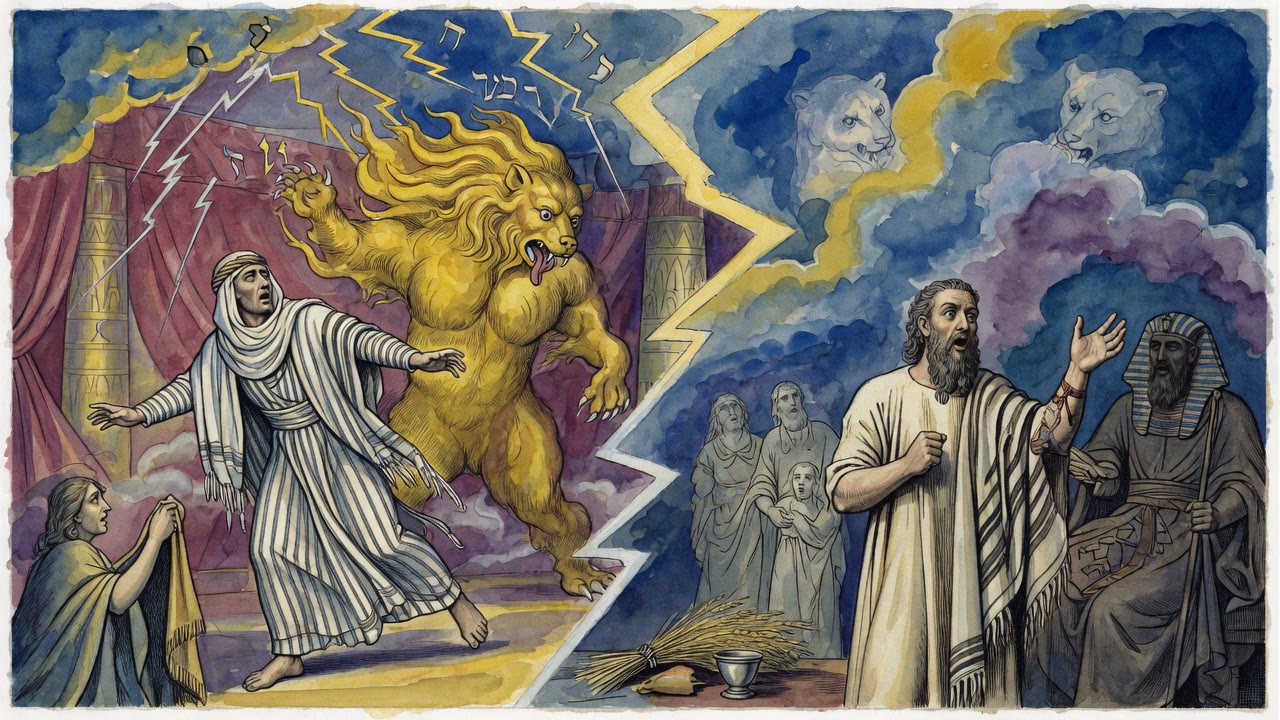
She brought him into her chamber. Above the bed hung an idol, an eye she did not want watching. Zuleika covered it. The covered idol became its own accusation. Joseph looked at the cloth and answered the room: the idol's eyes could be hidden, but God's eyes ranged through the whole earth.
The Fathers Entered the Room
Joseph's refusal did not rest on one reason. He built a wall of ancestors around himself.
Adam had been driven from Paradise for violating a light command. How could Joseph stand after a grave sin? God had chosen beloved members of his family for the altar of testing. What if Joseph himself had been marked for such nearness, and one act made him unfit? God had appeared suddenly to Abraham, Isaac, and Jacob in visions of the night. What if the vision came at the very moment he was defiling himself?
Then came the father he had prayed to forget.
Jacob had removed the birthright from Reuben because of an immoral act and had given that standing to Joseph. If Joseph yielded, he would inherit not the blessing but Reuben's fall. The old house he tried to forget entered the room and stood between him and Zuleika.
The Garment Stayed Behind
Zuleika reached for him, and Joseph ran.
He escaped with his body, not with his garment. Cloth remained in her hand. A coat had already marked him once for his brothers' hatred. Now another piece of clothing would become evidence against him in Egypt.
The test did not reward him with comfort. It threw him toward accusation, prison, and years hidden below the palace. But the prayer had been corrected. Joseph would not be saved by forgetting Jacob's house. He would survive because the house came back to him in time.
Egypt could rename him. It could dress him, promote him, chain him, crown him. It could not make him free of the father sitting in ashes.
The Chariot Filled the Streets
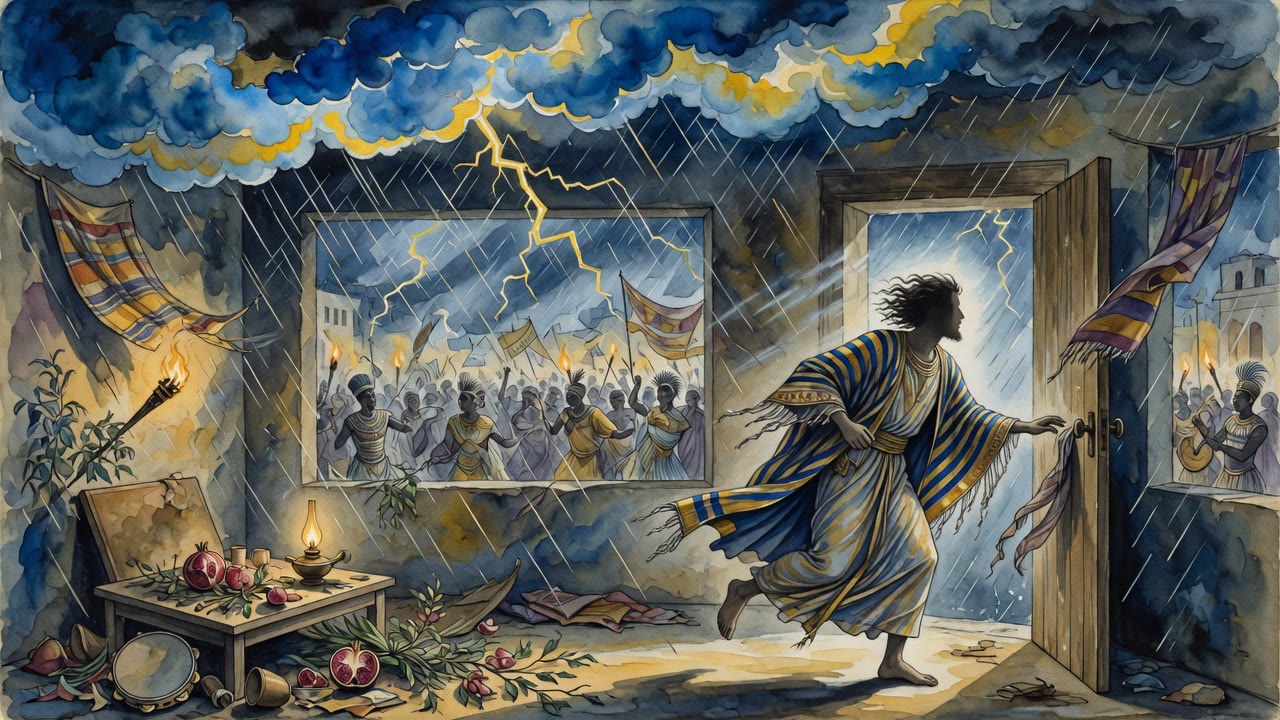
Years later, Pharaoh took off his signet ring and placed it on Joseph's hand. Princely garments covered him. A gold crown touched his head. A gold chain lay against his neck. The slave who had run from Zuleika now rode beside the king's chariot on a great royal horse.
A thousand cymbals clashed. A thousand flutes cried out. Five thousand men walked before him with drawn swords flashing in the air. Twenty thousand grandees marched on his right, and twenty thousand on his left, their leather belts embroidered with gold.
Women leaned from windows and threw chains, rings, and jewels, hoping his eyes would rise toward them. Joseph did not look up. Because he guarded his eyes, the evil eye lost its power over him and over his descendants.
Twenty heralds walked before him and proclaimed the decree. Pharaoh had chosen this man as second after him. All affairs of state would pass through Joseph's hand. Whoever resisted him would die as a rebel against the king and the king's deputy.
The boy who prayed to forget rode through Egypt with all its eyes upon him. This time he kept his own eyes down.
← All myths