Joshua Held Torah Up and Stopped the Sun
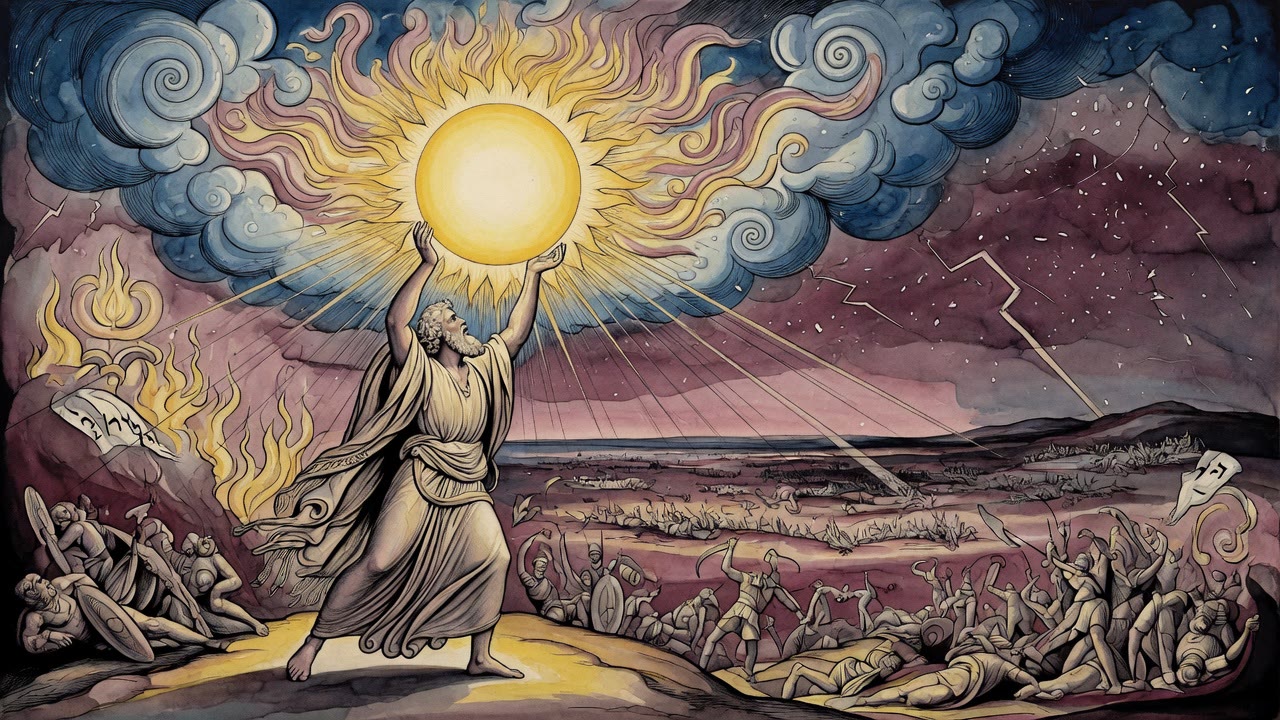
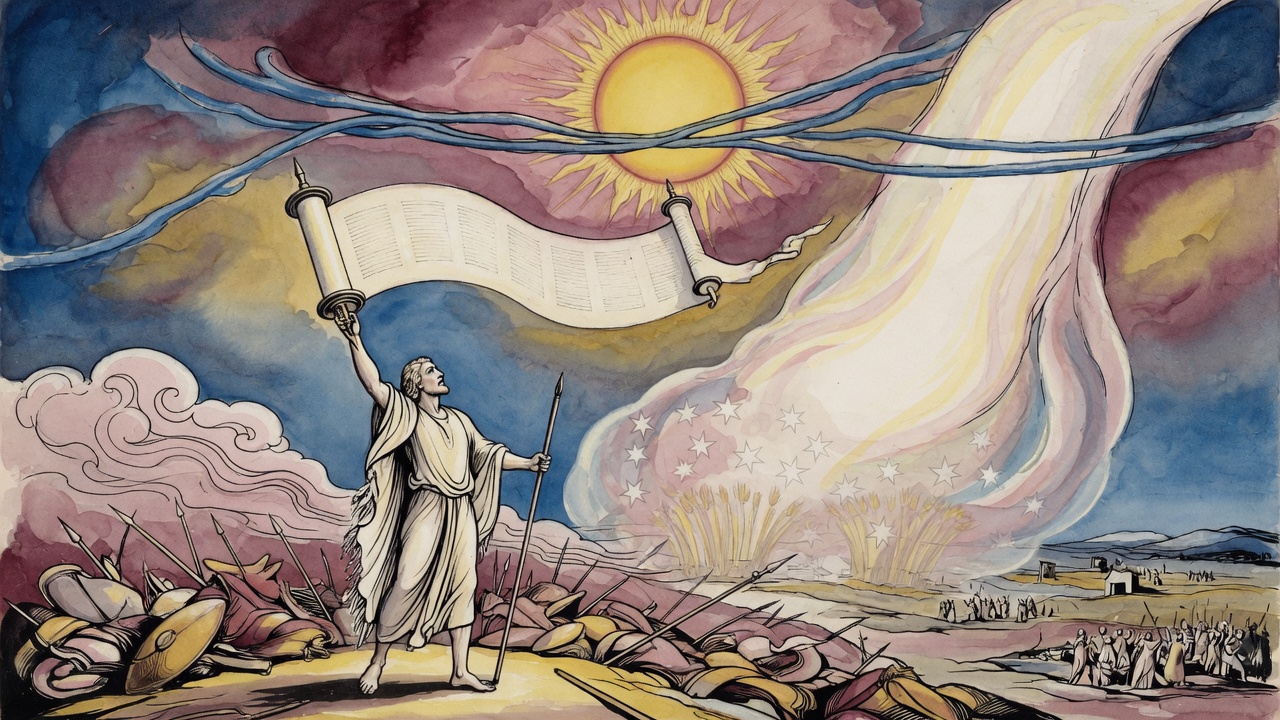
On the field of battle Joshua lifts the scroll he never stopped reading and orders the sun to halt, calling in Joseph's old dream as debt.
Table of Contents
 Click for full size
A General with a Scroll in His Hands
The day was losing the fight before Joshua was. Enemies fled toward the cover of night. Dust rose in long banners. If the sun set, the chase would dissolve into darkness and unfinished war, and the dead would multiply in the gaps between shadows. Joshua did not look for a larger army. He looked up.
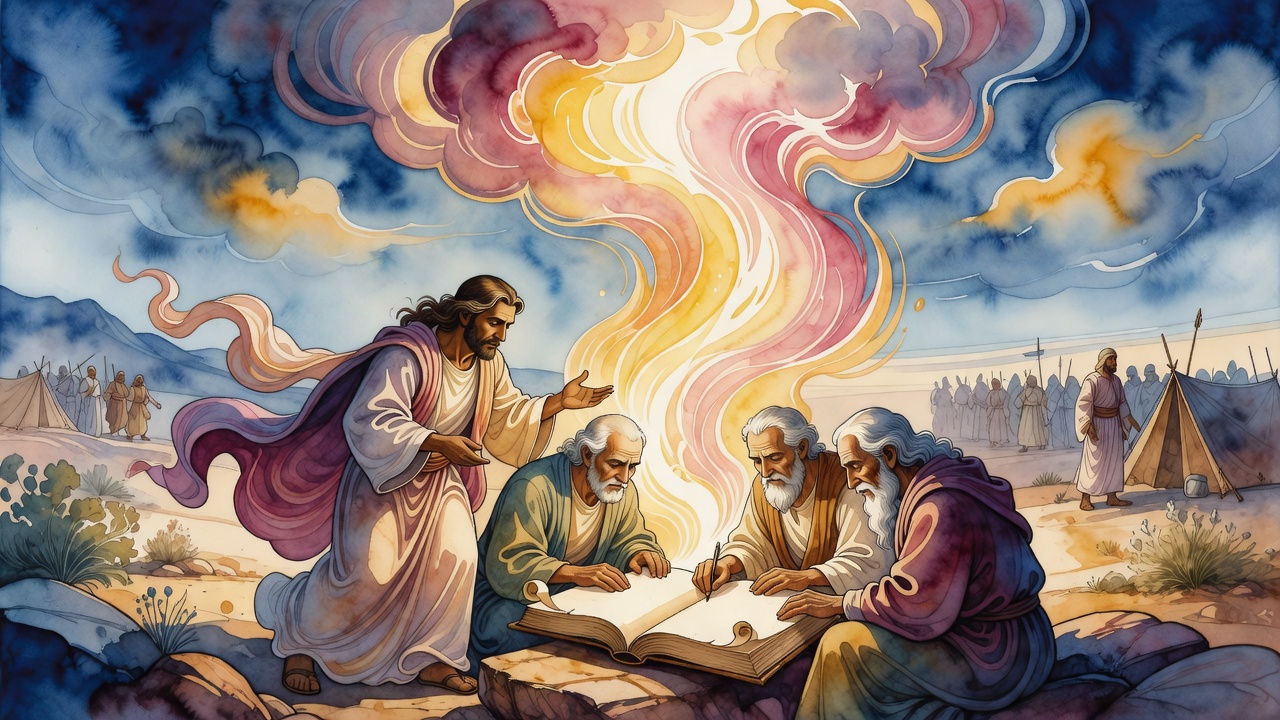
When God first called him, the tradition says, Joshua was found seated with the book of Deuteronomy open, not posing for destiny but studying. "This book of the Torah shall not depart from your mouth" (Joshua 1:8). So on the field he lifted the scroll he never stopped reciting and held it toward the sun and the moon as if the heavens were students who had grown restless.
"Just as I did not fall silent from these words," he said, "you fall silent before me."
Soldiers nearest him heard the order and forgot, for a heartbeat, to be afraid of spears. They were busy being afraid of a man who spoke to the sky like a commander.
The Slave Dream Called as Debt
Then he sharpened the order with family memory. He addressed the sun as a runaway servant and reminded it of Joseph's dream, when sun and moon and eleven stars bowed to the son sold into Egypt (Genesis 37:9). "You owe my house your deference. You bowed once in a boy's sleep. Bow now in open day."
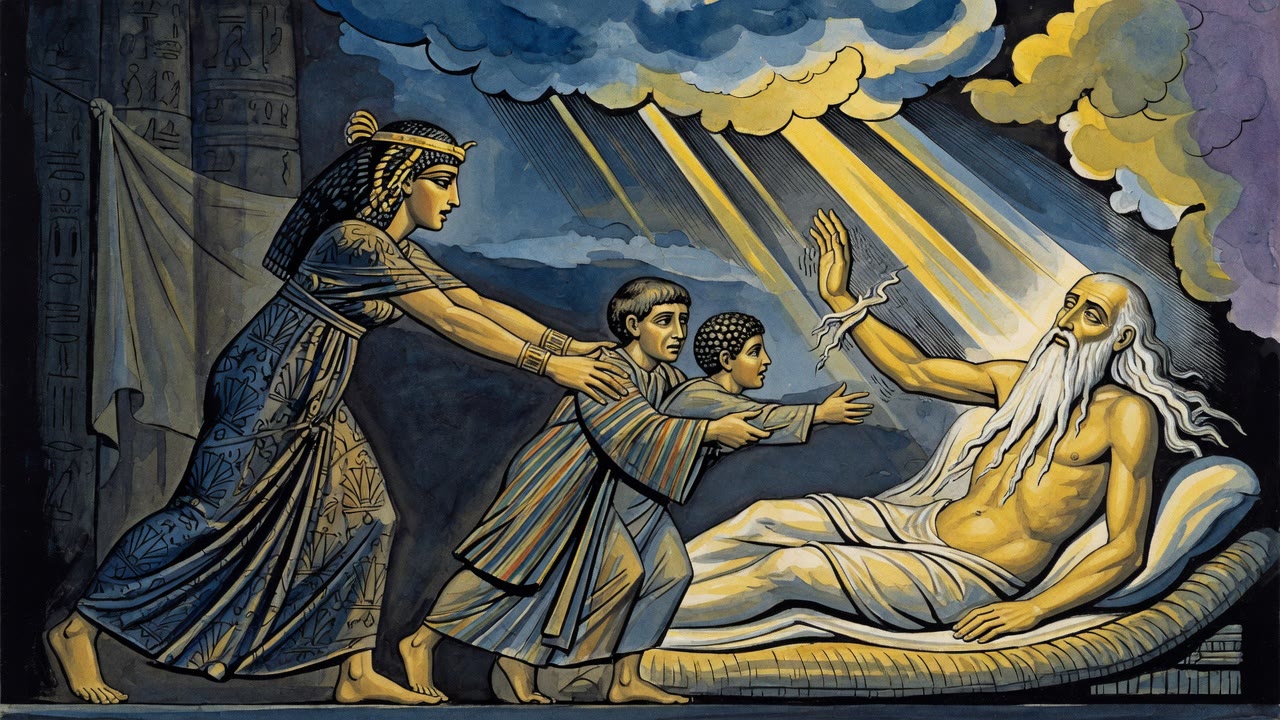
The cosmos halted. The sun stood still. The moon stayed. Shadows froze at odd angles. A man with a book and an old vision froze the clock of heaven long enough for Israel to finish what steel had begun. Jacob had blessed Ephraim that the younger would become a multitude of nations (Genesis 48:19). From that line came the commander who could stop the lamps of the world from end to end.
Somewhere a bird mid-flight felt the air change and did not know why.
Jacob's Hidden Sword
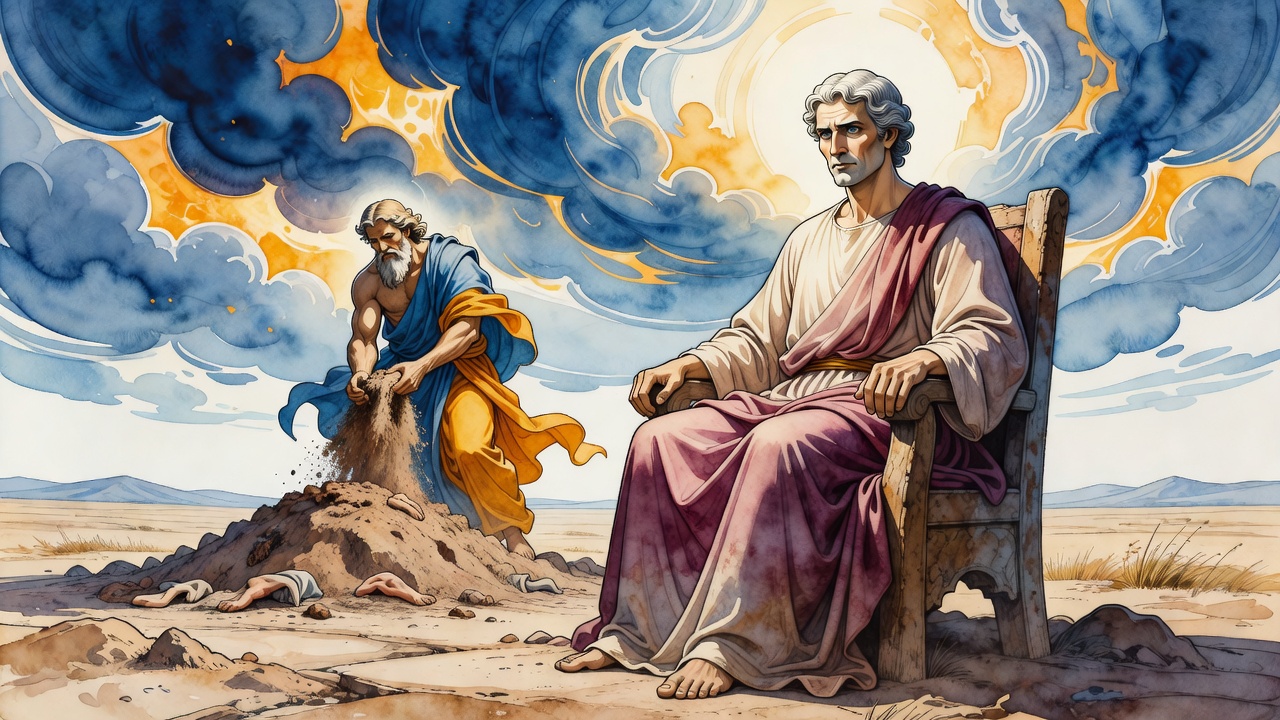
Joshua's fierceness did not start with him. Quiet Jacob, the tent-dweller, once claimed Shechem by sword and bow, ground the Torah never shows him taking in plain narrative. After Dinah and the raid, Amorite kings rose with armies and anger. Jacob buckled on weapons. The Holy One fought beside him. The portion later given to Joseph was earned earth, not soft favor, soaked in a patriarch's refusal to let the household of the covenant be erased.
Shechem would become Joseph's burial place (Joshua 24:32). The same house that stopped the sun also knew what it cost to hold a city when neighbors came for blood. Study and steel were not enemies in that lineage. They were two hands of one body.
Until the People Were Avenged
On that long day the light refused to leave. Soldiers who should have been shadows kept running, kept swinging, kept closing gaps that night would have opened like doors for the enemy. When the battle finally ended, the sky was allowed to move again, as if embarrassed to have been scolded by a student of Moses. Evening arrived late and almost polite.
Joshua did not boast. He returned to the book. The miracle was not a hobby. It was the battlefield extension of a mouth that would not drop Torah. Heaven, the story insists, listens to a commander who still studies, and to a house that once made the sun bow in a dream and later made it stand still in a war.
The scroll went back under his arm. The sun went back to its route. Israel counted the living and the dead under a light that had obeyed.
Light That Obeyed a Student
Men who survived that day told it badly at first, because the mouth is small and the event was large. They said the sun stopped. Then they said Joshua held a book. Then they said he spoke of Joseph's dream as if the sky still owed the house of Israel a bow. Listeners who had not been there laughed until they saw the speakers' eyes.
Moses had raised a staff over a sea. Joshua raised a scroll over a clock. Different tools, same refusal to let time or water decide against the people. The book of Deuteronomy in his hands was not a prop. It was the ongoing speech that made the battlefield speech possible. A commander who stops studying becomes only a man with a sword. A commander who studies can ask the cosmos for overtime.
Night, when it finally came, felt like a guest who had been told to wait in the hall. The stars arrived late and almost apologetic. Joshua slept with the scroll near enough to touch, as if the sun might need the reminder again before dawn.
Ephraim's blessing sat inside the miracle like a seed inside fruit. The younger brother made greater. The student of Moses made the day longer. Jacob's hidden sword and Joshua's open scroll were one family's two ways of refusing erasure. The sun, having bowed in a dream and halted in a war, went on its route with a new memory of Israel.
← All myths