Joshua Stopped the Sun on the Road at Beth-Horon
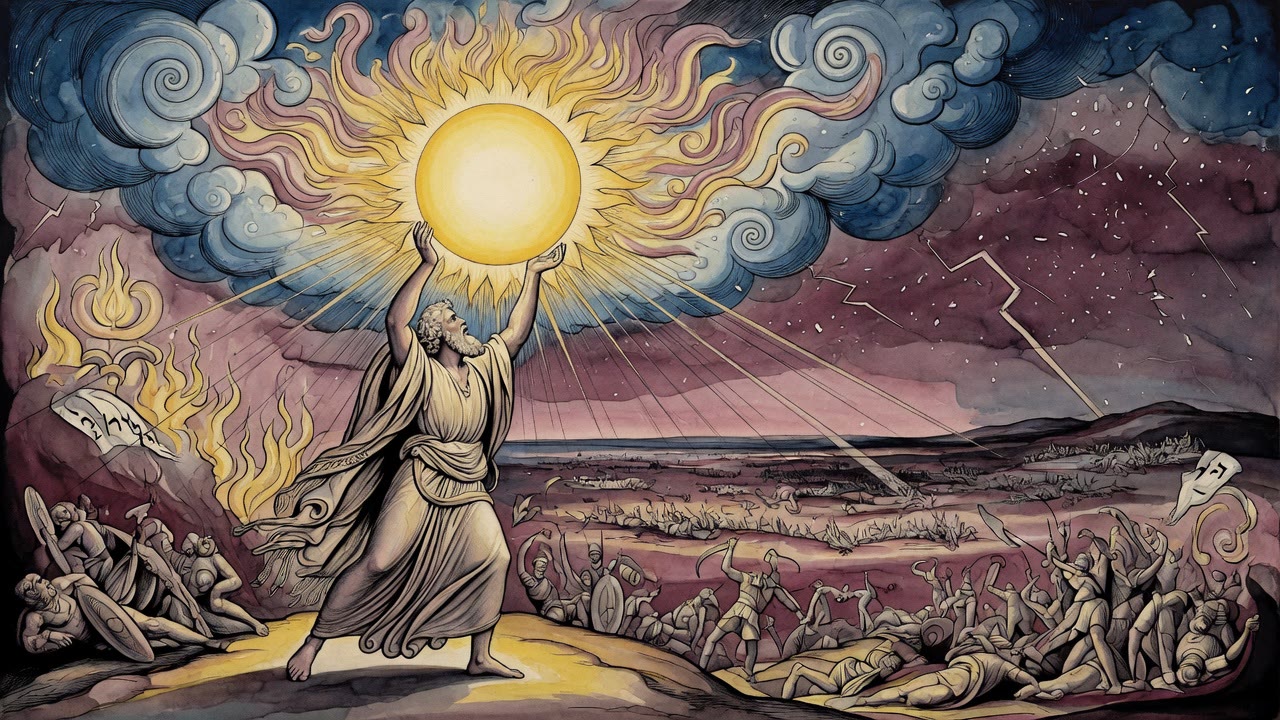
The five kings were still running when the light began to go. Joshua raised the scroll of Deuteronomy toward the sun and told it to be quiet.
Table of Contents
 Click for full size
Stones Out of a Clear Sky
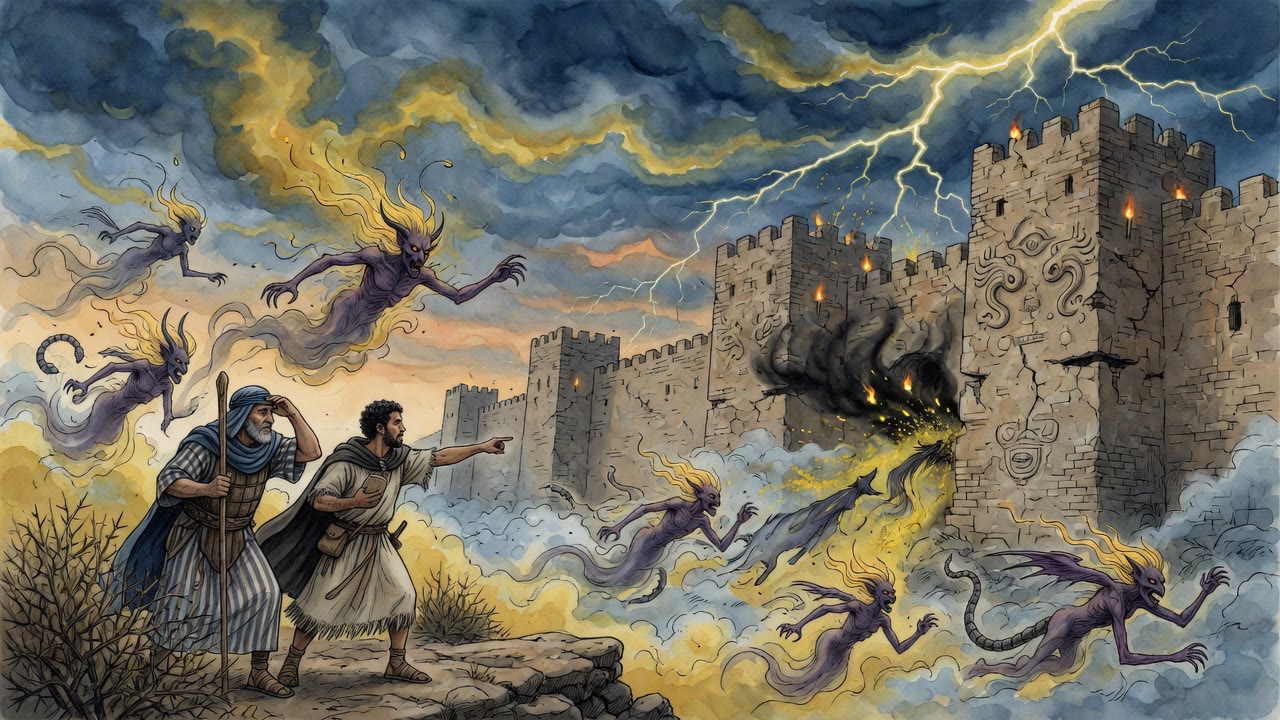
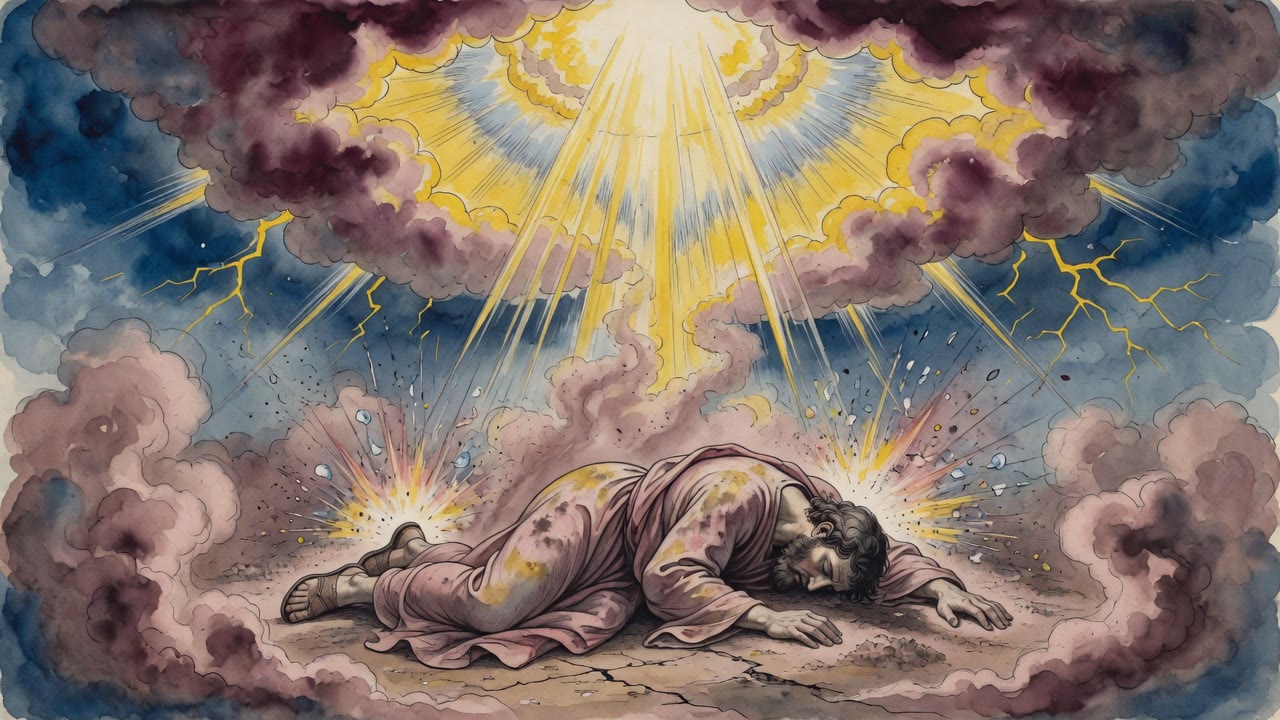
The five kings broke and ran down the descent of Beth-Horon with Israel behind them, and then the sky joined the chase. Stones came out of it. Great ones, falling on the men in the road and not on the men chasing them, so that more of that army died under the hail than died under the sword.
Horses went down on the slope. Armor rang where it was struck. The road they had chosen for their escape had turned on them.
The Light Was Going
But the descent is long, and the kings were not all dead yet, and Joshua could see what was coming. The sun was heading for the edge of the sky. Night would hand the survivors back their lives. Everything won since the army marched up out of Gilgal in the dark would be lost again in the dark, the kings would reach their own walls by morning, and the whole thing would have to be fought a second time.
He had one afternoon. The afternoon was running out.
He Held Up the Book
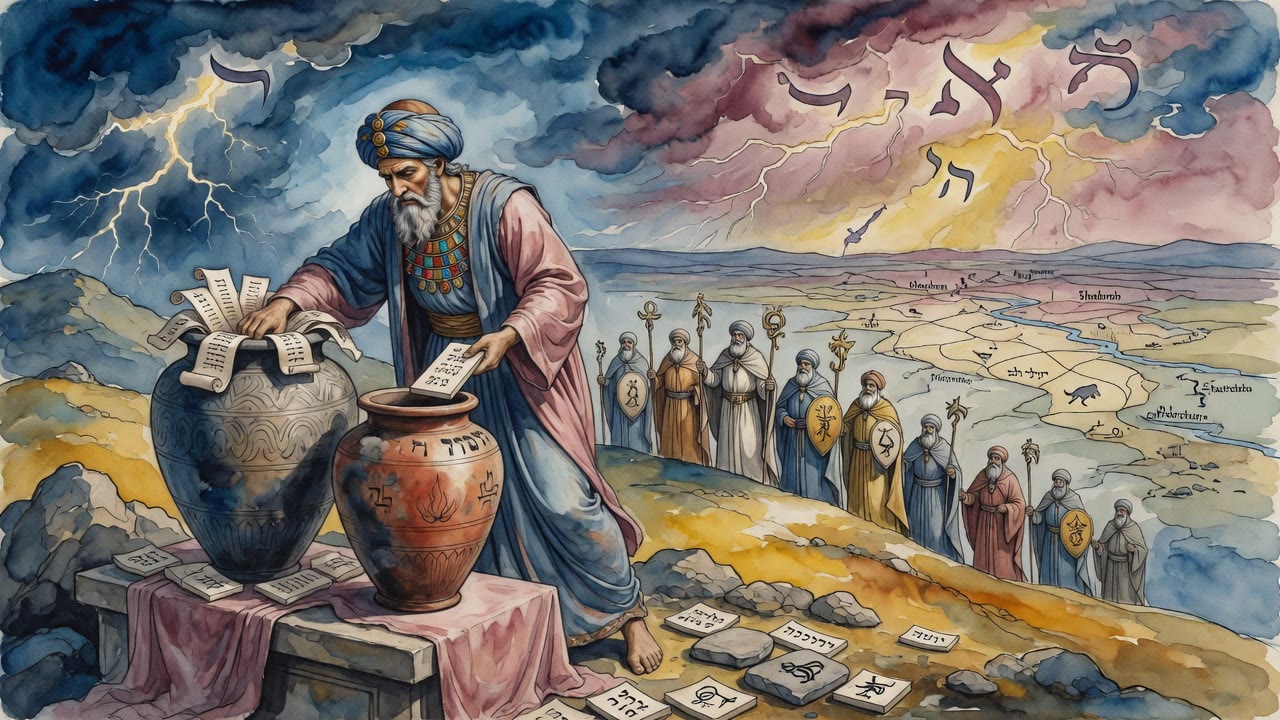
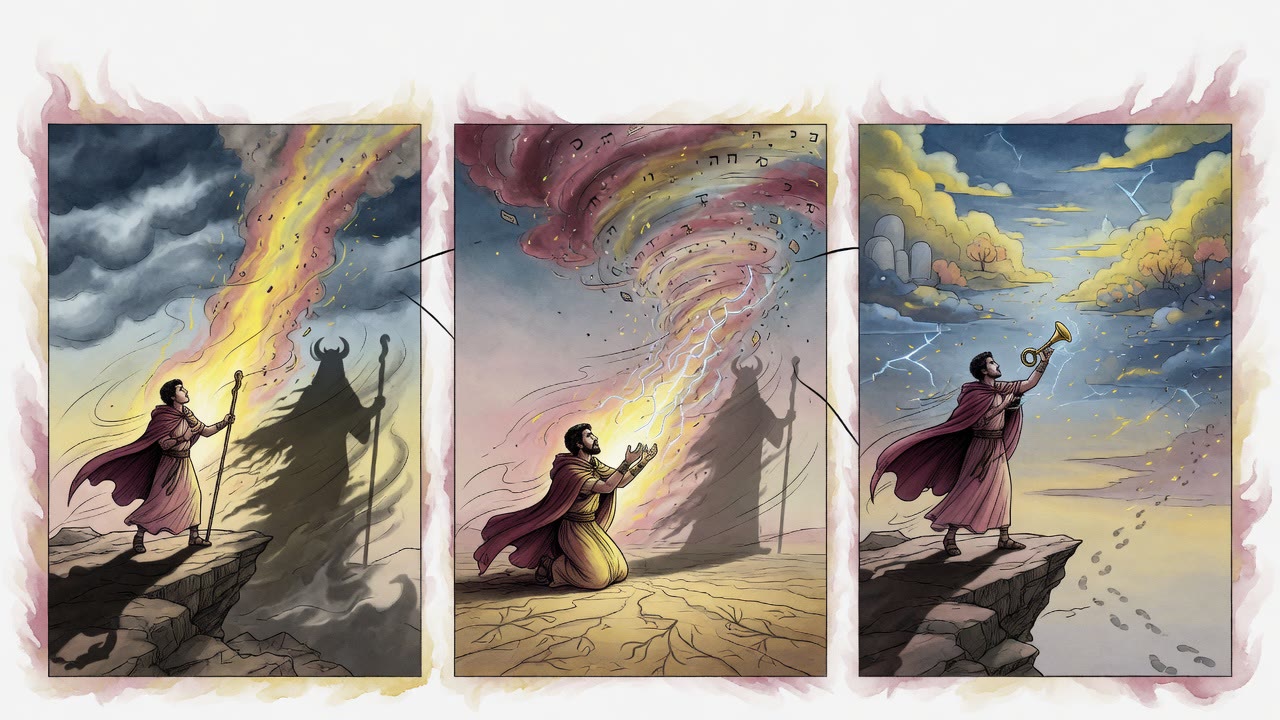
Joshua lifted the book of Deuteronomy over his head and turned it toward the burning face of the sun.
"I have never once fallen silent over these words," he said. "You be silent in front of me."
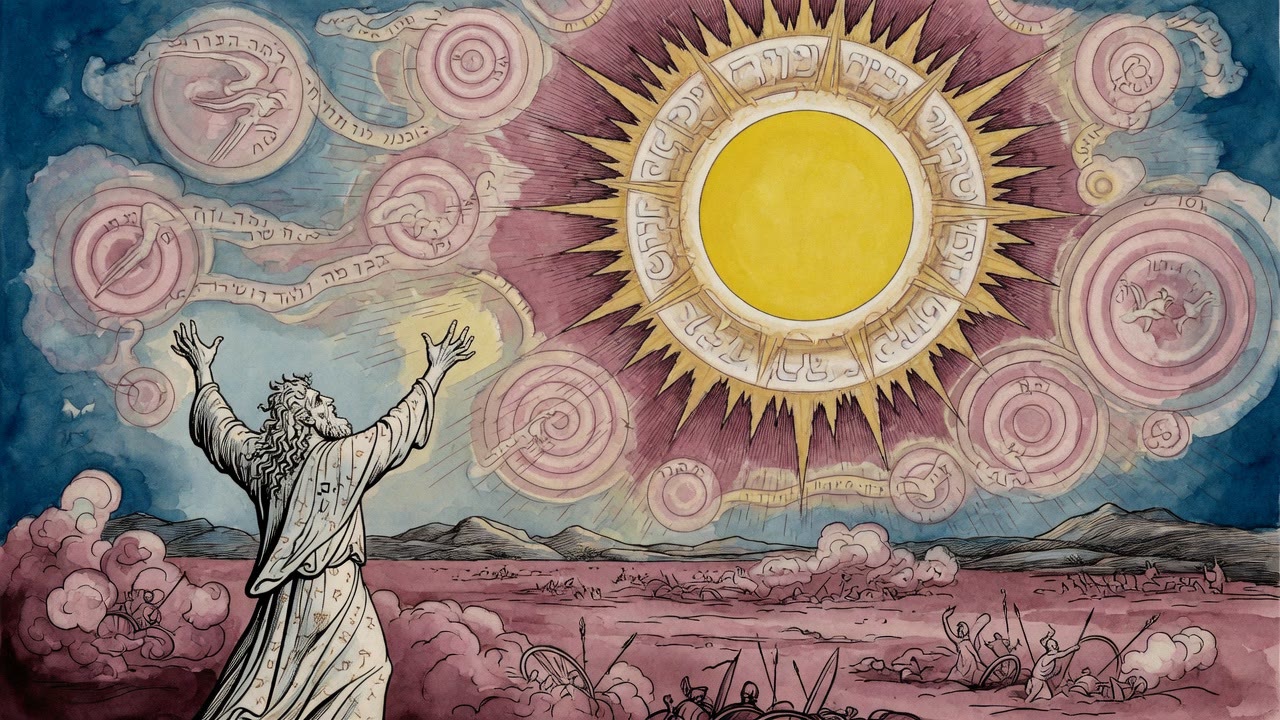
Then he reminded the sun who it was being spoken to by. It had bowed before. In a boy's dream back in Canaan it had come down and bowed, along with the moon and eleven stars, to a son of Rachel who was about to be sold into Egypt. That boy was Joseph, and the man now holding the scroll up at the sky had come out of Joseph's line through Ephraim. The creature that had bowed to the father could be told to stand still by the son.
The sun stood. The moon held with it. The sky stopped turning over, and the rout went on under light that should have been gone an hour earlier.
The Stones Are Still There
The kings died. The hail did not fade politely into a story afterward. The stones stayed where they had fallen, on that slope, and people kept walking past them for centuries.
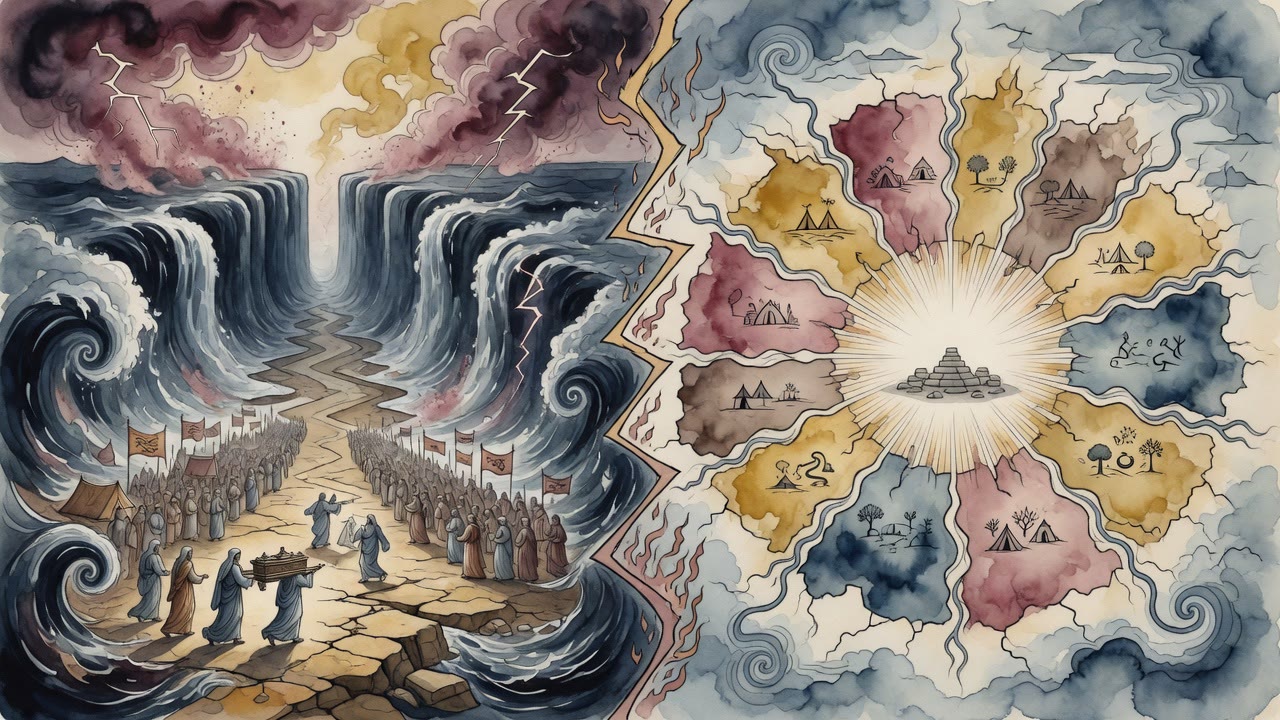
A person who comes on those stones is not free to keep walking. He has to stop and give praise and thanksgiving out loud before the Omnipresent, and the same obligation waits at the crossing place of the Sea and the crossing place of the Jordan, at the fords of the streams of Arnon, at the hailstones of Elgavish, at the boulder Og king of Bashan hoisted over his head to drop on the whole camp of Israel, at the rock Moses sat on while the fighting with Amalek went on below him, at the pillar of salt that had been Lot's wife, and at the walls of Jericho that went straight down into the ground where they stood.
A soldier who survived Beth-Horon could walk that road again as an old man and be required to stop in the same place and say the same thing.
The Man Who Came Up From Gilgal
Israel went back to the camp at Gilgal when the kings were dead, and that camp is where the strangeness came from next.
A messenger came up out of Gilgal to a place they afterward called Bochim, the Weepers, and the people who watched him arrive could not agree on what they had seen. His face was burning like lit torches. Some of them said an angel of the Lord had come up from Gilgal. Others said it was Phinehas the priest, and that his face did that whenever the holy spirit settled on him.
Manoah's wife had made the same mistake from the other side. She met someone out in a field, went home, and told her husband that a man of God had come to her and his look was like the look of an angel of God. She thought she had been talking to a prophet. She had not. The confusion ran in both directions and it never got settled: Haggai is called a messenger of the Lord, and so is the one who brought Israel up out of Egypt.
Joshua had held a book up at the sun and the sun had obeyed him. Phinehas walked up from the same camp with his face on fire and nobody watching could say for certain whether they were looking at a priest. In that generation the line was thinner than it looked.
← All myths