5 min read

Judah's Speech That Broke Joseph's Disguise

Judah promised Jacob he would bring Benjamin home. In Egypt, that vow became a throne-room plea sharp enough to break Joseph's disguise.

Curated by Arthur · Told by Maggid ·
Table of Contents
  1. Hunger Entered Jacob's Tent
  2. Rachel's Lamp Burned in Benjamin
  3. The Surety Took the Blame
  4. Judah Spoke Like a Threat
  5. The Vow Opened the Room

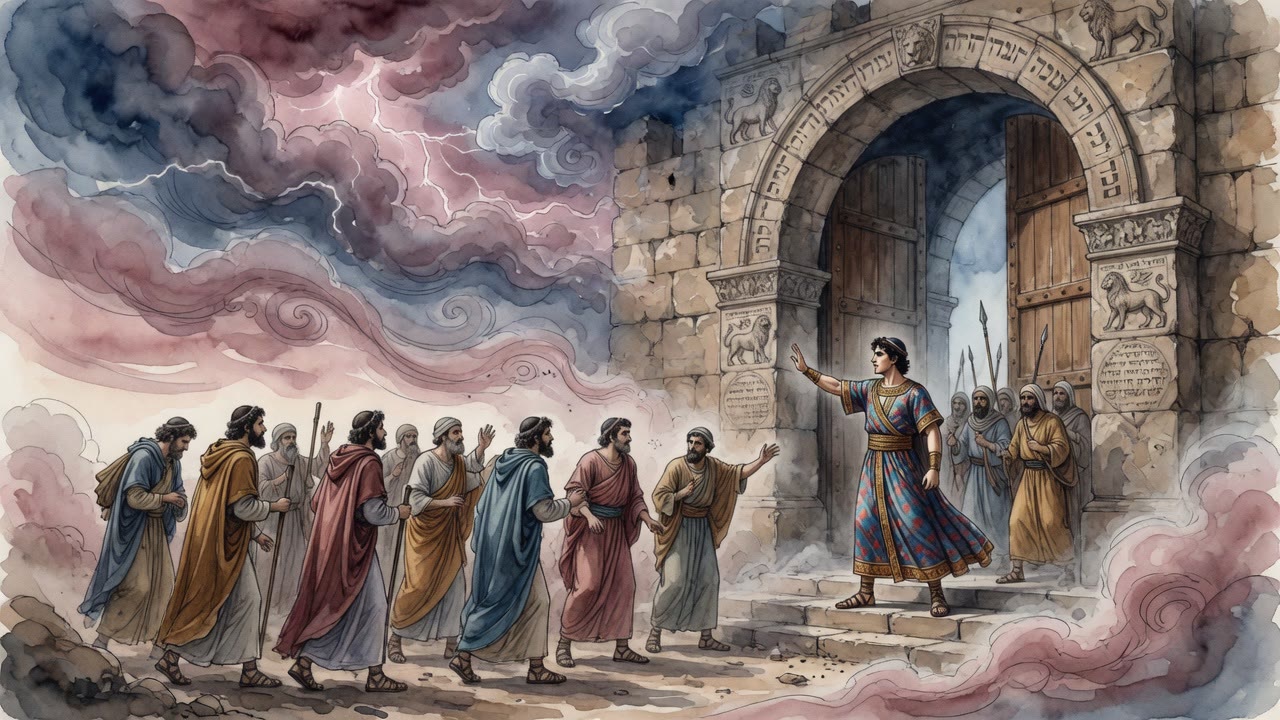
Judah stepped toward the throne with no cup, no guard, and no proof.
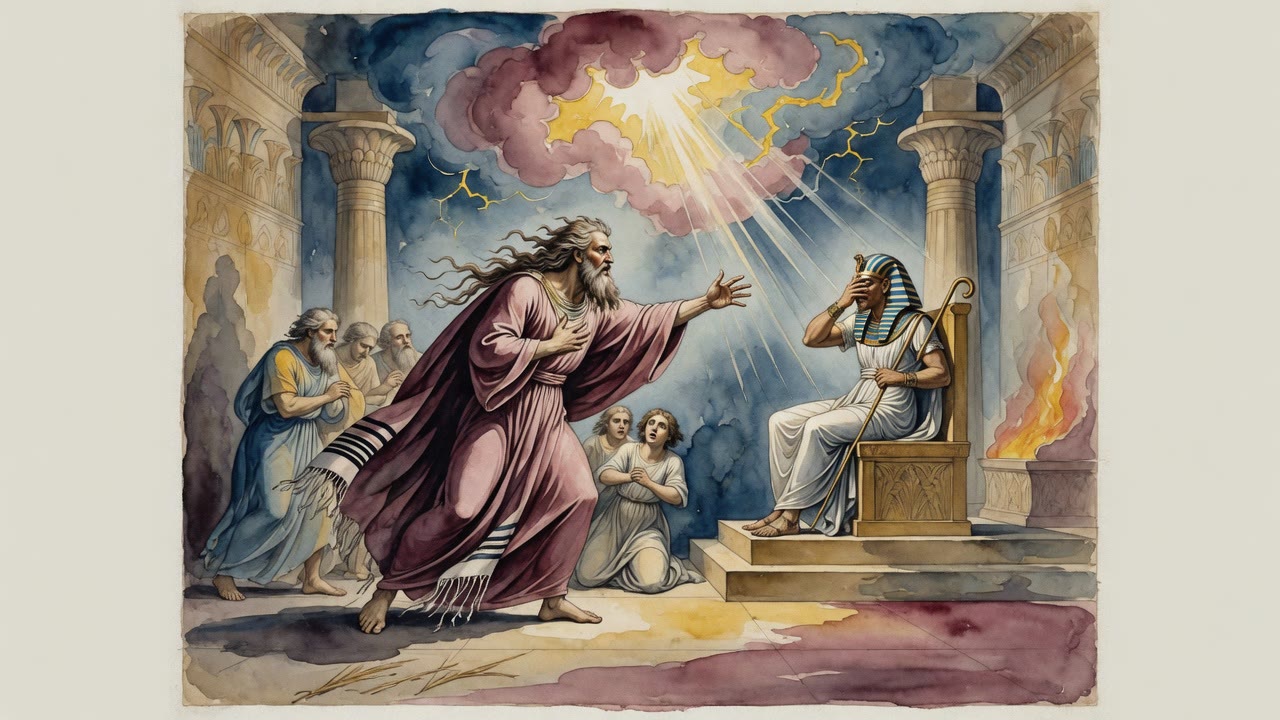
The silver goblet had been found in Benjamin's sack. The youngest brother, Rachel's last son, now stood under an Egyptian sentence. The governor could keep him as a slave. The others could go home with grain, shame, and a father who would not survive the news.

Hunger Entered Jacob's Tent

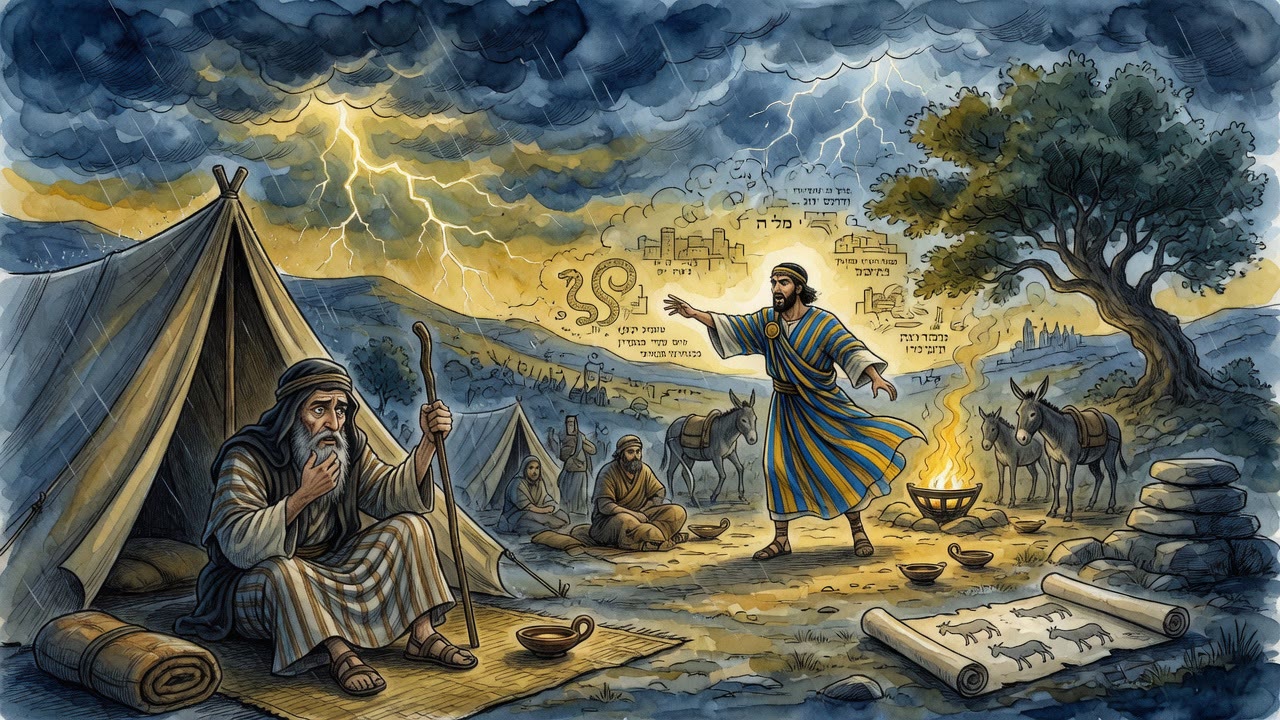
The road to that room began with hunger. Grain ran thin in Canaan. Children needed bread. Animals needed feed. The first trip to Egypt had ended with a warning: no brother could see the governor's face again unless Benjamin came too.

Jacob would not send him. He had already buried Joseph in his heart. He had already watched Rachel vanish on the road. Benjamin stayed near him like the last coal in a house after midnight.

Judah broke through the paralysis. "Send the youth with me," he said, "so that the family may arise and live, not die." Not only the brothers. The old father too. The little ones too. Hunger had made one boy's safety the hinge of every life in the camp.

Then Judah placed himself under the vow. If he did not bring Benjamin back and set him before Jacob's eyes, the guilt would remain on him all his days.

Rachel's Lamp Burned in Benjamin

Jacob opened the wound before he let the boy go. "My wife bore me two sons," he told them. "One went out from me, and I said he was torn to pieces. If this one also leaves my face and harm meets him, my gray hair will go down in grief."

Benjamin was not only Benjamin in Jacob's tent. He was Rachel still breathing. He was Joseph still near enough to touch. He was a lamp with three mouths, and if one flame died, all three went dark at once.

The road itself frightened Jacob. Rachel had died on a road. Joseph, as far as Jacob knew, had died after leaving home. If Benjamin died away from him too, the pattern would finish its work. Jacob would not need a sword. His own sighing would kill him.

Judah heard all of it. He took the boy anyway, because famine had left no merciful option.

The Surety Took the Blame

Now Benjamin stood accused in Egypt, and the governor turned on the brother who would not stop speaking.

"Why do you speak more than the others? Reuben is older than you. Simeon and Levi are greater than you. They stand silent. Why does your mouth keep moving?"

Judah did not retreat. The others might be greater, but none of them had made himself surety. None of them had put his own life, this world and the world to come, under a father's demand. Judah's insides twisted like a mourner's because the vow had become a chain around his ribs.

No silver could pay it. No gold could weigh it. He owed Jacob one living son.

Judah Spoke Like a Threat

The plea sharpened. Judah was not speaking to a kindly judge. He faced a ruler who had accused honest men of spying, demanded a younger brother, planted fear in their sacks, and now claimed Benjamin for a cup.

So Judah let the throne hear danger. A ruler who has no fear of God can twist law into hunger. A Pharaoh can take what he wants and call it judgment. If the governor wanted argument, Judah would argue. If he wanted pleading, Judah would plead. If he wanted force, Judah had not come empty.

Every word walked a blade. Too soft, and Benjamin stayed. Too hard, and Egypt's guards would close around them. Judah kept moving because there was no clean road left.

He did not ask for the family to be excused. He asked for the guilt to land on him.

The Vow Opened the Room

"Let the boy go up with his brothers," Judah said. "Let your servant remain instead."

There it was. The brother who once helped sell Joseph now offered himself in place of Rachel's other son. The man who had carried a lie home to Jacob now refused to carry home a second loss. He could survive slavery. He could not survive his father's face if Benjamin failed to return.

"How can I go up to my father if the boy is not with me?"

The throne room held still. Joseph had tested them with grain, silver, accusation, imprisonment, and the cup. Judah answered with his body. He placed himself where Benjamin stood and made the old crime run backward.

That was the blow Joseph could not absorb. Not a threat. Not a legal argument. A brother choosing bondage so another brother could go home.

The disguise began to crack. Behind the Egyptian ruler, Joseph the son of Jacob was already reaching for the door.


← All myths

From the tradition

Sources

4 sources

The texts this telling draws on, in full. Open a card to read inline, or expand it for a wider, quieter read.

Legends of the Jews, I. Joseph, Judah Pleads And Threatens.Legends of the Jews

The story of Judah confronting Joseph in Egypt is just that, a dramatic face-off fueled by family secrets, accusations, and the desperate need to protect a brother.

The scene is set: Joseph, now a powerful Egyptian official, has accused his youngest brother Benjamin of theft and imprisoned him. Imagine the tension as Judah, known for his strength and leadership, steps forward to plead for Benjamin's release. According to Legends of the Jews, compiled by Louis Ginzberg, Judah is prepared to use any means necessary: argument, entreaties, or even force.

Judah doesn't mince words. He accuses Joseph of acting like Pharaoh, someone who has "no fear of God," pointing out that Joseph's judgments defy both their own laws and those of the nations. He questions Joseph's motives, suggesting a hidden agenda, a "lustful purpose," even daring to compare him to the oppressive Pharaoh.

Judah's appeal isn't just based on logic. He invokes the power of their lineage, reminding Joseph that Pharaoh himself suffered plagues for wrongly detaining their grandmother. He warns Joseph of the potential consequences of angering a man whose own father once uttered a curse that led to premature death. "Take heed, then, that this man's curse strike thee not and slay thee," Judah cautions, a chilling reminder of the power of words and the bonds of family.

He then drops a bombshell: "Two of us destroyed the whole of a city on account of one woman, how much more would we do it for the sake of a man, and that man the beloved of the Lord, in whose allotment it is appointed that God shall dwell!" This alludes to the story of Dinah and the destruction of Shechem, displaying the brothers' capacity for fierce, even violent, retribution when their family is wronged.

As Judah's anger rises, he threatens to unleash a devastating plague. When Joseph has his son Manasseh stomp his foot, shaking the palace, Judah recognizes the power. He then accuses Joseph of setting them up from the start, asking probing questions that no other merchants were asked. Joseph retorts that Judah is nothing but a "babbler."

Judah explains that he is responsible for Benjamin's safe return, and so has more at stake in the situation than the other brothers. According to Ginzberg's retelling, the other brothers intentionally stayed out of the fight between Judah and Joseph, knowing they were witnessing something significant: "Kings are carrying on a dispute, and it is not seemly for us to interfere between them." Some even say that angels descended to witness this showdown between "Joseph the bull and Judah the lion."

Joseph, however, isn't swayed. He throws Judah's past back in his face, reminding him of the sale of Joseph into slavery years earlier. "Why wast thou not a surety for thy other brother, when ye sold him for twenty pieces of silver?" he asks, twisting the knife. "Then thou didst not regard the sorrow thou wast inflicting upon thy father… And yet Joseph had done no evil, while this Benjamin has committed theft."

The impact is devastating. Judah breaks down, his cries echoing for miles. Hushim, son of Dan, hears the outcry all the way in Canaan and leaps to Egypt, joining his voice to the tumult. According to the Midrash, the noise is so intense that the very land is on the verge of collapsing, Joseph's men lose their teeth, and the cities of Pithom and Raamses are destroyed. The brothers, finally stirred to action, resolve to destroy Egypt.

The descriptions of Judah's rage are almost supernatural. His eyes shed tears of blood, his hair pierces his garments, and he crumbles brass rods with his teeth. Joseph, witnessing this display of power, counters with his own show of strength, shattering the marble pedestal he sits upon. A battle of strength ensues, with stones thrown and threats exchanged.

Finally, recognizing the potential for complete destruction, Joseph orders his son to gather the Egyptian army. Judah, in turn, divides the city among his brothers, planning its complete annihilation.

As Pharaoh learns of the chaos, he sends a message to Joseph, essentially telling him to choose between Egypt and the Hebrews. The stakes couldn't be higher.

This intense confrontation highlights not only the brothers' complex relationship but also Judah's unwavering loyalty and determination to protect his family. It's a story of power, deception, and the enduring strength of familial bonds. It leaves you wondering: What would you do to protect your family? How far would you go? And what are the long-lasting consequences of our actions, both intended and unintended?

Full source
Midrash Aggadah, Genesis 44:29Midrash Aggadah

"And if ye take this also from me" etc. (Genesis 44:29). Our father Jacob said to his sons: Now, while Benjamin is with me, it is as though Rachel is with me and Joseph is with me; but now, when you take him from me, it is as though all three of them were taken in one day. And to what is Benjamin like to me? To a lamp that is burning and has three mouths: when one of them is extinguished, the three are extinguished.

"And mischief befall him" (Genesis 44:29). Jacob said: Woe is me, lest a [decree] has been decreed upon Rachel and upon her two sons that they should be consumed. She died on the way, Joseph died on the way, and now, if this one too should die on the way, I shall die of grief.

Joseph said to him: Judah, why do you speak more than your brothers? Are there not [among your brothers some greater than you? Judah said to him: You have spoken truly, for there are among my brothers some greater than I. But my brothers stand apart from the bargain, whereas I, my bowels, my bowels yearn within me like a mourner. Joseph said to him: Why? Is there silver or gold owed by you? I will give it on your behalf. He said: Neither silver nor gold is owed by me. Joseph said to him: If so, why are you anxious? He said to him: Thus I said to my father, if I do not bring him back to you, I shall be under the ban all my days. Judah said to Joseph: Why do you seek Benjamin? If for greatness, I am greater than he; and if for might, I am mightier than he. Better that I be a slave in his place, and that I not cause grief to my father, as it is said, "For how shall I go up to my father" (Genesis 44:34). And when he mentioned his father's grief, he could no longer contain himself. What did he do? He strengthened himself and sat down. He said to them: Where is your brother of whom you said that he is dead? Surely he is dead; call him and he will answer you. And he kept calling, "Joseph son of Jacob, Joseph son of Jacob," and they kept looking into the four corners of the house. He said to them: What are you looking at? I am Joseph your brother. And they did not believe him until he uncovered himself and showed them the covenant of circumcision.]

Full source
Midrash Tanchuma Buber, Vayigash 4:1Midrash Tanchuma Buber, Vayigash

Another interpretation of "And Judah drew near unto him" (Genesis 44:18). This is what Scripture says: "My son, if you have become surety for your neighbor" and so forth; "you are snared by the words of your mouth" and so forth; "do this now, my son, and deliver yourself" (Proverbs 6:1, 2, 3).

Joseph said to Judah: Why do you multiply words? I observe that there are men greater than you standing here, and they are not speaking. Is not Reuben greater than you? Are not Simeon and Levi greater than you? Yet they are not speaking. So why do you multiply words?

He said to him: Of all these, there is not one of them who is concerned about him, except for me myself, for I am the surety, as it is said, "I myself will be surety for him" (Genesis 43:9). And so I said to my father, that if I do not bring him to you and set him before you, then I am sinning before you in two worlds, in this world and in the world to come, as it is said, "if I do not bring him to you, then I shall have sinned against my father all the days" (Genesis 44:32). Therefore I lay down my life for him. Why? "My son, if you have become surety for your neighbor" and so forth.

Full source
Targum Pseudo-Jonathan on Genesis 43:8Targum Pseudo-Jonathan on Genesis

The famine grinds on. Grain runs thin. And Jacob, the aged patriarch, sits paralyzed at the thought of sending his youngest, Benjamin, down into Mizraim (Egypt). The viceroy there has said plainly that no one sees his face again without the boy. But Jacob cannot bear it.

It is Judah who breaks the silence. He does not plead gently. He speaks with the urgency of a man who has already counted the days. "Send the youth with me," he tells Israel his father, "that we may arise and go; and that we may live and not die, both we, and you, and our little ones" (Genesis 43:8).

Hear the stakes layered in that one sentence. Judah does not merely say, let us live. He says we and you and our little ones. Without Benjamin, the journey is forbidden. Without the journey, there is no bread. Without bread, no family survives, not the brothers, not the old father, not the children who have not yet tasted wheat.

Targum Pseudo-Jonathan, composed in Aramaic sometime between the fourth and eighth centuries, preserves this moment as a hinge. Judah, who once stood by while Joseph was sold, now speaks for life. The brother who suggested profit now offers his own body as surety.

This is the pattern the sages love: the one who caused a wound must be the one who heals it. Judah's voice here foreshadows the greater speech he will deliver in Genesis 44, when he stands before Joseph and offers himself as a slave in Benjamin's place. The seed of that repentance is planted right here, in a single plea to an unwilling father.

Full source