Judah Could Not Draw His Sword on the Man Who Held Benjamin
His roar carried four hundred parsangs. Hushim son of Dan heard it in Canaan and jumped. Egypt came close to turning over that afternoon.
Table of Contents
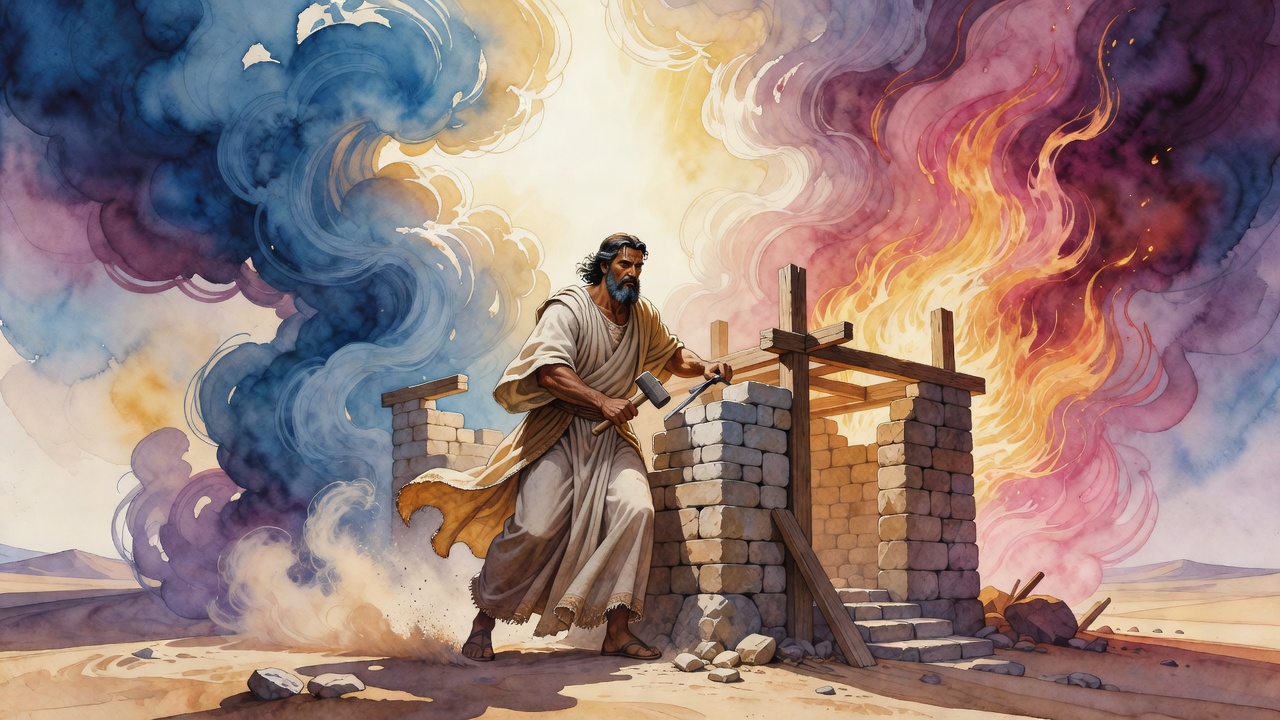
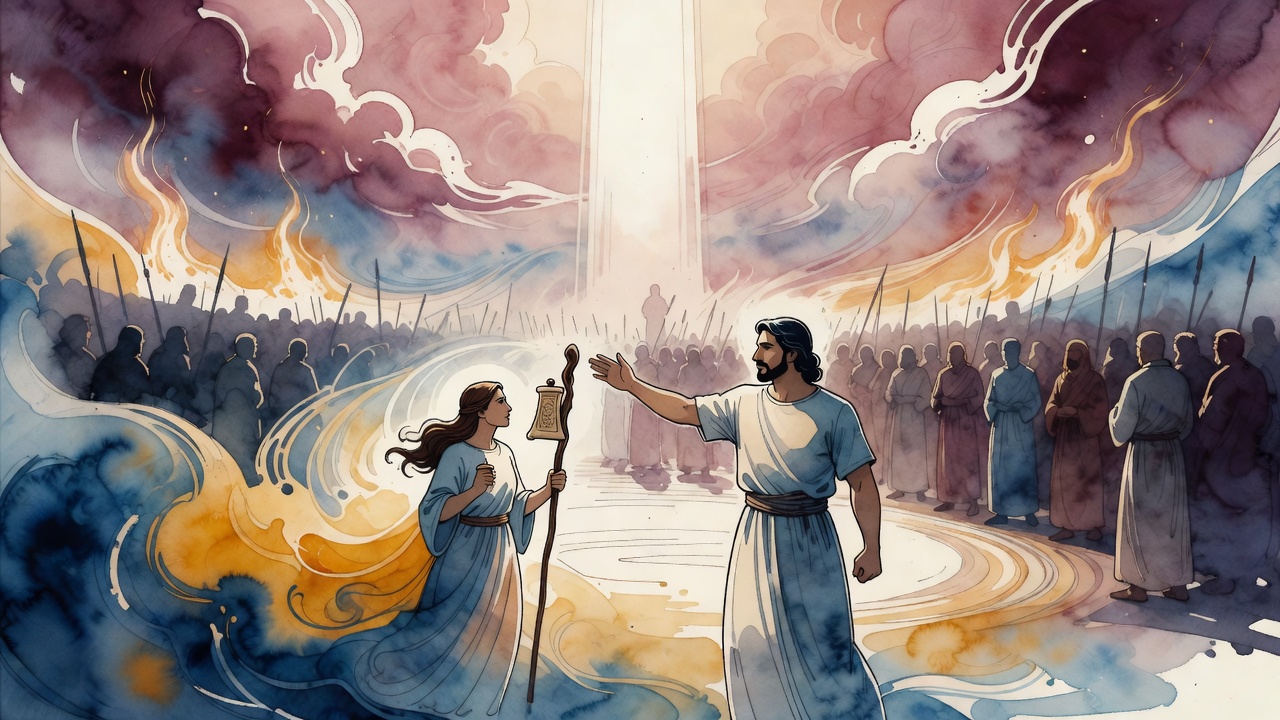
Judah put his hand on the hilt. The blade stayed in the scabbard. He pulled again. The same hand that had gone through armor would not bring a sword out of its own sheath.
 Click for full size
The man who held Benjamin sat on a stone pillar and did not stand up. Judah let go of the hilt. "This man is afraid of God," he said, and that was the end of the fight.
She Is More Righteous Than I
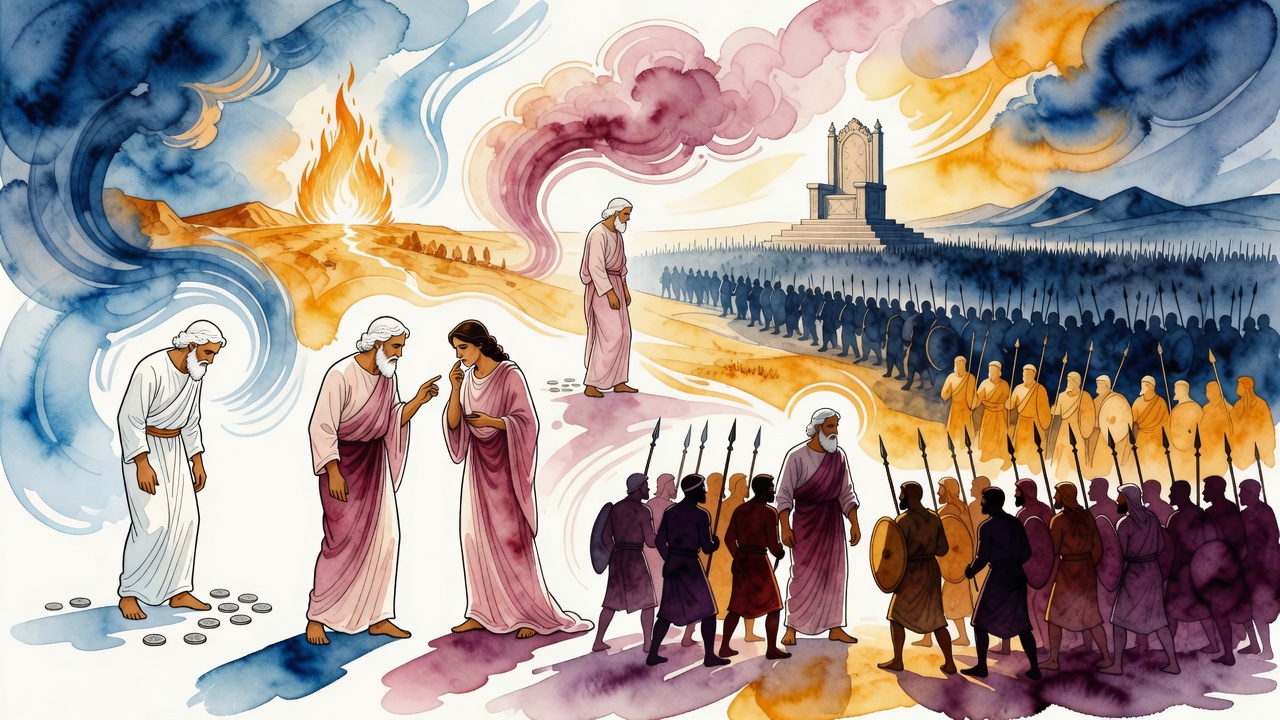
Years before that hall, Judah had sent a woman out to be burned. Tamar was his son's widow. She was pregnant. He had said the sentence out loud. "Take her out and burn her."
She did not name him. She sent a bundle instead: a seal, a cord, a staff. The owner of these, she told the court, is the man.
They were his. He was standing in the court of Shem, in front of the elders, in front of Jacob. He could have kept his mouth shut for one minute and walked out clean. He stood up instead. "She is more righteous than I." He gave the whole of it. He kept nothing back from Jacob and nothing back from the court.
She came out of the fire. So did the twins she was carrying. Because he pulled them back from the flames, three men of his line would later walk through a furnace in Babylon and come out with nothing burned, and a lion of Judah would go down into a pit of lions and come up untouched. The confession did not stay in Canaan. It kept paying.
The Day He Fought in Jacob's Place
Judah came to Jacob in the morning and told him to sit down. "You fought all day yesterday and you are worn out. Give me today."
The enemy line saw the lion in his face and the lion in his teeth. Then they heard the voice, and the fear went through them before the first blow landed. He went over the army the way a flea goes over a dog, from one armed man to the next, hitting and moving. By evening he had put down eighty thousand and ninety-six men with swords and bows.
He ran out of strength. Zebulun stepped up on his left and took the line and killed eighty thousand more while his brother stood breathing. Then Judah came back into it, grinding his teeth with a sound like thunder in midsummer, and the whole army broke and ran, and did not stop running for eighteen miles.
That night he slept. The tribe that would march under a lion was already in his body. It was not yet wisdom. It was force.
The Roar That Reached Canaan
Then came the famine, and the road to Egypt, and the silver cup in the youngest brother's sack. The man who ran Egypt gave his ruling. "The one who had the cup becomes my slave. The rest of you go home to your father in peace."
"Benjamin is taken," Judah said, "and you talk about peace in my father's house."
He had guaranteed the boy. He had also let Jacob believe Joseph was dead. Standing in that room he thought, if I spend myself on this, perhaps the Holy One will let me off that. So he roared.
The sound went four hundred parsangs. Hushim son of Dan heard it standing in Canaan and jumped and came. The two of them roared together, and the ground under Egypt came close to turning over. One was the roar of a lion and the other the voice of a great cat. When the anger came up in Judah, every guard in Joseph's hall lost the teeth out of his head. The brothers caught it off him. They kicked the floor until it was cut into furrows, like lions with the kill taken away.
The Sword Stayed in the Scabbard
The men of Shilo said blood ran out of both his eyes when he was like this. Others said he wore five garments under his clothes, layered the way a soldier layers armor, and that one hair over his heart would stand up and tear through all five.
Joseph watched the signs arrive on his brother's face and went cold. "He may kill me," he thought. He was sitting on a stone pillar. He kicked it, without getting up, and it came apart into a heap of gravel.
Judah looked at the gravel. "This one is stronger than I am." Then he put his hand on the hilt and pulled, and the blade would not move for him. Wisdom, the old verse said, fortifies the wise more than ten rulers in a city. The wisdom that stopped his hand was not a speech. It was the fear of God sitting in the man across from him, and Judah could not draw steel on that.
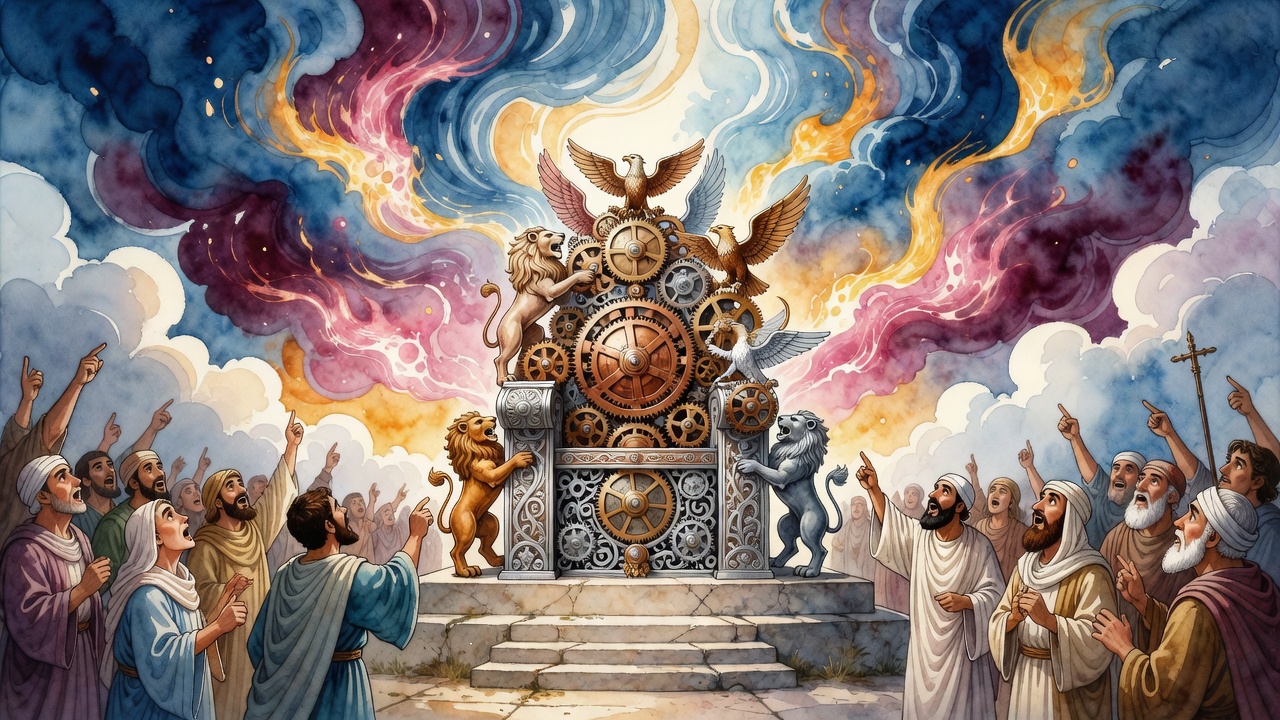
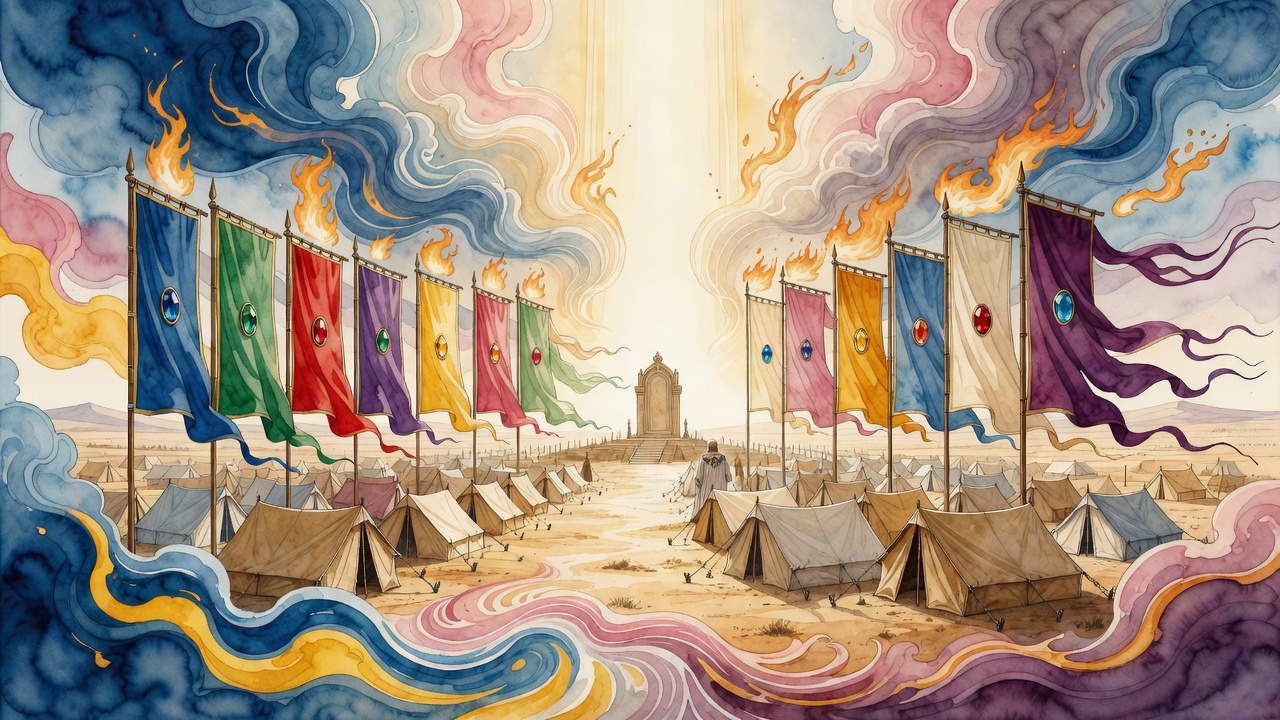
The family that was two seconds from being finished in a foreign hall walked out of it whole. In the wilderness his tribe marched under a lion worked in gold with hooks along it like swords, and God let a strip of the seventh cloud of glory rest on the standard, and inside the cloud the first letters of Abraham, Isaac, and Jacob burned with light off the Shechinah (שכינה), the Divine Presence. Every camp in Israel could see which way Judah was facing. The lion was not unbreakable because it roared. It was unbreakable because, once, the roar stopped at a sheath that would not open.
← All myths