5 min read

The Earth Opened Its Mouth Under Korah's Own Feet

Two hundred fifty censers were still smoking when the dust rose and the screams cut short. A child dropped a jug in the camp and nobody scolded him.

Curated by Arthur · Told by Maggid ·
Table of Contents
  1. Flies in the Perfume
  2. Why Courts Come First
  3. The Weight of One Decree
  4. Peace That Comes Too Late

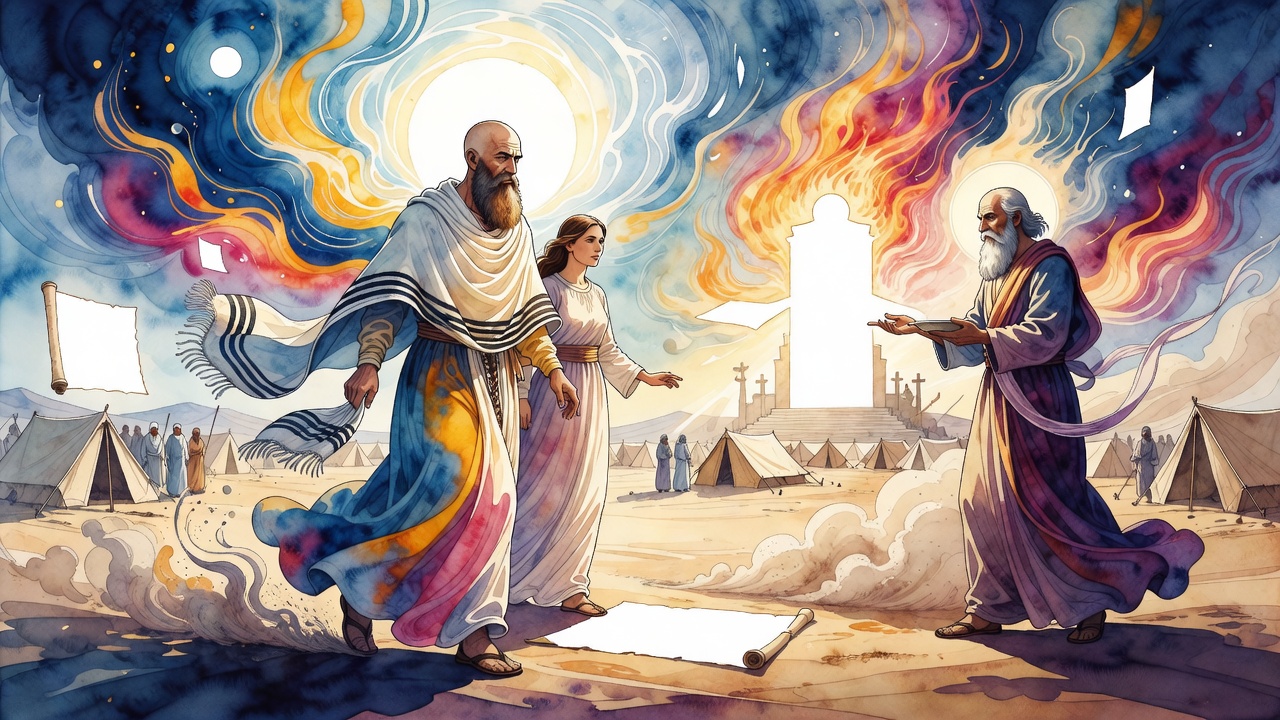
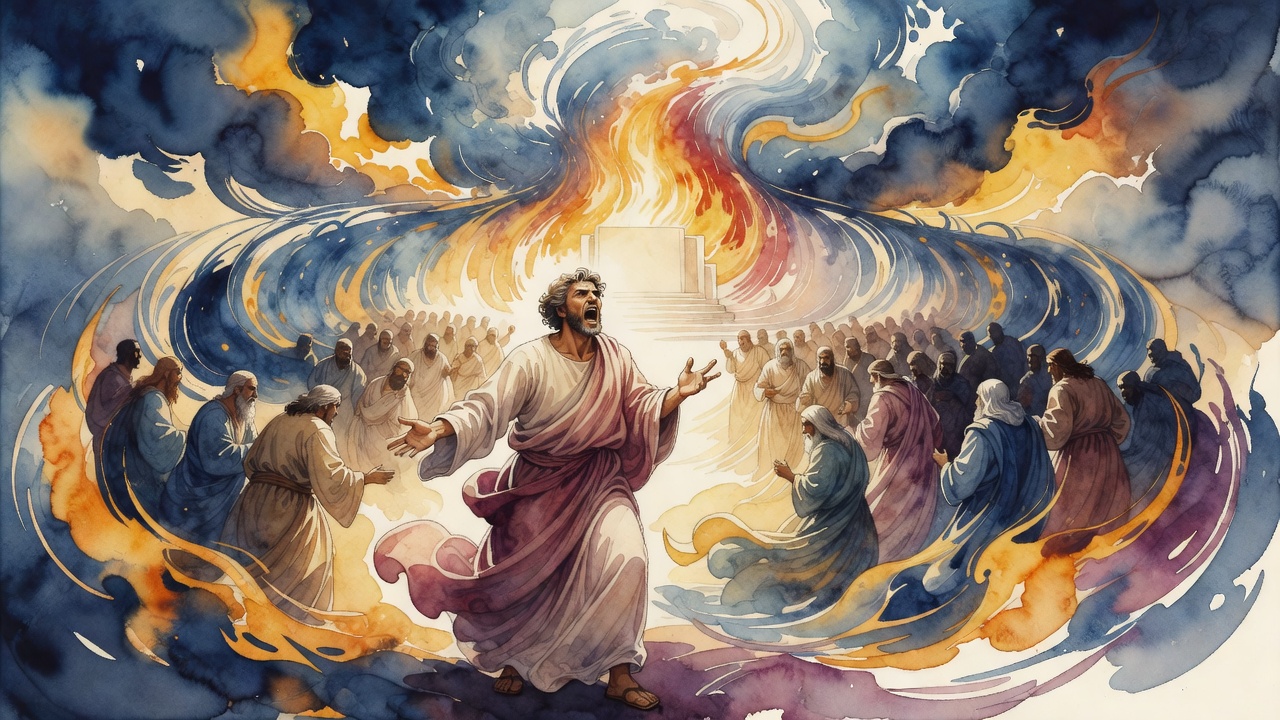
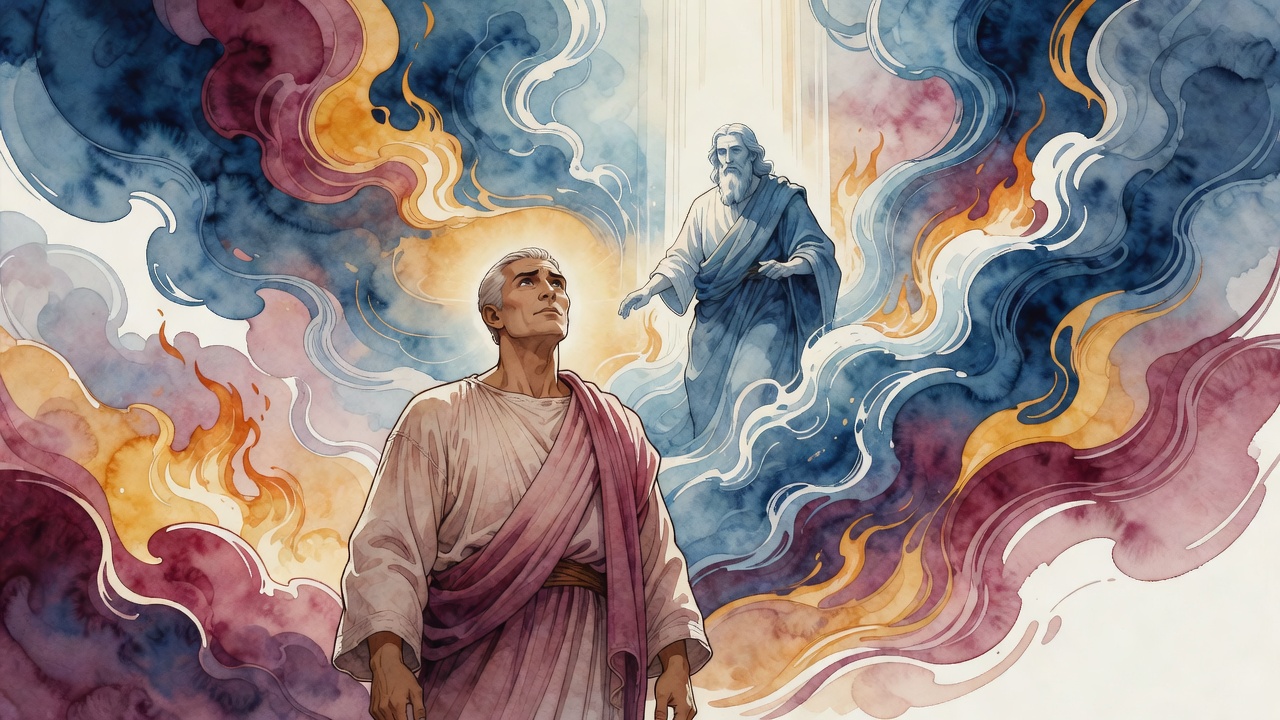
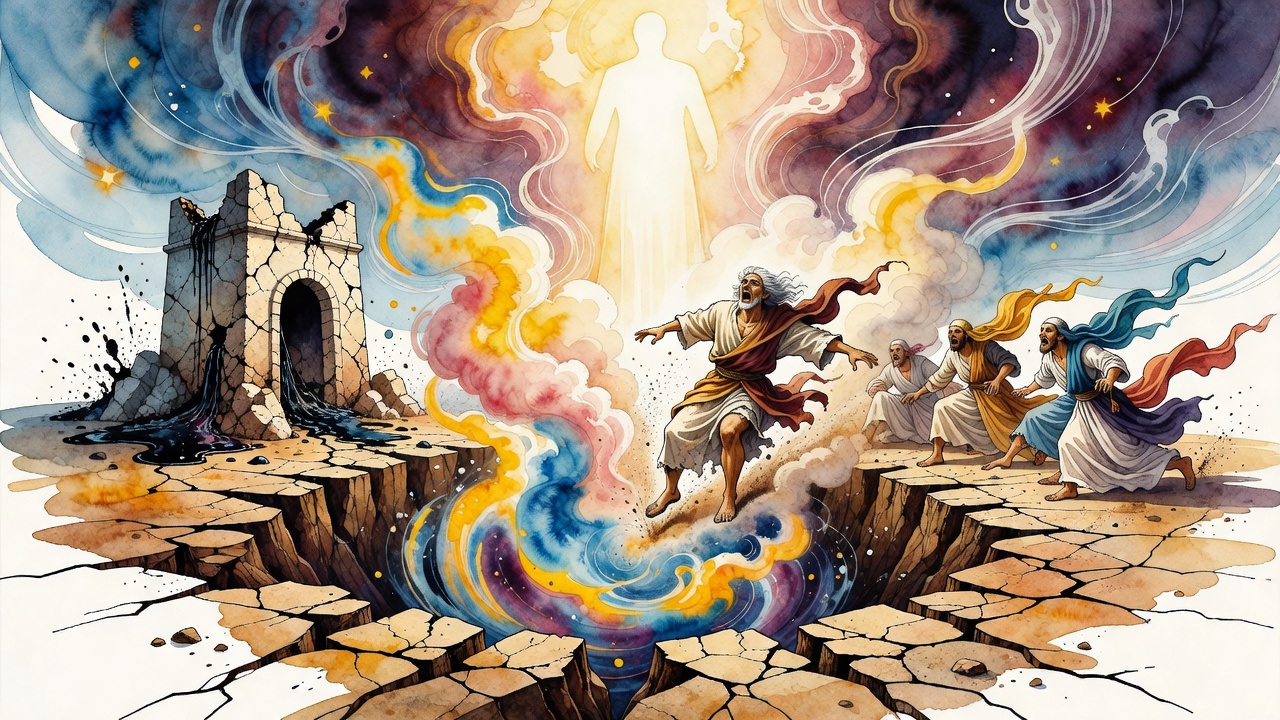
The ground under Korah felt ordinary until it did not. One moment he stood among two hundred fifty men with censers smoking, still tasting the speech that had made Moses look small. The next moment the earth remembered it had a mouth.
The Earth Opened Its Mouth Under Korah's Own Feet Click for full size

"If the Lord creates a creation, and the ground opens its mouth and swallows them..." (Numbers 16:30). Moses had put the test in public. Korah's camp had already put the insult in public: Moses is no true prophet, Aaron no true high priest, the Torah not from heaven. A little folly, the sages say, like dead flies in a perfumer's oil (Ecclesiastes 10:1). The oil had been costly. The flies were few. The froth ruined the jar.

Dust rose. Screams cut short. The camp smelled of burned incense and open ground. A child dropped a jug and no one scolded him.

Flies in the Perfume

Kohelet Rabbah does not pity the flies. It tracks them through Scripture. Korah and his company vilified Moses, the Hebrew mavishin, active work to diminish standing. Then the earth took them. From the depths, the tradition claims, they reversed their mouths: Moses is true, Aaron is priest, Torah is from heaven. The confession came after the floor disappeared. Truth arrived when it could no longer rearrange the living.

Doeg and Ahitophel later whispered against David's lineage, Ruth the Moabite held up like a stain. Shame followed. The pit of destruction waited in the psalm (Psalm 55:24). On Carmel the generation that cried "Baal, answer us!" learned a different shout after fire fell: "The Lord, He is God" (I Kings 18:39). Elijah still took them down to the Kishon. Reversal of speech does not always reverse consequence.

The pattern is almost cruel in its clarity. Folly is small. Reputation is a mixture. One campaign of contempt can froth what years of care distilled. Children watched adults learn that greatness is not a sealed jar, and that a few dead flies need no army to spoil a season of perfume.

Why Courts Come First

Rabbi Shimon asked why the laws of adjudication take precedence over other commandments and answered with peace. Two people in dispute poison a whole street. A ruling ends the poison. Even the loser can stand up because a recognized process carried the weight. Yitro saw it when he told Moses that a nation with judges would come to its place in peace (Exodus 18:23).

Korah refused that path. He did not bring a case. He brought a crowd. He turned the camp into a street without a court, where volume replaced verdict. The earth became the last judge because human peace had been refused.

Imagine the alternative morning: Korah at a doorway, claims listed, witnesses heard, a decision spoken that both sides could hate and still obey. That morning never came. The censer smoke of rebellion smelled braver than the dull smell of procedure. Bravery without process is how pits open under the shoes of clever men.

The Weight of One Decree

Moses' decree proved heavier than their initial folly. That is the midrash's cold scale. A lifetime of status, family, and learning sat on one side. One season of public contempt sat on the other, and the season won. Dead flies do not need to be large. They need only to be dead and in the oil.

Aaron still stood with his own censer for the living, making atonement while the crack in the earth cooled. The contrast is almost theatrical. One brother holds a tool of service. The other held a tool of challenge until the ground took the challenge literally.

People will argue for centuries about Korah's motives: equality, jealousy, a fair point about holiness in every tent. Kohelet Rabbah cares less about the motive speech and more about the froth. What did the little folly do to the mixture of a life that had once smelled expensive?

Peace That Comes Too Late

From below, if the story is believed, Korah's company finally spoke the sentences that would have saved them above. The oil cannot be unfrothed by apology spoken in the dark. The court they never sought now sits in every retelling: who started the quarrel, who refused process, who made the community choose sides until the ground chose for them.

Rabbi Shimon's peace and Kohelet's flies meet in one demand. Settle the dispute while feet still stand on solid earth. Do not wait for the mouth under the feet to open and force a verdict no appeal can reach.

Moses walked away from the rim. Somewhere in the new crack a last echo insisted on truth that should have been said in daylight. The camp learned, for a while, to fear both the fly and the refusal of judges. Fear fades. The oil waits for the next careless season. The midrash keeps the jar on the shelf where every generation can smell what froth costs when a crowd replaces a court.


← All myths
From the tradition

Sources

2 sources

The texts behind this telling. Some cards carry a translation of the source; others are our own retelling of it, and each card says which. Every card links out to the original.

Kohelet Rabbah 1:2Kohelet Rabbah

Retold in our words. Read the original at the link below.The Sefaria Midrash Rabbah, 2022 · CC-BY

It seems Kohelet Rabbah, the collection of rabbinic commentary on the Book of Ecclesiastes, thought so too. It uses that very image – "Dead flies spoil and froth a perfumer's oil" – to explore how quickly reputations and even spiritual truths can be tainted by foolish actions.

The Rabbis weren't just talking about literal flies, of course. They used this verse from Ecclesiastes to teach us something deeper about human nature and repentance. They saw it playing out again and again in biblical stories.

Take the story of Koraḥ, for example. You remember Koraḥ. He led a rebellion against Moses and Aaron, questioning their authority. Kohelet Rabbah tells us that Koraḥ and his followers were "vilifying" Moses, saying things like, "Moses isn't a true prophet, Aaron isn't the High Priest, and the Torah isn't from Heaven!" They were spreading negativity and doubt. That's what the Hebrew word mavishin implies here – they were actively trying to diminish Moses's standing.

Then, the earth swallowed them up! A pretty dramatic turn of events, wouldn't you say? And according to Bemidbar Rabbah and Bava Batra, even from the depths of the earth, Koraḥ and his congregation admitted Moses had been right all along. They were "expressing" (mabi'im) a completely different view. Suddenly, it was, "Moses is a true prophet, Aaron is the High Priest, and the Torah is from Heaven!"

Kohelet Rabbah sees this as a perfect example of the "dead flies" principle. Their "little folly", their rebellion, led to their downfall, even though, in the end, they acknowledged the truth. The decree of Moses, “But if the Lord will create a creation [and the ground will open its mouth and swallow them up…then you will know that these men have despised the Lord]” (Numbers 16:30) proved to be weightier than their initial folly.

But the story doesn't stop there. The Rabbis find this pattern repeating throughout the Tanakh, the Hebrew Bible.

Next, they point to Doeg and Ahitofel, two figures known for their opposition to King David. Initially, they questioned David's lineage, whispering that he wasn't fit to be king because he descended from Ruth the Moabite. Again, they were "vilifying" him. But later, they were ashamed and expressed a different view, acknowledging his worthiness as king and prophet. The weight of David's prophecy ultimately outweighed their folly, as (Psalm 55:24) describes their descent into the "pit of destruction."

And then there's the generation of Elijah. Remember them? They were the ones calling on Baal, challenging Elijah's authority. "Baal, answer us!" they cried, as recounted in I Kings. But after God's dramatic display on Mount Carmel, they changed their tune. They proclaimed, "The Lord, He is God; the Lord, He is God!" (I (Kings 18:3)9). Once again, a dramatic reversal! Their initial folly, calling on a false idol, was overshadowed by the power and truth of Elijah's prophecy. Of course, that didn't save them from the consequences of their actions. As the passage reminds us, "Elijah took them down to the Kishon Stream and slaughtered them" (I (Kings 18:4)0). A stark reminder that repentance doesn't always erase the consequences of foolish behavior.

So, what's the takeaway here? Kohelet Rabbah is showing us how easily we can be swayed by negativity, how quickly reputations can be tarnished, and how important it is to recognize and acknowledge the truth, even when it's difficult. It's a powerful reminder that even small acts of folly can have significant consequences, and that true wisdom lies in recognizing and correcting our mistakes. How many "dead flies" are buzzing around, threatening to spoil the "perfume" of our own lives and communities? And what can we do to keep them away?

Full source
Mekhilta Tractate Nezikin 1:6Mekhilta DeRabbi Yishmael

Retold in our words. Read the original at the link below.Mechilta, translated by Rabbi Shraga Silverstein · CC-BY

Why do the laws of adjudication, civil justice, take precedence over all the other commandments in the Torah? Rabbi Shimon gave a deceptively simple answer: because adjudication creates peace.

When two people have a dispute, strife exists between them. The longer the dispute festers, the more it poisons their relationship and the community around them. But once a ruling is given, once a judge decides the case, peace is restored between the parties. Even the loser accepts the verdict because it came through a recognized process of law.

Rabbi Shimon found proof in the words of Yithro, Moses' father-in-law. (Exodus 18:23): "If you do this thing", meaning, if you establish a system of judges and courts, "then all this people will come to their place in peace." Yithro understood that a nation without functioning courts is a nation at war with itself. Justice is not one commandment among many. It is the commandment that makes all other commandments possible.

This is why the laws of adjudication appear immediately after the revelation at Sinai. God gave the Ten Commandments, and the very next section of Torah deals with courts, judges, and civil disputes. The ordering is not random. A society must have a system for resolving conflict before it can function well enough to observe anything else. Peace is the precondition for Torah, and adjudication is the precondition for peace.

Full source