The Last Israelite Left the Sea as Egypt Entered
His heel found sand. Behind him the last Egyptian horse pushed into the corridor. The water still stood, waiting on a count.
Table of Contents
 Click for full size
The Last Heel Hit Sand
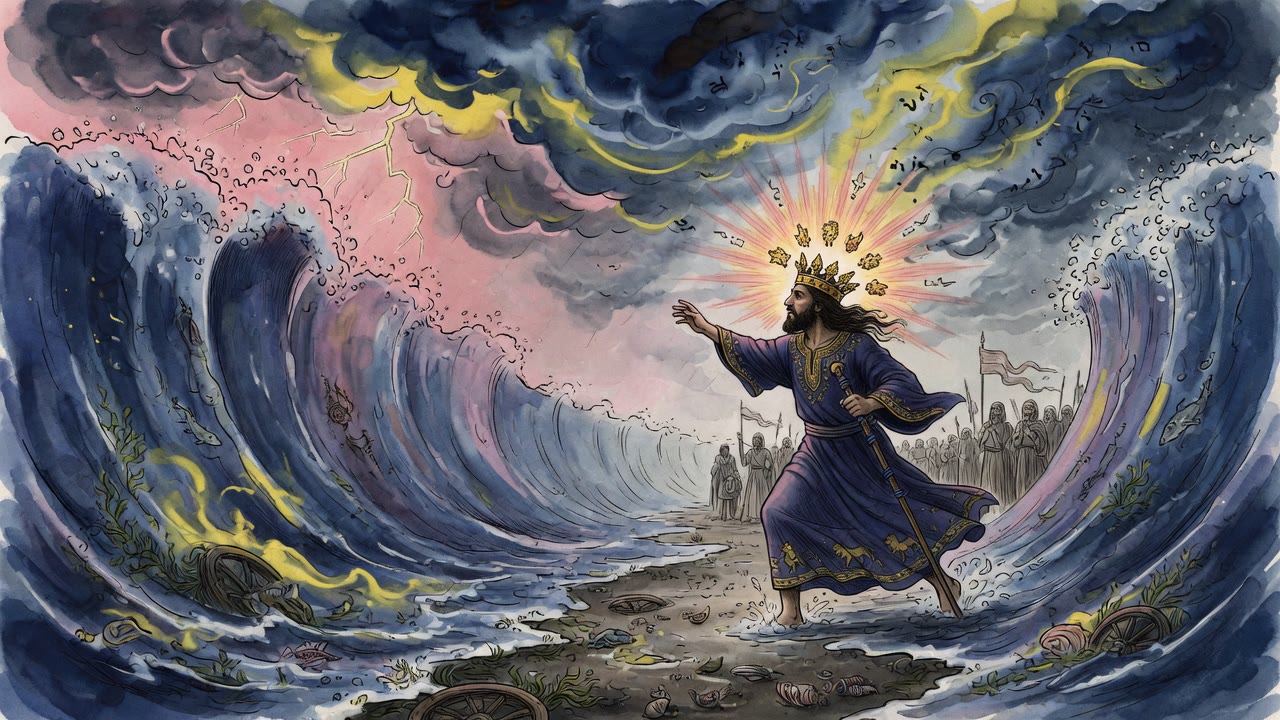
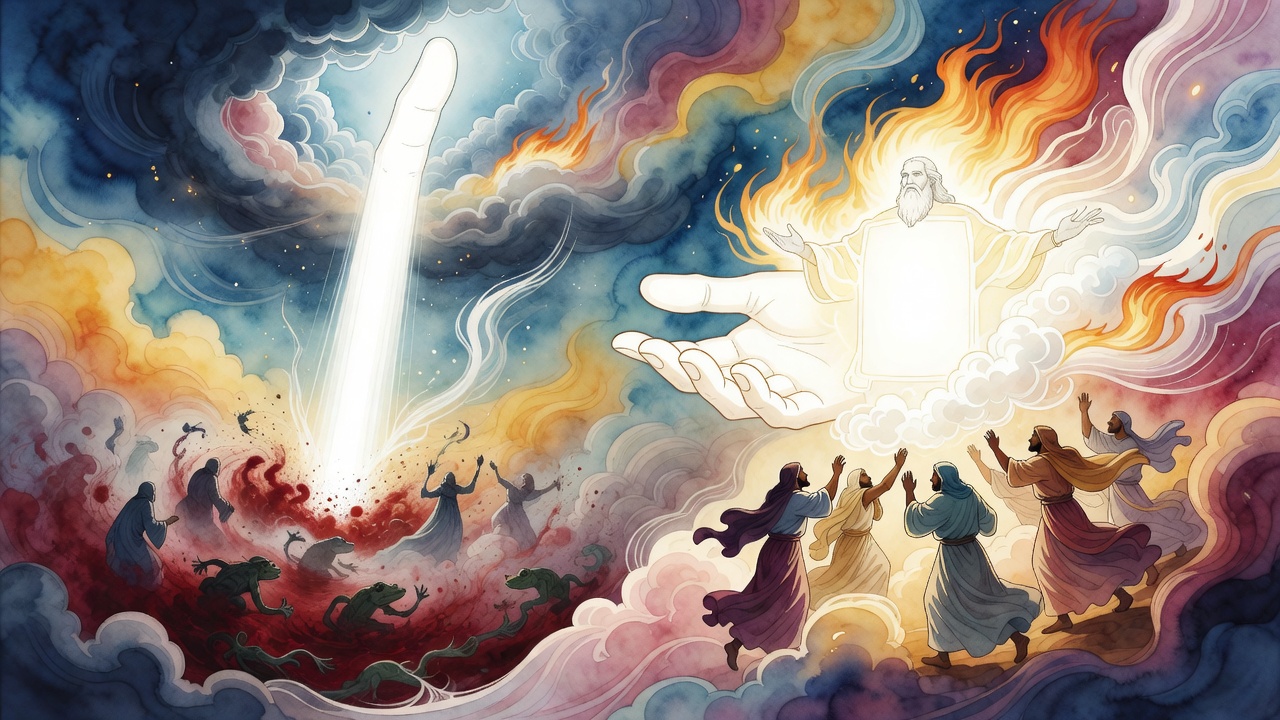
The last Israelite stepped off the sea floor onto sand that still smelled of salt and mud. Behind him the corridor of water stood upright like two walls of glass, and through that corridor the last Egyptian horse forced its way in. One foot free. One boot trapped. The whole of Egypt still pouring into a path that had already finished serving freedom.
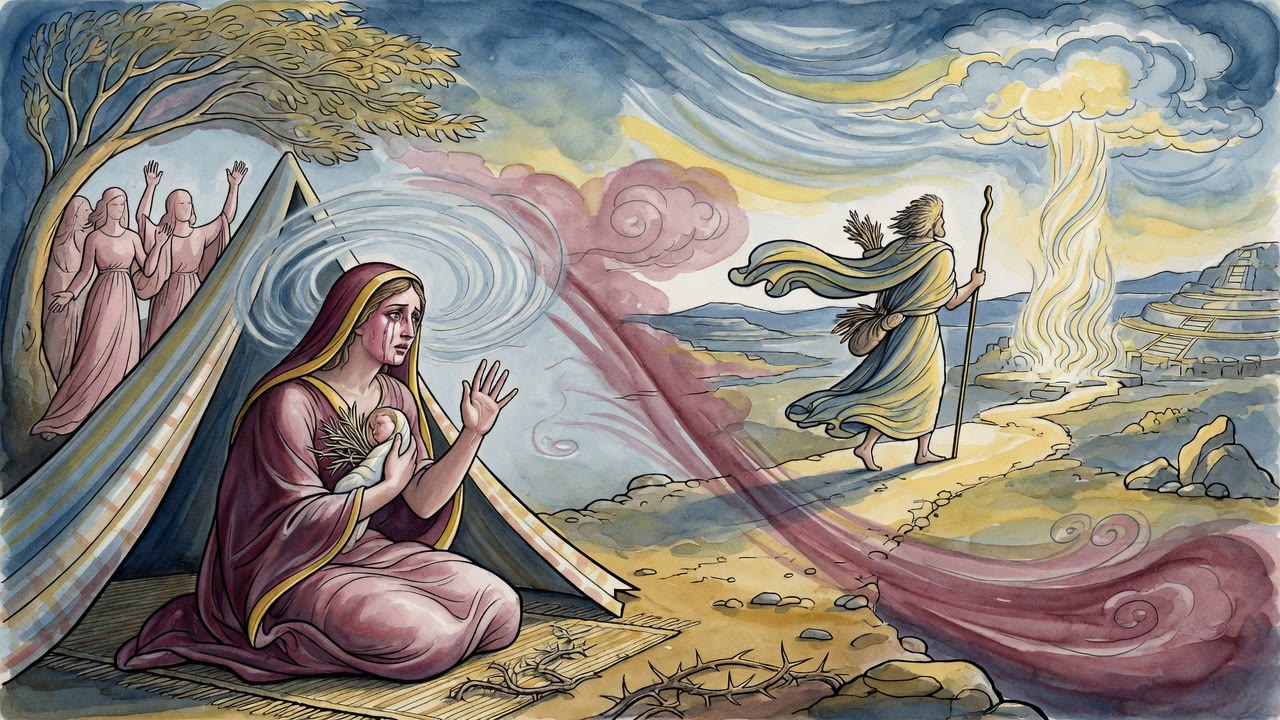
Spray hit faces. Children clung to baskets. A woman dropped a sandal and did not turn back. On the far bank someone laughed the high laugh of a person who has not yet decided whether he is saved. The sea had not closed. The sea was waiting for a count only Heaven held.
A man near the rear heard Egyptian shouts grow closer and still the walls did not fall. He wanted them to fall now. He wanted them to wait. Both wants lived in one throat.
Beetles on the Wet Floor
On the wet floor of the miracle, beetles crawled. Creatures no one names in the victory songs. Creatures that had followed the people into a road that was also a grave. Where would they go when the walls fell?
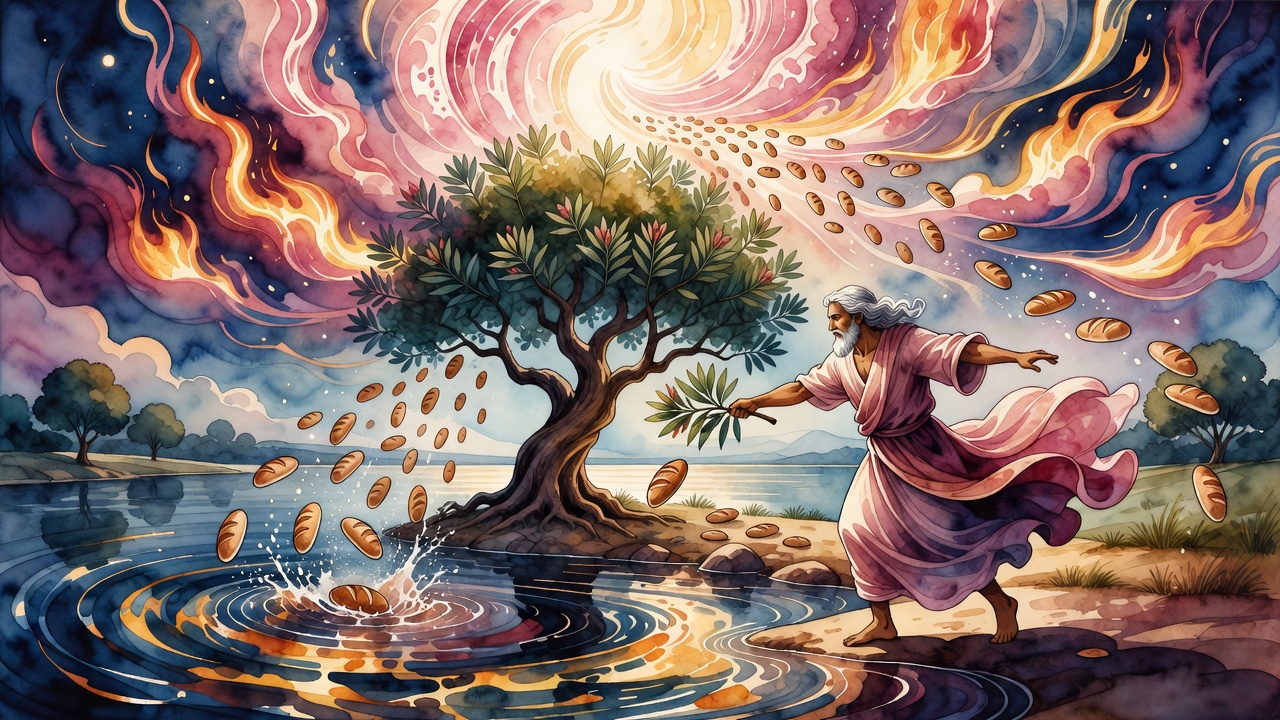
A hand came down for what was almost invisible. Beetles plucked from foam. "He drew me out of many waters" (Psalm 18:17). The drawing was not only for princes and prophets. God does not only split seas. A hand came down and lifted what Egypt would never count. The last free foot and the least beetle left the water on the same clock.
No one on the bank counted them. Heaven had already done that.
The Sea Turned Over
The sea did not close like a door. It turned upside down, a chaos of water and desperation, chariot wheels spinning in reverse light. The Presence did not stand on the bank as a spectator. The Presence was inside the overturned water, shaping the path while the path was still breaking.
One pillar held for Israel. One sinking took Egypt. "Your right hand, O Lord, is majestic in power. Your right hand, O Lord, shatters the enemy" (Exodus 15:6). Israel walked a road that was also a judgment. Egypt entered a road that was also a grave. The difference was not the width of the corridor. The difference was which foot the arm of God was holding.
When the walls finally folded, they folded like a book snapping shut. Someone counted family members. Someone counted cattle. The ground stopped trembling only after the last Egyptian cry vanished mid-vowel.
Dry Land Did Not Save Them
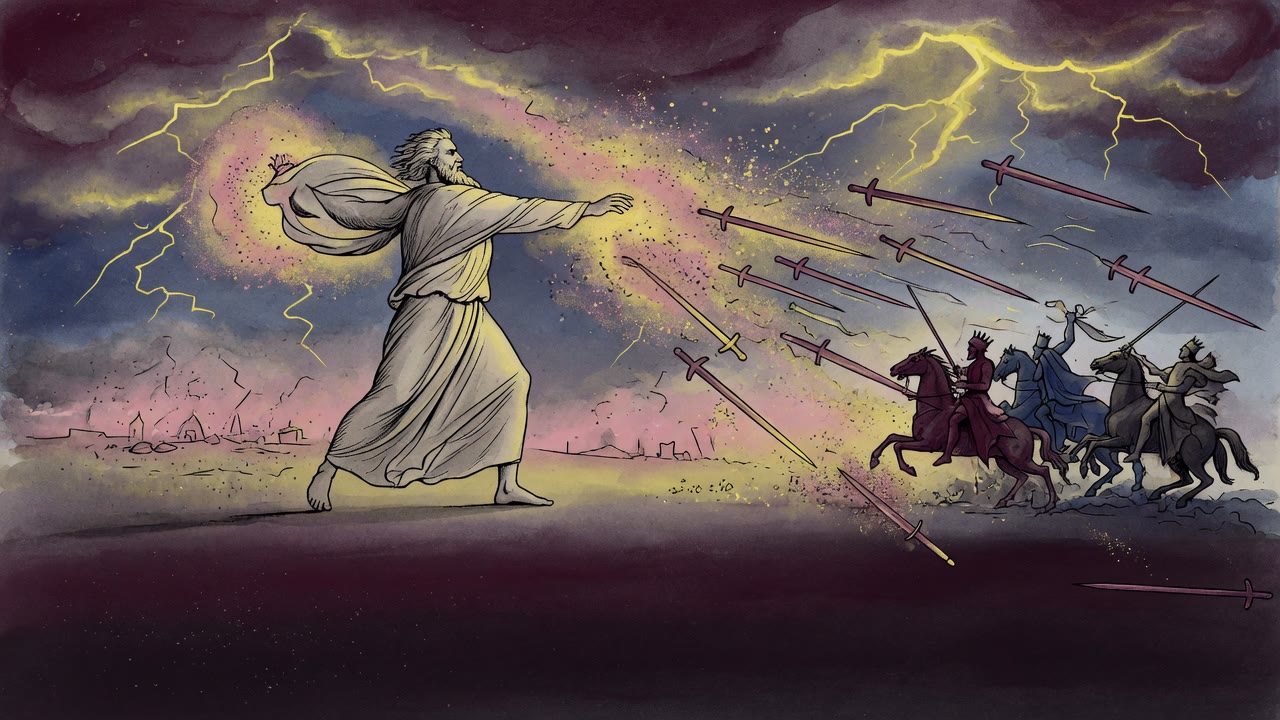
The first of the Egyptians who reached the far sand thought they had made it. They wanted to go away. They had horses under them and open country ahead. Then the sea came after them onto the dry ground, stuck them to it, and covered them. "He brought the sea over them and covered them."
A boy licked salt from his lip and thought it was sweat. His mother pulled him higher on her hip and did not correct him. Behind them the corridor was gone. Ahead of them the bank held people who had already begun to believe the ground would stay ground.
An Egyptian driver shouted a command that the water swallowed halfway. The arm that holds worlds did not need that command. It had already chosen which column of feet would finish the crossing and which column would learn what upright water does when it is done serving.
The Arm Under the Storm
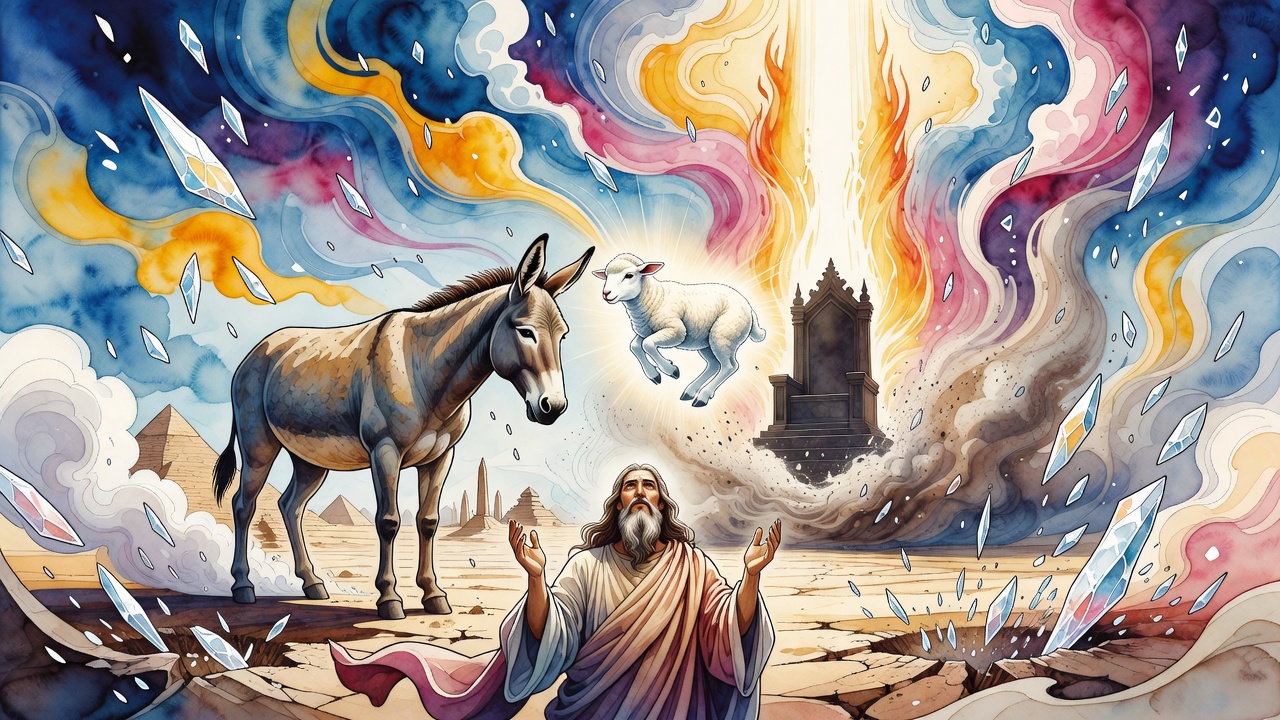
Underneath are the everlasting arms (Deuteronomy 33:27). The world hangs there, and those arms are not soft metaphors. The right arm bears the heavens. The left cradles the earth. Under the left arm rest one hundred twenty thousand worlds of the World to Come. Length of arm equal to the length of this world. Width equal to its width. Radiance like the sun in Tammuz. That same reach was already inside the water.
Earth stands on pillars, pillars on water, water on mountains, mountains on wind, wind on storm, and the storm hangs from the arm of the Holy One. A refuge measured in worlds can still reach for a beetle. A power that carries prior worlds under its arm can still time a last boot against a last heel.
The people on the bank felt the ground go still. The boy's salt was only salt. The beetles were already on dry sand, black specks in the light, uncounted and unforgotten. The last free heel and the least shell had shared one clock, and the clock struck only when both were clear.
← All myths