6 min read

Luleyanus and Pappos Answered Trajan's Taunt

The chains cut both brothers' wrists. They told the emperor they were sinners, not righteous men owed a furnace miracle. A guard laughed once, then stopped.

Curated by Arthur · Told by Maggid ·
Table of Contents
  1. They Refused the False Parallel
  2. Akiva on the Same Hard Road
  3. The Righteous Who Taste the Whip Now
  4. Judgment Does Not Wait for Comfort

In Laodicea the chains cut both brothers' wrists the same way.
Luleyanus and Pappos Answered Trajan's Taunt Click for full size

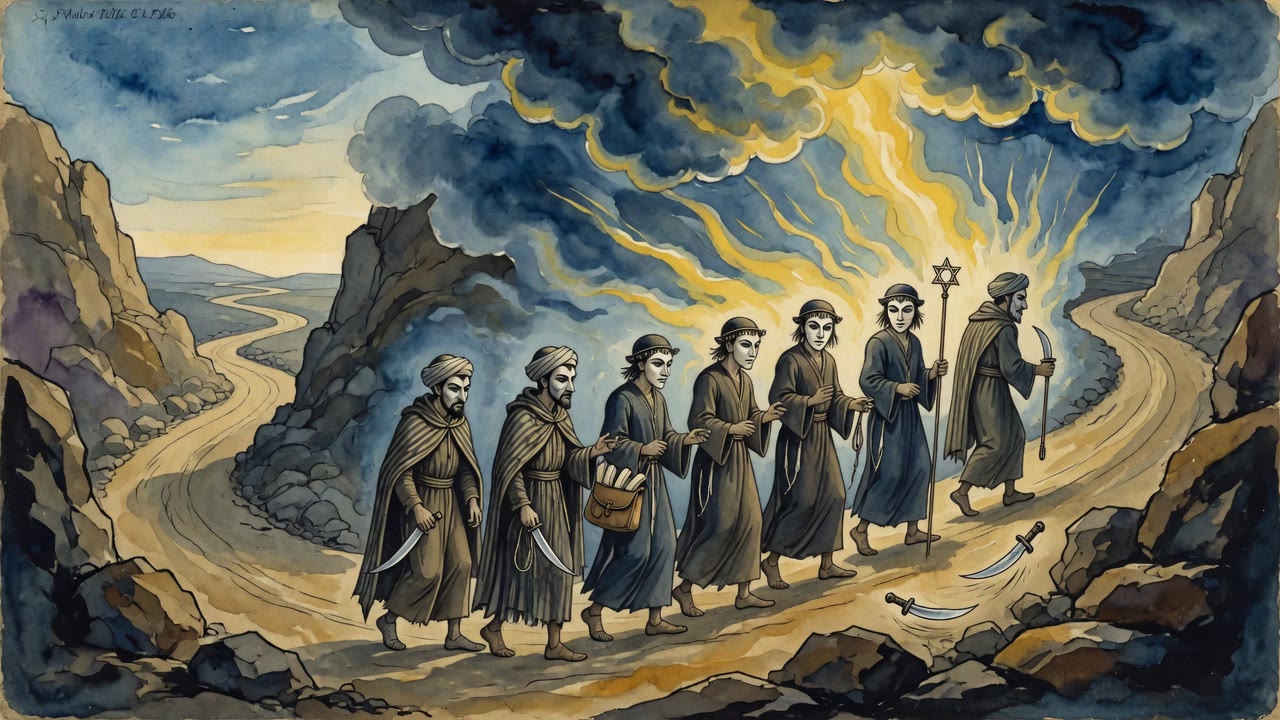
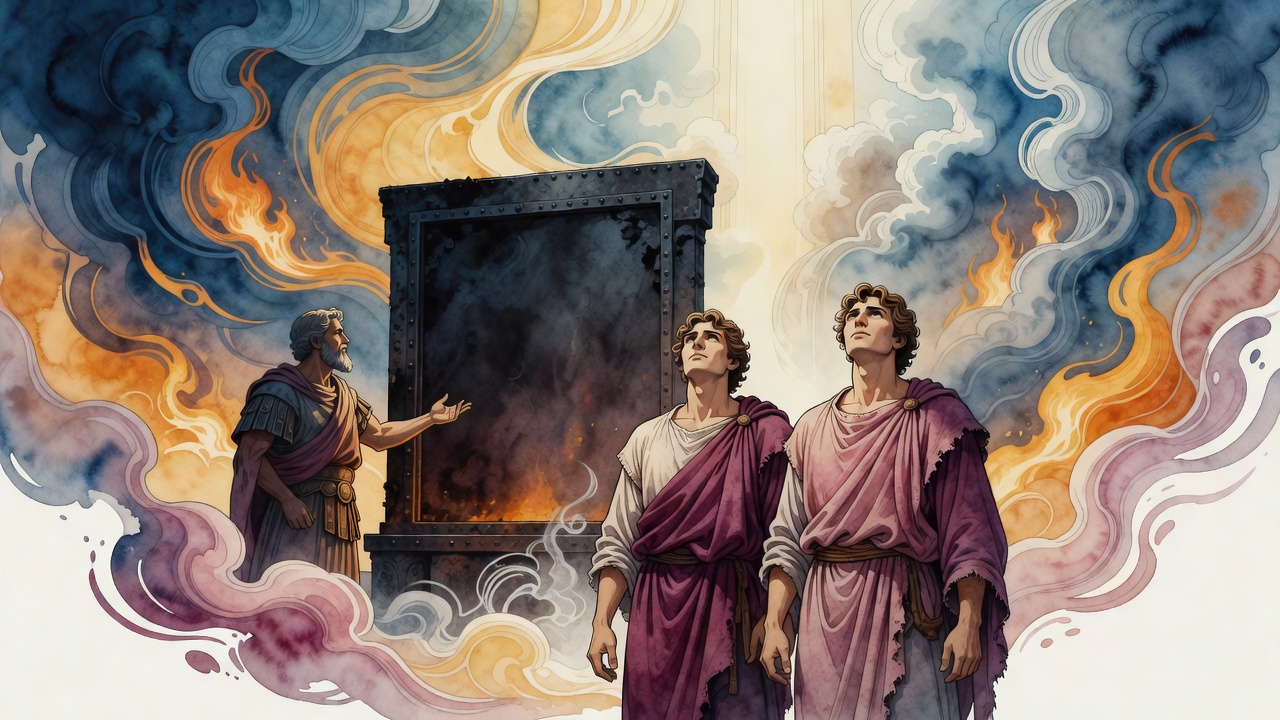
Trajan had them brought close enough that his breath reached their faces. Dust from the square stuck to their lips. The emperor liked a story when he held the knife. He borrowed one from Babylon and threw it at them like a bone for dogs to fight over.

"Are you not like Hananiah, Mishael, and Azariah, who walked out of Nebuchadnezzar's fire? I am like Nebuchadnezzar. Where is your God now?"

Luleyanus and his brother Pappos did not reach for a miracle slogan. They did not claim clean hands they did not own. Pappos shifted his weight so the chain slackened a finger's width. Luleyanus met the emperor's eyes and answered with a ledger sharper than the joke.

They Refused the False Parallel

Those three in Babylon were righteous, the brothers said, and even Nebuchadnezzar had held enough decency that heaven chose to work a sign through that hour. We carry our own sins. You are a wicked king, unworthy of the honor of a miracle performed in your court. If you kill us, the sentence can stand. If you hold back, God has many paths for a life to end. Know this: the Holy One is destined to avenge our blood.

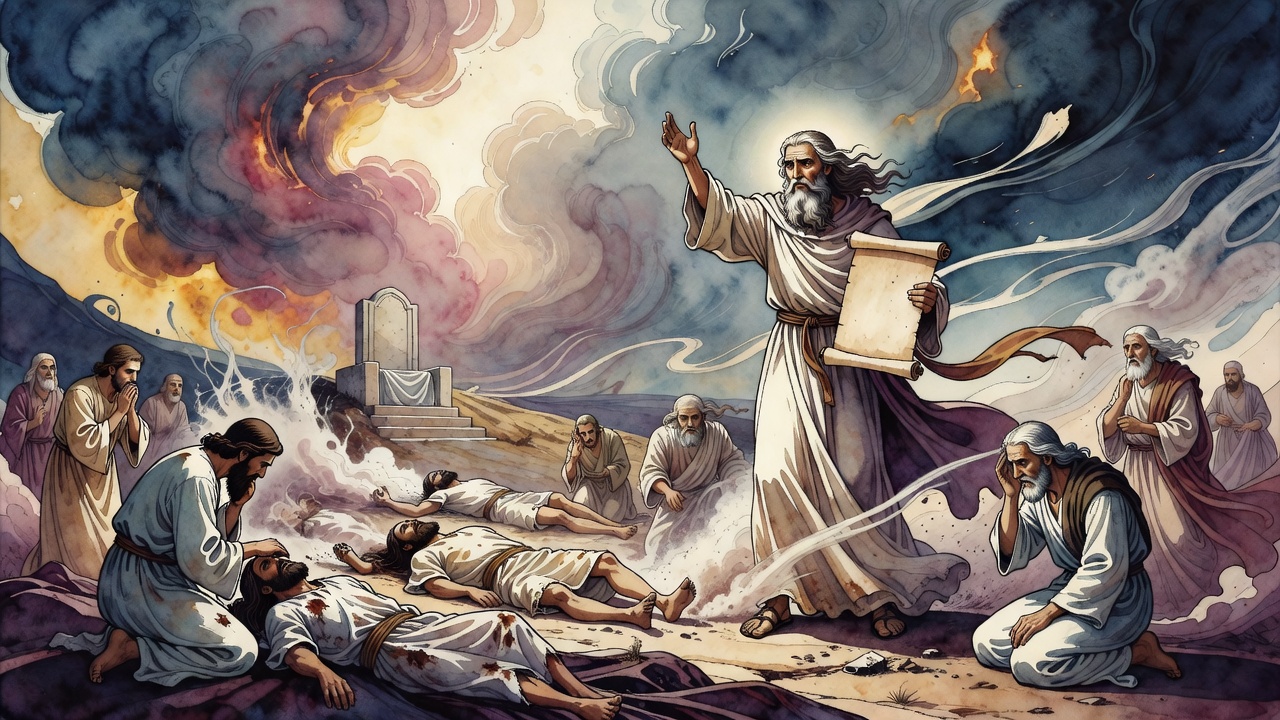
They finished the sentence. Iron still bit their skin. A guard laughed once and then stopped. Messengers from Rome arrived hard on the words, boots loud on stone. Elsewhere the governor Turnus Rufus, the man whose judgments had already stained other Jewish throats, met wooden clubs that smashed his brain. Blood and wood mixed on a floor far from Laodicea. Men who had served him stepped back from the mess and did not wipe it. The brothers' blood-claim and the wicked judge's end landed in the same hard hour.

Trajan still held two living prisoners. Heaven's answer did not have to look like a cooled furnace to count as an answer. The emperor's mouth stayed open a moment longer than pride likes, then closed on an order that needed no polish.

Akiva on the Same Hard Road

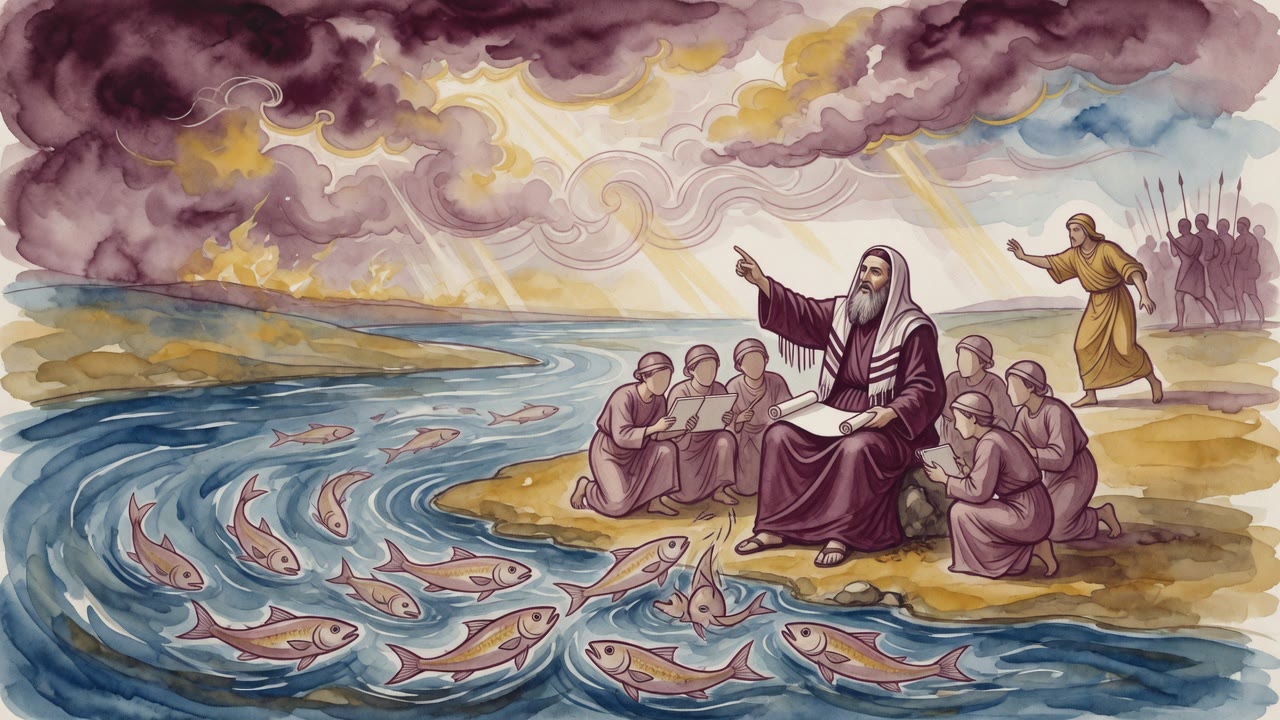
Rabbi Akiva walked a road that made the same point without a brother's pair. Rabbi Hanina bar Pappa taught that God sometimes judges the righteous like the wicked: a robber led to the gallows and Akiva led beside him, two bodies under one public shame. The crowd sees rope and does not always see the difference heaven keeps in its books. Dust rose under both sets of feet. Children pointed. Soldiers pushed. Someone sold fruit at the edge of the throng as if death were a market day.

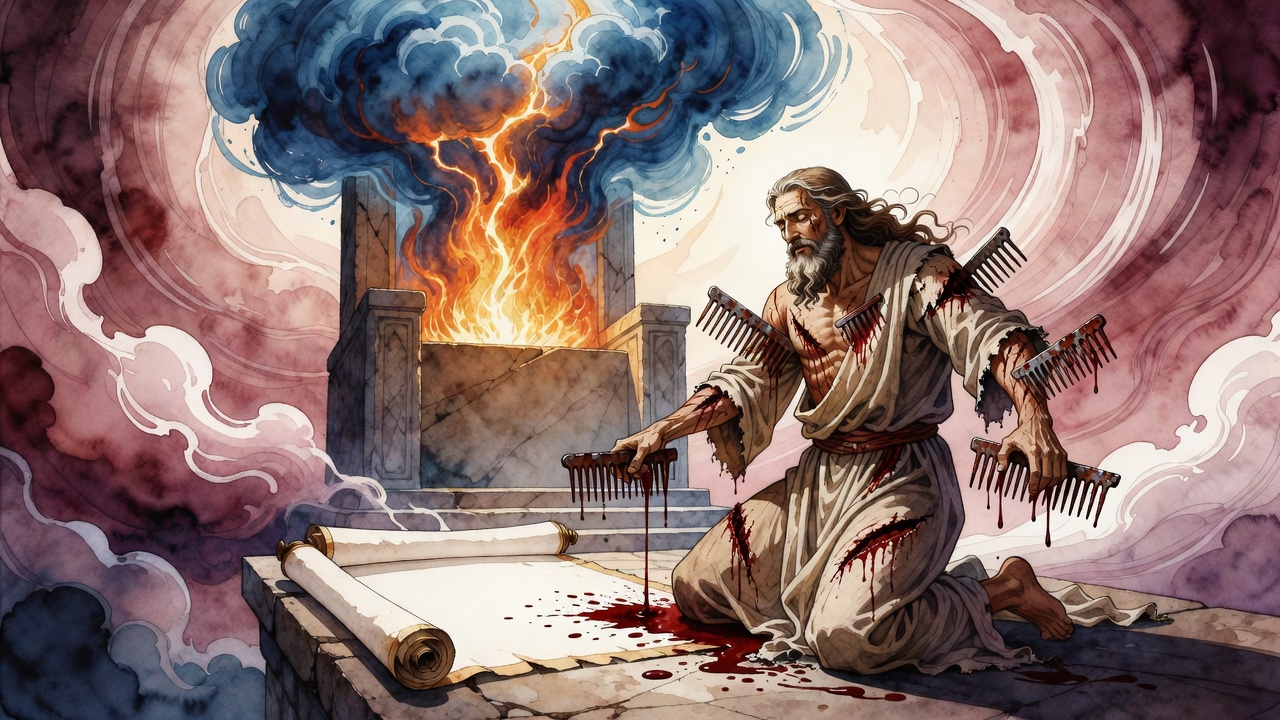
Rabbi Yehuda HaNasi pressed another angle. God judges the righteous through the wicked. Turnus Rufus sat in judgment over Akiva and condemned him to a death that tore flesh. A wicked mouth spoke a sentence over a sage. Iron combs found skin. Akiva's lips still moved around the Shema (Hear O Israel) while the combs worked. The court looked like Rome's victory. The wicked become the tool. The righteous still stand under a judgment that does not wait for a comfortable stage.

Akiva's iron combs and the brothers' chains are different instruments. The pressure is kin: a body of Torah under a power that thinks it owns the last word and learns, slowly, that it does not own the last account.

The Righteous Who Taste the Whip Now

Kohelet saw vanity on the earth in the form that still scrapes the mind raw. Righteous people receive as if they were wicked. Wicked people receive as if they were righteous (Ecclesiastes 8:14). Markets reward the cruel. Courts break the careful. A man who keeps faith buries children while a man who keeps none buries gold under a long life and sleeps without a dream of the bill.

Another voice flips the cry without softening it. Happy are the righteous who receive in this world according to the deeds of the wicked. Alas for the wicked who receive in this world according to the deeds of the righteous. The first group pays its few debts early, under a sun that still allows repair and clean account. The second group cashes its few merits early, and stores the rest of the bill for the world that does not bargain. A full table can be a warning if a person knows how to read plates.

Luleyanus and Pappos stood inside that hard happiness. They owned guilt. They refused to demand a Babylon miracle from a Trajan court. They put vengeance in God's hand and kept their mouths from lying about their own ledger. Akiva's generation learned the same math with different teeth on the skin. A full table in a wicked house can be a receipt already stamped paid for the little good that house ever did.

Judgment Does Not Wait for Comfort

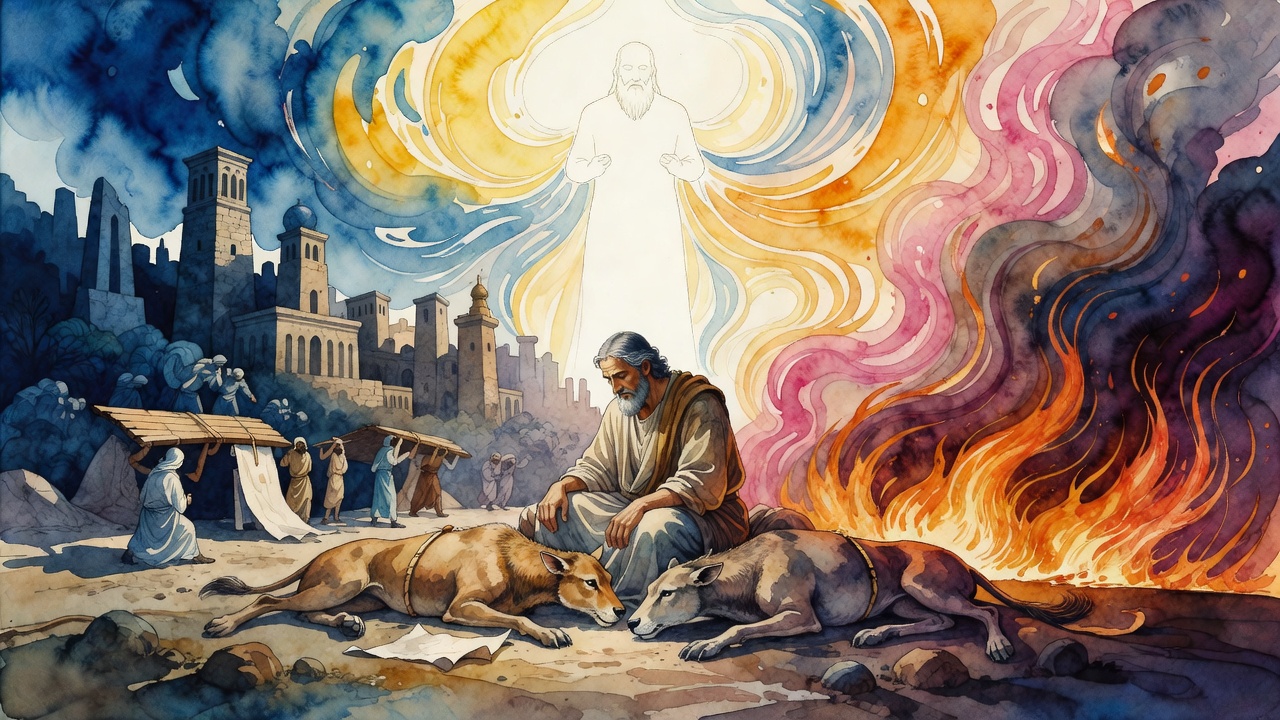
God will judge righteous and wicked, Kohelet said in his heart, for every purpose and every act has its time (Ecclesiastes 3:17). The time is not always a cooled furnace and a hymn. Sometimes it is a smashed skull in a governor's house while two chained brothers still breathe. Sometimes it is a sage and a robber walking the same last road so that no one confuses public spectacle with final truth.

Trajan's taunt tried to trap the brothers inside someone else's rescue story. They stepped out of the trap by naming themselves stained and naming him unfit for wonder. The clubs that found Turnus Rufus did not open their shackles in that same hour. The promise of avenged blood did not need their release to begin its work. Chains still rang when the messengers finished their other errand and the square's noise returned.

The brothers' last clear act was a refusal to flatter Trajan with a false comparison. That refusal still stands when the furnace story is told again without their names attached. In Laodicea the dust settled on two sets of footprints that never walked free of the square. Heaven had already started collecting on a different account, and the emperor's joke had bought him nothing but a longer shadow.


← All myths
From the tradition

Sources

2 sources

The texts behind this telling. Some cards carry a translation of the source; others are our own retelling of it, and each card says which. Every card links out to the original.

Kohelet Rabbah 3:17Kohelet Rabbah

Retold in our words. Read the original at the link below.The Sefaria Midrash Rabbah, 2022 · CC-BY

The book of Ecclesiastes, or Kohelet, grapples with this very question, stating, "I said in my heart: The righteous and the wicked, God will judge, as there is a time for every purpose and for every action there" (Ecclesiastes 3:17).

What does that really mean?

In Kohelet Rabbah, a rabbinic commentary on Ecclesiastes, we find some truly challenging interpretations of this verse. Rabbi Ḥanina bar Pappa goes so far as to say that God judges the righteous like the wicked. He uses the shocking image of a robber being led to the gallows alongside none other than Rabbi Akiva, one of the greatest sages in Jewish history. What a stark and unsettling comparison!

It gets even more complex. Rabbi Yehuda HaNasi, compiler of the Mishnah (the earliest code of rabbinic law), offers another perspective: God judges the righteous through the wicked. He illustrates this with a chilling story. The wicked Turnusrofus (often understood as a Roman governor) judged Rabbi Akiva, condemning him to a brutal death.

And then, there’s the tale of Luleyanus and his brother Pappos. Trajan, the Roman emperor, captured them in Laodicea. Taunting them, he says, essentially: "Aren't you like Ḥananya, Mishael, and Azarya – Hananiah, Mishael, and Azariah – who were miraculously saved from Nebuchadnezzar’s fiery furnace? I'm like Nebuchadnezzar! Where's your God now?"

Their response is incredibly powerful. They explain that Ḥananya, Mishael, and Azarya were righteous, and even Nebuchadnezzar possessed a certain level of decency, making him worthy of a miracle. But Luleyanus and Pappos? They admit they are liable to punishment for their sins. And Trajan, a wicked king, is unworthy of performing miracles. "If you kill us," they say, "fine. But if not, God has many ways to bring about death. And know this: The Holy One, blessed be He, is destined to avenge our blood."

According to the story, they barely finished speaking before messengers arrived from Rome and killed Turnusrofus by smashing his brain with wooden clubs. Talk about swift justice!

The commentary concludes with a reflection on the verse itself: “As there is a time for every purpose and for every action there” – for every purpose there is a time, and for every time there is a purpose. "And for every action there" – meaning that in this world, we have freedom of action, we can do what we wish. However, we are held to account for our actions in the World to Come.

Is it fair? Is it just? These stories don't offer easy answers. Perhaps the point isn't to understand the how of God's judgment, but to acknowledge its inevitability. Maybe it’s a reminder that even in the face of injustice, there's a divine reckoning. And that even the righteous can suffer, and that suffering, somehow, plays a part in the larger cosmic order. It's a sobering, complex, and ultimately, deeply human perspective on the mysteries of faith and justice.

Full source
Kohelet Rabbah 8:13Kohelet Rabbah

Retold in our words. Read the original at the link below.The Sefaria Midrash Rabbah, 2022 · CC-BY

You're not alone. The Book of Ecclesiastes, or Kohelet as it’s known in Hebrew, grapples with this very question, and the rabbinic interpretations in Kohelet Rabbah, a collection of commentaries on Ecclesiastes, really dig into it.

Specifically, There is vanity performed on the earth, in that there are righteous who receive in accordance with the action of the wicked, and there are wicked who receive in accordance with the action of the righteous. I said that this, too, is vanity.” It’s a heavy passage. It points out this frustrating paradox – the righteous suffering, the wicked thriving. What's going on here?

Kohelet Rabbah doesn’t shy away from the discomfort. In fact, it leans into it. It declares, "Happy are the 'righteous who receive in accordance with the action of the wicked' in this world, and alas and woe to the 'wicked who receive in accordance with the action of the righteous.'" Wait, happy are the suffering righteous? What kind of upside-down logic is that?

It's all about perspective, and about understanding the bigger picture, the long game. According to this interpretation, the righteous who experience hardship in this world, who are punished even for their few misdeeds, are actually in a fortunate position. Why? Because they're essentially "paying their dues" now, in this world, and storing up reward for the Olam HaBa, the World to Come. They get their punishment out of the way, and then it's smooth sailing in the afterlife.

Conversely, the wicked who are rewarded in this world, who get to enjoy the fruits of their few good deeds, are in a much more precarious situation. They're getting their reward now, and that means they're storing up… well, you guessed it… punishment for the World to Come. It’s like they’re cashing in all their chips upfront.

It's not about immediate gratification or earthly success. It's about the ultimate accounting, the final balance sheet. The rabbis of the Kohelet Rabbah are suggesting that appearances can be deceiving. What looks like injustice in the short term might actually be a divinely orchestrated plan to ensure ultimate justice.

So, the next time you see someone who seems undeserving prospering, or someone truly good struggling, remember this passage. Maybe, just maybe, there's a deeper, more eternal reason for it all. Maybe the scales of justice aren't always visible to us in this world, but they are always, ultimately, in balance. It forces us to ask ourselves: What are we living for? What kind of reward are we truly seeking? And where are we storing up our treasures?

Full source