4 min read

Mattia Walked to Ludia for Four Atonements

Rabbi Mattia ben Charash arrived with four questions, not one. His throat was dry from the road. He would not drink until Elazar ben Hakappar named the first.

Curated by Arthur · Told by Maggid ·
Table of Contents
  1. The Road to Ludia
  2. The Map of Repair
  3. Offerings and the Heart That Must Still Come
  4. He Left With Four Doors and One Fear
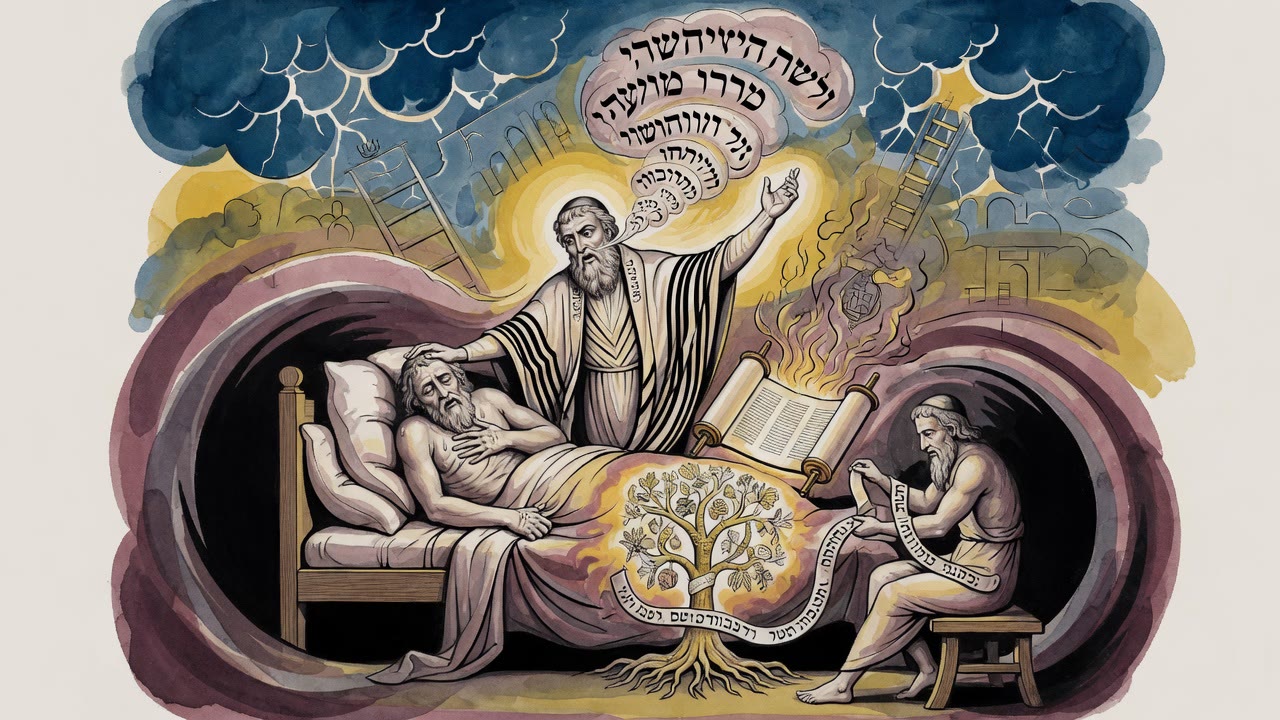
Mattia Walked to Ludia for Four Atonements Click for full size

The Road to Ludia

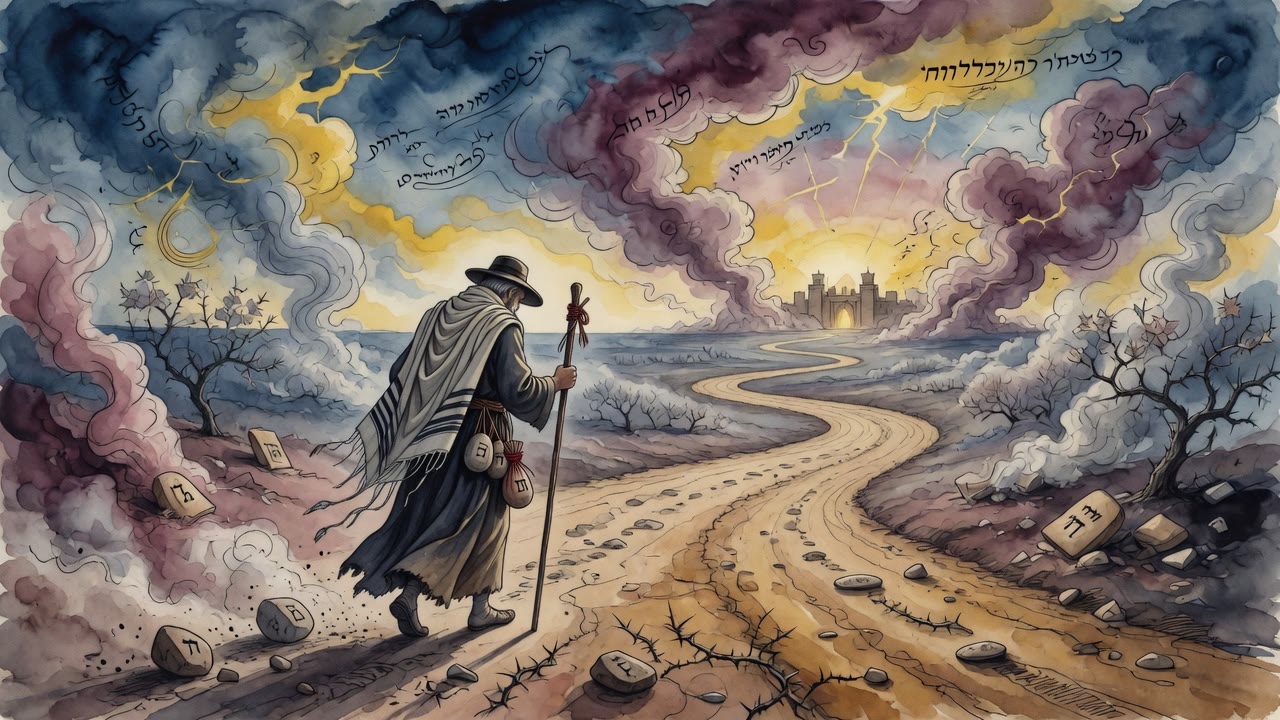
Rabbi Mattia ben Charash put dust on his sandals for four questions, not for one. He walked to Rabbi Elazar ben Hakappar in Ludia with a hunger that study halls sometimes fail to feed. "My master," he said, "did you hear of the four divisions of atonement expounded by Rabbi Yishmael?" The room narrowed to that ask.

Four verses waited like four doors. "Repent, you wayward sons" (Jeremiah 3:14). Penitence atones. "On this day atonement will be made for you" (Leviticus 16:30). Yom Kippur atones. "I will punish their offense with the rod" (Psalms 89:33). Afflictions atone. "This transgression will not be forgiven you until you die" (Isaiah 22:14). Death atones.

Mattia throat was dry from the road. He did not drink until the first door was named. Learning this map was not a hobby. It was triage for souls who would arrive torn and need more than a single soft word.

The Map of Repair

If a person fails a positive command and turns back, he does not move from that place until he is forgiven. Repentance is enough. The road home is short when the breach is a neglected deed. If he violates a prohibition and repents, repentance suspends and Yom Kippur completes. The day arrives like a second hinge. If the sin is graver still, of a kind that brings excision, repentance and the Day suspend, and sufferings scrub what remains. The body becomes part of the court.

For the darkest tear, the one that stains beyond those paths, death itself enters the ledger. The four divisions are not four equal coins. They are a ladder of severity and a ladder of hope. Mattia listened as if each rung might one day hold his own weight or the weight of a student who would come weeping after a private disaster.

He asked for examples. He received categories. Categories are cruel until you need them. Then they are mercy with edges that still cut clean rather than tear.

Offerings and the Heart That Must Still Come

Elsewhere the law presses the body toward the place of offering. You shall come there. You shall bring there. Festivals already demand gifts, yet the command returns, because a heart can hide from the road. Broken return is not only ash and tears. It is feet that still walk to the House when the calendar or the conscience calls.

Commands given with "saying" and "you shall say to them" bind future generations. The map Mattia sought was not a one-hour comfort for Ludia alone. It was meant to travel. A soul in a later century still needs to know which door opens for which wound. Grammar becomes permanence.

Mattia pictured a man who repents on an ordinary Tuesday and feels clean before the Day arrives. He pictured another who needs the fast and the white clothes. He pictured a third who accepts illness without calling it meaningless. The map held them without pretending they were the same man.

He Left With Four Doors and One Fear

Mattia turned home under a sky that did not explain itself. He carried the order of repair like a physician carries doses. Light breach, turn. Harder breach, turn and wait for the Day. Harder still, accept the rod as scrubbing, not as senseless hate. Darkest tear, know that even death is folded into mercy severe grammar.

He did not rejoice in the map. He respected it. Somewhere a man would need the first door tonight. Somewhere another would need the rod and still refuse to curse. The road to Ludia had been long enough to teach that atonement is work, not magic, and that God left more than one way home.

On the road home he passed a man limping from an old wound and wondered which door that wound belonged to, if any. Not every pain is atonement. Not every easy year is acquittal. The map prevents two opposite cruelties: calling all suffering meaningless, and calling all suffering a bill stamped paid without turn of heart. He rehearsed the verses under his breath until the order locked. When he reached his own town he washed the dust from his feet and taught the four doors before he slept. A student with a torn life might arrive at dawn, and Mattia intended to have the doors named before the knock.


← All myths
From the tradition

Sources

3 sources

The texts behind this telling. Some cards carry a translation of the source; others are our own retelling of it, and each card says which. Every card links out to the original.

Mekhilta Tractate Bachodesh 7:3Mekhilta DeRabbi Yishmael

Retold in our words. Read the original at the link below.Mechilta, translated by Rabbi Shraga Silverstein · CC-BY

Because of (the following) four things R. Mattia b. Charash went to R. Elazar b. Hakappar in Ludia. He said to him: My master, did you hear of the four divisions of atonement expounded by R. Yishmael? He answered: One verse states (Jeremiah 3:14) "Repent, you wayward sons", which indicates that penitence atones. Another verse states (Leviticus 16:30) "On this day, atonement will be made for you", which indicates that Yom Kippur (the Day of Atonement) atones. One verse states (Psalms 89:33) "I will punish their offense with the rod, and their transgression with plagues", which indicates that afflictions atone. And another verse states (Isaiah 22:14) "This transgression will not be forgiven you until you die", which indicates that death atones. How are these four verses to be reconciled? If one transgresses a positive commandment and repents, he "does not move from there" until he is forgiven. And of this it is written "Repent, you wayward sons." If one transgresses a negative commandment and repents, there is no power in penitence to atone; but penitence suspends (punishment) and Yom Kippur atones. And of this it is written "On this day atonement will be made for you." If one willfully transgresses (sins punishable by) krithuth (cutting-off) and judicial death penalty and repents, there is no power in penitence to suspend, but penitence and Yom Kippur atone for one half, and afflictions purge and atone for the other half. And of this it is written "I will punish their offense with the rod, and their transgression with plagues." If one desecrates the name of heaven and repents, there is no power in penitence to suspend or on Yom Kippur to atone, or in afflictions alone to purge. But penitence, Yom Kippur, and afflictions suspend, and the day of death purges. And of this it is written ("This transgression will not be forgiven you) until you die." And (I Samuel 3:14) "The transgression of the house of Eli will not be atoned for by sacrifice or offering." It is not atoned for by sacrifice or offering, but it is atoned for by death.

Full source
Sifrei Devarim 63:5Sifrei Devarim

Retold in our words. Read the original at the link below.Sifrei by Rabbi Shraga Silverstein · CC-BY

It's not always straightforward. There's a lot packed into the Torah, even in what seems like a simple command. to a passage from Sifrei Devarim, an early rabbinic commentary on the Book of Deuteronomy, specifically section 63. It wrestles with the nuances of bringing offerings, and it's more fascinating than it sounds.

The Torah tells us to bring offerings to the designated place. Okay, makes sense. But when? The text says, "and you shall come there… and you shall bring there." (Deuteronomy 12:5-6). The rabbis, being the meticulous interpreters they were, immediately start asking questions.

Wait a minute, they wonder. Am I free to bring an offering any time I feel like it? Maybe. But the Torah already says And if the point is to require it, well, haven't offerings already been made mandatory on specific festivals? So, why repeat the instruction?

The answer they arrive at is beautifully precise: "To make them mandatory on the first fixed festival that presents itself." In other words, the obligation to bring certain offerings kicks in with the very next festival that comes along. It's not just a general instruction; it's time-sensitive.

But what happens if life gets in the way? What if you miss that first festival? Do you immediately become a sinner, in violation of the verse "You shall not delay to pay it" (Deuteronomy 23:22)? The rabbis, ever compassionate, dig deeper.

Sifrei Devarim continues: "These shall you offer to the L-rd on your festivals." Ah, there's the key! You aren't considered in transgression, according to this interpretation, until all the festivals of the year have passed. It's not about one missed opportunity; it's about a pattern of neglect.

Think about the implications. This isn't just about following rules. It’s about the spirit behind them. It's about intention, circumstance, and the understanding that life is messy. The rabbis understood that sometimes, things happen. This passage isn't about trapping you in legalistic details.

It offers a bit of grace, a chance to catch your breath. It acknowledges that commitment isn't about perfection, but about consistent effort and a willingness to engage with the sacred rhythms of the year. It suggests that our relationship with the Divine isn't based on a single missed deadline, but on the interplay of our actions and intentions.

So, next time you feel like you've missed a deadline, whether it's spiritual or otherwise, remember this passage from Sifrei Devarim. Maybe it's not about that one missed opportunity, but about the whole journey. Maybe you still have the chance to turn things around and offer something meaningful.

Full source
Mekhilta DeRabbi Shimon Ben Yochai 14:1Mekhilta DeRabbi Shimon Ben Yochai

Translation of the source text.Mechilta de-Rabbi Simon b. Jochai, ed. D. Hoffmann, Frankfurt 1905 · Public Domain

"And the LORD spoke to Moses, saying, Speak to the children of Israel" (Exodus 14:1-2). Rabbi Shimon ben Yochai says: every place where it is said "saying" and "you shall say to them," this is for the generations; and every place where it is not said "saying" and "you shall say to them," this is for the moment only.

Rabbi says: even in a place where "saying" and "you shall say to them" is not stated, this is for the generations, except in three places.

Full source