Melchizedek Blessed Abram Before God and Lost the Priesthood
Abram still had dust on him from four kings. The priest of Shalem blessed the man first. God came second, and the office moved.
Table of Contents
 Click for full size
He Blessed the Man First
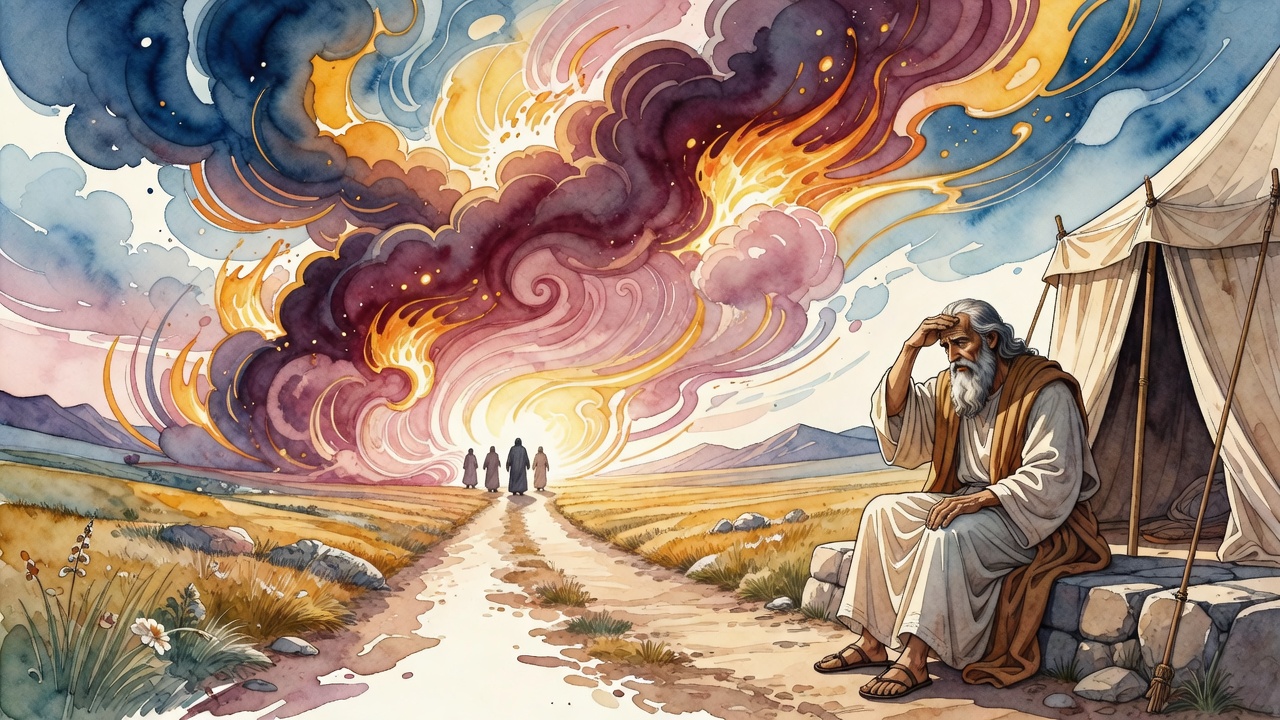
The dust of four broken armies was still on Abram when the king of Shalem came out to meet him with bread and wine.
Melchizedek was a priest as well as a king. He opened his mouth to bless, and he got the order wrong.
"Blessed be Abram of God Most High." That first. Then, after it, "and blessed be God Most High, who has delivered your foes into your hand" (Genesis 14:19-20).
He had put the man ahead of the One who handed him the victory. The servant named before the Master. The words left his mouth in that order and did not come back.
Nobody standing in that valley noticed anything. The bread went from hand to hand. The wine was poured. Abram counted out a tenth of everything he had taken off the four kings and gave it to the priest in front of him, which is what a man does for a priest.
The priesthood had already gone.
It came off Melchizedek in the length of one sentence and settled on the man he had just blessed, and the oath that pinned it there was never revisited: "The LORD has sworn and will not relent: You are a priest forever" (Psalms 110:4). Forever, and in Abraham's line.
Melchizedek took the tithe from hands that were now holding his office. Then he walked back up to Shalem lighter by the one thing he had spent his life carrying, and no king of that city ever held it again. A priest falls in the time it takes to say two clauses, and nobody in the valley hears it happen.
Aner and Eshkol Told Him to Spare Himself
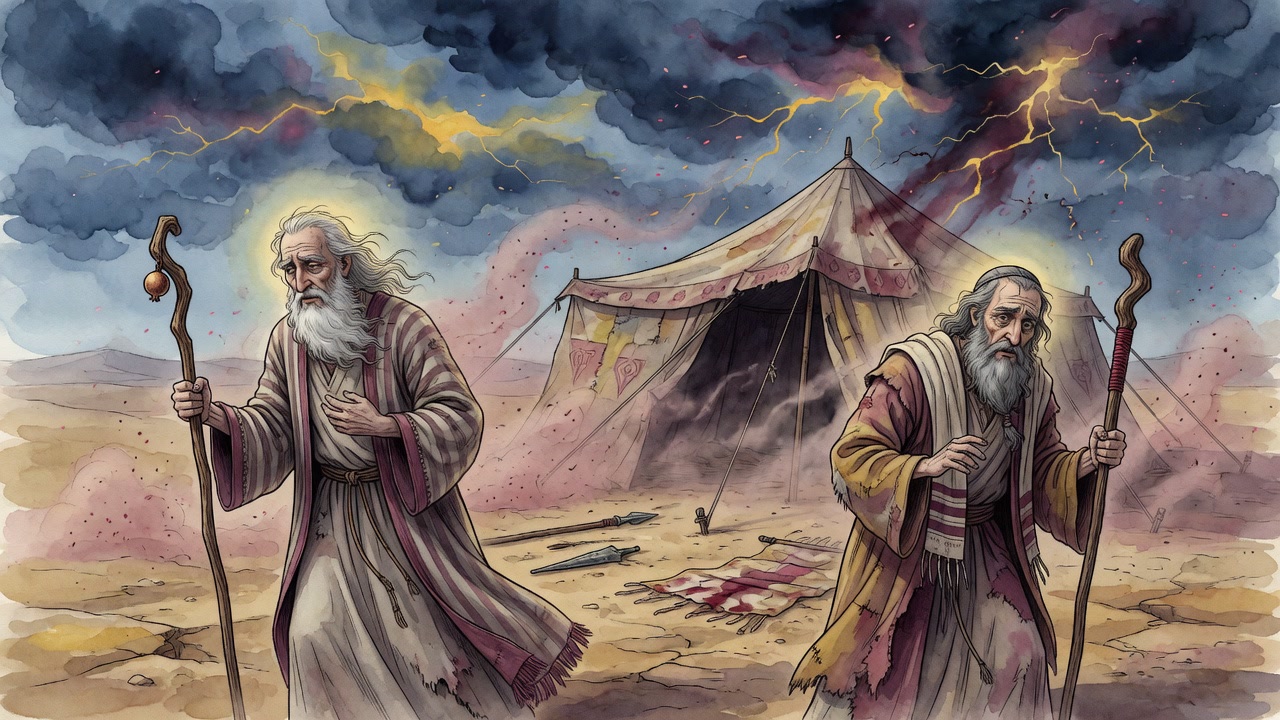
Years later the command came to cut his own flesh, and the old man did not do it alone.
He went to the three who had ridden with him in the war and asked them what they thought. Aner pulled back from it. So did Eshkol.
"You are old," they said. "A wound like that is no fitting thing for a man of your years. Spare yourself."
They were not being cruel. They were counting his years against the odds of a man that age surviving a knife, and the arithmetic was against him. Abram heard them. He held the knife and did not yet move.
Mamre Told Him to Take the Knife
Mamre asked a different question.
"Do exactly what the Holy One told you. Was it not He who pulled you out of the fiery furnace and gave you the life you are trying to protect? Will you refuse Him now, in this?"
Abram weighed the two answers against each other. He took Mamre's.
He took the knife to himself and kept the command. The pain of it belonged to him alone. The covenant went into his body where he could not put it down. Aner kept his caution. Eshkol kept his. The blood was Abram's, and the counsel that let him spill it was Mamre's.
The Presence Came to Mamre's Trees
The reward for that counsel did not go to Abraham.
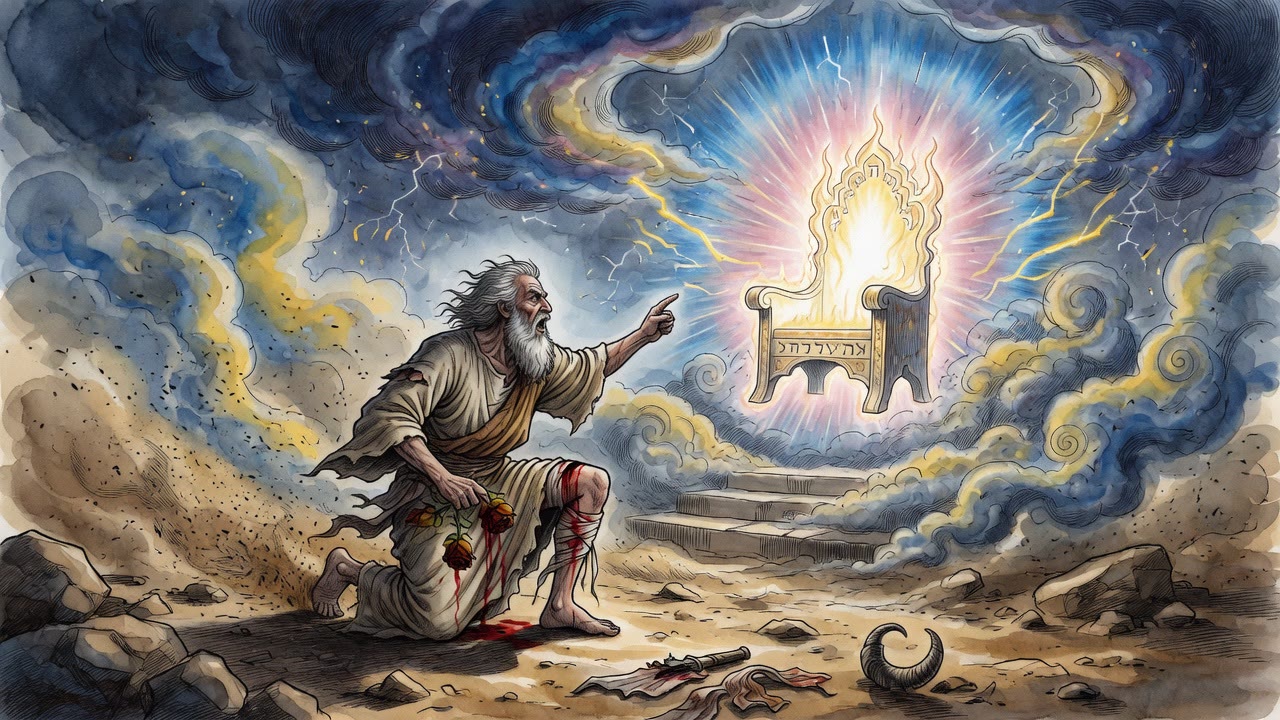
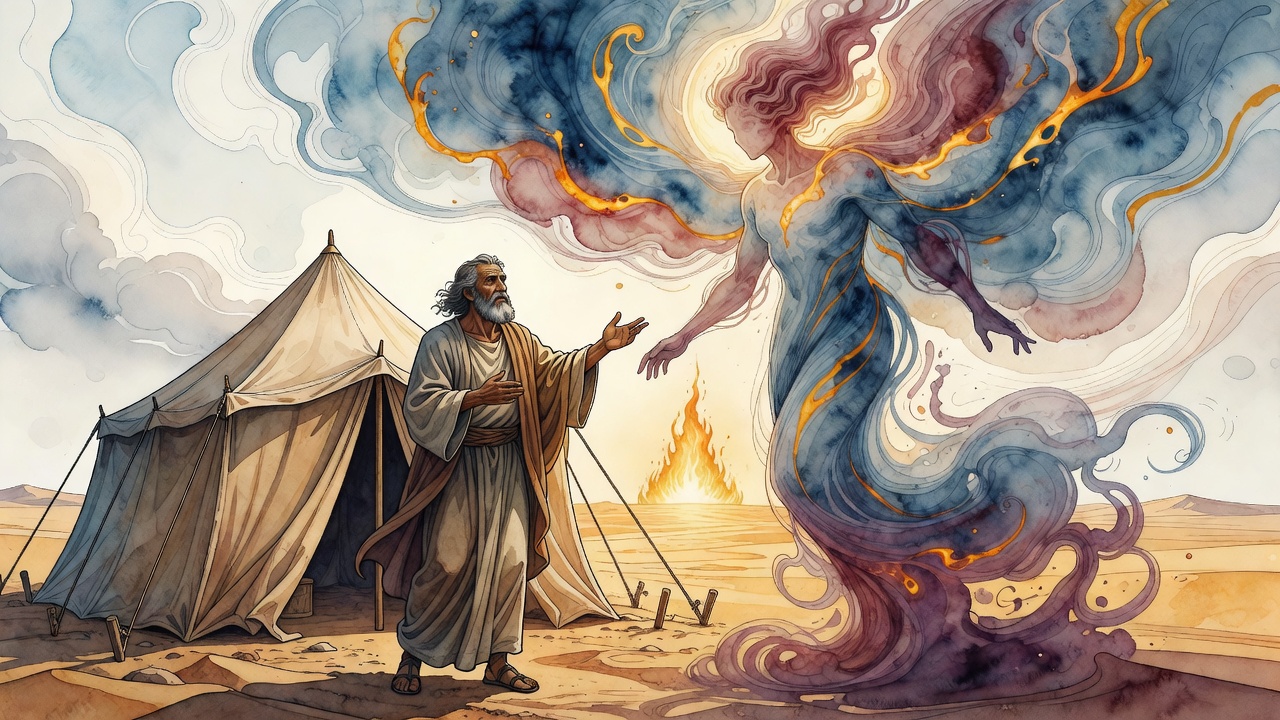
When the Holy One came down to visit the freshly cut patriarch, He did not come down just anywhere. "And the LORD appeared to him by the terebinths of Mamre" (Genesis 18:1). The grove belonged to the man who had told him to obey.
Abraham sat in the heat of the day under another man's trees, healing, and the Presence stood there because Mamre had said take the knife. Aner kept his caution. Eshkol kept his. Mamre got the trees the Presence stood under and his name fixed to the ground where it happened.
He Carried the Bread Himself
Three travelers stood at the tent door in the worst heat of the day, and Abraham ran at them.
He split the hospitality in two without appearing to think about it. "Let a little water be taken" (Genesis 18:4). Taken. Fetched. Carried over by somebody else's hands.
The bread he did not hand off. He ran to the herd himself. He hurried Sarah to the flour himself. He set the loaf down in front of them with his own arms.
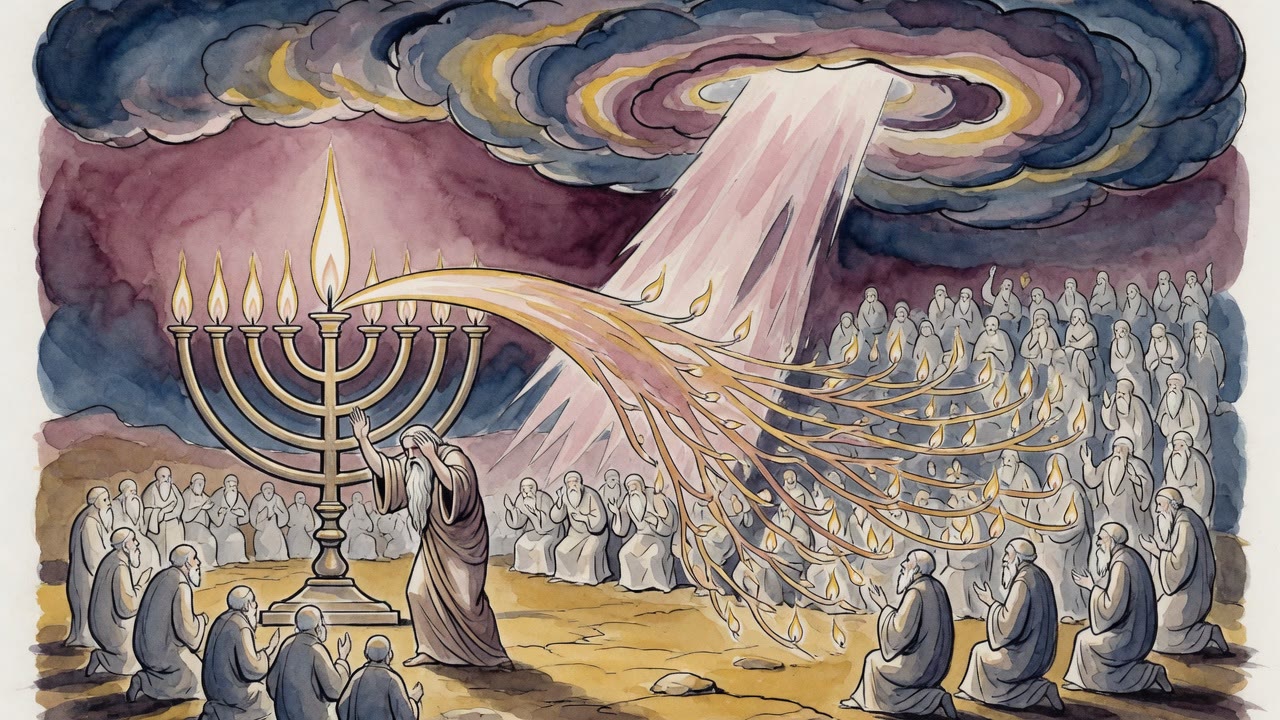
Heaven measured that difference and paid it back in kind. In the wilderness, when Israel was dying of thirst, the water came through an agent: Moses with a staff, striking a rock, and the water breaking out of the stone at somebody else's blow. But the bread came down with no one in between. The manna lay on the ground in the morning and the quail came in at evening, given directly, the way Abraham had carried the loaf himself. "The LORD gives you in the evening flesh to eat, and bread in the morning" (Exodus 16:8).
Melchizedek had carried bread and wine out to one man and lost a priesthood over the sequence of two clauses. Abraham carried bread out to three strangers, and his great-grandchildren ate off the floor of the desert for forty years. Order is not a small thing. Who gets named first, who gets the knife, who carries the loaf. The valley did not hear the office leave. The wilderness ate the proof of it anyway.
← All myths