5 min read

Michael Was Sentenced to Guard Jacob Forever

God rebuked Michael for harming His firstborn. The sentence was lifetime service: plead mercy for Jacob and face Egypt's angel in court.

Curated by Arthur · Told by Maggid ·
Table of Contents
  1. The Rebuke in the Court of Fire
  2. A Fire Was Given to a Fire
  3. The Angel Learned to Plead
  4. Uzza Made the Stronger Claim
  5. God Counted From Isaac's Birth
  6. The Guardian Stayed at His Post

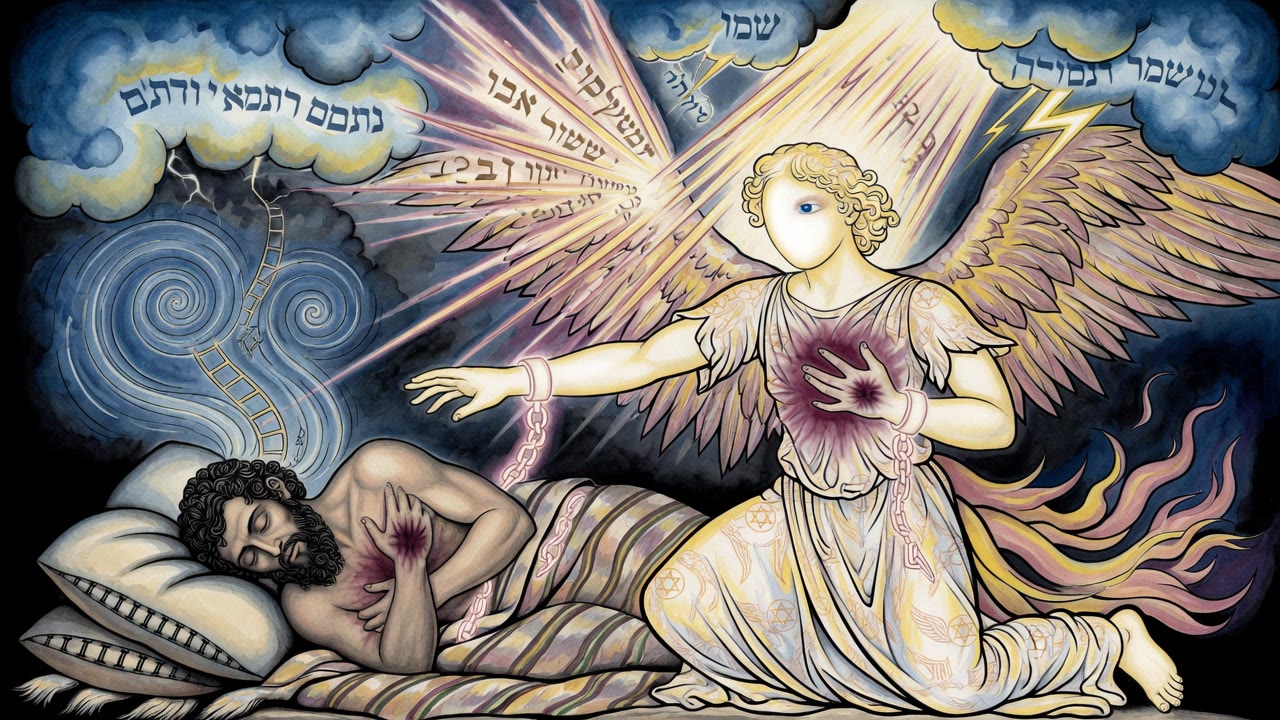
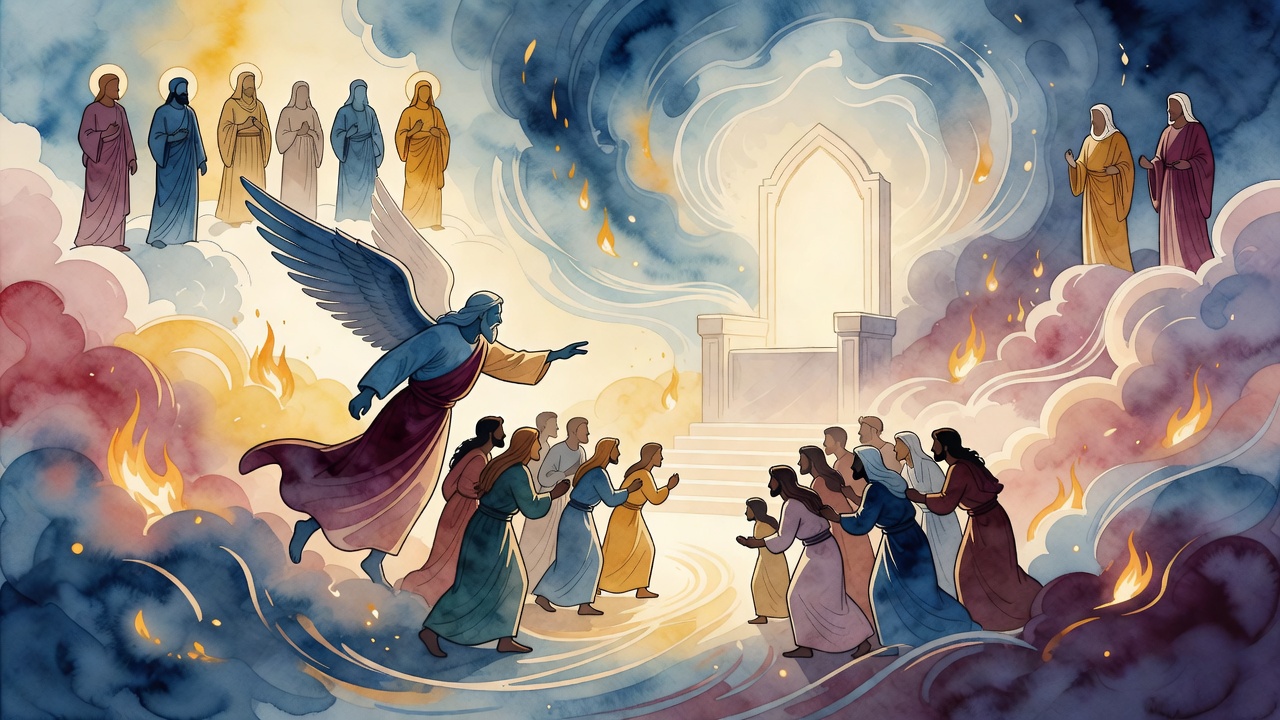
The accusation struck Michael before the whole height of heaven: he had harmed God's firstborn son.

The Rebuke in the Court of Fire

No wound is opened for inspection. No weapon is named. The charge comes bare and sharp. God asks why Michael did harm, and the archangel answers with the only defense he has: he did it to glorify God.

That answer could have ended him. Fire does not make a small mistake. An archangel is not a child with ash on his hands. Michael stood near the top of the heavenly order, and rank makes a failure heavier, not lighter. If he had harmed Jacob, or Jacob's seed, then the blow had landed on the family God called firstborn.

God did not strip him of his height.

He gave him a post.

A Fire Was Given to a Fire

The sentence came in matched images. Michael was fire. Jacob was fire. Michael stood as head among angels. Jacob stood as head among nations. Michael was supreme among the messengers above. Jacob would be supreme among the peoples below.

So the greater angel was assigned to the greater people. Not as decoration. Not as a trophy. He would serve them by pleading mercy before the Supreme One over all.

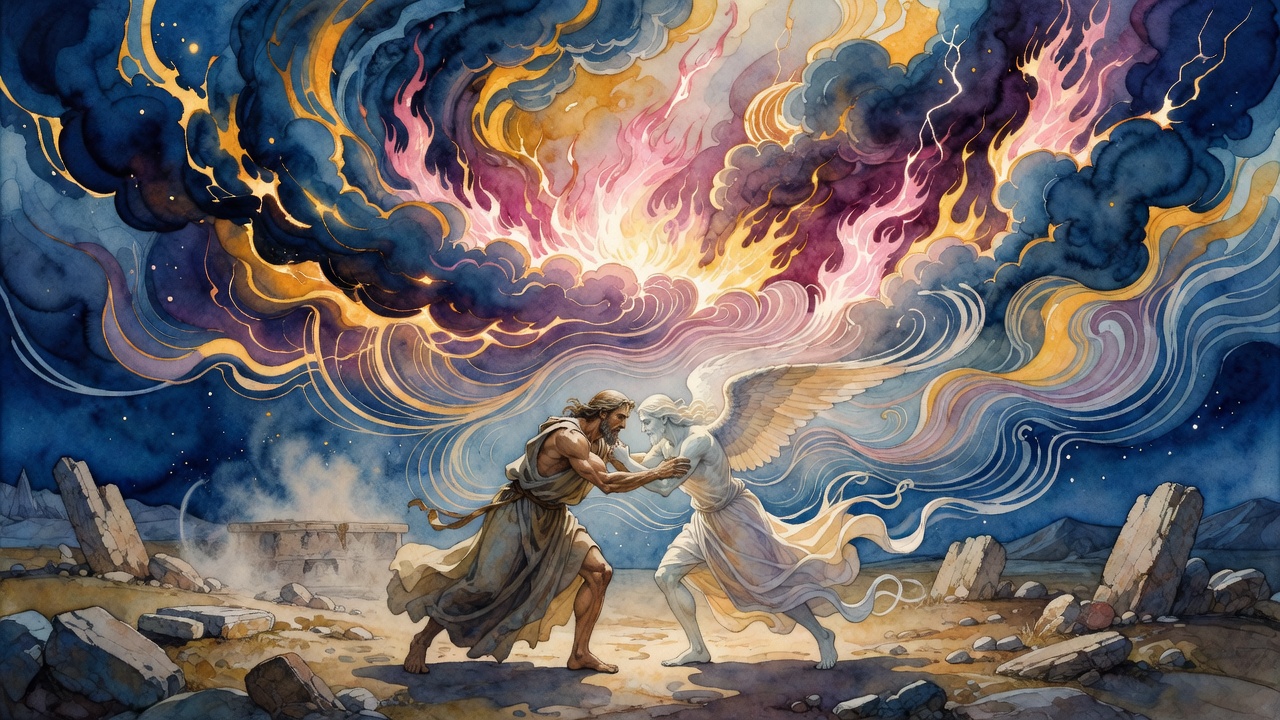
The punishment fit the wound with terrible precision. The one who had harmed would now guard. The one whose zeal had crossed a line would spend the generations standing at the line, stopping harm before it reached the children of Jacob. His fire did not go out. It was harnessed.

The Angel Learned to Plead

A guardian does not only fight. Sometimes he must stand in court with no sword in his hand.

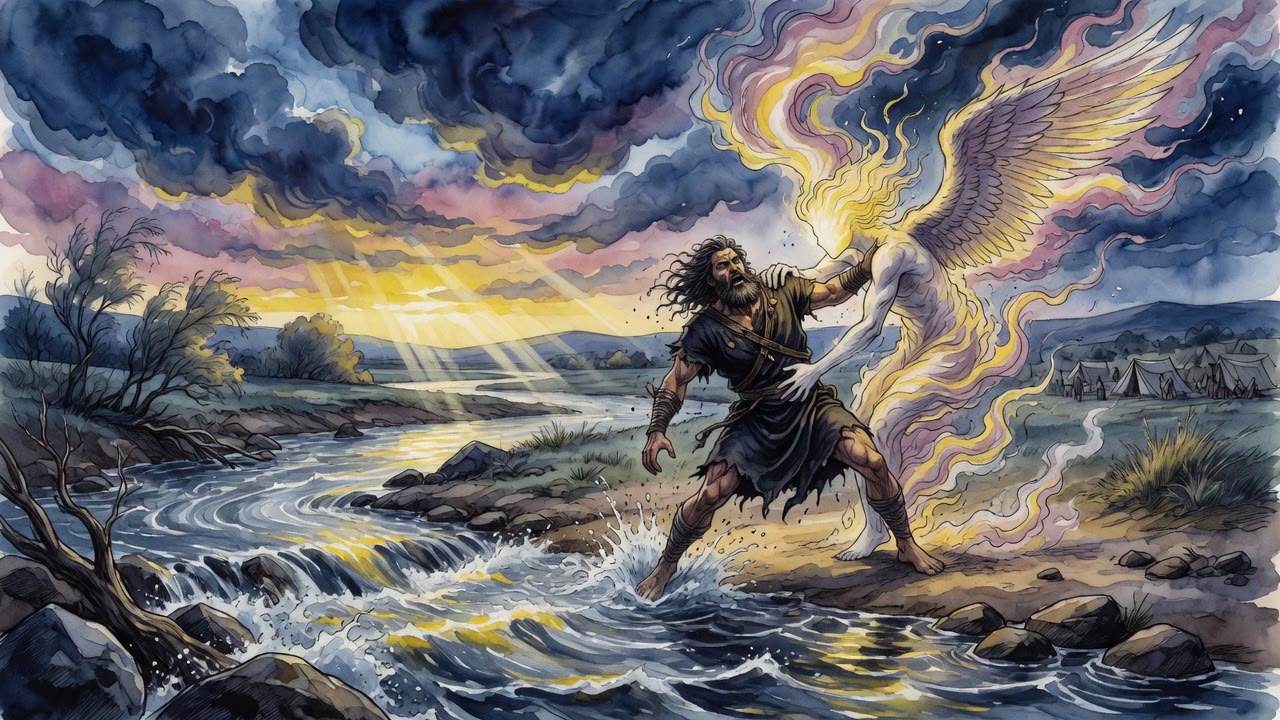
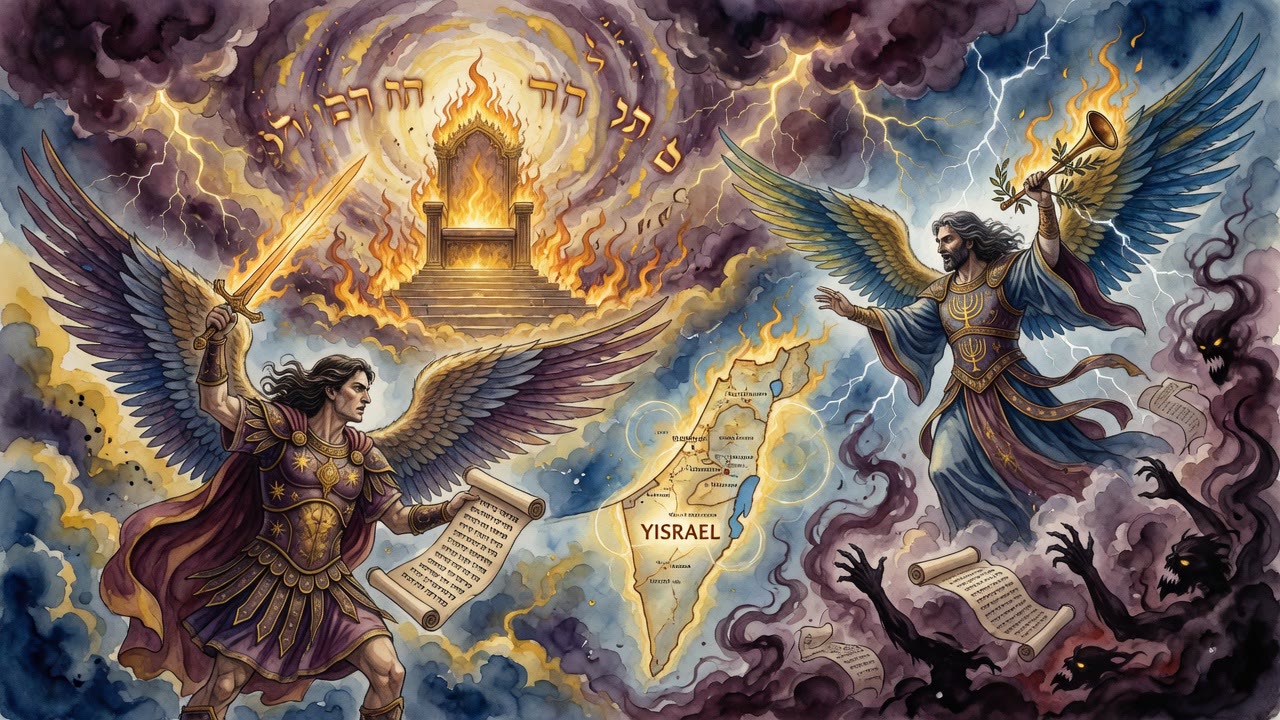
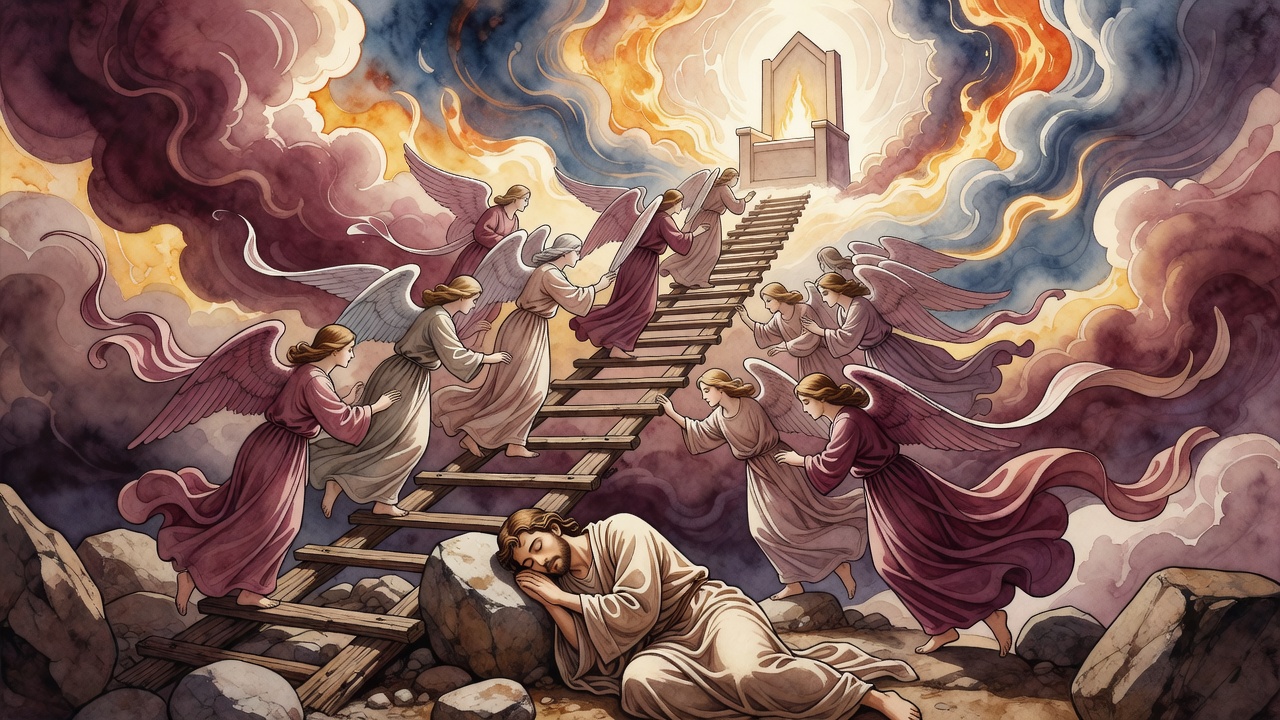
Michael's task stretched beyond one man sleeping in the open country with stones near his head. It reached the seed of Jacob, every generation that would carry the name Israel into danger. When the people cried under Pharaoh, the matter did not remain on earth. Their bondage rose into the heavenly court, where nations had patrons and patrons had claims.

There stood Uzza, the angel of Egypt, with an argument cold enough to hold a nation in chains. Israel had been decreed to serve as strangers. The term had not been paid, he said. Egypt still had a right.

Michael, guardian of Jacob, had to answer. He could not.

Uzza Made the Stronger Claim

Silence in heaven is not empty. It has weight. Michael knew the decree. He knew the old words spoken to Abraham when God promised him the land and Abraham asked how he would know he would inherit it. Because of that unseemly question, Abraham's seed had been told they would be strangers in a land not their own.

Uzza seized the line like a creditor holding a signed bond. The Israelites had worked for Egypt. Their backs had bent. Their children had been born under commands they did not make. If the decree required four hundred years, then Uzza wanted every year.

Michael had fire. He had rank. He had an appointment from God Himself. None of that supplied the missing answer. The guardian stood there while Egypt's angel pressed the claim, and for a moment it looked as if the court would leave Israel in bondage because the paperwork favored the oppressor.

God Counted From Isaac's Birth

Then God took the case.

He did not deny Abraham's question. He did not pretend the decree had never been spoken. He counted it differently. The seed of Abraham had been strangers not from the first lash in Egypt, but from the birth of Isaac. From that day the covenantal family had lived as sojourners, never fully at home in the lands under their feet.

Four hundred years had elapsed. The account was paid.

Uzza's claim collapsed. The angel of Egypt had no right to keep God's children in bondage any longer. The decree he used as a chain had already spent its force. Pharaoh's grip on Israel was not only cruel. It was expired.

The Guardian Stayed at His Post

Michael's silence did not cancel his appointment. It exposed the strange shape of it. Israel's guardian could plead, burn, stand, and fail to find the answer. God would still be the one who broke the trap when the trap was built from a true word used without mercy.

That was Michael's work from then on: to stand close enough to the danger to feel the argument forming, close enough to mercy to ask for it, close enough to Jacob's children to remember why he had been sentenced there in the first place.

The archangel who once harmed the firstborn remained beside the firstborn's descendants, fire beside fire, waiting for the next accusation to rise.


← All myths
From the tradition

Sources

2 sources

The texts this telling draws on, in full. Open a card to read inline, or expand it for a wider, quieter read.

Legends of the Jews 6:187Legends of the Jews

Legends of the Jews turns to Birth of Michael.

So, what did Michael do? The text doesn't explicitly tell us. What it does tell us is Michael's defense: "I did it only to glorify Thee." Think of it like a zealous act, perhaps misguided, but ultimately intended to serve God's greater purpose. Ever been there?

Instead of further punishment, God appoints Michael as Jacob's guardian angel – and not just Jacob's, but his seed as well, meaning all of the Jewish people for all time. Think about the weight of that responsibility!

The language God uses is just beautiful. "Thou art a fire, and so is Jacob a fire." Both are forces to be reckoned with, powerful and transformative. "Thou art the head of the angels, and he is the head of the nations." This establishes a parallel, a divine connection between the angelic realm and the earthly one. Michael is supreme among the angels, and Jacob is supreme among the nations.

Then comes the key line: "Therefore he who is supreme over all the angels shall be appointed unto him who is supreme over all the peoples, that he may entreat mercy for him from the Supreme One over all." According to Ginzberg's retelling in Legends of the Jews, this is the ultimate purpose. Michael, in his high position, can plead for mercy on behalf of the Jewish people before God. It's a system of divine advocacy. Even after what seems like a mistake, Michael is given this incredible role. It speaks to the idea of redemption, of finding purpose even in our missteps. And it establishes a powerful, enduring connection between the Jewish people and the angelic realm, a bond of protection and intercession that lasts "unto the end of all generations."

So, what does this mean for us today? Perhaps it's a reminder that even when we stumble, we can still find our purpose. Maybe it's a comfort to know that, according to tradition, there's an angel out there advocating on our behalf. Or maybe it's just a fascinating glimpse into the tradition of Jewish folklore, a reminder that the stories we tell shape our understanding of the world, and our place within it.

Full source
Legends of the Jews 1:25Legends of the Jews

Take this story, for example, about the angel Michael, the angel Uzza, and a really sticky situation regarding the enslavement of the Israelites in Egypt.

Here's the setup: the Israelites are suffering under Pharaoh's rule, and Michael, the archangel often seen as Israel's defender, is arguing for their release. But the angel Uzza is putting up a fight. Why? Because from Uzza's perspective, the Israelites are bound by a divine decree.

The text simply states that Michael was silent, seemingly unable to argue against Uzza's points. It looked like Uzza had won! Can you imagine the weight of that moment? The hopes of an entire nation seemingly dashed by celestial bureaucracy.

Then, something extraordinary happens. God Himself intervenes. God speaks directly to Uzza, and this is where it gets really interesting.

God says "The Israelites were meant to serve their time because of something Abraham said." Remember when God promised Abraham the land of Israel? God says, "I am the Lord that brought thee out of Ur of the Chaldees, to give thee this land to inherit it." But Abraham, understandably wanting reassurance, asked, "Whereby shall I know that I shall inherit it?" (Genesis 15:7-8).

According to this tradition, that question – a perfectly human moment of doubt – had consequences. God continues, "Therefore did I say to him, 'Thy seed shall be a stranger.'" In other words, because of Abraham’s question, his descendants were destined for a period of servitude.

But here's the kicker, the loophole, the divine grace: God states that He knows that the period of "strangers" has already begun with the birth of Isaac, and that the four hundred years of the decree had already elapsed. The time was up! Uzza, according to God, no longer had the right to keep the Israelites in bondage.

So, what do we take away from this? It's a powerful reminder that even divine decrees aren't set in stone. There's room for interpretation, for mercy, and ultimately, for justice. It also speaks to the enduring power of human action – even a single question asked generations ago can have ripple effects through history. It makes you wonder about the unseen consequences of our own words and actions, doesn't it?

Full source