Morning Lambs Wash Jerusalem Clean Before Night
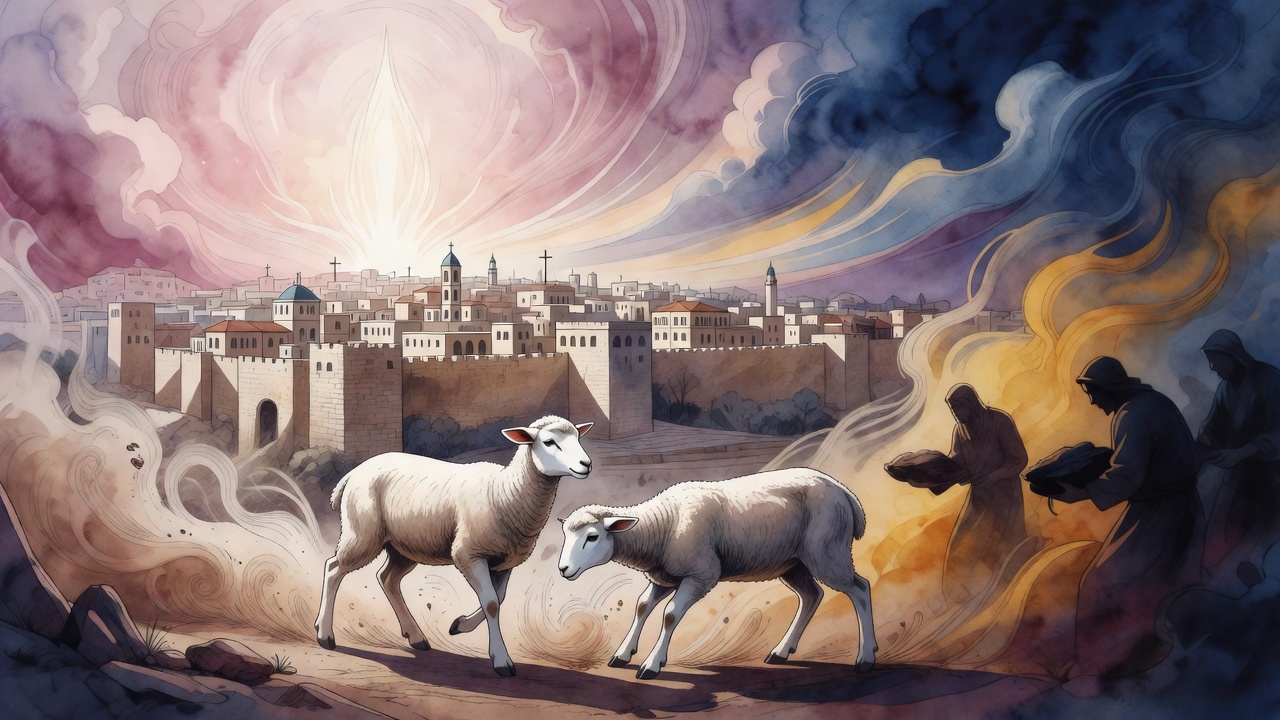
The first lamb climbed the ramp while Jerusalem still held last night's cool. Bakers had not opened their doors.
Table of Contents
The first lamb of the day climbed the ramp while the streets of Jerusalem still held last night's cool. Priests moved with the speed of men who knew the sun would not wait. By the time a baker opened his door, the morning offering had already gone up.
 Click for full size
Two lambs, every day. Not for a festival. Not for a vow. Continual.
Scarlet Went Up the Ramp
A young kohen held the lamb's head while another priest named the offering. Smoke lifted into a sky that was still grey. The House of Shammai heard in those lambs a pressing down, as if sin could be crushed under a heel the way Micah said God would press iniquities into the deep. The House of Hillel heard laundry. Scarlet turning white. A washboard rhythm that never skipped a morning.
Ben Azzai stood in the court later and said these were lambs in their first year because they made Israel clean like a child in its first year. Soft skin. No ledger yet.
Rabbi Yudah son of Rabbi Simon made the hours matter. The morning lamb took the night. The twilight lamb took the day. Between them, he said, no one in Jerusalem went to bed still clutching the day's stain. The city could be called a place where righteousness lodged overnight because the altar kept washing.
At dusk merchants locked stalls. Mothers called children in from alleys. The second smoke rose, and the ledger of daylight closed. A man who had shouted at his worker, a woman who had measured flour short, a boy who had pocketed a coin: the altar did not wait for their apologies. It washed first. They could catch up.
A Nazirite Could Not Collapse His Gifts
Not every lamb belonged to the city's clock. A nazirite who had finished his vow came with three animals that could not be packed into one. One unblemished lamb in its first year for a burnt offering. One unblemished ewe for a sin offering. One unblemished ram for a peace offering.
He asked if one set of gifts could close two periods of restraint. The priest shook his head. "One. Not two. You do not shave for two vows with a single set of gifts."
The nazirite's hair fell after the offerings, not before. Months of growth hit the floor in a heap that looked almost human. Burnt, sin, peace. Then the razor. Then ordinary wine waiting on a table outside the court.
Oil Stopped at the Two Loaves
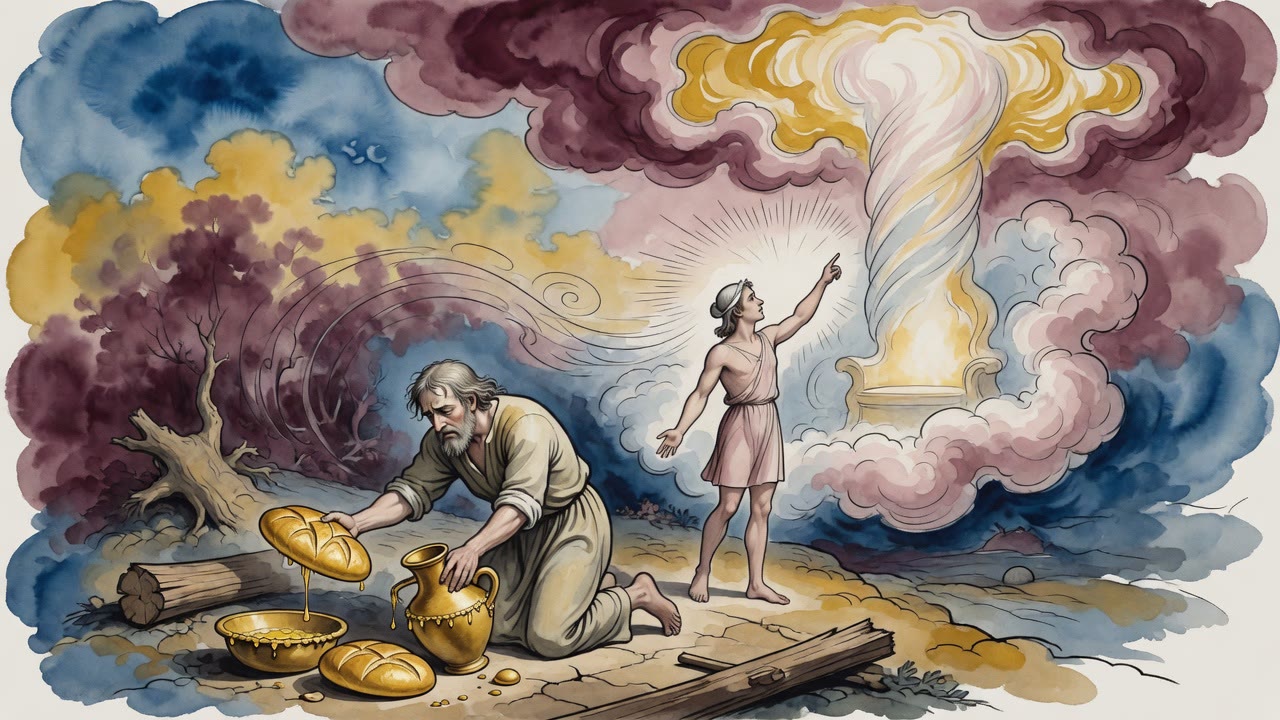
Elsewhere on the same court, a priest reached for oil to dress the two loaves of Shavuot, the wheat festival seven weeks after Passover. Rabbi Akiva's ruling was already in the room. The omer, the barley sheaf of Passover, is bought from public funds. The first grain on the altar belongs to all Israel. Oil goes on this meal offering, not on the showbread. Frankincense goes here, not there. The two loaves take neither.
The priest's fingers were already shiny. He pulled them back. A single small word in the verse, "upon it," had shut the door (Leviticus 2:15). Some flour wanted perfume. Some flour wanted to stay plain. The altar was not a kitchen that improvised.
Moses Stepped Back From Boards
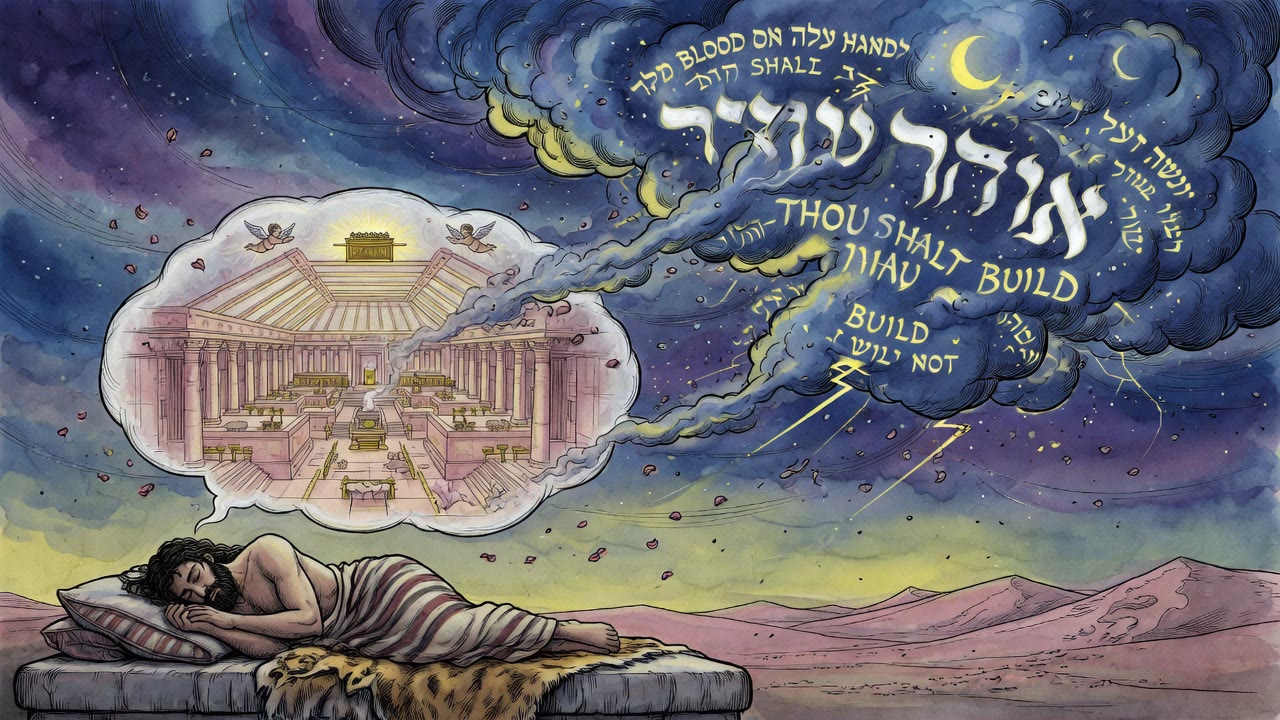
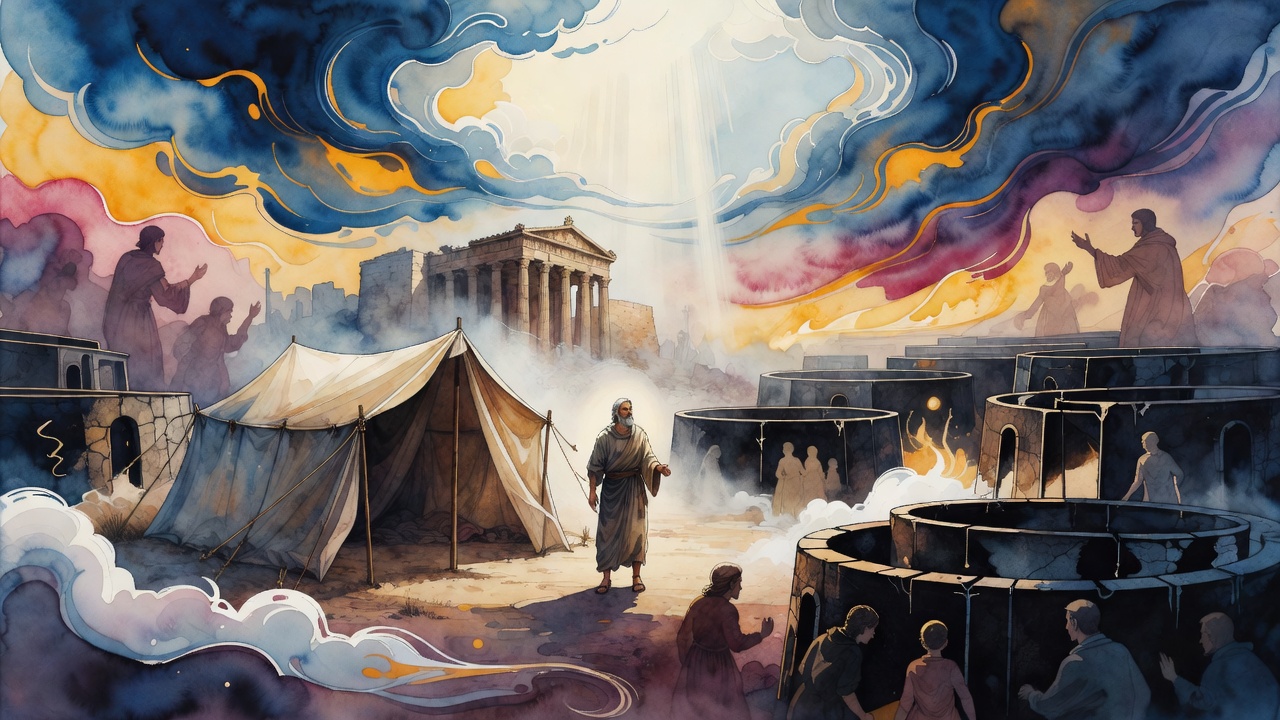
A student asked how boards and curtains could house the One whom the heavens cannot contain. An older priest pointed at the ramp, where the next lamb was already climbing, and told the old flinch of Moses. Moses had recoiled from the command to build a sanctuary at all. How can the heavens fail to contain God, while wood claims to hold Him?
The smoke of two lambs each day did not answer with a speech. It answered with rhythm. Mercy on a schedule. A city that could not hold the Infinite still held the work of becoming clean before nightfall. The student watched the lamb go up and stopped asking for a better room.
The City Would Not Keep a Stain Overnight
A merchant who had shouted at his worker all afternoon locked his stall at dusk and smelled the second smoke. He had not apologized. The lamb had not waited. The altar washed first. He could catch up on the street if he chose. The schedule did not ask his mood.
When the nazirite's hair hit the stone, the continual lambs were already on their way up or down the day. Personal vows and public hours shared one courtyard without confusing their jobs. One body washed the hours. Three bodies closed a private vow. Oil and frankincense drew lines through flour so that no gift could steal a rule from its neighbor.
Smoke at dawn. Smoke at dusk. A city that could be accused of many things could not be accused of sleeping with yesterday still stuck to its hands.
← All myths