Parshat Shelach5 min read

Moses Begged for the Patience He Once Refused

Long before the spies, Moses asked God not to be slow to anger with the wicked. God said nothing back. Then came the sentence of pestilence on the camp.

Curated by Arthur · Told by Maggid ·
Table of Contents
  1. The Silence That Waited for the Spies
  2. Draw Near for Embrace or Judgment
  3. When the Cloud Took the Blow
  4. Power That Looks Like Mercy

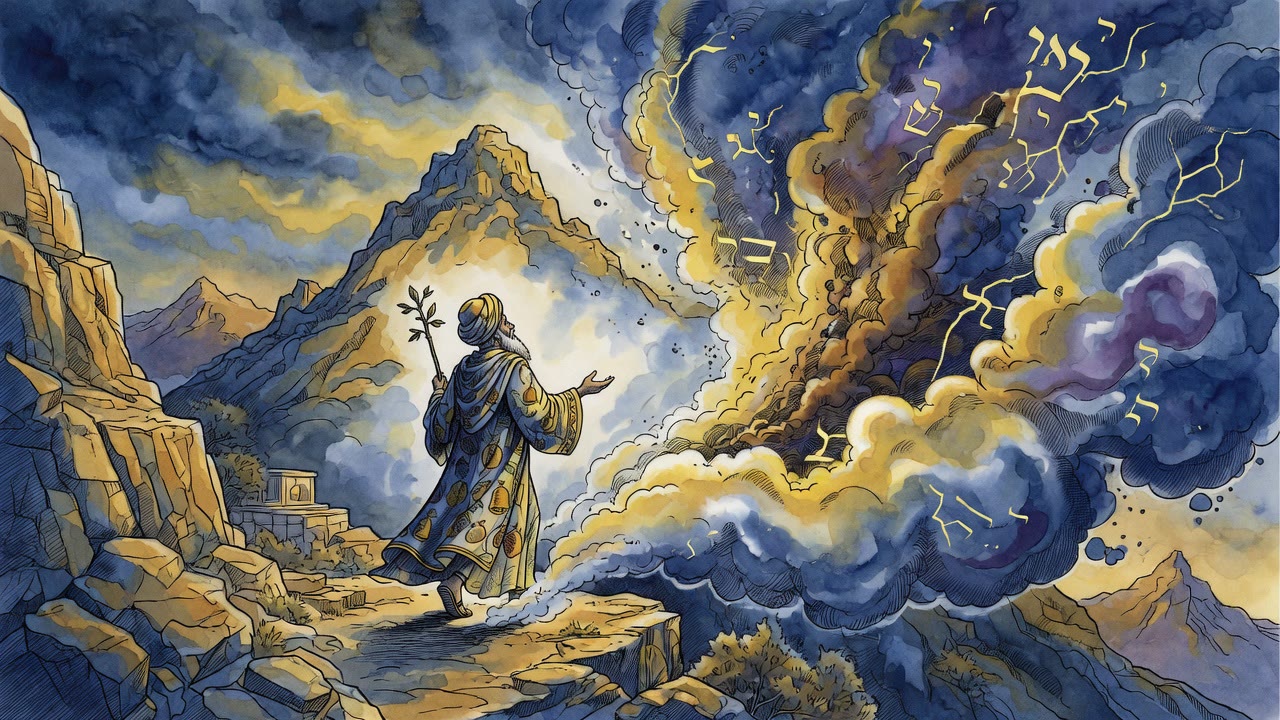
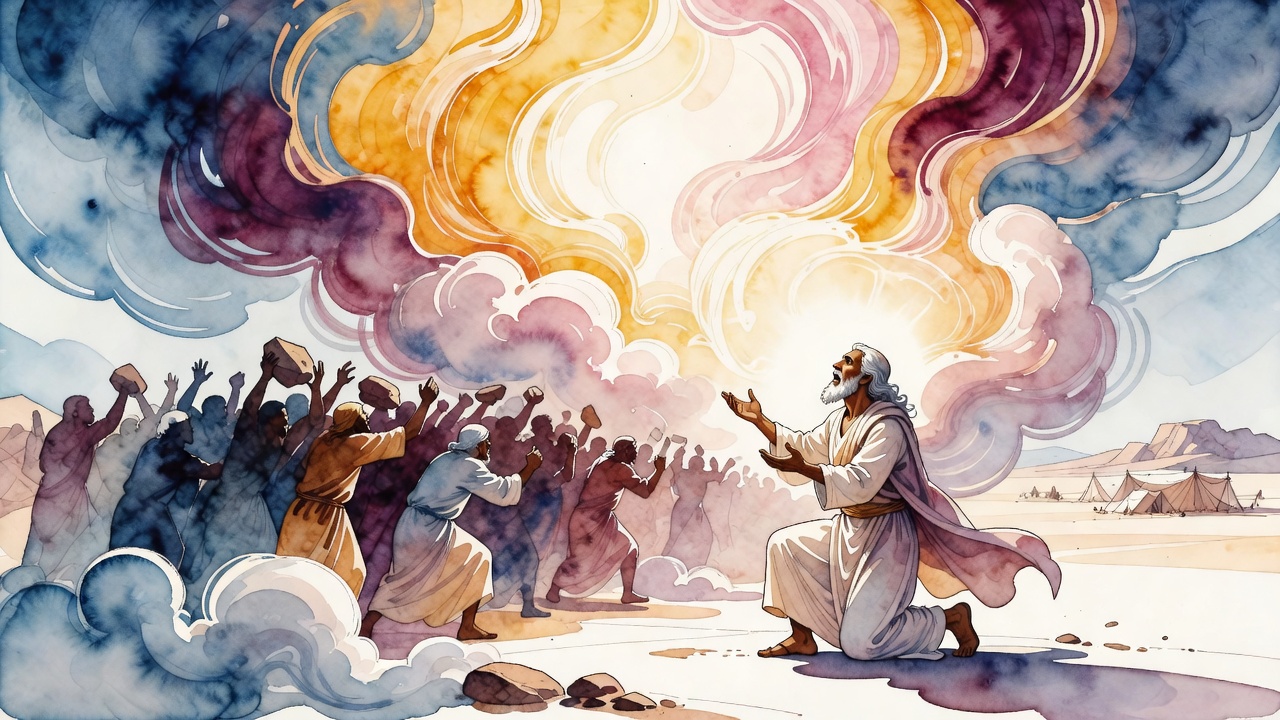
Moses climbed until he reached the place set apart for the Holy One and found God binding crowns onto the letters of the Torah. He stood in silence. "Is there no greeting of peace in your town?" God asked. "Can a servant greet his master?" Moses answered. Then God said, "You should have strengthened My power." At once Moses opened his mouth. "And now, let the power of the Lord be great."
Moses Begged for the Patience He Once Refused Click for full size

The words were not decoration. They were a reversal of an older wish he had once spoken when patience still looked to him like a threat.

The Silence That Waited for the Spies

Long before, when God showed Moses the orders of forgiveness and named Himself slow to anger, patient with good and wicked alike, Moses had pleaded: do not be patient with the wicked, who will one day destroy Your house and slay Your people. God answered with silence. He already saw the day Moses would need that very patience.

That day came at the sin of the spies. God said, "I will smite them with pestilence," and Moses remembered his own rash plea. Now he reversed himself, begging that mercy subdue wrath. He leaned on every word God had spoken of Himself: slow to anger, abundant in lovingkindness, forgiving iniquity for those who forgive others, acquitting the penitent, visiting fathers' sins only on sons who still grip their fathers' deeds. The patience he once tried to refuse became the wall behind which his people survived.

Draw Near for Embrace or Judgment

When Moses told Aaron to summon the people to draw near before the LORD, the sages heard two invitations in one command. Rabbi Yehoshua heard intimacy, the Presence about to be revealed. Rabbi Elazar of Modiin heard judgment. The same call can be an embrace or a reckoning, depending on the heart that steps forward.

They turned toward the wilderness, and Rabbi Elazar heard ancestral merit in the turn. As the wilderness holds neither iniquity nor sin in that teaching's image, so the early fathers were free of the stain that would later make a camp throw stones at its own prophets.

When the Cloud Took the Blow

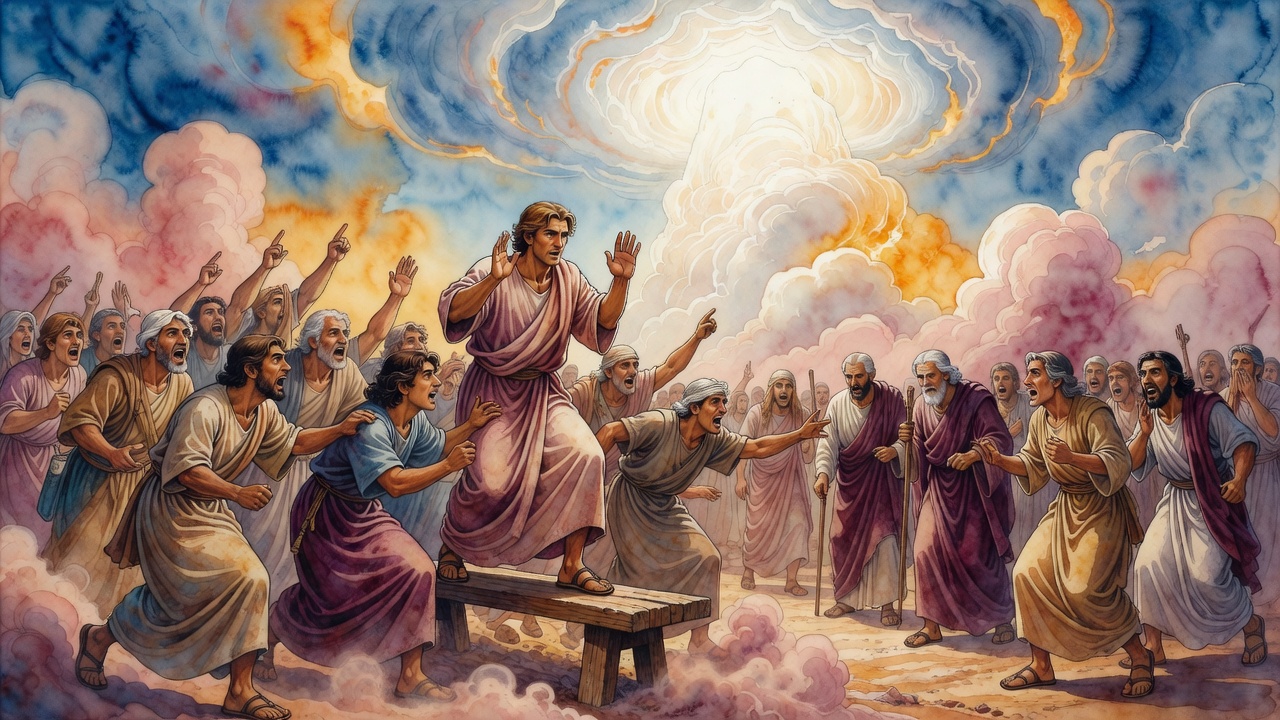
Rabbi Yose ben Shamua observed the pattern that saved lives. Whenever the people grew enraged enough to stone Moses and Aaron, the glory of the LORD appeared in the cloud. Better that the pillar of cloud be stricken than that Moses and Aaron be stoned, the Omnipresent declared. God interposed His own visible presence between servants and mob, willing to absorb the blow rather than let prophets fall to their own people.

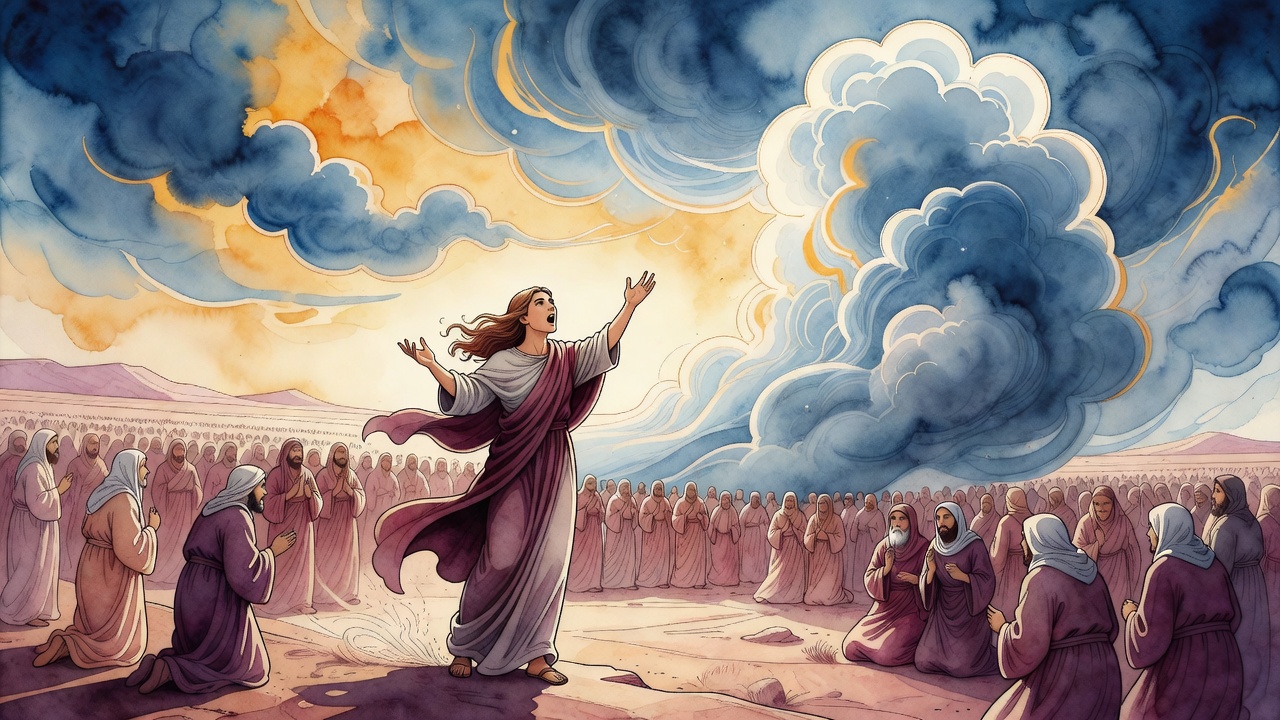
The same man the camp sometimes wanted to kill was the man they also watched with hungry eyes. When Moses walked out to the Tent, the whole people stood and gazed after him. Rabbi Ami and Rabbi Yitzchak split on the meaning. Honor, said one: for the greatest leader you stay standing until he is seated, watching the entire way. Contempt, said the other: murmurers measuring thighs and legs, sneering that he eats off the people. To gaze on a righteous man can be merit or poison, depending on the heart behind the eyes.

Power That Looks Like Mercy

"Let the power of the Lord be great" sounds like a request for force. In Moses' mouth after the spies it was a request that force wear the face of restraint. Power great enough to wait. Power great enough to let a cloud take stones. Power great enough to keep a people alive who had just talked themselves out of the land.

He had learned the lesson God refused to argue in words years earlier. Patience with the wicked is not weakness when the same patience is the only door left for the children of the wicked who still might turn. Moses strengthened God's power by agreeing at last to the Name he had once tried to edit.

Below the mountain of that prayer, a cloud still knew how to stand between a leader and a raised rock. Above it, crowns still settled on letters that would outlast every spy's report.

Pestilence had been the open threat. Moses answered with names of God spoken back to God, a lawyer of mercy using the client's own words. He had once wanted a tighter justice. Now he wanted room for a people who had just talked themselves into ruin. The silence from years before finally spoke: you will need this patience, so do not delete it from the Name.

In the camp, stones still waited in angry hands on other days, and the cloud still knew its job. Gaze and glare followed Moses to the Tent. Some stood in honor until he sat. Some measured his body for gossip. He kept walking the line between prayer above and riot below, strengthening power by agreeing that power can wait, cover, and spare.


← All myths
From the tradition

Sources

3 sources

The texts behind this telling. Some cards carry a translation of the source; others are our own retelling of it, and each card says which. Every card links out to the original.

Midrash Aggadah, Numbers 14:17Midrash Aggadah

Translation of the source text.Midrash Aggadah (Buber), Public Domain, on Sefaria · CC-BY-SA

"And now, let it be great" (Numbers 14:17). When Moses ascended on high, to the mountain, to the place set apart for the Holy One, blessed be He, he found the Holy One, blessed be He, tying crowns to the letters, and Moses was silent. The Holy One, blessed be He, said to him: "Is there no greeting of peace in your town?" Moses said to Him: "Is there a servant who gives a greeting of peace to his master?" The Holy One, blessed be He, said to him: "But you should have strengthened [My] power!" Immediately Moses opened and said: "And now, let the power of the Lord be great."

Another interpretation: "And now, let the power of the Lord be great." At the time when the Holy One, blessed be He, showed the orders of forgiveness to Moses, and the Holy One, blessed be He, told him that He is slow to anger, that He is long-suffering with the good and with the wicked, Moses began to say: "I beg of You, do not be long-suffering with the wicked, for the wicked are destined to destroy the houses of Your people and to kill Your people." This is what David, peace be upon him, said in Psalms: "Your testimonies are very faithful" (Psalms 93:5), all that You have written in Your Torah is true; "holiness becomes Your house, O Lord, forevermore" (ibid.); therefore "O Lord God, to whom vengeance belongs; O God, to whom vengeance belongs, shine forth... how long shall the wicked, O Lord" (Psalms 94:1, 3). When Moses said this, the Holy One, blessed be He, was silent to him, because it was revealed before Him that Moses would need [God to be] long-suffering with the wicked.

Once Israel sinned in the wilderness in the matter of the spies, and the Holy One, blessed be He, sought to exact punishment from them, He immediately said: "I will smite them with the pestilence and disinherit them" (Numbers 14:12). Moses regretted that he had said to the Holy One, blessed be He, not to be long-suffering with the wicked. Moses began and said: "And now, let the power of the Lord be great", that His mercy may subdue His anger, just as the Lord said to him, "slow to anger," that He should not exact punishment from them at once. "As You have spoken, saying", what did He speak? "The Lord is slow to anger," that You said that You would be long-suffering with the wicked; "and abundant in lovingkindness," that all Your deeds are only in lovingkindness, for if You were to be exacting with Your creatures, there is none who could stand in the time of Your anger. "Forgiving iniquity and passing over transgression", to whom does He forgive iniquity? To the one who passes over [others'] transgressions. "And acquitting", for those who repent; "He will not acquit", for those who do not repent. "Visiting the iniquity of the fathers upon the sons", when they hold the deeds of their fathers in their hands.

Full source
Yalkut Shimoni on Torah 258:10Yalkut Shimoni on Torah

Translation of the source text.Torat Emet (Yalkut Shimoni) · CC-BY-NC

"And Moses said to Aaron, Say to all the congregation of the children of Israel, Draw near before the LORD" (Exodus 16:9). Rabbi Yehoshua says: "Draw near" because the Divine Presence was revealed. Rabbi Elazar of Modiin says: "Draw near" in order to receive judgment. "And it came to pass, as Aaron spoke": what does Scripture teach by saying "and it came to pass"? It teaches that just as the Omnipresent decreed, so it was. "And they turned toward the wilderness": Rabbi Yehoshua says, they did not turn until the divine might was revealed. Rabbi Elazar of Modiin says, they turned only on account of the deeds of the fathers, as it is said "the wilderness": just as a wilderness has in it neither iniquity nor sin, so the early fathers had in them neither iniquity nor sin.

"And behold, the glory of the LORD appeared in the cloud" (Exodus 16:10). Rabbi Yose ben Shamua says: Whenever Israel sought to stone Moses and Aaron, immediately the glory of the LORD appeared in the cloud. There it says, "And all the congregation said to stone them with stones" (Numbers 14:10), and here it says the glory of the LORD appeared in the cloud. And why all this? The Omnipresent said to them: Better that the pillar of cloud be stricken and that Moses and Aaron not be stoned.

Full source
Yalkut Shimoni on Torah 393:6Yalkut Shimoni on Torah

Translation of the source text.Torat Emet (Yalkut Shimoni) · CC-BY-NC

"And they looked after Moses" (Exodus 33:8). Rabbi Ami and Rabbi Yitzchak, one said it was to his discredit, and one said it was to his praise.

Rabbi Avdimi of Haifa said: When a sage passes by, one rises before him within four cubits, and once he has passed, one sits. When the head of the court passes by, one rises before him as far as the eye can see, and once he has passed four cubits, one sits. When the patriarch passes by, one rises before him as far as the eye can see, and one does not sit until he has taken his seat in his place, as it is said, "And they looked after Moses" and so on.

The one who said it was to his discredit: they would say, See his thighs, see his legs! He eats from what is the Jews' and drinks from what is the Jews'. And the one who said it was to his praise: to gaze upon a righteous man brings merit.

Full source