Parshat Bamidbar5 min read

Moses Begged God to Shield the Men the Ark Kept Killing

The clan of Kehat bore the Ark on their shoulders, and one greedy glance at the uncovered gold struck them dead until Moses argued for a shield.

Curated by Arthur · Told by Maggid ·
Table of Contents
  1. The Deadliest Honor in the Camp
  2. The Men Who Raced Past the Table
  3. Moses Carried the Grievance to the Throne
  4. What the Most Sacred Order Cannot Do
  5. The Field at Beit Shemesh
Moses Begged God to Shield the Men the Ark Kept Killing Click for full size

The Deadliest Honor in the Camp

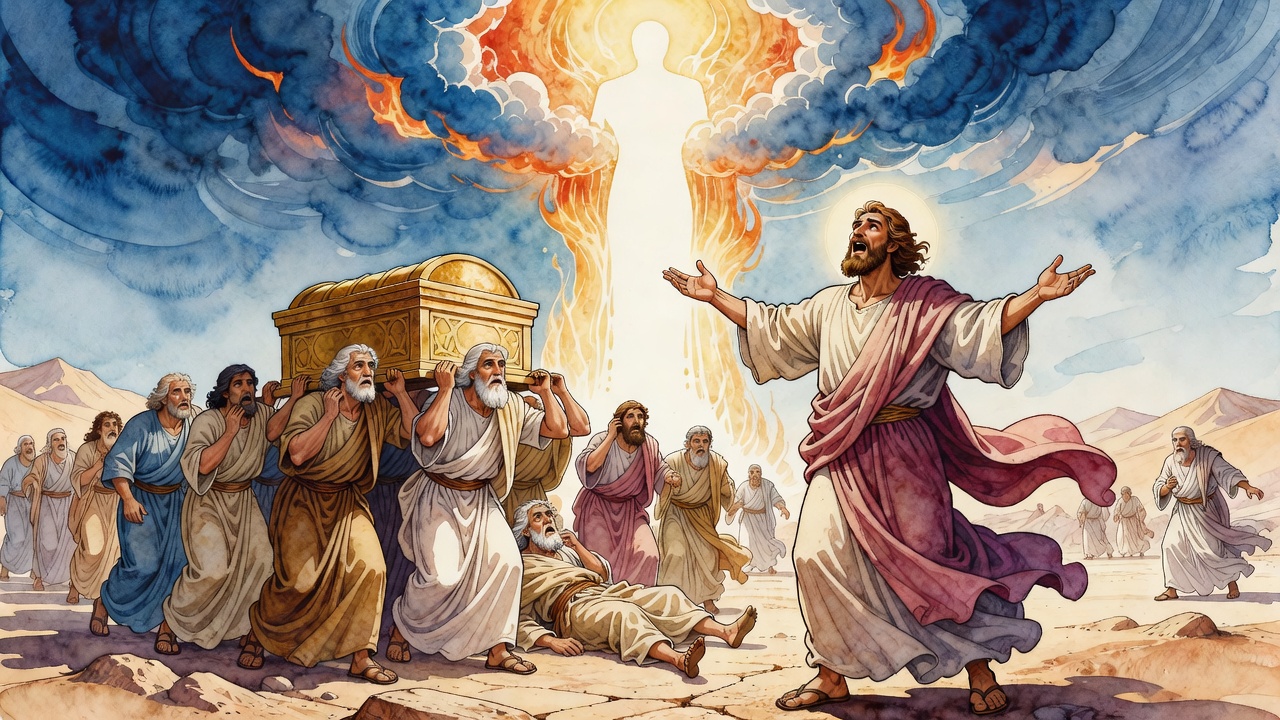
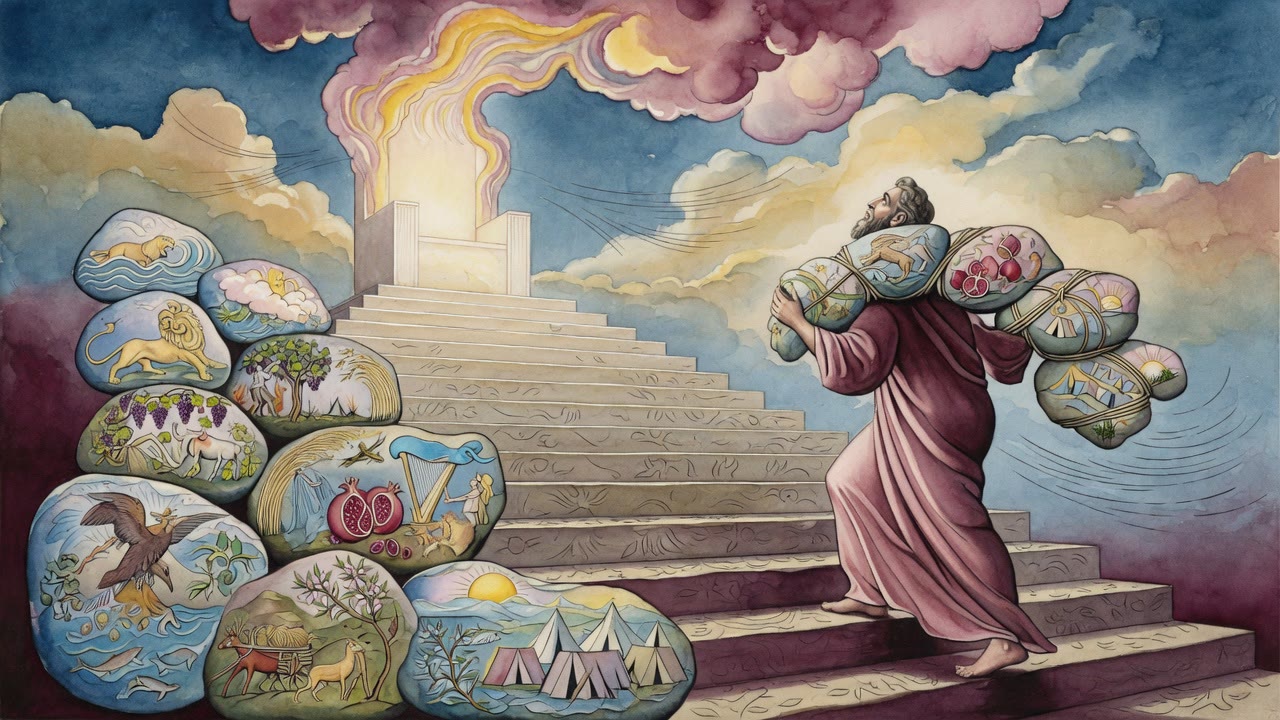
When the camp broke and the Tabernacle came down, the clan of Kehat stepped forward to lift the holiest thing Israel owned. The Ark of the Covenant rode on their shoulders, its poles worn smooth by their hands. No wagon carried it. Wagons took the boards and the sockets and the hangings, but the Ark and the vessels of the inner sanctuary were laid on living men, because the sacred service belonged to them alone.

The honor came with a single rule, and the rule was death. No Kehatite could look on the Ark while it stood uncovered. "They shall not come to see as the sacred is being covered, lest they die." A curtain hid it. Only after the curtain was drawn could the men come near, put their shoulders under the poles, and carry.

The Men Who Raced Past the Table

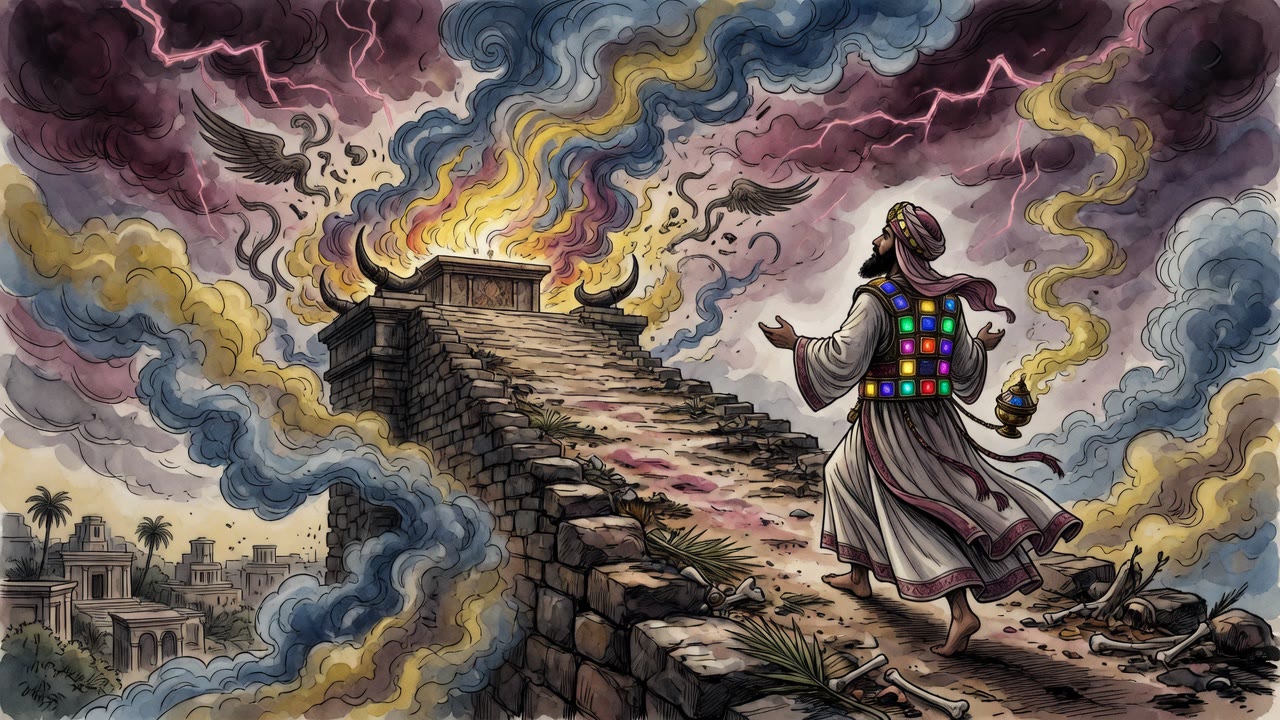
The trouble was that the men wanted the Ark. They knew what carrying it was worth. The reward for bearing the holiest vessel outshone every other task, and so the strongest of them pushed toward its poles and left the rest behind. The Table with its bread went unlifted. The lampstand waited. The altars stood untended while the crowd pressed toward the one burden everyone wanted.

Their hunger did not stop at the poles. A man would reach the curtain and could not wait for it to fall. He pulled it back a hand's breadth to feast his eyes on the gold before anyone covered it. For one blink, an eyelid closing on an eye, he saw. Then he dropped. "No man can see Me and live," the word had said, and the Ark kept the word to the letter. The dead were carried out, and the clan of Kehat grew thinner at every encampment.

Moses Carried the Grievance to the Throne

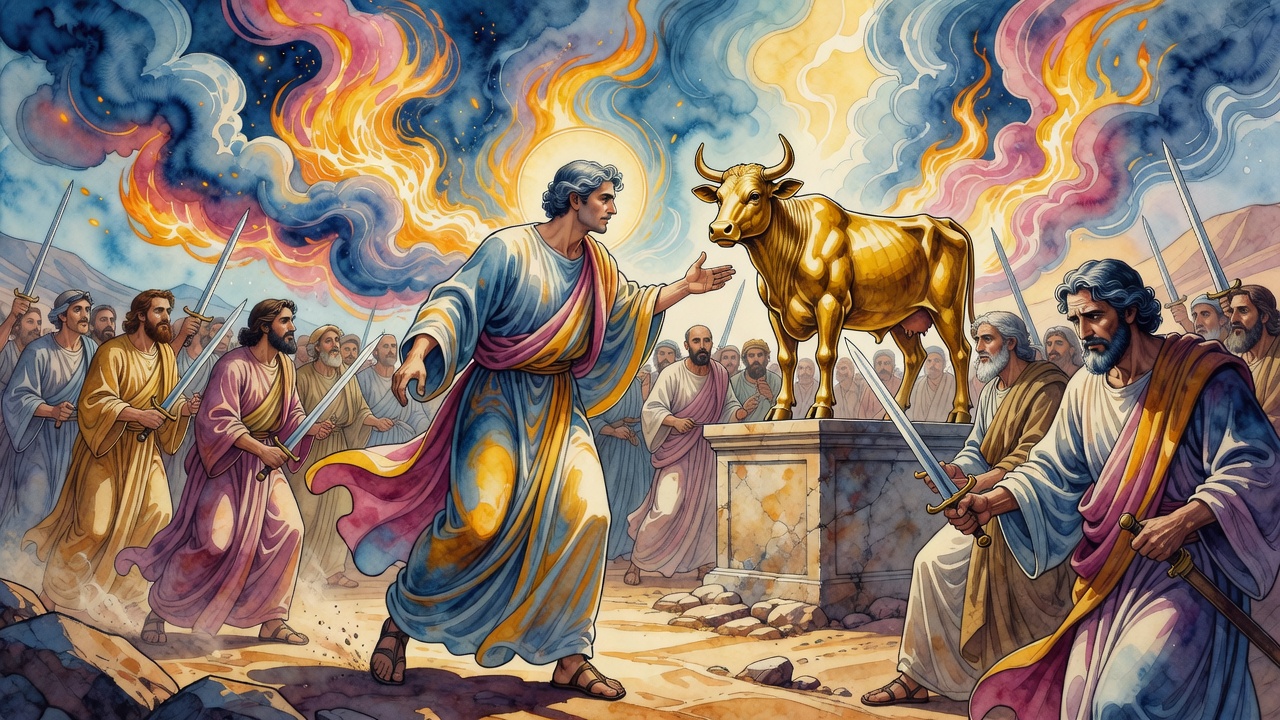
Moses counted the losses and could not let them pass. He came before God with a hard question, the kind a shepherd asks when he suspects the flock is being culled by favoritism. "Is the blood of the sons of Kehat cheaper than the blood of the sons of Aaron?" Why should one family carry a burden that killed them while the priests walked through the same camp untouched? He did not soften it. He wanted to know whether God valued one house over another and let the lesser house bleed for the difference.

What the Most Sacred Order Cannot Do

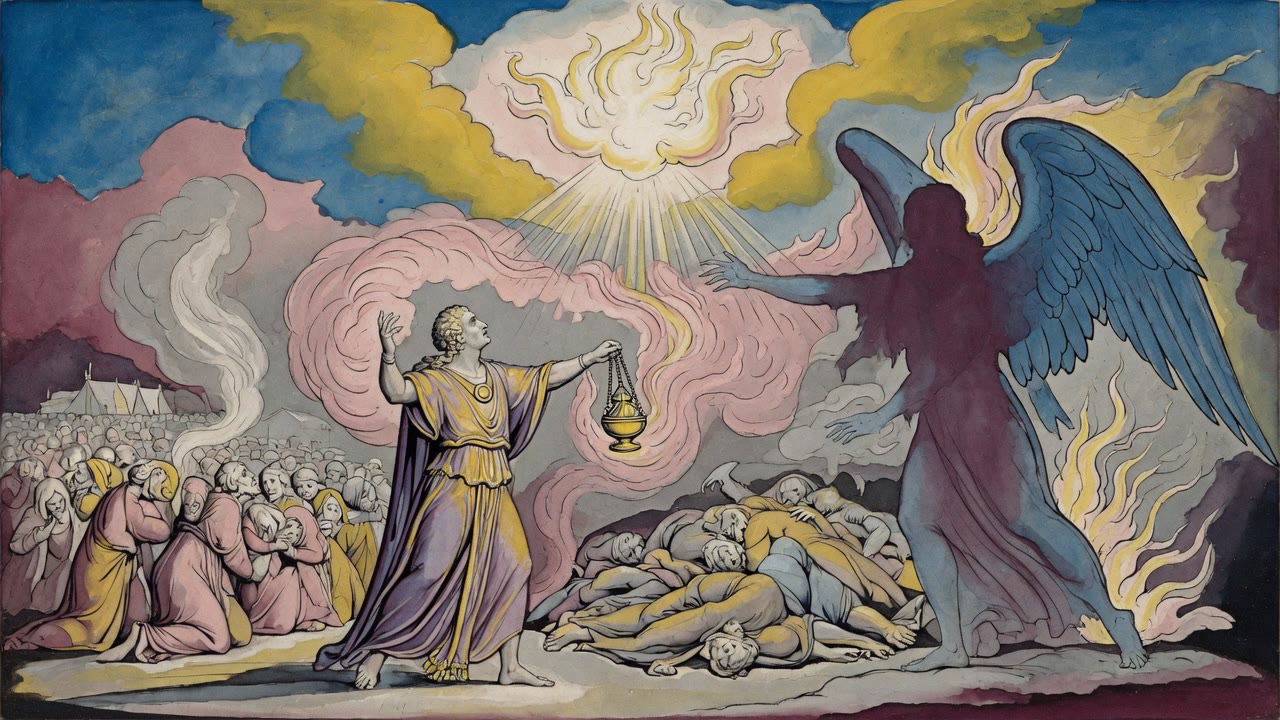
The answer came back in the language of rank. There is an order called the most sacred, and Aaron belonged to it, set apart to be sanctified as holy of holies. The Ark belonged to it too, holiest of every object in the world. Holiness of that highest order does not wound holiness of that highest order. Aaron's own sanctity shielded him. The Ark's sanctity shielded itself. When the two stood together, neither could harm the other.

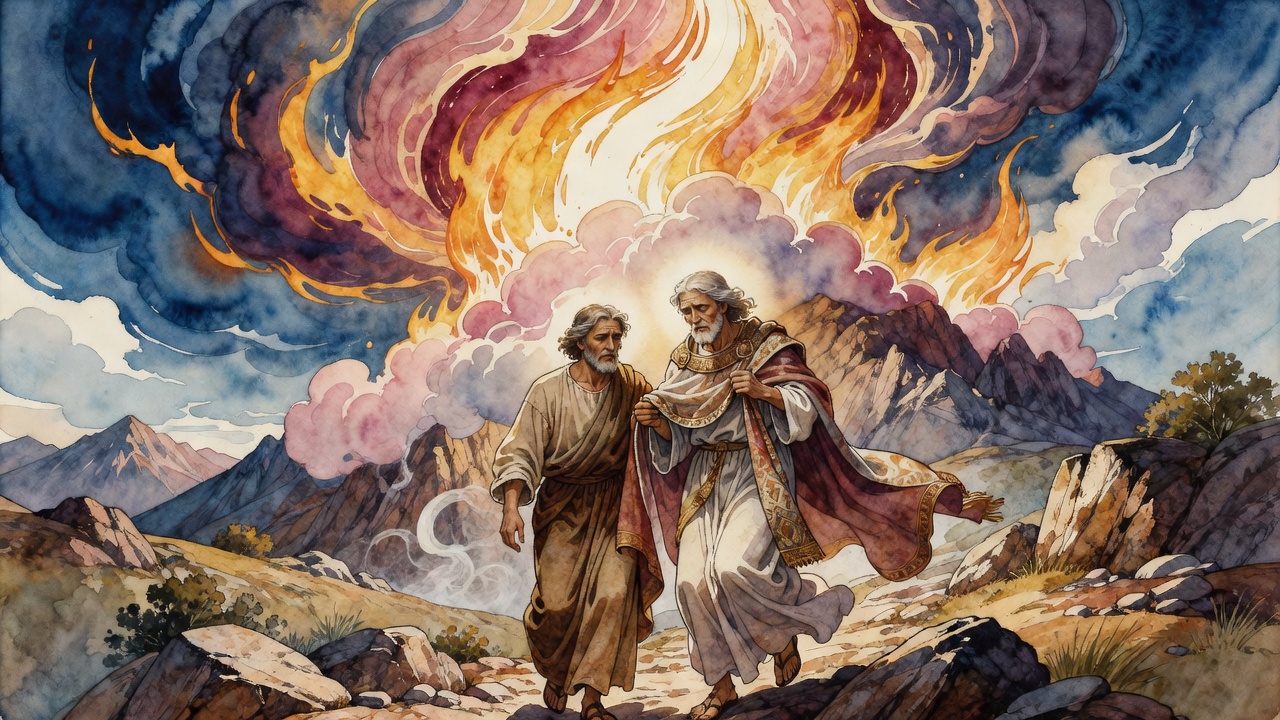
The sons of Kehat were holy. They were not holy in that way. They served the highest things without standing among them, and so the highest things could burn them. That was why the priests carried a duty the Kehatites never understood as mercy. Before a single Kehatite came near, the sons of Aaron went in first and covered the Ark, the Table, and all the vessels with their own hands. The men who carried the sacred would never again see it bare. The warning that had sounded like a threat was the wall God built to keep them alive.

The Field at Beit Shemesh

Generations after the wilderness camp was folded away, the same gaze found men who had no priest to cover the gold for them. The Ark came home to Beit Shemesh on a cart, and the harvesters looked up from their sickles and stared. Some bowed low and kept reaping in the same breath, worship and labor tangled together as if the Ark were a landmark in their field. Some stood beside it and kept up their ordinary talk, gossip and jokes loose in the air before the holiest vessel on earth. The curtain that should have hidden it had been folded back.

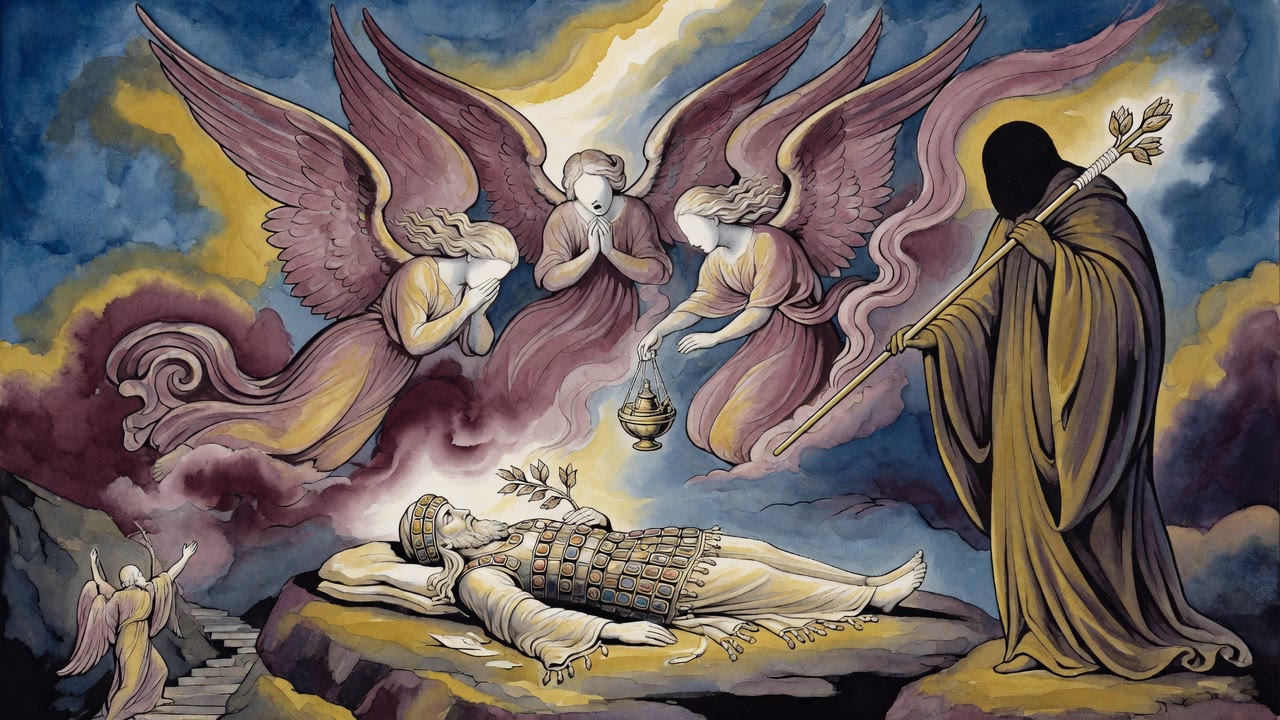
They gazed, and the counting began. Seventy men fell, and fifty thousand with them, the elders of the great court lying among the ordinary dead in one field. War followed, and more of the court went down. When the survivors asked who had brought this ruin on them, it was Elijah who named the cause. The men of Beit Shemesh had looked on the uncovered Ark, and the Ark had answered the way it always answered. The sons of Kehat, warned and shielded, had been spared the death that this field could not escape.


← All myths

From the tradition

Sources

2 sources

The texts behind this telling. Some cards carry a translation of the source; others are our own retelling of it, and each card says which. Every card links out to the original.

Bamidbar Rabbah 4:19Bamidbar Rabbah

Retold in our words. Read the original at the link below.The Sefaria Midrash Rabbah, 2022 · CC-BY

Sometimes, tradition, holiness, and even a little bit of divine reasoning come into play.

Our story begins with a seemingly simple instruction from the Book of Numbers (Bamidbar in Hebrew), specifically the passage that speaks of the sons of Kehat. "Thereafter, the sons of Kehat shall come to bear…" (Numbers 4:15). It's a verse about carrying sacred objects, but it sparked a profound question in Moses' heart.

He turned to God, a plea in his voice: "Is the blood of the sons of Kehat safeguarded and the blood of the sons of Aaron unprotected?" In other words, was God valuing one family over another? Why should the sons of Kehat bear such a heavy, potentially dangerous burden, while the sons of Aaron were seemingly spared?

God's answer, as recorded in Bamidbar Rabbah, is a fascinating glimpse into the complexities of holiness and responsibility. It all boils down to the concept of kodesh kodashim – "the most sacred order."

God explains to Moses that Aaron holds a unique position. "Aaron was set apart to sanctify him as of the most sacred order," as we find in I (Chronicles 23:13). He and his descendants are imbued with an extra measure of holiness. And so is the Ark of the Covenant, the Aron Hakodesh, the holiest object of all.

Here’s the key: "The most sacred order does not harm the most sacred order." Aaron's inherent holiness protects him. The Ark's holiness protects itself.

But the sons of Kehat? They aren't of that same "most sacred order." While they are certainly holy and dedicated to their service, they are not on the same level as Aaron or the Ark. Therefore, the Ark and the other sacred vessels, being of a higher level of holiness, could potentially "harm" them. Not physically, perhaps, but spiritually. Their very presence could be overwhelming.

That’s why, as Bamidbar Rabbah tells us, the sons of Aaron were charged with a crucial task: to guide and protect the sons of Kehat, to ensure they didn't perish while handling these potent objects. They had to be careful, precise, and mindful of the power they were dealing with. Think of it like handling radioactive material – care must be taken!

There's another interesting detail here. "These are the burden of the sons of Kehat in the Tent of Meeting," the verse continues, meaning "these" specific items were to be borne on their shoulders. "But the rest of the vessels are not borne, but rather are in wagons." As it says in (Numbers 7:9): "But to the sons of Kehat he did not give, [because the sacred service is upon them; they shall bear on the shoulder]."

So, not everything was carried. Only the most sacred objects, the ones that demanded the most reverence and care, were entrusted to the sons of Kehat. Other vessels were transported in a more mundane way.

What does this all mean? It suggests a delicate balance between divine order, human capacity, and the inherent power of holiness. It’s a reminder that some responsibilities come with inherent risks, and that those in positions of leadership must be mindful of those risks and act to protect those under their care.

Perhaps it’s a metaphor for life itself. We all carry burdens, some heavier than others. And sometimes, the very things that are most sacred to us, the things we cherish most, can also be the most challenging to handle. The key, perhaps, lies in recognizing the inherent power of those things, and in supporting each other as we carry them.

So, the next time you're feeling burdened, remember the sons of Kehat. Remember the delicate balance between holiness and humanity. And remember that even in the face of great responsibility, we are not alone.

Full source
Bamidbar Rabbah 5:9Bamidbar Rabbah

Retold in our words. Read the original at the link below.The Sefaria Midrash Rabbah, 2022 · CC-BY

It wasn't just about following instructions; it was about life and death. A fascinating passage in Bamidbar Rabbah 5 explores the story of the sons of Kehat, whose job it was to carry the Ark of the Covenant, and the dangers that came with that sacred task.

Rabbi Shmuel bar Rabbi Naḥman points out that the sons of Kehat were well aware of the immense reward for carrying the Ark. So much so, that they were eager to take on the duty. But their eagerness had a dark side. They would neglect the other sacred objects – the table, the candelabrum, the altars – all detailed earlier in the text. Why? Because they were too focused on the Ark! This brings us to the verse: "They shall not come to see as the sacred is being covered, lest they die" (Numbers 4:20).

Rabbi Yehuda HaLevi ben Rabbi Shalom offers a chilling interpretation. He asks, do you want to know why the sons of Kehat were dying? It was because, in their zeal to carry the Ark, they would pull back the curtain and gaze upon it before it was properly covered. They couldn't resist feasting their eyes on the holy object. But as (Exodus 33:20) states, “As no man can see Me and live.” The Ark, in its unveiled glory, was simply too much for mortal eyes.

So, what was the remedy? God instructed Moses that when the Tabernacle was dismantled, the sons of Kehat were not to touch the curtain. Instead, the sons of Aaron, the priests, would enter, cover the Ark, the table, and all the vessels. This way, the sons of Kehat would be protected from gazing upon the Ark and facing death.

Rabbi Levi adds a layer of nuance. He says that even a fleeting glimpse, "like an eyelid when it closes upon the eye," could be fatal. A chilling example of this comes from the story of the people of Beit Shemesh in I (Samuel 6:19): "He smote among the people of Beit Shemesh because they gazed at the ark of the Lord."

But what exactly does it mean to "gaze" at the Ark? Rabbi Abahu and Rabbi Elazar offer different interpretations. One suggests they were disrespectfully engaging in prostration while also reaping. The other says they were speaking "extraneous matters", perhaps gossiping or joking, in the presence of the sacred object. Rabbi Levi adds that the curtain had been folded back, allowing them to see it.

The consequences were devastating. The text says "He smote among the people seventy men, fifty thousand men” (I (Samuel 6:1)9). Rabbi Abahu and Rabbi Elazar debate the meaning. Were there seventy important men, each equal to fifty thousand? Or fifty thousand men, each equal to the seventy elders of the Sanhedrin (the supreme rabbinic court)? Rabbi Ḥanina and Rabbi Mona offer a similar, yet different, interpretation: the seventy were the Sanhedrin, and the fifty thousand were ordinary people.

The passage goes on to say that a war broke out, with fifty thousand men falling, along with members of the Great Sanhedrin. Elijah identifies the people of Beit Shemesh as the cause of this catastrophe, because they gazed at the Ark.

So, what’s the takeaway from all of this? The Holy One, blessed be He, honored the sons of Kehat by warning them, allowing them to save their lives. The text concludes that anyone who fears God will be honored and remembered. This is exemplified by the sons of Yonadav ben Rekhav, who, because they performed God's will, are promised that "No man shall be cut off, for Yonadav son of Rekhav standing before me all the days" (Jeremiah 35:19).

And if God does this for proselytes, how much more so for Israel, the children of Abraham! As (Isaiah 48:18-19) says, "Had you heeded My commandments, your peace would be like a river…[the offspring of your innards…their name would not be excised and not be destroyed from before Me]." And (Deuteronomy 4:4) reminds us, "But you, who cleave to the Lord your God, all of you live today."

This passage from Bamidbar Rabbah is a powerful reminder of the delicate balance between reverence and accessibility, and the enduring rewards for those who truly fear God. Are we drawing too close? Or are we keeping a respectful distance, mindful of the power and mystery that lies within?

Full source