Moses Came Down From Sinai Not Knowing His Face Was Radiant
Forty days in the cloud left the skin of Moses radiating fire, and he walked down Sinai glowing, never guessing why Aaron and the elders shrank back.
Table of Contents
 Click for full size
The Mountain Sent Him Down Lit
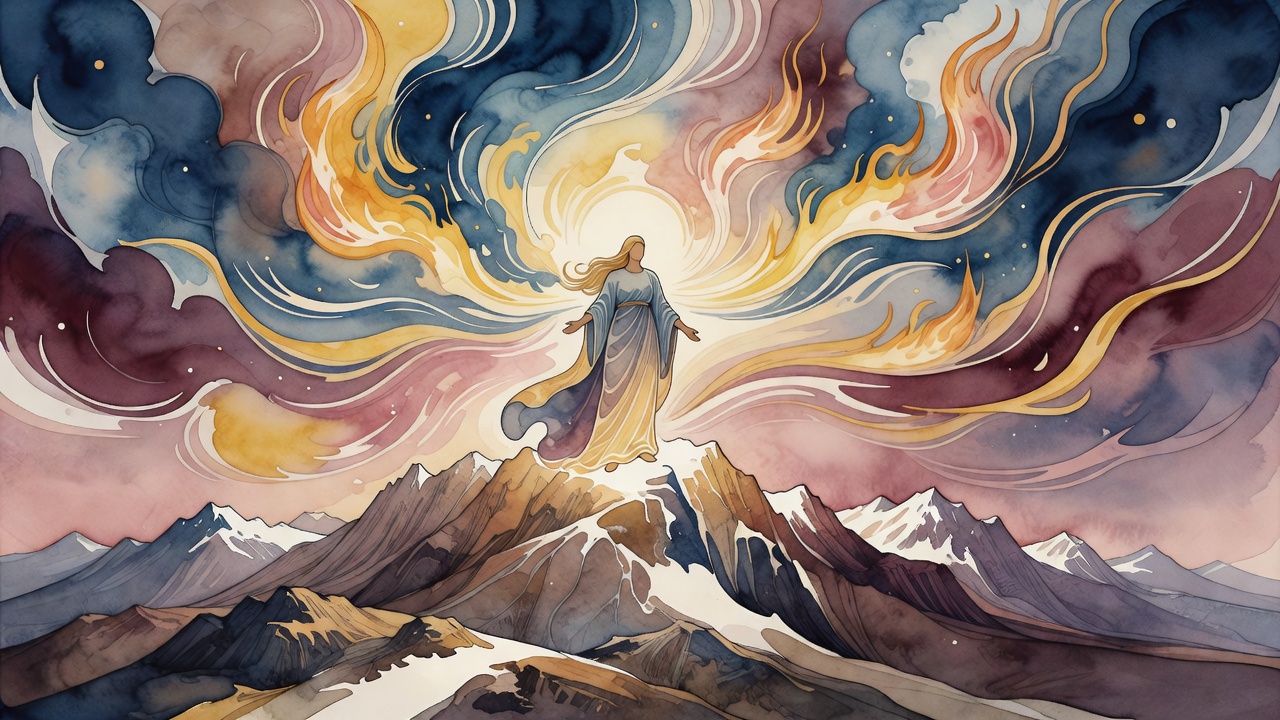
Forty days inside the cloud, and then the ground again. Moses came down the slope of Sinai with the two tablets of the testimony pressed against his chest, one in each hand, the stone still warm from the writing. He had not eaten. He had not slept the way men sleep. He had stood so long inside the divine speech that the words were still moving in him, and he walked down toward the camp thinking of them, not of himself.
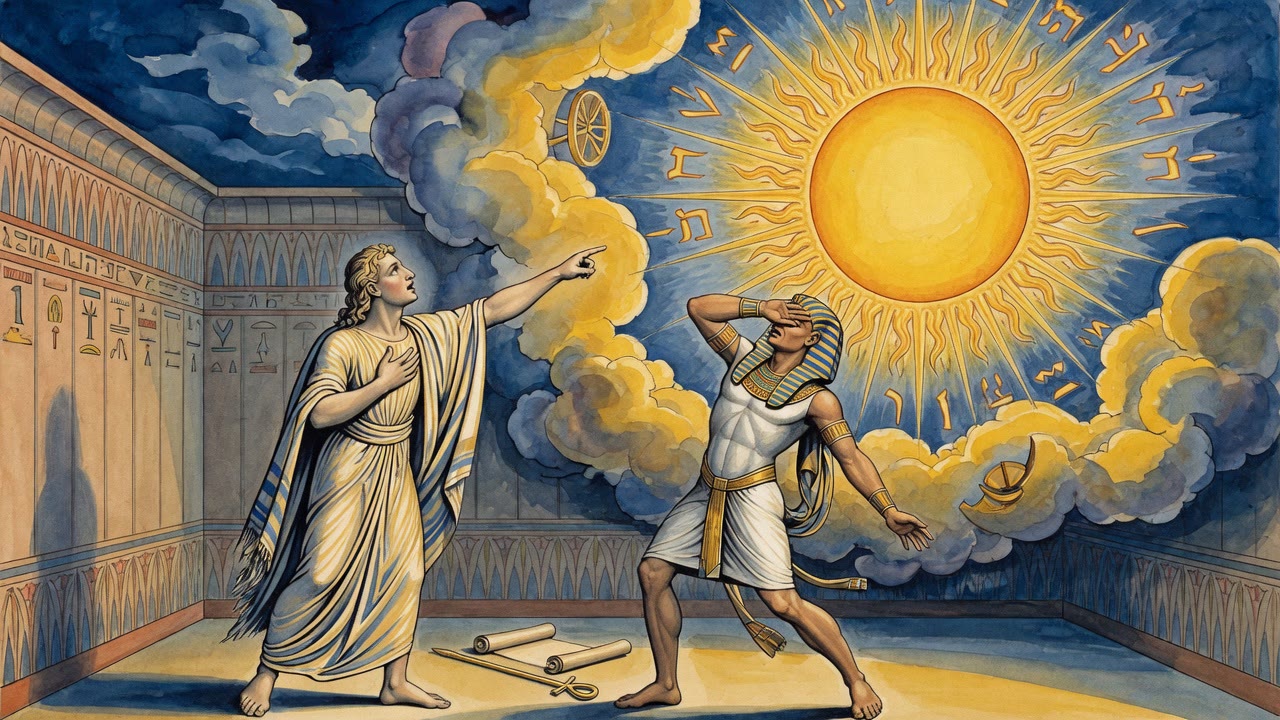
He did not know that his face had changed. The skin over his cheekbones and brow had taken on a light. Not a flush, not sweat and sun after a hard climb, but a steady shining, as if a lamp had been lit under the surface of him. The brightness of the glory of the Lord's Shekhinah (His presence dwelling among Israel) had rested on him through all those days of speaking, and now it clung to him the way scent clings to cloth long after the fire is out. He carried it down the mountain and felt nothing. A man cannot see his own face.
Aaron Was the First to Step Back
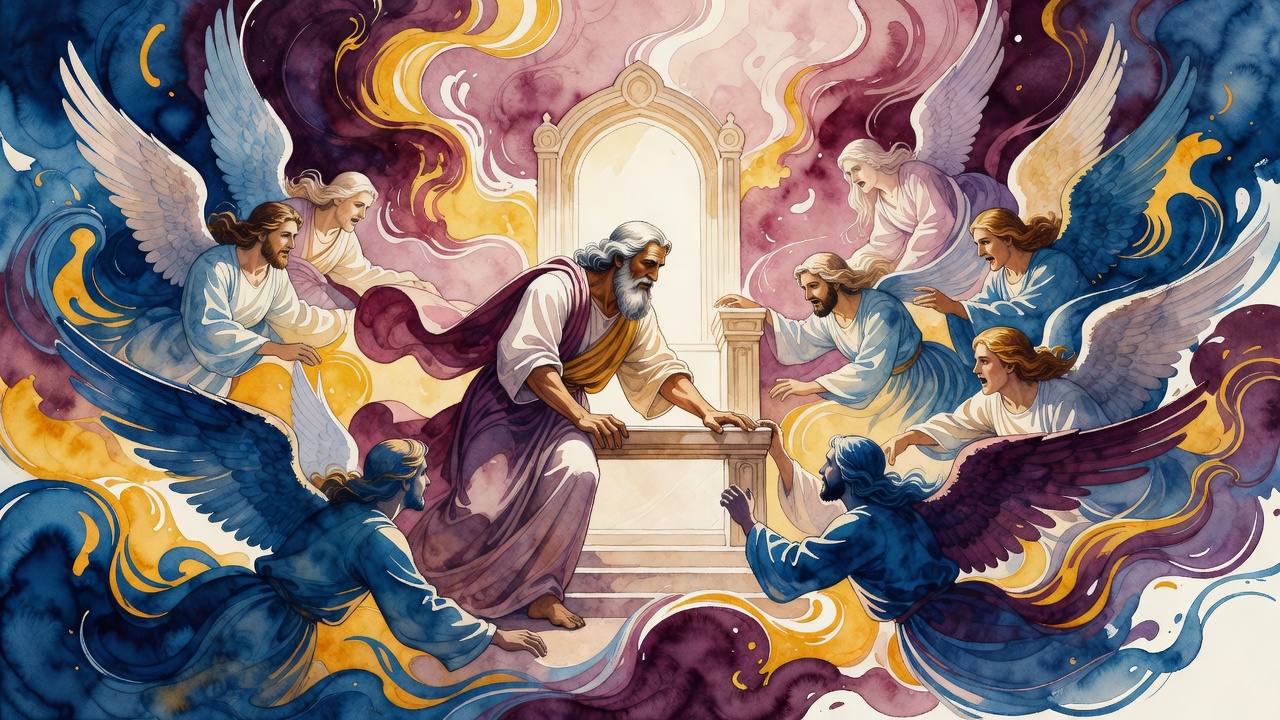
Aaron came out to meet him, and the elders of Israel came with him, and they stopped. Then they took a step backward. Moses saw his brother's eyes go wide and his brother's hands come up, not in greeting, in defense, the way a man lifts his hands against a fire that is too close. The elders would not come near. They stood at a distance with their faces half turned, blinking, as though the noon sun had walked into the camp on two legs.
Moses did not understand. He held out the tablets. He opened his mouth to tell them what he had been given. And the men he had led out of Egypt, the men who had watched the sea stand up in walls, shrank from him as if he had come back carrying a plague. It was only then, reading the terror on Aaron's face like a mirror he had never owned, that he began to grasp what the mountain had done to him. He had gone up a man. He had come down something that people could not look at.
The Veil He Learned to Wear
So he called them. He made his voice ordinary, and he spoke to them of small things until Aaron drew close, and then the elders, and then the people, one careful step at a time, learning that the light would not burn them if they came slowly. He gave them the commandments the Lord had spoken on the mountain. And when he had finished, when the words were delivered and there was nothing left to say, he reached up and drew a veil over his face.
He wore it after that. In the camp, at the wells, walking among the tents, the prophet went muffled, a cloth between his skin and their eyes. The light was still there under the cloth. It did not fade the way a sunburn fades. But the veil made him a man they could stand beside, a man they could bring their quarrels and their questions to without flinching. This dimming of himself was a mercy he did for them, and it was also the price he paid to walk among his own people at all.
He Uncovered His Face Only in the Tent
There was one place the veil came off.
When Moses went in before the Lord to speak with Him, he lifted the cloth from his face and left it off until he came out again. Inside the Tent of Meeting there was nothing to fear and nothing to spare. Before the One who had lit him, he stood uncovered. He could not mediate through a screen. A man does not meet the source of the light with a rag between them.
So he lived in two faces. Outside, veiled, kept at arm's length by the very people he had saved, dimmed on purpose so they could bear him. Inside the tent, bare, fully lit, standing close in the place the light had come from and returning to it each time like a coal carried back to the hearth. When he came out, he would draw the veil down again over the glow, and only then walk back toward the tents.
The Camp That Gazed After Him
The people learned the rhythm of it. Whenever Moses set out toward the Tent of Meeting, a hush went through the camp, and the men and women came and stood at the entrances of their own tents, and they watched him go. They did not stop watching until he had gone inside. Rabbi Yitzchak said they blessed the mother who had carried such a son, murmuring, "Happy is the one who bore him, for what she sees in him."
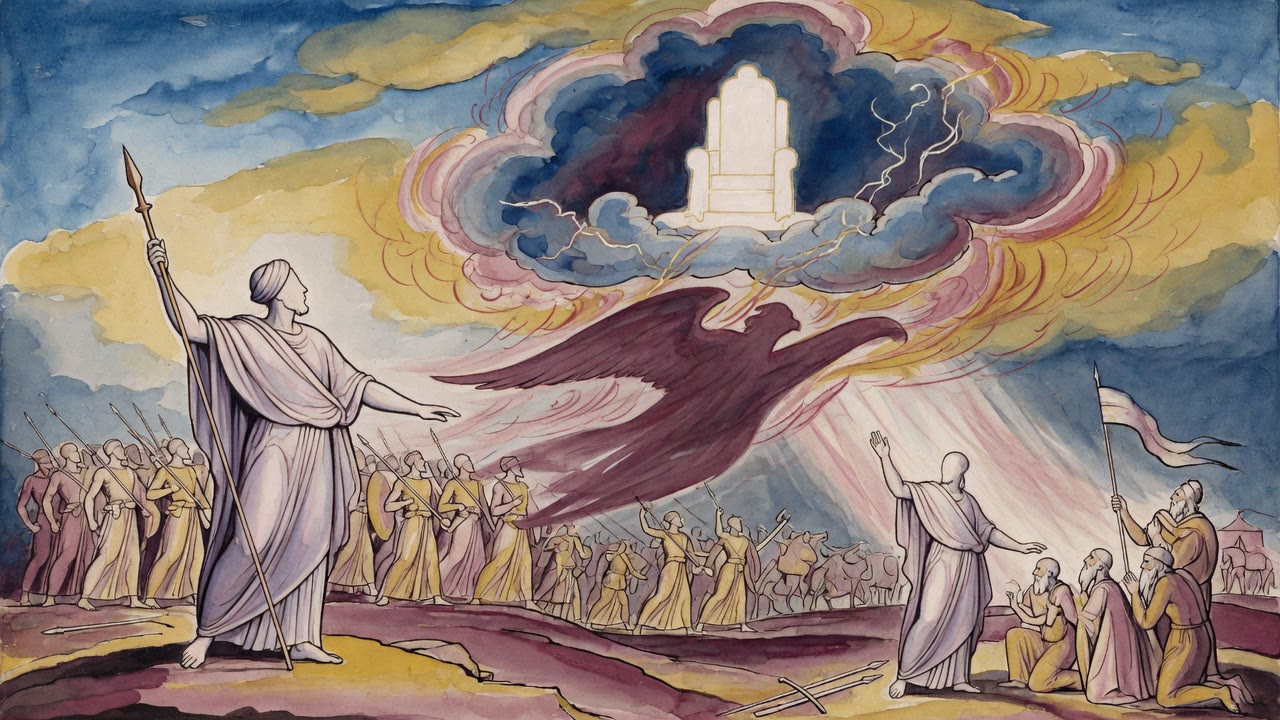
And when he was inside, the pillar of cloud would come down and stand at the door of the tent while the Lord spoke with him. The whole people saw the cloud standing there, and the whole people rose, and every man bowed low at the door of his own tent. Then they waited. They watched the doorway for him to come out, because when he came out his face would be uncovered for that half a breath before the veil came down, and the last of the shining would spill into the camp. They gazed after him leaving and they gazed for him returning, chasing the light of a face that had stood too long in front of God to ever fully go dark again.
← All myths