Moses Wanted His Sin Written in the Torah While David Wanted His Sin Hidden
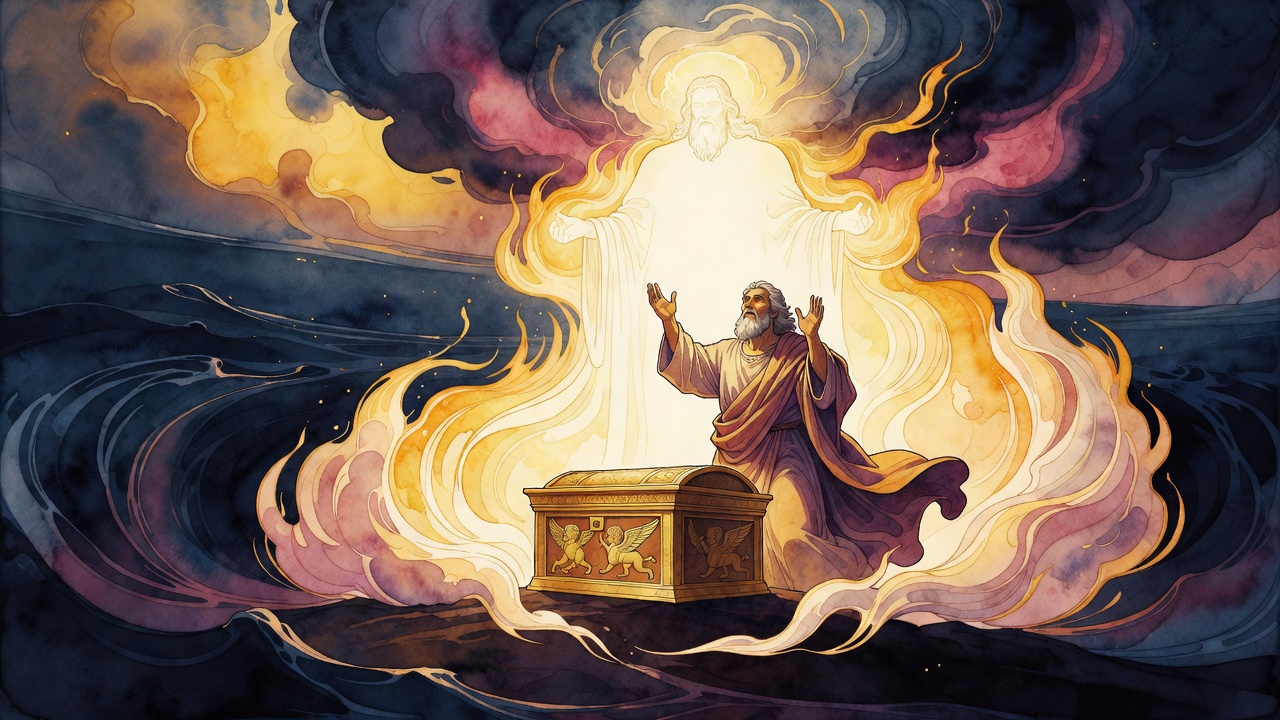
Two leaders, two sins, two opposite requests. One asked God to carve his failure into the Torah forever. The other asked God to bury it.
Table of Contents
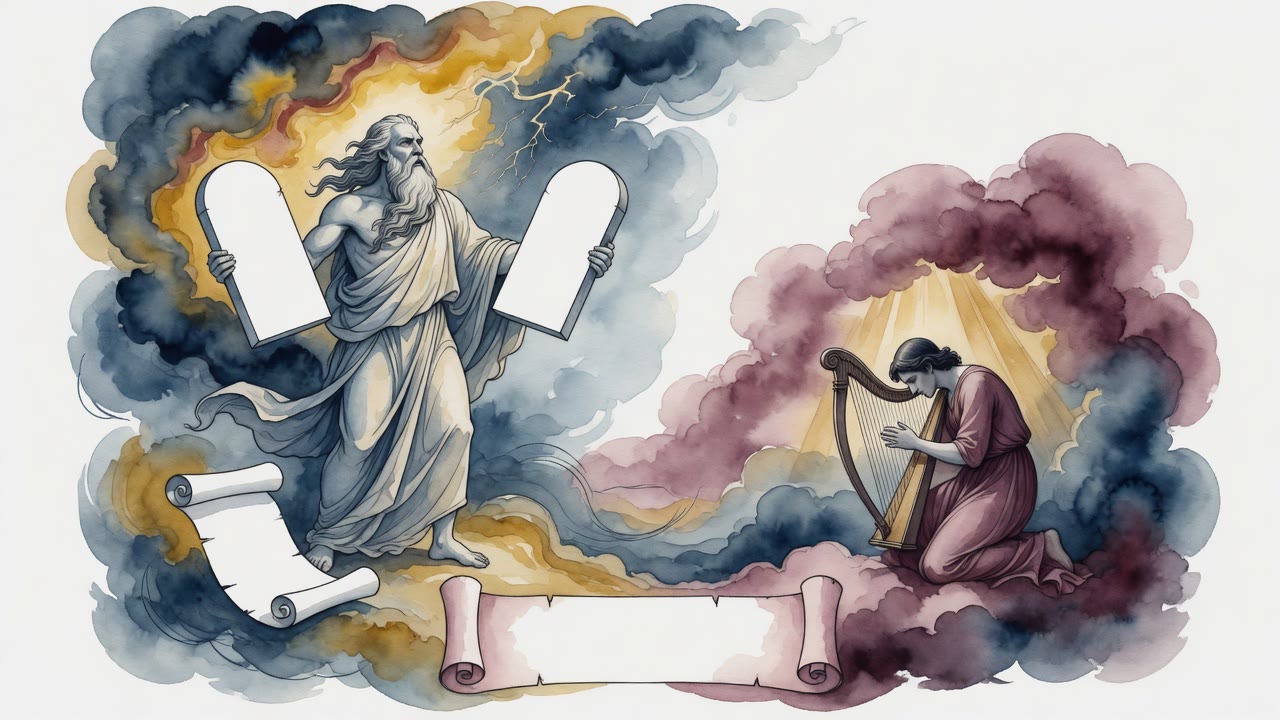
Moses hit the rock twice and the water came out anyway, which was the worst thing that could have happened. If the stone had stayed dry, the whole camp would have understood in that second that something had gone wrong. Instead the water came in a rush, and the people shoved forward with their jars and their animals, so that the noise of a camp drinking covered the sound of a sentence being passed.
 Click for full size
He had been told to speak to it. He spoke to the people instead, called them rebels, and asked whether he and Aaron were supposed to bring water out of this rock, and the pronoun in that question was the whole problem. Then the staff came down, twice, before anyone could stop him.
The verdict arrived while his sleeve was still wet. Because you did not trust Me enough to sanctify Me in the eyes of Israel, you will not bring this assembly into the land I have given them (Numbers 20:12). Forty years of wilderness, and the door shut over one bad afternoon at a rock.
Write It Down With My Name On It
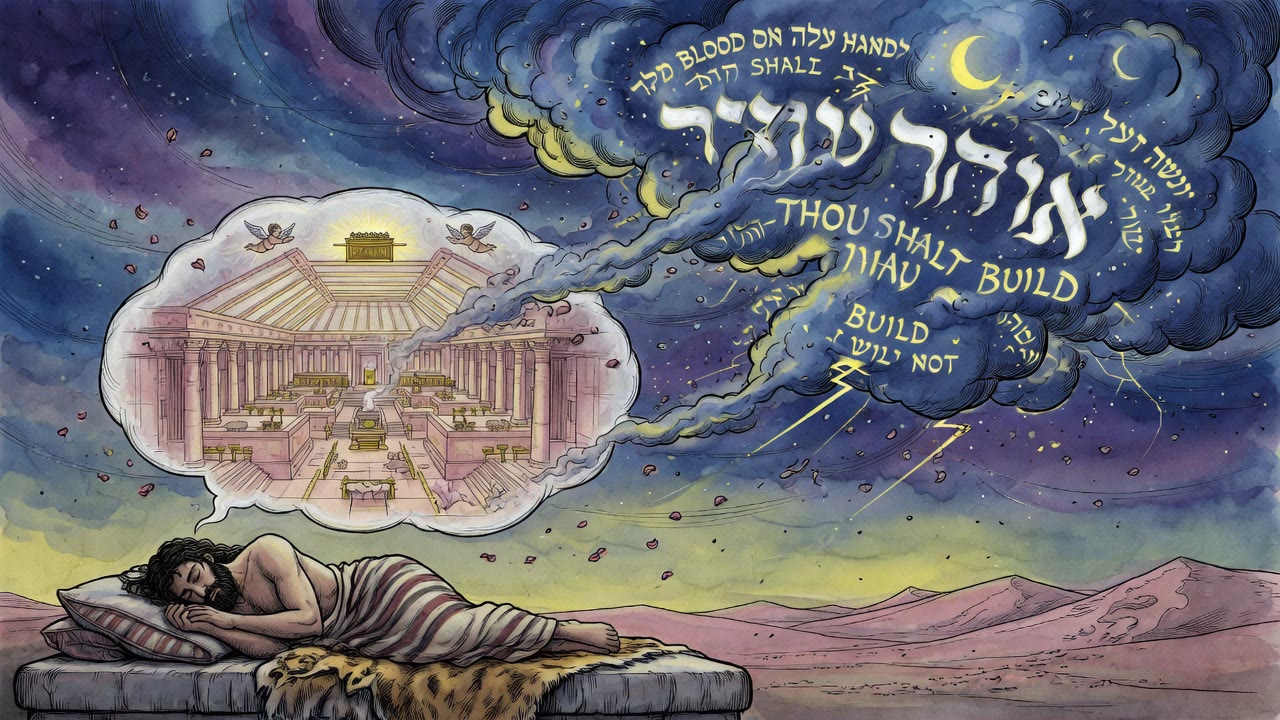
What he demanded next was not a reprieve. He asked that the thing be written down, the place and the failure and the sentence, set into the Torah in his own book, where every generation after him would read it among the census lists and the order of march.
The reason was not modesty and it was not penance. Moses had watched what people do with a great man's death when nobody tells them the cause, which is that they dig, and decide there must have been something else underneath, something worse, something the record was too polite to name, until within two generations the man himself is a rumor. He wanted the charge nailed up in the place where the rumor would otherwise go. Let them say he lost his temper at Meribah and lost the land for it, and let them stop there, since there would be nothing underneath to find.
The Woman With the Figs Around Her Neck
Two women took stripes from the court on the same morning. One had gone to another man's bed. The other had eaten unripe figs off a tree in the seventh year, when the land is supposed to lie open and untouched, which is a real transgression and is not that one.
The strap does not sound different for different sins. The crowd at the edge of the court saw two women bent over the same post taking the same count from the same officer, so the crowd began doing what crowds do, which is supply the part it has not been told.
The second woman heard it start behind her. She could feel the story being written over her while she was still standing there, and she knew it would reach her own lane before she did, so she asked the court for the one thing she still had a right to ask, which was that somebody say out loud what she had actually done.
They hung a cluster of the green fruit around her neck. A crier walked in front of her calling it out, this one is being beaten for eating unripe figs of the seventh year, and she went the length of the courtyard with the figs knocking against her collarbone and her whole disgrace swinging off her in public. It was the best hour of her week. The other woman's silence now belonged to the other woman.
Moses was the one with the figs.
What David Asked For Instead
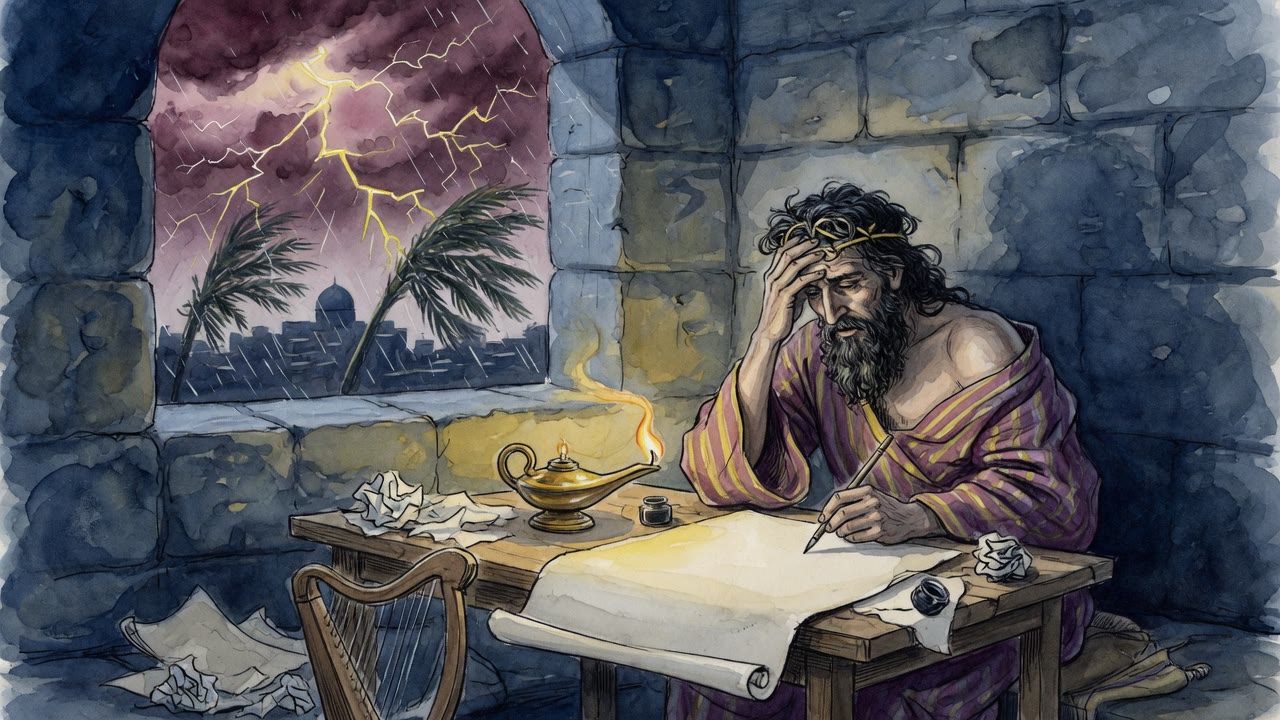
David wanted the opposite, and he put that in writing too. Happy is the man whose offense is lifted, whose sin is covered over (Psalms 32:1). Covered. Not forgiven in the open and filed where a nation can look it up, but put under something.
He had reason. Nathan had come to him with a story about a rich man who took a poor man's one lamb, and David passed sentence on the rich man out loud before the prophet told him whose sentence it was. He had taken Bathsheba, and he had put Uriah where the arrows were thickest and then taken the news like a man taking news.
When the reckoning landed he did not open his accounts, though he could have, since between the giant and the ark coming up to Jerusalem with the king dancing in front of it he had more credit than any man then alive. He asked instead for chaneini (חנני), be gracious to me, which is what a person says when he has decided not to be paid what he is owed.
Four Times They Read Out Aaron's Sons
The Torah does to Aaron exactly what Moses asked it to do to him. Nadav and Avihu brought fire that had not been commanded and it killed them, and the Torah says they are dead in four separate places, and every time it says they are dead it says again what they were holding.
Aaron had to stand through that reading and hear his sons' one act named in front of the assembly over and over, which is a hard thing to do with a straight back. But the alternative was worse. Take the fire out of the sentence and leave only the deaths, and inside a generation the sons of the high priest have died for something nobody was willing to write down, and after that the boys are not two young men who got it wrong at the altar. They are a secret.
That much care went into an hour of anger. Moses was betting the same care would hold for him.
Both of Them Asked for the Same Word
He used David's word himself. Va'etchanan, he wrote, I pleaded, when he begged one last time to be let across, and it comes off the same root as the cry David made on the floor of his own palace. Two men who could have read their balances aloud, and neither one did.
David went further than pleading. He said he could not sit with the great ones and would wait with the small ones, and he arranged the house in his head the way a man packs a coat before a long walk: Abraham, Isaac and Jacob in the pocket, Moses and Aaron in the lining, himself at the threshold. If there was no room at the threshold he would take the doorstep, and if there was no doorstep he still was not leaving.
So the king of Israel sat down at the edge of the house with his sin covered and would not be moved off the step, while out in Moab the other one lay down on a mountain he was not allowed to walk off, with the whole thing written behind him in his own book, the place named and the sentence named and nothing left for anybody to guess at.
← All myths