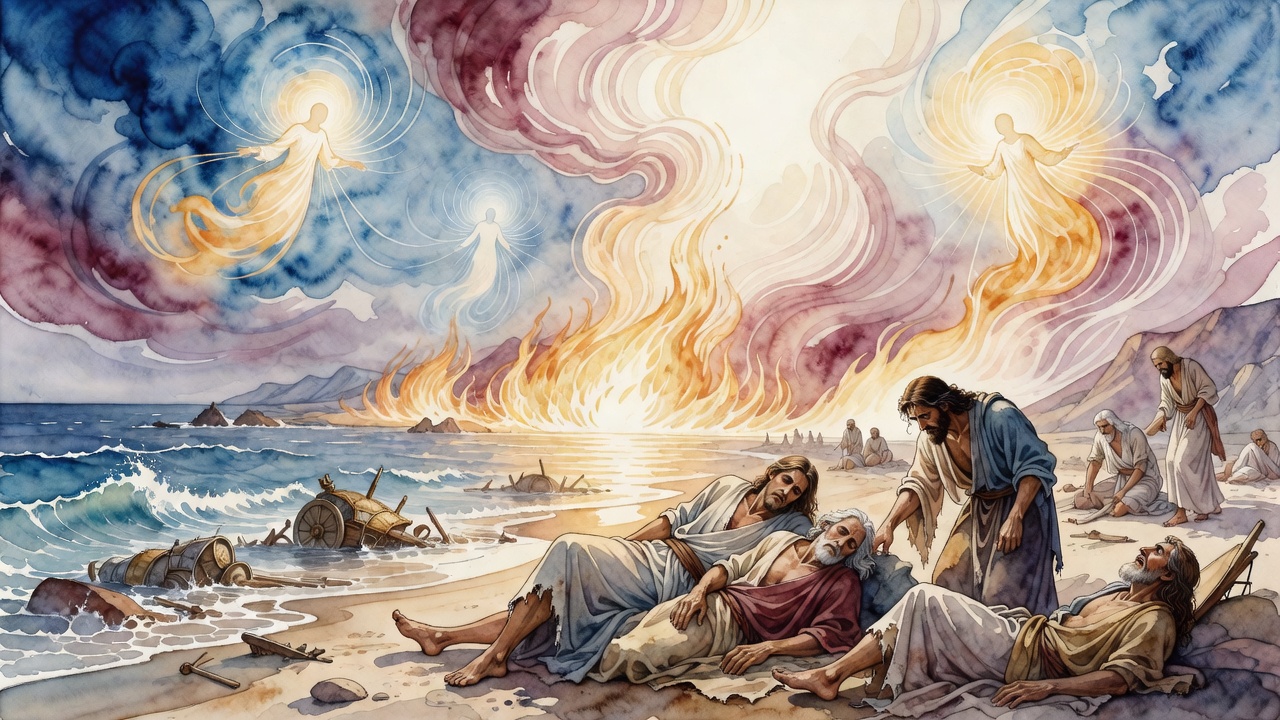
Moses Demanded to Know Who Would Walk Beside Israel
Called twice at the bush, Moses later refuses an anonymous escort after the calf. He bargains for names until heaven confirms his goodly name and grants the…
Table of Contents
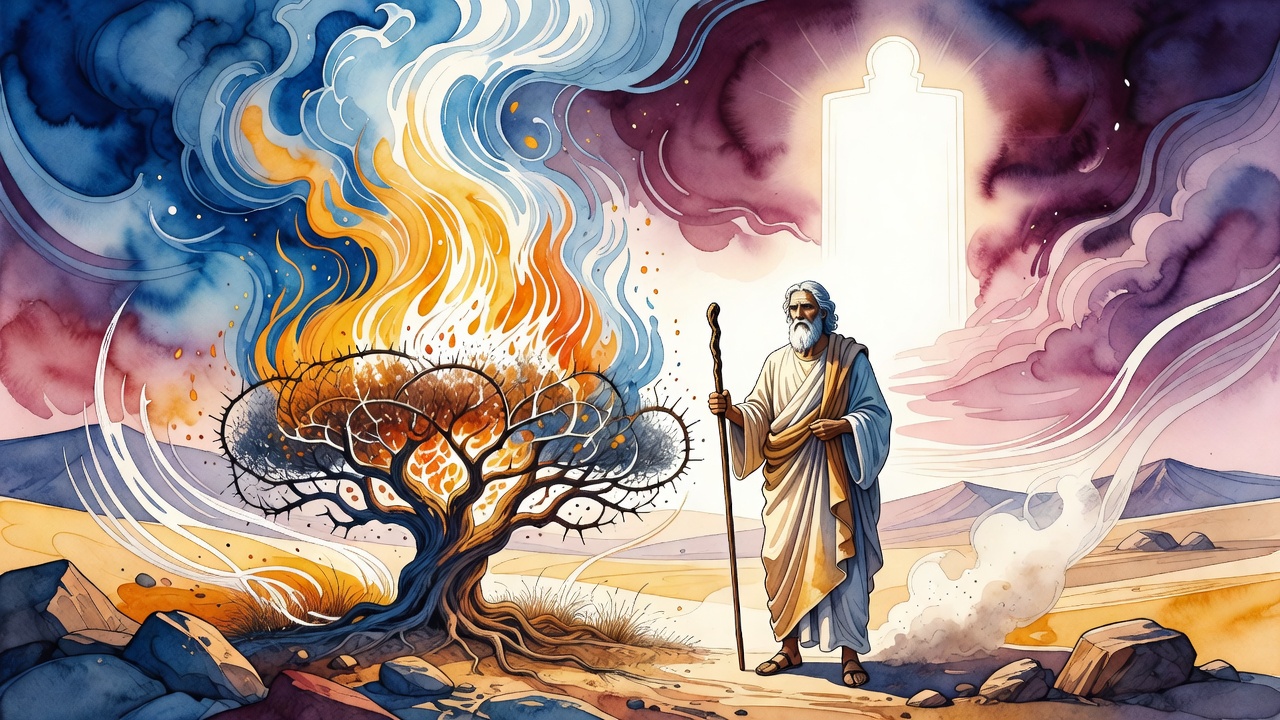
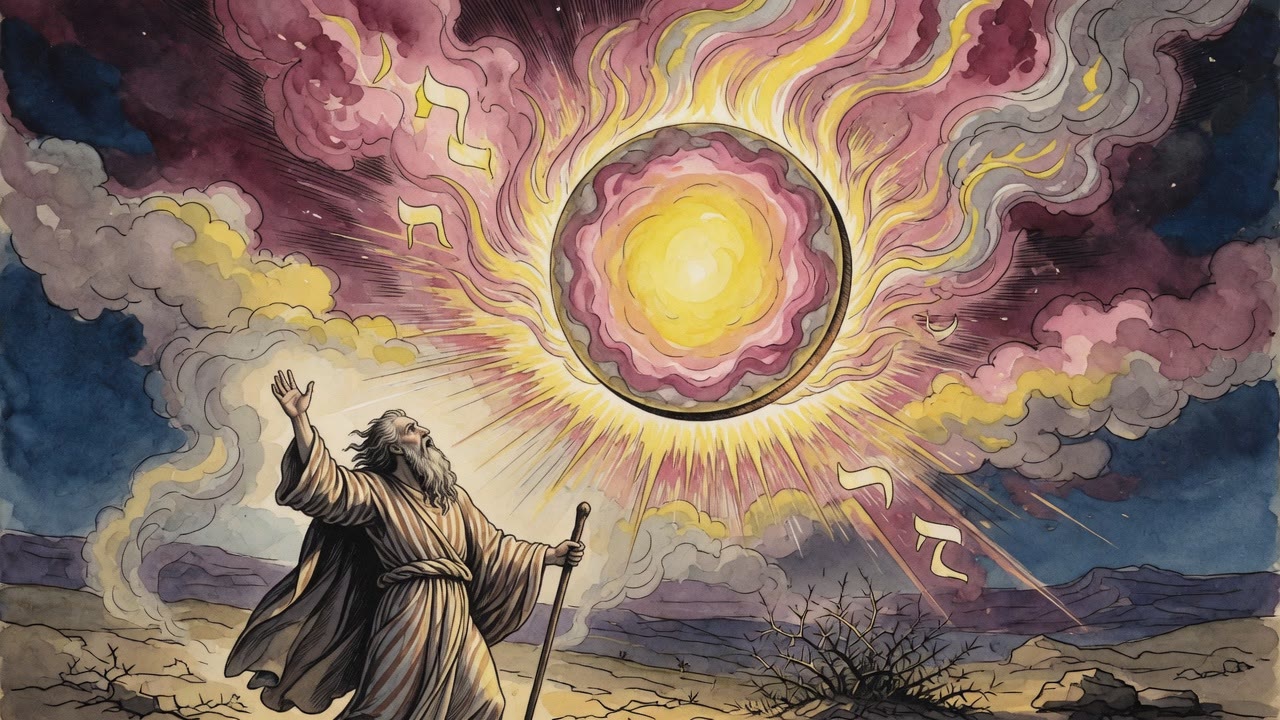
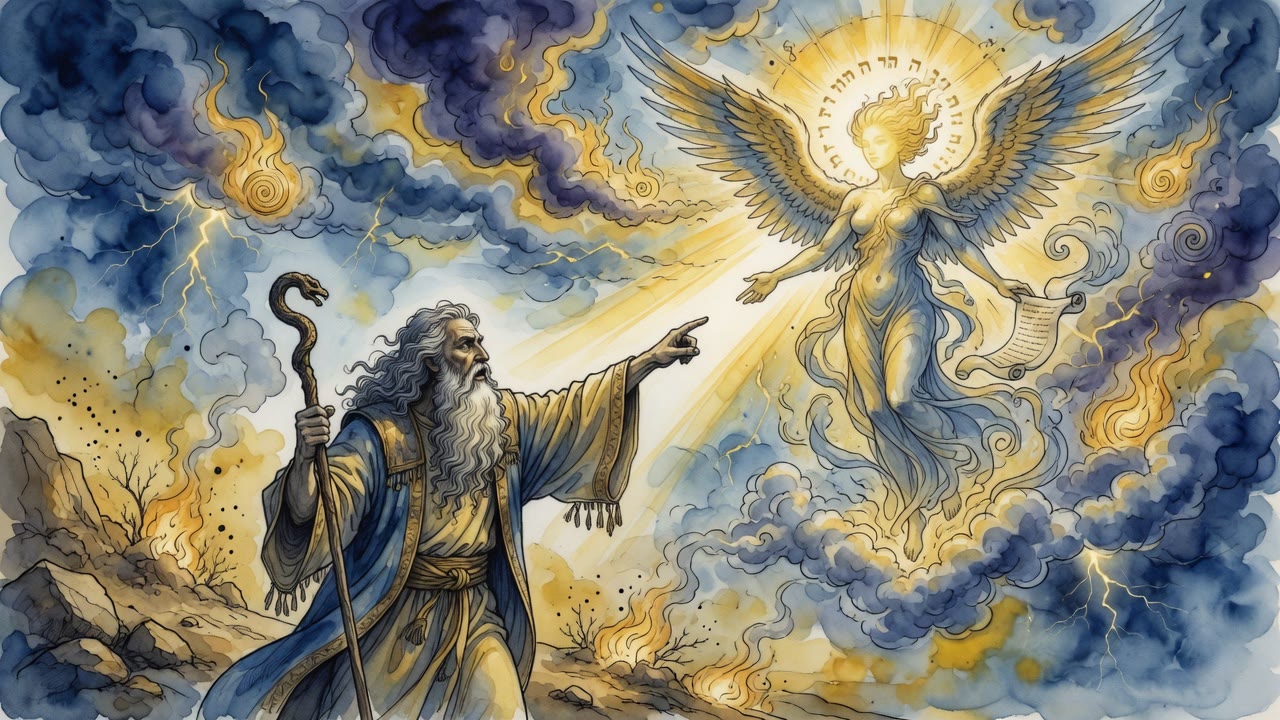
Moses turned aside because a bush burned and would not fall to ash. Sand gritted between his toes. Heat that should have eaten the leaves left them green. Only when it was seen before the Lord that he had turned to look did the voice come from the fire and say his name twice: Mosheh, Mosheh. He answered with one word that meant his whole body, ha-eina, behold me, the Aramaic of the old Targum for the Hebrew hineni (Exodus 3:4).
 Click for full size
The double call was not stutter. It was urgency braided with love, the same pattern that stopped Abraham at the knife, that held Jacob before Egypt, that woke Samuel in the night at Shiloh. A life was about to be claimed. Moses stood ready before he knew the size of the claim.
The Name Said Twice Before the Mission
Revelation had waited for curiosity. The bush had burned while he still walked the ordinary path of a hired shepherd. The voice waited until he stepped out of that path and put his face toward the strange. Then the Name used his name as if the two syllables were a door only he could open.
He left that ground with a staff that would become a serpent and a mouth that still doubted its own speech. The mission did not ask him to stay gentle with thrones. It sent him into a palace that counted Hebrews as tools.
The Same Demand Under a Harder Sky
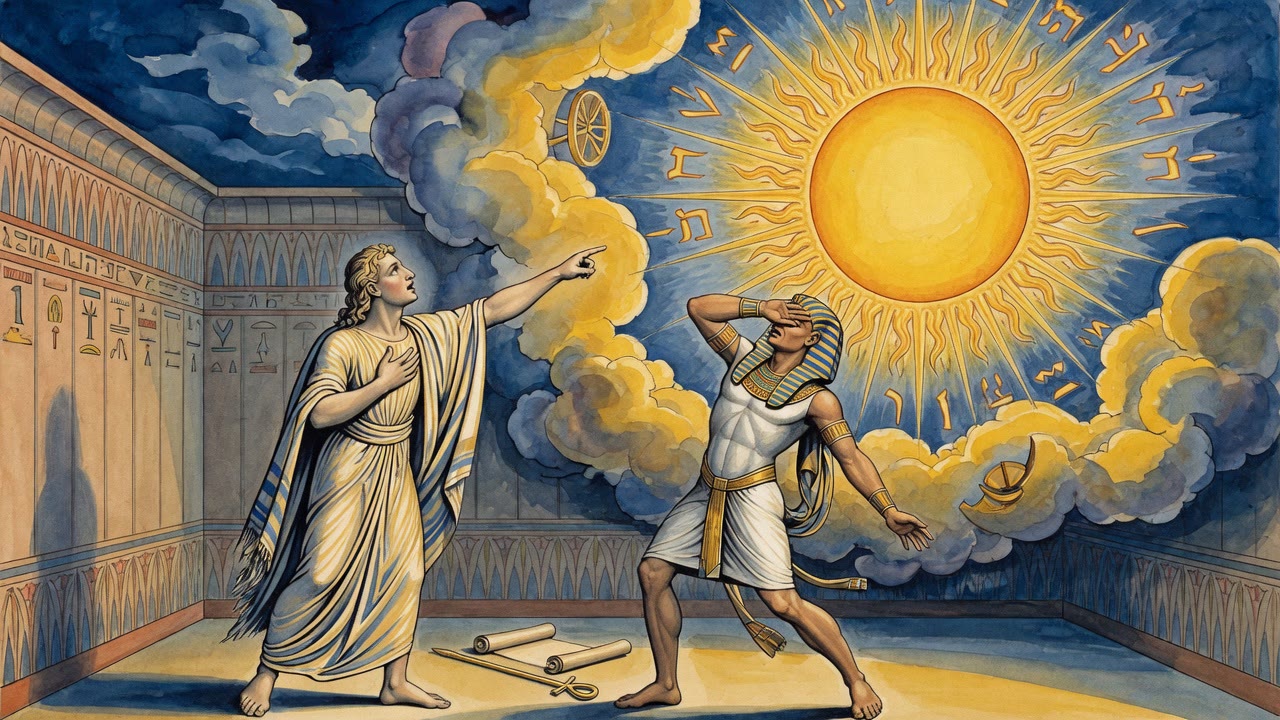
Four plagues had already fallen when the message returned for the fifth time with the weight of a hammer that refuses a new shape. Targum Pseudo-Jonathan hears the line as the Lord, the God of the Jehudaee, the God of the Jews, telling Pharaoh to emancipate My people so they may worship before Me (Exodus 9:1). The Hebrew says God of the Hebrews. The Aramaic closes the gap for a congregation that already knows itself as Jews. The slaves in Goshen and the listeners in a later synagogue share one Owner.
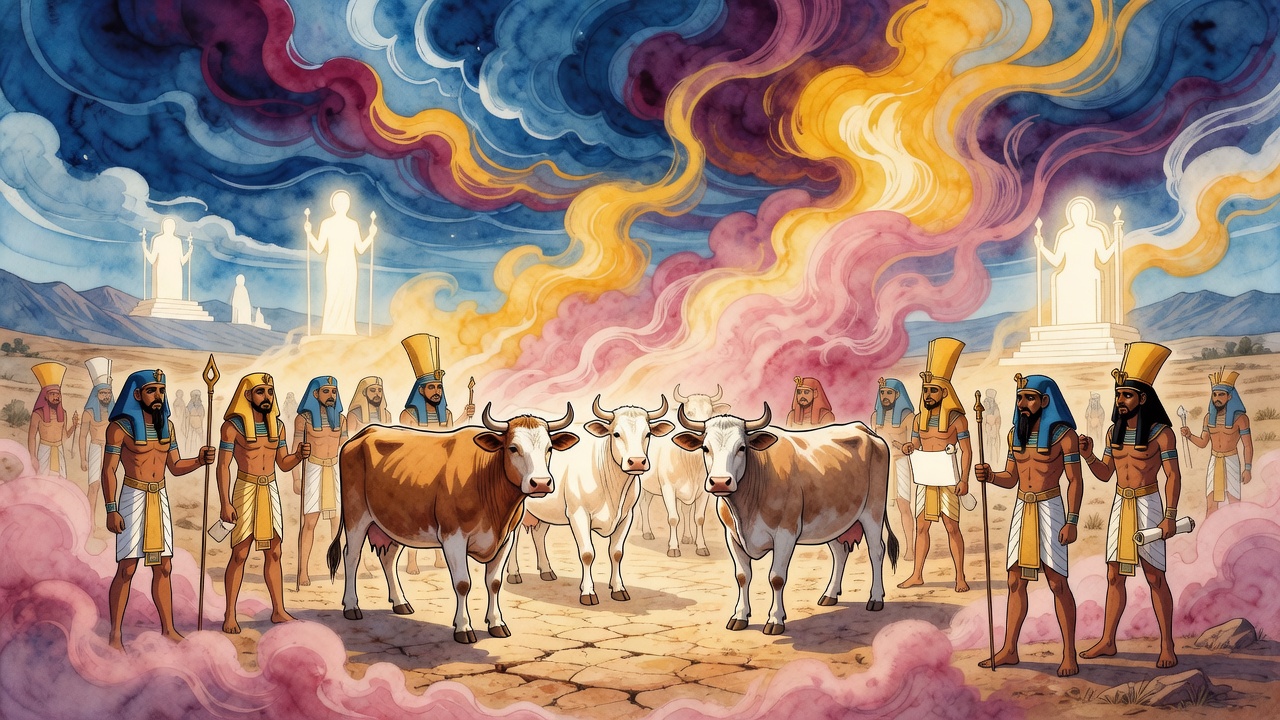
Moses said the same demand again. Let them go. Pharaoh's heart stayed a locked room. Cattle would die. Boils would bloom. Hail would run with fire inside it. None of that changed the sentence Moses was required to carry. Prophets do not graduate to fresher slogans while the first command still hangs unanswered. The people were already called Mine while the chains still cut. Geography had not yet caught up to relationship.
Moses walked the corridor between throne and brick pit until his sandals knew every crack. The double name at the bush had not promised ease. It had promised that heaven knew which man it was burning into a messenger.
After the Calf, No Anonymous Angel
Then the calf rose in the camp, and the tablets broke, and the future of the road itself came into doubt. Gold still stank in the ashes of the feast. Moses climbed again, not with the innocence of a first calling but with the grit of a man who has watched his nation melt jewelry into a rival. His knees took the mountain. His lungs took the thin air. He pressed a question most mouths would swallow.
"Look, You have said to me, Take this people up. But You have not made me to know whom You will send with me. By Your Word You said, I have ordained you with a goodly name, and you have found favour before Me" (Exodus 33:12).
He did not ask for a vague blessing. He asked for identity. Who walks beside Israel? Name the escort. You registered me above with a goodly name. Do not hand me an anonymous force and call it guidance. Intimacy, once given, may demand names in both directions.
The camp below still smelled of burnt gold and fear. Levites had already bloodied their hands for the Name. Moses stood in the breach with a prophet's right to bargain because heaven had written his name in a court that does not issue empty compliments.
The Goodly Name Confirmed
The answer came short enough to carry. "This thing also which you have spoken of, I will do; for you have found mercy before Me, and I have ordained you with a goodly name" (Exodus 33:17). The Targum keeps the Aramaic weight: tiqanit yatakh b'shum tav, I have set you firm in a good name.
Three movements land in one line. The request is granted, not only the return of Presence to the camp but the distinction Moses had fought for, prophecy and nearness marked for this people. The basis is personal mercy found before God, not a camp still raw from the calf. The goodly name is repeated from heaven's side, so Moses's earlier appeal was not a bluff. Registration above was status, not flattery.
He came down with more than relief. He came down with a road that would not be walked under a blank banner. The Shekhinah (God's indwelling presence) would not be a rumor at the edge of the column. The man called twice at a green fire had forced the journey to keep its names public.
Years of dust still waited. Pharaoh's successors would forget. The people would forget and remember and forget again. But the pattern set at the bush and sealed after the calf does not blur: heaven says a name twice when a life turns, and a prophet who has been named may refuse to march under silence. Behold me, he said when he did not yet know the cost. Whom will You send, he said when he knew the cost too well. Between those sentences a nation learned that prayer can be as bold as a lawsuit when the plaintiff already holds a goodly name in the only court that matters.
At night, when the camp lamps burned low, Moses could still hear the double call under the later grant, two syllables from a bush that would not die, answering the long argument that followed, as if the first love and the hard bargain were one continuous voice that never learned how to say his name only once.
← All myths