Moses Made Israel Face Their Sin at Beth Peor and Promised God's Mercy
Opposite Beth Peor Moses showed Israel the valley their sin had dug, then pointed past his barred road to a God who still receives the penitent.
Table of Contents
 Click for full size
The Valley That Would Not Move
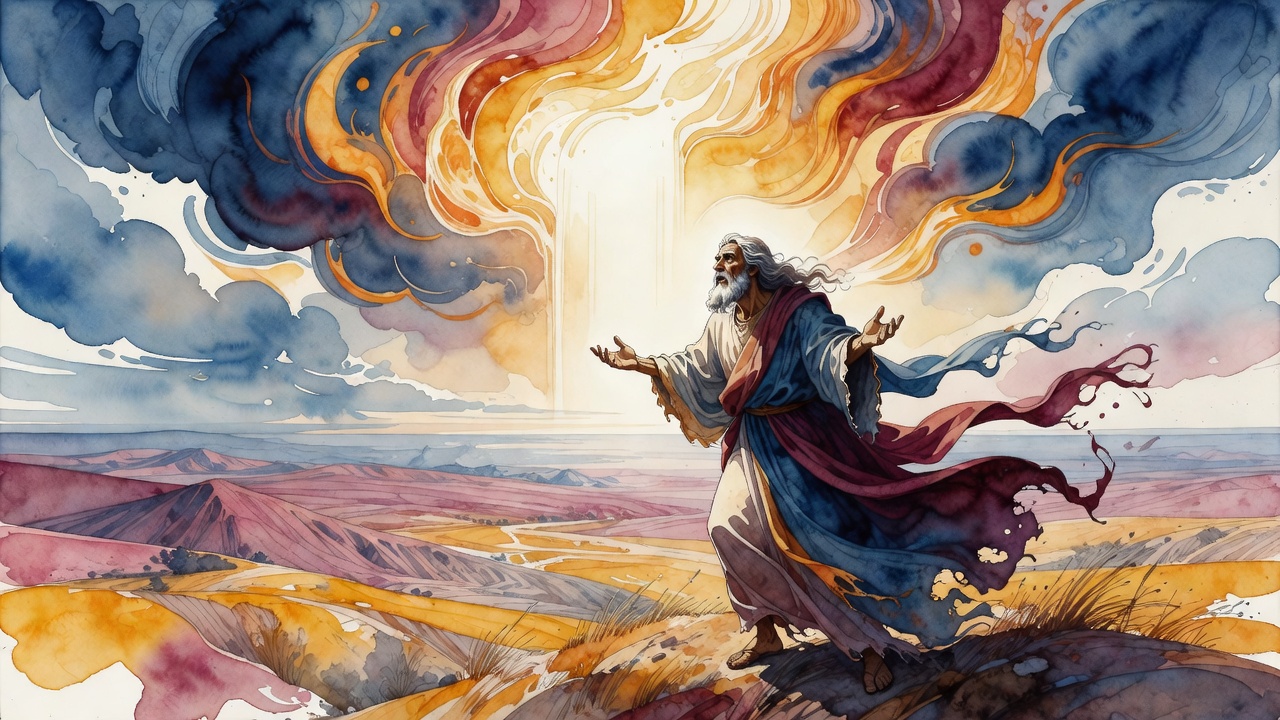
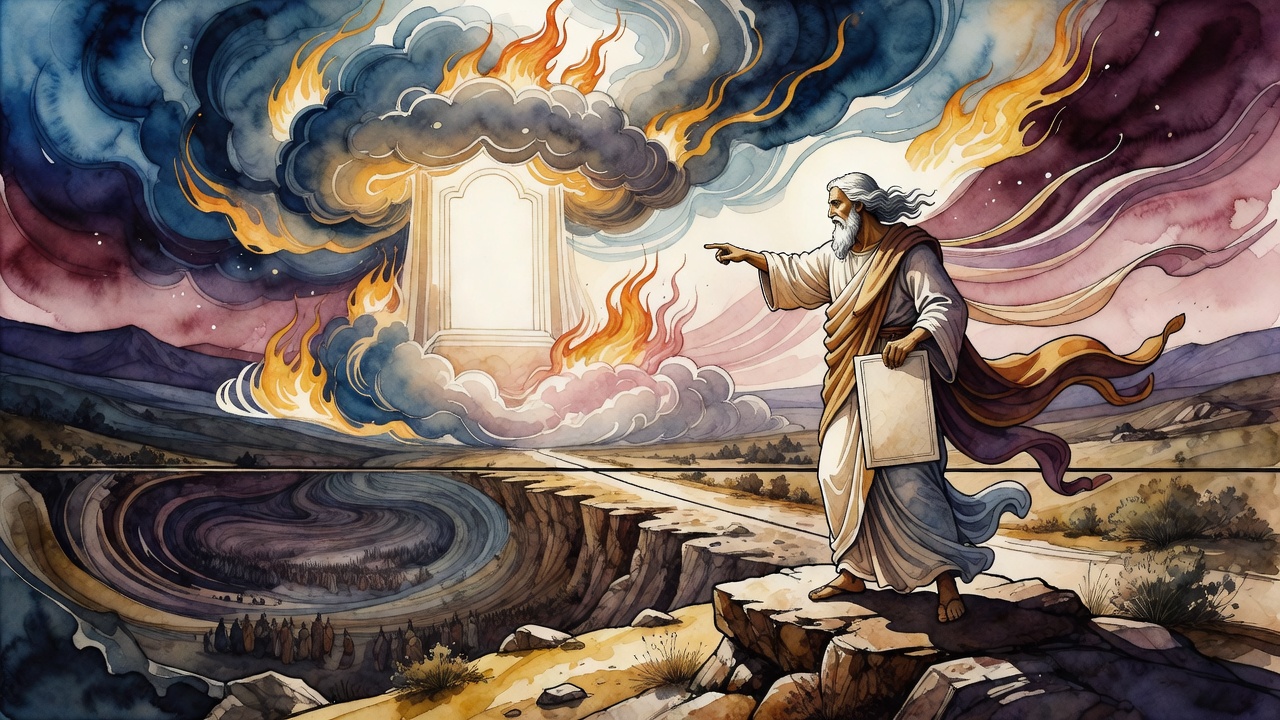
They camped in the valley opposite Beth Peor, close enough to smell the old smoke of their shame. Moses did not pretend the geography was innocent. "Who caused us to sit in this valley?" the teaching asks. The evil deeds of Peor (Numbers 25:3). Idolatry and the body sold to a foreign cult had dug a ditch between the people and the Jordan. They could see the Land. They could not yet cross the memory.
A valley is a place between. They lived in between: past the sin, not past the consequence. Night winds came down from the idol's hill and found men who still flinched at certain names. Children born after the plague did not understand why the adults grew quiet when the ridge showed black against the stars. Moses understood. He made them look.
Young men who had been children during the plague shifted on their feet. They wanted the Land more than they wanted another sermon about a hill of shame. He would give them both, because shame without a door becomes despair, and a door without memory becomes a second Peor under a new flag.
Look at You, Look at Me
Moses turned their faces toward Peor and toward his own barred road. How many prayers had he poured out? How close had he walked with God? Still he would not enter. They had angered Heaven for forty years (Psalms 95:10). Their great ones had bent to Peor. Now they stood ready to inherit, and he stood ready to die outside.
The unfairness hung in the air like heat before a storm. He did not deny it. He used it. If the most faithful servant can be stopped at the line, and the most stained camp can be invited across, then the story is not about clean ledgers. It is about a right hand stretched out to receive penitents.
Moses put his own loss on the scale so they could see the weight of mercy that still tipped toward them. He had every human reason to sour. He chose instead to teach. Look at the difference, not to shame you into paralysis, but to wake you into gratitude sharp enough to cut new habits.
Now You Are New
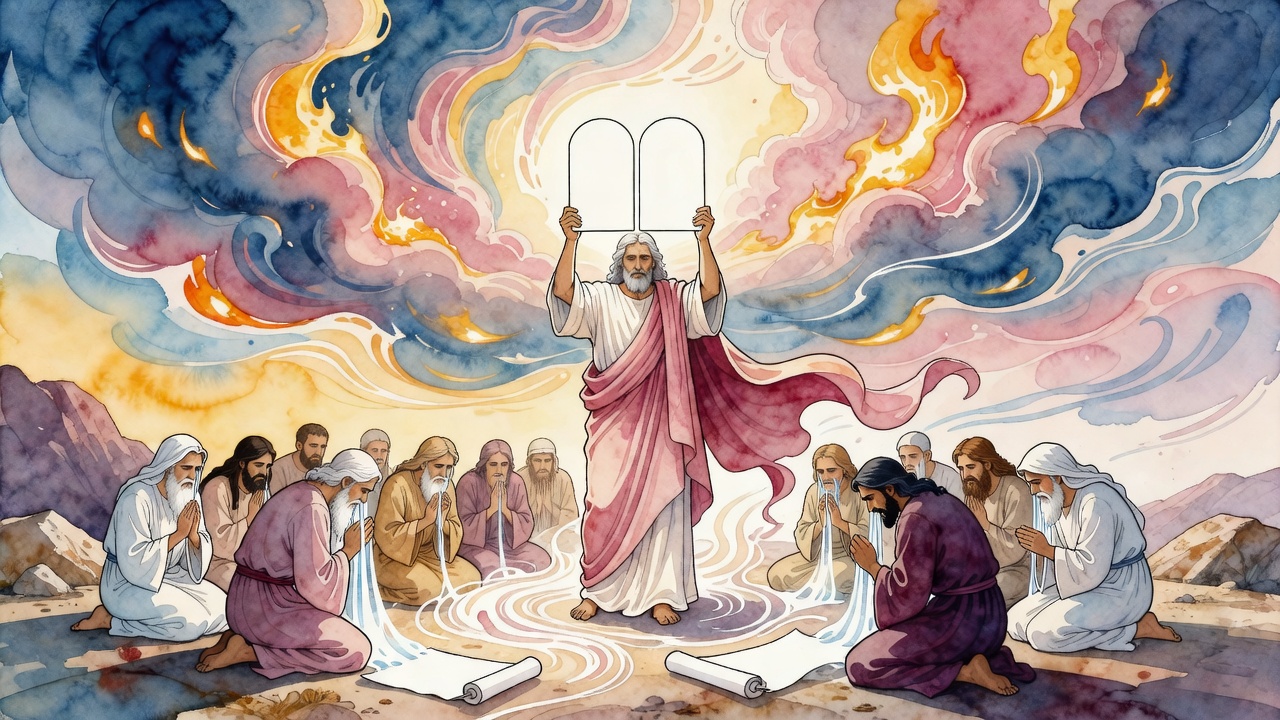
"Now, O Israel, hearken to the statutes" (Deuteronomy 4:1). Now. Not after you finish punishing yourselves forever. The past had been named. The slate, impossibly, was wiped for the road ahead. They were to listen as a people made new, not as a people permanently branded by Peor.
Moses knew the difference between forgetting and forgiving. He forced them to face the valley so they would not forget. He ordered them to hear so they would not drown in the memory. Forgetting would send them back to the same hill under a new name. Forgiving would send them forward with scars that still knew how to warn.
He held the door open with one hand and the memory open with the other until their eyes adjusted to both lights at once. That double vision is the only safe way to leave a valley of consequence.
Rebuke, Then Blessing
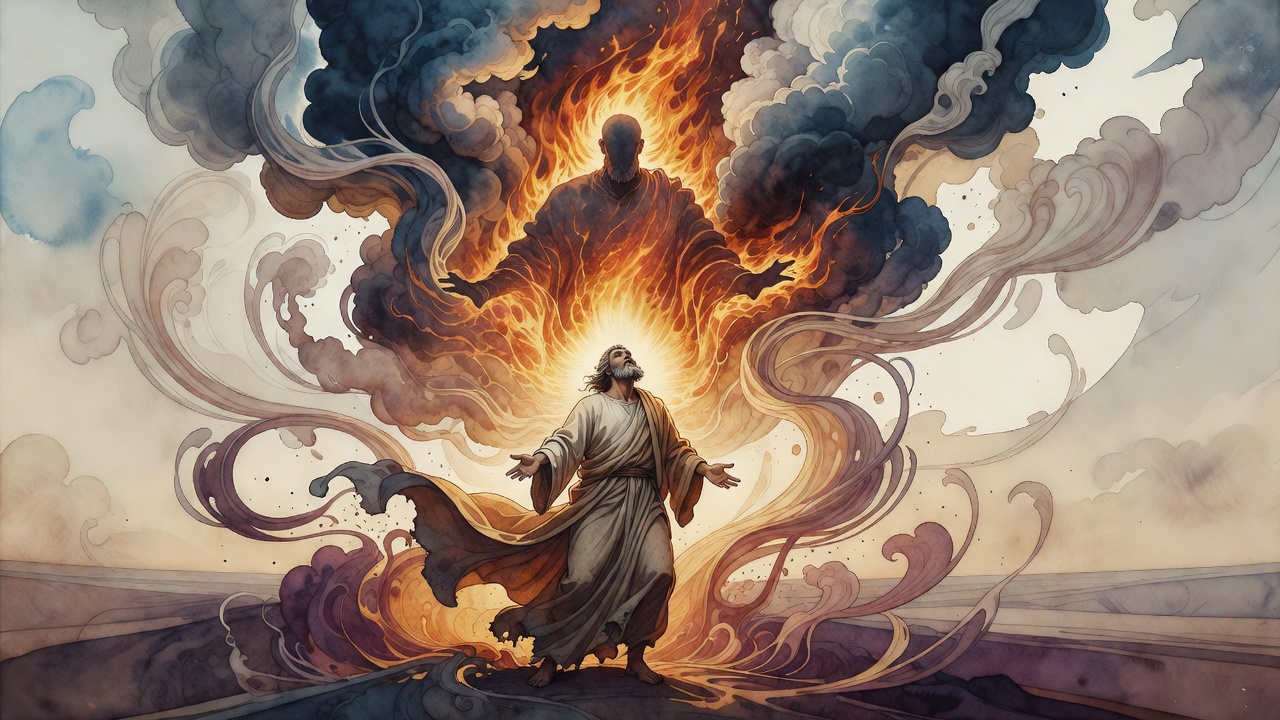
Before he died he had already laid down fire. Hunger like hair, demons in the rooms, sword outside, terror inside (Deuteronomy 32:24-25). He had dragged Chorev and the rebellions back into the light (Deuteronomy 9:7-8). The song did not flatter. It inventoried. Then he turned, as a shepherd turns when the flock has been properly frightened of the cliff, and blessed the children of Israel before his death (Deuteronomy 33:1).
Tokhecha without bracha breaks a people. Bracha without tokhecha lies to them. He gave both while Peor still sat on the horizon like a black tooth. The blessing was not amnesia. It was a second weather after the storm, necessary if anything green was to grow.
When the blessing finally came, tribe by tribe, some wept from relief and some from the knowledge that the man blessing them would not eat the first fruits of their fields. The valley listened. The idol's ridge stayed silent.
The Hand Still Open
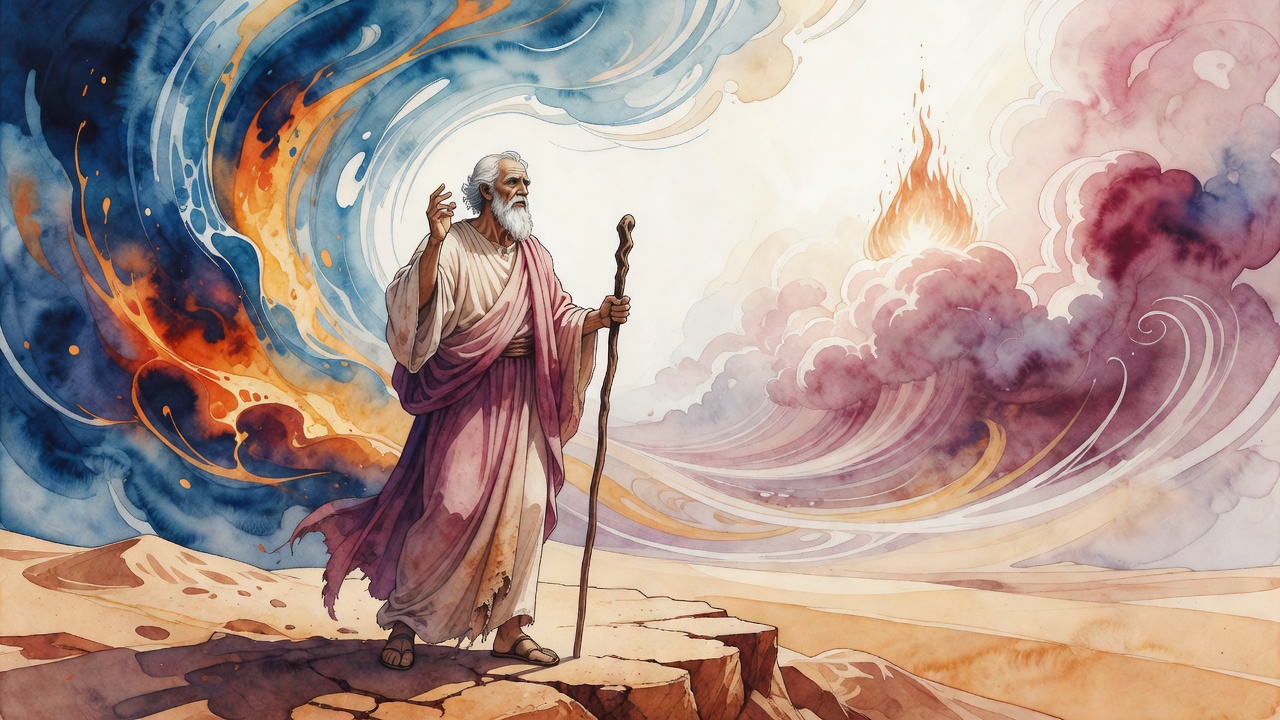
They would cross. He would not. The valley would empty of tents. The idol's hill would shrink behind them if they kept walking toward statutes instead of back toward shame. God's right hand, Moses insisted, stays forward for the one who turns, even for a camp that once learned the postures of Peor.
So the last geography lesson of his life was not a map of rivers. It was a map of return: stand in the place your sin made, face it without flinching, and then move when Heaven says now. The Jordan waited. The valley waited to become only a story. Moses waited for a death on the far side of a mercy he had spent his last strength preaching to others. The river, indifferent as rivers are, kept offering its only gift: a far bank.
← All myths