Moses Laid Both Hands on Joshua as Successor
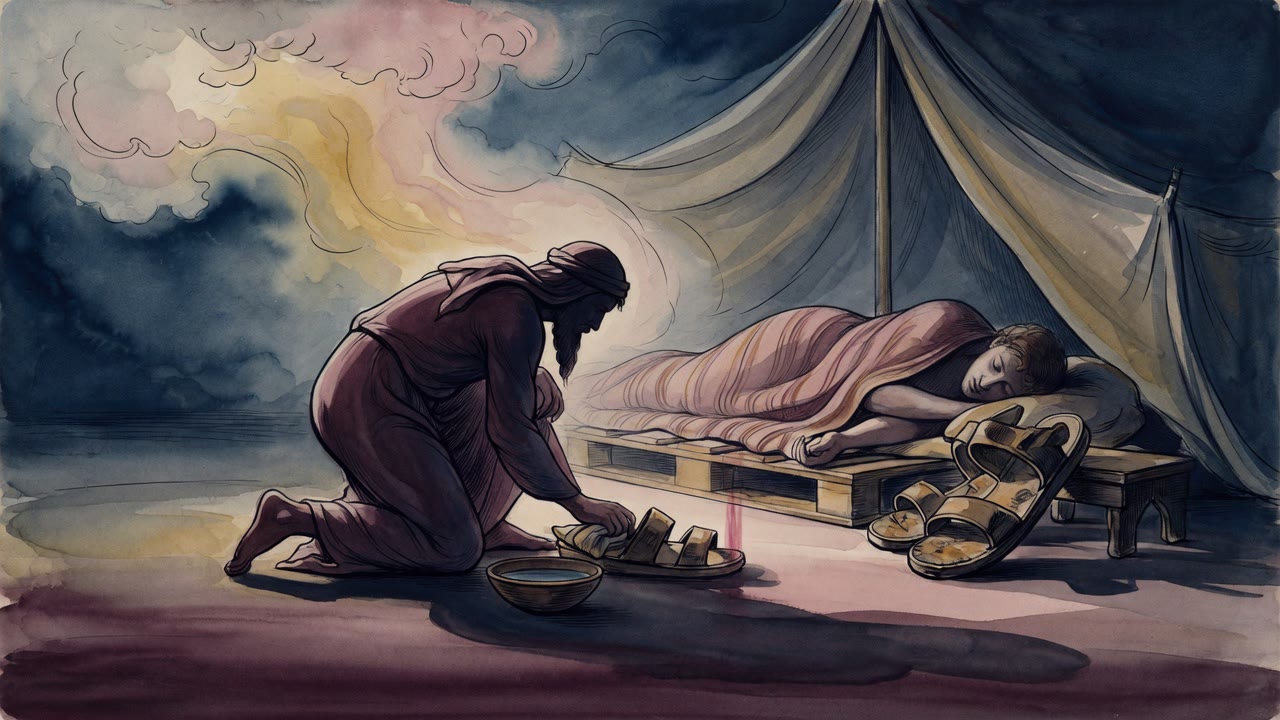
God courted Moses seven days like a king pursuing an orphan bride. When succession came, Moses laid both hands on Joshua beyond the command.
Table of Contents
 Click for full size
Seven Days of Saying No
There is a king who wants a particular woman, an orphan with nothing, and she keeps telling him she is not worth the trouble. He asks again. She refuses again. He asks seven times before she gives in and marries him, and years later, when he is angry enough to send her away, she does not plead for herself. "I never asked for this," she says. "You came after me. If you divorce me and take another, do not do to her what you did to me."
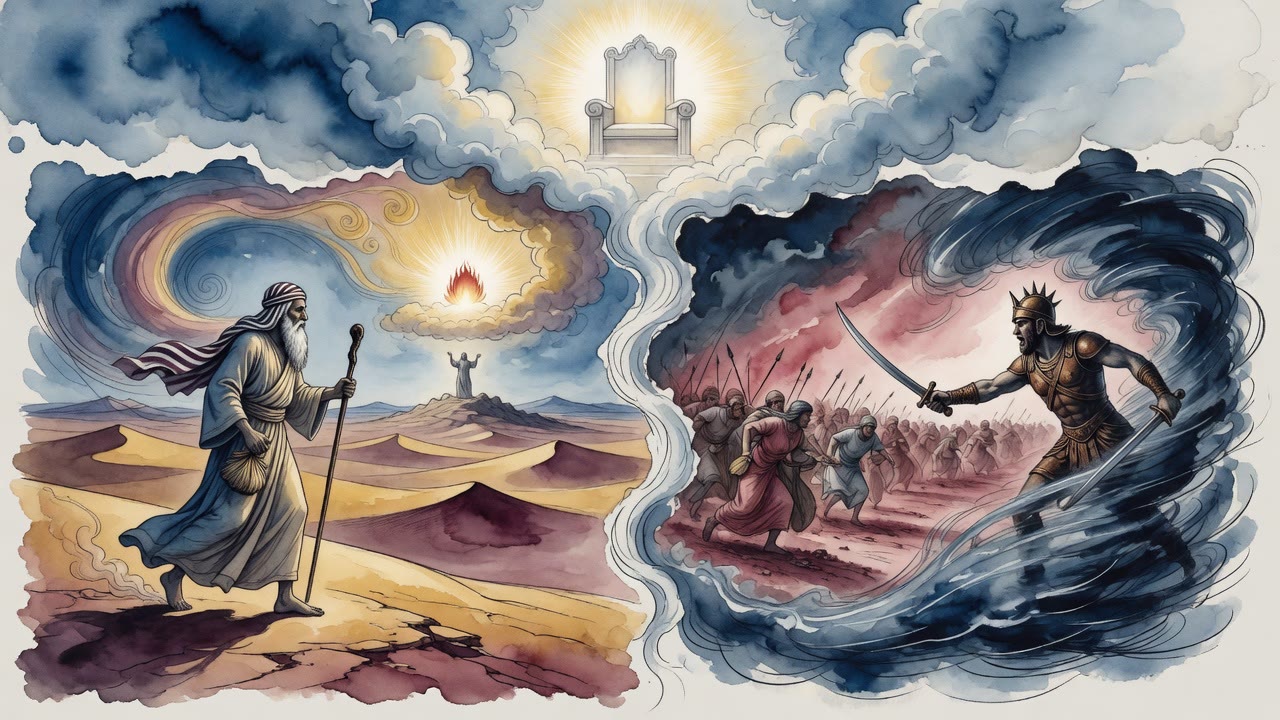
That is Moses at the bush. For seven days God pressed him toward the mission and for seven days he pushed it back. Send by the hand of whomever You will send. I am not a man of words, not yesterday and not the day before, which is how a man counts the days he has been arguing.
He gave in. He took the staff, and the sea, and forty years of a people who complained at every well. Then the decree came down at the rock: you will not bring this assembly into the land.
He had refused the job for a week and now the job was being taken from him with the road unfinished.
Do Not Do to Him What You Did to Me
Moses did not argue the decree, because he had watched enough decrees to know which ones move. What he argued about was the next man.
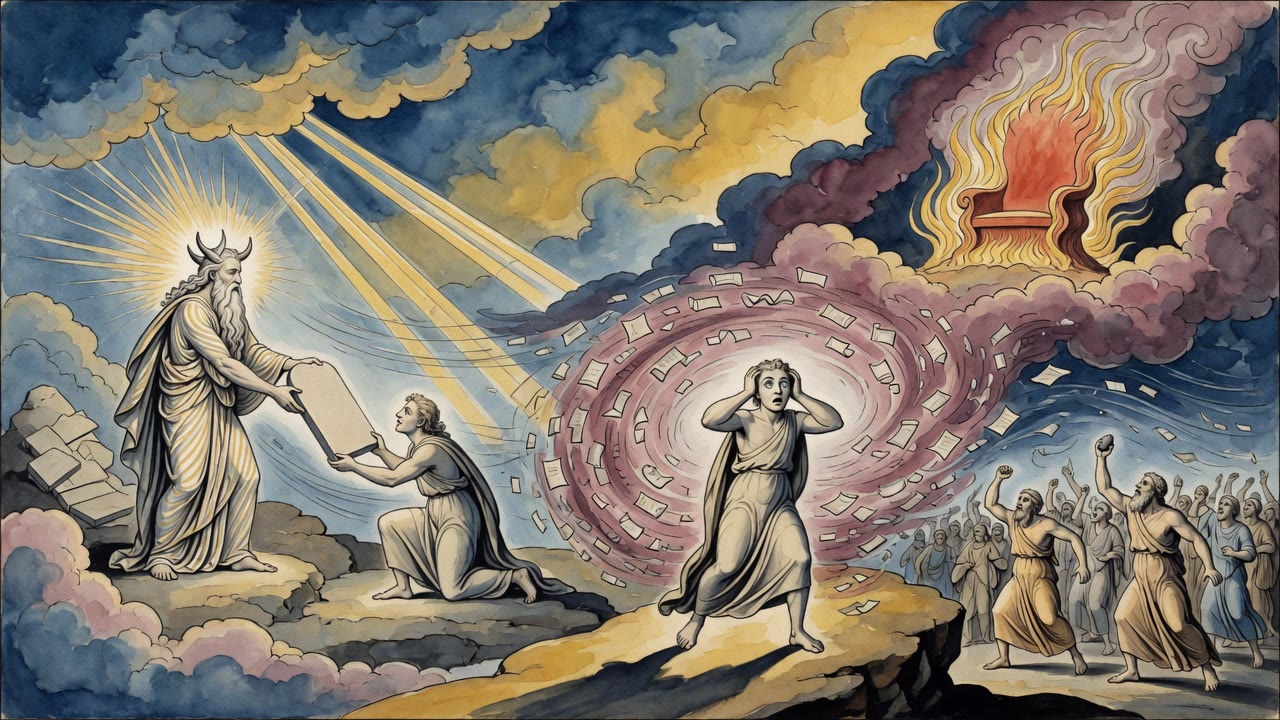
Master of the universe, I did not ask for this. You began to show Your servant. Since this is Your decree, whoever comes in my place, do not treat him as You treated me. Appoint one who will take them out and who will bring them in, both halves, the whole road.
The verse underneath the plea is about sheep. Let the congregation of the Lord not be like a flock that has no shepherd. A flock without a shepherd does not mourn its shepherd; it scatters into the hills and gets eaten. So the request was not for a monument to himself. It was for a man on the ridge before the first night fell.
The answer came with a name in it. Take Joshua son of Nun, a man in whom there is spirit, and lay your hand upon him.
One hand, and the command was exact about the number, because a command that says a hand does not mean two.
One Se'ah, and Then Another
A king tells his servant to carry one se'ah of wheat to a man, and the servant carries two, one from the king and one out of his own store. Nobody ordered the second. Nobody would have known it was missing.
Moses had asked heaven for a successor and heaven had named one and set the measure at one hand, which was already more than the man who refused for seven days had any standing to demand. The generous man will be blessed, and generosity is whatever happens after the requirement has already been met.
Both Hands
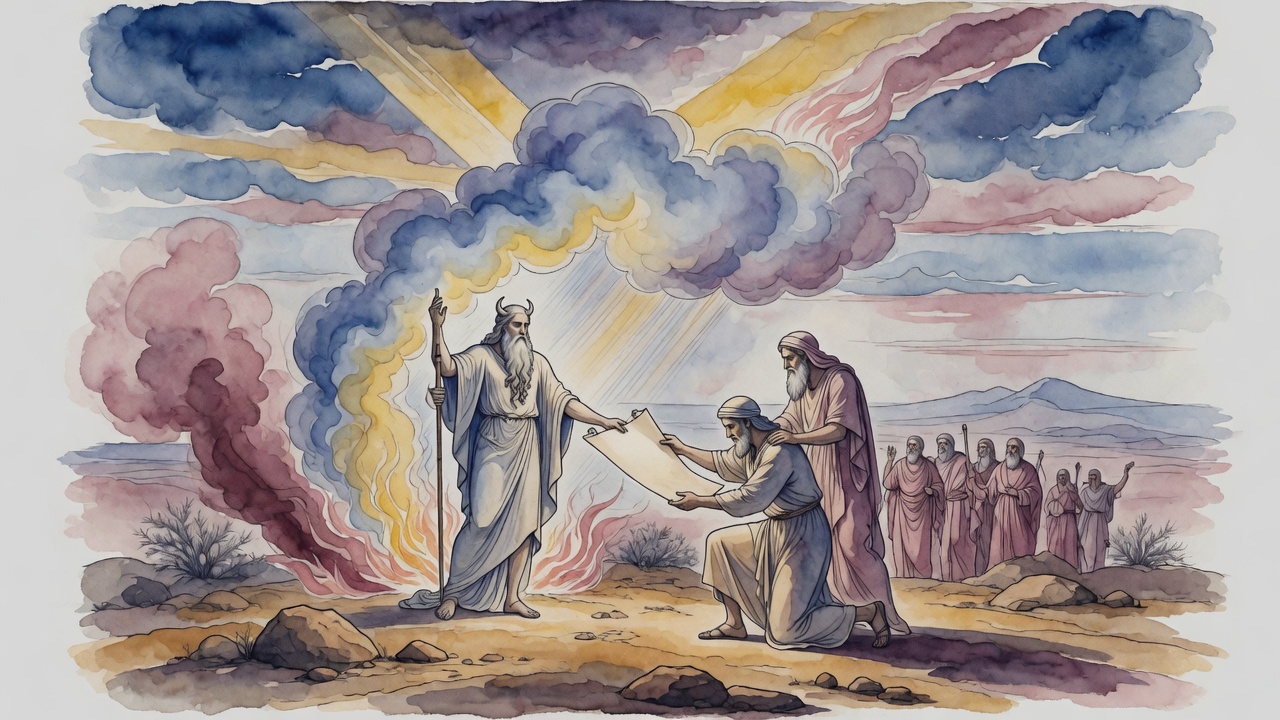
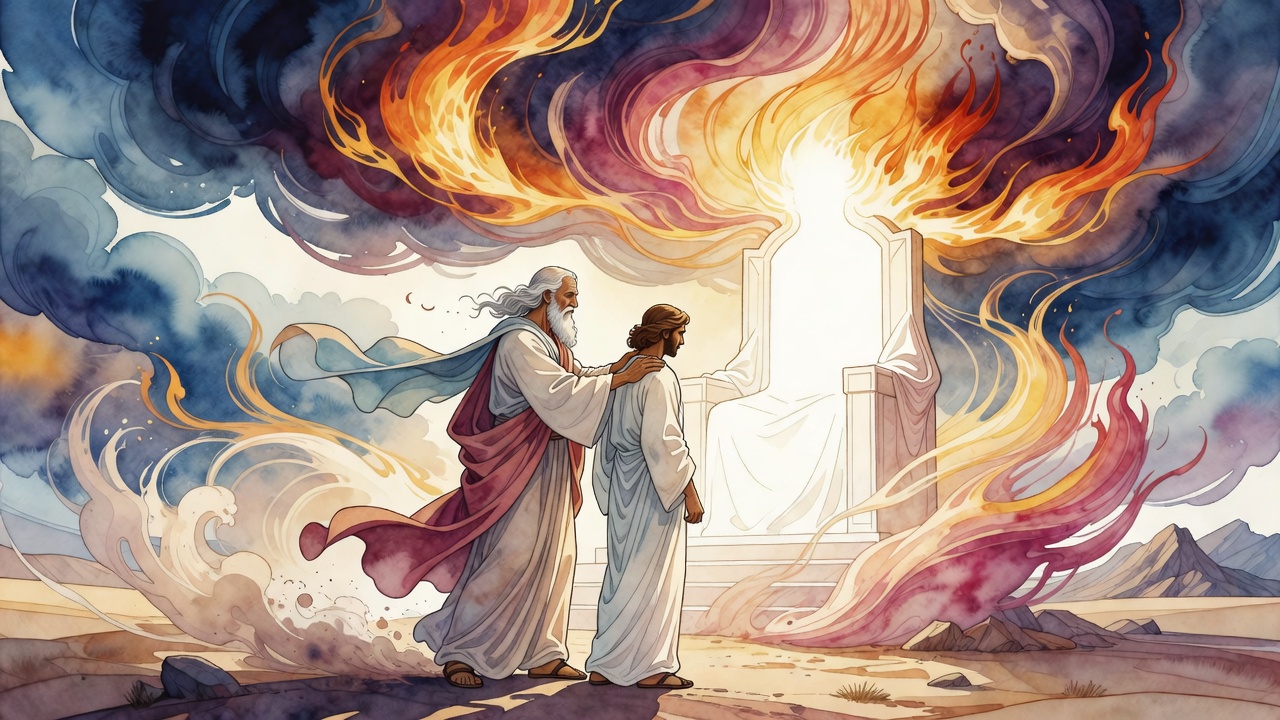
The camp was watching, and Elazar the priest was standing where he had been told to stand, and Joshua went down on one knee in front of a man who was going to die outside the land.
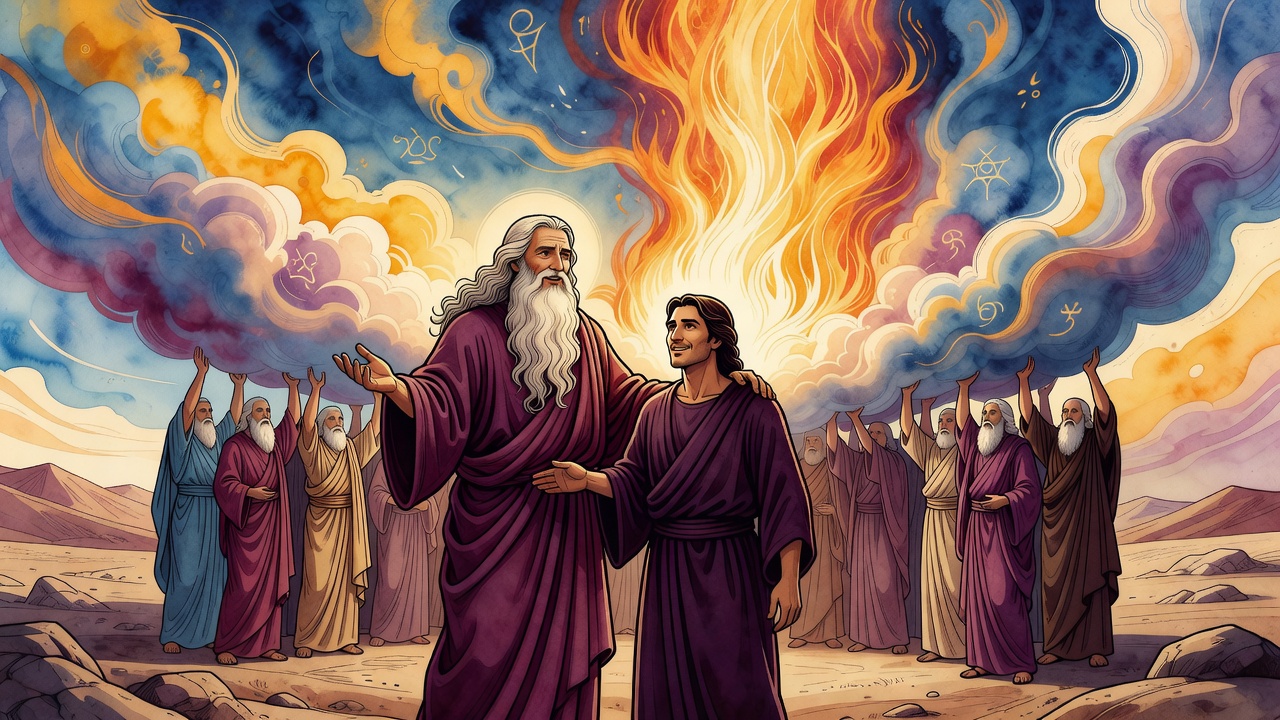
Moses put his right hand on Joshua's head, which was the whole of what he had been commanded to do. Then his left hand came off his side. It hung there a moment, since nothing in the instruction accounted for it, and then it came down on the young man's head beside the other one and pressed.
What went across was not a title. One lamp is kindled from another and the first lamp is not diminished, and a vessel is poured into a vessel until the pouring vessel is lighter than it was. Both pictures were in play under those hands at once.
The limits held even so. Joshua would still stand before Elazar the priest and ask, because no one man was going to hold every key, and the honor stayed braided to the line rather than leaping loose from tribe to tribe. Torah ripens the way figs do, a few at a time, never the whole tree in one morning, and Joshua would learn his forty years the same slow way under a spirit that had been pressed into him with open palms.
A Lamp Asked For, a Pillar of Fire Given
Israel is asked for pure beaten olive oil, enough to keep one lamp burning. That is the whole request: a small jar, brought in.
What comes back is a pillar of fire going before the camp all night, and beyond that a light in which the moon burns like the sun and the sun burns sevenfold. When God asks, He asks by what a person can carry. When He gives, He gives by what He is, and the gap between the two is not an oversight.
Moses had been asked for one hand and he had given the pillar-of-fire answer with the little he had, which was a second hand.
He took them back afterward. The camp made its noise, the elders went to look at Joshua, and Moses stood there with two hands that were only hands again.
← All myths