Moses Lost the Priesthood for One Hesitation
The bush burned and stayed green. Moses named his heavy tongue and asked for another messenger. The priesthood left his line before the fire went out.
Table of Contents
 Click for full size
The Bush That Would Not Go Out
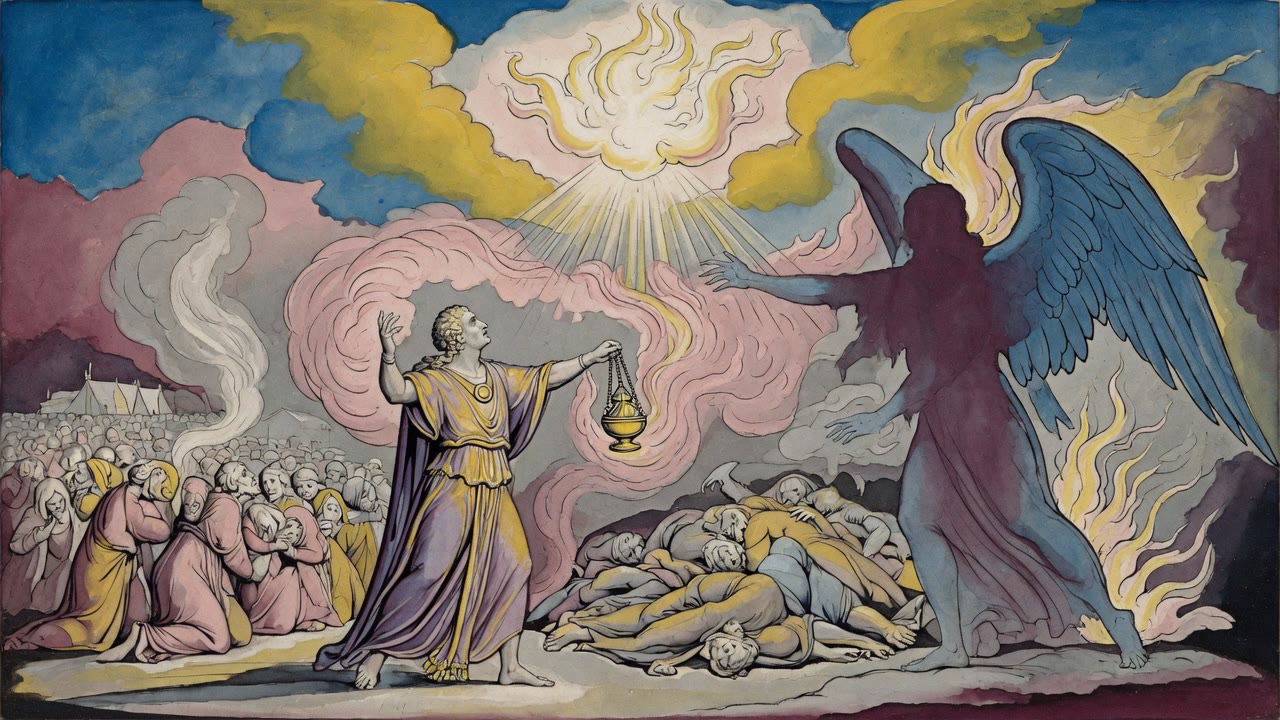
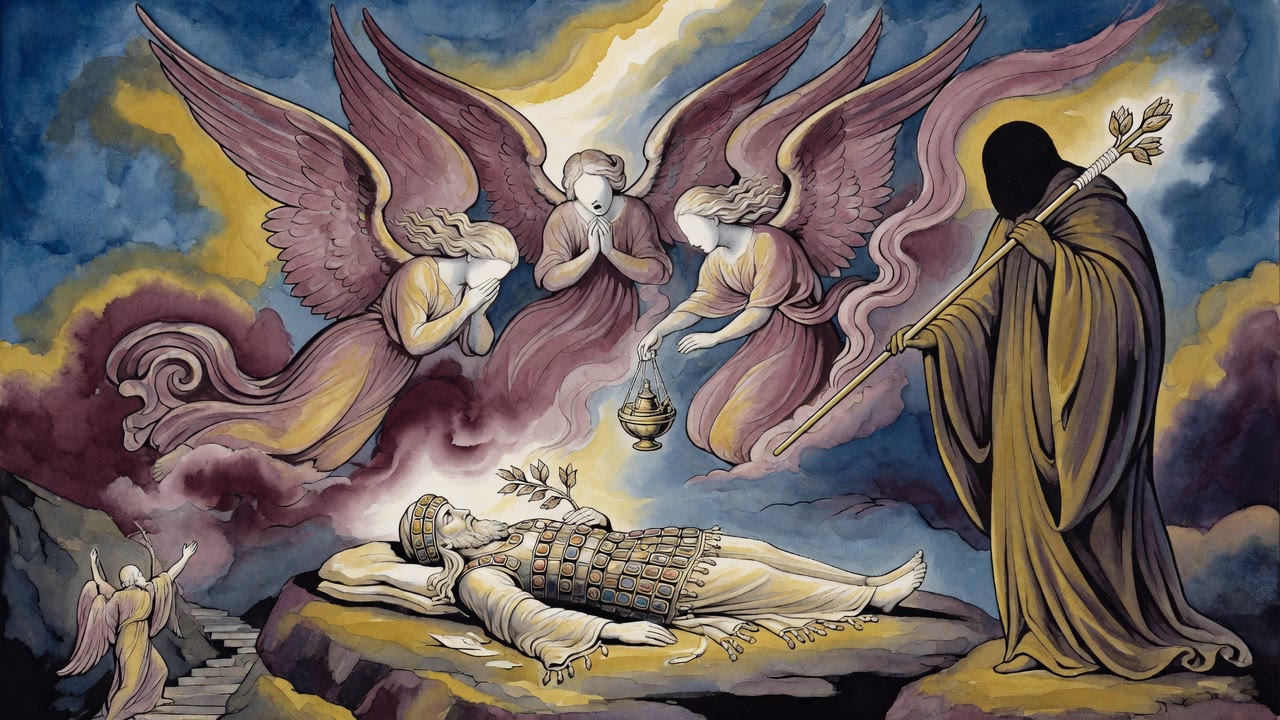
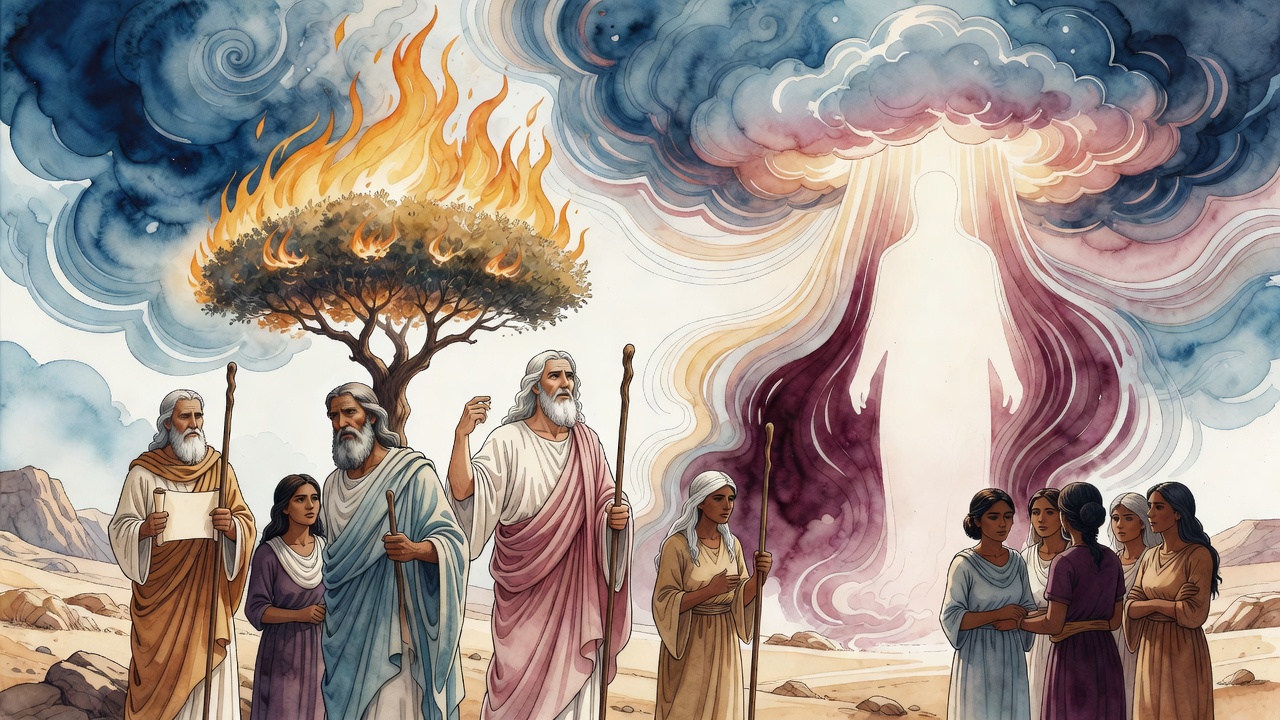
Moses stood before the bush that burned and did not consume itself, and his first answer was not yes. He named his heavy tongue. He named his fear of Pharaoh's court. He asked for another messenger. God had already set the offices. Moses for priest, Aaron for Levite. The hesitation rewrote the order on the spot.
"It was appointed that thou shouldst be priest, and Aaron should be the Levite. Because thou hast refused to execute My will, thou shalt be the Levite, and Aaron shall be priest."
The fire still burned. The mission still stood. Sand held the heat around his sandals. The mitre would never sit on Moses' line the way it might have. His own hands would still serve at the Tabernacle in certain hours, but the priesthood would run through Aaron's sons, not his. One pause at a holy bush cost a forever arrangement, sealed while the leaves of the bush stayed green inside the flame.
The Tongue That Stayed Heavy
Days of speech with God did not free Moses' mouth. He came back to the complaint. Thou hast been speaking to me now these many days, nevertheless I am still slow of speech and of a slow tongue. Heaven could have remade the flesh. The answer came as a closed door. Because the doubt had been spoken, the cure would not be given. Moses would lead a nation with the same stumbling tongue he had carried out of Midian, every public sentence a small climb.
He spoke anyway. He argued with God for the people. He climbed Sinai. He broke tablets and cut new ones. He faced Korah and the sea and the endless complaints over water. The impediment stayed like a reminder stitched into every public word. The man who hesitated once would not receive a second body for free. Aaron's mouth often ran smoother. Moses' authority did not rest on polish. It rested on a call that had already cost him the first prize of office.
Five Women at the Door of the Law
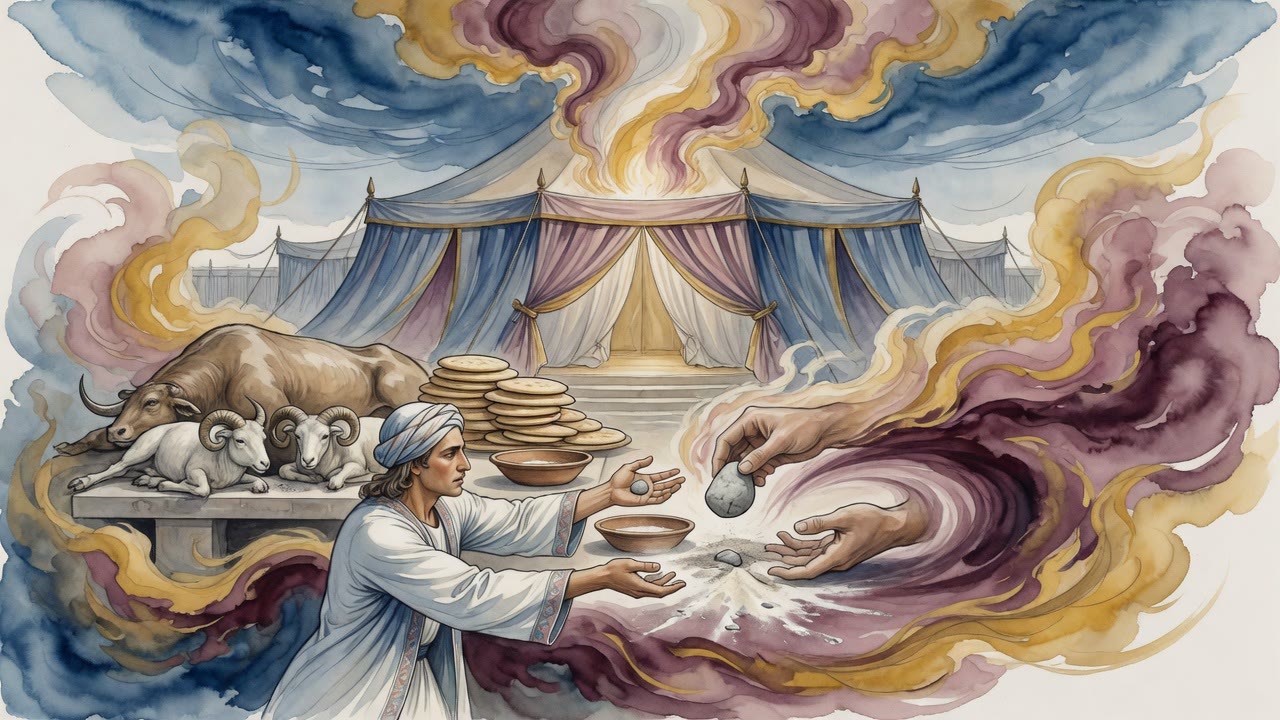
In the last year of the wilderness road, five sisters stood where men usually stood. The daughters of Zelophehad had no brother. Their father's name risked vanishing from the land-portion of Manasseh. Mahlah, Noah, Hoglah, Milcah, and Tirzah. The youngest was already forty, past the ordinary age of first marriage in that world, and they had refused husbands who did not meet their standard. They were not waiting. They were choosing. Dust from the camp stuck to their hems as they crossed to the place of judgment.
They brought the case to Moses. Inheritance law as he held it had no ready place for daughters in that shape. The man who spoke with God face to face opened his mouth and found no ruling. Silence stretched. Elders watched. He had to turn and ask.
God answered through them. Good moves through the good, and the chapter of law that would have come in any case arrived as their reward, published because they stood and demanded a name not be erased from the map of the land. They married at last, sons of their uncle, keeping the portion inside the tribe. Free to choose more widely by the word Moses brought them, they chose family land over a stranger's house. Zelophehad's name stayed on the allotment because his daughters refused to let a missing brother end the line.
The Leader Who Had to Ask
Moses, after the call, had lived apart from his wife. Prophetic burden became a kind of pride, a private holiness measured by distance from the tent. In that last year the unmarried daughters of Zelophehad stood before him as living counters to self-regard. Women who had waited decades for a fit match, then used heaven's court to secure their father's name, made the solitary prophet look small in his chosen separation. Their courage was public. His distance had grown quiet and self-satisfied.
He had told the elders, the cause that is too hard for you, bring it to me, and I will hear it. Then five women asked a question he could not settle. God reminded him of the boast. Didst not thou say, bring it to me? And now thou canst not properly settle this legal question of the women.
The priesthood he had lost at the bush and the silence he met at their petition were different costs of the same human edge. Hesitation, then pride, then a gap only God could fill. He walked from their hearing with the law in his mouth and no ground left for boasting about how purely he had lived alone.
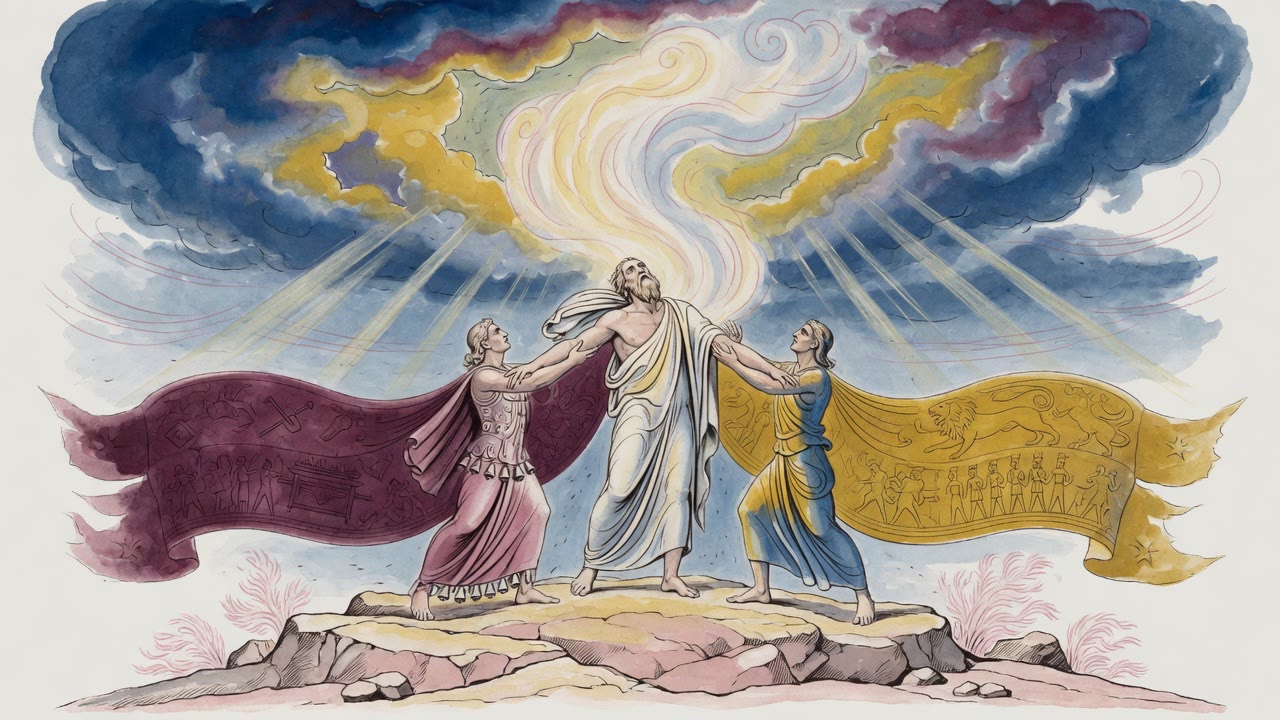
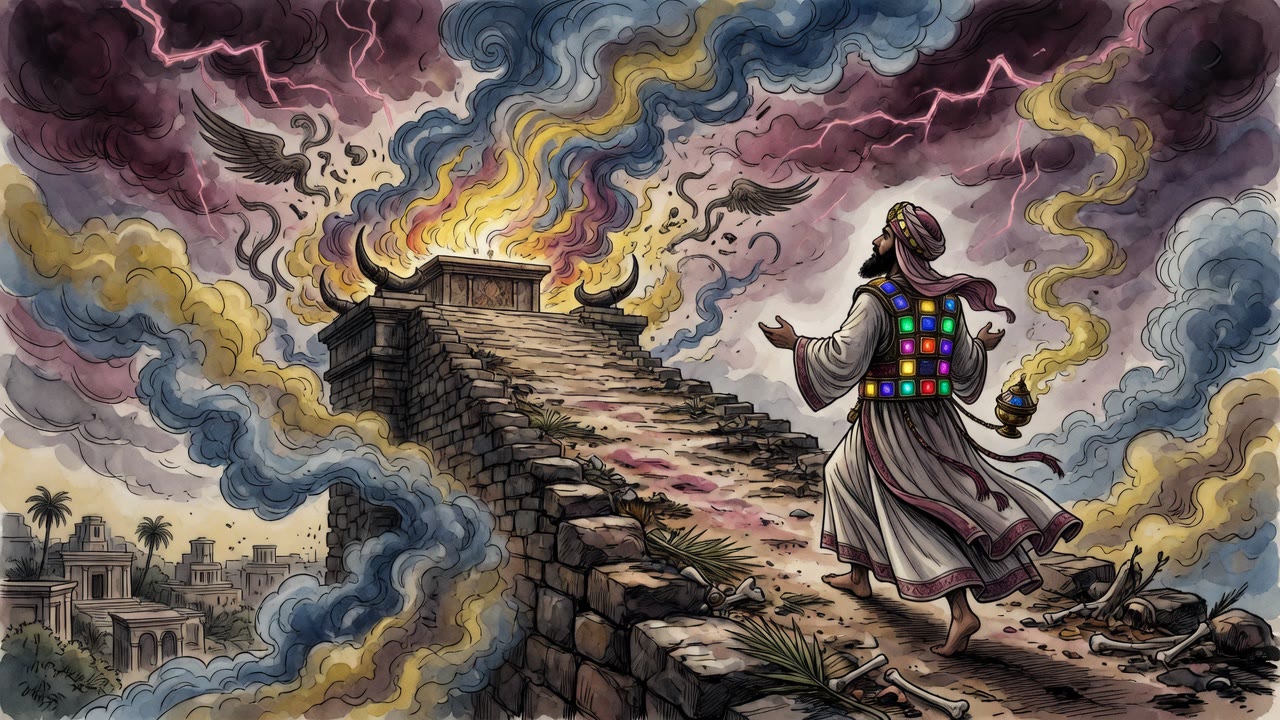
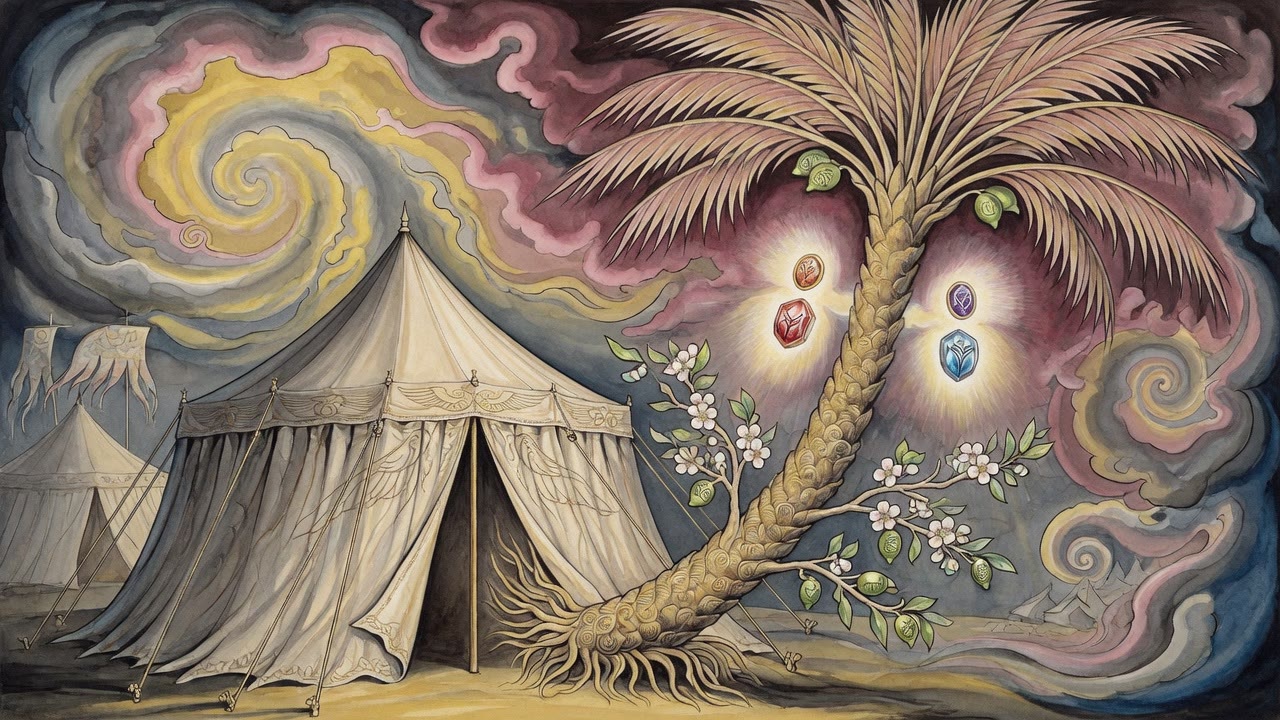
Aaron wore the breastplate. Moses wore the unfinished tongue and the memory of a yes that came late. The daughters walked away with a statute and husbands of their choosing. Israel walked toward the river with a law that remembered women's mouths at the gate of inheritance. The camp shifted. Pegs pulled. The story of five sisters entered the same scroll as the story of a bush that would not burn out.
At the bush, one refusal had reassigned forever. In the camp, one hard question had forced the lawgiver to lift his eyes again. Between those two hours lay a life of leading without the cure he wanted and without the priesthood first written for him. The fire that did not consume the bush had still burned a line through his house, and the daughters of Zelophehad had made sure that line did not end in a man who never had to ask.
← All myths