Moses Was Made a God Over the King Who Made Himself One
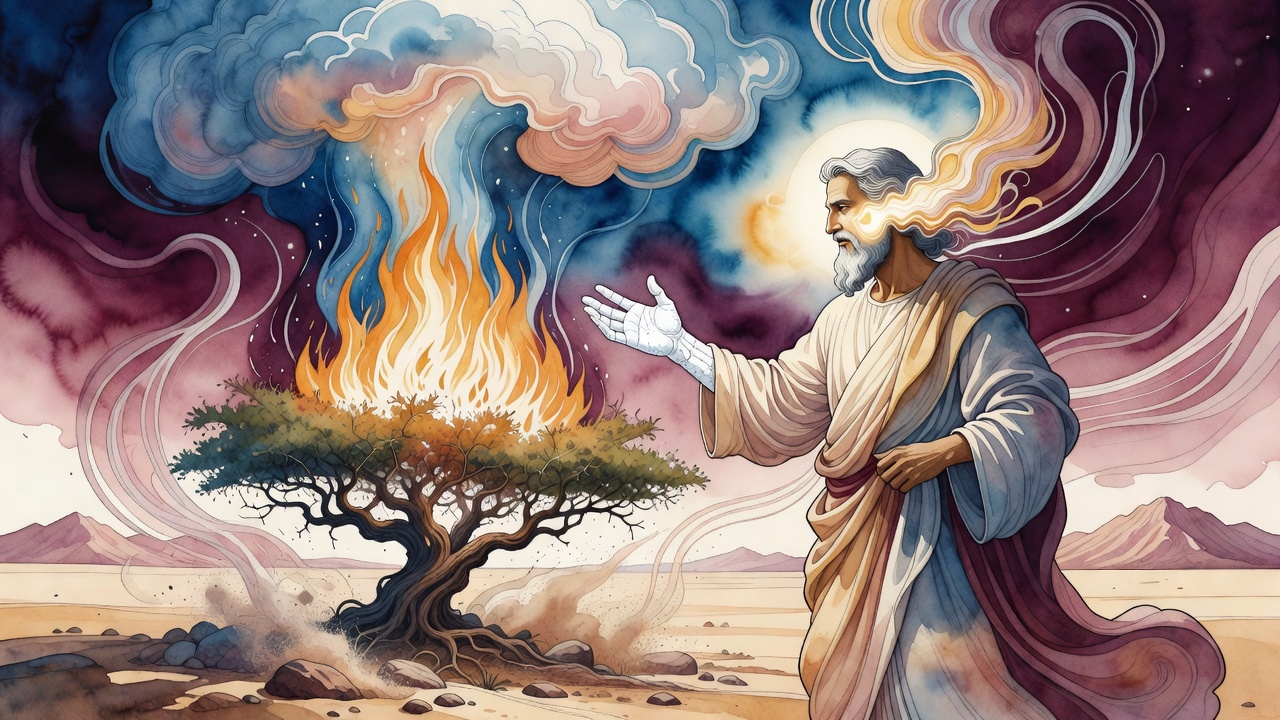
Pharaoh swore he made the Nile and needed nothing, so God set Moses as a god over him and sent him to ambush the king at the river at dawn.
Table of Contents
Before the sun cleared the reeds, Pharaoh walked down to the Nile alone. He went at that hour on purpose, while the court still slept and no servant trailed him. A god has no need of the river the way a laborer does. That was the story he had told Egypt, and every dawn he slipped to the water in secret to keep the story alive.
 Click for full size
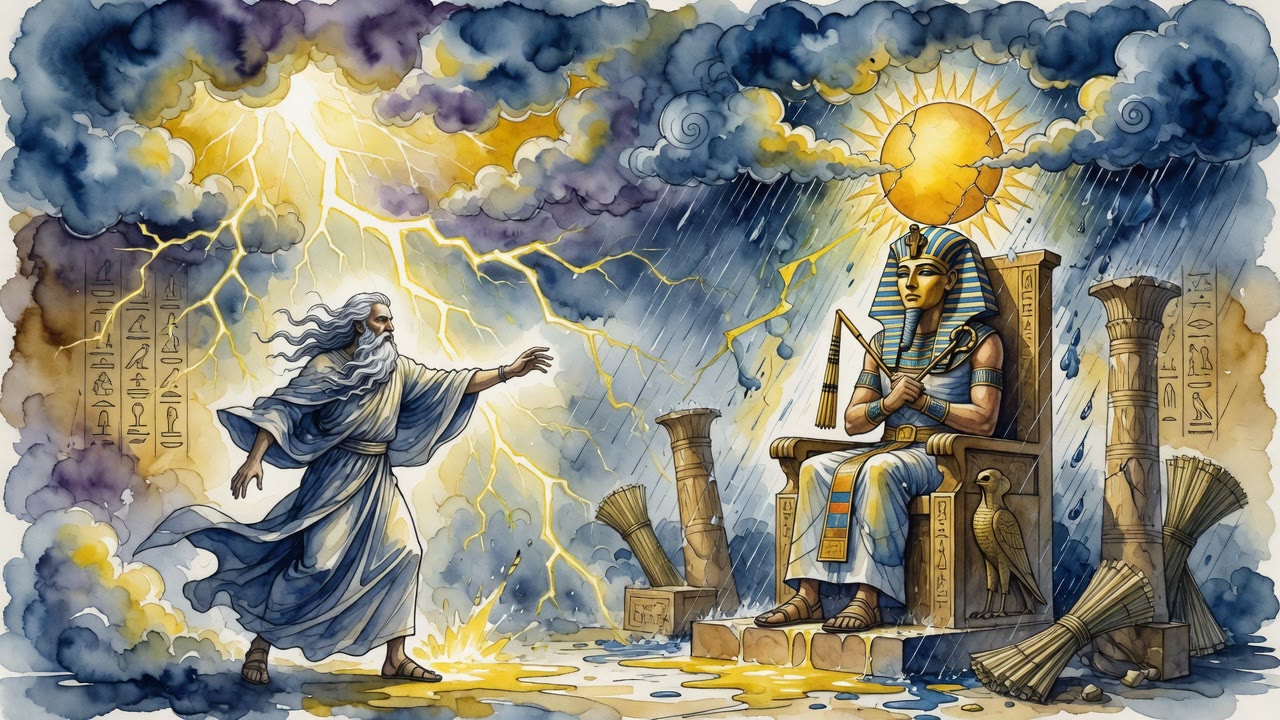
He had said it plainly, in the hearing of his own priests. "The Nile is mine, and I made myself." The river was his handiwork. His flesh answered to no one and needed nothing.
The Boast That Reached Heaven
Egypt believed him. Pharaoh was not the first man to climb onto the seat of a god and dare the heavens to pull him down. Hiram of Tyre had done it. So had Nebuchadnezzar, who woke one morning in a field, eating grass like an ox. So had Joash, whom his own princes bowed to as a god after he walked out of the Holy of Holies alive. Each of them said in his heart, I am a god, and each was brought low in a way that stripped the last shred of majesty from him. God kept a ledger of such men, and Pharaoh's name was now written in it, beside the day he would be handed to his enemies and made, in the prophet's phrase, like a woman.
God Answers a Boast With a Boast
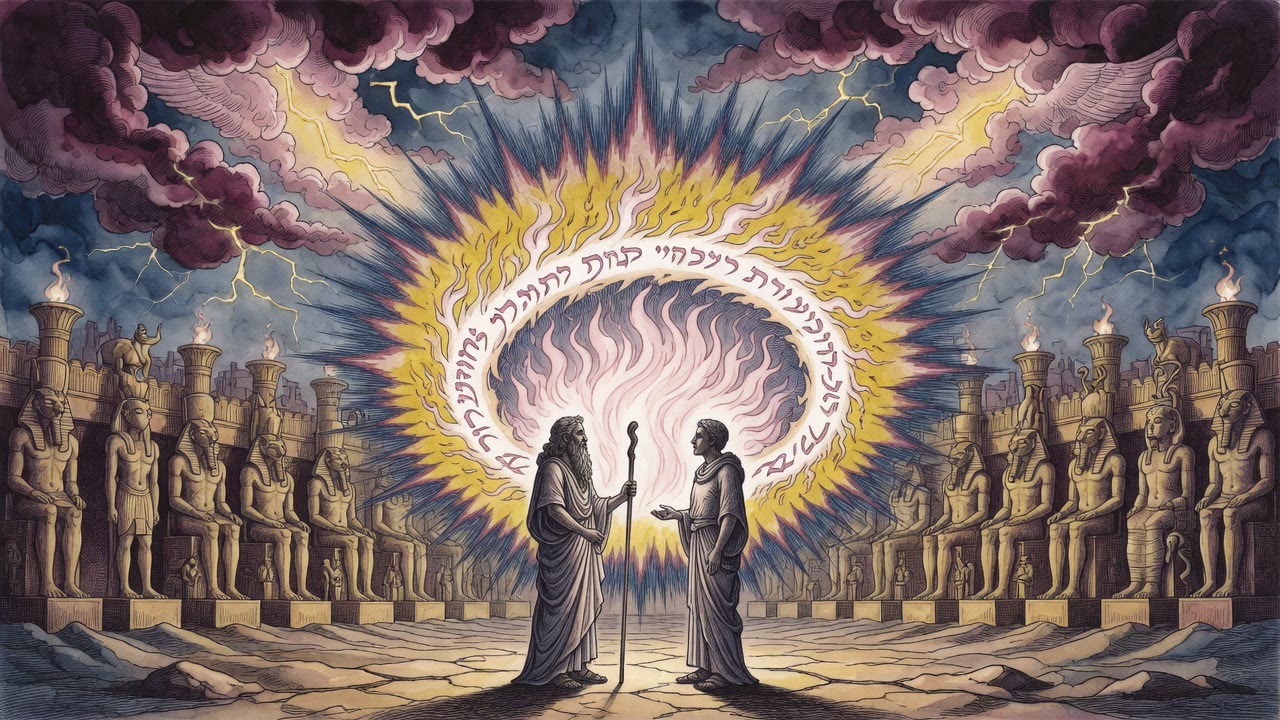
So God did not argue with the boast. He matched it. He turned to Moses, a shepherd whose tongue caught on its own syllables, and said, "See, I have made you a god to Pharaoh." Let the man who invented his own divinity meet a god he had not invented. Pharaoh would look up from the water and see Moses standing over him the way a judge stands over a prisoner, and he would learn that he was nothing.
To carry the sentence, God gave Moses a staff. It weighed forty se'ah and was cut from a single block of sapphire, and along its length ten plagues stood engraved in three clusters of letters, DeTzaKh, ADaSh, BeAChaB, the order in which they would fall. "With this," God told him, "go and collect what is owed."
Aaron Becomes the Voice
Moses looked at the weight in his hand and heard the size of the task. "Master of the Universe, I cannot bend him with words. A servant is not corrected by words." A mouth that stumbled would not break a king who believed he had built the river.
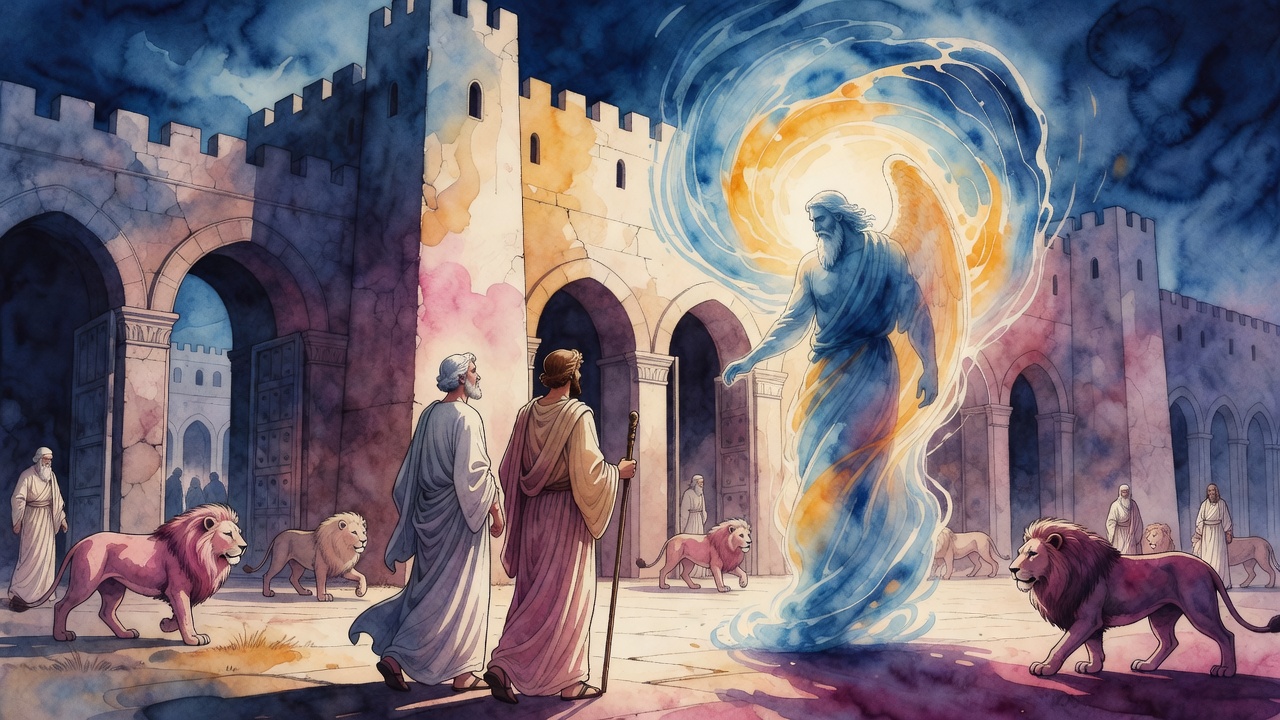
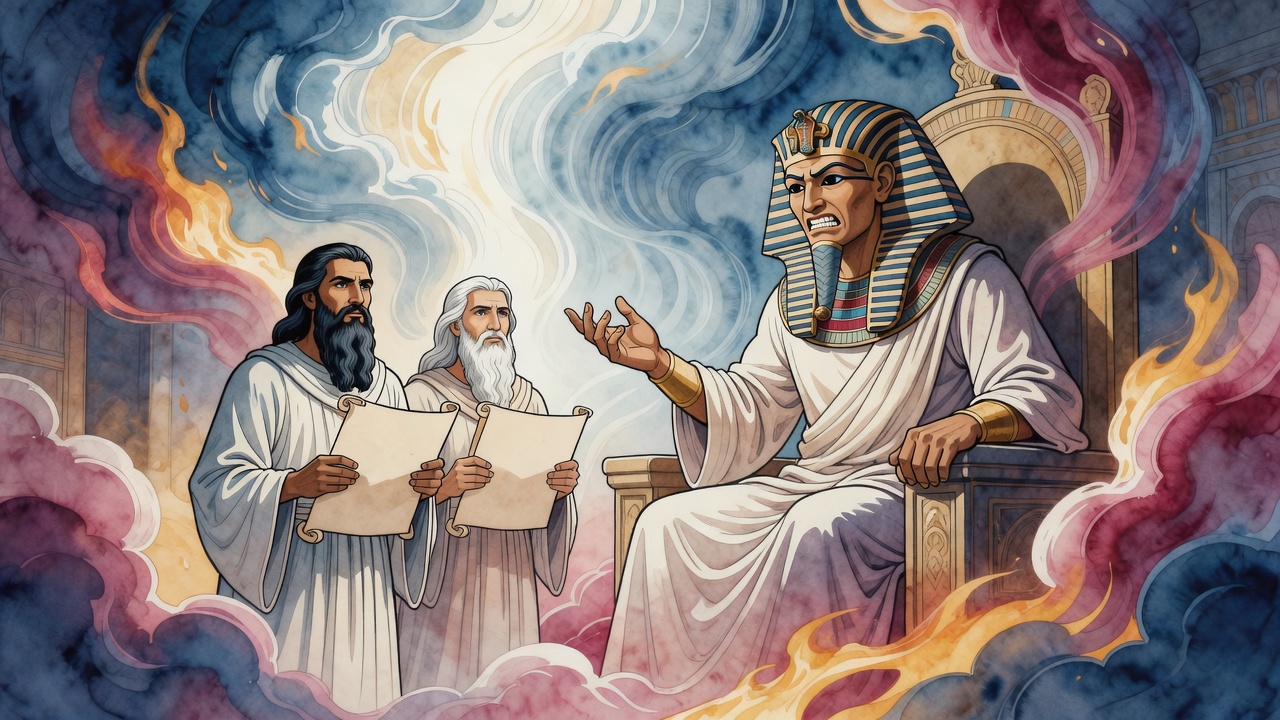
So God split the office in two. Aaron would stand beside his brother the way a prophet stands beside the one who sends him. As a teacher sits and expounds while the interpreter turns his words for the crowd, Moses would receive the command and Aaron would speak it into Pharaoh's face. The two brothers were equals in it. Whatever terror clung to Moses clung to Aaron. Neither trembled at the throne. Both would walk into the palace and say the unsayable without dropping their eyes.
The Ambush at the Riverbank
"Go to Pharaoh in the morning," God said. "He goes out to the water." A cruelty was folded inside the command. Pharaoh's morning secret, the private walk to the river that no god should need, was about to become the place of his unmasking. Moses would be waiting on the bank when the king came down to empty his body, caught in the one act that proved he was a man like any other.
No corner of Egypt could hide it. "Can a man hide himself in secret places, and I not see him?" That question stood behind the ambush. The king who made himself a god had one hour of the day when he admitted, in the dark, that his flesh obeyed rules he had not written. God chose that hour and that riverbank to answer him.
The River Turned Against Its God
Then the staff came up over the water. Before God struck Pharaoh, He struck Pharaoh's god. Egypt worshipped the Nile, so the Nile would bleed first. There is an old saying among men, strike the gods and the priests grow afraid, and heaven followed it to the letter.
The blood ran everywhere the water had reached. It filled the river and the canals, the pools and the standing water in the cisterns. It rose in the wooden buckets and the stone jars. When an Egyptian spat, blood came from his mouth. In one house, when an Israelite dipped his cup into a shared tank he drew clear water, while the Egyptian beside him drew red. A thirsty Egyptian who begged a swallow found it thicken to blood the moment it touched his lips, until he paid a high price for what his neighbor drank for nothing, and by that strange trade Israel grew rich.
The self-made god stood on his own riverbank and watched the water he claimed to have made turn to blood in his hands. He had said his flesh needed nothing. Now he could not drink.
← All myths