5 min read

Moses Named Tribe After Tribe and God Rejected Each for the Priesthood

Reuben had his father's bed in the record. Simeon had Shechem. The files came back one at a time, until only the tribe with no land was left.

Curated by Arthur · Told by Maggid ·
Table of Contents
  1. Reuben's Bed and Simeon's Blade
  2. Dan's Image and Joseph's Whisper
  3. Judah on the Roadside
  4. Appoint From Your Own
  5. Judah's Hands Were Given Other Work
  6. The Name Moses Would Not Leave Out

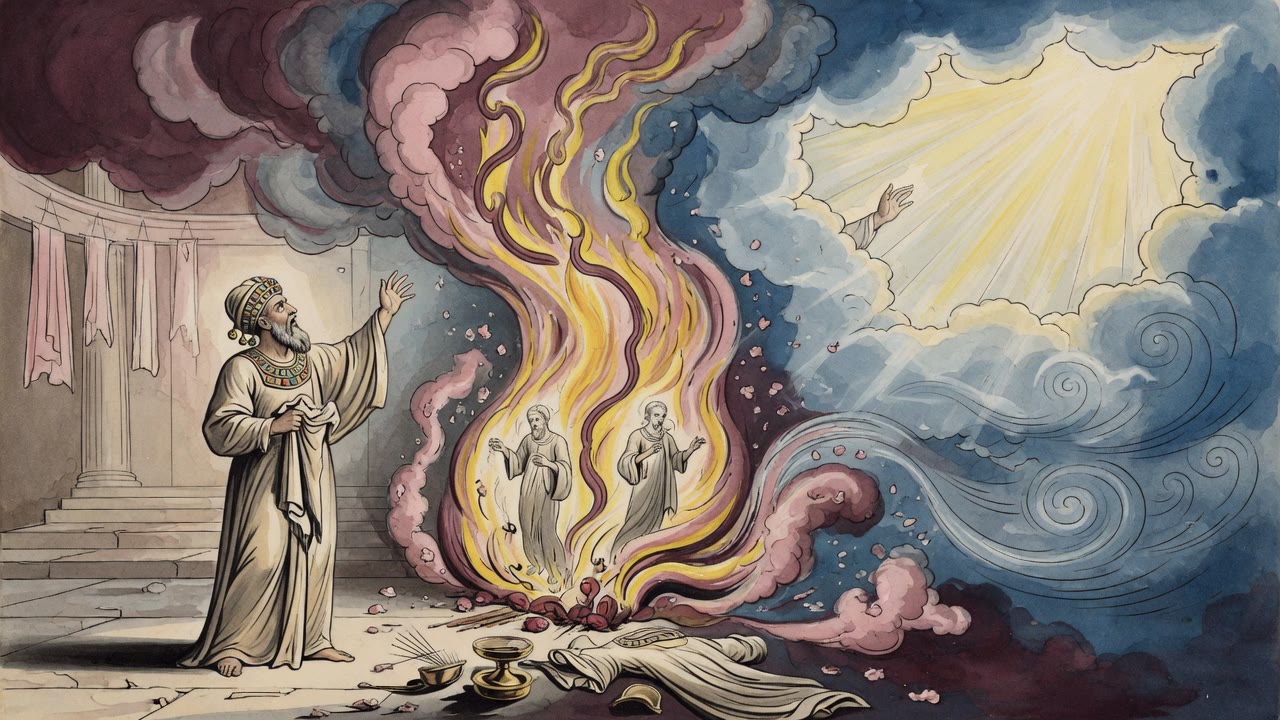
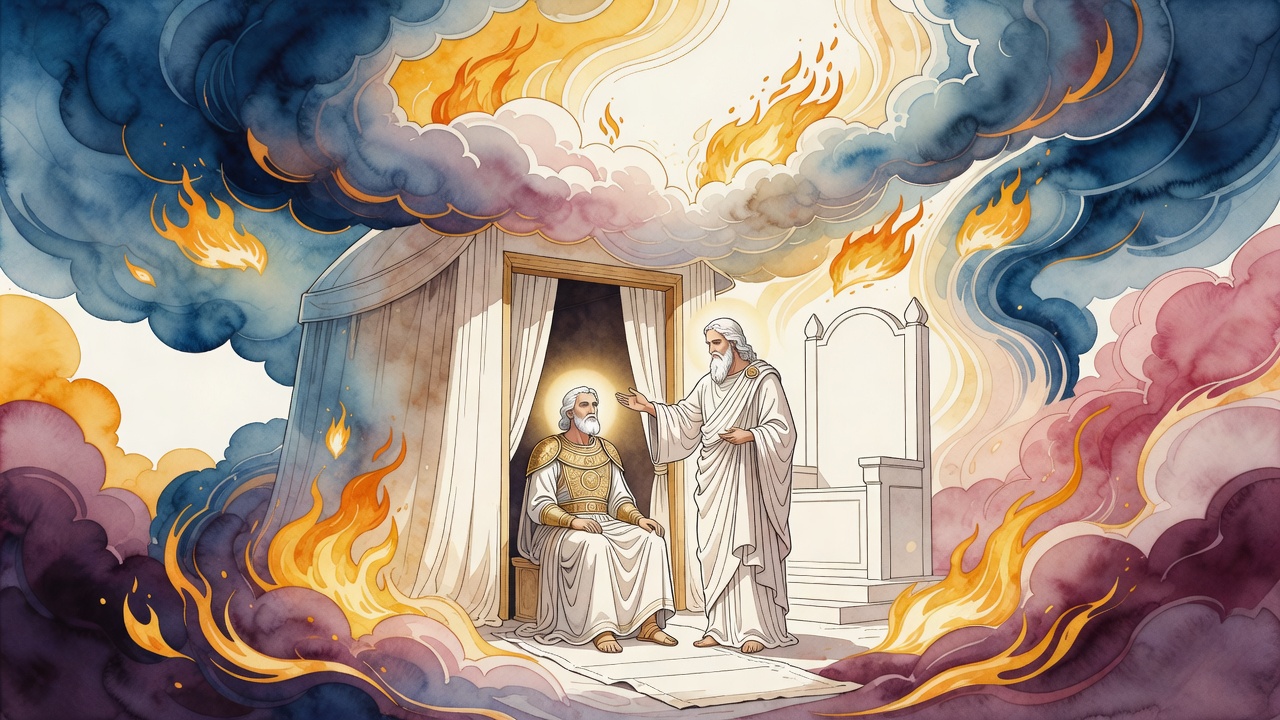
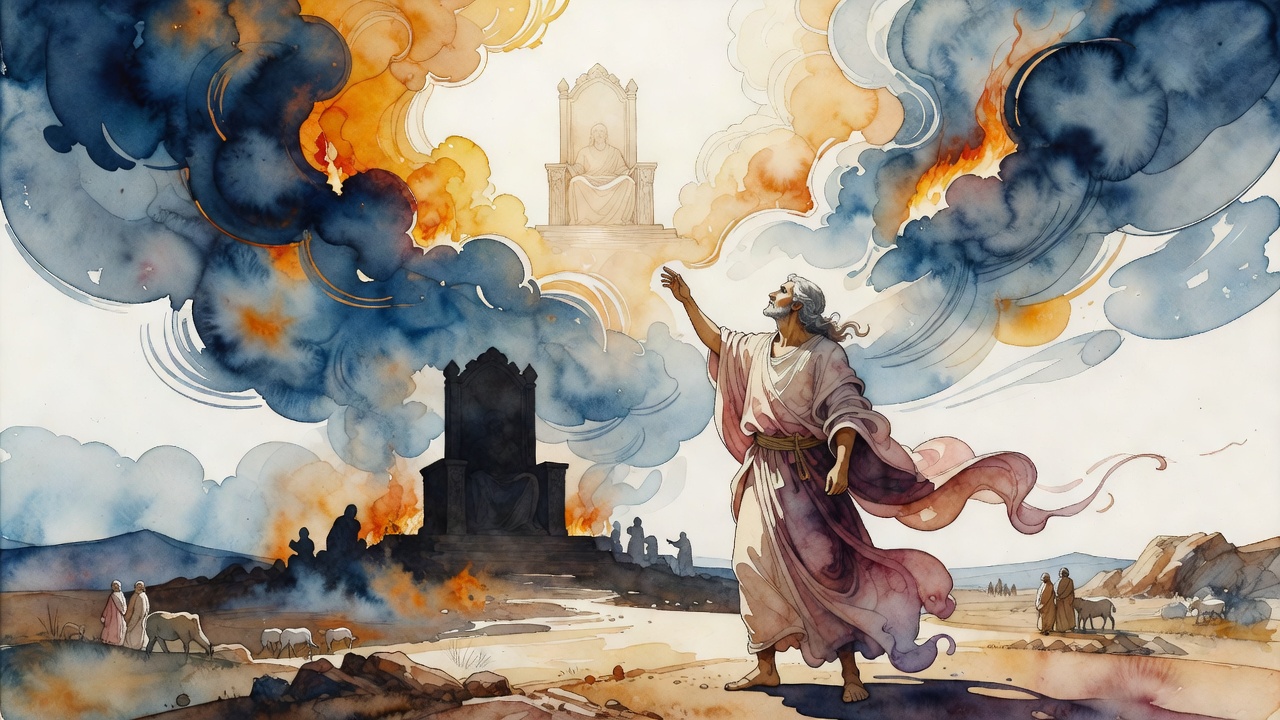
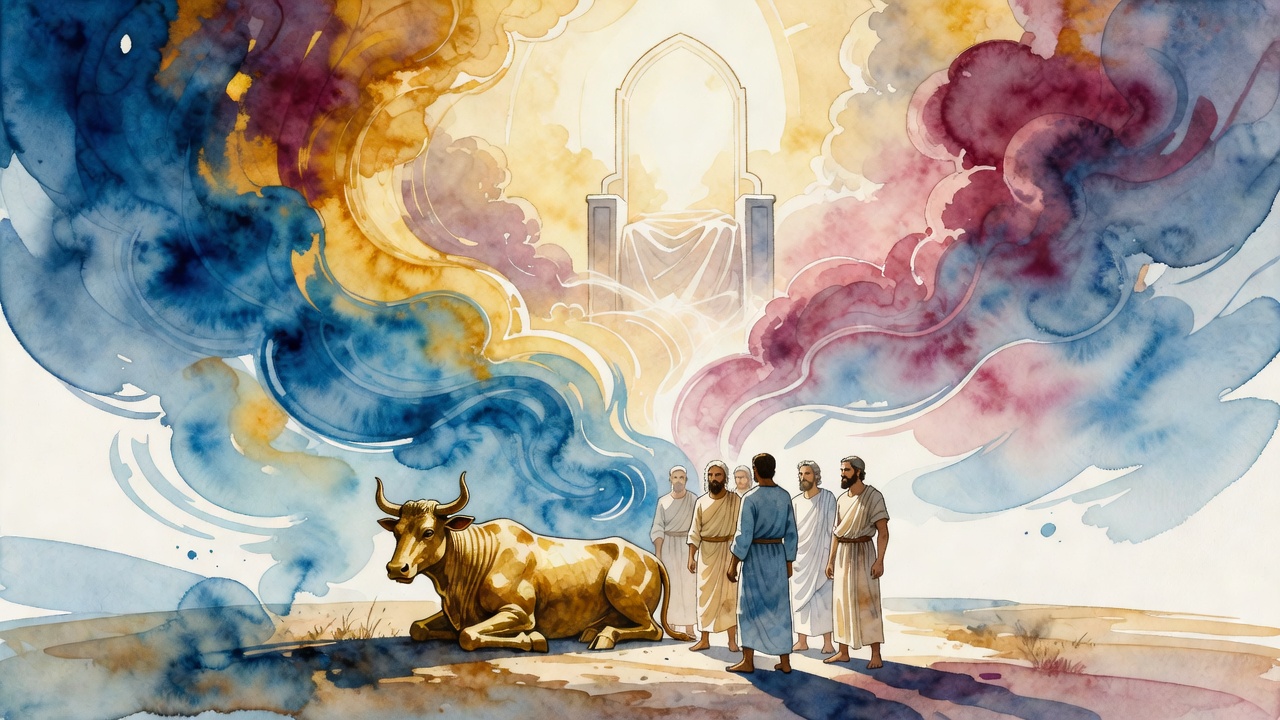
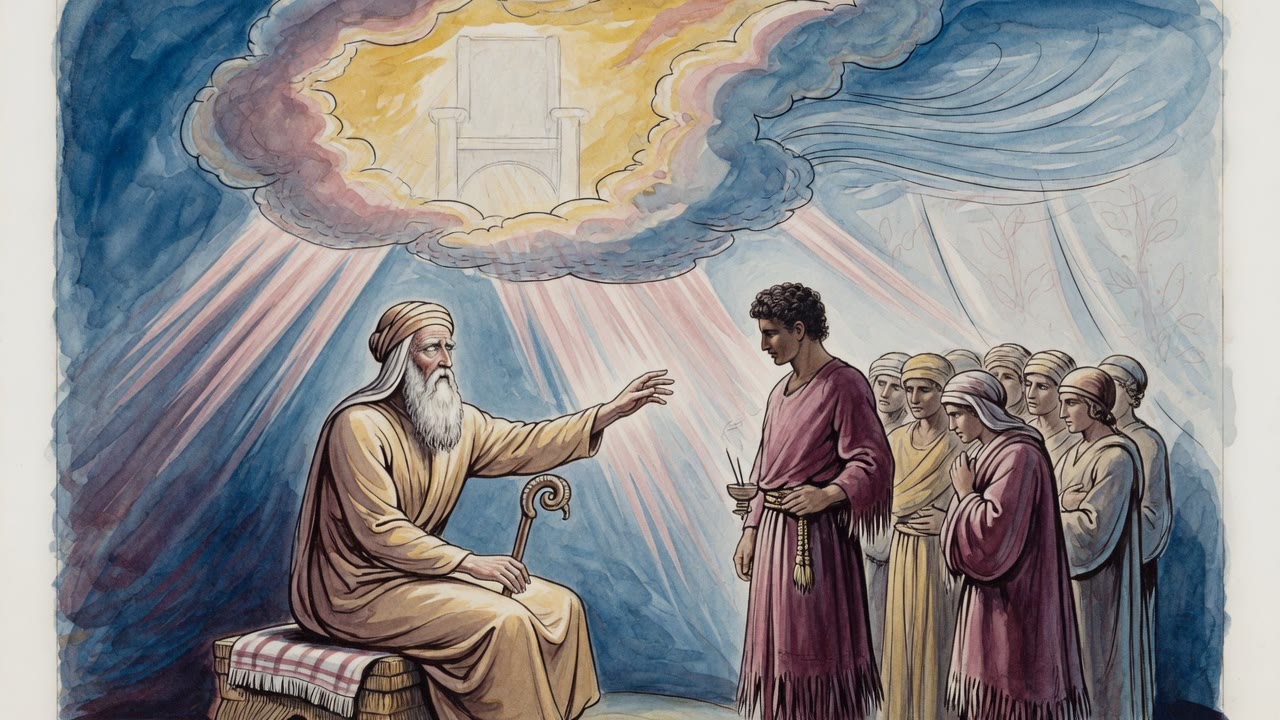
The altar was finished before the priest was chosen. God told Moses to appoint one, and Moses asked the only question that mattered. "Which tribe?"
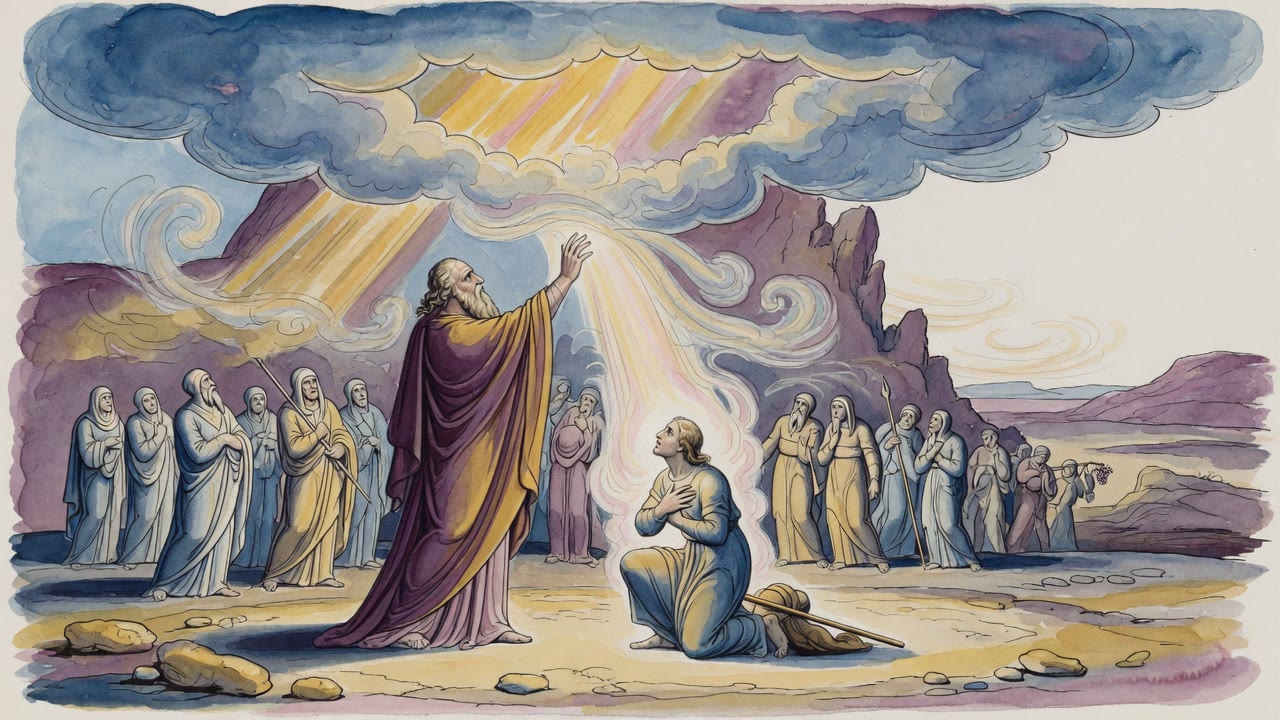
Moses Named Tribe After Tribe and God Rejected Each for the Priesthood Click for full size

What came back was not a name. It was a file.

Reuben's Bed and Simeon's Blade

Do not put Reuben in front of Me. He went up onto his father's bed and lay with Bilhah. The eldest son's portion had already been spent on one night in a tent, and the tent was still standing in the record.

Moses tried again. "Simeon, then."

Weapons of violence are their wares, and violence is the thing I hate. Moses did not argue that one. He had heard what those brothers did at Shechem, walking into a city of men three days after the knife and leaving nobody upright. A house that settles its accounts with a blade cannot be handed the one knife whose entire purpose is peace.

Dan's Image and Joseph's Whisper

"Dan."

They will bring My anger down. There will be a carved image set up in Dan, poured from silver a son stole out of his own mother's house, and that tribe will keep it, and keep a hired priest standing in front of it, for as long as the house of God stands at Shiloh.

Moses moved down the list. "Joseph."

They carry evil talk about their brothers back to their father. Moses knew that file too. A boy comes in from the flock with a report, and the report is accurate, and by the end of it there is a coat dipped in goat's blood on a table and an old man tearing his clothes over an animal that never touched his son. A priest who deals in accurate damage will empty the courts faster than a foreign army.

Judah on the Roadside

One name left before his own. "Judah."

Arrogant of eye and wide of heart. He saw a woman sitting veiled at the entrance to Enaim and took her for a harlot and turned aside to her, and she was his own son's widow, and he left his seal and his cord behind as a pledge. An eye that quick does not belong near a curtain nobody is permitted to look behind.

Moses had run out of tribes worth naming. "Whose tribe, then, shall I appoint?"

Appoint From Your Own

Appoint from yours.

Moses waited for the list of Levi's merits. It did not come. Levi had been named in the same breath as Simeon when the blade was condemned, since the verse that damned the weapons put both brothers on it. Nothing was read out about Levi that morning. Every other door had simply closed on a sentence written into Genesis in ink that does not lift.

So the priesthood went to the tribe with no land coming to it, and to the man who had just heard five families rejected out loud before he was told to look at his own.

Judah's Hands Were Given Other Work

Forty years later, on the last day of his life, Moses went down the tribes again. This time he was blessing them.

When he reached Judah he did not mention the roadside. He asked that Judah's hands fight for him, and that God be a help to him against his enemies. Two fights sat folded inside that: the one where Judah brings down Esau, and one already finished, in a grain palace in Egypt, when Judah walked toward a vizier he did not know was his brother and offered his own body in place of Benjamin's.

Hands that could not be trusted with the basin could still open in a foreign court for the youngest child in the family.

The Name Moses Would Not Leave Out

There was a tribe missing from the blessings that day. Simeon was not called. Everyone standing in that field could count, and everyone knew why.

So Moses hid him inside Judah's blessing. Hear, O Lord, the voice of Judah. Master of the world, he meant, whenever the tribe of Simeon is in trouble, get him out of it. He had refused Simeon the altar at the start and would not let the name fall off the end.

The prayer was paid out in land. When the tribes went up to take their portions, Judah turned to Simeon and said, "Come up with me into my lot." Whole districts were cut off Judah's inheritance and handed to Simeon's children, because Judah's share was larger than he could hold and Simeon's was nothing at all.

The tribe that lost the altar for violence got a home from the tribe that lost the altar for lust. The man who had disqualified them both was buried in a valley in Moab that nobody has ever been able to find.


← All myths
From the tradition

Sources

2 sources

The texts behind this telling. Some cards carry a translation of the source; others are our own retelling of it, and each card says which. Every card links out to the original.

Midrash Tehillim 101:2Midrash Tehillim

Retold in our words. Read the original at the link below.Rabbi Mike Feuer, Jerusalem Anthology · CC-BY

Who Deserves to Be Appointed as a Priest of God is the question behind this passage from Midrash Tehillim.

God, in this retelling, proceeds to disqualify several tribes, each for a specific, deeply human flaw. First up is Reuben. "Do not put Reuben before Me," God says, "who sinned with Bilhah, his father's concubine, as it is said (Genesis 35:22), 'And Reuben went and lay with Bilhah, his father's concubine.'" A pretty serious transgression, and a clear reason for disqualification.

Next, it’s the tribe of Simeon. God rejects them because "They are engaged in violence, which I hate, as it is said (Genesis 49:5), 'Simeon and Levi are brothers, weapons of violence are their wares.'" Their aggressive nature makes them unsuitable for a priestly role.

What about the tribe of Dan? "They will cause My anger," God declares, "for they are idolaters, as it is said (Zechariah 10:11), 'And they shall cross the sea with affliction...'" The Midrash (rabbinic interpretive commentary) connects this verse to the idol of Micah, referencing the story in (Judges 18:30) where "the children of Dan set up the graven image for themselves." So, idolatry is a no-go.

Even the tribe of Joseph isn't spared. God says, "They speak evil behind their brethren's backs, as it is said (Genesis 37:2), 'And Joseph brought evil tales of them unto their father.'" Gossip and tale-bearing? Not exactly priestly qualities.

And finally, the tribe of Judah. "He is arrogant of eye and wide of heart, as it is said (Genesis 38:15), 'And Judah saw her, and thought her to be a harlot.'" This refers to the incident where Judah mistakes his daughter-in-law, Tamar, for a prostitute. Arrogance and questionable judgment are disqualifying factors.

Moses, understandably frustrated, asks, "Whose tribe, then, shall I appoint?" The answer? "Appoint for yourself from your own tribe." In other words, the tribe of Levi. The text doesn't explicitly say why Levi was the only acceptable choice, but we can infer that they were deemed to possess the qualities that the other tribes lacked: righteousness, peacefulness, faithfulness, honesty, and humility.

Rabbi Nehemiah offers another perspective, attributed to Resh Lakish: "One who serves Me in this world will serve Me in the World to Come, and will not sit in the midst of My house." This suggests that true service to God is a continuous commitment, both in this life and beyond.

Finally, Rabbi Joshua ben Levi adds a valuable lesson about character: "A person must be modest within his own home, and needless to say in the home of his friend." This emphasizes the importance of humility and integrity, not just in public but also in private, as these traits are fundamental to genuine service.

It requires character, integrity, and a commitment to serving something greater than oneself. It's a powerful message about the qualities we should seek, not just in our leaders, but also within ourselves. Are we living up to the standards of humility, honesty, and devotion that this midrash seems to be calling for? It's a question worth pondering.

Full source
Sifrei Devarim 348:6Sifrei Devarim

Retold in our words. Read the original at the link below.Sifrei by Rabbi Shraga Silverstein · CC-BY

Sometimes, a single phrase can unlock a whole world of meaning, revealing the interplay of Jewish tradition.

Take, for instance, the blessing given to Judah in (Deuteronomy 33:7). It says, "His hands will fight for him," and "You shall be a help against his foes." Simple enough. But the Sifrei Devarim, an ancient commentary on the Book of Deuteronomy, doesn't let us stop there.

It asks: What exactly does "His hands will fight for him" mean? The answer given is that it refers to Judah slaying Esau. And "You shall be a help against his foes"? That's a reference to Judah standing up for his brother Benjamin against Joseph in Egypt, as we see in (Genesis 44:18). It's like the Torah is whispering secrets across generations, linking these pivotal moments in Jewish history through a single, carefully chosen blessing.

That's not all. The Sifrei Devarim offers another, even more fascinating interpretation. It connects Judah not just to his own triumphs, but also to the fate of another tribe: Shimon.

The verse begins "And this, for Judah. And he said: Hear, O L-rd, the voice of Judah." The commentary sees in this that Moses was praying for Shimon as well. Why? Because Shimon isn't explicitly mentioned in this blessing. It's almost as if Moses is interceding on Shimon's behalf, saying, "L-rd of the world, whenever the tribe of Shimon is in distress, rescue him from it. That even in moments where a tribe seems forgotten, prayer can still reach them.

And the connection goes deeper. "And to his people shall You bring him," the verse continues. The Sifrei Devarim explains that this refers to Judah drawing Shimon near for inheritance of the land. This is based on (Judges 1:3), where Judah says to Shimon, "Go up with me in battle for my portion." And, as we find in (Joshua 19:9), sections from the inheritance of the children of Judah fell to the children of Shimon.

So, what does it all mean? It suggests a deep interdependence between the tribes of Judah and Shimon. Judah, the powerful and prominent tribe, is linked to Shimon, perhaps suggesting a responsibility to support and uplift those who might be struggling. We are all interconnected, and the strength of one can be a source of strength for all.

Full source