Parshat Bamidbar6 min read

God Chose Levi as He Chose Sabbath and Zion

While shepherding at Abel-Meholah, Levi saw injustice enthroned and heaven open. Tanchuma places his tribe among God's chosen like Sabbath and the land.

Curated by Arthur · Told by Maggid ·
Table of Contents
  1. What the Shepherd Saw in the Grass
  2. Chosen the Way the Sabbath Was Chosen
  3. Silver That Comes Out Even
  4. Why the Numbers Kept Falling

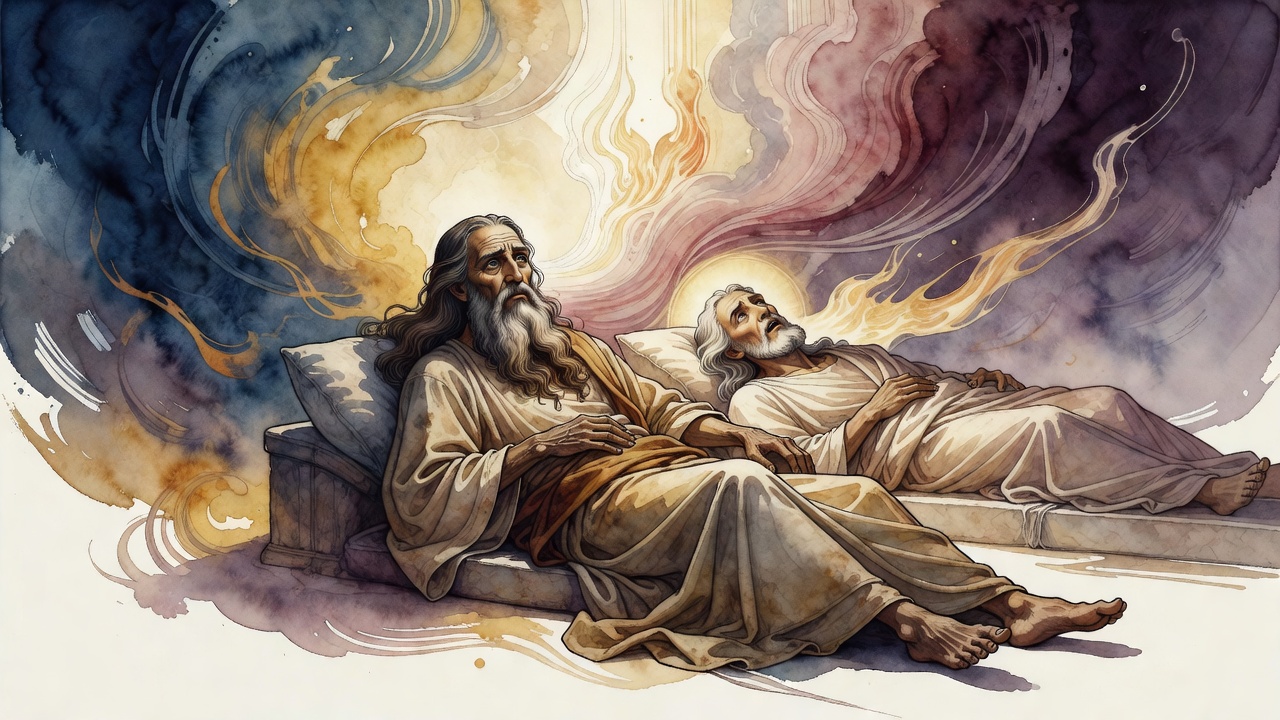
Levi had his children brought in close to the bed because his voice had gone down to almost nothing, and what he wanted to leave them was not a blessing. It was the pasture at Abel-Meholah, and what happened to him there, and what it was going to cost them.
God Chose Levi as He Chose Sabbath and Zion Click for full size

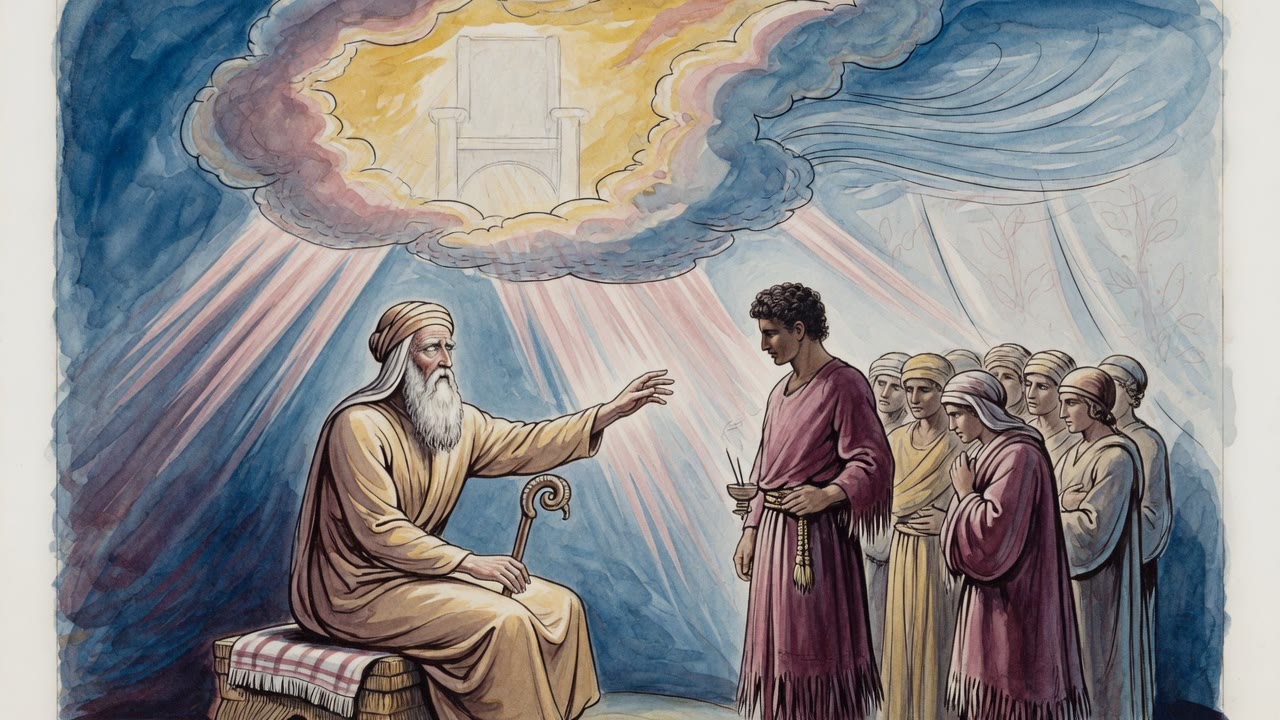
He had been out with the flocks that day, an ordinary man with wool on his sleeves and nothing holy about him. Then the spirit of understanding of the Lord came on him in the middle of the grass, and he stopped seeing sheep.

What the Shepherd Saw in the Grass

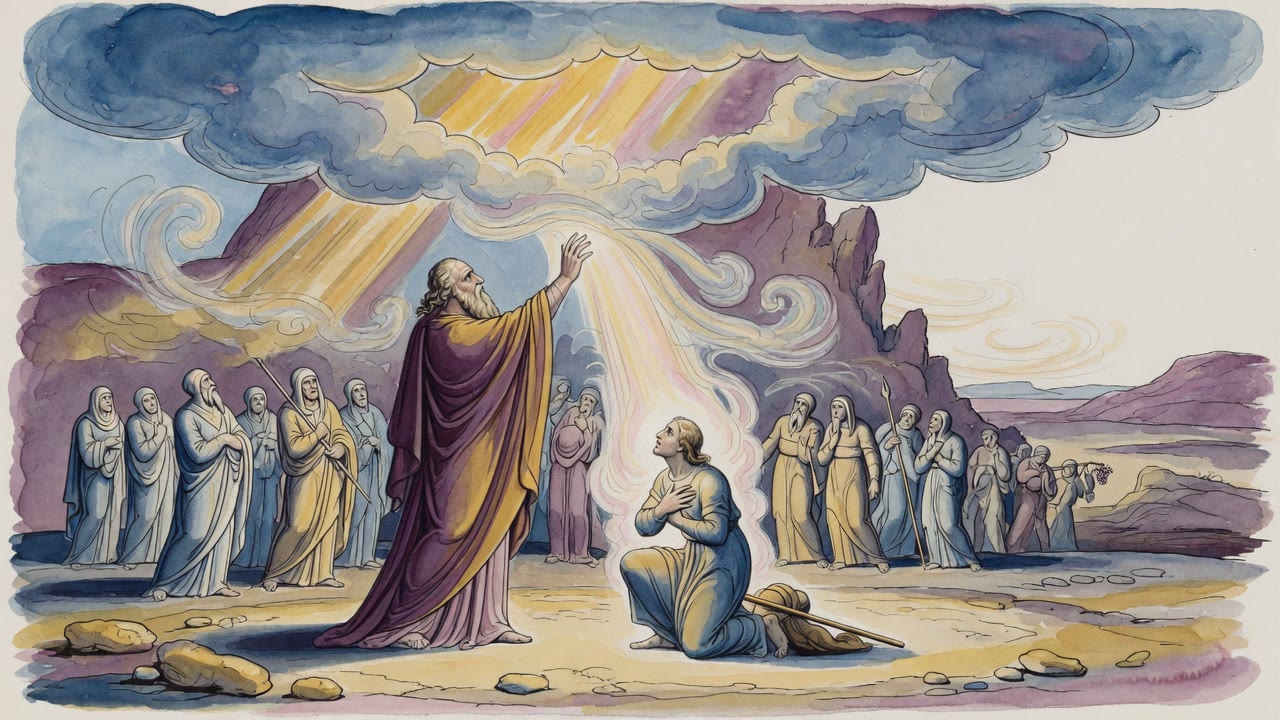
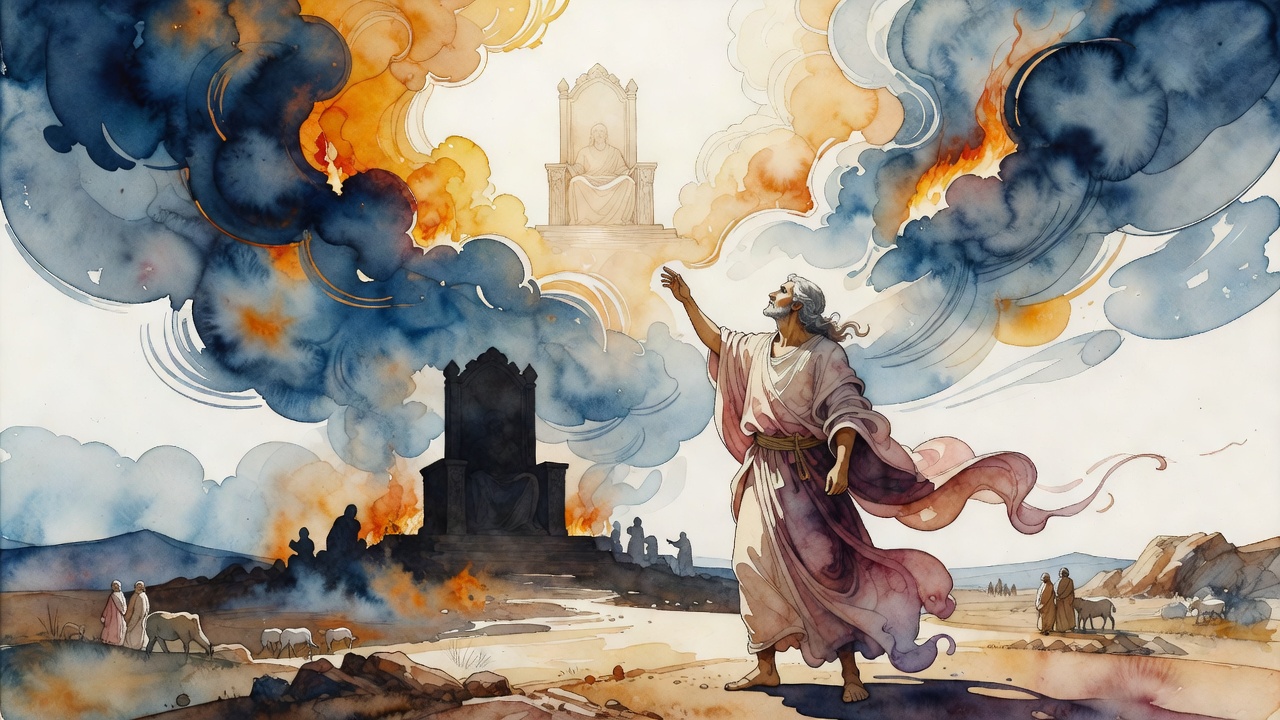
He saw all mankind corrupting their ways. He saw injustice building walls for herself, course on course, the way a mason builds when he expects to be paid, and towers going up on the walls, and impiety climbing the towers and sitting down on top of them as though a seat had been prepared. The sheep went on tearing grass around his feet. Nothing in the field had changed, though he could no longer stand up in it.

So he sat down among the animals and grieved over the generations of men, one after another, all of them under those walls. He prayed the only prayer he had. "Save me," he said, and he did not mean from a lion or from a bad year.

Sleep came over him where he sat. A mountain stood in front of him, taller than any hill he had walked a flock up, and while he was still measuring it with his eyes the heavens opened over the top of it. An angel of God stood in the opening and said one word to him. "Enter."

He told his children he did not move at first. He had asked to be taken out of a world with walls in it, and here was the door, and a door that opens for a man opens for his seed after him, and he was a shepherd with dirt in the seams of his hands. Then he went up the mountain and through, because a man who has prayed for exactly this does not get to say he meant something smaller.

Chosen the Way the Sabbath Was Chosen

What he understood on the other side he spent the rest of his breath explaining to the children on the bed. God had made days and kept one of the seven for himself. He had made lands and kept one of them and called it his own land. He had made tribes, and out of twelve he took Levi to be his priest, not because Levi was the eldest or the strongest, but because he loved him, the same reason he took the one day and the one land.

Then Levi told them what being kept looks like from the inside, which is being counted. "A man will come with a roll and a reed and count you by name, every male among you," he said, "and the next year he will come and do it again, and it will feel like bookkeeping." It is not bookkeeping. A king who loves his troops takes them out and numbers them for the pleasure of it, and this King would number them from Sinai to the end.

Silver That Comes Out Even

The counting reached everything they touched. When the firstborn of Israel were redeemed, Moses would not hand the redemption silver to Aaron and his sons on his own judgment. He stood there with it until the word came from the mouth of the Holy One, give it to them, and only then did he give it, half to Aaron and half to his sons, the father weighed against the children and neither pan dropping.

Market silver never behaves. Weigh a heap of ordinary shekels one coin at a time and then weigh the heap whole, and the two numbers argue, a little over or a little short. Sacred shekels do not. One at a time or all at once, the weight comes out the same, no surplus and no shortage, and the tribe that handled them lived by the same rule. Nothing about them was approximate. Everything about them was counted.

Why the Numbers Kept Falling

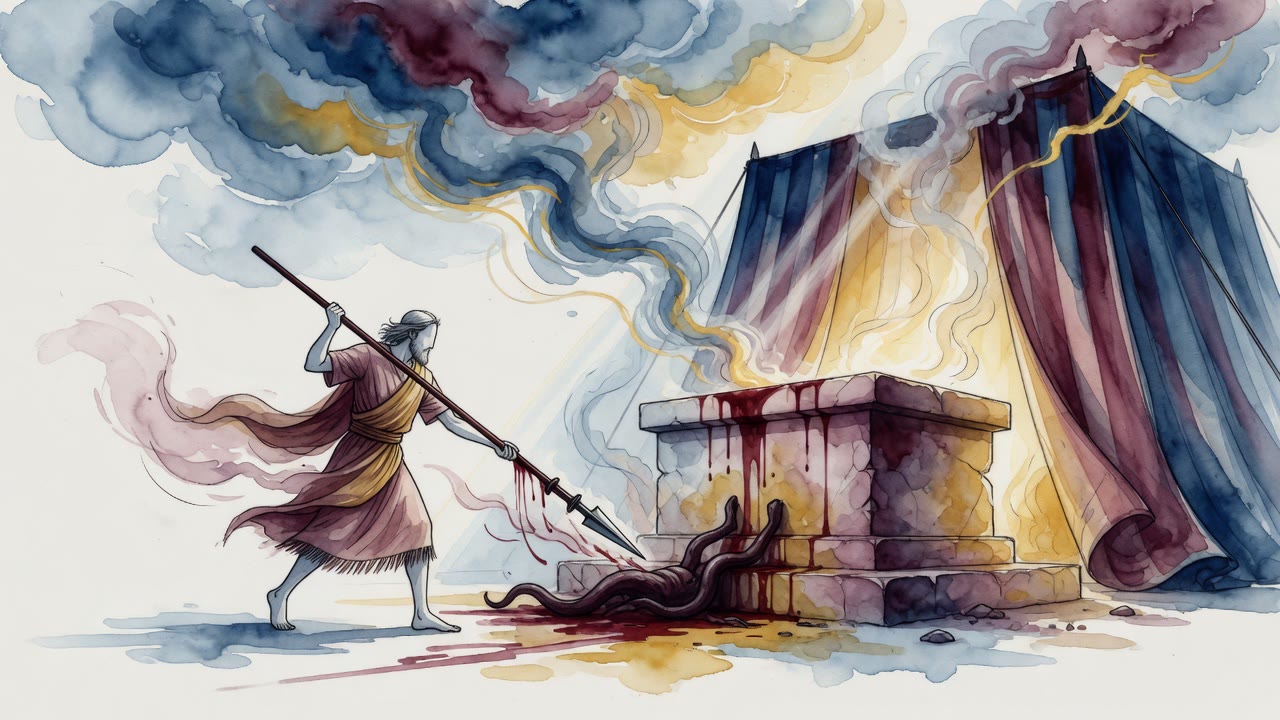
The counting also told on them. The tribe grew thin, and it grew thin for the reason no other tribe had: they saw the Divine Presence, and they saw it often, and no human being sees it and lives. They carried the tent, they stood inside the curtain, they served where the glory sat, and each generation came out of that service with fewer men in it than went in. Their nearness was the whole of their honor and the whole of their loss.

It took centuries to reach the bottom of that arithmetic. When Israel came up out of captivity, Ezra stopped the whole company at the river and looked them over before he would move, family by family, priests and people, checking the muster against the roll the way a man checks a load before a long road.

He found none of the children of Levi. Not few. None. He went back through the camp and looked again, since a tribe does not simply fail to appear, and the second pass gave him the same nothing as the first. The men who had been counted more often than any other family in Israel had been counted down to the line where the counting stops.

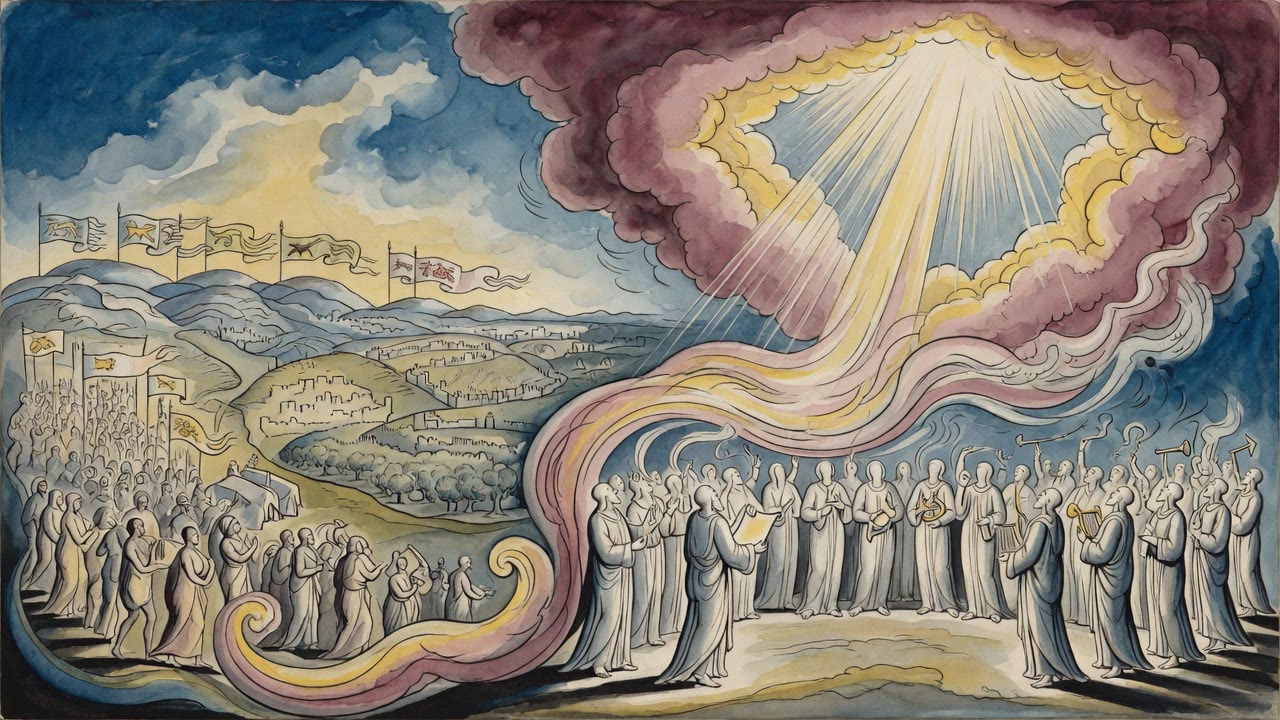
Over that gap in the roll the Holy One said what he had been keeping. "In this world they were destroyed for having seen my Presence, because no human shall see me and live. But when I bring my Presence back to Zion, I will be revealed in my glory over all Israel, and they will see me and live, eye to eye, the Lord returning to Zion." Every one of them would put out a finger and point at it and say, this is our God.

Ezra folded the list where the name should have been, gave it back to the man holding it, and called for the next family by the water.


← All myths
From the tradition

Sources

3 sources

The texts behind this telling. Some cards carry a translation of the source; others are our own retelling of it, and each card says which. Every card links out to the original.

Legends of the Jews 2:21Legends of the Jews

Retold in our words. Read the original at the link below.The Legends of the Jews by Louis Ginzberg (1909) · Public Domain

As his days dwindled, he called his children together, not just to say goodbye, but to share the story of his life, and astonishingly, to foretell their futures, all the way to the final judgment. The air thick with emotion, anticipation hanging heavy as Levi began to speak.

"When we were pasturing the flocks in Abel-Meholah," he began, according to Legends of the Jews, "the spirit of understanding of the Lord came upon me." Abel-Meholah, a place name that echoes with the simplicity of pastoral life. It was there, in that very ordinary place, that Levi experienced something extraordinary.

He continued, "I saw all mankind, how they corrupt their ways, and that injustice builds up walls for herself, and impiety sits enthroned upon the towers." He wasn't just seeing the present; he was seeing the trajectory of humanity, the rise of corruption and the reign of injustice. A stark and sobering vision.

Levi was overcome by grief, "And I fell to grieving over the generations of men, and I prayed to the Lord to save me." His heart ached for the future, for the suffering he foresaw. He turned to God in prayer, a desperate plea for salvation.

And then, something incredible happened. "Sleep enshrouded me, and I beheld a tall mountain, and lo! the heavens opened, and an angel of God addressed me, and said: 'Levi, enter!'"

A mountain, often a symbol of spiritual ascent. The heavens opening, a direct line to the divine. And an angel, a messenger of God, beckoning him forward. What does it all mean? What awaits Levi beyond this point? We're left hanging, just as his children must have been, eager to hear the rest of this incredible vision, this pivotal moment that shaped not only Levi's life, but the destiny of his descendants.

Full source
Midrash Tanchuma, Bamidbar 17Midrash Tanchuma

Retold in our words. Read the original at the link below.Townsend 1989 translation of Midrash Tanhuma, S. Buber Recension · CC-BY

(Numb. 3:15:) “Enroll the Children of Levi.” This tribe was dearer to the Holy One, blessed be He, than all the tribes, as stated (in I Sam. 2:28), “And I chose him from all the tribes of Israel to be My priest….” How so? The Holy One, blessed be He, created days and chose one of them for Himself, as stated (in Ps. 139:16), “days were formed, and one of them was His own.” And which is it? R. Levi says, “This is the Sabbath.” He created years and chose one of them for Himself, i.e. the seventh, as stated (in Lev. 25:2), “Then the land shall observe a Sabbath for the Lord.” He created weeks [of years] and chose one of them for Himself, i.e. the Jubilee, as stated (in Lev. 25:10), “And you shall sanctify the fiftieth year.” He created countries, and chose one of them for Himself, [i.e.] the land of Israel, as stated (in Deut. 11:12), “A land for which the Lord your God always cares.” And so the Holy One, blessed be He, calls it His land, as stated (in Joel 4:2), they have divided up My land. He created firmaments and chose one of them for Himself, i.e. ‘aravot, as stated (in Ps. 68:5), “Build a way for the One who rides in the 'aravot; the Lord is His name.” He created seventy peoples and chose one of them for Himself, i.e. Israel, as stated (in Deut. 7:6), “the Lord your God has chosen you to be for Himself a treasured people,” a worthy (KShR) nation, and you are worthy (KShR). Now (according to Deut. 7:6), “the Lord your God has chosen you….” Why did He choose you? Because He loved you, as stated (in Hos. 14:5), “I will love them generously”; and it is written (in Deut. 7:8), “Because the Lord loved you.” He created tribes and chose one of them for Himself, i.e. the tribe of Levi, as stated (in I Sam. 2:28), “And I chose him from all the tribes of Israel to be My priest….” He therefore especially cherishes him. So he says to Moses each time (as in Numb. 3:15), “Enroll the Children of Levi [….]” “Every male.” Why did he say, “every male,” and not mention the noun, female? Because the glory of God arises from the males. [Ergo,] “every male.” David has stated (in Ps. 127:3), “Behold, sons are the heritage of the Lord”; i.e. the males. “The fruit of the womb, a reward,” for if females come, says the Holy One, blessed be He, “they also are a reward.” And why does he enroll them [each and every time]? Because they are His troops, and the King has much joy in His troops. You find that the whole tribe of Levi was diminished (in number). And why were they diminished? Because they see the Divine Presence much. So also when Israel came up from the captivity, they did not find any of them, because they had been diminished, as stated (in (Ezra 8:1)5), “so I viewed the people and the priests, but I found there none of the Children of Levi.” The Holy One, blessed be He, said, “In this world they were destroyed, because they had seen the Divine Presence, since it is stated (in Exod. 33:20), “For no human shall see Me and live.” But in the future to come, when I restore my Divine Presence to Zion, I will be revealed in My glory over all Israel. Then they shall see Me and live forever. Thus it is stated (in Is. 52:8), “for eye to eye they shall see the return of the Lord to Zion.” And not only that, but they shall point out My glory to each other with the finger, while saying (in the words of Ps. 48:15), “For this God, our God.” It also says (in Is. 25:9), “And in that day they shall say, ‘See, this is our God; we waited for Him and He delivered us]; this is the Lord; we waited for Him. Let us rejoice and be glad in His salvation.’”

Full source
Bamidbar Rabbah 4:11Bamidbar Rabbah

Retold in our words. Read the original at the link below.The Sefaria Midrash Rabbah, 2022 · CC-BY

Bamidbar Rabbah turns to Aaron and Moses and the Firstborn.

Specifically, What's so special about these "sacred shekels?"

Bamidbar Rabbah, a midrashic (rabbinic interpretive commentary) compilation on the Book of Numbers, digs into this. It points out that “sacred shekels are not like the ordinary shekels.": regular coins, if you weigh each one separately and then weigh the whole lot together, you’ll almost always find a slight discrepancy. A little more, a little less. Imperfections creep in. As Bamidbar Rabbah says, "Ordinary shekels, if one weighs each one individually, then weighs them all as one, he will either have a surplus or a shortage. They are not exact." Those tiny fractions, unnoticeable on their own, add up.

sacred shekels? That's a different story. According to the Rabbis, they were perfectly precise. Weigh each one individually, weigh them together, and you get the exact same result. No surplus, no shortage. “However, sacred shekels are precise; if one weighs each one individually and then weighs them all as one, he will have neither a surplus nor a shortage.”

What does this tell us? Maybe it’s about the idea of sacredness itself. Sacred things are whole, complete, without flaw. They embody a kind of perfection that we, in our everyday lives, rarely encounter.

Then comes verse 51: “Moses gave the silver of the redemption to Aaron and to his sons, according to the directive of the Lord, as the Lord commanded Moses.” Here, Bamidbar Rabbah emphasizes that Moses didn't just hand over the silver on his own initiative. No, no, no. He waited for a direct command from HaShem, the Holy One, blessed be He. “Moses gave the silver of the redemption…[according to the directive of the Lord] – it teaches that he did not give it to them until it was stated to him from the mouth of the Holy One blessed be He: Give it to them.” Every detail mattered.

And how was it distributed? Equally! Half to Aaron, the High Priest, and half to his sons, the priests. “As the Lord commanded Moses – he gave half to Aaron and half to his sons, just as the Holy One blessed be He said to him: “You shall give the silver to Aaron and his sons” (Numbers 3:48); Aaron is equivalent to his sons." There's a beautiful symmetry here. Aaron, in his holiness, is seen as equivalent to all his sons. A unified priestly line.

So, what do we take away from this little nugget of Torah and its midrashic unpacking? Perhaps it’s about the importance of precision in sacred matters, the need for divine instruction, and the underlying unity within the priesthood. Or maybe it's just a reminder that even the smallest details, like the weight of a shekel, can hold profound meaning if we take the time to look closely. What do you think?

Full source