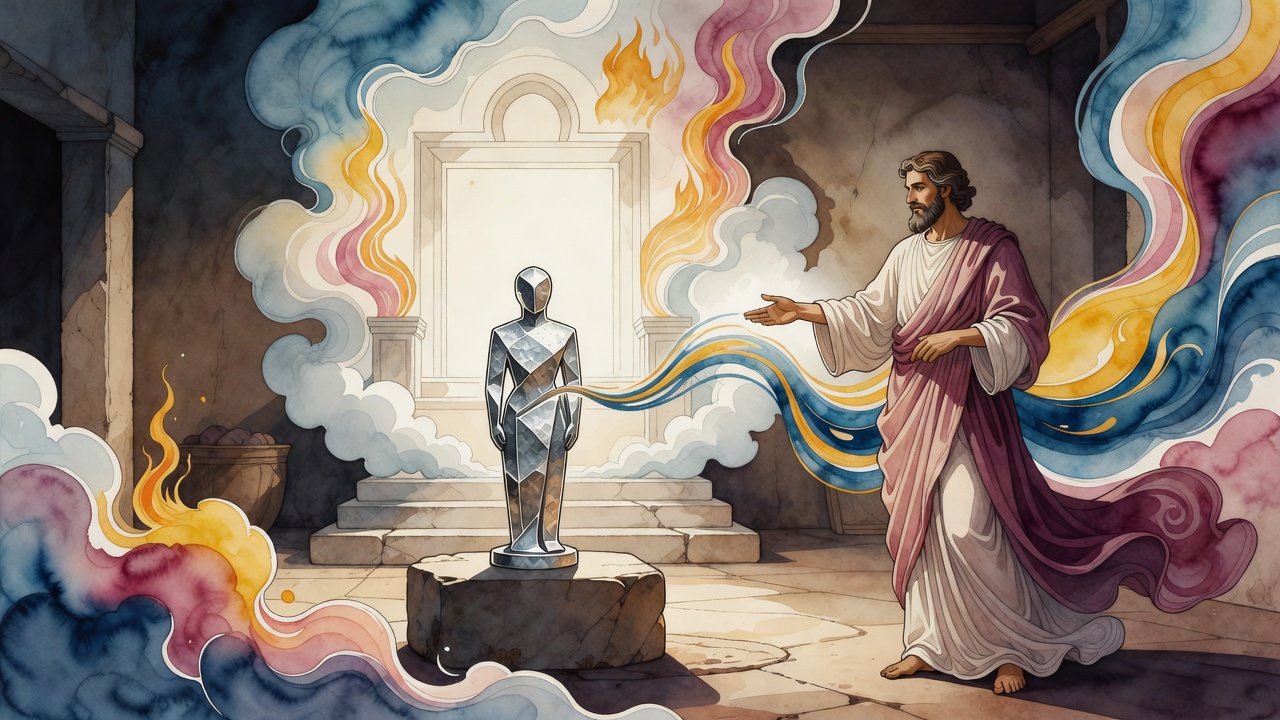
Moses Sang the Sea Song With the Word He Had Used Against God
The brick quota did not drop. Foremen came off Pharaoh's porch still bleeding and cursed Moses for putting a sword in Egypt's hand.
Table of Contents
The Israelite foremen came off Pharaoh's porch with welts still opening. Straw was gone. The brick count had not moved by a single brick. They walked into the road and found Moses and Aaron waiting for news, as if news could be good.
 Click for full size
"May the Lord look at you and judge," the foremen said, "because you have made us stink in front of Pharaoh and in front of his servants, and put a sword in their hand to kill us."
Then they walked past him back to the yards.
The Straw Ran Out
The audience had gone badly from the first sentence. "Let my people go," Moses and Aaron had told Pharaoh, "so they can hold a feast for me in the wilderness."
Pharaoh looked at them. "Who is the Lord, that I should listen to his voice and let Israel go? I do not know the Lord, and I will not let Israel go."
He gave the order the same day. Stop supplying straw for the bricks. Let them go scavenge it themselves. Do not reduce the count by a single brick, because they are idle, and idle men start asking for festivals.
So the people scattered all over Egypt pulling stubble out of the fields, and the quota stayed where it was, and the foremen who had to report the shortfall took the beating for it. They went to Pharaoh themselves, still bleeding, and asked why he was doing this to his servants.
"You are idle," he said. "Idle. That is why you keep saying, let us go sacrifice to the Lord. Go work. No straw will be given you, and the full count of bricks you will deliver."
What He Threw at Heaven
Moses turned from the road and threw the whole day at heaven.
"Lord, why have you done evil to this people? Why did you ever send me? From then, from the hour I came to Pharaoh to speak in your name, he has done evil to this people, and you have not delivered your people at all."
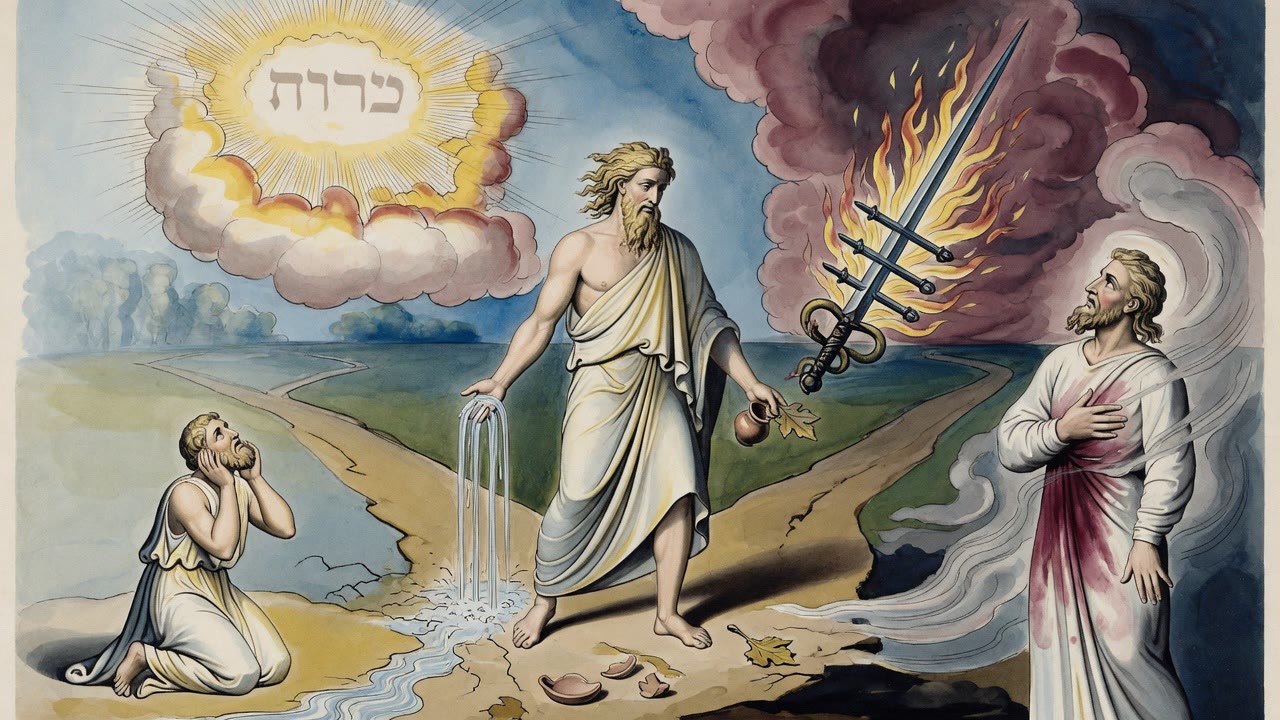
The complaint had a small word at the front of it. Az (אז). From then. It was the word a man reaches for when he is dating his own disaster.
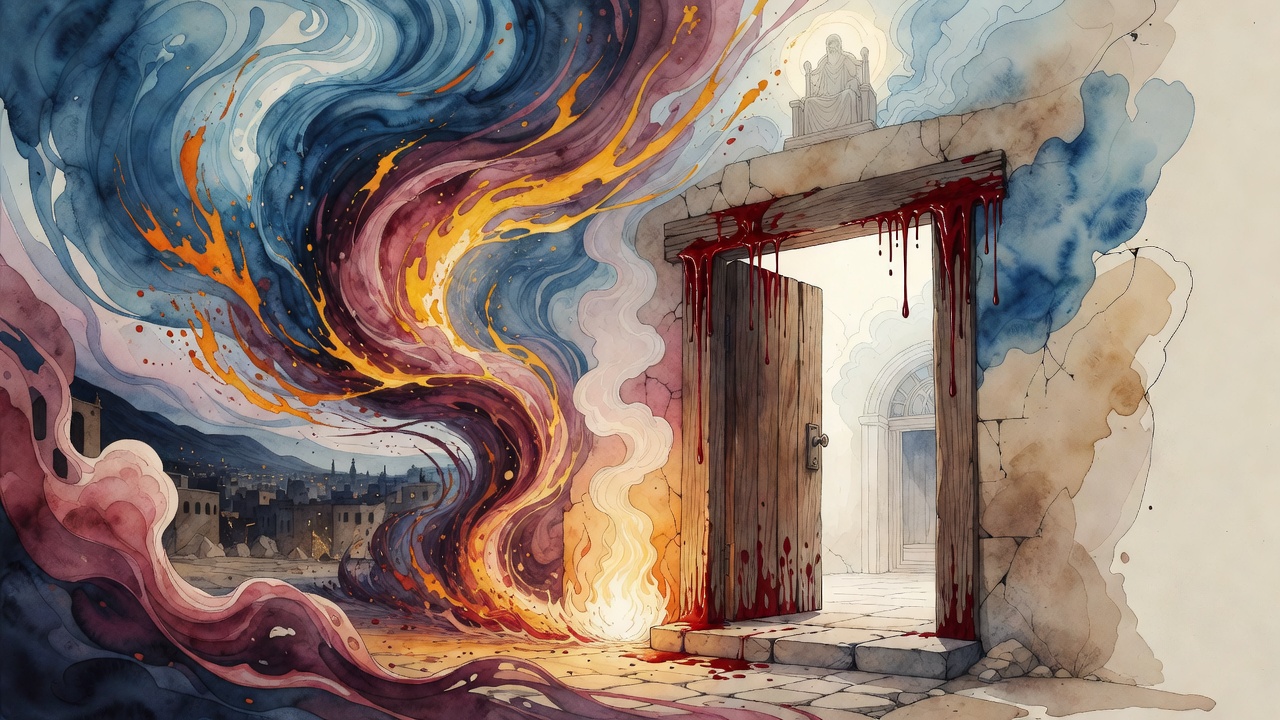
God did not defend himself. He answered with what he was about to do. The argument went into the ground for a while, under a year of blood and frogs and darkness, under the night the firstborn died and Egypt shoved a whole nation out its door before dawn.
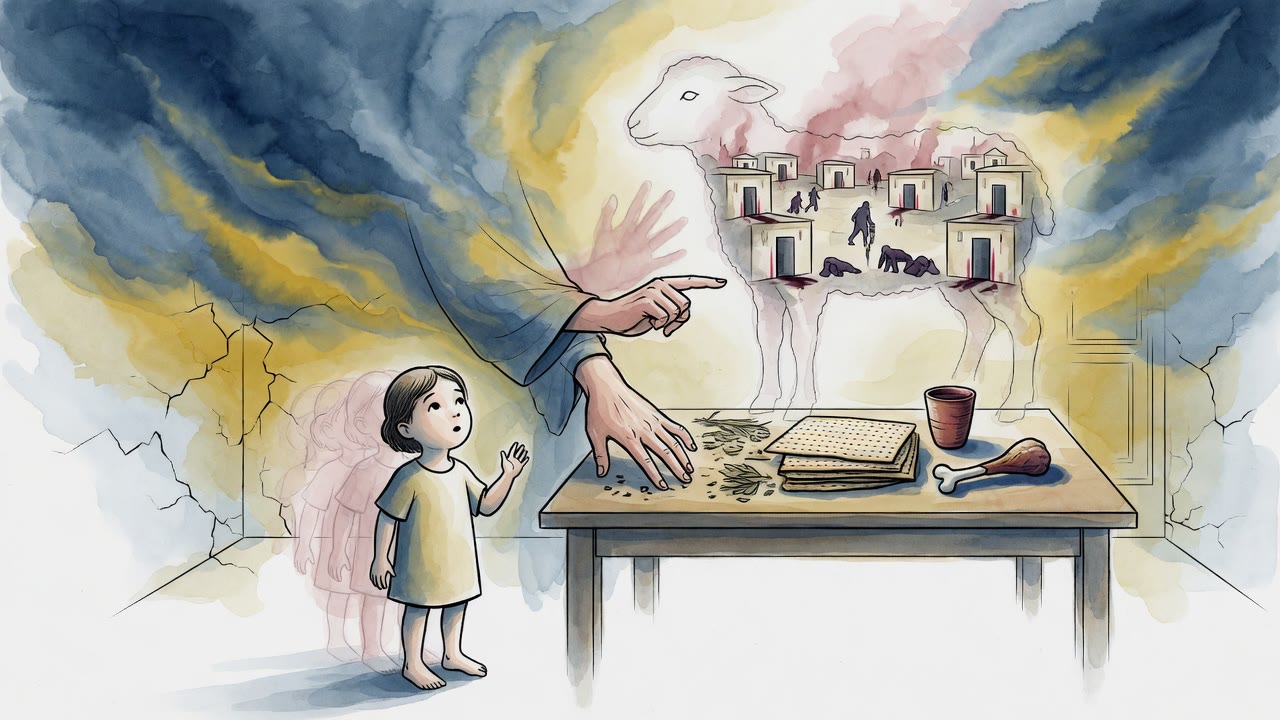
That night had been held ready since the six days of creation. Harm could not enter it. Israel walked out under a guard older than Egypt, a watch set before there were taskmasters, before there were bricks. Later a people would raise four cups on that same night and drink them in peace, because the night itself had been sealed against what hunts in the dark.
The Water Stood for an Idol Too
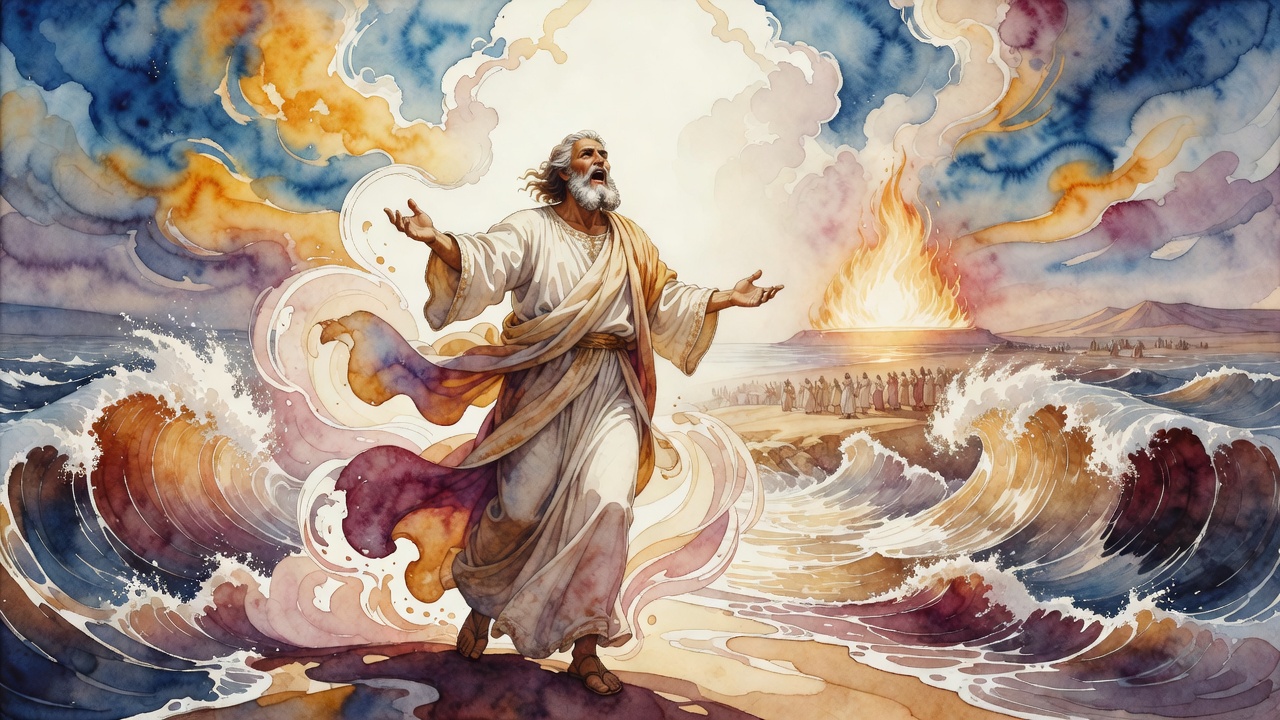
They came to the edge of the sea with six hundred chariots closing behind them and no road anywhere.
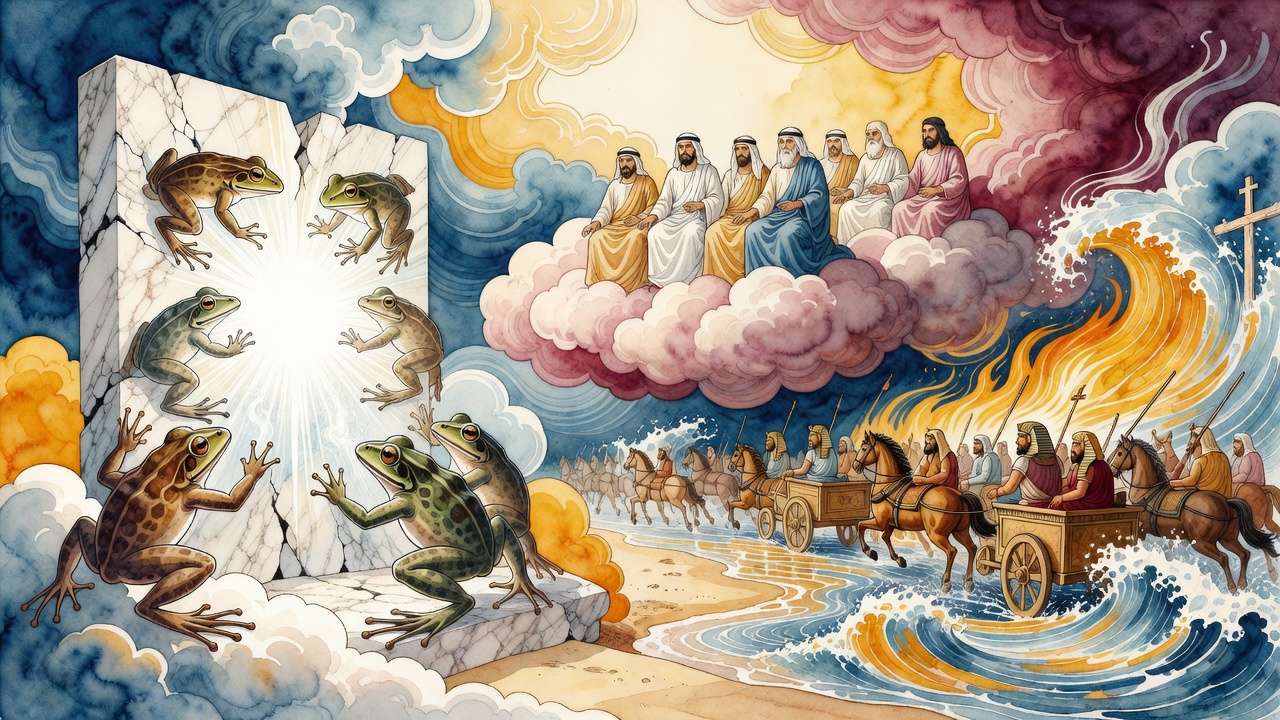
An east wind ran all night and drove the water back, and the seabed came up dry. Israel walked in between two standing walls of it. Not everyone who walked through was clean. A man carried an idol into the corridor of the sea, wrapped and hidden against his ribs, moving along with the redeemed. The water stood for that man too.
Toward morning the wheels of the chariots started coming off in the wet sand. The walls fell back into themselves. The Egyptian army went under. Israel came up on the far shore in the early light and saw bodies on the beach.
The hidden figure was still under the cloak. The sea had split for a people that was not finished with other gods. Righteousness, that morning, belonged to the One who had opened the water anyway.
Everybody stopped and looked at Moses.
The Word He Chose to Open With
He stood at the waterline with wet ankles and a whole nation waiting. He opened his mouth on a single small syllable.
Az.
Then. The same word. He could have started anywhere. He reached for the one that had carried his accusation and made it carry the song instead.
"With the tongue I ruined it with," he said, "with that same tongue I set it right and praise you."
Then he sang, and the people sang the lines back after him, and the line they came to was that the Lord is a man of war. Not a man of war in the air. A man making war for them, on their side of the water, while they stood there holding their children and doing nothing at all.
Miriam picked up a drum. The women came out behind her with drums and dancing, and she sang the first line back at them across the sand.
The Tongue That Had Dated Disaster
Nobody standing there knew where Moses had gotten his first word. He had complained his way to it years earlier in the dark, alone, after a beating that was not even his. The foremen's curse had gone through him into heaven. Heaven had taken the curse and the word together, and given the word back as a song.
Manna would fall later on a day some of them fed it to idols. The sea had already taught the same patience. The water stood. The song stood. The small syllable stood at the front of both the wreck and the repair.
Moses' ankles dried in the morning wind. The drum kept time. Behind him the beach still held the army that had chased them, and ahead of him a people that had walked through with mixed cargo began to sing as if their mouths had always been for this.
He had used the tongue once to date a disaster. He used it now to keep time for a nation that had not fought at all.
← All myths