5 min read

Moses Served the Meal While God Fed the World

Jethro brought offerings and the elders sat to eat. Moses stayed on his feet serving, and the sages raised the bar to heaven.

Curated by Arthur · Told by Maggid ·
Table of Contents
  1. The Leader With the Platter
  2. Abraham's Pattern
  3. Why the Table Has Rules
  4. The Convert's Smoke and the Elders' Bread
  5. What the Dishes Taught

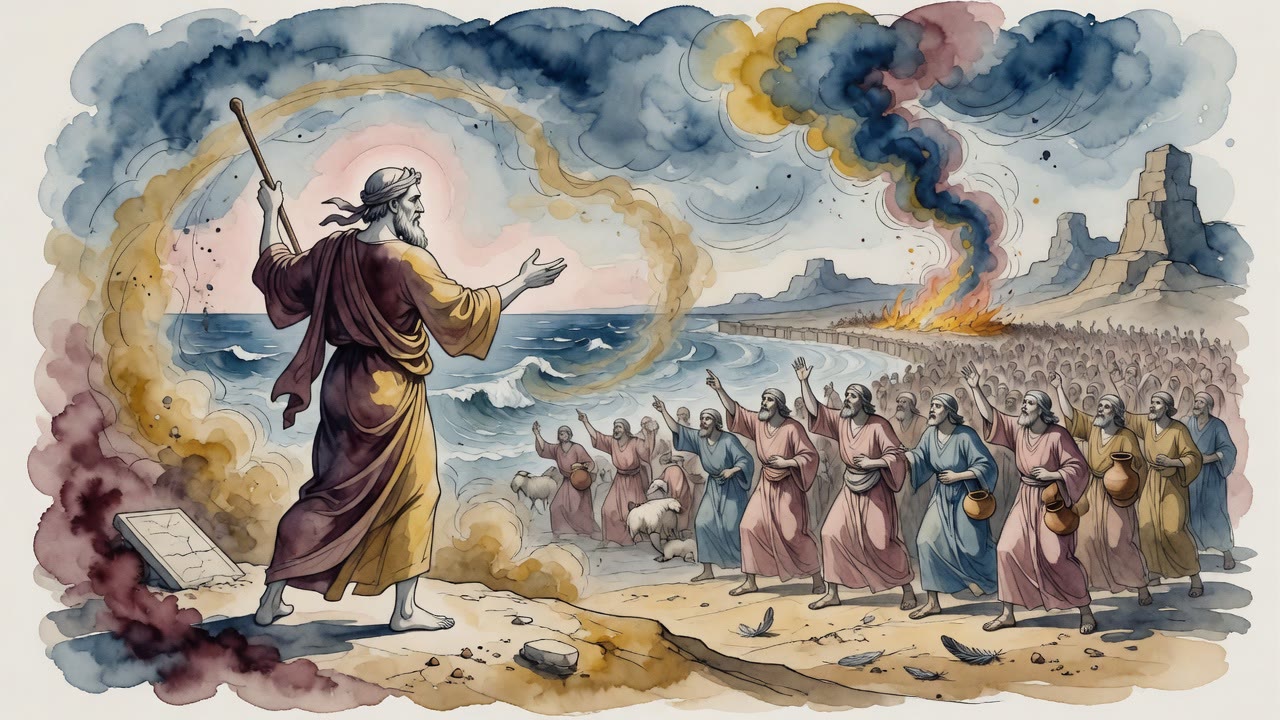
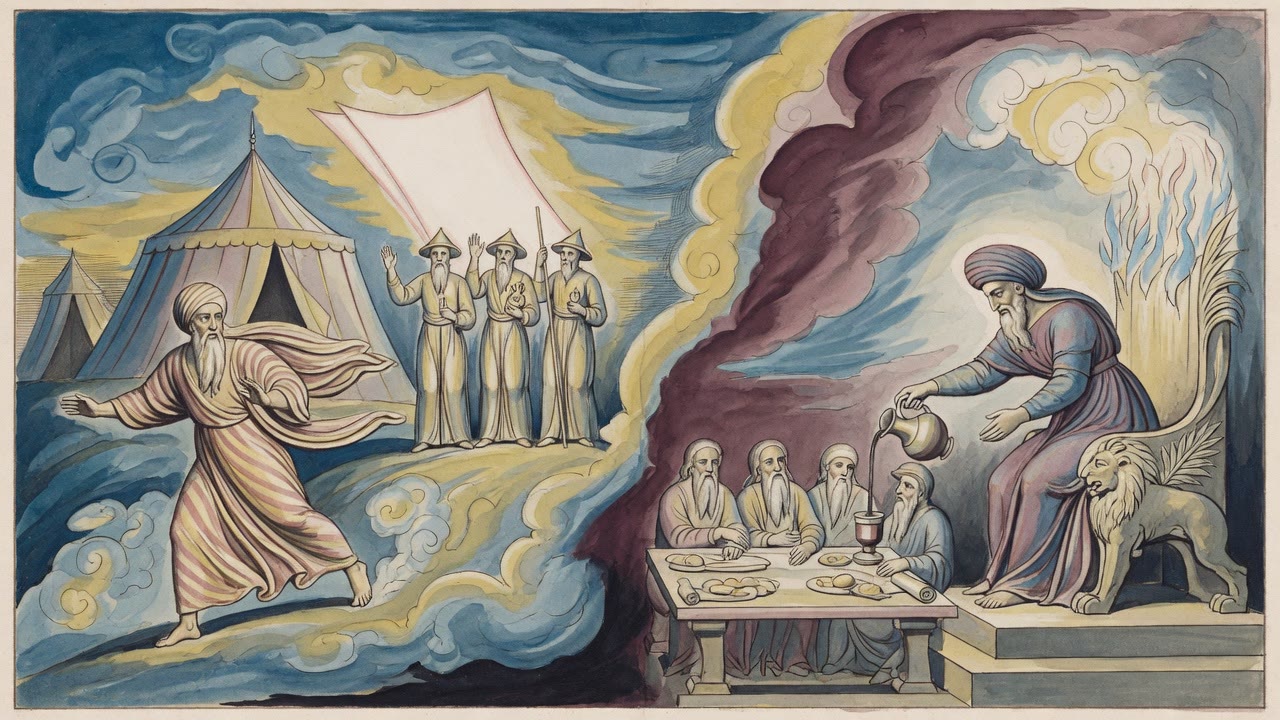
Jethro set a burnt offering before the God of Israel, and the smoke rose from hands that only yesterday had burned incense to other powers. Scripture itself seems to pause at the sight. A convert's altar can astonish heaven.
Moses Served the Meal While God Fed the World Click for full size

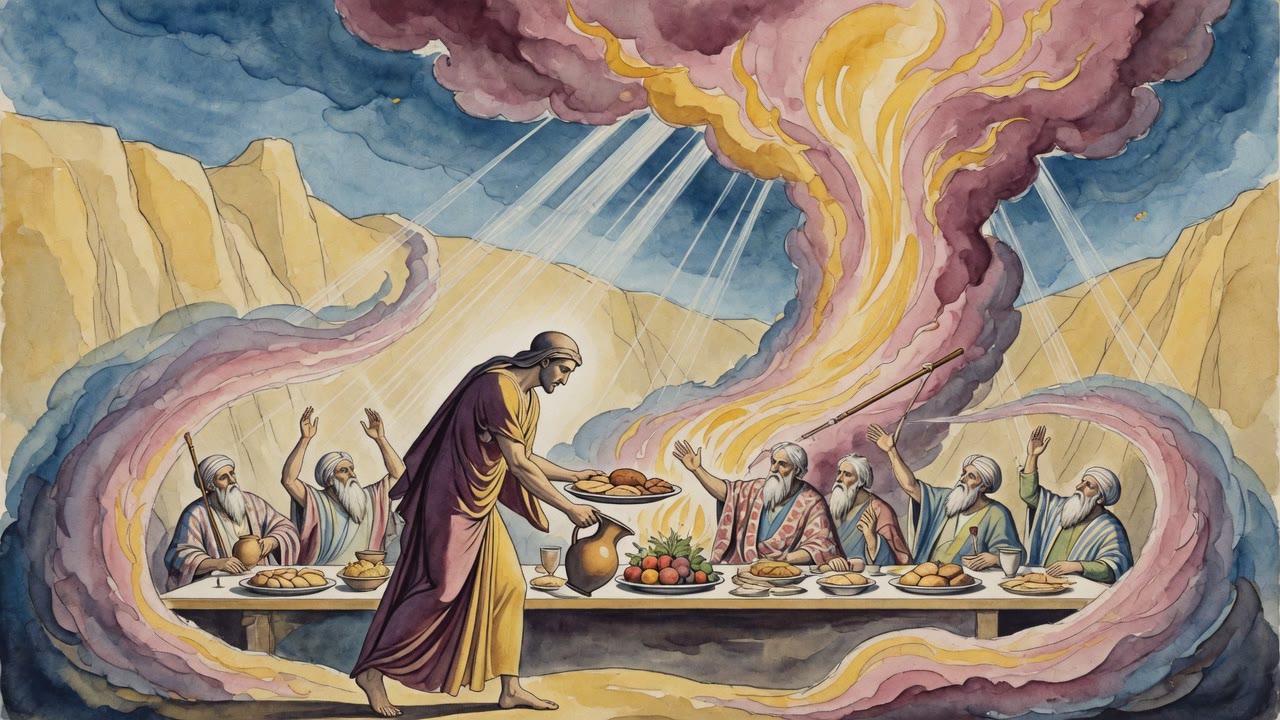
Then the feast was laid. Aaron and all the elders of Israel sat down to eat bread with the Midianite priest. The verse never seats Moses at the table. The rabbis answered the silence: Moses was on his feet, serving the meal to his guests.

The Leader With the Platter

The greatest man in the camp carried dishes. He poured. He watched that each elder had enough. He did not perform humility for show. He treated the table as sacred work, the same hands that had held the staff now steadying a bowl.

Centuries later, when Rabban Gamaliel stood and served his colleagues, they protested that the act was beneath him. Rabbi Yehoshua reminded them of someone greater who served: Abraham, who stood over his guests, and those guests were idolaters. Rabbi Tzadok raised the bar higher still. Someone greater than Abraham serves every day: the God of heaven, who gives each creature what it needs, who feeds all flesh, even the beasts of the field, and not only the righteous but those who provoke Him.

If God waits on a thankless world, a sage may serve those who labor in Torah. Welcoming the wise is like welcoming the Presence itself.

Abraham's Pattern

Abraham had already written the script in the heat of day. He ran toward strangers, ordered water for feet, stood while they ate. Midrash on the psalms calls him prophet, God-fearer, the one who walked before the Lord and chose the way of integrity. When he prayed for Abimelech, kings lived. When he bound Isaac, heaven said, now I know that you fear God.

Fear here was not cringing. It was the spine that can serve without losing stature. Moses at Jethro's feast was Abraham's pattern in a new generation: greatness measured by who rises from the cushion to feed another.

Why the Table Has Rules

Far from Sinai, a Jewish scholar speaking to a Greek king explained that the laws of permitted and forbidden foods were not random. The cloven hoof and the chewing of the cud trained discrimination and memory. What enters the mouth trains what enters the mind. A people that sorts its food learns to sort its acts.

At Jethro's meal the menu is not inventoried, but the moral of discrimination is already present. Who sits, who serves, who may approach the altar after a life of idols: all of it is a sorting. Moses serving does not erase difference. It shows that hierarchy of holiness can still bow in hospitality.

The Convert's Smoke and the Elders' Bread

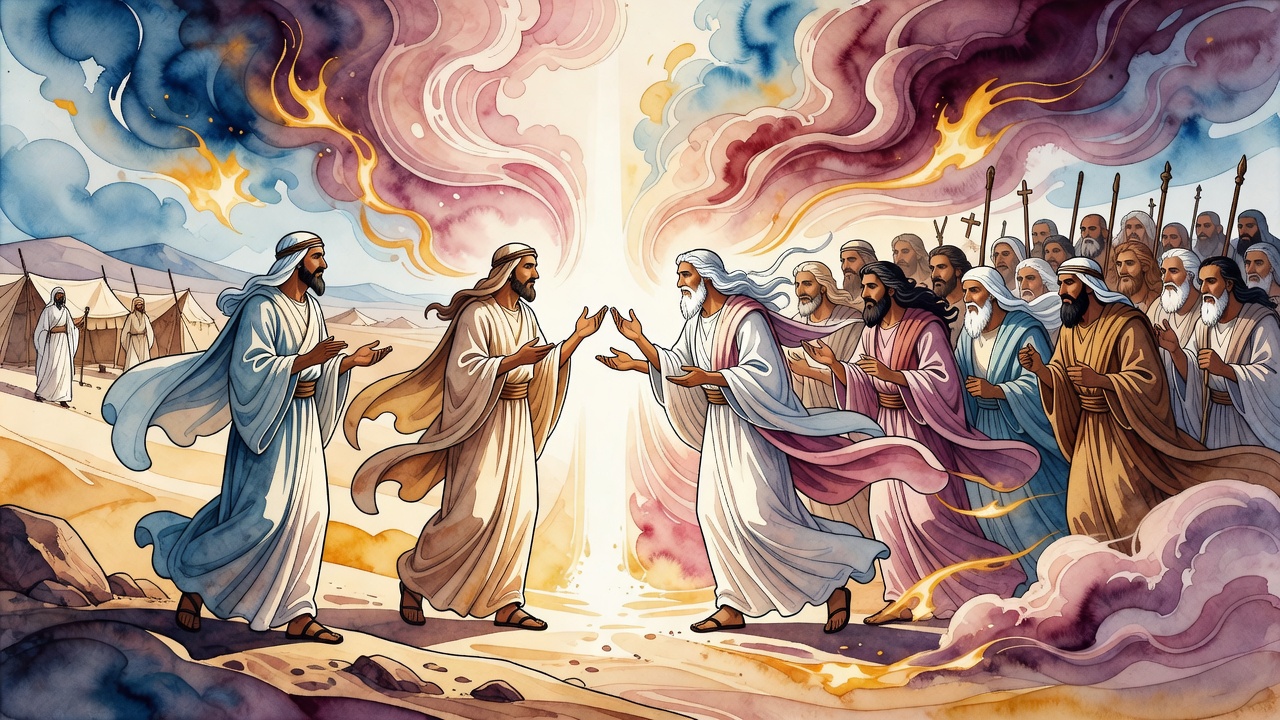
Jethro's sacrifice was the shock. Yesterday's idolater, today's offerer. The feast that followed was the repair of relationship: priest of Midian, brother-in-law of Moses, elders of a newly freed people, bread shared under the eye of heaven. Moses' service stitched the scene together. Without him standing, the table might have been only politics. With him standing, it became a teaching.

Some in the camp must have muttered that a leader should sit. The tradition answers with the chain: Moses, Abraham, God. The higher the rank, the more natural the service.

What the Dishes Taught

Night came and the plates were empty. Jethro would soon advise Moses to appoint judges so the man would not wear himself out. Even that counsel grew from a day when Moses spent strength on others' hunger first. The God who feeds all flesh had a servant who fed a room.

Abraham running toward strangers in the heat, Moses circling a table with bread, God measuring food for beasts of the field: three rungs of one ladder. A student who refuses to serve because he has learned too much has not learned the first story. A leader who will only sit has forgotten the staff that once stretched over water and now steadies a platter.

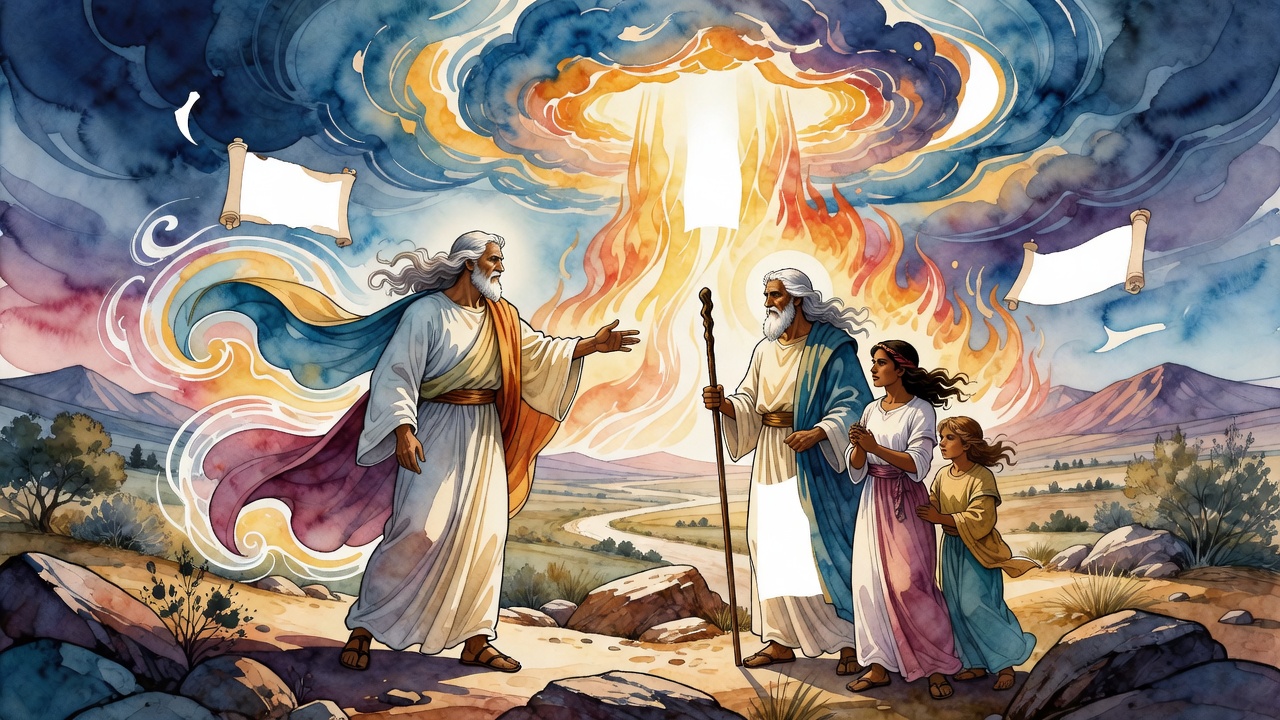
Jethro watched his son-in-law move between the elders and understood something about the God he had just addressed with fire. This was not a deity who only received smoke. This was a God whose chief prophet refused a cushion while guests ate. The convert's astonishment at the altar met a second astonishment at the table.

Later courts would argue who is fit to serve, who is fit to eat, what food marks a people set apart. Discrimination at the table is real. Hospitality does not erase Israel's boundaries. It shows how a bounded people still rises to feed the guest, even the guest who only yesterday bowed elsewhere. The image that outlives the arguments is simple: the prophet on his feet, the convert's offering still fragrant, the elders chewing bread while the greatest among them refuses a chair.


← All myths
From the tradition

Sources

3 sources

The texts behind this telling. Some cards carry a translation of the source; others are our own retelling of it, and each card says which. Every card links out to the original.

Mekhilta DeRabbi Shimon Ben Yochai 18:12Mekhilta DeRabbi Shimon Ben Yochai

Translation of the source text.Mechilta de-Rabbi Simon b. Jochai, ed. D. Hoffmann, Frankfurt 1905 · Public Domain

"And Jethro, Moses' father-in-law, took a burnt offering and sacrifices for God" (Exodus 18:12). Here Scripture expresses astonishment at him: A man who used to stand and sacrifice and burn incense to idols every day now brings a burnt offering and sacrifices to God!

"And Aaron came, and all the elders of Israel, to eat bread." Where did Moses go? Did he not at first go out to meet him, as it is said, "And Moses went out to meet his father-in-law" (verse 7)? Rather, this teaches that Moses stood and served them.

This matter Rabbi Tzadok expounded. When Rabban Gamaliel stood and served, they said: Is it right that we recline while Gamaliel, the son of Rabbi, stands and serves us? Rabbi Yehoshua said to them: We find one greater than Rabban Gamaliel who stood and served. They said to him: Who is this? He said to them: Abraham, as it is said, "and he stood over them" (Genesis 18:8) - and they were not even decent men but men who worshipped idols and provoked the Omnipresent; how much more so should Rabban Gamaliel stand and serve men who are worthy and occupied with Torah!

Rabbi Tzadok said to them: We find one greater than Abraham and than Rabban Gamaliel who stands and serves. They said to him: Who is this? He said to them: the God of heaven, blessed be He, who gives to each and every one his needs and to every body its sufficiency, as it is said, "who gives bread to all flesh" (Psalms 136:25), and it says, "who gives to the beast its food" (Psalms 147:9) - and not to decent men but to men who worship idols and provoke Him; how much more so should Rabban Gamaliel stand and serve men who are worthy and occupied with Torah! "Before God" - [this teaches that whoever receives the face of the sages is as if he receives the face of the Divine Presence].

Full source
Letter of Aristeas 1:162Letter of Aristeas

Retold in our words. Read the original at the link below.The Letter of Aristeas, Clarendon Press (1913) · CC-BY

The excellency of the analogy in regard to discrimination and memory has now been pointed out to you, according to our interpretation of " the cloven hoof and the chewing of the cud ". For our laws have not been drawn up at random or in accordance with the first casual thought that occurred to the mind, but with a view to truth and the indication of right reason.

For by means of the directions which he gives with regard to meats and drinks and particular cases of touching, he bids us neither to do nor listen to anything, thoughtlessly nor to resort to injustice by the abuse of the power of reason.

Full source
Midrash Tehillim 25:11Midrash Tehillim

Retold in our words. Read the original at the link below.Rabbi Mike Feuer, Jerusalem Anthology · CC-BY

He's not just a character in a story; he's a blueprint, a model for living a life of faith and devotion. But how do we even begin to grasp the depth of his significance?

Midrash Tehillim, a collection of rabbinic interpretations on the Book of Psalms, illuminates this very question. It asks, "Who is this man?" And the answer? It points directly to Abraham.

This teaching uses verses from the Torah to paint a portrait of Abraham as the ultimate exemplar of piety. It starts by identifying him as a prophet. Remember when Abraham intercedes for Abimelech in Genesis? "Now therefore, restore the man's wife, for he is a prophet, and he will pray for you, and you will live" (Genesis 20:7). This wasn't just a polite request; it was the powerful supplication of a divinely chosen individual.

Then, there's the ultimate test: the Akeidah, the binding of Isaac. "Now I know that you fear God, since you have not withheld your son, your only one, from Me" (Genesis 22:12). This verse, according to Midrash Tehillim, encapsulates Abraham's profound fear – or better yet, his awe – of God. It wasn't a cowering fear, but a reverent recognition of the Divine's power and authority.

But Abraham's influence doesn't stop at his own personal piety. He's also a guide, someone who shows us "the way to choose." How did he do that? By walking before God and striving for perfection, as God commanded him: "Walk before Me and be perfect" (Genesis 17:1). This wasn't about achieving some unattainable ideal; it was about the constant, conscious effort to align one's actions with God's will. It's about tikkun (spiritual repair) olam, repairing the world through righteous deeds.

And the reward for such devotion? Not just personal salvation, but the promise of a future for his descendants. Midrash Tehillim reminds us of the oath God made to Abraham: "The Lord, the God of heaven, Who took me from my father's house and from the land of my birth, and Who spoke to me and Who swore to me, saying, 'To your offspring will I give this land'" (Genesis 24:7). This promise echoes through generations, evidence of the enduring legacy of Abraham's faith.

So, what does it all mean for us? Abraham isn't just a figure in the past; he's a living example, an invitation to walk a path of righteousness, to strive for connection with the Divine, and to build a better future for generations to come. He shows us that even the most challenging tests can be overcome through unwavering faith and devotion. And that, perhaps, is his most profound legacy.

Full source