5 min read

Mount Gaash Shook for Joshua's Forgotten Eulogy

They put Joshua in the ground and went straight out to their fields and vineyards. Nobody spoke over him. The hill above the grave began to move.

Curated by Arthur · Told by Maggid ·
Table of Contents
  1. They Buried Him and Went Back to Work
  2. Days but Not Years
  3. The Mountain Tried to Take Them First
  4. What Slips When a Pillar Falls
  5. The Name the Map Kept
Mount Gaash Shook for Joshua's Forgotten Eulogy Click for full size

They Buried Him and Went Back to Work

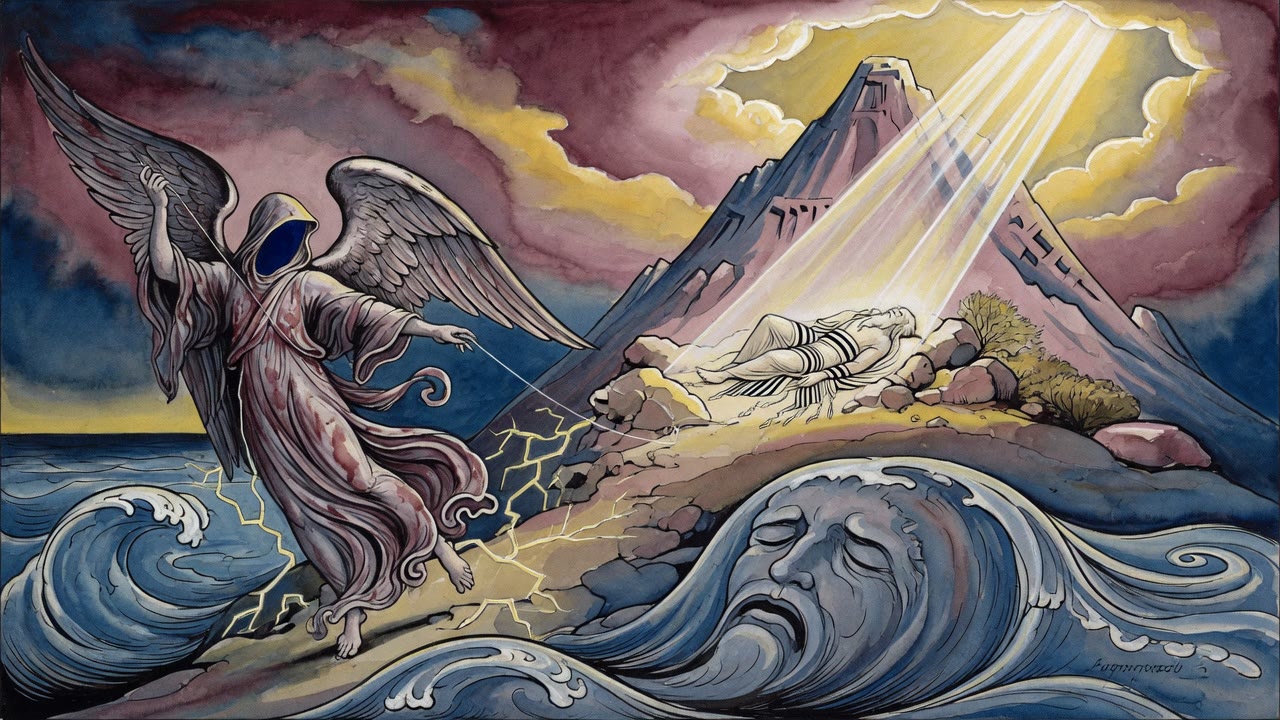
They laid Joshua in the border of his own inheritance at Timnath-serah, in the hill country of Ephraim, on the north side of a hill nobody had bothered to name until that week.

Then they scattered.

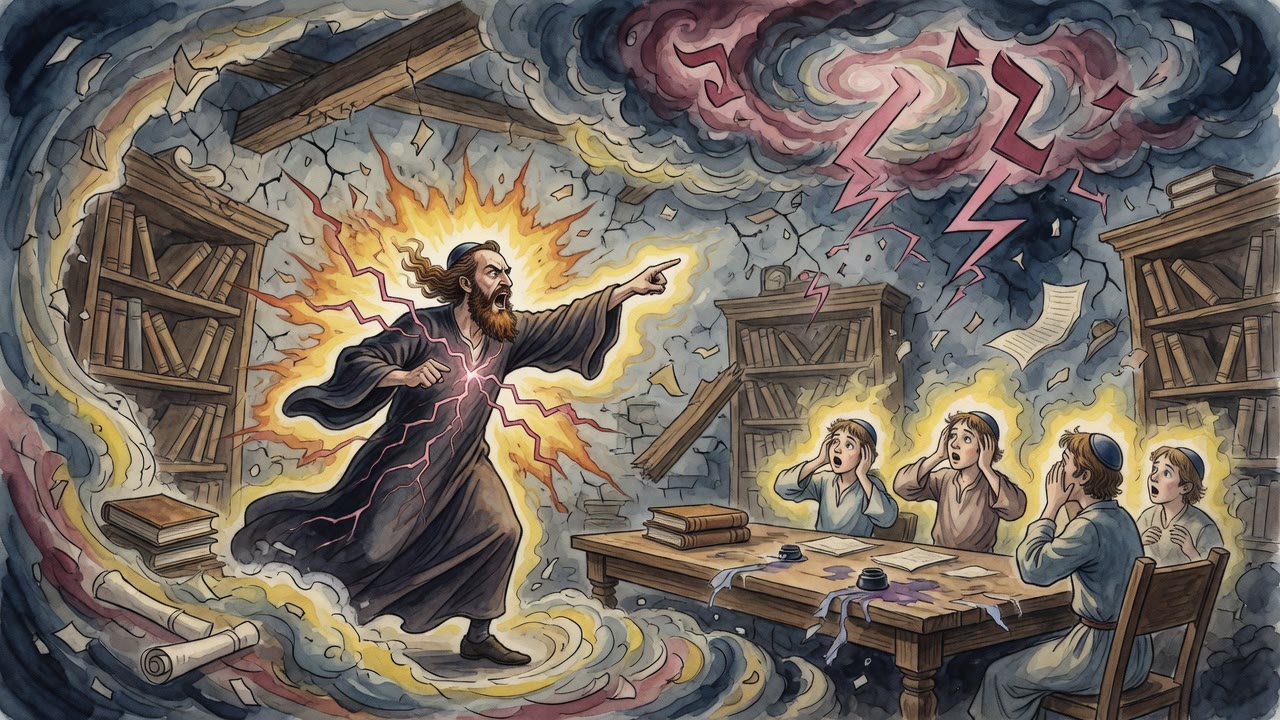
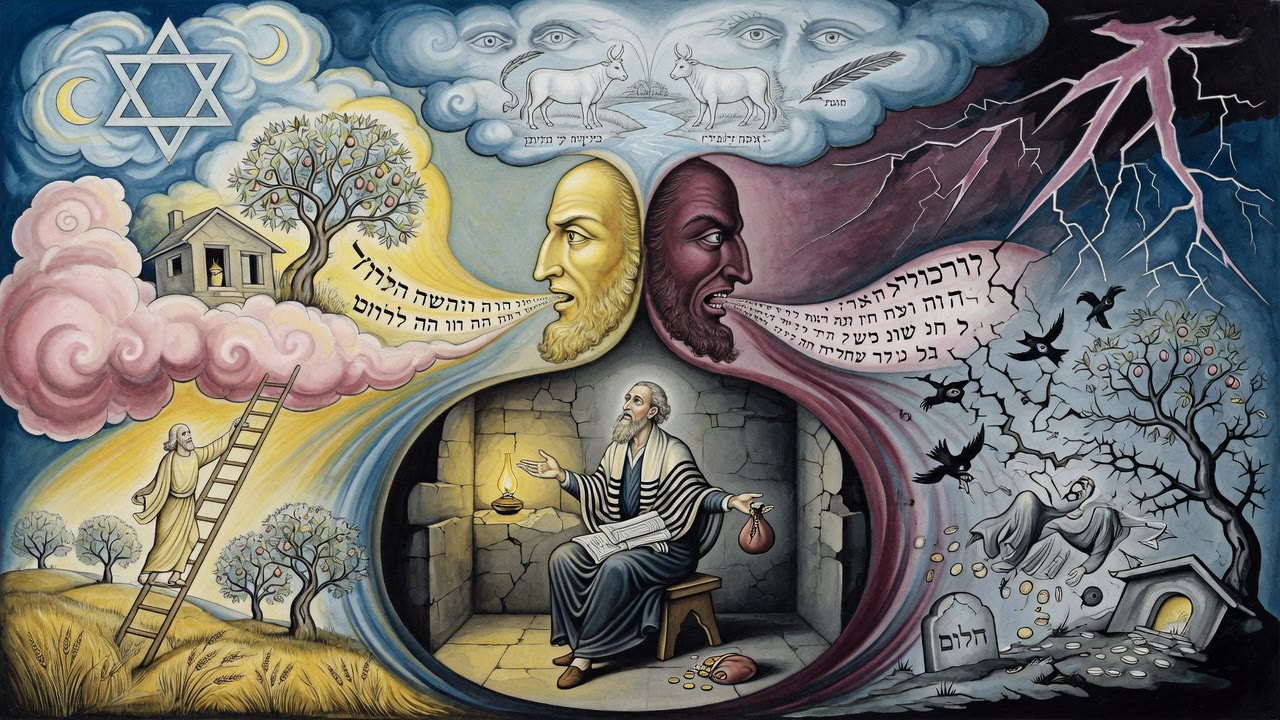
The land was being divided that same season, and the portions had gotten into the people the way wine gets into a man. This one went to walk his field. That one went to his vineyard. That one went to look at the house that was suddenly his, and that one went out with cord and stones to fix a boundary before a neighbor fixed it first. The man who had stopped the sun over Gibeon, who had stacked the Jordan into a wall and walked a nation across the riverbed on dry stones, went into the ground while the beneficiaries counted their acres. Almost nobody stopped to say anything over him.

Not a single one of them thought of it as an insult. That is what made it one.

Days but Not Years

Rav Yehuda passed on a ruling in the name of Rav that has no softness anywhere in it. A man too lazy to eulogize a sage properly deserves to be buried alive, and the proof is in the address on Joshua's grave: north of the mountain of quaking.

Rabbi Hiyya bar Abba brought Rabbi Yohanan's version, measure for measure. Whoever drags his feet at a sage's funeral does not get length of days.

Someone objected. Scripture says Israel served the LORD all the days of Joshua and all the days of the elders who prolonged days after him. Those elders lived. Their days ran long.

Days, came the answer. Days they prolonged. Years they did not.

That is the sentence sitting quietly under the story. The generation that ran to its vineyards got exactly what it had given: the calendar honored them, the count did not. They woke and slept and harvested and were buried early, and each of them had been standing on the hillside on the morning the eulogy went unsaid.

The Mountain Tried to Take Them First

God did not wait for the arithmetic of years.

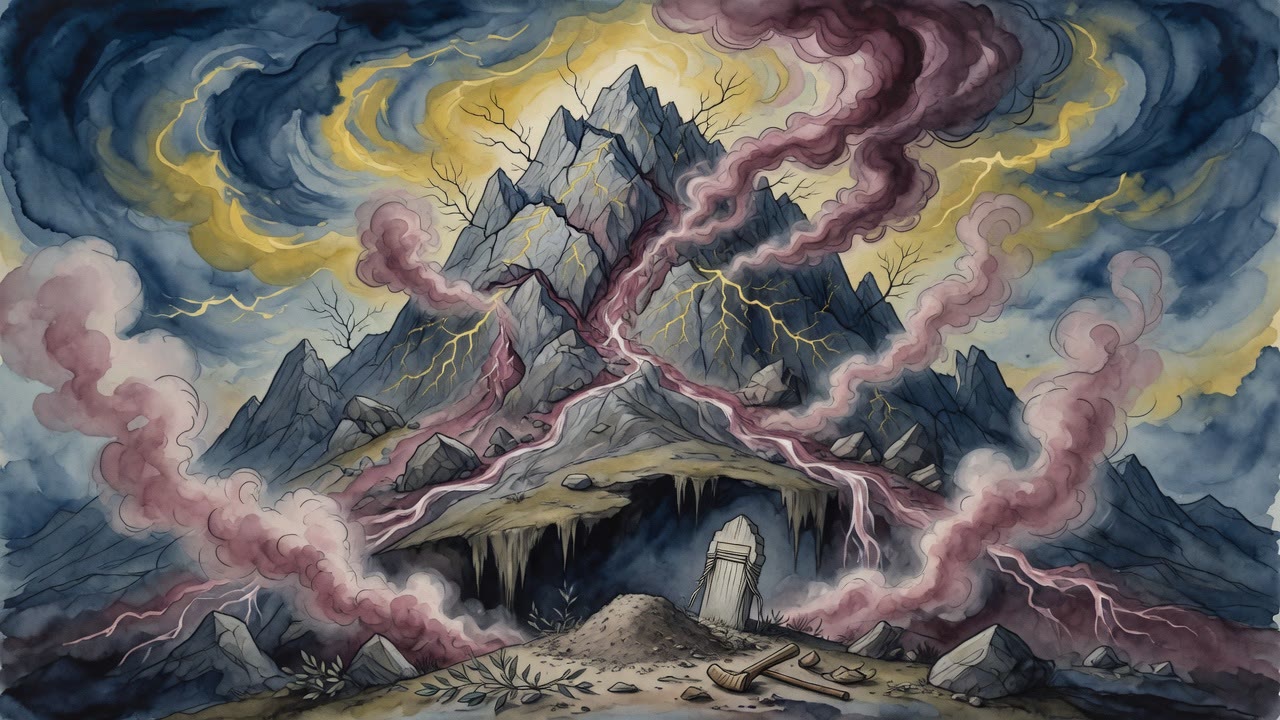
He moved to shake the whole world onto the people standing on it. The earth reeled and shook. Men out in the new fields felt the ground go soft and unreliable under their sandals, stones came loose off the terraces, and the hill above the fresh grave heaved like something turning over in its sleep. The mountain was trying to do to them precisely what they had failed to do for Joshua: it was going to bury a generation of men who were still walking around.

The vineyard they had run to nearly drank them. The boundary stones one man had just set nearly closed over his own head. They had preferred a survey to a funeral and the survey was about to become one.

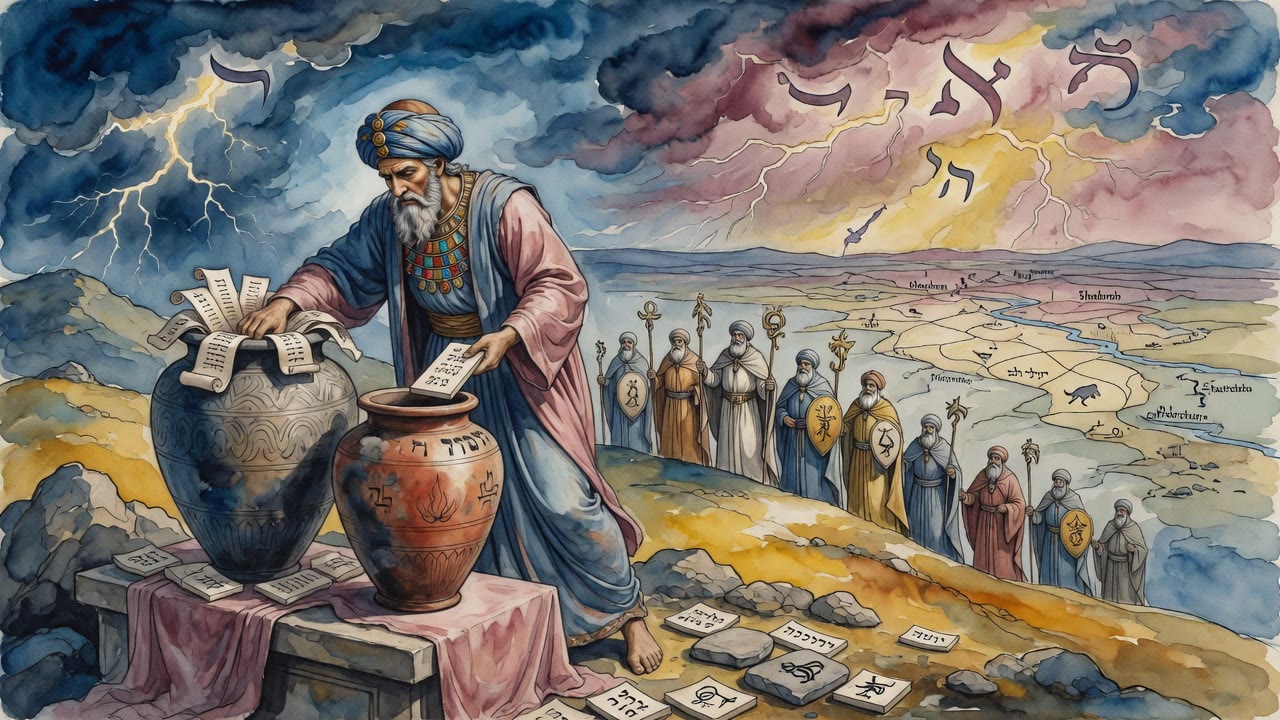
When the shaking stopped, the hill had a name. Mount Gaash, the mountain of quaking. It went onto the map that way and stayed there, an accusation carved into geography that anyone reading the burial notice would have to walk past to reach Joshua.

What Slips When a Pillar Falls

Rabbi Simon had been watching a phrase for years, and it always meant the same thing. Wherever Scripture says and it came to pass after, the world had just slid backward.

After Abraham died, Philistines came out with shovels and filled in every well his servants had dug, until there was no sweet water in the whole valley. After Moses died, the well stopped following the camp, the bread stopped falling in the mornings, and the clouds that had gone in front of them lifted and did not come back. After Joshua, the peoples rooted in the land turned on Israel. After Saul, the Philistines came down and the fighting started again.

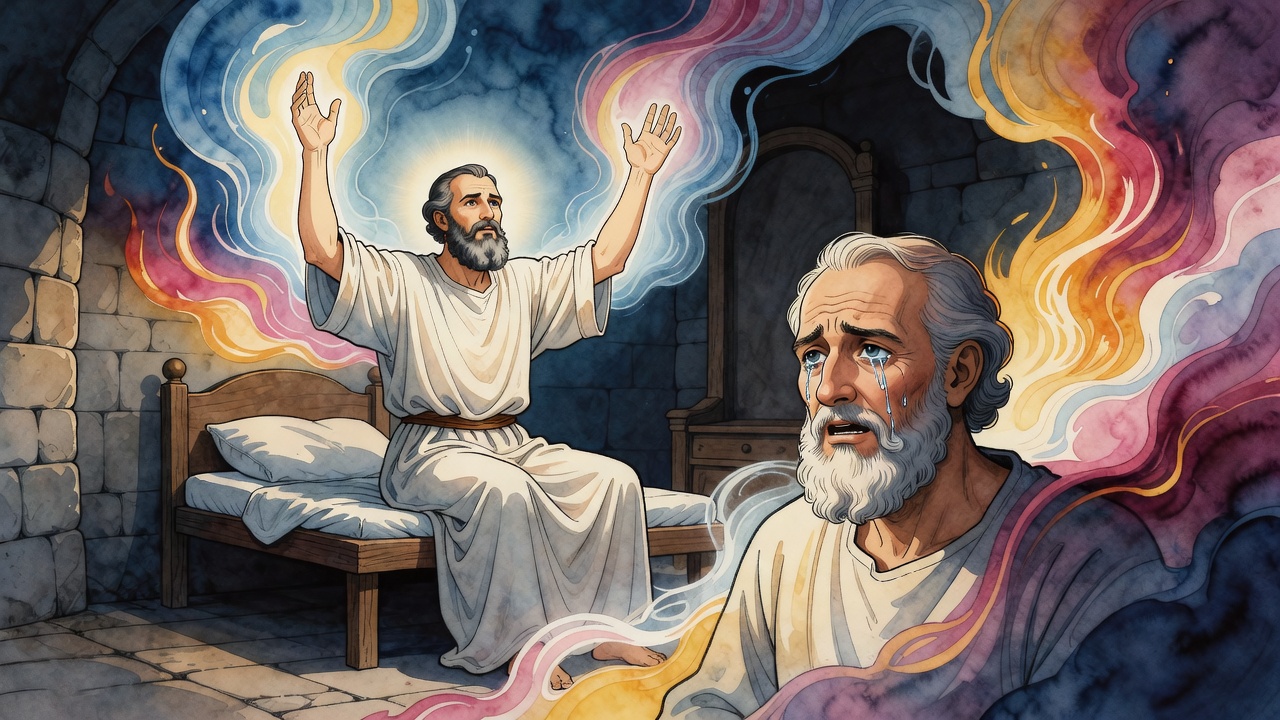
His colleagues pushed back with Jehoiada, after whose death the officers of Judah came and bowed to the king, which is hardly a catastrophe. Rabbi Yudan gave the ruling that held. The world would have collapsed backward every single time. It did not, because the Holy One had already stood the next man up before the old one was cold. Abraham was buried and Isaac went out and reopened the wells with his own hands. Moses was buried and the voice that had spoken to him turned and spoke to Joshua. Joshua was buried and the word came down naming Judah to go up first.

The chain never broke. What broke was the manners of the men holding it.

The Name the Map Kept

The successor was already appointed while the ground was still moving. That was never the problem. Israel got its next leader and its portions and its harvest, and the tribes ate well that year off the fields they had run to claim.

What they did not get back was the hour. The eulogy stayed forgotten. There is no way to return to a graveside and say the thing late.

Timnath-serah is a small place in the hills of Ephraim, and the man who won the land is in it, and above him the ground still carries the word for what it did on the day nobody spoke.


← All myths
From the tradition

Sources

2 sources

The texts behind this telling. Some cards carry a translation of the source; others are our own retelling of it, and each card says which. Every card links out to the original.

Yalkut Shimoni on Nach 35:4Yalkut Shimoni on Nach

Translation of the source text.Yalkut Shimoni on Nach (Sefaria) · CC-BY-NC

"And they buried him in the border of his inheritance in Timnath-serah" (Joshua 24:30). Rav Yehudah said in the name of Rav: Whoever is lazy in eulogizing a sage deserves to be buried alive, as it is said, "And they buried him in the border of his inheritance in Timnath-serah, which is in Mount Ephraim, on the north side of the mountain of Gaash." What is Mount Gaash? It teaches that the mountain quaked over them to slay them. Rabbi Hiyya bar Abba said in the name of Rabbi Yohanan: Whoever is lazy in eulogizing a sage does not prolong his days, measure for measure. Rabbi Hiyya bar Abba raised an objection to Rabbi Yohanan: "And Israel served the LORD all the days of Joshua, and all the days of the elders who prolonged days." He said to him: they prolonged days, but not years. But if so, "that your days may be multiplied" (Deuteronomy 11:21) would mean days and not years? A blessing is different. Israel were lazy in performing acts of kindness for Joshua. At that hour the Land of Israel was being divided, and the division was excessively dear to them, and Israel were busy with their work: this one busy with his field, this one with his vineyard, this one with his house, and this one with his boundary. Therefore the Holy One, blessed be He, sought to shake the whole world upon its inhabitants, as it is said, "Then the earth shook and quaked" (2 Samuel 22:8). This is Mount Gaash.

Full source
Yalkut Shimoni on Torah 110:9Yalkut Shimoni on Torah

Translation of the source text.Torat Emet (Yalkut Shimoni) · CC-BY-NC

Rabbi Simon said: Wherever it is said "And it came to pass after," the world reverted backward. "And it came to pass after the death of Abraham" (Genesis 25:11) - immediately, "all the wells which" Abraham's servants had dug, the Philistines stopped up (Genesis 26:18). "And it came to pass after the death of Moses" (Joshua 1:1) - immediately the well, the manna, and the clouds of glory ceased. "And it came to pass after the death of Joshua" (Judges 1:1) - immediately the borders of the land were provoked against them. "And it came to pass after the death of Saul" (II Samuel 1:1) - immediately "the Philistines fought against Israel" (I Samuel 31:1).

The colleagues raised an objection to Rabbi Simon: "And after the death of Jehoiada the officers of Judah came and bowed down to the king" (II Chronicles 24:17). Rabbi Tanchum said: Rabbi Simon only came to speak of "And it came to pass after." Rabbi Yudan said: Were it not that the Holy One, blessed be He, set up others in their place, the world would already have reverted backward. As it is written, "And it came to pass after the death of Abraham," and it is written, "And Isaac returned and dug the wells of water" (Genesis 26:18). It is written, "And it came to pass after the death of Moses," and it is written, "And the LORD said to Joshua" (Joshua 1:1). It is written, "And it came to pass after the death of Joshua," and it is written, "And the LORD said, Judah shall go up" (Judges 1:1-2). It is written, "After the death of Saul," and it is written, "And David returned from the slaughter of Amalek" (II Samuel 1:1).

"And these are the generations of Ishmael" (Genesis 25:12). Rabbi Chiyya bar Abba and the Rabbis were sitting and raising the difficulty: Why did the Holy One, blessed be He, see fit to record the descendants of the wicked one here? Rabbi Levi passed by. They said: Here comes the master of the teaching; let us ask him. Rabbi Levi came and said in the name of Rabbi Chama bar Chanina: To inform you at what age your ancestor was blessed. And Rabbi Chiyya bar Abba said in the name of Rabbi Yonatan: Why were the years of Ishmael counted? In order to reckon by them the years of Jacob.

As it is written, "And these are the days of the years of the life of Ishmael" and so on (Genesis 25:17), and it is written, "And Abraham was eighty-six years old, and Ishmael his son was thirteen years old." By the time Isaac was born, Ishmael was fourteen, and it is written, "And Isaac was sixty years old when they were born" (Genesis 25:26), so Ishmael was seventy-four. How many years remained of his life? Sixty-three. And in the very period that Jacob was blessed, Ishmael died. As it is written, "And Esau went to Ishmael and took Mahalat the daughter of Ishmael" (Genesis 28:9). From the fact that it says "daughter of Ishmael," do I not know that she is the sister of Nevayot? Rather, it teaches that Ishmael betrothed her and died, and Nevayot her brother gave her in marriage. Sixty-three and fourteen until Joseph was born makes seventy-seven, and it is written, "And Joseph was thirty years old" (Genesis 41:46), making one hundred and seven; seven of plenty and two of famine make one hundred and sixteen. And Jacob said to Pharaoh, "The days of the years of my sojournings are a hundred and thirty years" (Genesis 47:9). And fourteen years in the house of Eber after his descent to Aram - so Jacob was seventy-seven years old when he stood at the well. Just as Jacob was separated from Isaac twenty-two years, so Joseph was separated from Jacob twenty-two years. But Jacob was separated thirty-six years! Rather, the fourteen years that he served in the house of Eber he was not punished for, to teach you that the study of Torah is greater than the honoring of father and mother.

"And these are the years of the life of Ishmael" - what did Scripture see fit to record the years of Ishmael here for? Only because he came from the edge of the wilderness to perform an act of kindness for his father. "And they dwelt from Havilah unto Shur" and so on (Genesis 25:18). Here you say "he fell" [the verse reads "he fell"], yet earlier (Genesis 16:12) you say "he shall dwell." Rather, all the days that Abraham our father was alive, "he shall dwell"; once Abraham our father died, "he fell." Before he stretched out his hand against the Temple, "he shall dwell"; once he stretched out his hand against the Temple, "he fell." In this world, "he shall dwell," but in the world to come, "he fell."

Full source