Parshat Vayishlach5 min read

News of Rebecca Found Jacob Still Weeping

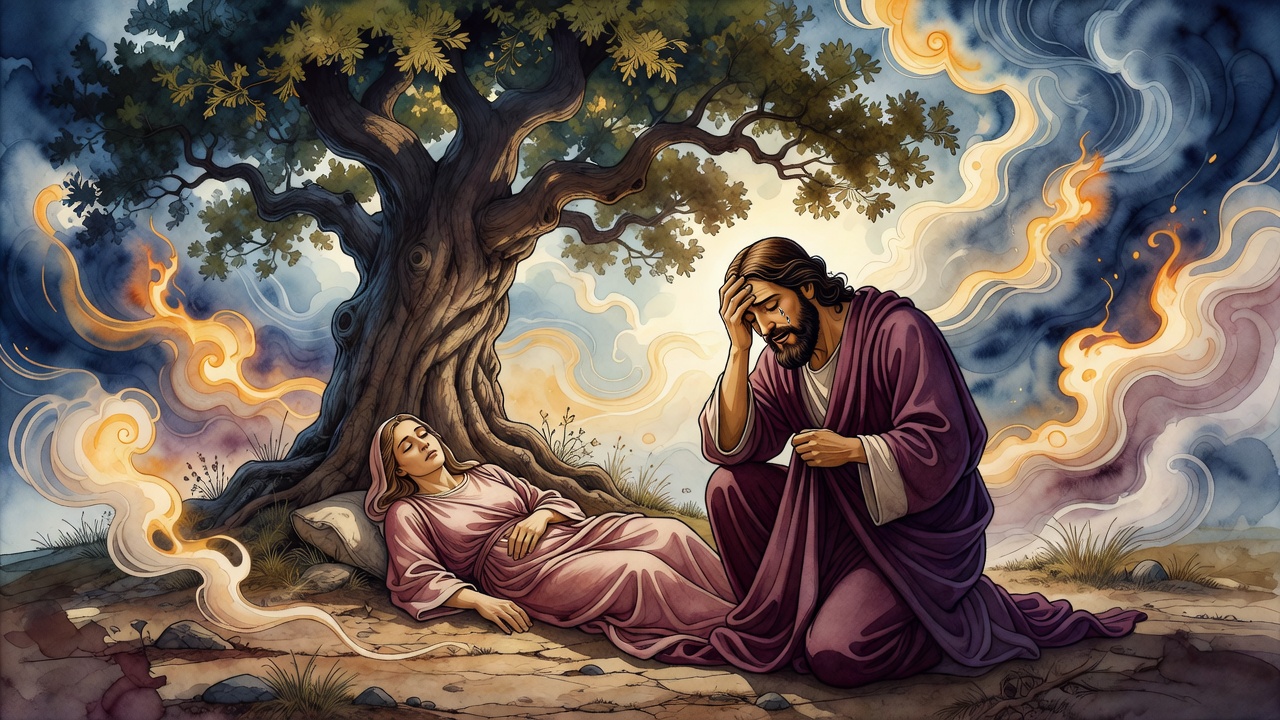
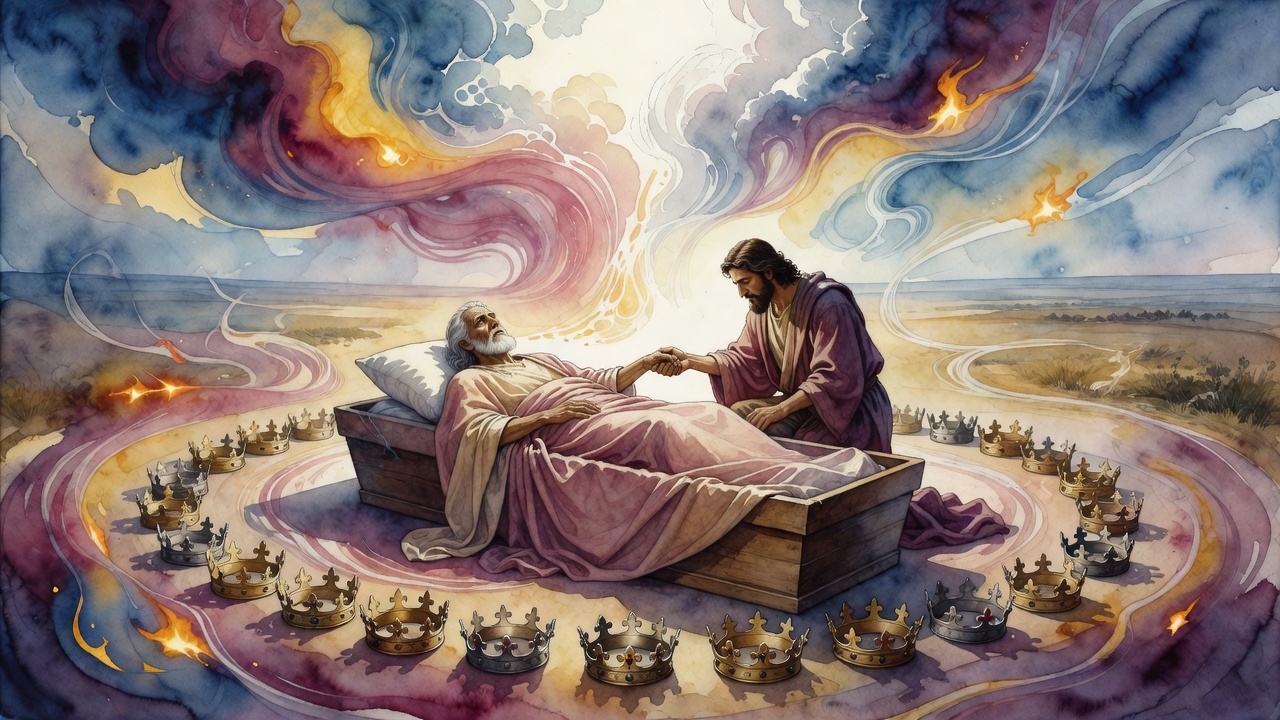
Deborah died under the oak at Beit El. While Jacob still mourned the nurse, word came that Rebecca too was gone.

Curated by Arthur · Told by Maggid ·
Table of Contents
  1. The Oak That Learned a New Name
  2. The Other Under the Oak
  3. God's Blessing for a Mourner
  4. Later Silver and Sinking Hearts
  5. What the Tree Kept
News of Rebecca Found Jacob Still Weeping Click for full size

The Oak That Learned a New Name

Deborah, nurse of Rebecca, died on the road home, and Jacob buried her below Beit El beneath an oak. He called the place Alon Bakhut, the Oak of Weeping (Genesis 35:8). Earth took an old woman who had rocked his mother, guided a bride to Canaan long ago, and outlived half the quarrels of that house.

Jacob's hands packed soil. His mouth shaped a name for a tree so sorrow would have an address. The camp moved quieter after that. A nurse's death is not a patriarch's death, yet the grief was real enough to rename landscape. Children asked why the grown men stood so still. No one gave a short answer.

Deborah had known Rebecca's girlhood, the well, the journey, the long marriage to Isaac. When she died, a living archive closed. Jacob felt the loss as more than courtesy to a servant. The woman who had nursed his mother was a bridge back to a home he had fled.

Then the second blow arrived while the first was still open.

The Other Under the Oak

Rabbi Shmuel bar Nahman hears Greek in the word alon. Other. While Jacob still sat in mourning for Deborah, news came that Rebecca herself had died. Mother and nurse fell into the same week of tears. The oak held more than one burial's worth of water.

Jacob had left home years earlier under Rebecca's command, fleeing Esau with her voice in his ears and her stew-plot still warm in memory. He returned too late to close her eyes. The message found him already bent over Deborah's grave, and the two losses locked together like twin stones in one sling.

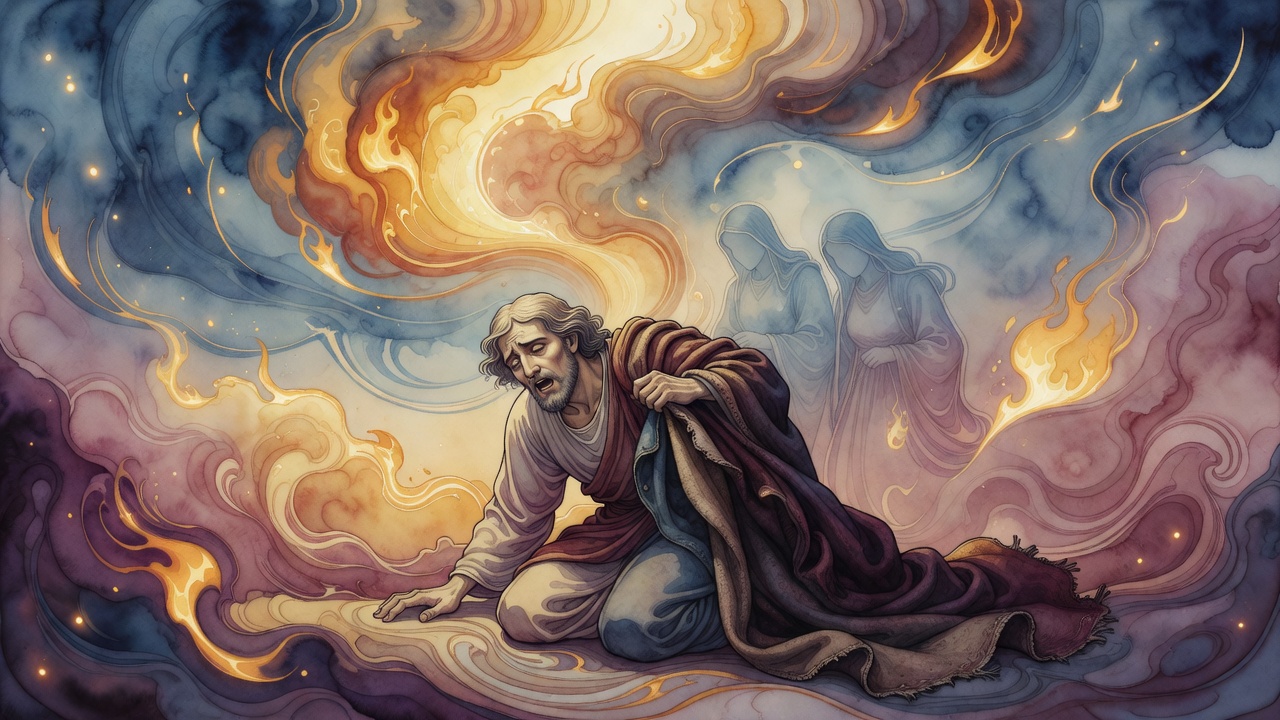
No midwife of comfort stood ready. Only dust, a tree, and a son far from the bed where his mother ended. He could not rise from one death into clean air. The second death sat down beside him before he had finished the first.

Travelers would later pass the oak without knowing it held a double ledger. Jacob knew. His body knew in the way grief makes the ribs too tight for ordinary breath.

God's Blessing for a Mourner

At once Scripture says God appeared to Jacob again when he came from Padan Aram and blessed him (Genesis 35:9). Rav Aha, in the name of Rabbi Yohanan, hears here the blessing of mourners. Heaven does not wait for Jacob to finish crying correctly. The Holy One speaks the words the living say to the bereaved, a divine visit paid in the currency of comfort.

Name change and promise will follow in the chapter. Israel will be confirmed. Kings and land will be spoken again. First comes this. A man under a weeping oak is not left to invent solace alone. The God of Abraham and Isaac stands in the role of comforter before He stands again as the giver of nations.

Jacob received the blessing with dirt still under his nails. Holiness did not require him to wipe his face dry first. That detail matters for every later Jew who thinks mourning must end before prayer may begin.

Later Silver and Sinking Hearts

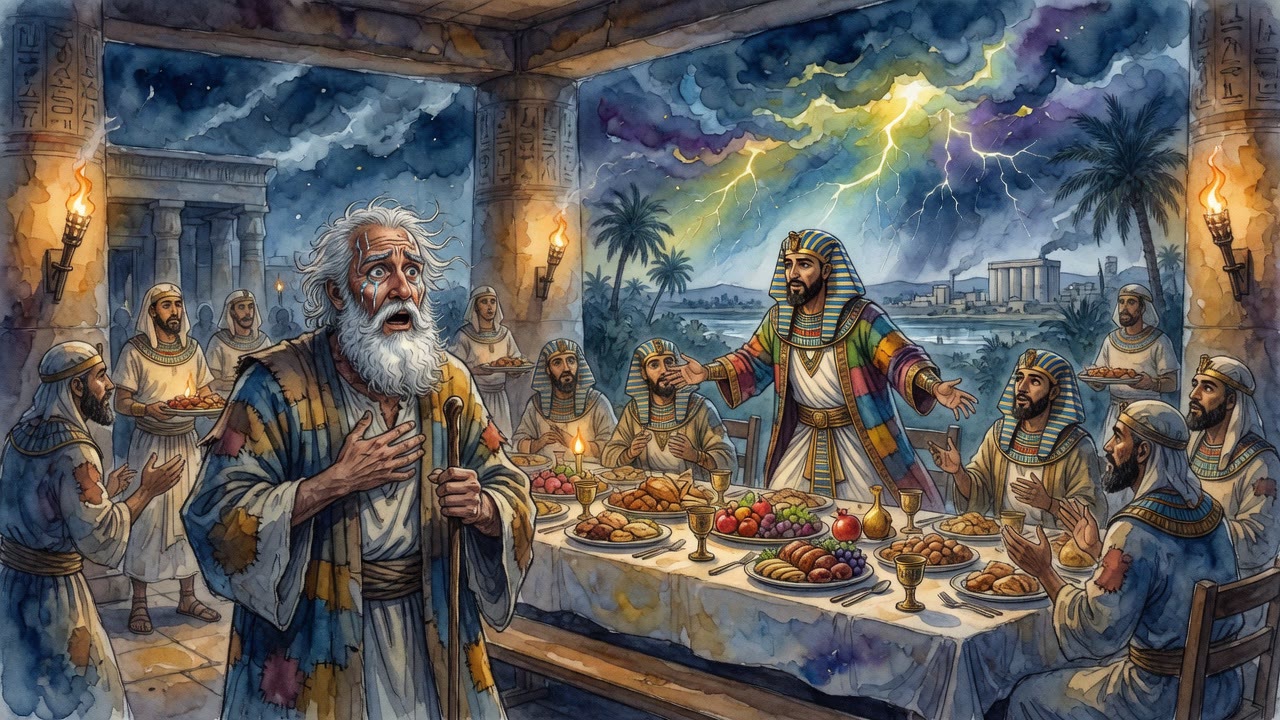
Years after, another terror would empty his sons' faces. Silver returned in grain sacks on the road from Egypt, and their hearts sank. "What is this that God has done to us?" they asked one another (Genesis 42:28). Loss multiplies in this family. A coat in blood. A nurse under an oak. A mother unburied by her son. Money that looks like a trap.

When a sage dies, the midrash will borrow Job's cry that wisdom has vanished from the eyes of all living, that the deep says it is not here. Jacob's house learns that lesson early. Each disappearance steals a kind of knowing. Deborah took the memory of Rebecca's girlhood. Rebecca took the voice that once said flee. The brothers later feel wisdom leave the road when silver glitters where it should not.

Grief in Genesis is not a single scene. It is a practice the family cannot graduate from. Joseph's empty place at the table trains Jacob for a long refusal of comfort. The oak at Beit El is an earlier classroom in the same hard subject.

Hearts that sink on the Egypt road are students of an older curriculum.

What the Tree Kept

Alon Bakhut remained on the map after Jacob walked on. Travelers would pass an oak that remembered two deaths and a blessing spoken into open mourning. Jacob carried both names, Deborah and Rebecca, into the next stages of the journey, into the long wait for Joseph, into the final descent to Egypt where he would hear that a son lived after all.

A man can be renamed Israel and still be a son who missed his mother's last breath. The oak does not argue. It only marks where weeping was honest enough to rename the ground. Later generations who recite mourners' blessings stand, knowingly or not, in the line of a God who once played that role for Jacob under a tree.

Two deaths. One name for a place. Comfort that arrived without erasing the water on a grown man's face.


← All myths

From the tradition

Sources

2 sources

The texts behind this telling. Some cards carry a translation of the source; others are our own retelling of it, and each card says which. Every card links out to the original.

Bereshit Rabbah 81:5Bereshit Rabbah

Retold in our words. Read the original at the link below.The Sefaria Midrash Rabbah, 2022 · CC-BY

The Torah, in its concise way, captures this very human experience.

We find ourselves in Genesis, Chapter 35. Jacob is returning home, a journey laden with its own emotional baggage. And then, a double blow.

"Deborah, Rebecca's nurse, died, and she was buried below Beit El, beneath the oak, and he called its name Alon Bakhut" (Genesis 35:8). The text then immediately continues: "God appeared to Jacob again, already upon his arrival from Padan Aram, and He blessed him" (Genesis 35:9). What’s going on here?

The name Alon Bakhut, the Oak of Weeping. A place so associated with sorrow that it earns this mournful title. But there’s something more lurking beneath the surface.

Rabbi Shmuel bar Naḥman offers a fascinating insight. He points out that in Greek, alon can mean "other." So, what "other" event is linked to the death of Deborah?

According to him, while Jacob was still in mourning for Deborah, news arrived of his mother Rebecca's death. The grief compounding, one loss on top of another. That feeling of being utterly overwhelmed.

And it casts a new light on the very next verse. "God appeared to Jacob…and He blessed him." But with what blessing? What comfort can be offered at such a moment?

Rav Aḥa, citing Rabbi Yoḥanan, suggests that it was "the blessing of the mourners." In Jewish tradition, there are specific blessings recited to comfort those in mourning. Was God, in this moment, offering Jacob that same solace? A divine acknowledgment of his profound sorrow? The Torah doesn't always spell things out for us. Sometimes it offers glimpses, fragments of stories that we have to piece together. And in this brief passage, we see a powerful depiction of grief, loss, and the comfort, however small, that can be found in tradition and community. The alon of one sorrow becomes the herald of another, and yet, even in the midst of it all, there is a blessing. A reminder that even in our darkest moments, we are not alone.

Full source
Bereshit Rabbah 91:9Bereshit Rabbah

Retold in our words. Read the original at the link below.The Sefaria Midrash Rabbah, 2022 · CC-BY

It's a deep dive into the story of Jacob's sons and their trip to Egypt, and it's full of anxiety, suspicion, and loss.

The passage begins with a recap from Genesis 42. Joseph, now a powerful figure in Egypt, has secretly returned the brothers' silver to their sacks of grain. "Joseph commanded to fill their vessels with grain, and to restore each man's silver to his sack, and to give them provisions for the way, and he did so to them" (Genesis 42:25). The brothers discover this unexpected gift (or is it a trap?) on their journey home, and naturally, they're freaked out. "My silver was returned and, behold, it is in my sack. Their hearts sank, and they trembled one with another, saying: What is this that God has done to us?" (Genesis 42:28).

This sets the stage for a really interesting interpretation tied to the death of Rabbi Simon bar Zevida. When Rabbi Simon bar Zevida died, Rabbi Ela entered and began [his eulogy] for him: “But wisdom, where will it be found? …It is vanished from the eyes of all living… The deep says: It is not…” (Job 28:12, 21, 14). The text draws a parallel between the irreplaceable loss of a Torah scholar and the temporary nature of material things. It says there are four things essential for the world's needs, and they all have replacements. "For there is a source of silver and a place where gold is refined. Iron is taken from the dust, and copper is smelted from rock" (Job 28:1–2). But a Torah scholar? According to Rabbi Levi, they're irreplaceable. The tribes' fear when they find the silver is nothing compared to the loss of Rabbi Simon.

When the brothers finally return to Jacob, their father, they recount their experience. "They came to their father Jacob, to the land of Canaan, and they told him all that had befallen them, saying" (Genesis 42:29). The Bereshit Rabbah interprets the phrase "all that had befallen them [hakorot]" as matters that weighed heavily upon them, like beams [kekorot]. The weight of their experience is palpable.

And it gets worse! Jacob, already grieving the loss of Joseph, is now suspicious of his sons. "The man, lord of the land, spoke… It was as they were emptying their sacks…" – it teaches that their father suspected them (Genesis 42:30, 35). He accuses them of bereaving him, reminding them that Joseph is gone, Simeon is detained, and now they want to take Benjamin too. "Jacob their father said to them: You have bereaved me: Joseph is not, and Simeon is not, and Benjamin you will take; all of these have come upon me" (Genesis 42:36). He laments that it is incumbent "upon me" to produce twelve tribes. Talk about pressure!

Reuben's rash offer to guarantee Benjamin's safe return by offering his own sons as collateral doesn't help matters. "Reuben said to his father, saying: Kill my two sons if I do not bring him back to you; place him in my charge, and I will return him to you" (Genesis 42:37). Rabbi Yehuda HaNasi dismisses this as the words of "a firstborn imbecile." Ouch! Is it a helpful suggestion? Are your sons not my sons?

Finally, Jacob refuses to let Benjamin go, fearing for his safety. "He said: My son will not go down with you, for his brother is dead, and only he remains, and disaster will befall him on the path on which you will go; you will cause my old age to descend in sorrow to the grave" (Genesis 42:38). Rabbi Hanina and Rabbi Marinos, citing Abba Nehorai, offer a fascinating interpretation of Jacob's words. They relate it to Rabbi Tarfon, who would use the phrase "a knob and a flower [kaftor vaferaḥ]" – parts of the ornamentation of the candelabrum – to indicate a pleasing statement. But if someone said something nonsensical, he would say, "My son will not go down with you."

The passage concludes with a poignant observation: "On the path on which you will go; [you will cause my old age to descend in sorrow to the grave]" – but not in the house? (Genesis 42:38). From here it is derived that the accuser accuses only in a time of danger. The idea is that danger heightens vulnerability.

So, what do we take away from all this? It seems to me that this midrash (interpretation) isn't just about the literal events of the story. It's about the weight of loss, the sting of suspicion, and the ever-present fear of what might go wrong. It's about the fragility of life and the importance of wisdom. And maybe, just maybe, it's a reminder that even in the darkest of times, there's always the potential for hope – even if it's hidden in a sack of grain.

Full source