The Thirty-Six Crowns That Ringed Jacob's Coffin at Atad
Feeling death draw near, Jacob binds Joseph by oath to carry him home to Canaan, and armed kings who came to raid his funeral leave their crowns on his coffin.
Table of Contents
 Click for full size
The Day That Lodged Its Complaint
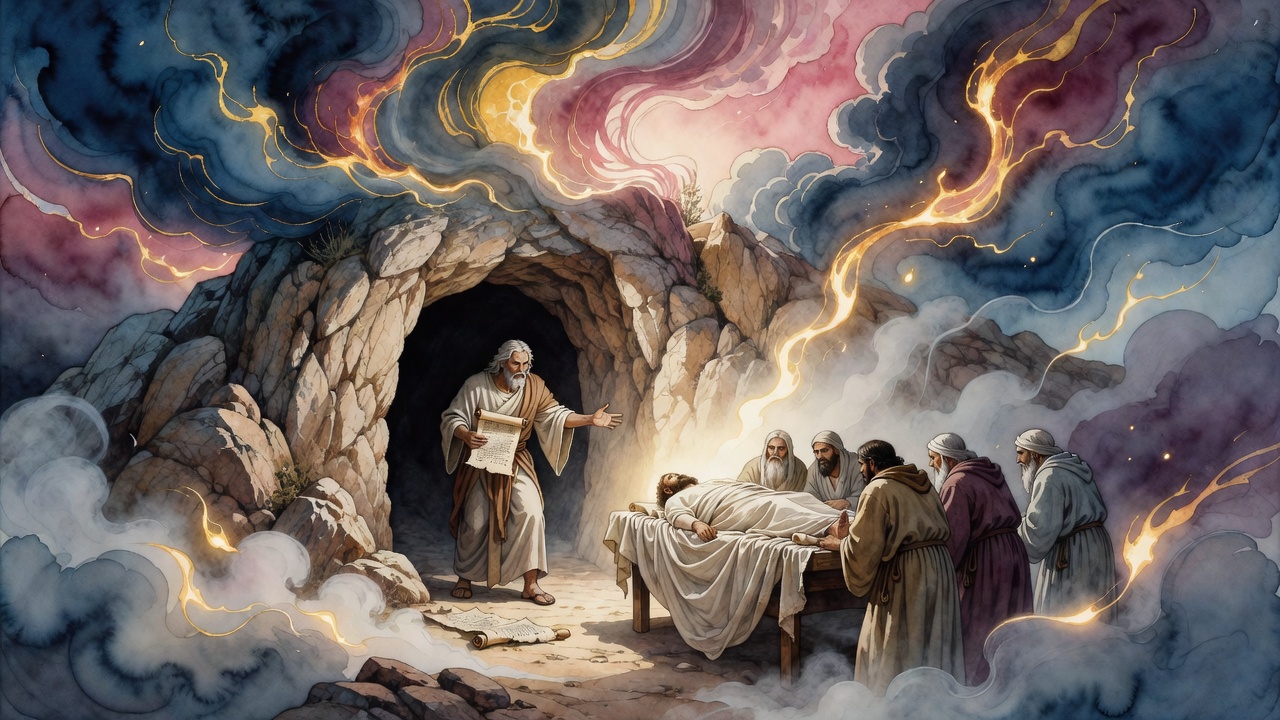
One day the silver trumpets will be forged, and Moses will lift them to summon the whole camp of Israel to his mouth. But when his own death drew near, the Holy One hid the trumpets away, so no man could blow them, gather the people, and stretch his last hour by a single breath. No man has power over the spirit. There is no rule in the day of death.
The same law now bent over an old man in Egypt.
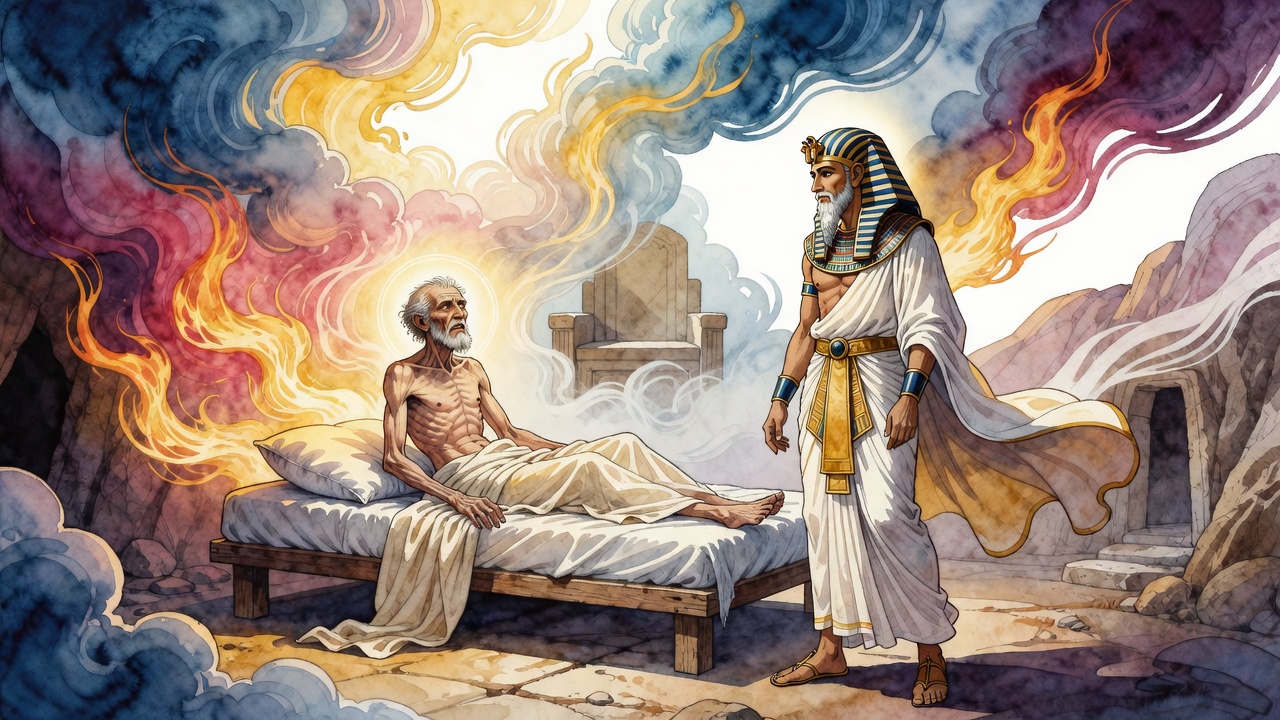
Jacob felt it coming the way a body feels a change in weather. His days drew near. Not the days of the king, not the days of Israel the prince, only the days of Jacob, for a man standing in the doorway of death lays down every title he wore in life. He did not command. He lowered himself. The Holy One said to him, "By your life, you will be hidden away, and you will not die." Then what was this drawing near? The day itself had lodged a complaint against him. His fathers had gone deeper into their years. Abraham reached a hundred seventy-five, Isaac a hundred eighty, and Jacob would stop at a hundred forty-seven. Of every man whom Scripture says drew near to die, this is the mark. He does not reach the years of his fathers.
Why He Summoned Joseph and Not the Firstborn
He sent for one son. Not Reuben, though Reuben was the firstborn. Not Judah, though the kingship would run through Judah. He called Joseph, because only Joseph had the power to carry a body to a far country, and a dying man asks the son who can honor the request.
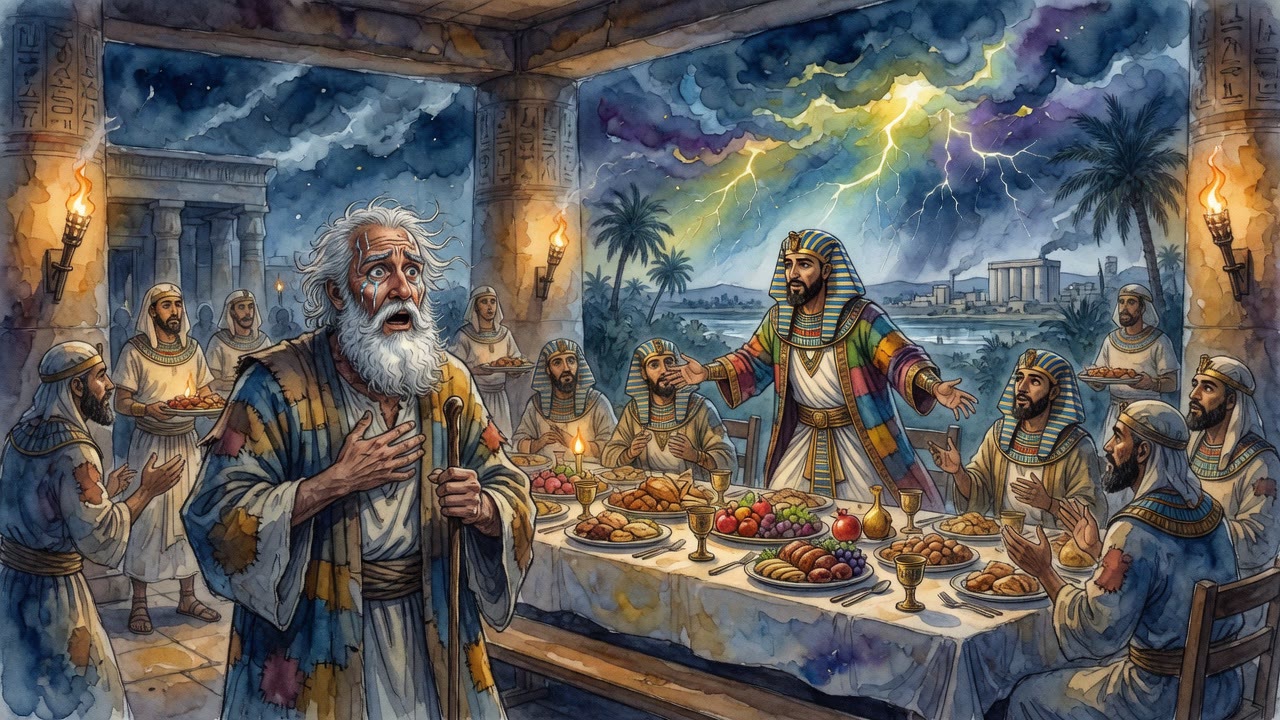
"If now I have found favor in your eyes," Jacob said to the second most powerful man in Egypt, and the words sat strangely in a father's mouth, "deal with me in kindness and truth."
Is there a kindness that lies? There is. Kindness done for the living can hope for repayment, and hope makes it a trade. Kindness done for the dead expects nothing back, because the dead cannot repay it. That is why the sages called it the kindness of truth. As the common proverb ran, when your friend's son has died, carry the body, for your friend may yet repay you; but when your friend himself has died, unload it. Jacob was asking for the second kind. Keep faith with me after I am gone, he meant, and it will be true.
The Oath Against an Egyptian Grave
"Do not bury me, please, in Egypt."
Why refuse the richest soil in the world? Egypt was destined to be struck with lice until the dust itself crawled, and Jacob would not have the vermin moving beneath his body. And there was worse than lice. Leave a patriarch's bones in Egypt and the Egyptians would kneel to them, and Jacob knew what came of being worshipped. When Daniel read the dream, Nebuchadnezzar fell on his face and ordered incense burned to him, and Daniel refused every grain of it, because the punishment that falls on the idolater falls on the idol too. Hiram of Tyre did not refuse. He said in his heart, "I am a god," and God answered, "You are wiser than Daniel," and then cast him to the ground. Jacob wanted no altar raised over him. Let the Egyptians find no redemption through his grave.
There was one more reason, quiet under the others. Jacob knew himself to be wholly righteous, and the righteous of every land would surely rise. But the dead buried outside the land must roll through tunnels in the earth to reach it before they stand again, and he had no wish to endure that grinding passage. So he bound his son with an oath, and Israel bowed at the head of the bed.
The Procession That Egypt Feared to Dishonor
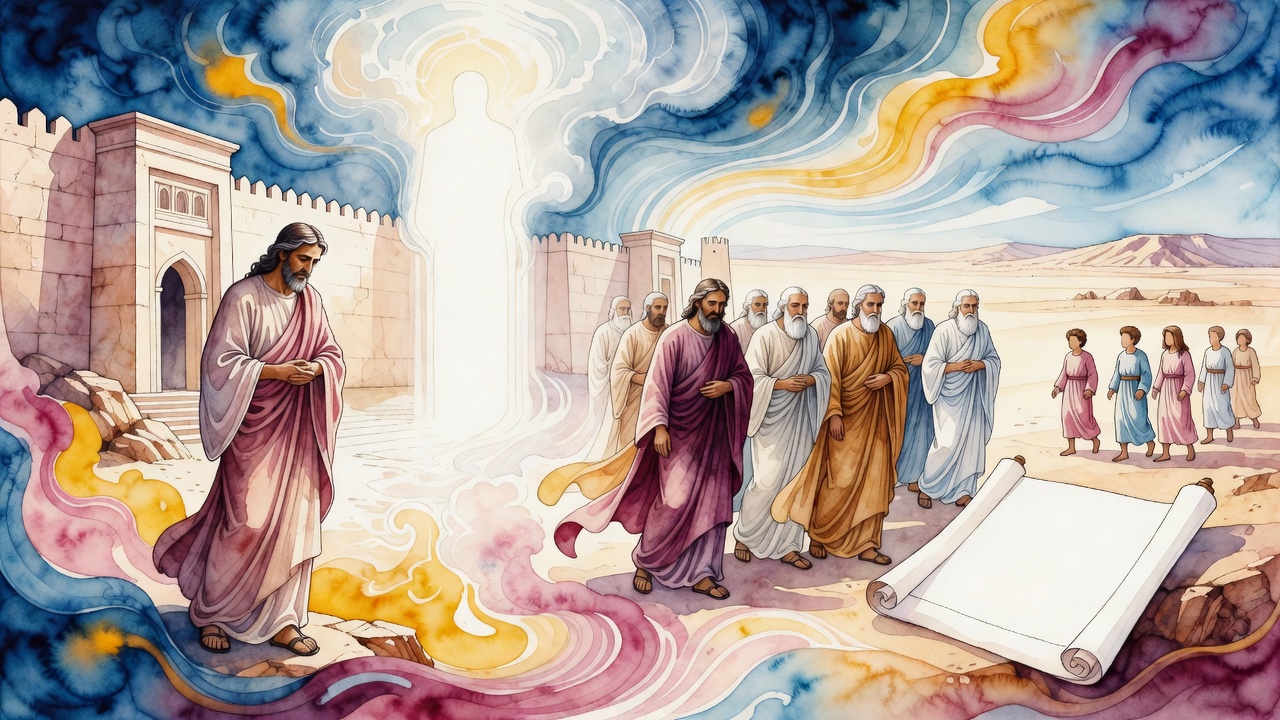
Joseph went up to bury his father, and of all the brothers none was greater than the one who led the coffin north. Greater still, for in the end no one would tend Joseph's own bones but Moses himself. The chariots of Egypt followed, the elders, the whole house of Pharaoh.
At the start the nations along the road paid the mourners no honor. Then they saw the honor of Israel, the ranks, the crowns, the grief of a kingdom, and they changed their faces. The column reached a place called the threshing floor of Atad, the threshing floor of thorns. But who threshes thorns?
Thirty-Six Crowns at the Threshing Floor of Atad
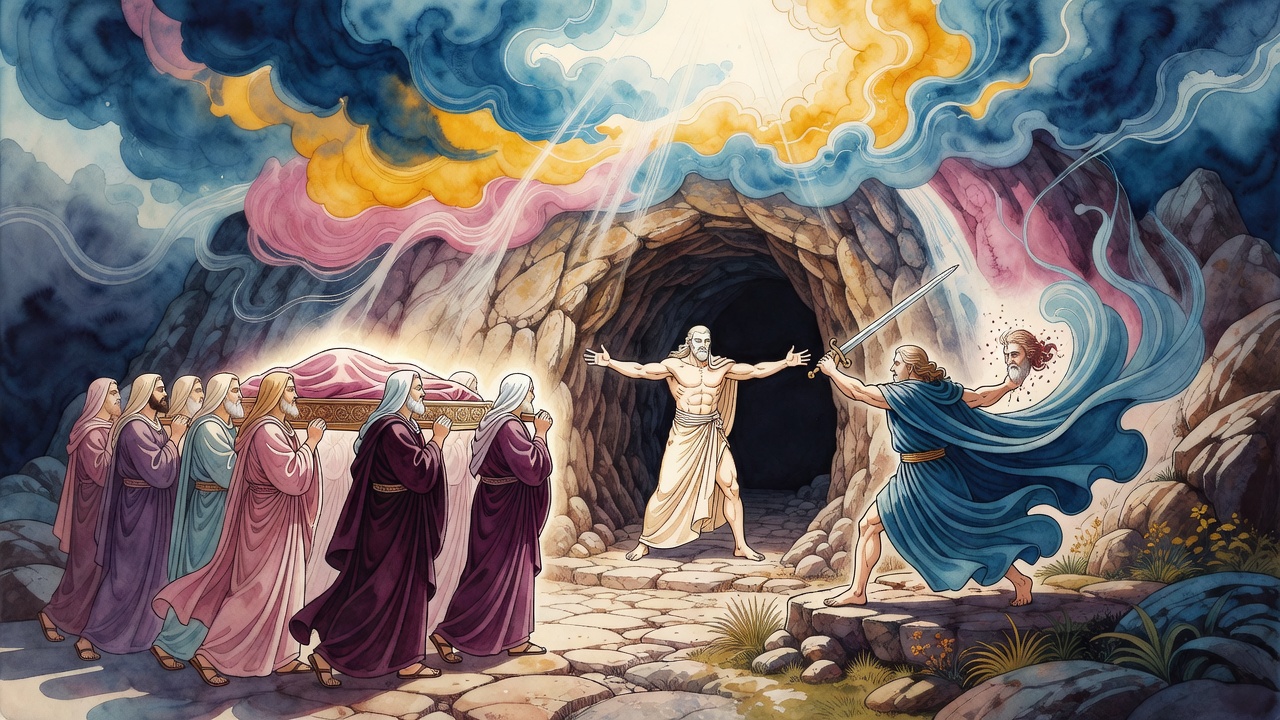
They had not come to mourn. The sons of Ishmael, the sons of Esau, and the sons of Keturah came down to the road for war, to fall on the funeral and settle old scores over a dead man's bones. They ringed the coffin the way a hedge of thorns rings a threshing floor, a wall of armed kings closing on a box of cedar.
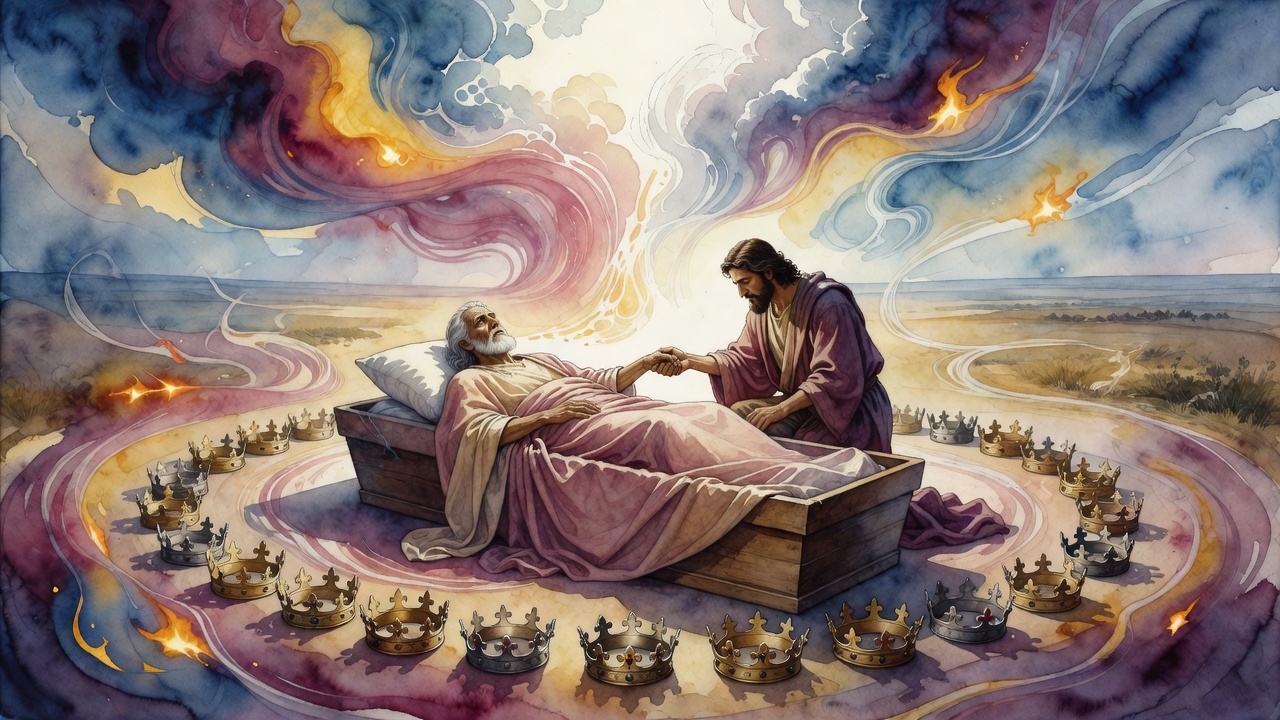
Then they saw it. Joseph's own crown, laid upon Jacob's coffin in honor. And the war went out of them. One by one the chieftains lifted the crowns from their heads and hung them on the coffin, until thirty-six crowns circled the body of Israel like a fence of gold where a fence of iron had stood. They loosened the girdles at their waists. They untied the knots at their shoulders. And each one pointed a finger at the cedar and said, "This is a grievous mourning for Egypt."
Seven days they wept there, one day for each day of a wedding feast, the mourning cut to the exact measure of joy. And a voice ran beneath the weeping like a promise. In this world you have grieved seven days with a righteous man; in the world to come I will turn your mourning into gladness, and comfort you, and make you rejoice out of your sorrow.
← All myths