Noah Clung to God's Hand in the Flood Mud
A king tells his little child, hold my hand. He tells his grown son, lead the way. Abraham led. Noah was the child, pulled out of the mud.
Table of Contents
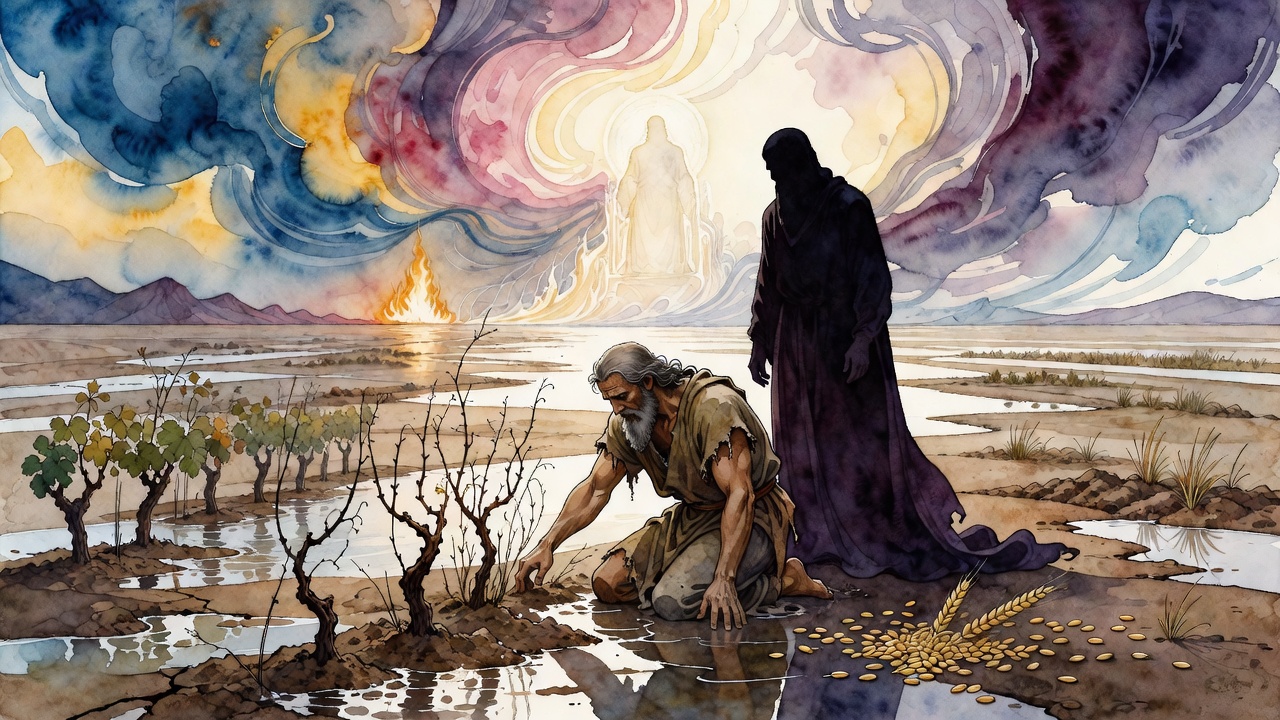
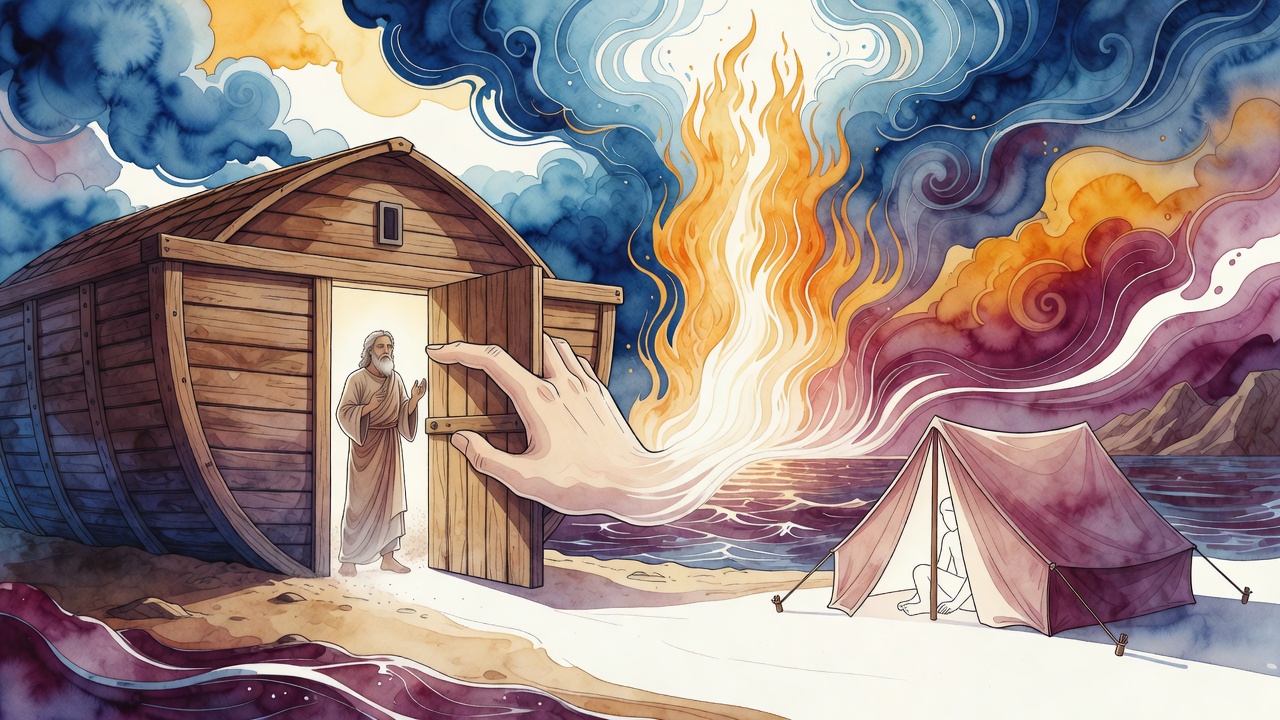
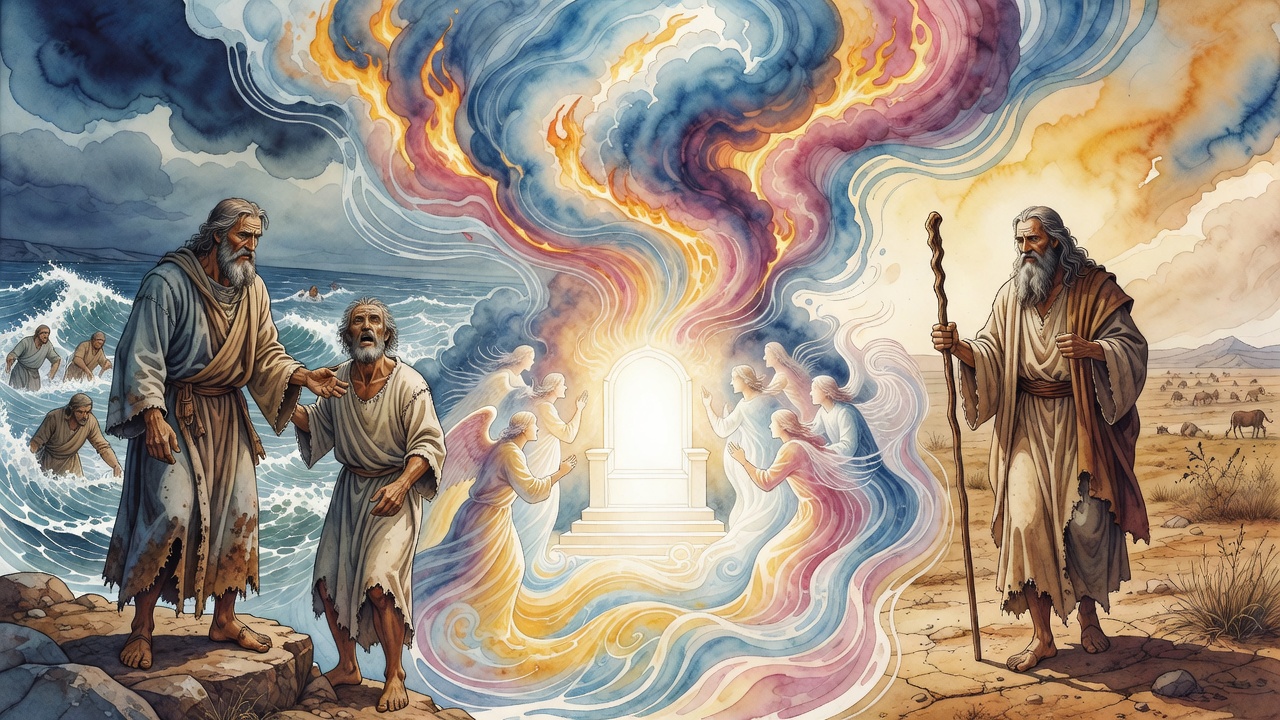
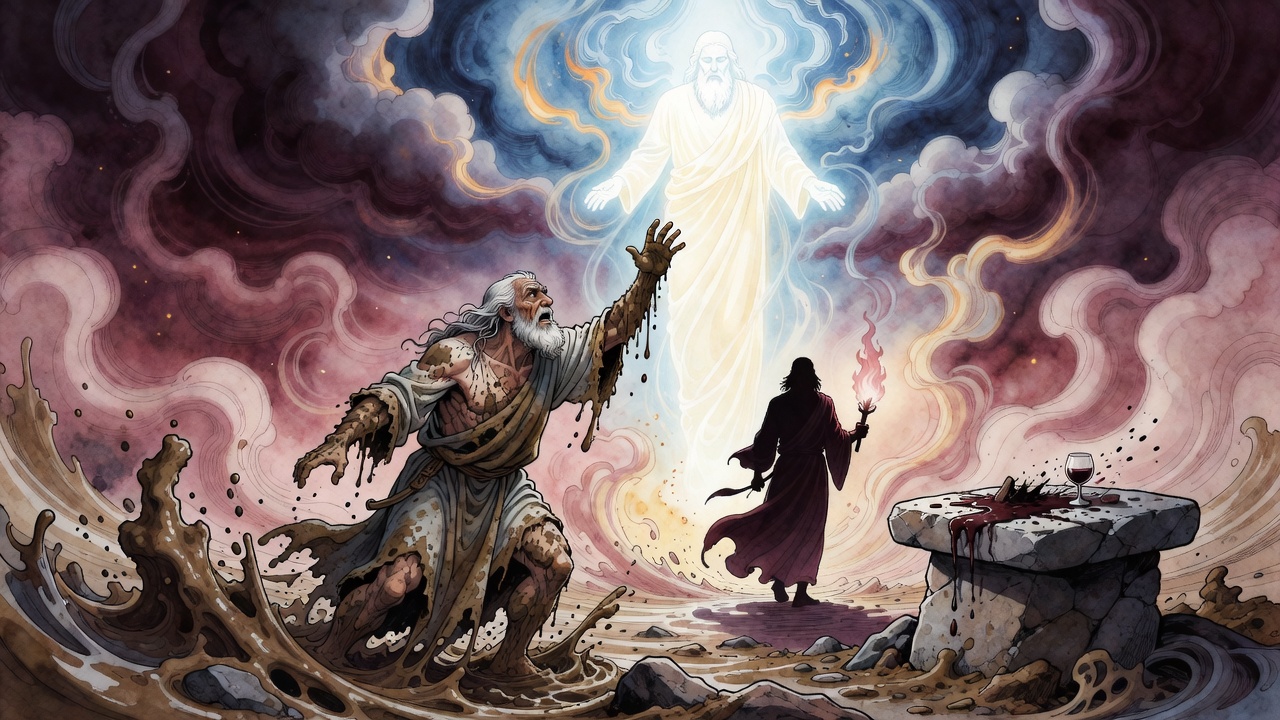
Noah was sinking in mud when God reached down, pulled him up, and walked beside him so he would not drown.
 Click for full size
That is why Scripture says Noah walked "with" God, while Abraham walked "before" Him. A king tells his little child, "Hold my hand," but tells his grown son, "Lead the way." Abraham was strong enough to walk ahead. Noah needed to be held. Rabbi Nehemiah sharpens it further: Abraham was a light shining through a window into the king's dark alley, and God said, come light the way before Me.
Grace Found, Not Discovered
Noah found grace, yes, but the finding ran the other way from the great discoveries of history. The Holy One found a faithful heart in Abraham, found His servant in David, found Israel like sweet grapes in the wilderness. Noah found favor, yet he was not counted among God's own discoveries, as if he reached toward grace rather than being singled out by it. Two travelers meet on the road and keep walking until affection binds them. Grace can be that bond, hard won step by step through a generation already rotting.
He is called a righteous man, perfect, read by some to mean he was born already circumcised. His name appears three times in one verse, set with Daniel and Job among those who lived through worlds destroyed and rebuilt. With all the flood generation's crimes, the final verdict sealed only when they filled the earth with robbery and theft. Greed for what belonged to others tipped heaven's scales.
The Offering and the Wine
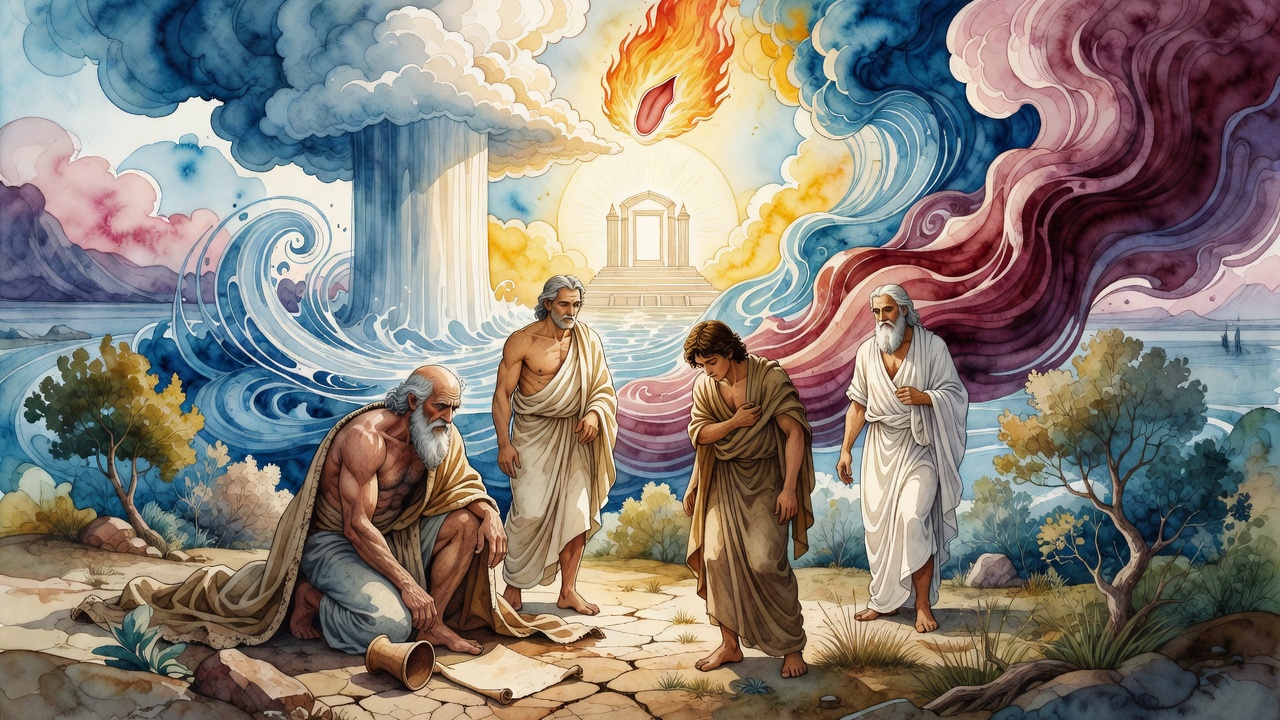
After the waters, God smelled the pleasing aroma of Noah's offering. Wine entered the story of the human heart. A man who stays gentle when he drinks carries something of the knowledge of his Maker. A man whose mind stays steady over wine holds the wisdom of seventy elders, because the Hebrew words for wine and secret share the number seventy: when wine goes in, secrets come out. The one who keeps his secret even while drinking is worth a whole Sanhedrin (the high court of seventy-one sages).
Wine also belongs to a blessed household. A home where wine is not poured freely, almost like water, stands outside the category of blessing. Bread and water include the wine bought with sacred tithe money when the house knows how to open its hand.
Rage That Wrecks Its Own House
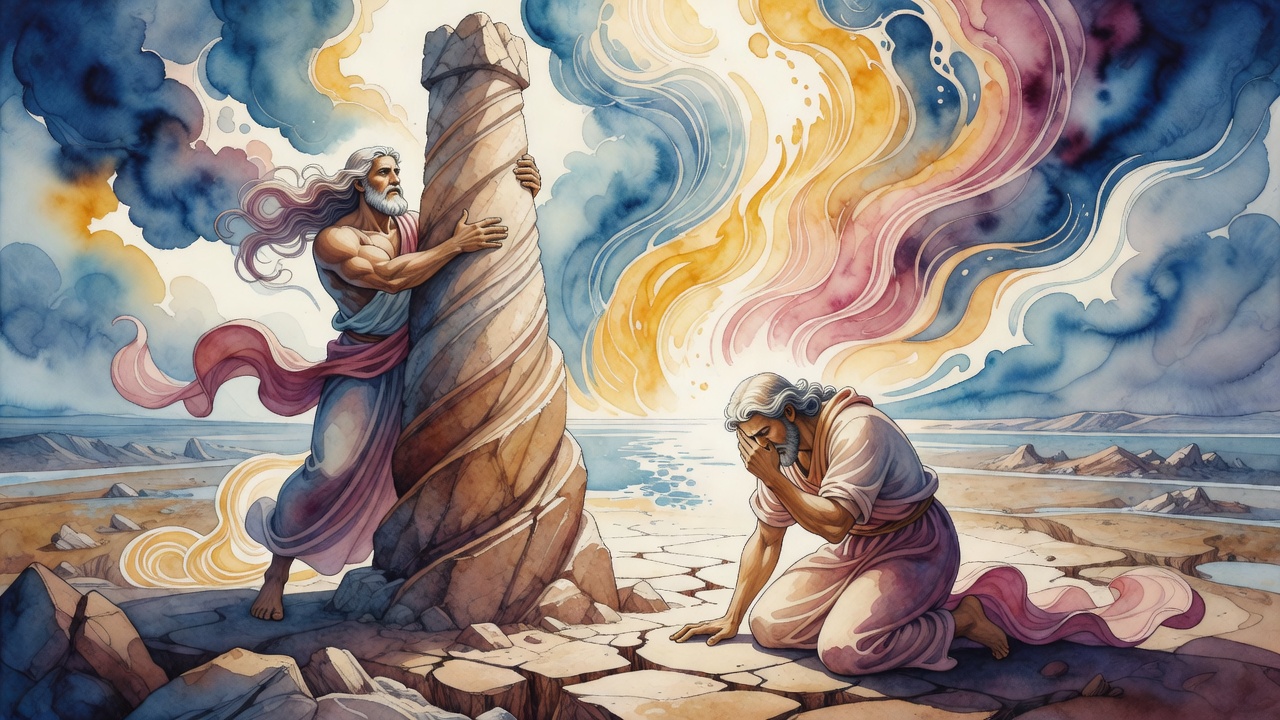
The tone sharpens. A person is responsible not only for harming others but for harming himself. The man who, in a rage, tears out his own hair, rips his clothes, smashes his dishes, and flings his money away is beyond the reach of human courts, but Heaven still calls him to account, for God requires the blood of our own lives. Treat such a person as an idolater, said Rabbi Shimon ben Elazar, because the same evil inclination that pushes him to wreck his own things would, on another day, push him to worship idols. Rage and idolatry are the same craft of the same enemy within.
Noah had been held up through water. On dry land the tests turned inward: cup, temper, the secret that spills when the mind softens.
Two Walkers, One Road
Noah clung. Abraham strode. One needed the hand. One became the lamp. Both walked under the same God, and both left the road marked for children who would need mud-saving and light-leading in turn. Grace found in a dark age is still grace. Walking ahead is a harder trust. The flood mud dried. The wine and the temper remained human work for every generation that stepped off the ark into a smaller world.
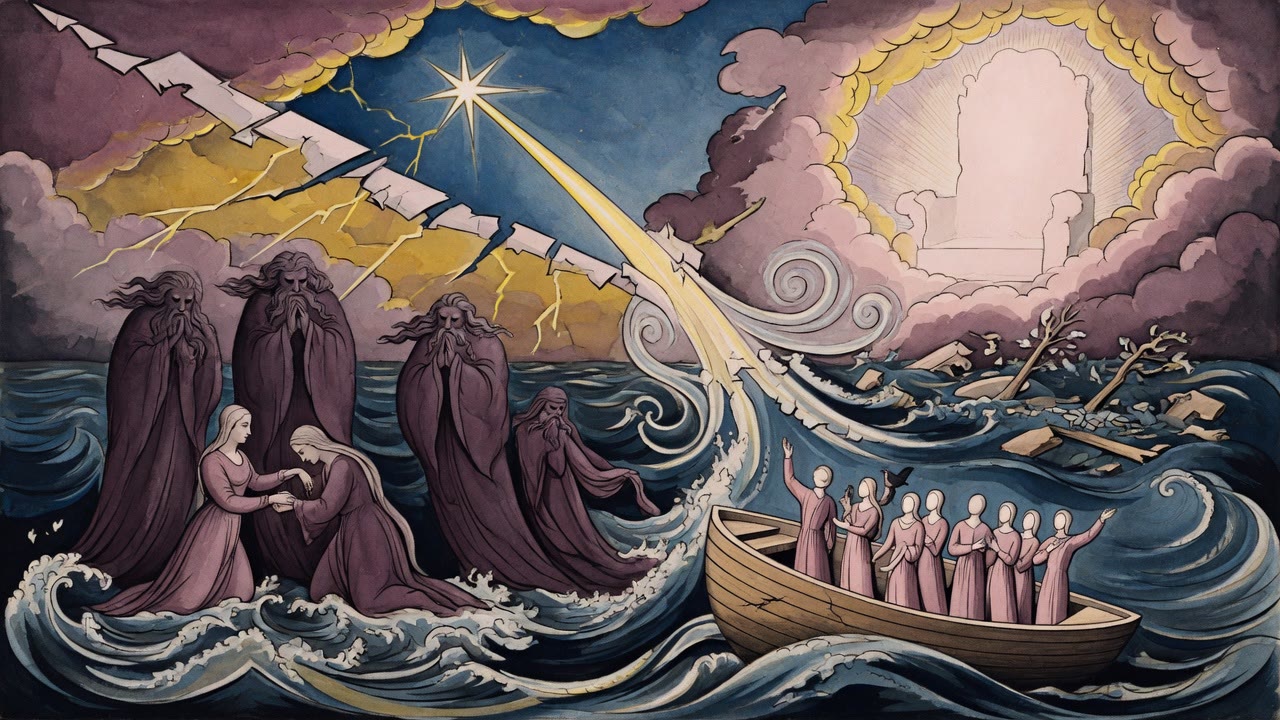
The mud of the generation was not only water and silt. It was robbery, theft, the collapse of every boundary until even animals abandoned their kinds. Noah built while neighbors laughed. He warned for years that felt longer than the rain. When the flood finally lifted him, the hand that held him was the difference between a righteous man and a drowned one. He was not Abraham's lamp in a dark alley. He was a child told to grip tight.
Finding grace did not make him one of God's three great discoveries. That fact is not insult alone. It is precision. Some hearts are found. Some hearts find. Noah found, and kept finding, through the long bobbing of the ark and the silence after the last raven and dove. When the offering smoke rose, the wine of a new world waited to test what the water had not washed away: temper, secrecy, the will to smash one's own house when rage climbs higher than reason.
Abraham would later walk ahead into famine and fire and a chart full of impossible stars. Noah's work was to survive being held. Both walks write the same Name on different roads. Children of both kinds of walkers still appear: some who need the hand in the mud, some who are asked to light the alley. The cup still reveals them. The temper still wrecks dishes. Heaven still requires the blood of our own lives when we turn the weapon inward.
← All myths