Noah Planted Wine Before Wheat After the Flood
On mud still smelling of flood, Noah set vines before grain, partnered with a dark teacher of wine, and woke to shame under a single day's harvest.
Table of Contents
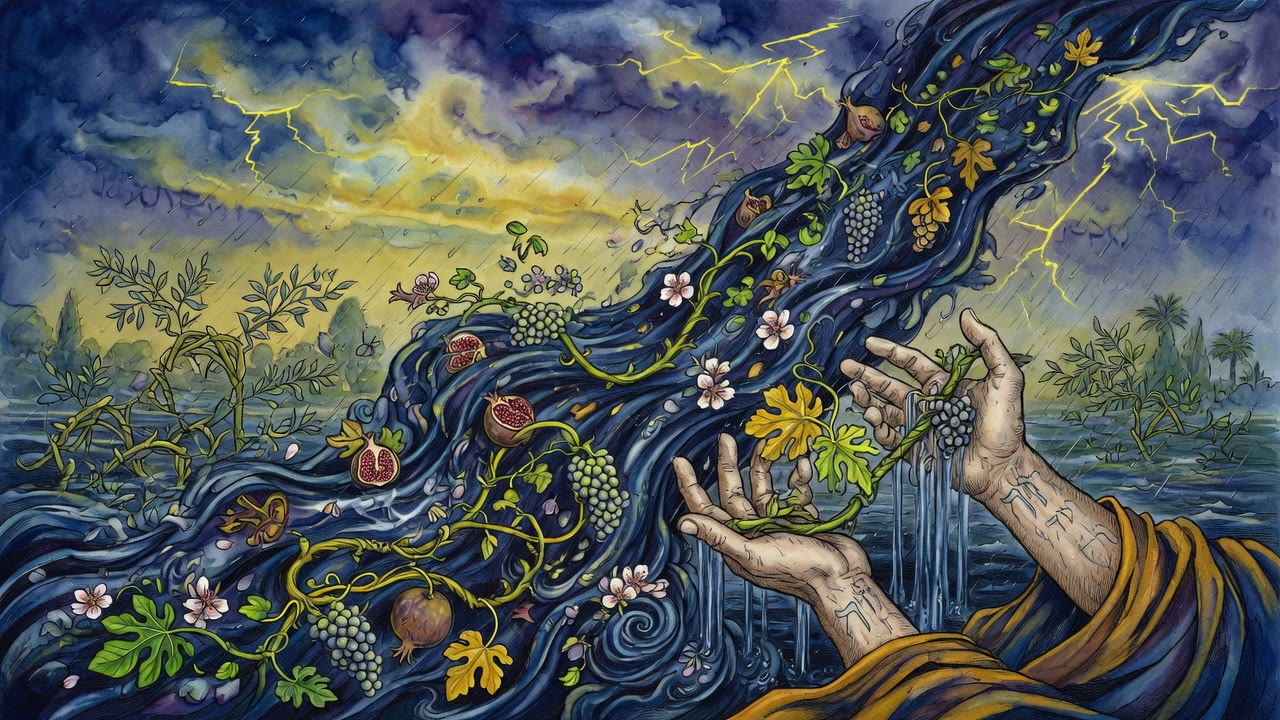
The ark's door stood open on a world rinsed clean and empty. Mud shone where cities had been. Noah stepped down as a man of the soil and chose his first crop under a sky that still looked newly washed.
 Click for full size
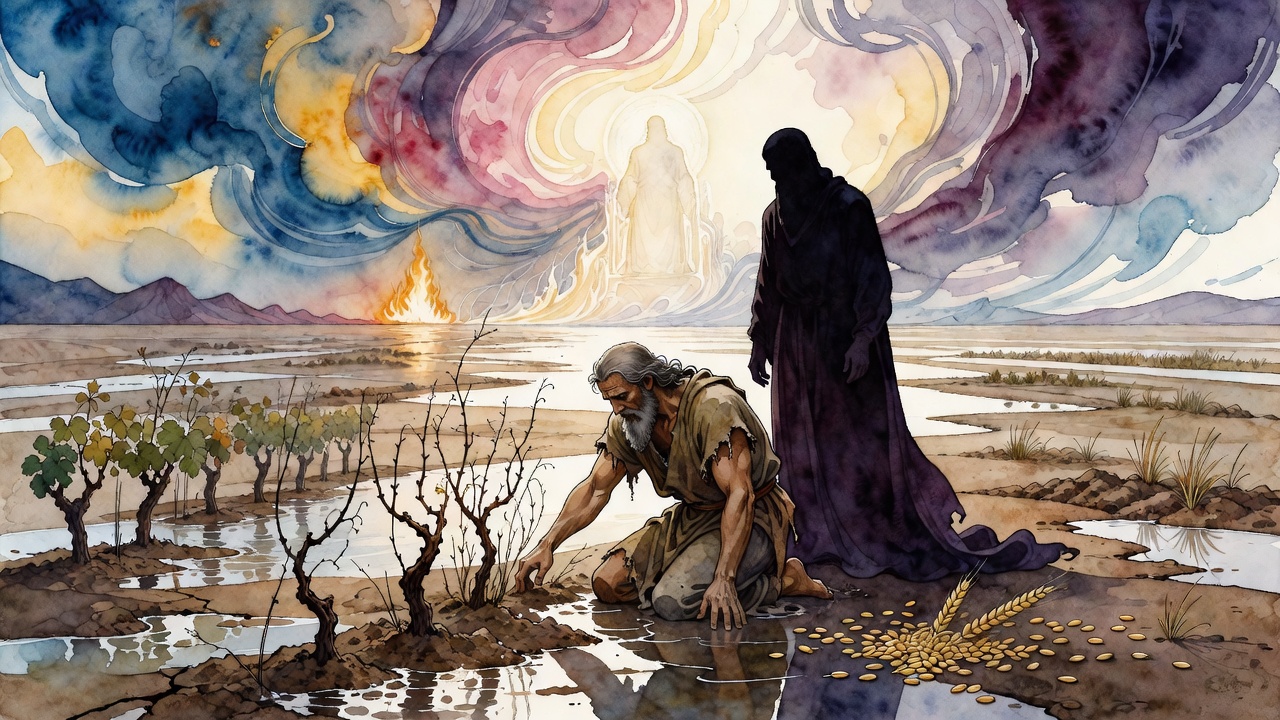
He did not plant wheat. He planted a vineyard (Genesis 9:20).
Why Not Barley First
Philo's midrash presses the strangeness. After a flood that erased fields and storehouses, the necessary grains should have come first: wheat, barley, the productions without which life cannot stand. A vineyard looks like pleasure ahead of survival, luxury before bread.
The answer Philo gives is not carelessness. Noah treated the staples as gifts that rise almost of themselves under God's hand, things to be dedicated rather than claimed as human invention. Wine, by contrast, requires craft, pressing, waiting, human partnership with the vine. The first planter after the flood chose the crop that would force him to labor as a partner, not only to receive as a dependent.
So the mud received roots of joy and danger together. The world after water would not be only ration and survival. It would include sweetness that can unmake a man in a single afternoon.
The Partner at the Furrow
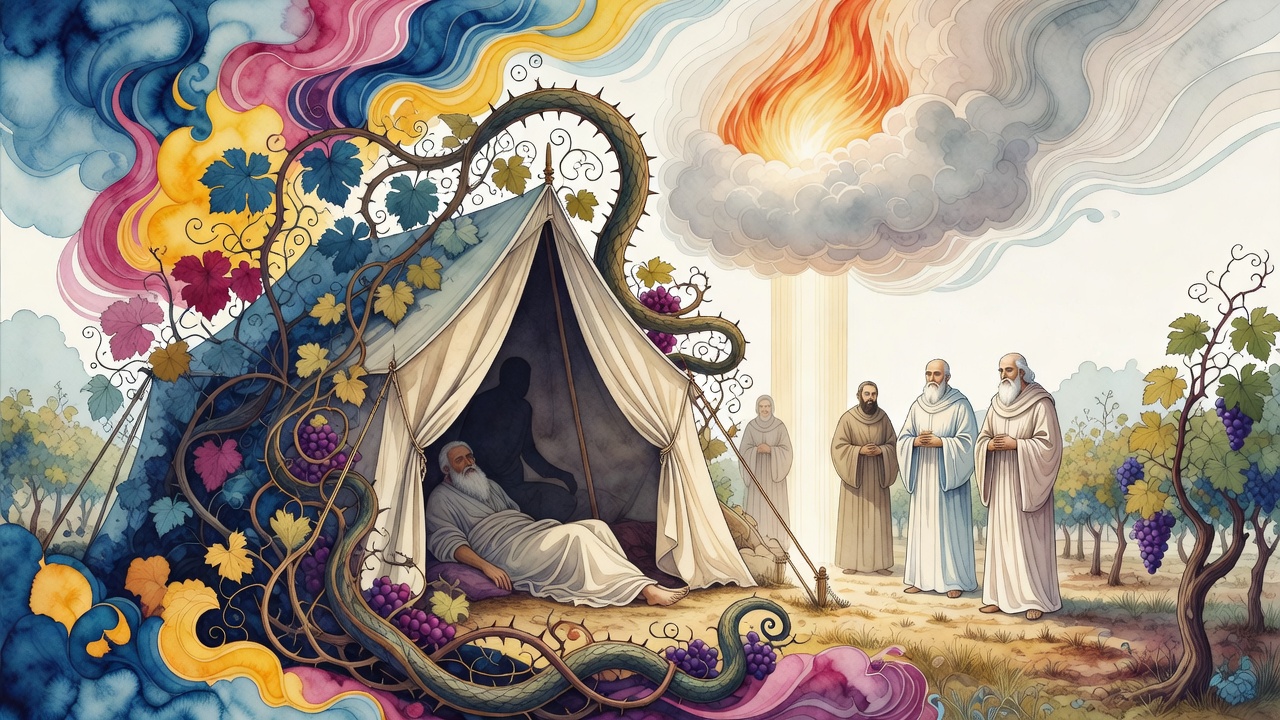
Legend places another figure at the planting. Ha-Satan, the Accuser who works in the world under God's leave, strolled up as Noah set the vine. "What are you planting?" The answer came bright: a vineyard, fruit sweet dry or moist, wine that rejoices the heart of man.
"Let us go into partnership," the Accuser proposed. To seal it he slaughtered animals at the roots in a grim sacrament of temperament: blood of lamb, lion, pig, and ape poured into the soil so that drinkers would inherit their natures in turn, mild, fierce, filthy, and foolish. The partnership was not a contract Noah fully understood. It was a teaching about what wine can do when the heart is unguarded.
Some strands say the vine itself came from Adam, carried out of Eden as a cutting of the old world. Noah tasted, found it good, and set it in new earth. The first day of planting became, in the compressed telling, a day of fruit, press, cup, and collapse. The pious man of the ark became a man of the ground in a few hard hours.
Altar Smoke Before the Spree
Jubilees will not let the vineyard stand alone without worship. After the landing Noah built an altar. He offered ox, ram, and sheep, flesh mixed with oil, a sweet savor rising from a planet still drying. He and his children rejoiced before the Holy One who had remembered them in the waters.
Only after thanksgiving does the agricultural story darken. The same hands that arranged sacrifice later arranged vines. Gratitude and excess can share a calendar. The flood generation's survivor knew how to build an altar and still did not know, yet, how to stop at one cup.
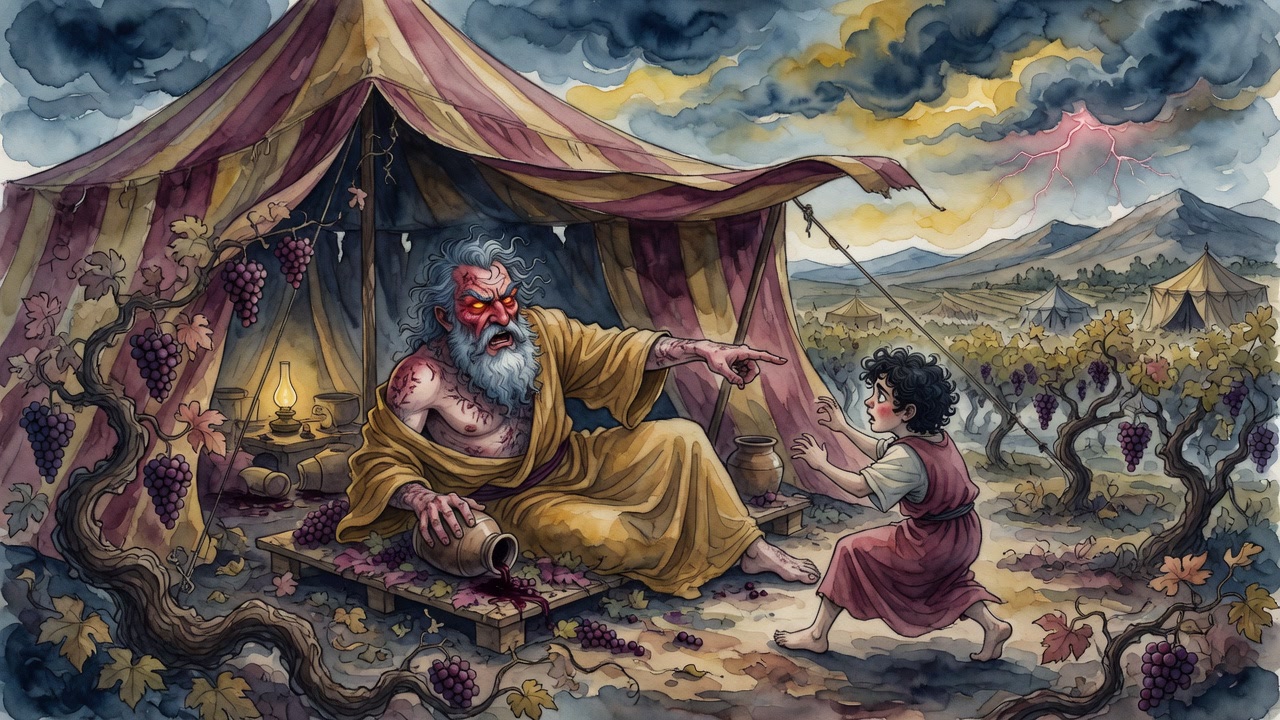
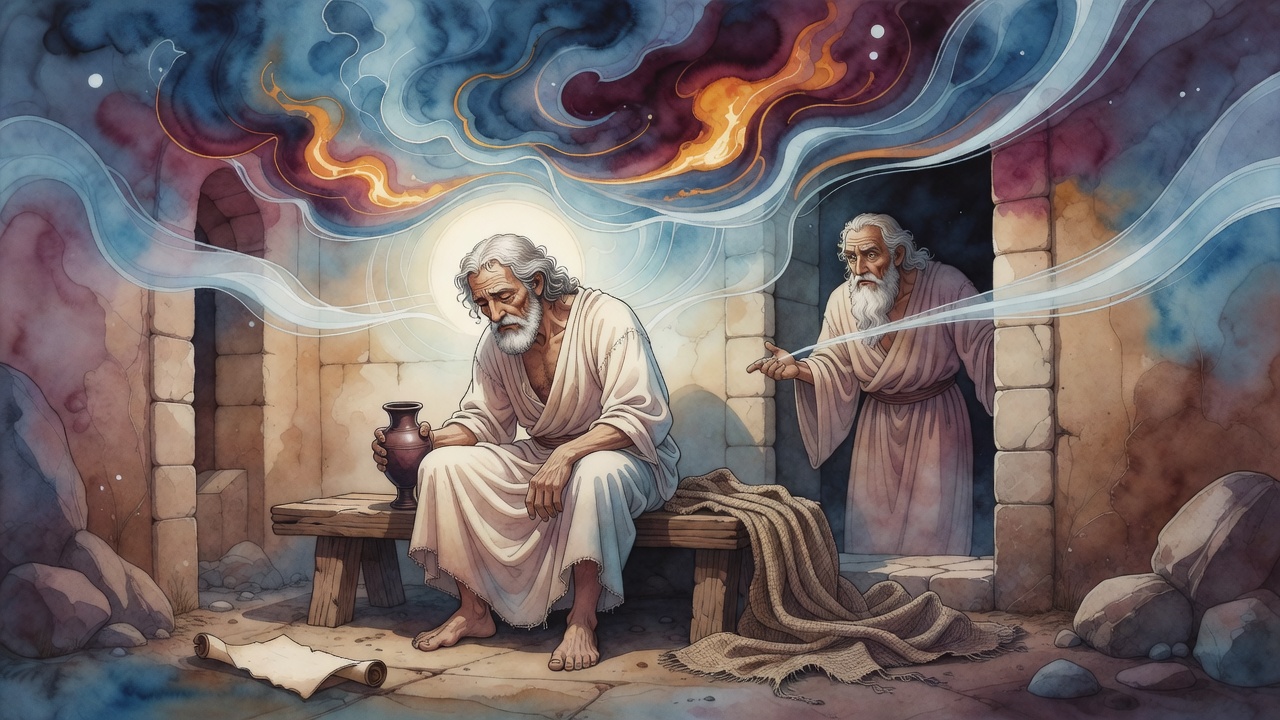
When the wine took him, he lay uncovered in his tent. Ham saw and spoke. Shem and Japheth walked backward with a garment and covered their father without staring. The household that had survived drowning now had to survive shame.
The Curse That Missed Ham's Name
Noah woke and learned what had been done. The curse fell not on Ham's own head in the plain text but on Canaan, Ham's son, a judgment that has kept interpreters awake for centuries. The story's moral edge is clear even when the legal path is thick: honor covers; mockery spreads; drunkenness hands a weapon to whoever is watching.
The Accuser's partnership had paid its dividend. Lion-fury, pig-filth, ape-folly, and the soft beginning of the lamb had all visited one tent in one day. Bread still waited unplanted. The first new field after the flood had already taught the world that joy without boundary is another kind of drowning.
Noah lived on. The vine lived on. Every later vintage carries both altar smoke and tent-shame in its scent if the drinker has ears for the old story. The man who saved the animals in pairs could not, on the first day of wine, save himself from a single partnership offered with a smile at the furrow.
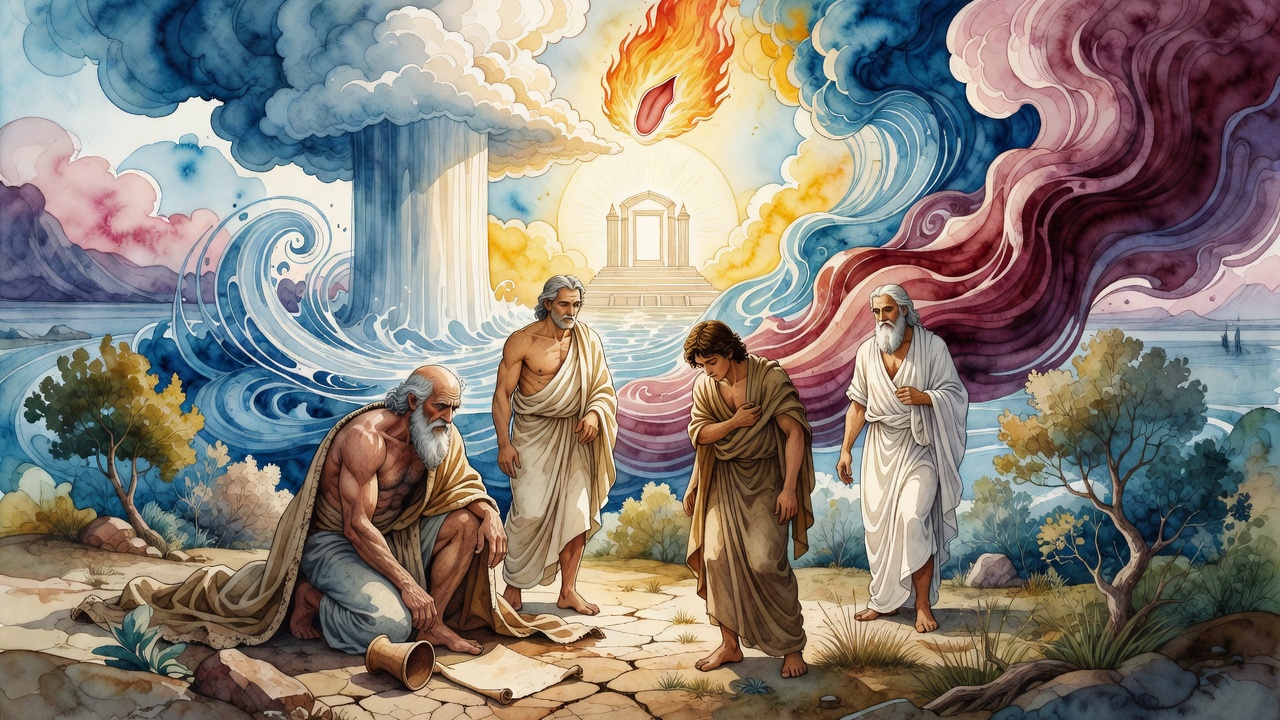
Ham's brothers walked backward with a cloak, eyes averted, the way men move when dignity is the last raft after a shipwreck of judgment. The tent flap moved in a small wind that was not the flood's wind and still felt like weather with a memory. Canaan, young enough to be named in a curse he did not invent, became the target of a sentence that would haunt maps and wars long after the vineyard's first season ended.
Noah's hands, which had built an ark to the cubit, now shook with the simpler failure of not knowing when to stop. Philo's question still hangs over the mud: why wine first? The craft answer and the Accuser answer do not cancel each other. A man can mean dedication and still accept a partnership that stains the roots.
By the time grain finally went into the ground, the world already knew drunkenness. The flood had washed violence from the open air. It had not washed thirst from the human chest. The vineyard taught that lesson faster than any wheat field could.
← All myths