Parshat Noach6 min read

Noah Cut the World Into Lots and Madai Refused His

Noah drew the drained earth into lots and bound his sons with a curse. The first man to break that oath did it out of distaste for cold water.

Curated by Arthur · Told by Maggid ·
Table of Contents
  1. The Lots Came Out of Noah's Chest
  2. Noah Made Them Swear and Left a Curse in the Ground
  3. Madai Looked at the Sea and Hated It
  4. Canaan Stopped Walking Where the Land Was Good
  5. The Jubilees Ran On Without Anyone Counting
  6. Blood on Ground No One Came to Gather
Noah Cut the World Into Lots and Madai Refused His Click for full size

The Lots Came Out of Noah's Chest

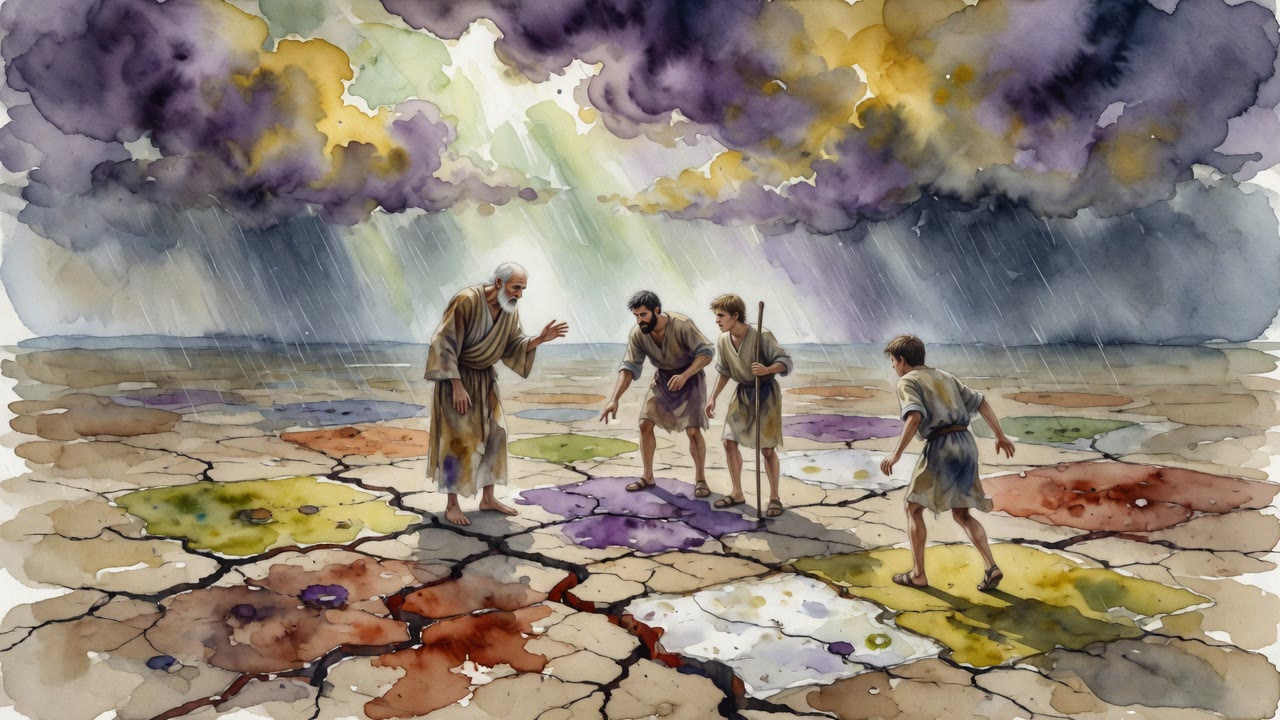
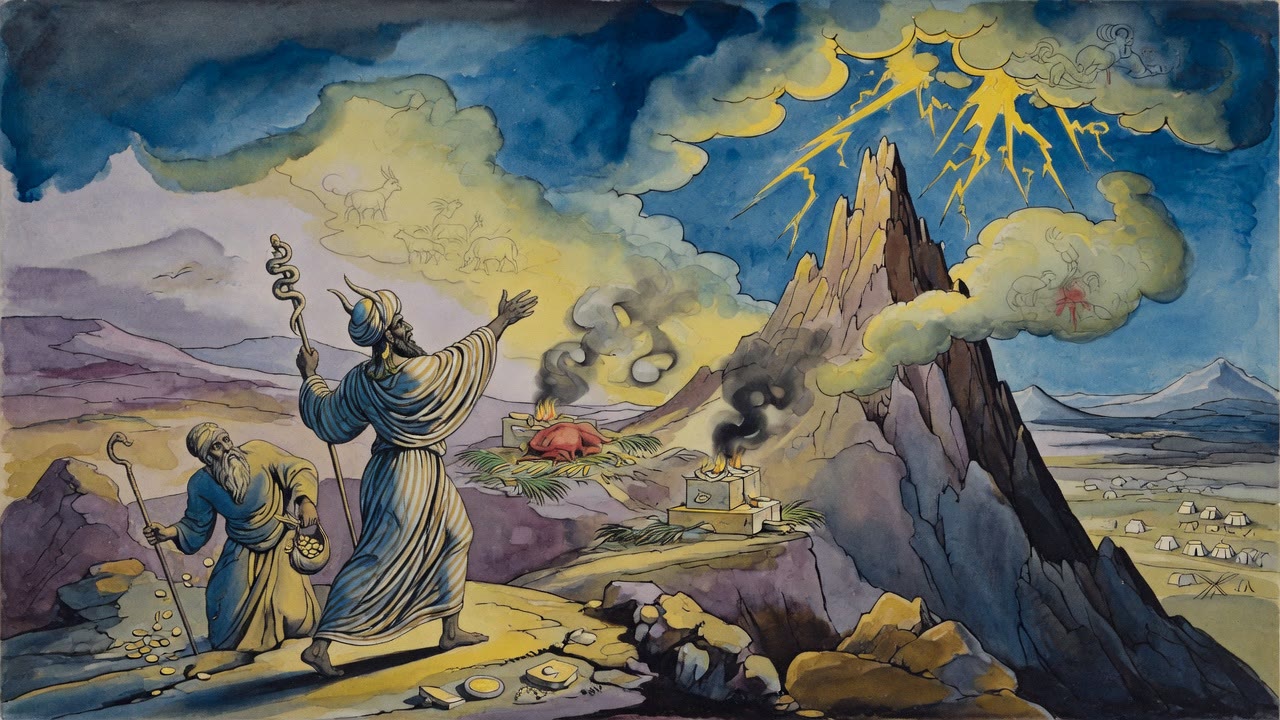
The mud had barely hardened when Noah called his sons up the slope and spread the writing across his knees. He drew the lots one at a time and read each one out before he let anybody speak. Shem took the middle of the earth, the belt of ground that held the garden and the mountain and the navel of the world. Ham took the hot south past the river. Japheth took the north and the cold, and Noah held that lot in his hand a while before he passed it over.

Then the grandsons came forward, and the world got smaller and stranger with every reading.

Madai drew third among Japheth's sons. His portion ran west of his two brothers, out to the islands and the coasts of the islands, which meant salt and wind and a horizon that would not sit still. Javan drew fourth, every island and the islands lying toward the border of Lud. Tubal drew fifth, the land in the middle of the tongue that reaches toward Lud's border, then the country past the second tongue as far as the third. Meshech drew sixth, everything beyond the third tongue until it comes to the east of Gadir. Nobody standing there had seen Gadir. They took the word for the place.

Noah Made Them Swear and Left a Curse in the Ground

When the last portion had been read out, Noah did not roll up the writing. He made them swear on it.

The oath had teeth. Whoever reached for a portion that had not fallen to him by lot would be cursed, and the curse would carry down through his sons and his sons' sons to the day of judgment, when the Lord God would come with a sword and with fire for all the filth they had spread across the earth.

"So be it," they answered. "So be it." They said it for themselves and for their children, and the sound of it went out over ground that was still drying.

Madai Looked at the Sea and Hated It

Japheth's sons went toward the water the way the lots had sent them, and Madai walked with them as far as the shore.

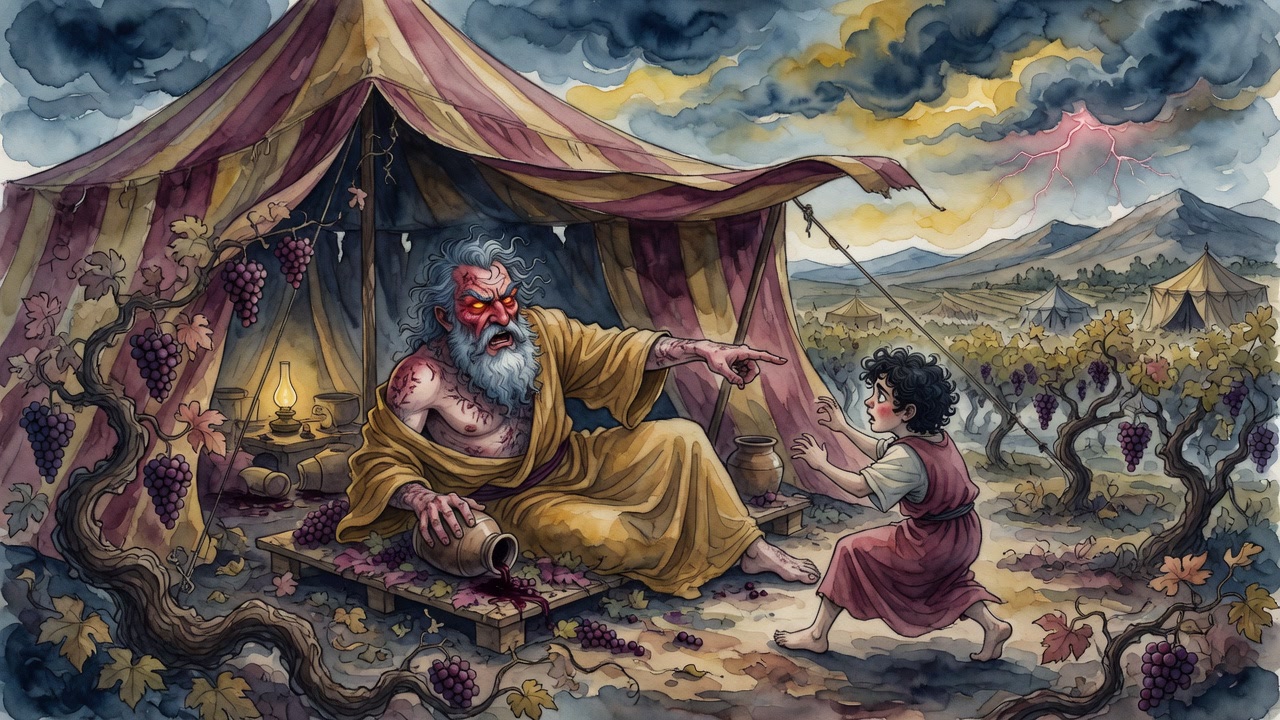
He stood on the coast of his own inheritance and it did not please him. Grey water. Islands he would have to reach by boat, and a coastline soaked nine months out of the year. So he turned inland and went to Elam and Asshur and Arpachshad, and Arpachshad was his wife's brother, which made the asking easier and made it nothing else.

He begged them for ground. They gave it to him, warm ground out of Shem's belt of the world, and Madai settled in Media beside his wife's brother and stayed there. The islands got along without him.

Then he named the place. He called his own dwelling and the dwelling of his sons Media, after himself, so that a portion he had never drawn wore his name on it from then on.

Canaan Stopped Walking Where the Land Was Good

Canaan did it louder. He came up through the country between Lebanon and the river of Egypt, and the land was so good that he never crossed the sea to the share that had fallen to him. His father Ham came looking for him. So did his brothers Cush and Mizraim.

"You have settled in a land that is not yours," they told him, "and it did not come to us by lot. Do not do this. If you do, you and your sons will fall in this land, and you will be rooted out for sedition, because by sedition you sat down here."

Canaan stayed. The country took his name and kept it, and the oath his grandfather had made them all swear stood over it like weather.

The Jubilees Ran On Without Anyone Counting

Seasons went by in sevens and the sevens went by in forty-nines. In the thirty-fifth jubilee, in the first year of the third week, Reu took a wife, and her name was Ora, daughter of Ur, son of Kesed. Nobody at that wedding was thinking about coastlines or tongues of land. The crossings were so old by then that they looked like the map.

Blood on Ground No One Came to Gather

The sword and the fire in Noah's oath were in no hurry at all.

Far down the line from the drawing of lots, the sinners of the nations rise against Israel, and they have no mercy and no compassion in them, and they respect nobody's face, not the old man's and not the child's. They use violence against Israel and transgression against Jacob. Blood runs out over the earth, and there is nobody to gather it up and nobody to bury it.

The people cry aloud. They call and they pray to be pulled out of the hand of the sinners, and not one of them is saved.

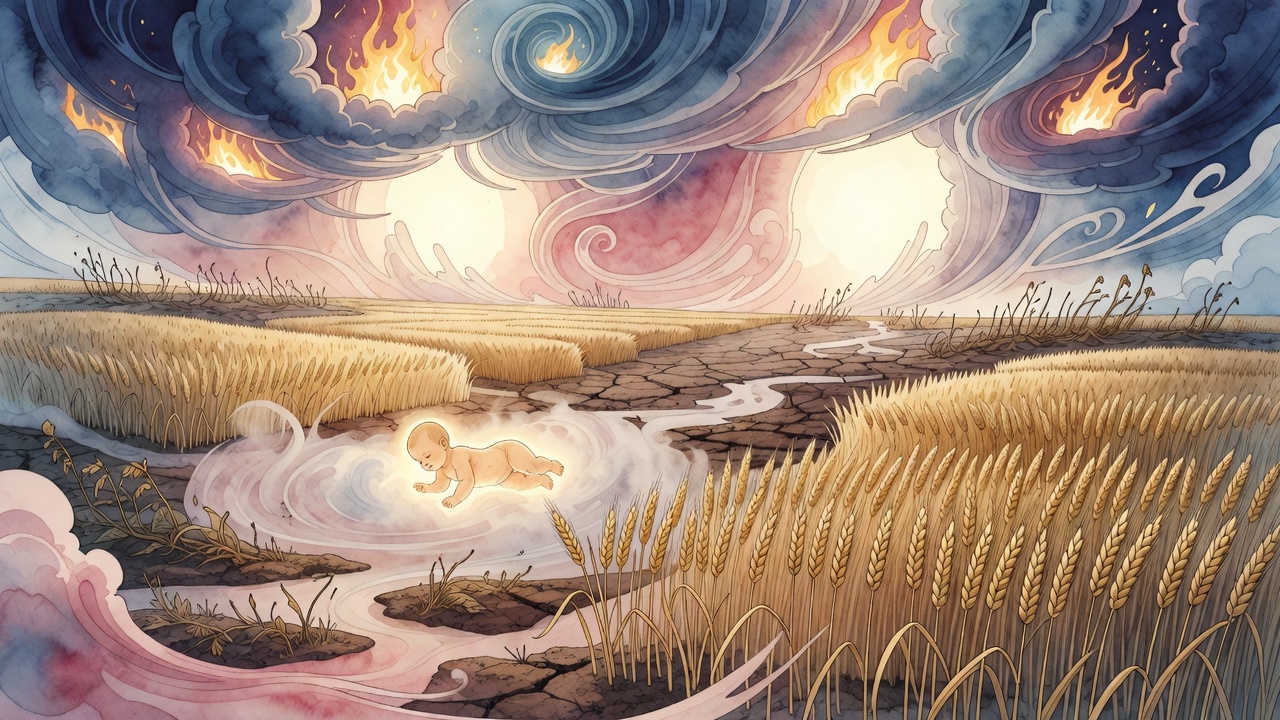
The children go grey at the head. A child three weeks old wears the face of a man of a hundred years, and their bodies are bent down by oppression until nobody in the country stands to full height. The earth Noah cut into portions holds them all the same, the ones who kept inside their borders and the ones who walked out of them, and no one comes with a spade.


← All myths
From the tradition

Sources

3 sources

The texts behind this telling. Some cards carry a translation of the source; others are our own retelling of it, and each card says which. Every card links out to the original.

Book of Jubilees 9:15Book of Jubilees

Retold in our words. Read the original at the link below.Sefaria Community Translation · CC-BY

It’s a story of inheritance, of boundaries, and of the ancient world taking shape.

The Book of Jubilees, sometimes called Lesser Genesis, isn't afraid to get specific. It paints a picture of Noah dividing the earth among his sons and grandsons.

The scene: lines being drawn, territories assigned. It's a geographical roll call of the ancient world, as understood by the author of Jubilees.

First up is Madai. His portion? From the west of his two brothers, reaching out to the islands and coasts of the islands. Think of the Mediterranean, perhaps, and the lands accessible by sea.

Then comes Javan. His territory encompasses the "fourth portion, every island and the islands which are towards the border of Lud." This suggests a maritime domain as well, lands scattered across the sea, bordering the territory of Lud, another descendant of Noah.

Next, we have Tubal, receiving the "fifth portion in the midst of the tongue which approacheth towards the border of the portion of Lud to the second tongue, to the region beyond the second tongue unto the third tongue." This is where it gets interesting. What are these "tongues"? Likely, the text is referring to geographical features, perhaps peninsulas or river systems that defined the boundaries between these early territories.

Finally, there's Meshech. His share is the "sixth portion, all the region beyond the third tongue till it approaches the east of Gadir." Again, we see the "tongue" acting as a landmark, a natural border defining the limits of his domain, reaching eastward towards Gadir.

What’s striking about this passage from the Book of Jubilees is its ambition. It aims to provide a complete geographical framework, a divine blueprint for the distribution of humanity across the earth. It’s evidence of the ancient desire to understand our place in the world, to map our origins onto the land itself.

While we might not be able to pinpoint every location with absolute certainty, the Book of Jubilees offers a glimpse into a world being reborn, a world where every tribe, every people, had its divinely appointed place. It shapes our stories, our identities, and our understanding of where we come from. So, the next time you look at a map, remember this ancient division, this cosmic real estate transaction, and the stories it continues to tell.

Full source
Book of Jubilees 11:1Book of Jubilees

Retold in our words. Read the original at the link below.Sefaria Community Translation · CC-BY

Sometimes, the answer is simpler – and more personal – than it first appears.

Take the story of Madai. We find him in the Book of Jubilees, hanging out in the land of Media, close to his wife's brother. Nothing too extraordinary. But here's the kicker: he liked the place so much that he named his dwelling – and the dwelling of his sons – after himself! Media. Just like that. A lasting legacy, etched onto the map.

The Book of Jubilees, if you're not familiar, is an ancient Jewish text that retells the stories of Genesis and Exodus, but with a lot of added details and a unique chronological framework based on "jubilees" – periods of 49 years. It fills in gaps and provides a different perspective on familiar narratives.

Speaking of families and timelines, the Book of Jubilees then shifts its focus. We jump ahead to the thirty-fifth jubilee – that's a long time, if you're counting! – specifically, the first year of the third week. Got it? Good! It was then that Reu, another figure in the ancestral line, decided to take a wife.

Her name was ’Ôrâ. Pretty name. The daughter of ’Ûr, son of Kêsêd. Lineage matters in these stories. It's all about connecting people and events across generations.

It's easy to gloss over these names and dates. To see them as just lists of people in a very, very old book. But when we pause, when we really consider these details, we start to see the human element. These weren't just names on a page. They were people who lived, loved, and left their mark, however big or small, on the world. From someone like Madai, who had a whole region named after him and his sons, to figures like Reu and ’Ôrâ, whose story contributed to the larger narrative.

Remember that behind every name there is a person, behind every person there is a world. Just like us.

Full source
Book of Jubilees 23:41Book of Jubilees

Retold in our words. Read the original at the link below.Sefaria Community Translation · CC-BY

Book of Jubilees turns to Violence and Suffering Foretold for Israel.

It speaks of a future filled with violence and suffering for Israel and Jacob. violence against Israel, transgression against Jacob. It's a stark image. the verse says, “And they will use violence against Israel and transgression against Jacob, And much blood will be shed upon the earth, And there will be none to gather and none to bury.”

Can you imagine a world where so much blood is spilled that there’s no one left to even perform the basic acts of mourning and respect for the dead? It’s a terrifying thought.

The passage continues, describing a desperate plea for salvation that goes unanswered. "In those days they will cry aloud, And call and pray that they may be saved from the hand of the sinners, the Gentiles; But none will be saved." This paints a picture of utter helplessness, a feeling of being abandoned and alone in the face of overwhelming adversity. They cry out to be saved from the "sinners, the Gentiles," highlighting a period of intense intergroup conflict and persecution.

What's perhaps most unsettling is the description of the physical and mental toll this suffering takes on the people. “And the heads of the children will be white with grey hair, And a child of three weeks will appear old like a man of one hundred years, And their stature will be destroyed by tribulation and oppression.” The innocence of childhood, robbed by hardship. A three-week-old baby appearing ancient? It's a powerful metaphor for the crushing weight of despair and the acceleration of aging under immense stress. This imagery emphasizes the complete disruption of the natural order.

Why this vision of despair? What's the purpose of such a bleak prophecy?

Perhaps it's a warning. A stark reminder of what happens when we stray from our values, when violence and injustice reign. Maybe it’s a call to action, urging us to create a world where such prophecies never come to pass. Or maybe, just maybe, it's a reflection of the cyclical nature of history, a reminder that even in the darkest of times, there's always the potential for hope and renewal.

The Book of Jubilees doesn’t offer easy answers. But it does offer a powerful, unforgettable glimpse into the consequences of our choices – and a chilling vision of a world we must strive to avoid.

Full source