Noah's Raven Argued Back and Elijah Needed It
Noah's raven refused the mission and argued for its species. God ordered it kept for Elijah. Wonders followed, and exile still came for unrepentant kings.
Table of Contents
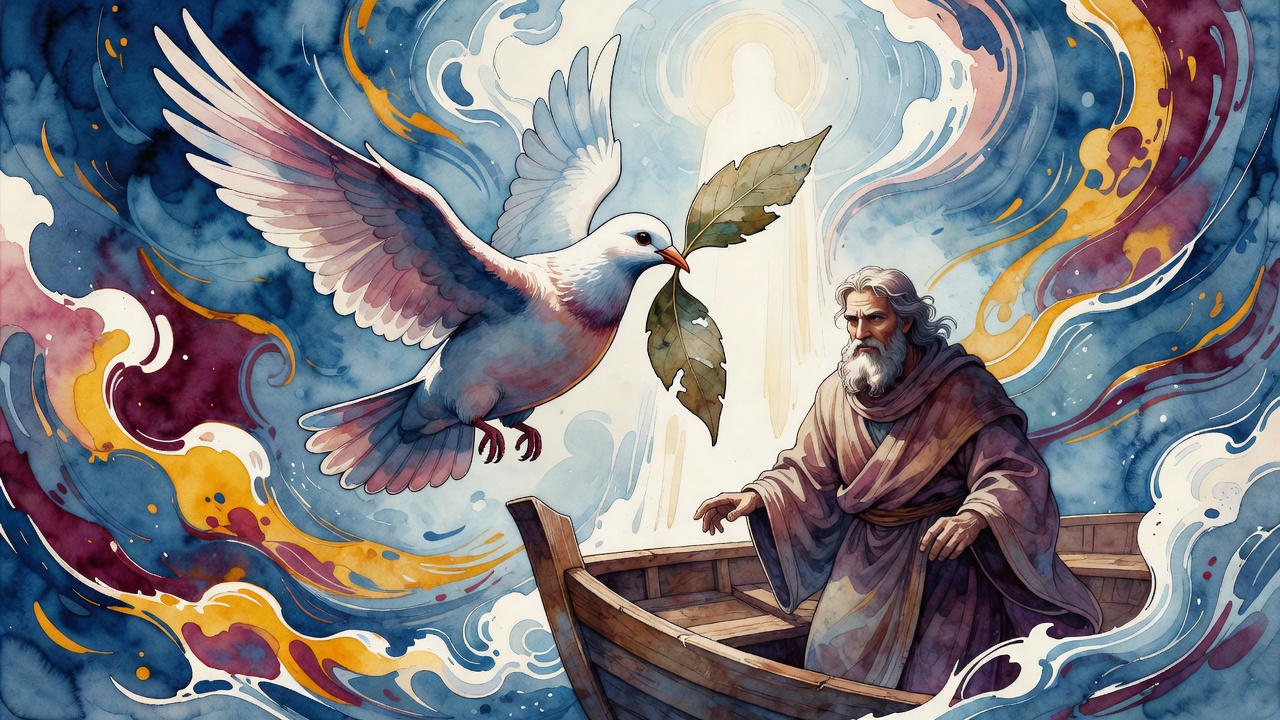
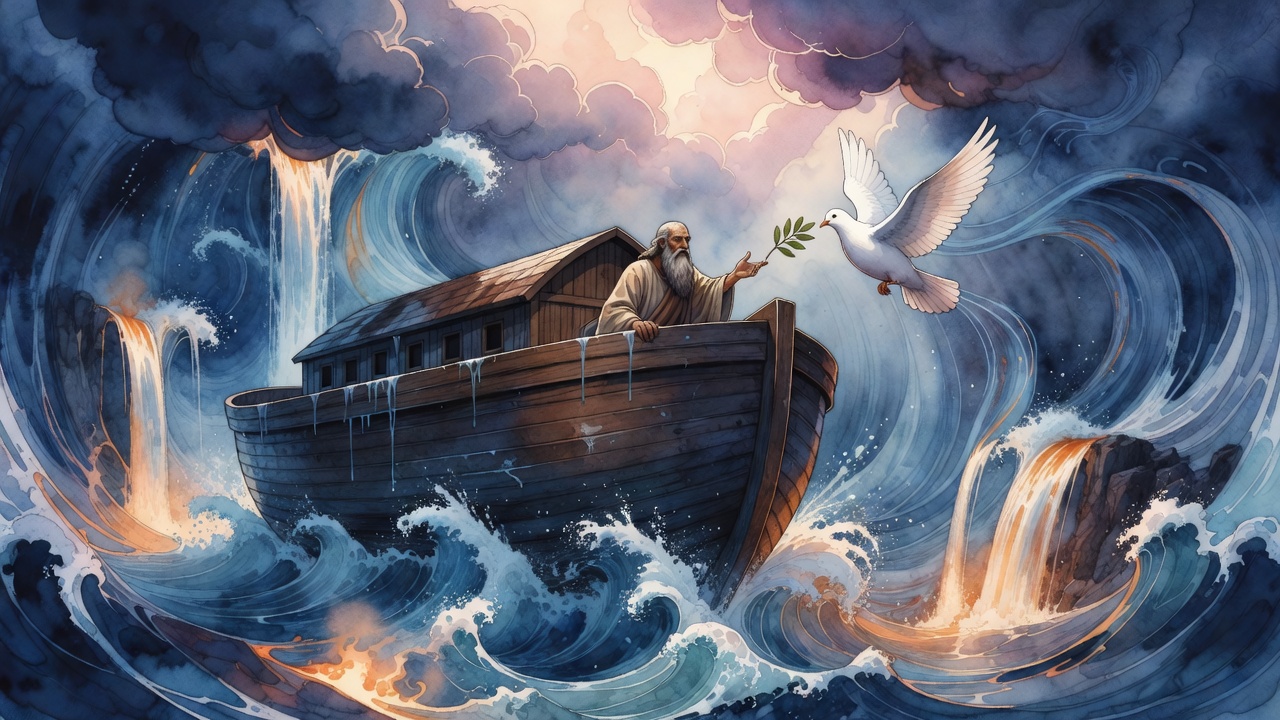
At the end of forty days Noah opened the window of the ark, the tzohar that Rabbi Abba bar Kahana reads as a window, and sent out the raven. The bird went back and forth. Rabbi Yudan, in the name of Rabbi Yehuda ben Rabbi Simon, hears not mere flight but argument. The raven began presenting answers to Noah, meshivo, turning the mission into a lawsuit on the wet air.
 Click for full size
Of all the animals, beasts, and birds here, why send only the raven? There are seven of the clean kinds. Of ravens there are two. Send this bird out and risk erasing its kind from the washed earth.
A Species on Trial at the Window
Noah answered without tenderness. What need does the world have for this bird? It is fit neither for food nor for offering. He did not want the raven back inside. The window that had let the dark bird out was ready to stay shut against it. Utility was the whole ethic of the passenger list in Noah's mouth.
Then the Holy One spoke. Accept it back into the ark, for the world will have a need for it in the future. Noah asked when. Until the drying of the water from upon the earth, came the answer that points past the Flood to another drying. A certain righteous man is destined to arise and dry the world with drought, and he will need this bird.
The useless creature is under sealed orders for a prophet not yet born. Noah's inventory of worth fails the test of providence.
Bread and Meat on Black Wings
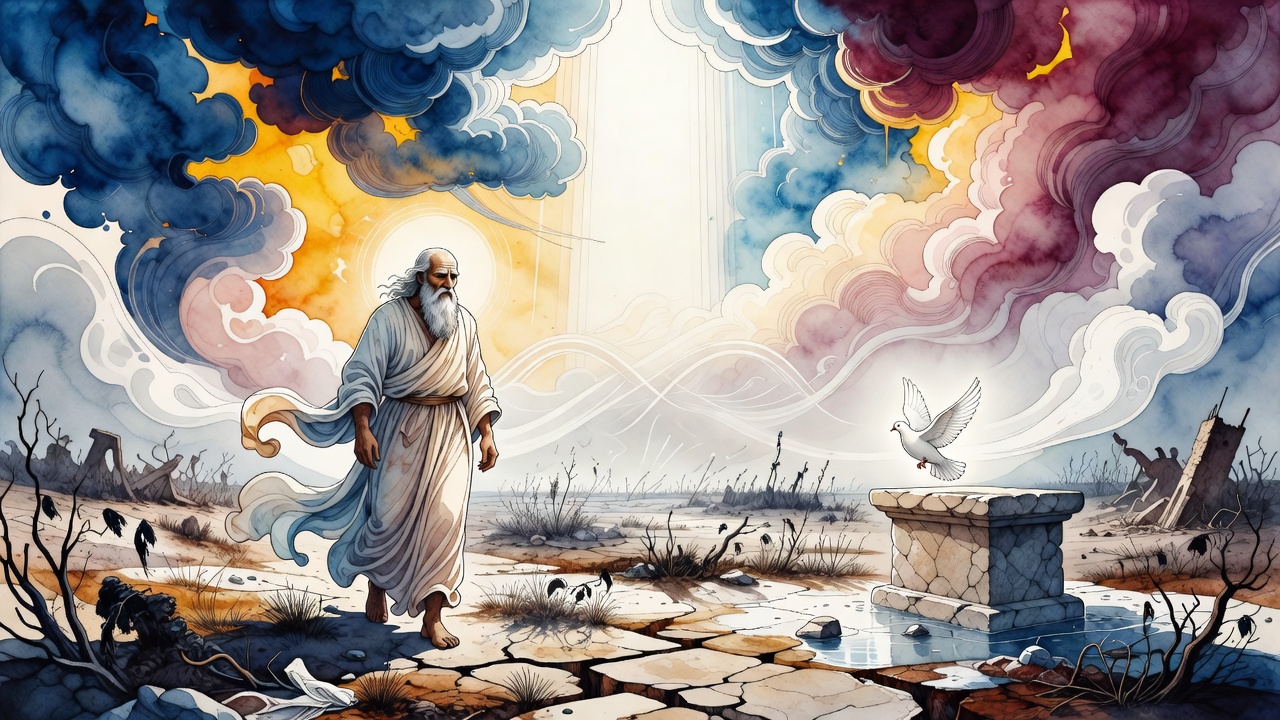
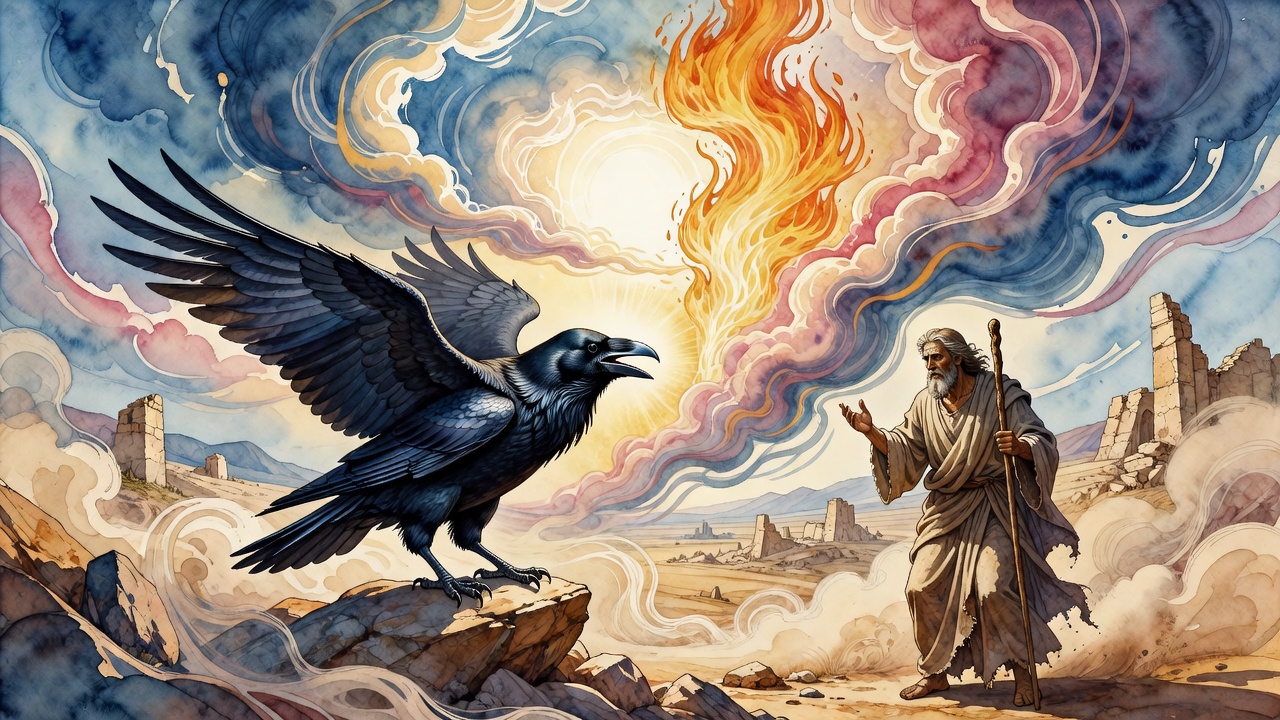
That righteous man is Elijah. By the brook, when the land cracked under the word of drought, ravens brought him bread and meat morning and evening. The species Noah nearly erased from the passenger list became the courier service of a prophet who closed the sky.
Some sages still argue whether orevim means literal ravens or men of Aravi near Beit She'an. Rabbi Nehemiah insists on birds carrying food from royal tables. The midrash does not need the argument settled to keep its sting. What Noah called worthless, Heaven booked as logistics for the day the rain refuses to fall.
The Flood's survivor almost aborted the rescue plan for the drought's survivor. Mercy for a black bird is policy written centuries early. Morning bread and evening meat ride on the wings of a lawsuit that lost.
Wonders in Life, Power After Death
Ben Sira praises the same prophet in a tight line. In his life he did wonders, and in his death powerful deeds. Fire from heaven, rain restored, ascent in a storm, and after the body is gone, the deeds still work on the world. Influence does not retire when the chariot rises.
Then the praise collapses into verdict. With all this the people did not repent and did not cease from their sins until they were torn from their land and scattered in all the earth. Miracles without teshuvah (turning back to God) become scenery. Galut follows as geography written by refusal.
A few remained with Judah. A ruler from the house of David still sat. Among them some did right and some did evil. The remnant is not a pure choir. It is a mixed household still choosing under a thinned crown.
Hezekiah Cuts Rock While Prophets Burn
Beside that moral weather, Hezekiah strengthens his city with water, cutting through rock with bronze and damming mountains for a pool. Practical salvation runs beside spiritual failure. A king tunnels for life while a nation ignores the prophet the ravens once fed.
Return to Noah's window. The raven argues for its life. God argues for Elijah's breakfast. Ben Sira argues that even after wonders the people can still choose exile. The chain from ark to brook to scattering is one long refusal to waste what Heaven has already reserved.
A bird called useless keeps the file open on mercy until a prophet opens his mouth over a dry land. The Flood taught survival of pairs. The raven taught survival of purposes not yet visible to the captain of the ark.
Rabbi Akiva, preaching on the Flood generation, found hearers dry-eyed at mass death and weeping at Job. The midrash links that hardness to mercy forgotten among humans, so mercy was forgotten for them. Injustice breaks like a tree snapped rather than uprooted, never to be replanted. Against that background the spared raven is almost comic, a small black exception Heaven insisted on keeping for a better errand.
The argument at the window is comedy only until Elijah's hunger makes it law. Noah ranked creatures by altar and kitchen. Heaven ranked them by future errands. Between those rankings the Flood generation's cruelty, which forgot mercy among humans, meets a small black exception that proves not every life in the ark was measured by Noah's taste.
← All myths