Parshat Bo5 min read

One Crumb of Chametz Could Cut Off a Soul

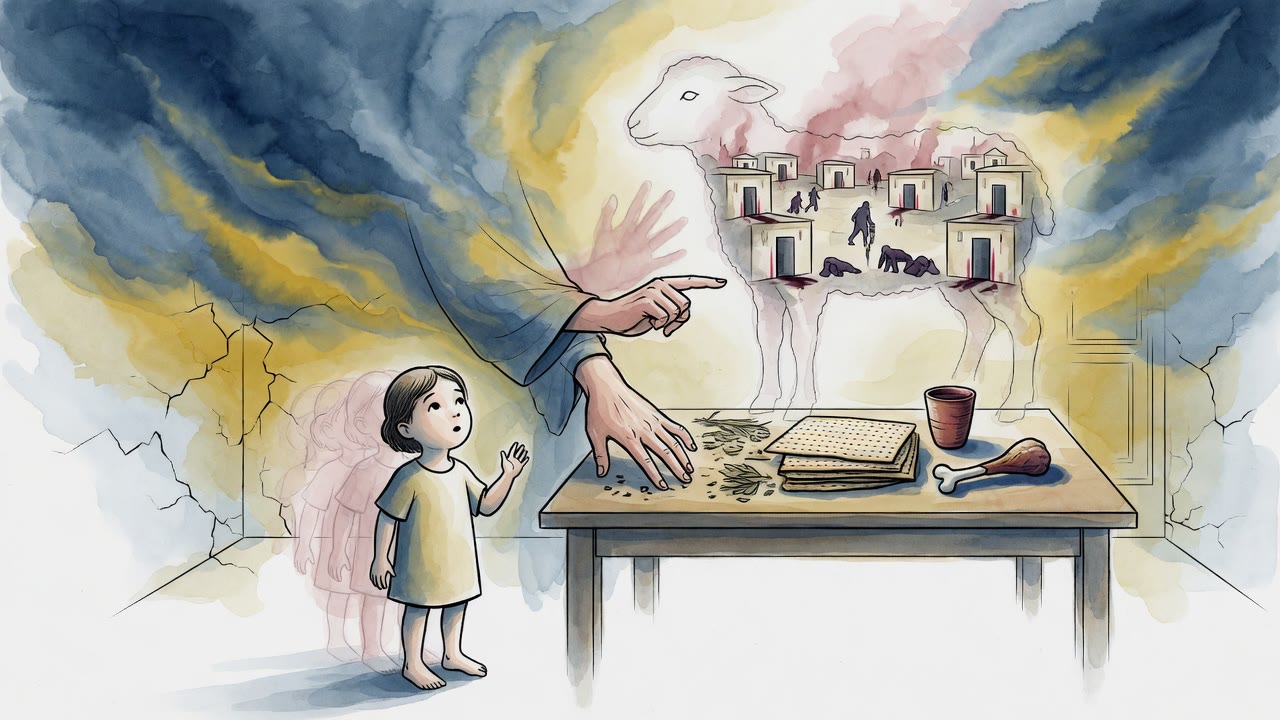
A woman in Goshen dug one hard crumb out of the mortar with her fingernail. Lamb's blood was drying on the door, and her firstborn son watched.

Curated by Arthur · Told by Maggid ·
Table of Contents
  1. Crumb Under the Mortar
  2. Chametz and Se'or Share One Edge
  3. Every First Opening of the Womb
  4. Went and Did Before the Last Word
  5. Midnight and the Cut That Was Not Ours
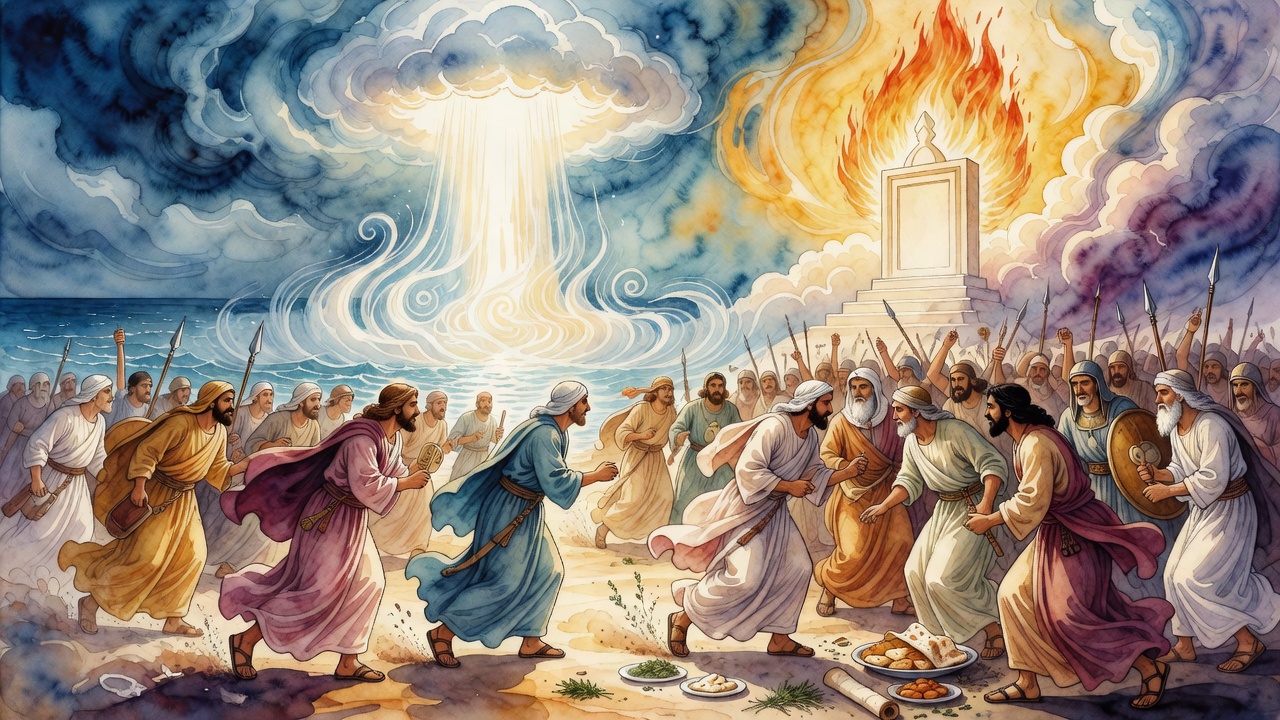
One Crumb of Chametz Could Cut Off a Soul Click for full size

Crumb Under the Mortar

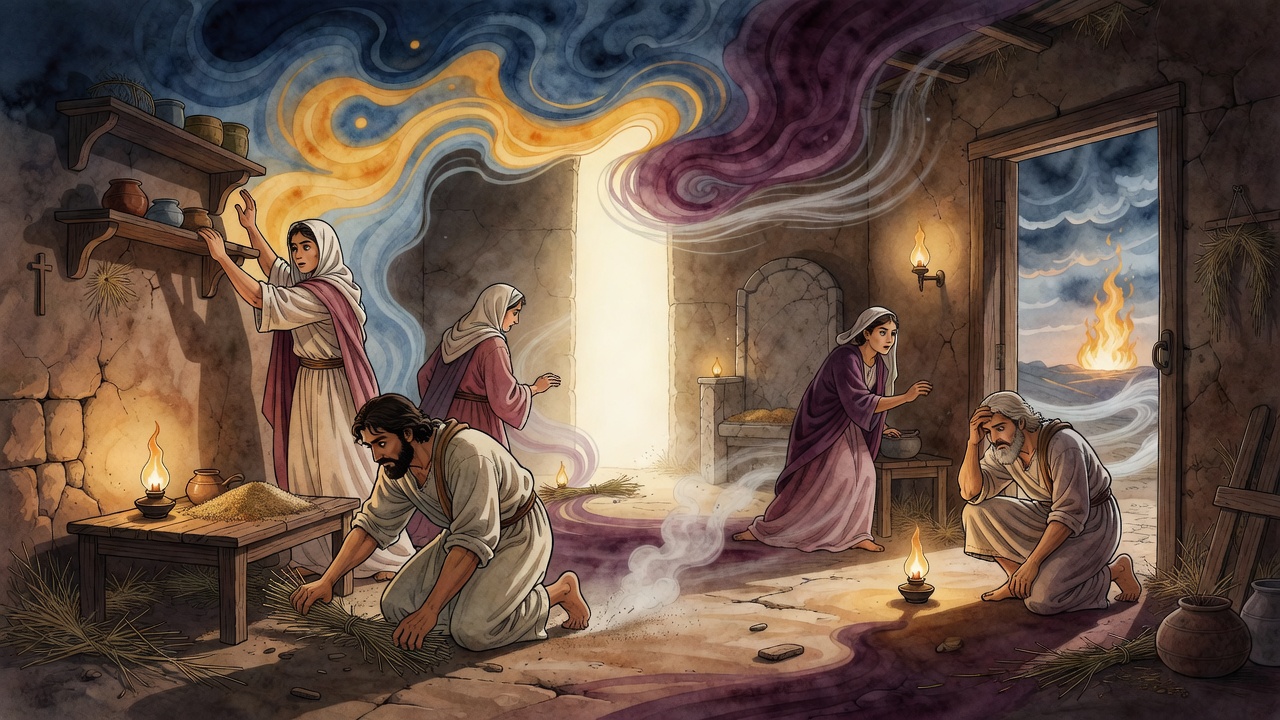
She found it with a fingernail. One hard crumb, pale as bone, stuck under the rim of the mortar where dough had lived all year. Outside, Goshen held its breath. Inside, the woman scraped until the stone was clean enough for a night that would not forgive carelessness. Moses had said the soul that eats leaven would be cut off. Not shamed. Not fined. Cut off.

Her husband held the lamp. Their firstborn son watched from the doorway, a lamb's blood already drying on the lintel in a dark stroke. The crumb went into the fire and vanished. Still she checked again.

Chametz and Se'or Share One Edge

The law did not leave a loophole for the sly. Whoever eats chametz is cut off, the verse said, and another line widened the blade to leavening itself, to se'or, the sour starter that wakes dough from within. A person might swear they ate no finished loaf and still carry the agent of rising on the tongue. The Mekhilta closed that door. The soul's danger ran through both names.

In the house the difference felt small and total. Bread was gone. Starter was gone. Even the smell of old fermentation had to leave. The night asked for a kitchen as empty of puff as a field after fire.

Every First Opening of the Womb

Beside the law of the crumb stood a larger claim. Sanctify to Me every firstborn, God told Moses: human, animal, whatever opens the womb. The command sounded absolute until the details arrived to give it edges, donkey and son and priestly redemption, the general and the particular braided into a system a family could keep. Holiness landed on the first to break into the world.

Their boy in the doorway was such a first. Tonight Egypt's firstborn would learn the same category from the other side of the door. The woman looked at her son and felt the word "firstborn" change temperature in her mouth.

Went and Did Before the Last Word

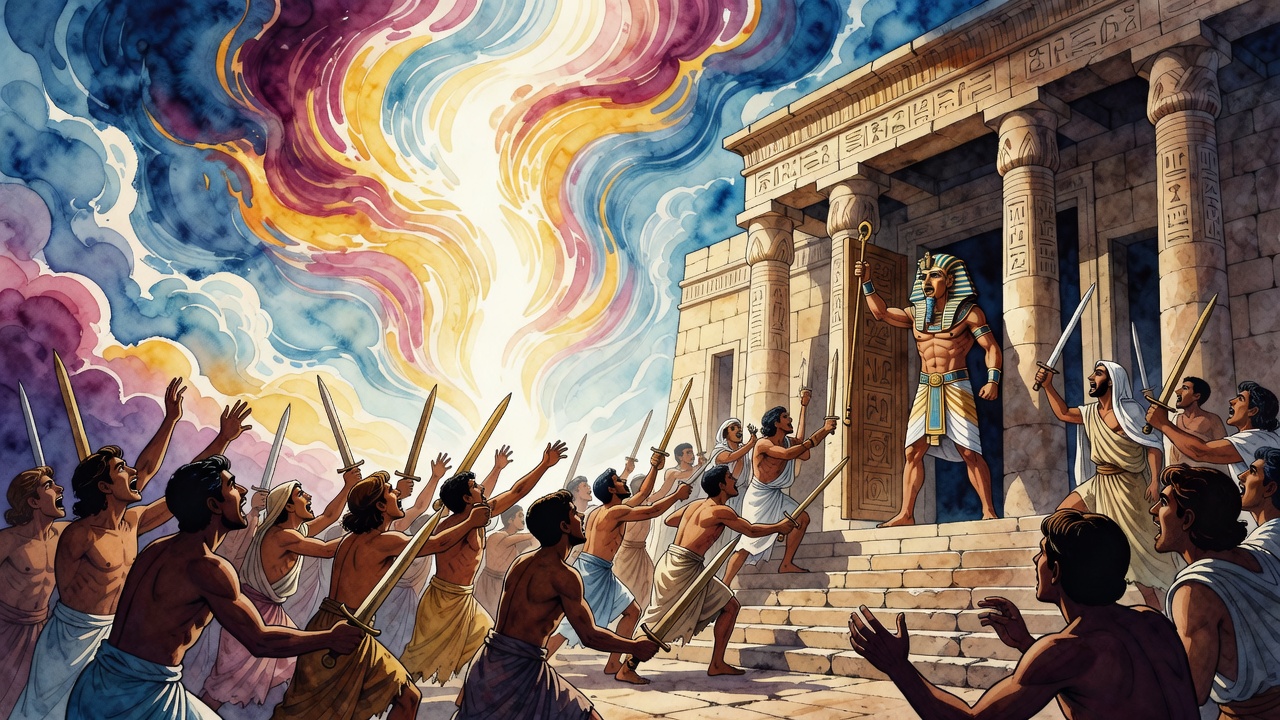
Israel went and did as the Lord commanded Moses and Aaron. The sages heard two acts in the phrase, the going and the doing, and they heard a heart already willing before the full order finished landing. In this house the willingness looked like scraped stone and a lamp held steady. Aaron's name rode beside Moses' in the command. Leadership did not exempt the teachers from the rite.

They ate the lamb in haste, loins girded, staffs near the door. No crumb left on a plate. No starter left in a jar. The boy asked once why a small piece of bread could cost a soul. His father said, because tonight small and large share one edge, and we do not argue with the edge while it is still moving.

Midnight and the Cut That Was Not Ours

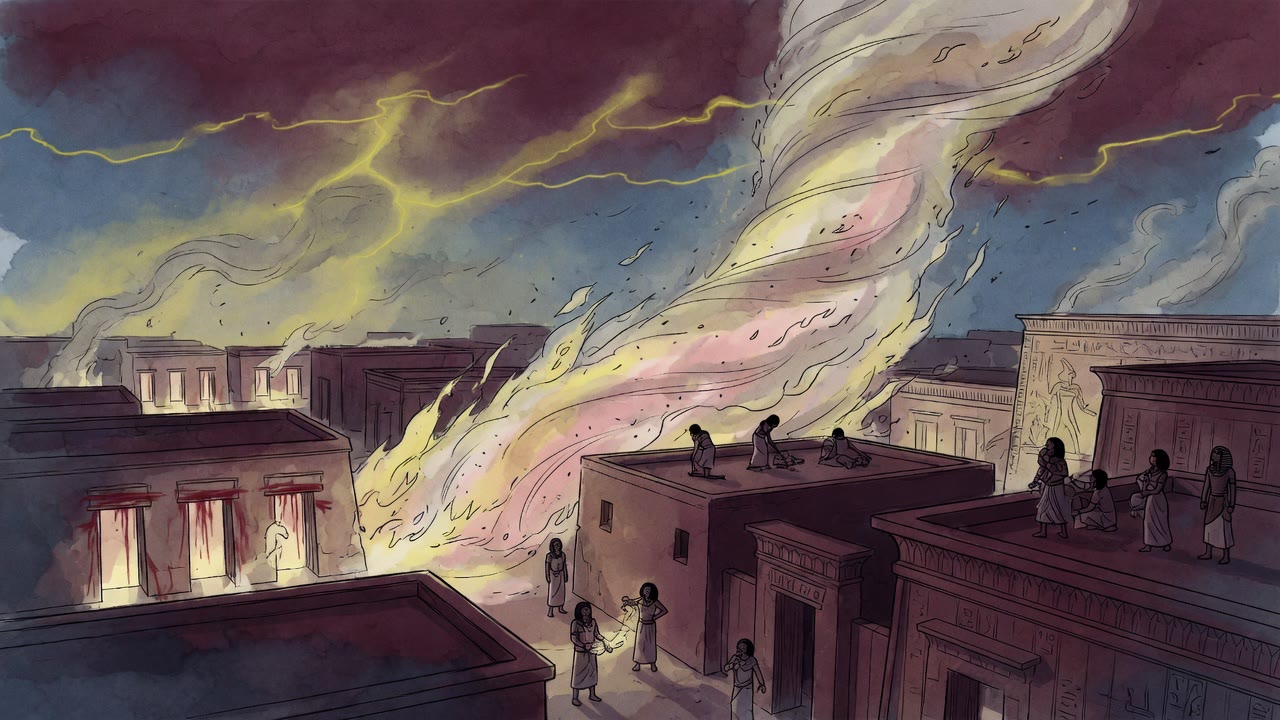
When the cry rose from Egypt, it was not their cry. Blood on the wood did its work. The destroyer passed. In the morning they would walk out with dough that had not risen, a nation leaving on flat bread because there was no time and because time itself had been trained to fear leaven for a night.

The woman kept the clean mortar. Years later, when Passover returned as memory rather than escape, she would still run a nail under that rim. One crumb. One soul. The fear had learned the shape of love, and love had learned the shape of thoroughness.

Moses had not exaggerated. The night proved that a household can hold firstborn life and firstborn death in the same dark hour, and that the difference can be a stroke of blood and the absence of a crumb.

An hour before midnight the boy fell asleep sitting up, staff still in his fist. His mother eased the staff down without waking him and checked the table one last time. A sesame seed of doubt would have been enough to send her back to the mortar. She found nothing. The lamb bones shone dull in the lamp. Bitter herbs still stung the air. Her husband recited the words Moses had given them, not smoothly, but whole.

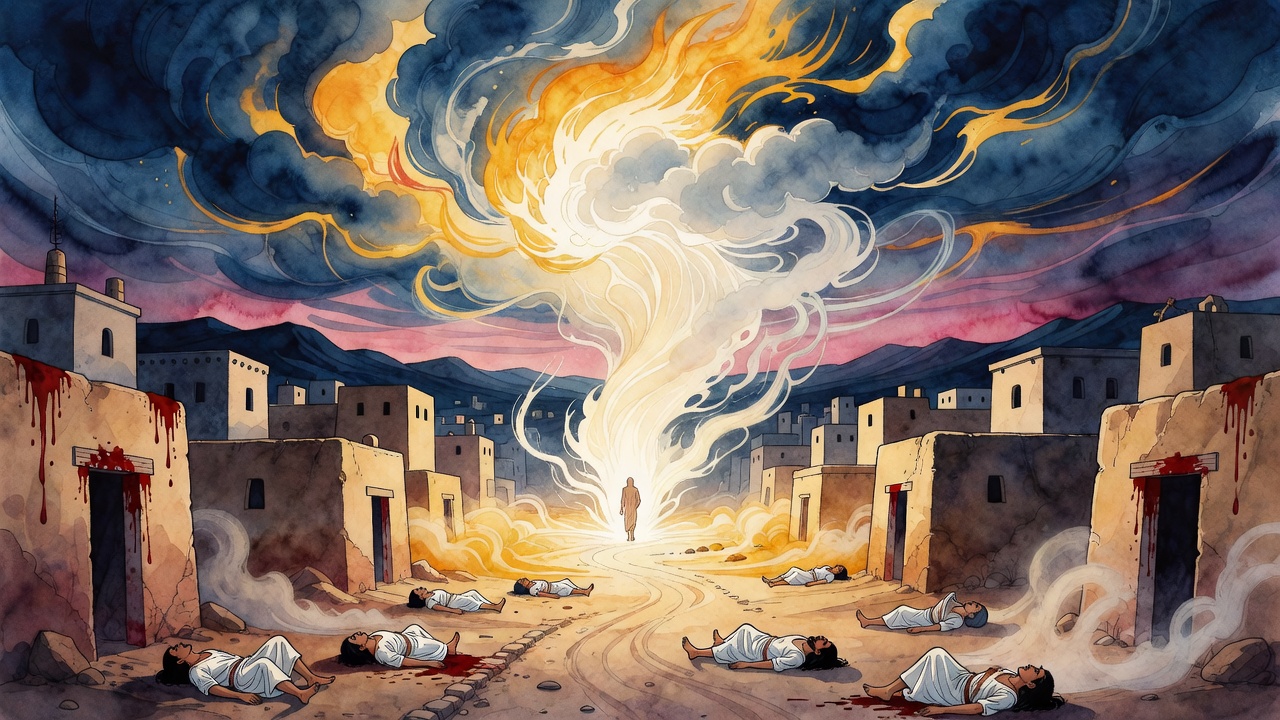
When the cry rose from the Egyptian streets, the boy woke and grabbed for a hand. They held him between them and did not open the door. Cutting-off, she thought, can mean many exits from a people: sin, death, exile of the name. Tonight the crumb-law and the blood-law stood side by side like two guards who do not chat on duty. She loved her son with a thoroughness that looked like fear because fear was the only language the night would accept.

Toward morning a neighbor whispered through the wall that his house was clean too, that his firstborn still breathed. They did not celebrate yet. Celebration would come with walking shoes and dough that stayed flat on purpose. For now the victory was negative and total: no crumb, no unlocked door, no child missing from the mat.


← All myths
From the tradition

Sources

3 sources

The texts behind this telling. Some cards carry a translation of the source; others are our own retelling of it, and each card says which. Every card links out to the original.

Mekhilta Tractate Pischa 10:5Mekhilta DeRabbi Yishmael

Retold in our words. Read the original at the link below.Mechilta, translated by Rabbi Shraga Silverstein · CC-BY

(Ibid. 19) "For whoever eats leavening, that soul shall be cut off": What is the intent of this? From (Ibid. 15) "Whoever eats chametz shall be cut off," I would know only of chametz. Whence would I derive (the same for) se'or? It is, therefore, written "For whoever eats leavening, that soul shall be cut off.". But even if it were not written, I would know it a fortiori, viz. If chametz, which does not cause other (foods) to become chametz, is liable to kareth, how much more so, se'or, which does cause other (foods) to become chametz!. No, this may be true of chametz, which is fit for eating, as opposed to se'or, which is not fit for eating, wherefore it should not be liable to kareth. It is, therefore, written "For whoever eats leavening, that soul shall be cut off." Let the verse for se'or suffice a fortiori for chametz, viz. If se'or, which is not fit for eating, is liable to kareth, how much more so chametz, which is fit for eating!. No, this may be true of leaven, which causes other foods to become chametz, as opposed to chametz, which does not cause other foods to become chametz. The two verses, then, must be written. Otherwise, we would not know (the two laws).

Full source
Mekhilta DeRabbi Shimon Ben Yochai 12:28Mekhilta DeRabbi Shimon Ben Yochai

Translation of the source text.Mechilta de-Rabbi Simon b. Jochai, ed. D. Hoffmann, Frankfurt 1905 · Public Domain

"And the children of Israel went and did" (Exodus 12:28), to give them reward for the going as well as reward for the doing.

"as the LORD commanded Moses" (Exodus 12:28). Since we find that the first passage the Omnipresent spoke to Moses, and the second Moses spoke to Israel, whence do we know that both of them too he heard from the mouth of the Holy One, and went back and repeated them to Israel? Scripture teaches, "as the LORD commanded Moses." I have only Moses, on whom the passage depends; whence do we know that Aaron too was with him? Scripture teaches, "as the LORD commanded Moses and Aaron." One might think that Moses and Aaron, who were occupied with the commandment, had no Passover offering of their own; therefore Scripture teaches, "so they did." And whence do we know that even though it had not yet been said to them, they were ready and prepared, eager and made eager? Scripture teaches, "so they did", so they did, and so it was in their heart to do.

Full source
Mekhilta Tractate Pischa 16:1Mekhilta DeRabbi Yishmael

Retold in our words. Read the original at the link below.Mechilta, translated by Rabbi Shraga Silverstein · CC-BY

God spoke to Moses with a command that sounds absolute: "Sanctify unto Me every first-born" (Exodus 13:1-2). Every first-born, of humans, of animals, of everything that opens the womb, belongs to God. The Mekhilta identifies this as an example of one of the thirteen interpretive principles by which the Torah is expounded: a generic statement that requires a specific one to define it, and a specific statement that requires a generic one to expand it.

"Sanctify unto Me every first-born" is the generic statement. Standing alone, it is almost impossibly broad. Every first-born of every species? First-born males and females alike? First-born of Jews and non-Jews? The command needs boundaries.

The specific statements that follow, detailing which first-born animals are sanctified, how the first-born of a donkey is redeemed, how the first-born son is redeemed through the priests, provide those boundaries. The general principle establishes that first-born status carries holiness. The specific laws explain exactly how that holiness is expressed in practice.

This hermeneutical principle (known as klal u-frat, "the general and the particular") was one of the essential tools the rabbis used to derive law from Scripture. The Torah frequently pairs sweeping declarations with detailed instructions, and the interplay between the two generates the actual legal framework. Without the general statement, the specifics would seem arbitrary. Without the specifics, the general statement would be unworkable. Together, they form a complete system, exactly as the thirteen principles intend.

Full source