One in Five Hundred Walked Out Past the Graves
A man reached for his brother's wrist in the dark and it did not close. They buried the unwilling before Egypt could see the graves.
Table of Contents
A man reached for his brother's wrist in the dark and the wrist did not close around his fingers.
 Click for full size
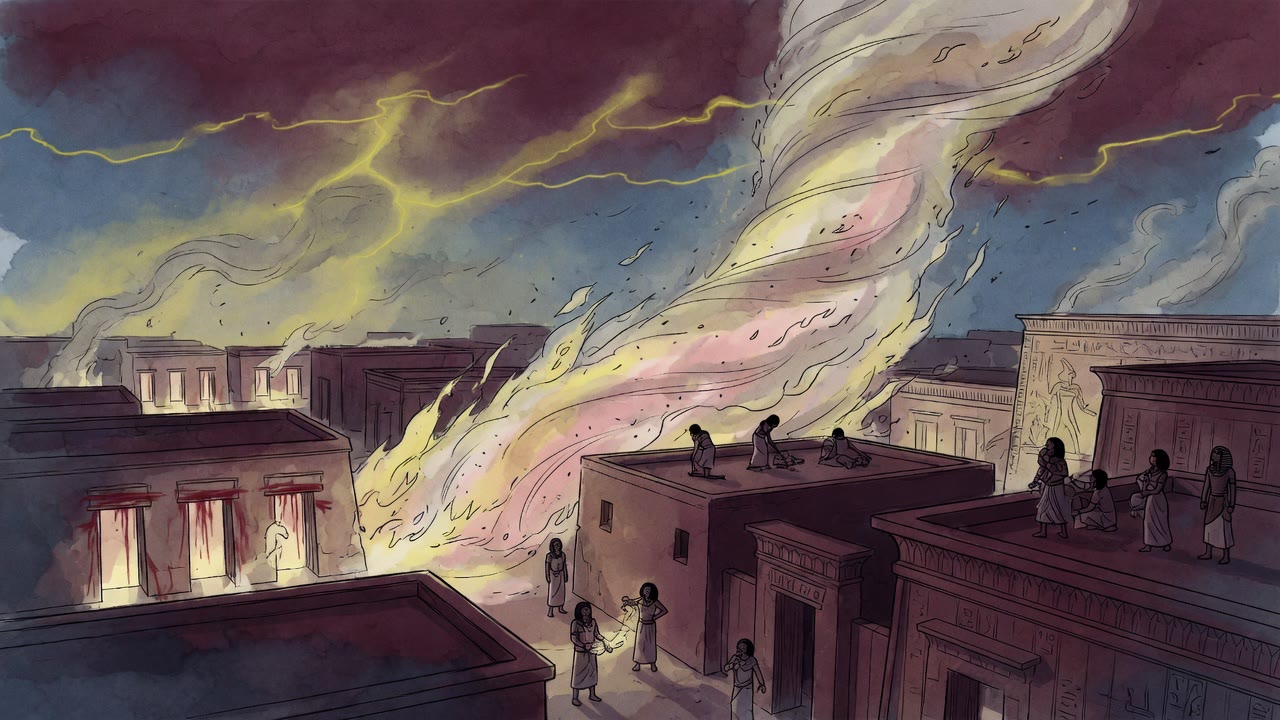
He said the name anyway. Nothing answered. The ninth plague had sat down on Goshen like wet cloth over the eyes, and a man could not see his brother (Exodus 10:23). In Egyptian courtyards that blackness was a sentence. In Israelite streets it became a cover for graves.
They Buried Them Before Egypt Could See
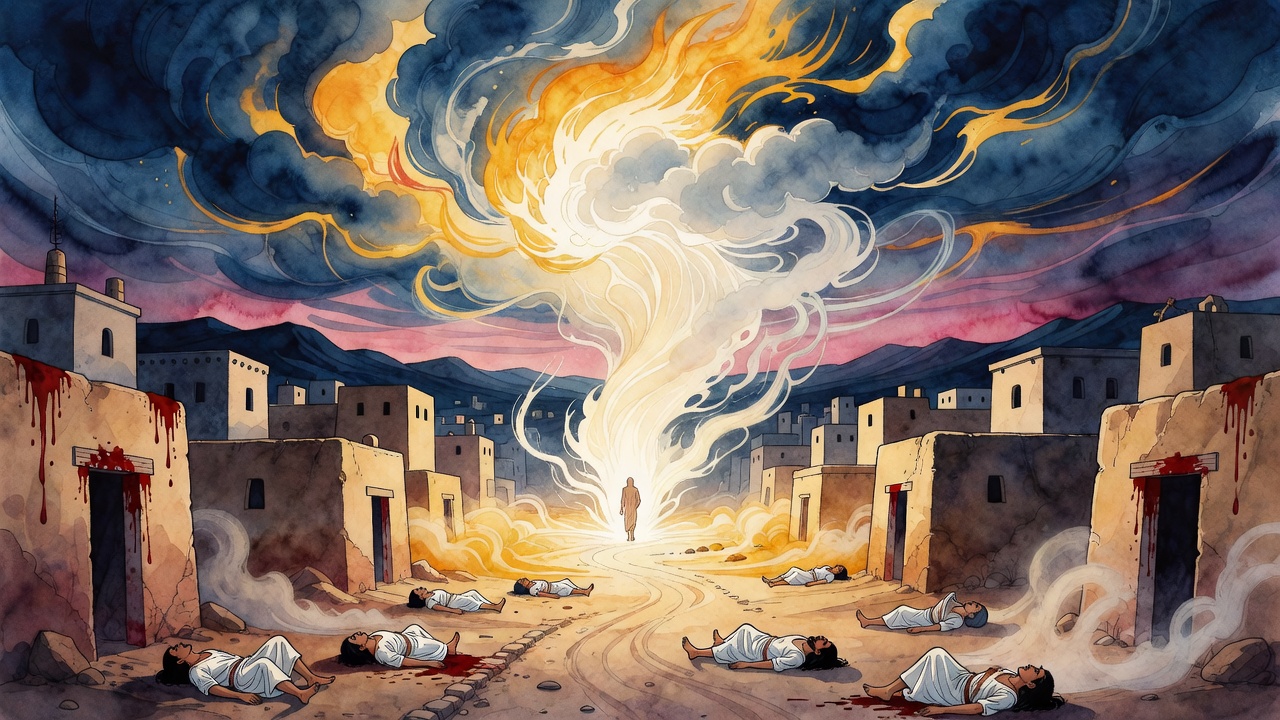
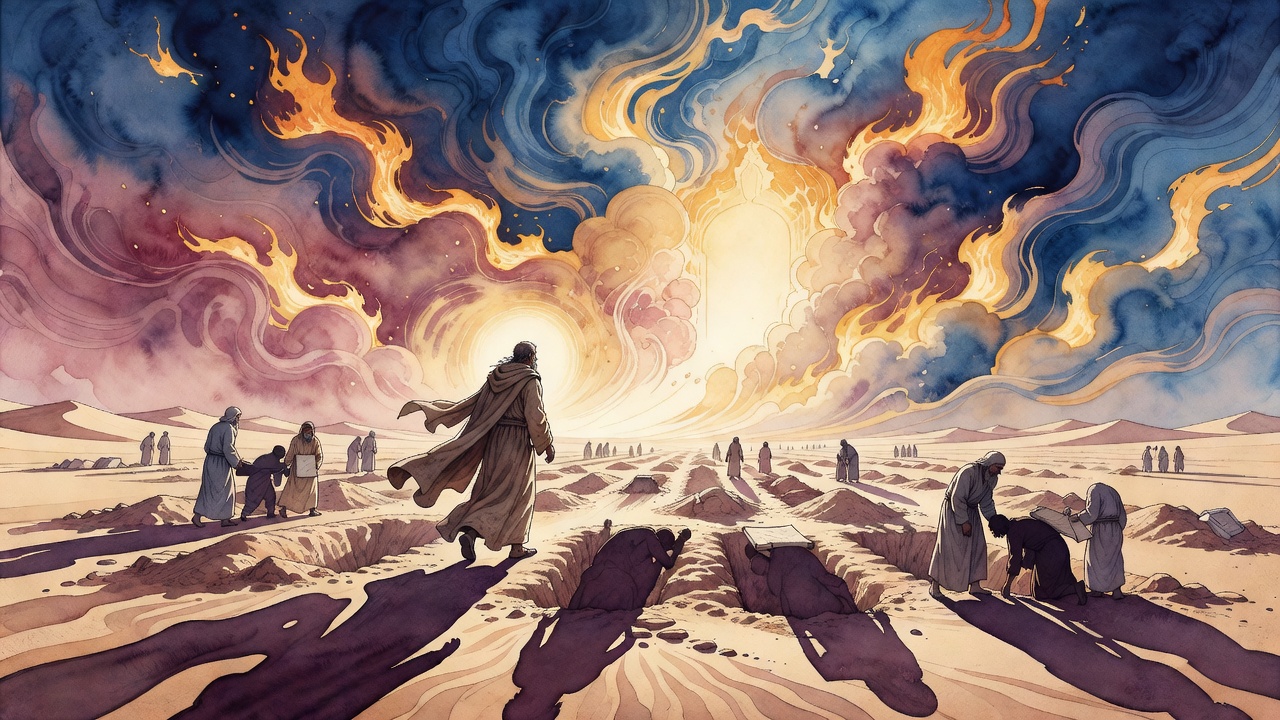
Families who had refused the road of leaving, who clung to bricks and to Goshen, went cold in those three days. Their kin dug without lanterns. Hands worked by touch. A shoulder bumped a neighbor who was only earth now. Someone whispered thanks that God had made the night thick enough that no Egyptian torch could find a hole to mock.
They lowered bodies where the sand would hold them. They filled the holes. They packed the ground with their palms so it would not look like a cemetery when the light came back. A child asked who was missing and was told to keep shoveling.
When the dark lifted, Egypt saw survivors and wagons. It did not see how much of Israel was already under the sand.
The Column Looked Too Thin
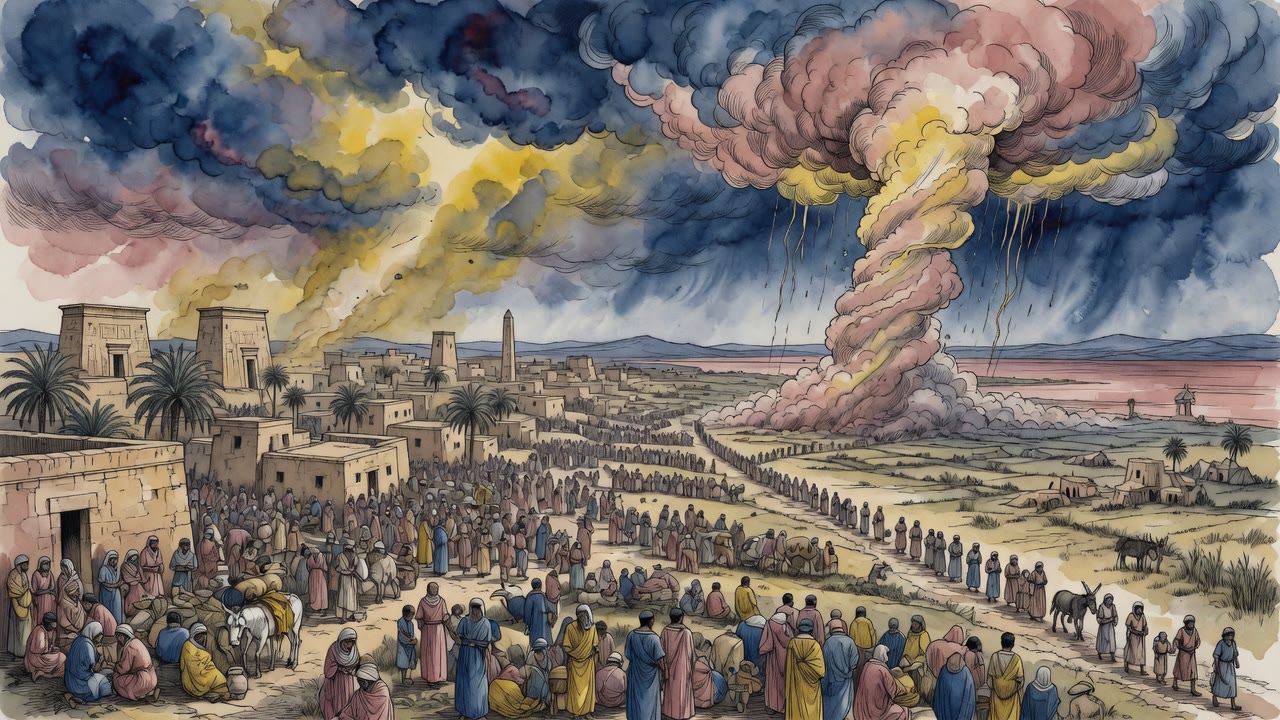
Six hundred thousand men left Egypt (Exodus 12:37). The yards they walked out of had held more. The children of Israel had teemed and multiplied until the land was full of them (Exodus 1:7). A woman would bear six in one birth. Now the column looked like a strip cut from a field.
A woman who had watched a crowded courtyard empty counted the living on the road and stopped before she reached a number she could stand. Not one in five hundred, she thought. Maybe not one in five thousand. The rest had never seen the sea.
They still had to leave. After the water stood up and fell, the remnant pushed forward because there was no house left to go back to that did not sit on a grave.
The Desert of Shur Was Full of Fangs
The column went out into the desert of Shur, which some called Kazav, a square of waste nine hundred parasangs on a side. The ground held serpents and scorpions the way a storehouse holds grain. Moses walked the front line. Children learned not to set a bare foot on a warm rock without looking twice.
The same country would later be named as a place of affliction, lions, vipers, and the flying serpent (Deuteronomy 8:15; Isaiah 30:6). Water was not yet the crisis. The first crisis was simply surviving the map.
Moses did not slow for the ones who flinched. A boy hopped from stone to stone with his sandals in his hands until his father shoved the sandals back on his feet and told him the sand was not empty. The camp that had buried kin under Egypt's black now marched under a sun that painted every traveler with a dark twin.
A Bird Fell Out of Its Own Shadow
Among the creatures was a viper that did not need to strike flesh first. It lay still until a bird's shadow slid across the sand. The snake turned its head. Shadow and body linked. The bird's wings stopped in the air as if someone had cut the strings, and it fell. Death arrived without a bite. Shade was no longer safety.
A mother pulled her child under a cloth for noon heat and then yanked the cloth away. She had seen the bird drop. A scout watched his own outline stretch long at evening and stepped aside as if the line on the ground could bite.
They had a word for that country later. Tzalmaveth (צלמות), shadow-death. Jeremiah would ask why the people never cried out for the One who led them through a land of deserts, pits, drought, and that kind of shade (Jeremiah 2:6). The question was not a riddle. They had already seen death wear black in Egypt. Now it wore shadow in the open waste.
They Did Not Turn Back
They did not turn back to the graves. The road had already chosen them. Being the one in five hundred was not a prize. It was a sentence to keep walking where even shade was hostile.
Not every name from that generation vanished into sand. Later, families of scribes settled with a teacher called Yaavetz. Chronicles lists them as the dwellers of Yaavetz (I Chronicles 2:55). They cried out and were answered. They heard the shofar, the ram's horn, of Torah. They slept in booths, the way the Rechabites slept in tents, because that was how they had come out. Their line ran through Kenites who still remembered Sinai's sound.
The remnant did not only carry water skins and dough. They carried the thin math of who was missing, the skill of burying without spectators, and a fear of shadows that would outlive the last scorpion of Shur. God had taken them out. He had also left most of their kin in the dark. The ones who walked had to live with both facts at once.
← All myths