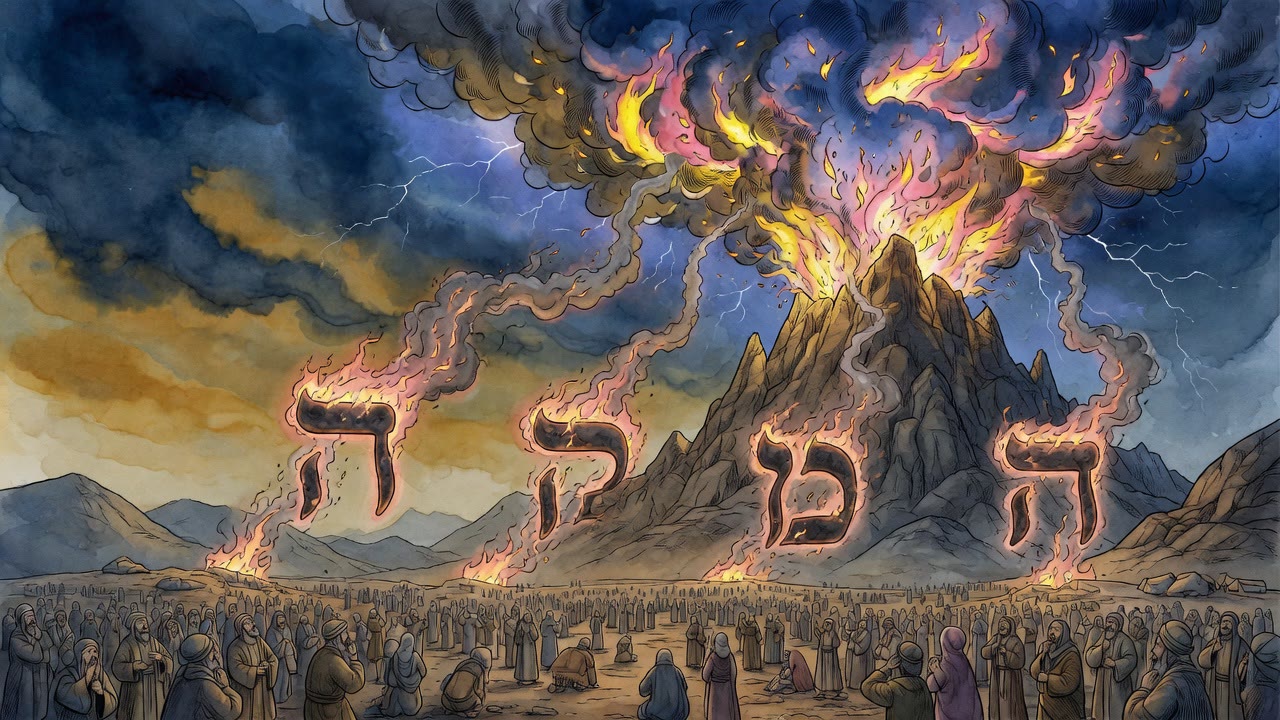
Onkelos Left the Shema Untouched in Aramaic
He had been cutting hands and descents out of the Aramaic Torah. At Hear O Israel he set the knife down and copied six words as they stood.
Table of Contents
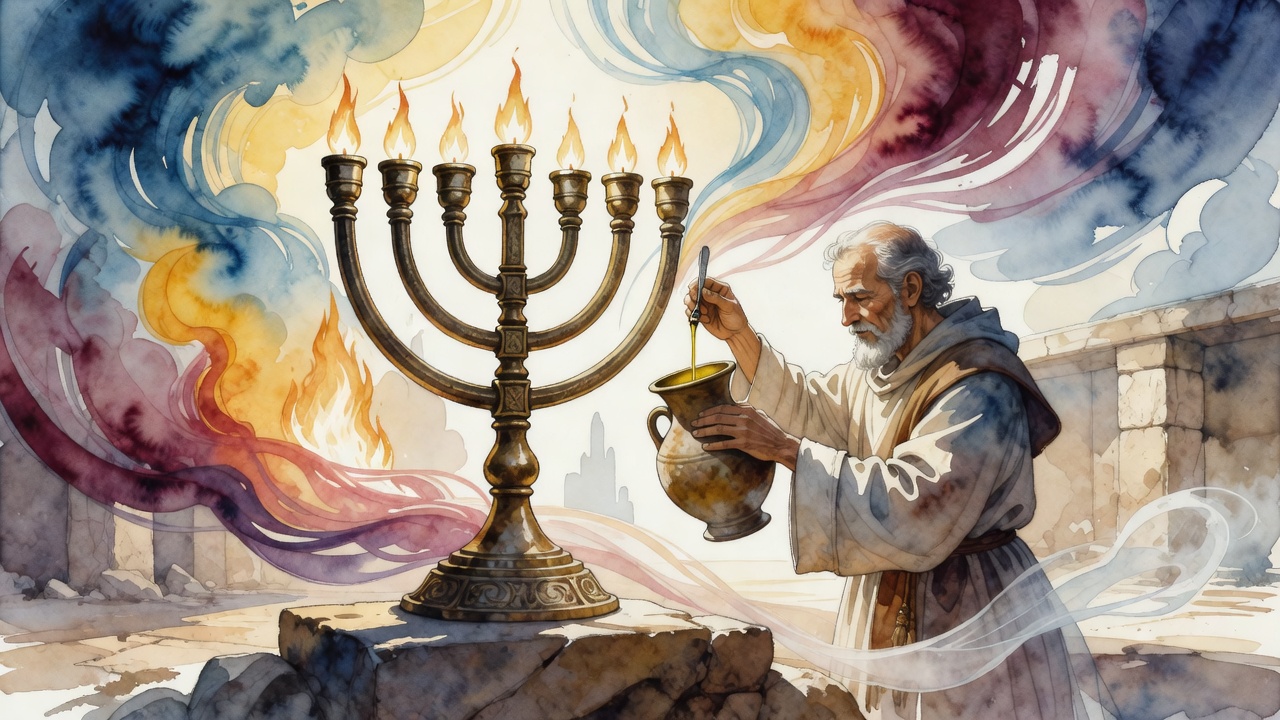
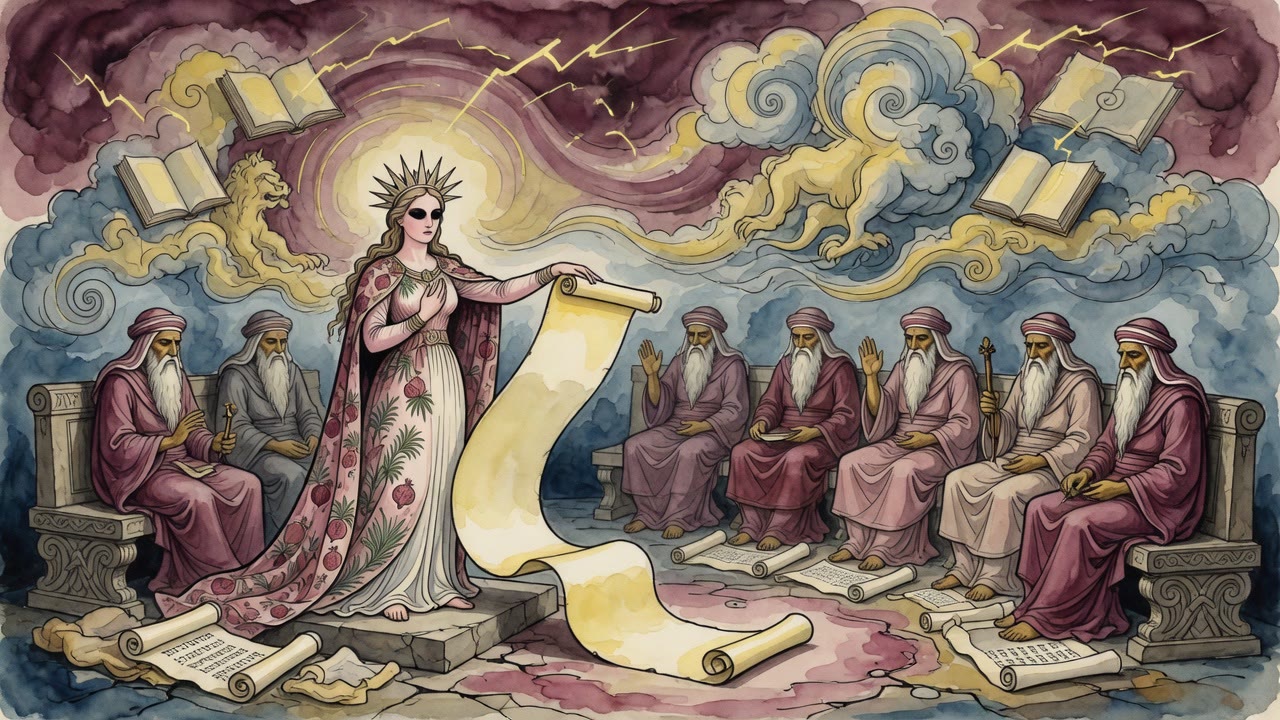
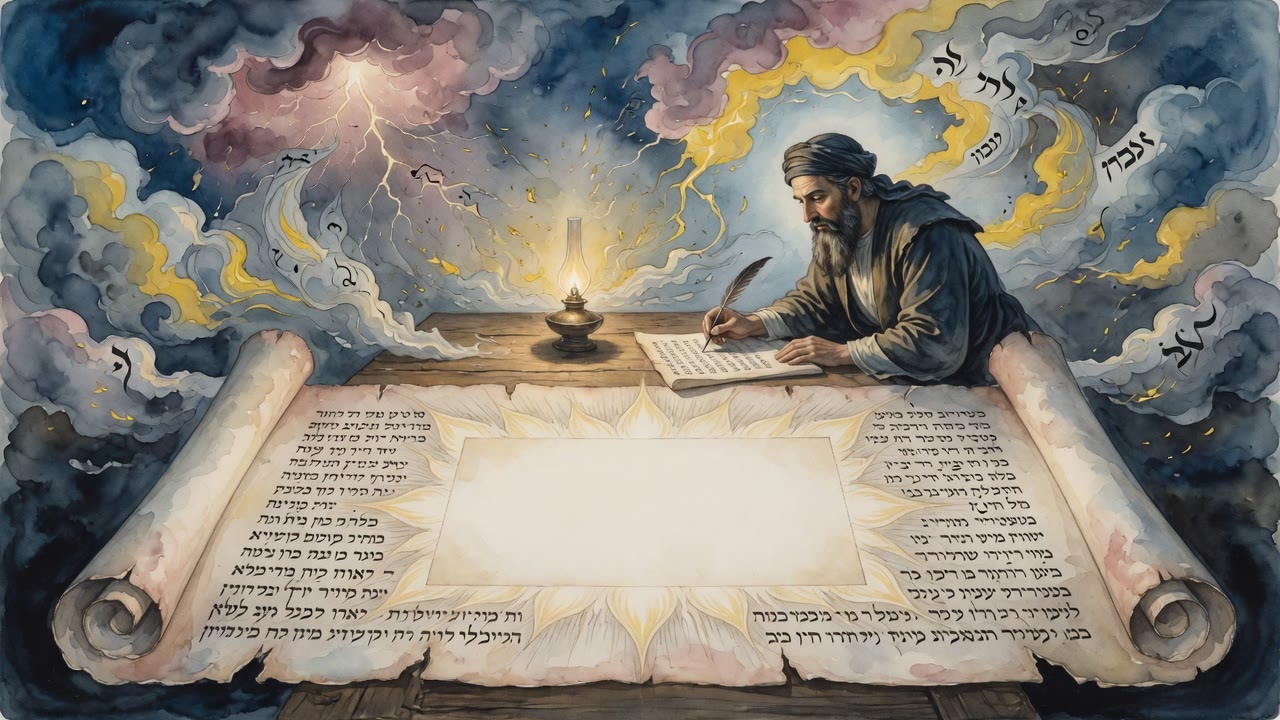
Onkelos sat over the scroll and cut. A hand became power. A descent became a revealing. Wherever the Hebrew might let a listener build God a body, he took the body out and left the meaning standing in Aramaic.
 Click for full size
He Guarded Every Image
He had walked the Torah like a man carrying flame through dry grass. God walked. God came down. God's hand stretched out. God's anger burned. The Hebrew could speak that way because Torah speaks in a human tongue. Onkelos had to make it heard in houses, markets, study halls, and synagogues where a careless ear might mistake image for anatomy.
So he guarded the border. He did not erase the story. He removed the false body a sloppy listener might build from it. Verse after verse, the knife worked. Then he reached Hear, O Israel (Deuteronomy 6:4).
Six Words Needed No Fence
Hear, O Israel. The Lord is our God. The Lord is one.
Onkelos arrived there and stopped cutting. There was no hand to soften, no foot, no throne, no motion through space, no metaphor that could harden into form. The verse stood already clean. God is one. The words did not need rescue from themselves.
He copied them as they stood. In a translation famous for intervention, the stillness was the loudest choice. He did not improve the Shema (שמע), Hear. He guarded it by leaving it exact. Six words, no body, no gap, no correction.
Love Reached the Chest and the Field
The next verse did need help. Love God with all your heart, all your soul, and all your very much. The Hebrew last phrase stretches past easy measure. Might, excess, what a person has beyond ordinary count.
Onkelos made it concrete. Love God with your possessions. Not only thought. Not only breath. Not only song. The money in the chest, the field, the flock, the goods a person trusts when fear begins. Love had to reach what a person can lose.
The declaration of oneness remained untouched. The command to love that One entered the marketplace. He had refused to give God a body. He would not let love stay a feeling.
The Strange Word Became Straps
Then came another hard word. Bind them as a sign on your arm, and let them be totafot between your eyes (Deuteronomy 6:8). Totafot sits strange in the Hebrew, a sealed object with no picture attached. Onkelos opened it into practice. Tefillin (תפילין), the leather boxes.
The command moved from mystery to straps, boxes, arm, head, morning prayer. A word that might hover became a ritual a person could tie onto the body. The same translator who refused to give God a body made sure Israel's body knew what to do.
Children still had to be told the story of slavery and redemption. Onkelos left that conversation standing too. The untouched verse did not float above practice. It anchored it. Hear remained hear. One remained one. Around that still point, love moved into possessions, and mystery moved into leather on the arm.
He had spent verse after verse protecting Israel from a false image. At the center he protected them by refusing to add one. The knife stayed sheathed because the verse had nothing extra to cut. Later teachers would warn that right and left, giving and wisdom, closeness and gap, are not rooms with distances. The gap is a blocked desire, not a hallway. Onkelos had already lived that discipline at the table. He would not trap God in space. He left the Shema without a shadow between Israel and the One it named.
← All myths